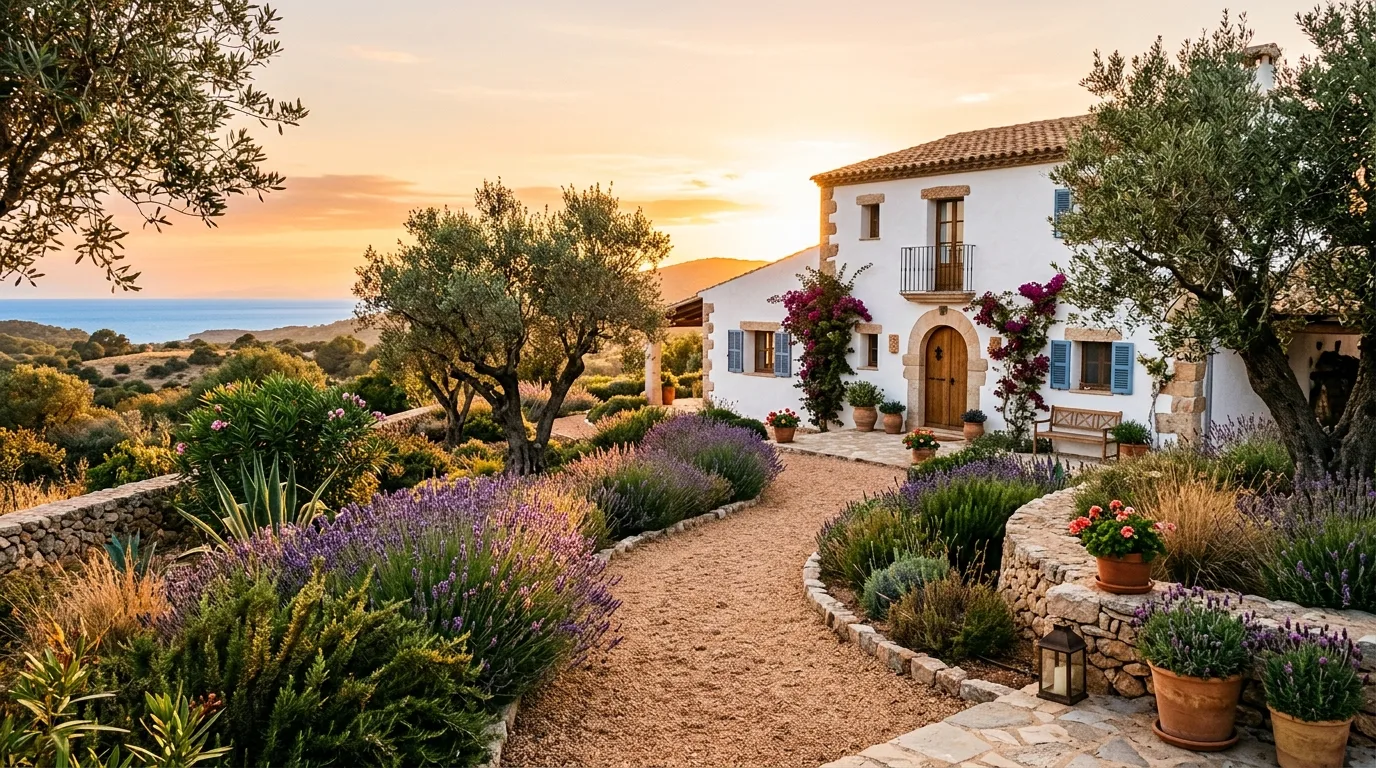
Mediterranean front yards feel inviting because they combine warmth, texture, and restraint in a way that immediately gives a home character. Olive trees, stone, gravel, terracotta, herbs, and sun-loving planting all help create that easy European flair.
The strongest front-yard versions are not crowded. They usually rely on a clear material palette, a few memorable planting gestures, and an arrival sequence that feels more atmospheric than overly decorated.
These Mediterranean front yard ideas explore different ways to create that warm and welcoming look. Each one shows how the right combination of planting and hardscape can give a home timeless curb appeal.
Quick planning notes
Keep the material palette warm and cohesive so the front yard feels sunlit and intentional.
Use plants with strong form or fragrance to support the style without overwhelming the entry.
Think about the approach to the house as a sequence rather than only a static view from the street.
Let containers, paths, and focal trees work together to build atmosphere close to the facade.
Idea 1
A warm stucco facade framed by olive trees and gravel
Mediterranean front yards feel instantly convincing when they balance sun-baked materials with graceful planting, and olive trees over gravel create that character with very little visual noise. The look feels old-world, relaxed, and naturally suited to bright climates.
Idea 2
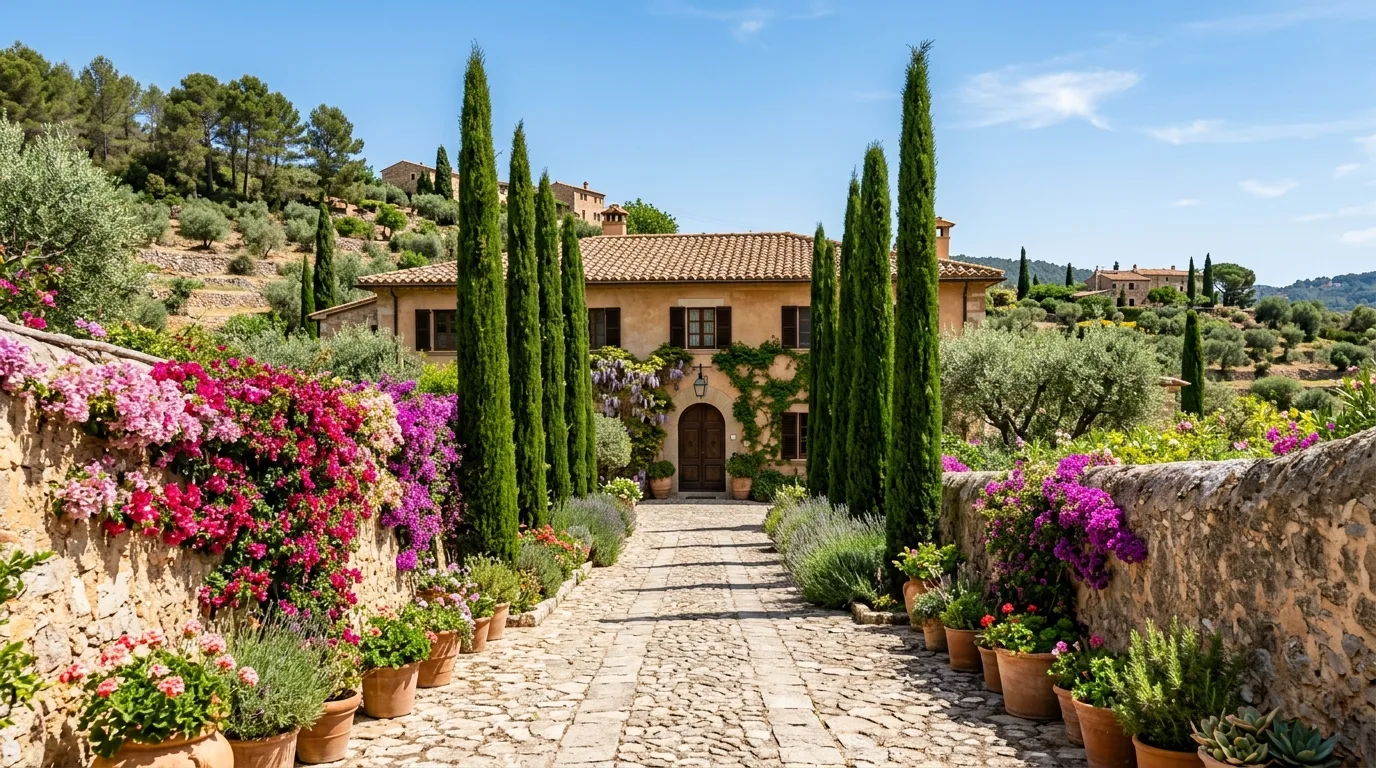
A tiled entry path leading through herbs and clipped shrubs
Front entries become more memorable when the walk itself contributes to the style, and patterned tile surrounded by herbs and clipped greenery gives the yard a stronger sense of arrival. The mix of fragrance, texture, and warm material feels richly European without becoming overworked.
Idea 3
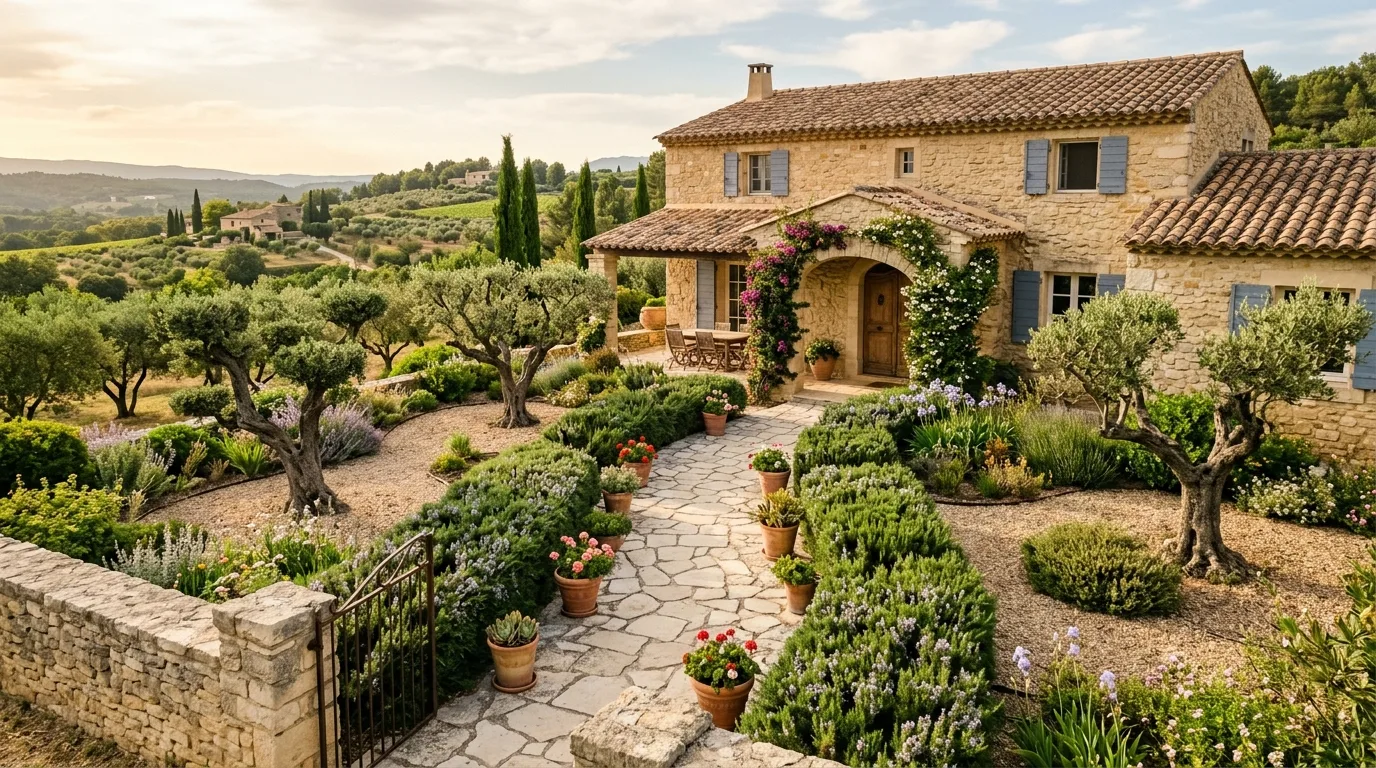
A terracotta planter composition softening the base of the house
Terracotta works beautifully in Mediterranean yards because it reflects the warmth of the architecture while giving planting more presence at the ground level. Grouped near the facade, the pots make the house feel more layered, welcoming, and lived in.
Idea 4
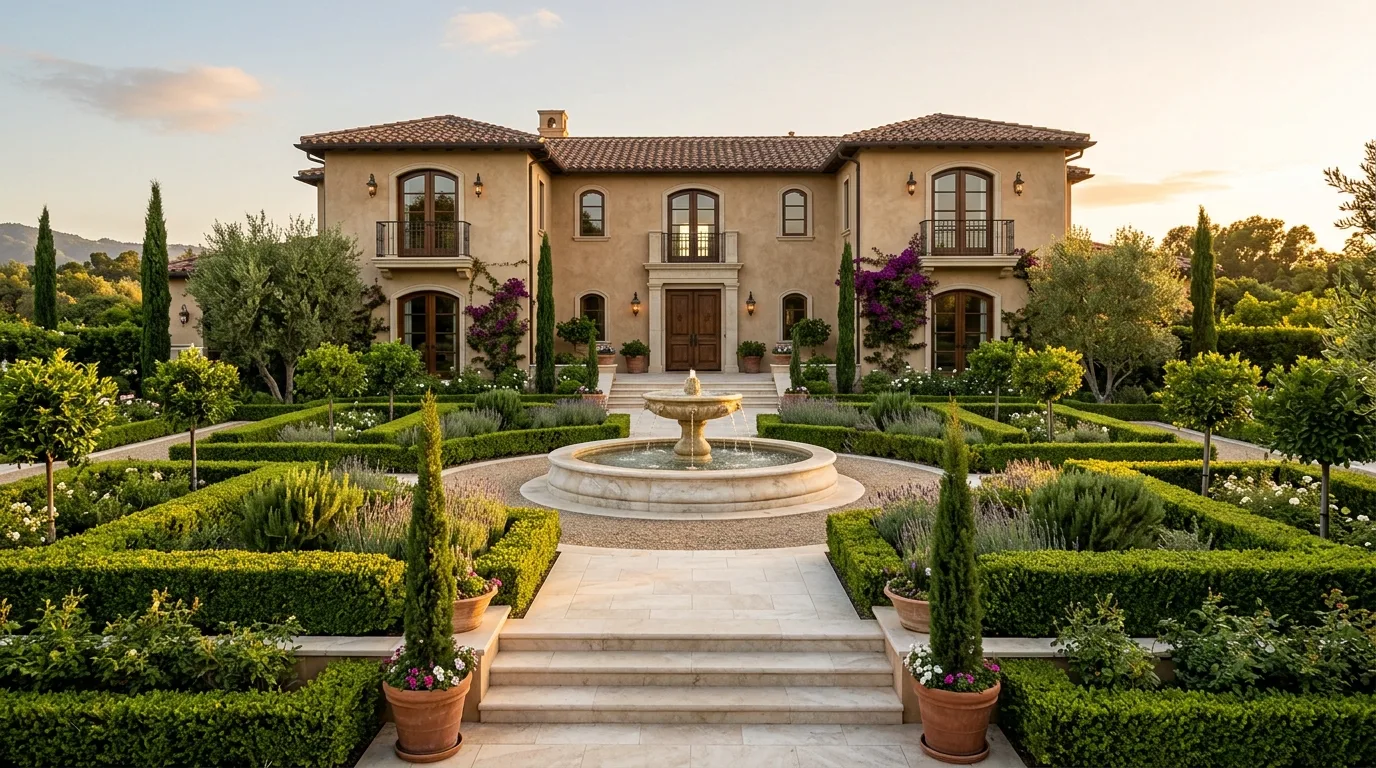
A cypress-lined approach creating elegant vertical rhythm
Tall cypress gives Mediterranean landscapes an unmistakable silhouette, and in a front yard it can make the whole approach feel more composed and intentional. The vertical repetition sharpens the architecture while still preserving the softness of a planted entrance.
Idea 5
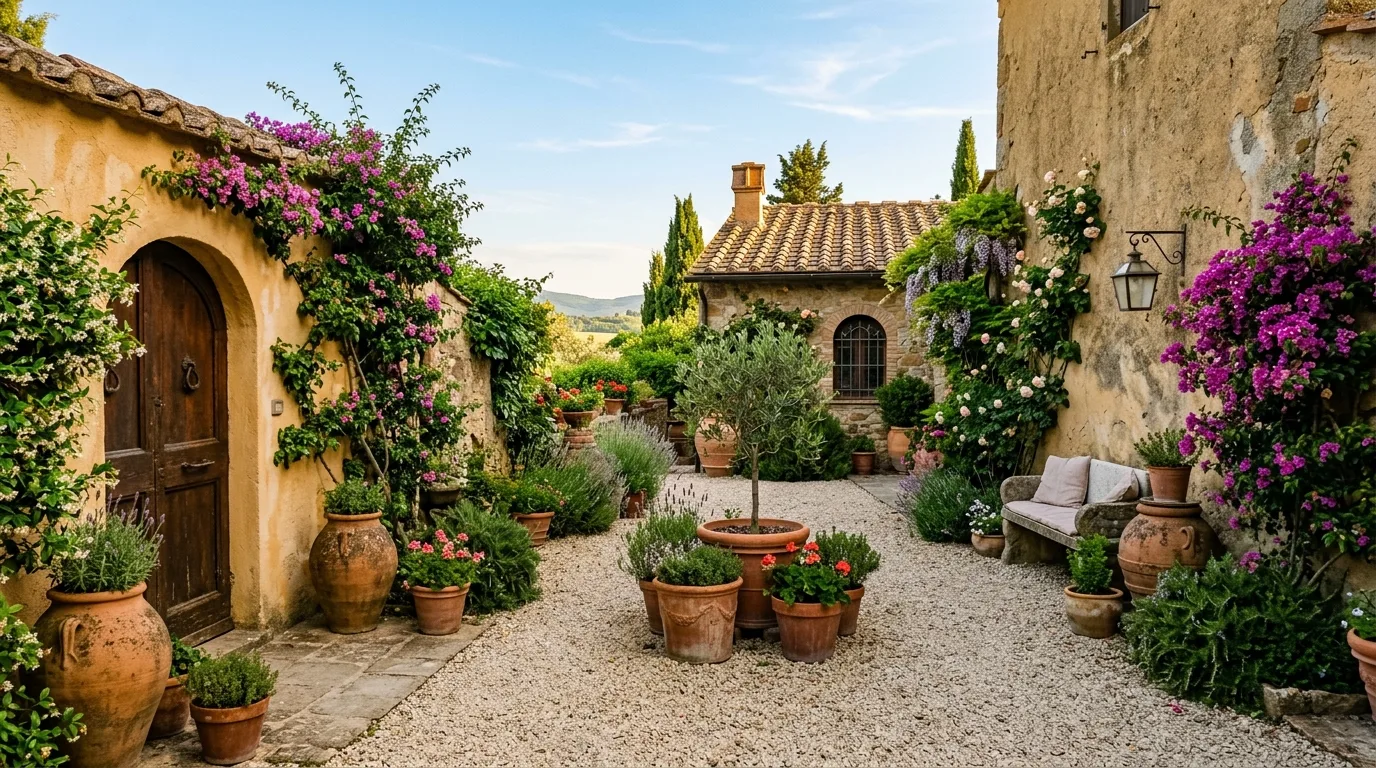
A drought-tolerant flower mix bringing color to a sunny frontage
Mediterranean style does not have to rely on foliage alone, and restrained bursts of hot-weather bloom can bring life to the frontage without undermining the calm structure of the yard. The key is using color as accent rather than allowing it to dominate every surface.
Idea 6
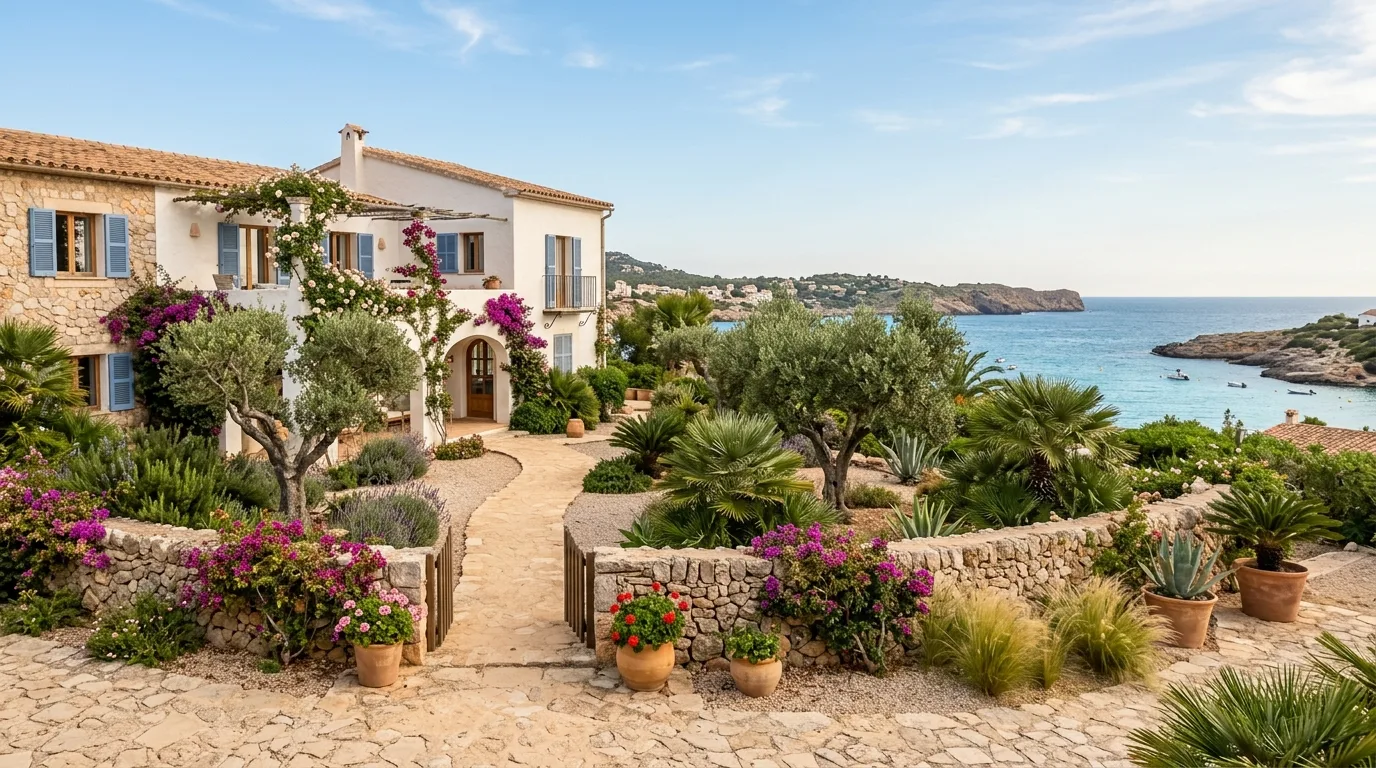
A stone stair entry wrapped in soft silver-green planting
Stone stairs gain much more romance when the edges are softened by pale foliage and aromatic plants because the hard materials begin to feel settled into the landscape rather than imposed on it. That balance is one of the reasons Mediterranean yards age so gracefully.
Idea 7
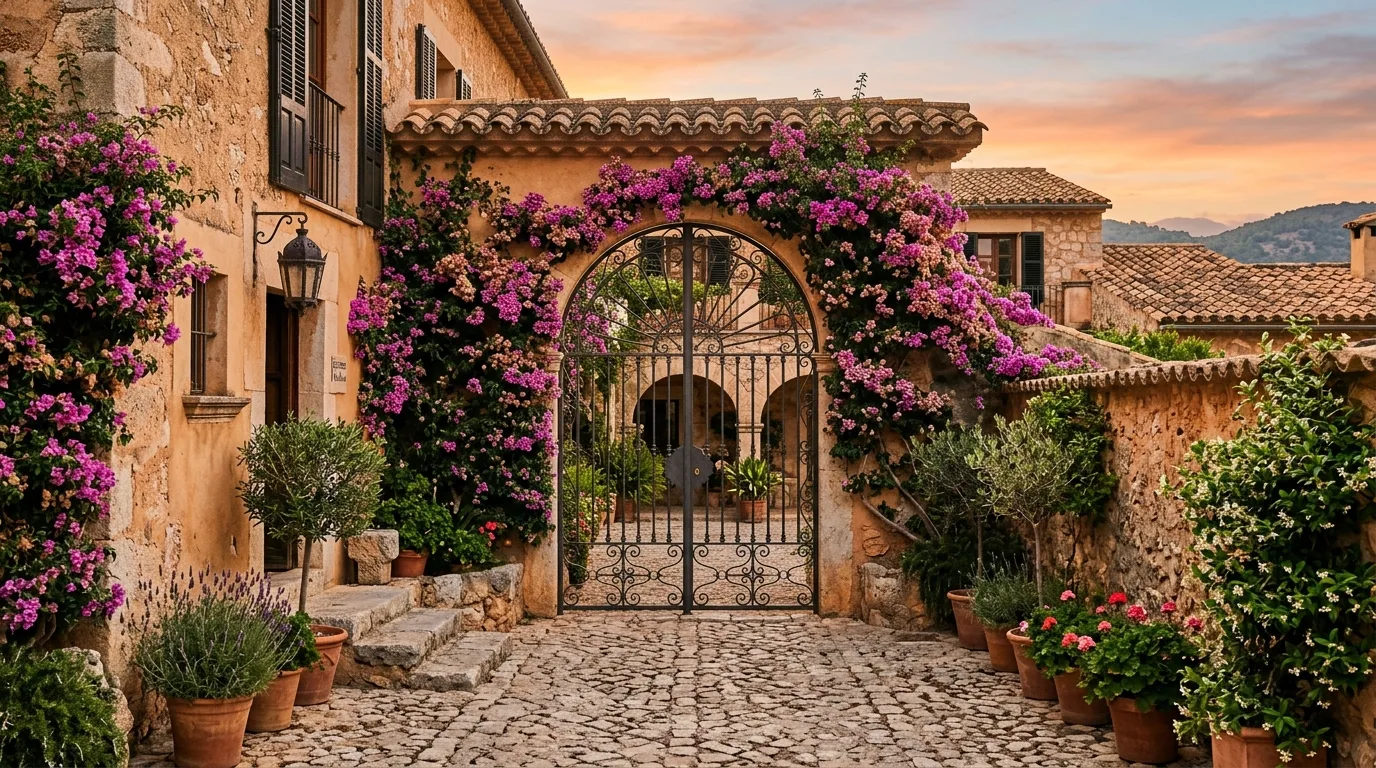
A courtyard-style frontage enclosed with low walls and greenery
Low walls can give a front yard stronger Mediterranean character by turning the entry into a sequence rather than a simple exposed lawn, and planted edges keep the enclosure welcoming. The house feels more private and more atmospheric from the street.
Idea 8
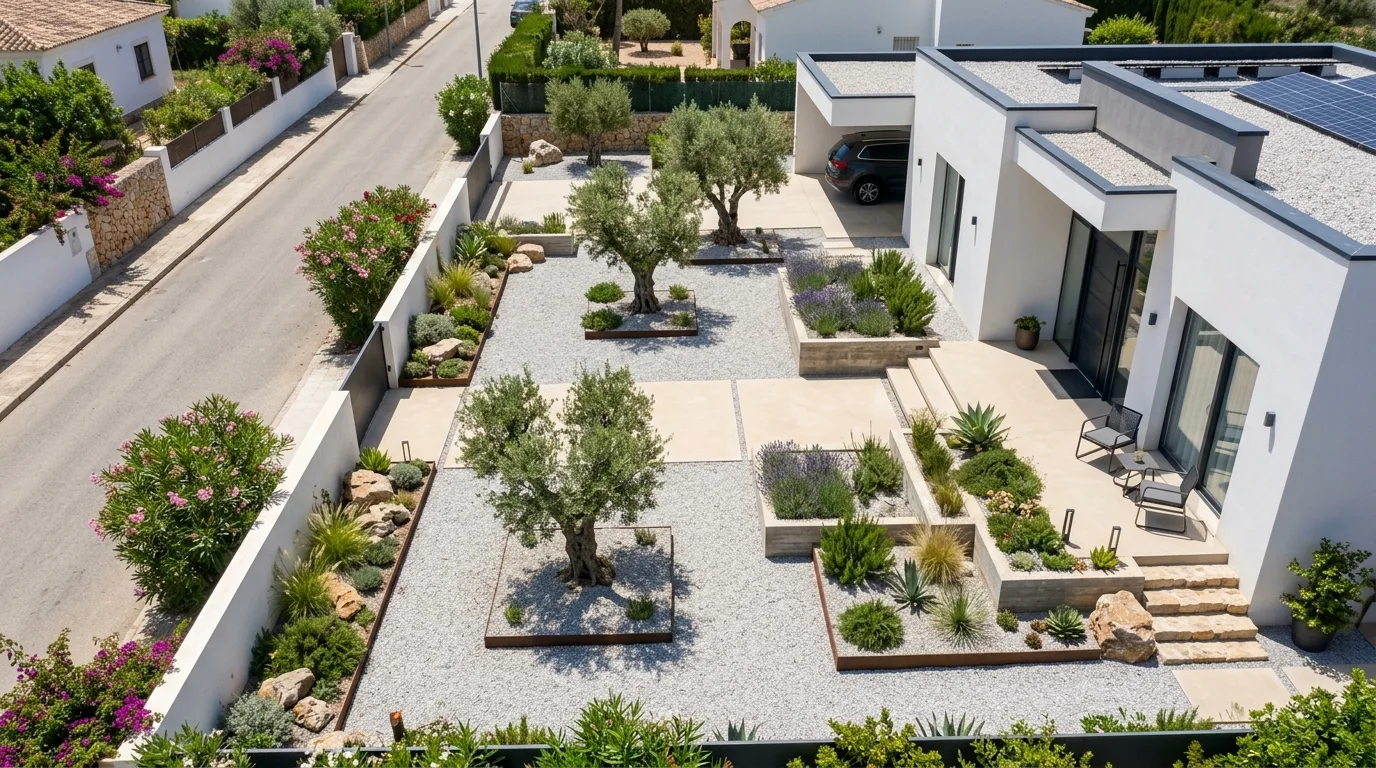
A small front yard organized around one sculptural tree
Compact frontages often become more elegant when the design is built around one strong focal tree instead of many competing pieces, and Mediterranean planting supports that clarity well. The result feels calmer, more expensive, and easier to read from the sidewalk.
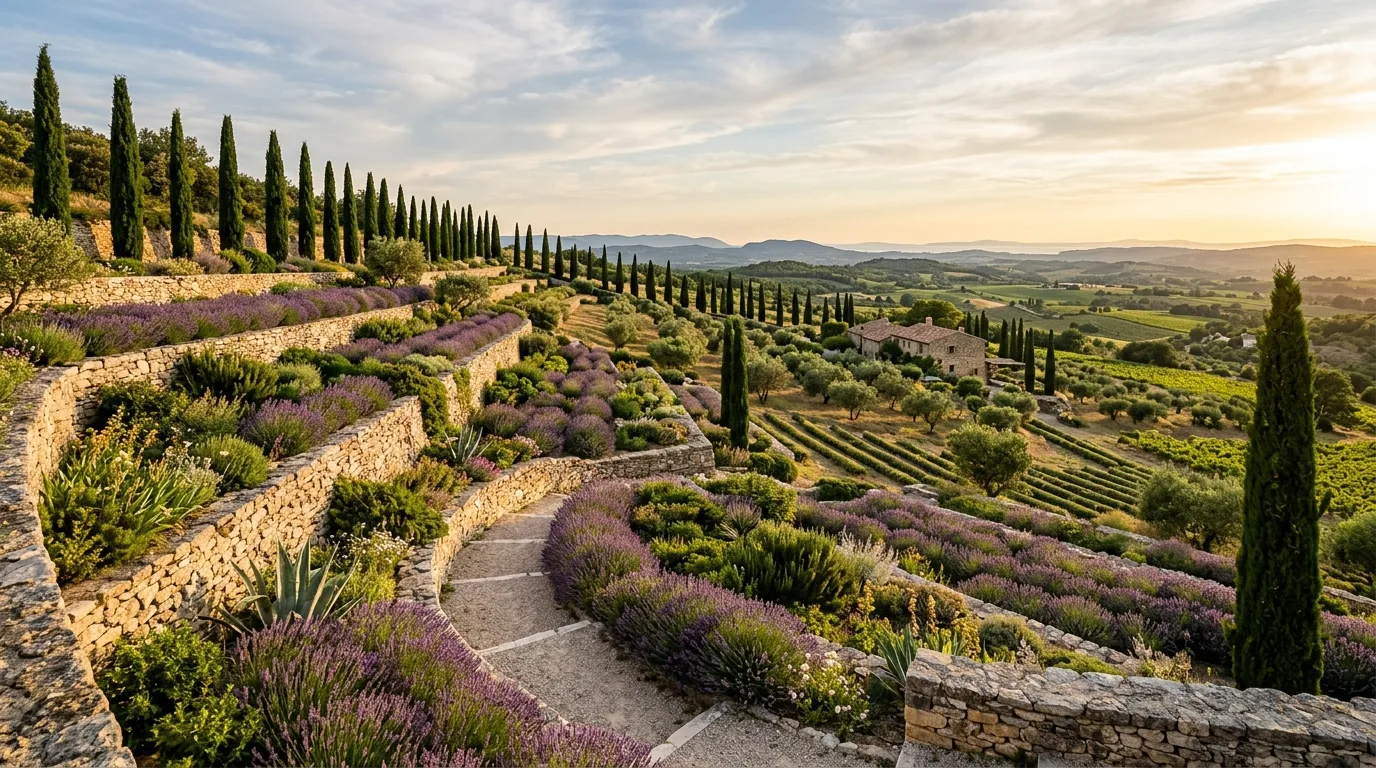
Idea 9
A warm entry garden with lavender, rosemary, and gravel texture
Few combinations feel more naturally Mediterranean than gravel underfoot and aromatic herbs at the edge, because together they create a front yard that is both visually simple and richly sensory. The house gains charm through atmosphere rather than excess decoration.
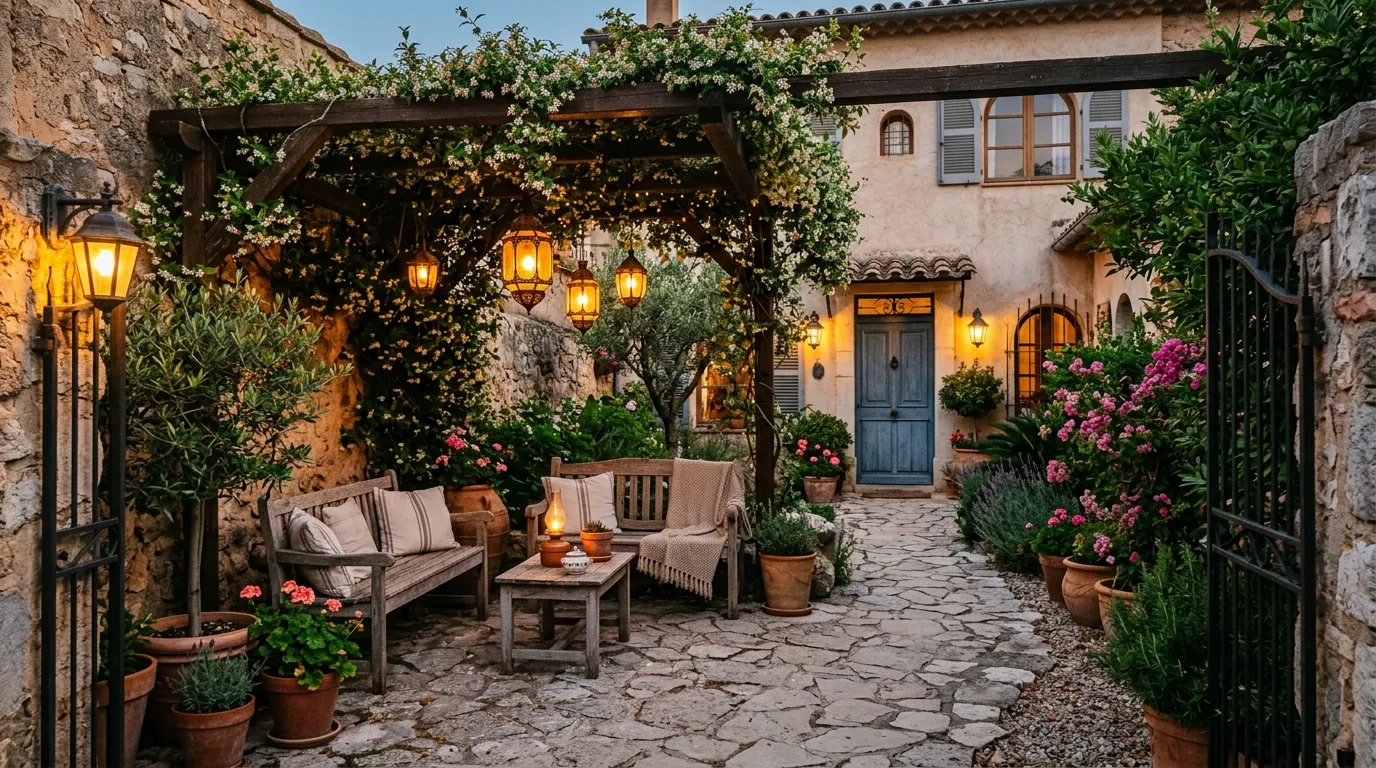
Idea 10
A fountain-centered yard that feels like a European courtyard
A modest fountain can completely shift the tone of a front yard by turning it into a destination instead of just a setback, especially when paired with Mediterranean planting and stonework. The water adds movement and coolness that make the entry feel more refined.
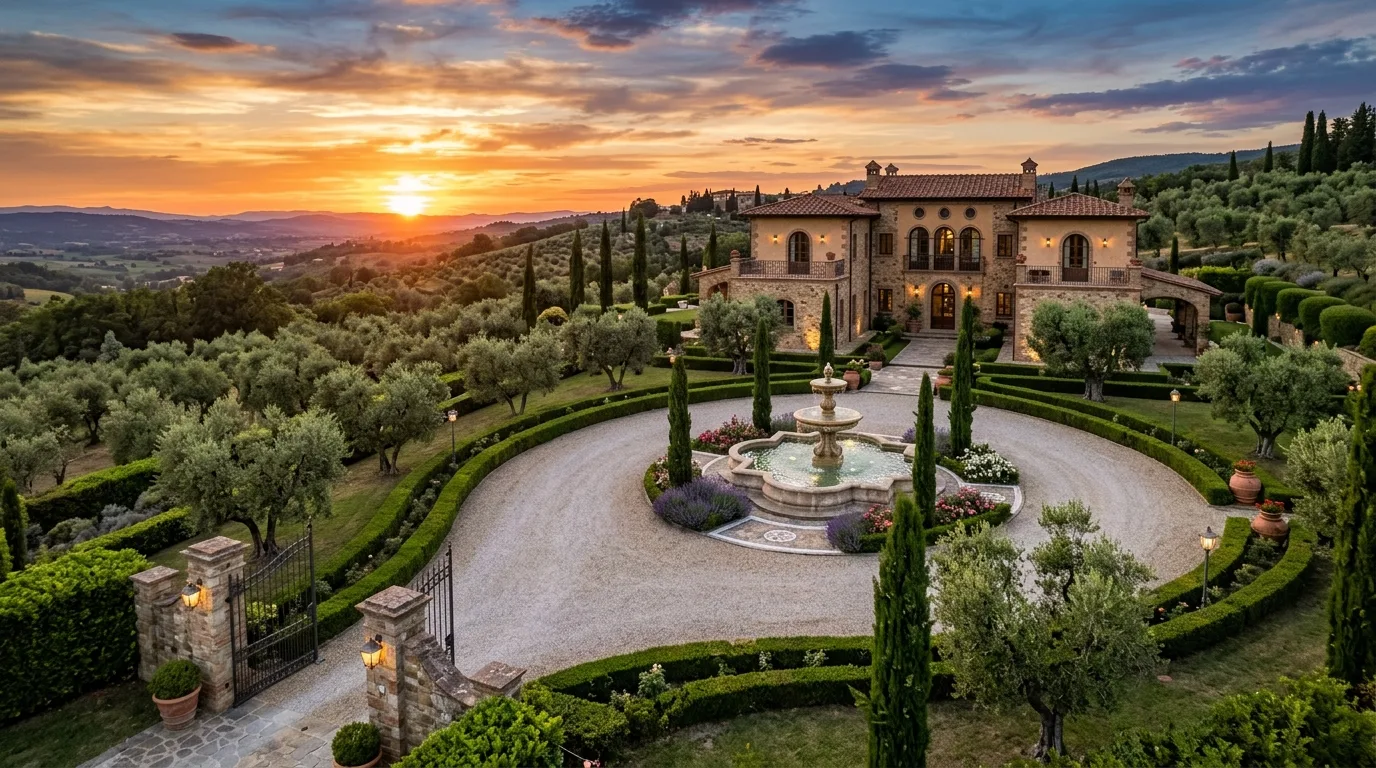
Idea 11
A broad facade anchored by repeated pots and clipped structure
Wide house fronts often need repetition to feel cohesive, and matching pots with clipped structure can provide that rhythm without making the yard seem stiff. Mediterranean materials keep the composition warm and welcoming while still clearly ordered.
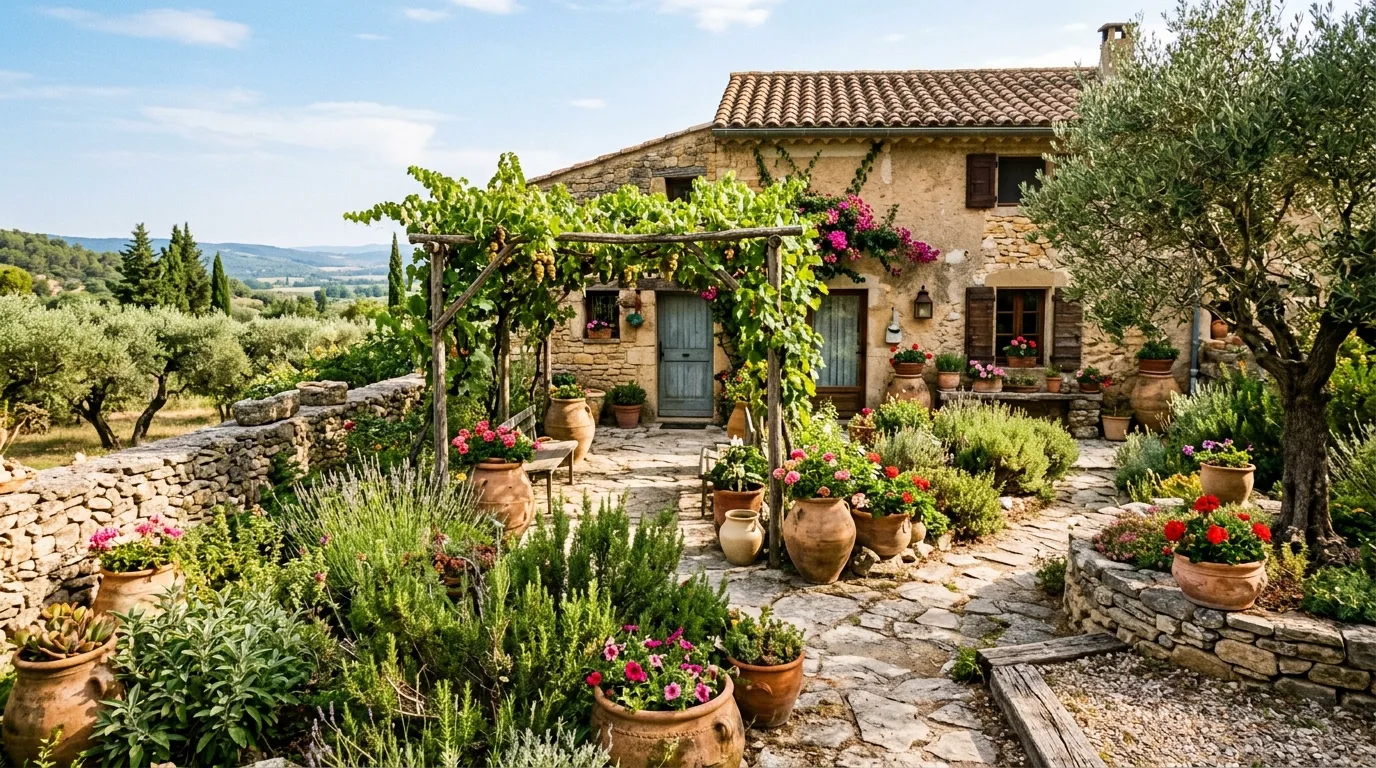
Idea 12
A sloped frontage terraced for better texture and movement
Terracing can make difficult front yards feel more beautiful because it slows the grade and turns the planting into a sequence of layered moments rather than one awkward plane. Mediterranean stone and drought-tolerant greenery are especially well suited to that stepped look.
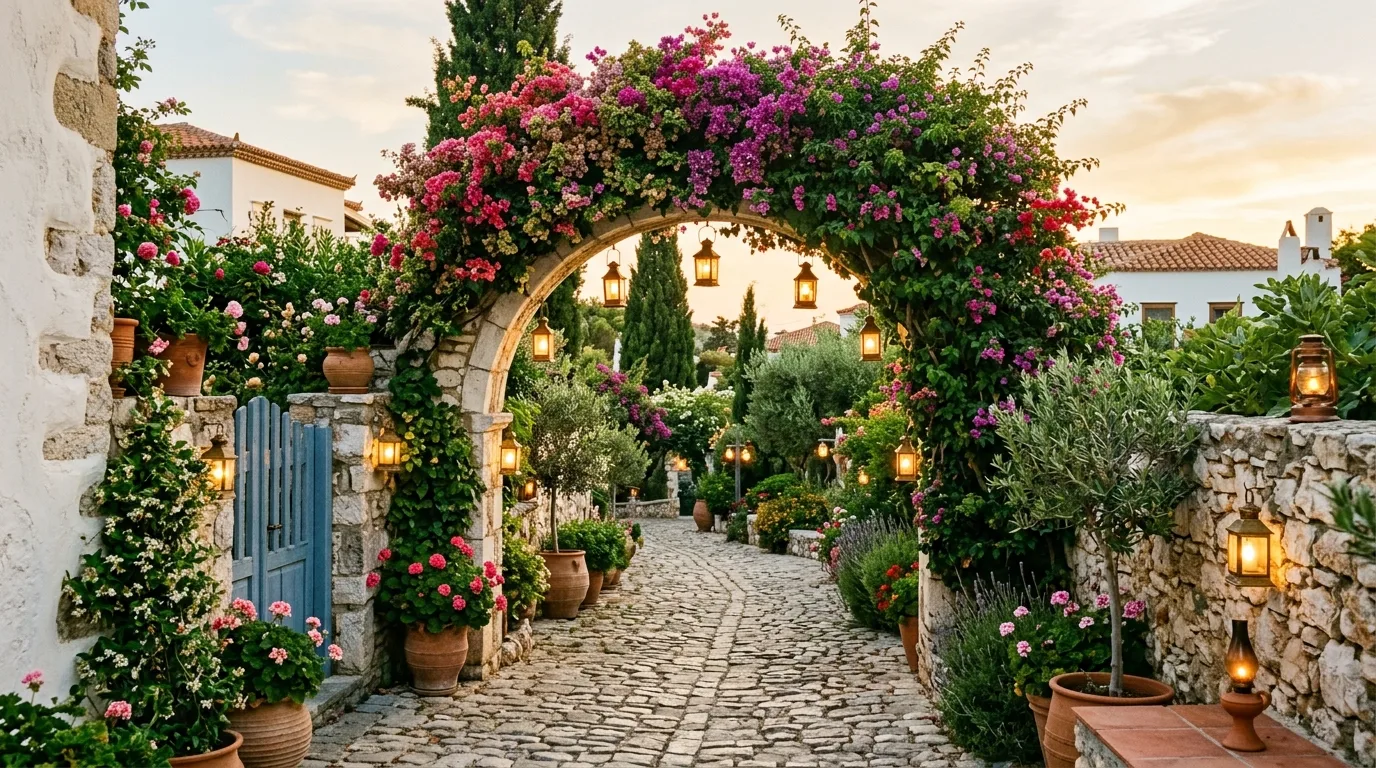
Idea 13
A low-water design that still feels rich and sun-drenched
The strongest Mediterranean front yards show that restraint and abundance can coexist when the palette, materials, and plant forms are chosen carefully. Even with modest water use, the space can feel warm, textured, and full of European flair.
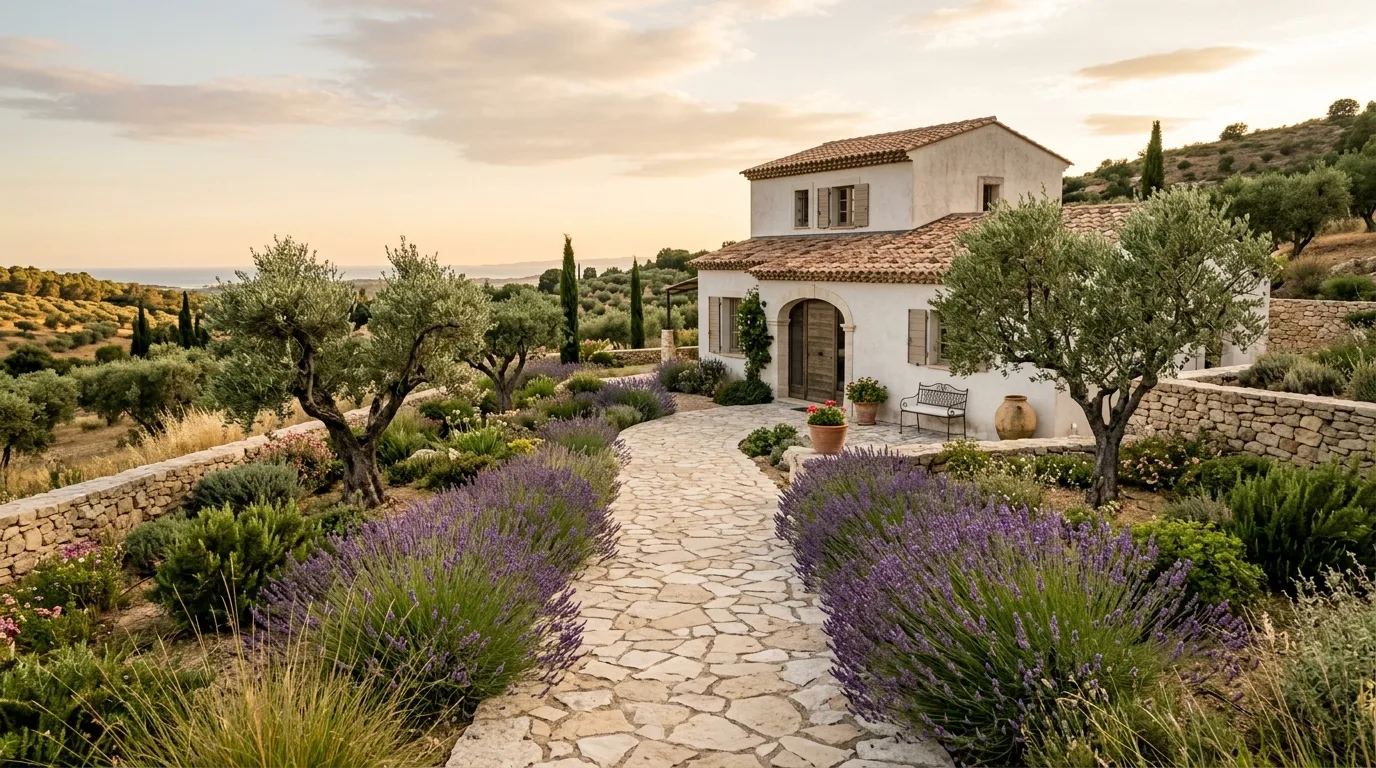
Idea 14
An entry composition that pairs rustic warmth with clean geometry
Mediterranean style often succeeds because it holds two moods at once, feeling rustic and refined simultaneously, and that balance comes through clearly in front yards that mix warm materials with simple geometry. The house looks welcoming, polished, and deeply connected to its landscape.
Read next on Saw & Sprout
Edible Gardens
13 Clever Tomato Trellis Gardens for a Bountiful Harvest
Small-Space Growing
14 Space-Saving Small Vegetable Gardens for Urban GrowersFrequently asked questions
What defines a Mediterranean front yard look?
Warm materials, restrained planting, olive or cypress forms, terracotta, stone, herbs, and a relaxed but elegant layout usually define the style.
Can Mediterranean front yards be low water?
Yes. Many Mediterranean-style landscapes use drought-tolerant plants and gravel or stone surfaces very effectively.
How do you add European flair without overdecorating?
Use a few strong materials and plants well, focus on the entry sequence, and let texture and proportion carry much of the style.