The space between houses is often ignored, yet it can become one of the smartest and most satisfying parts of the property when circulation, privacy, and planting are handled with a little intention.
Narrow side yards do not need huge gestures to feel better. Clear paths, vertical greenery, good lighting, compact seating, and climate-appropriate planting can completely change the mood of these overlooked strips.
These side-yard garden ideas explore passages, shade paths, utility zones, dining nooks, privacy screens, and slim planting strategies that make the most of every inch between buildings.
Quick planning notes
Use walls, fences, and vertical structures well because they often provide the most valuable planting space in narrow yards.
Keep circulation clear so the side garden remains comfortable to move through and easy to maintain.
Decide whether the strip should be mainly practical, atmospheric, or both before adding too many elements.
Bring in light and repeated texture to stop the space from feeling pinched or forgotten.
Idea 1
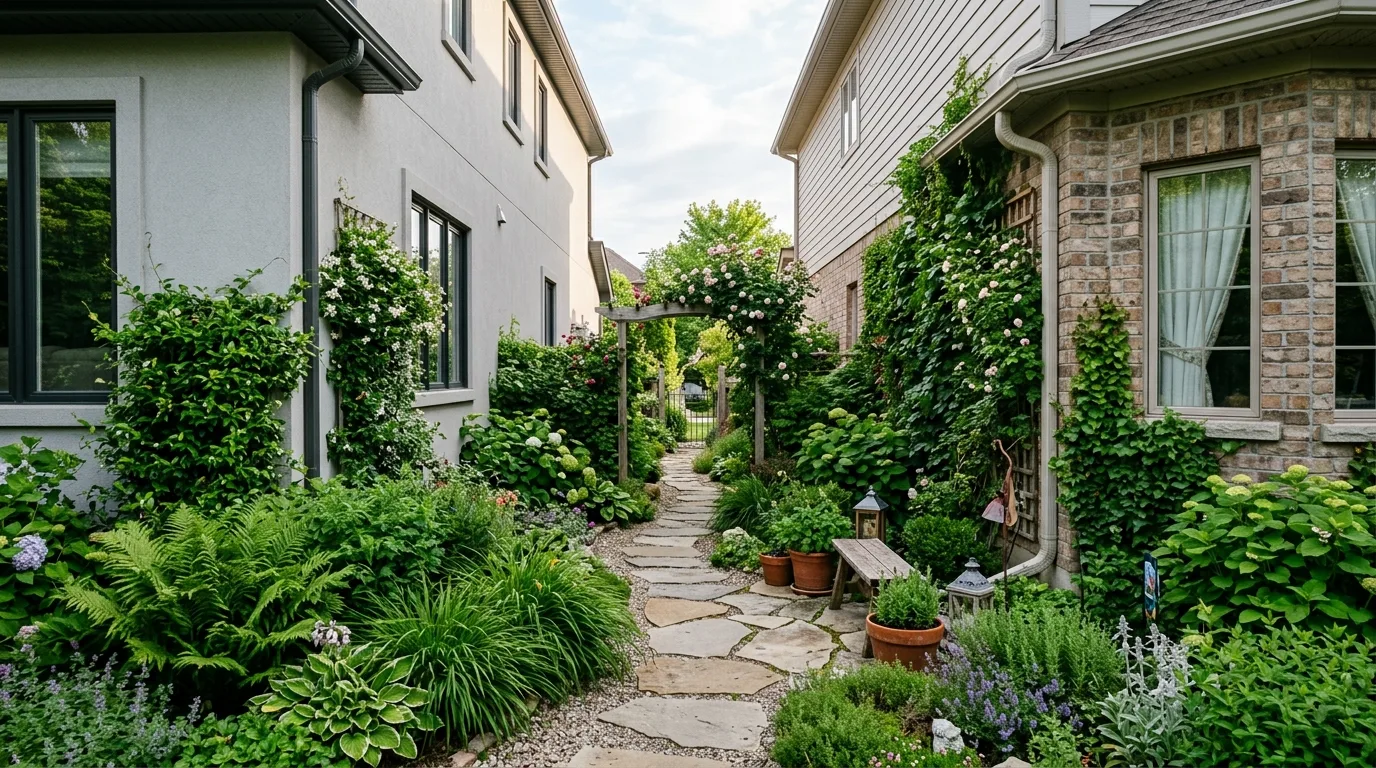
A narrow side garden with stepping stones and layered vertical planting
Gardens between houses improve dramatically when the design moves upward as much as outward, using walls and fences for greenery so the walkway can stay open and comfortable to move through. The result feels intimate without becoming cramped.
Idea 2
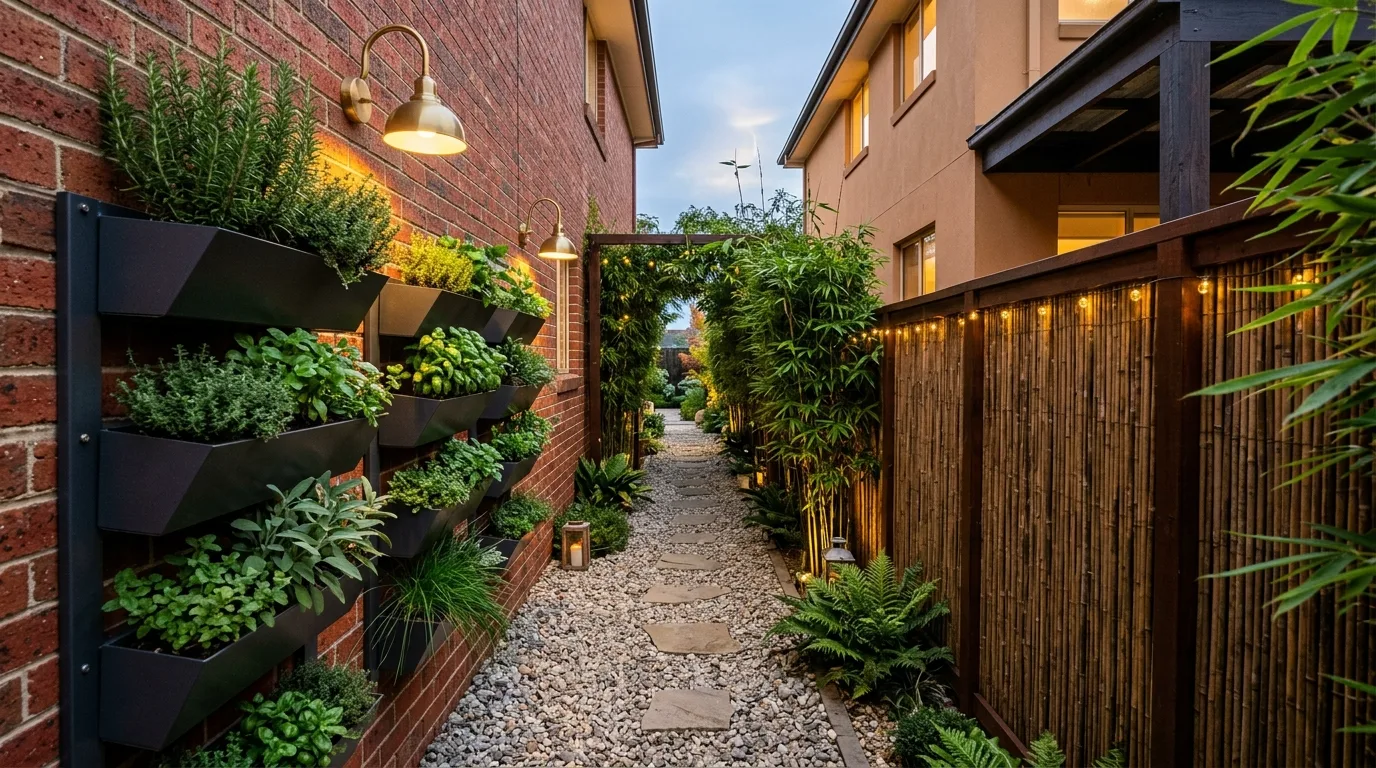
A gravel side yard with slim trees and repeated pots
Simple materials are often best in tight spaces, and gravel with repeated containers can bring order and softness to a narrow passage while still keeping maintenance straightforward. The strip starts to feel intentional instead of leftover.
Idea 3
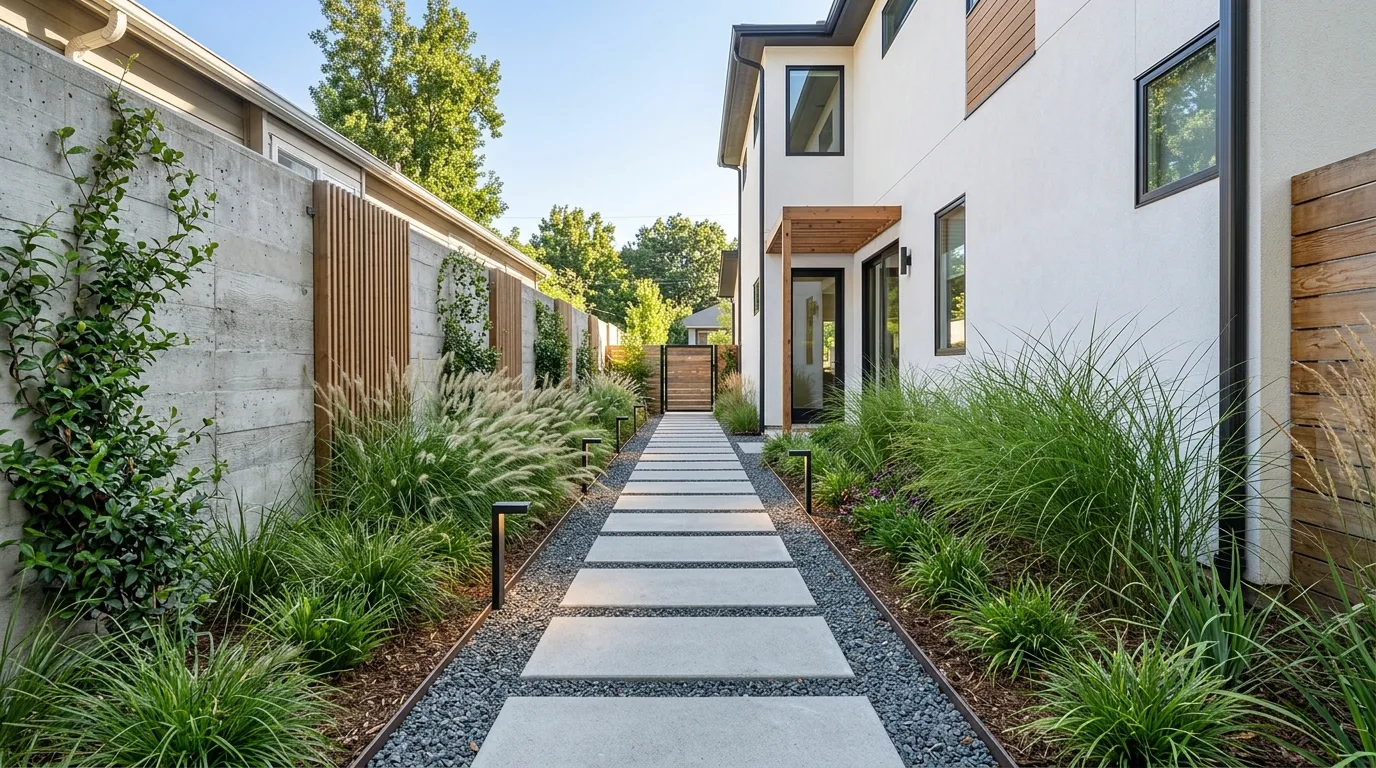
A side-courtyard dining nook tucked between two walls
Even the narrowest gaps between buildings can become useful when one end is widened or furnished just enough to create a little destination rather than only a circulation path. The outdoor room feels hidden, practical, and surprisingly special.
Idea 4
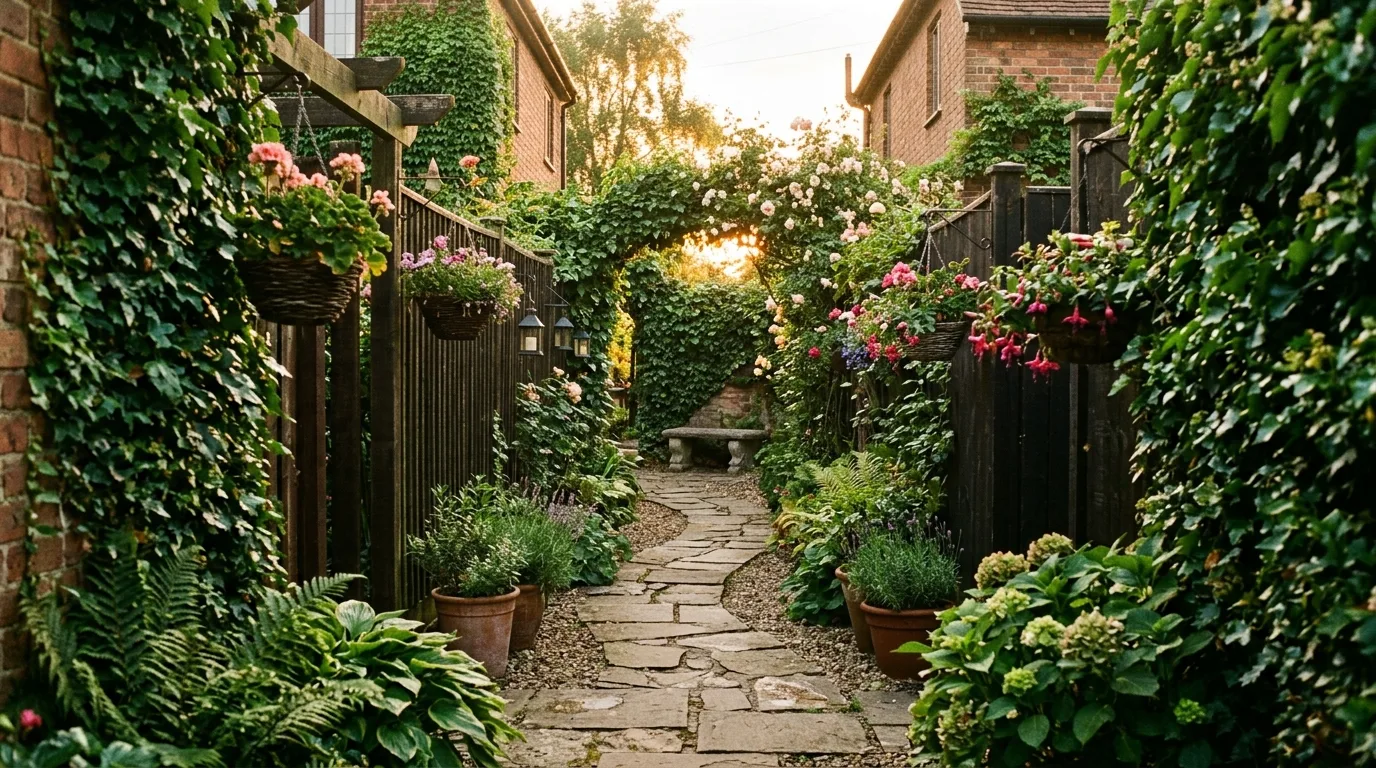
A fern-filled shade path that cools the whole side yard
The spaces between homes are often naturally cooler and shadier, which can make them ideal for lush shade planting that turns a plain corridor into a calming green passage. The ferns create softness and depth without needing much width.
Idea 5
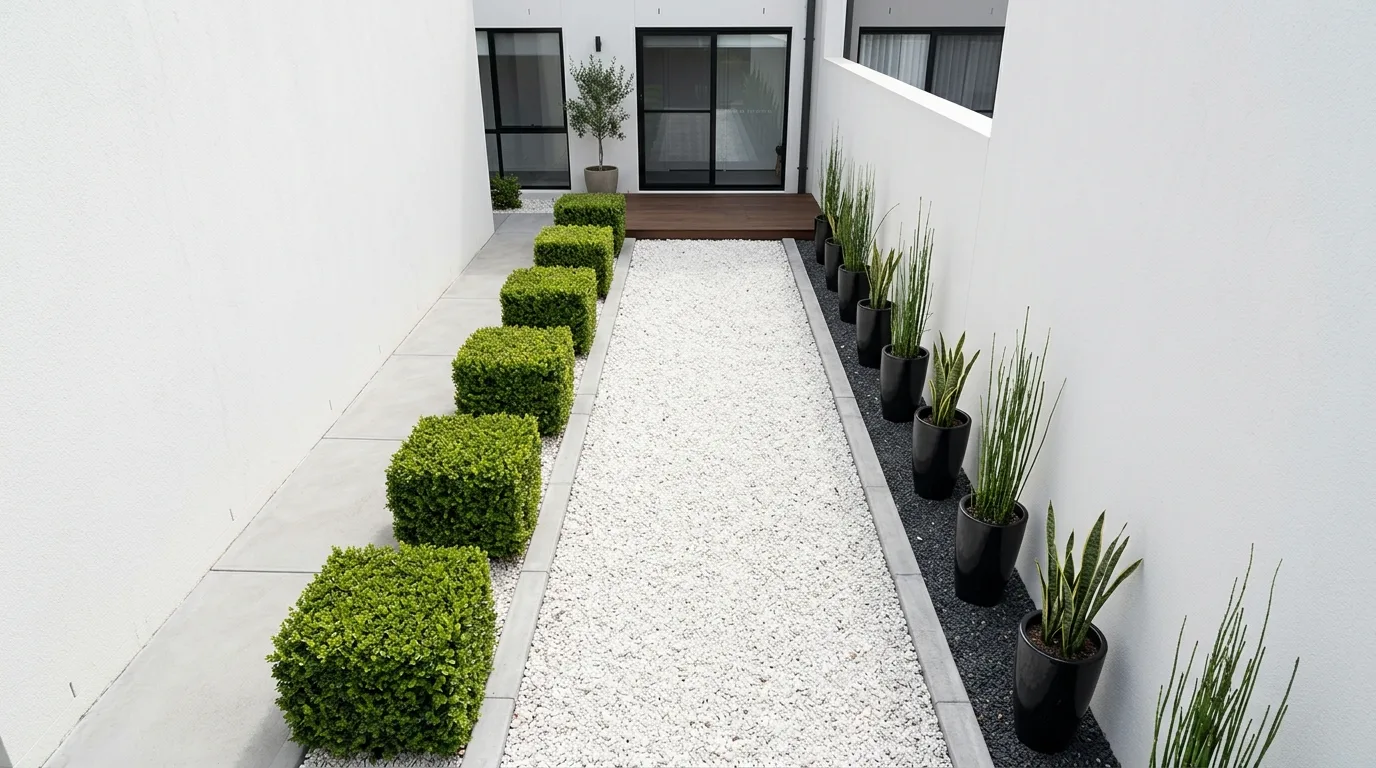
A modern side yard with broad pavers and clipped green rhythm
Strong geometry is especially helpful between houses because it keeps the narrow space from feeling cluttered, and broad pavers with repeated greenery make the corridor feel cleaner, more spacious, and more architectural. The visual rhythm does a lot of work.
Idea 6
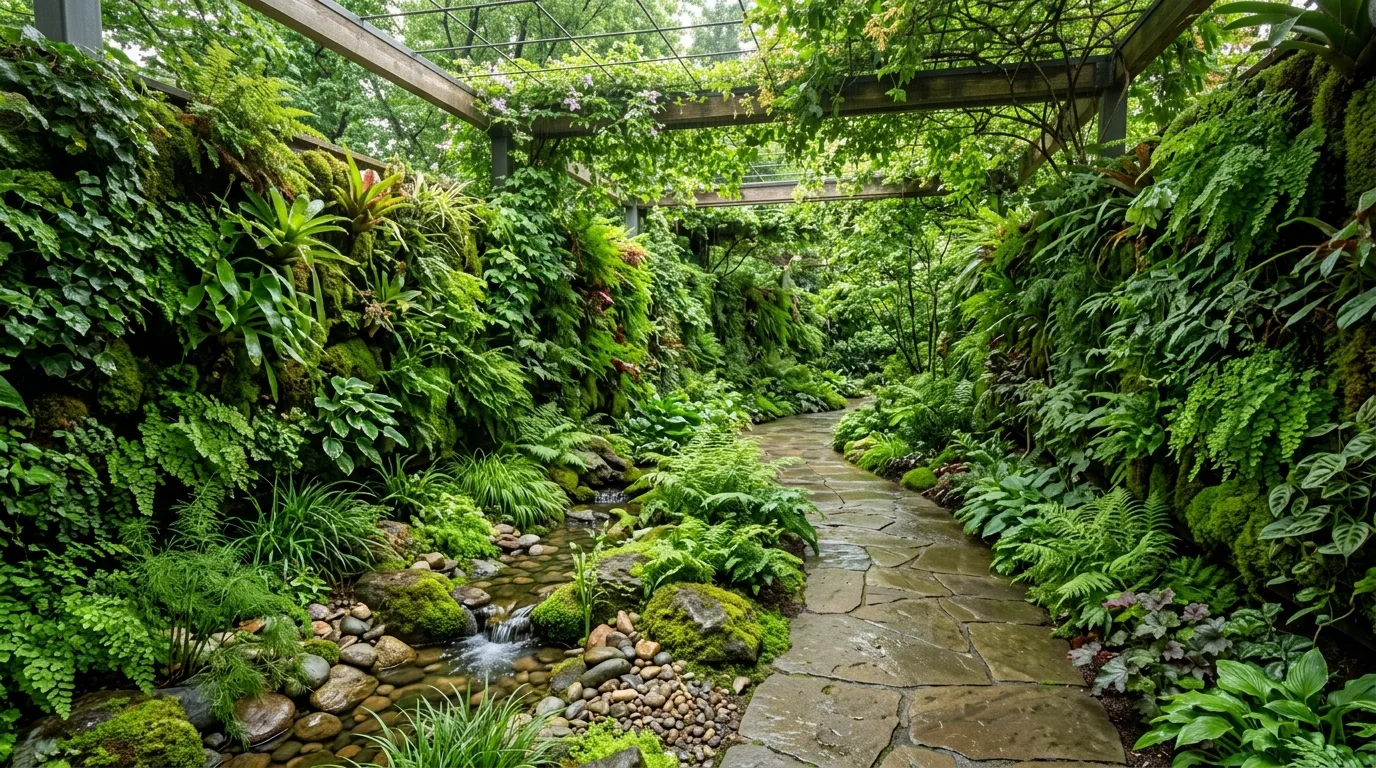
A utility side strip softened by espalier and wall planting
Practical zones like bins or service paths can still become attractive when the vertical surfaces are used intelligently, because trained plants and wall-mounted greenery add enough life to shift the whole mood without obstructing function. The space feels much less neglected.
Idea 7
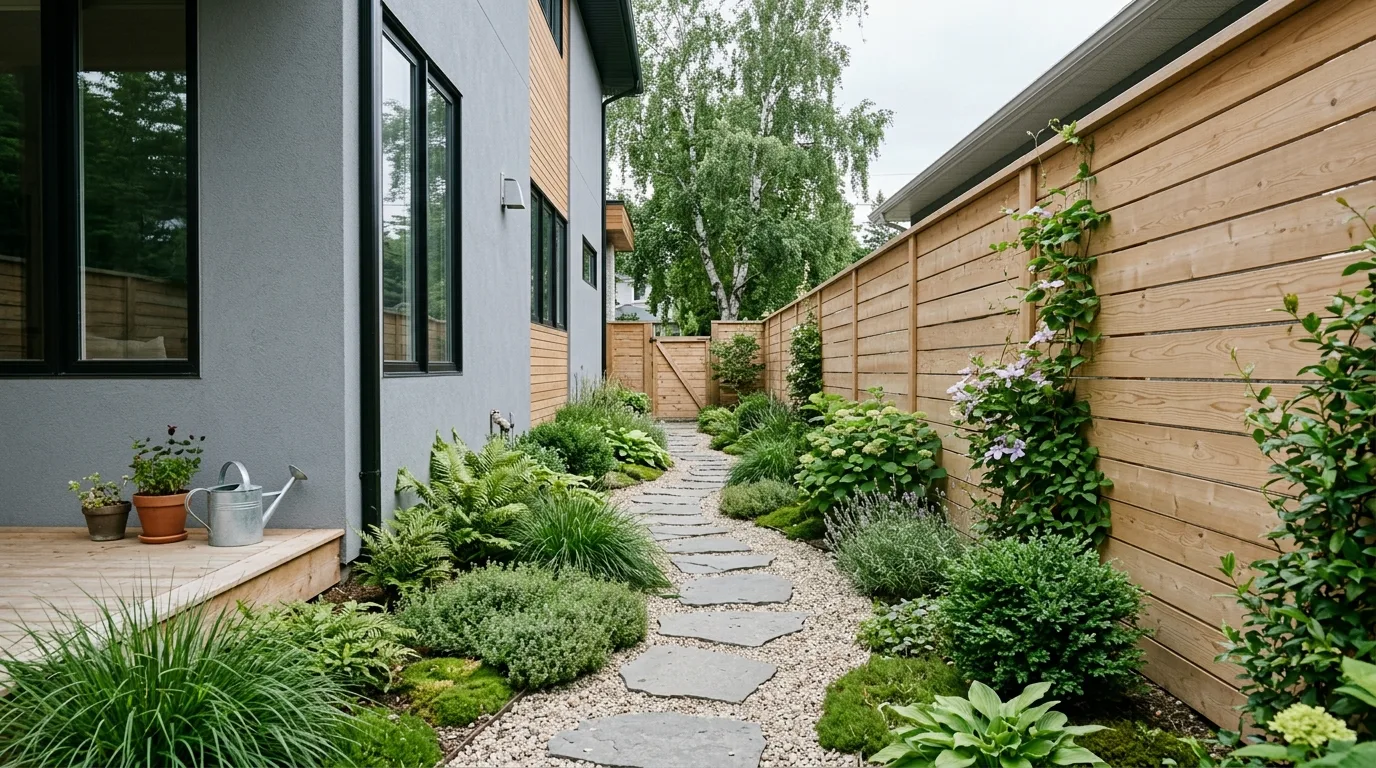
A rain-friendly side garden using pebbles and moisture-loving plants
Narrow gaps often collect runoff, so designing them to handle moisture gracefully can solve problems while creating a much more natural and beautiful palette for the space. Pebbles and suitable planting make the side yard feel deliberate and resilient.
Idea 8
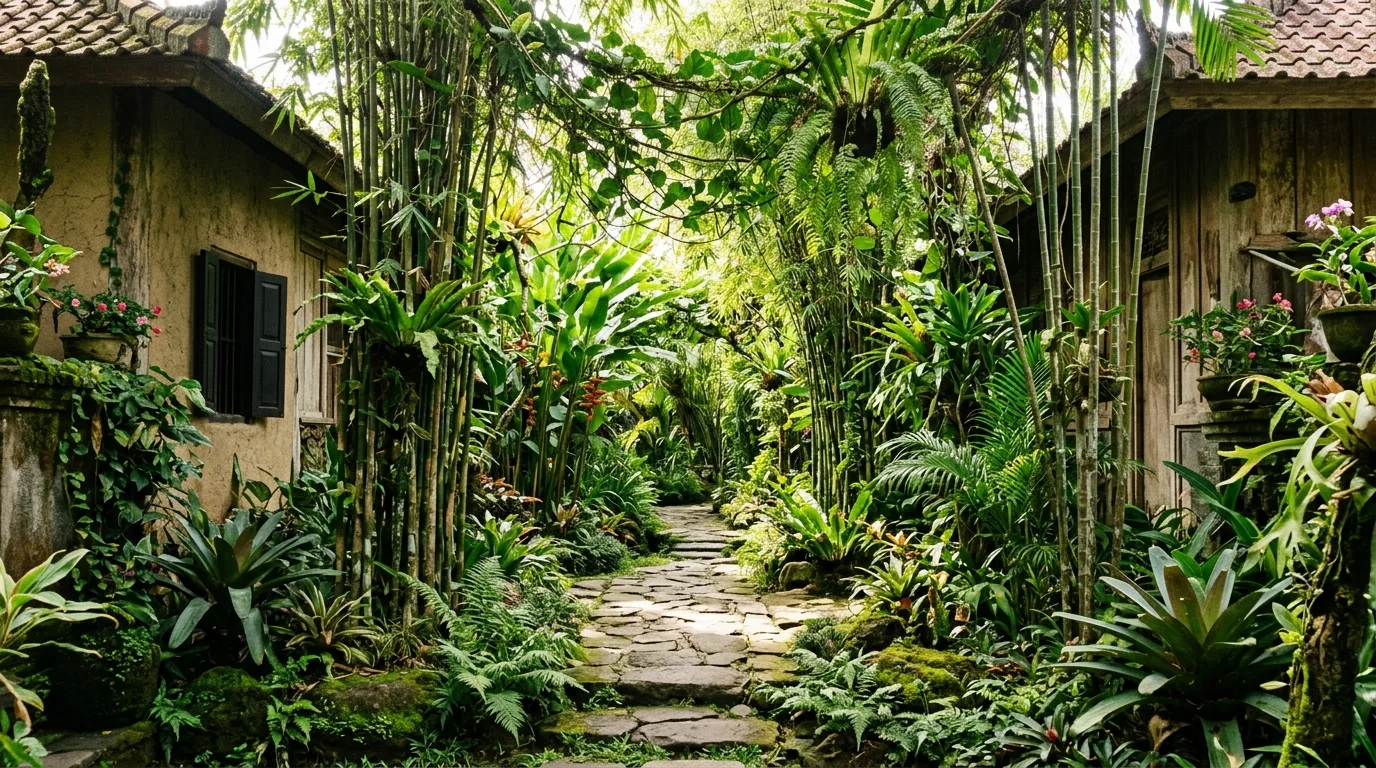
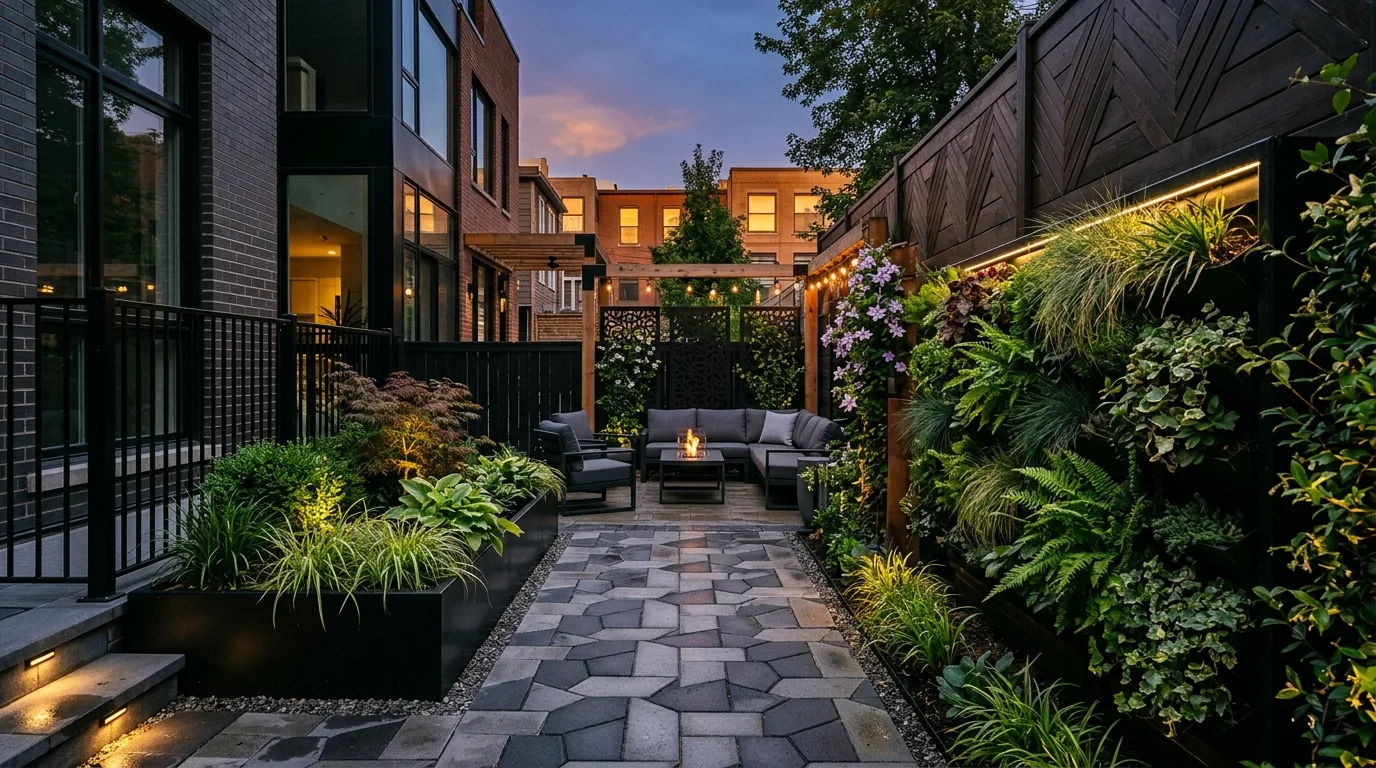
A side passage lit at night for safety and quiet atmosphere
Lighting matters greatly in the spaces between buildings because a narrow garden can feel either harsh or inviting after dark depending on how the edges are illuminated. Low, warm light makes the path feel safer and far more welcoming.
Idea 9
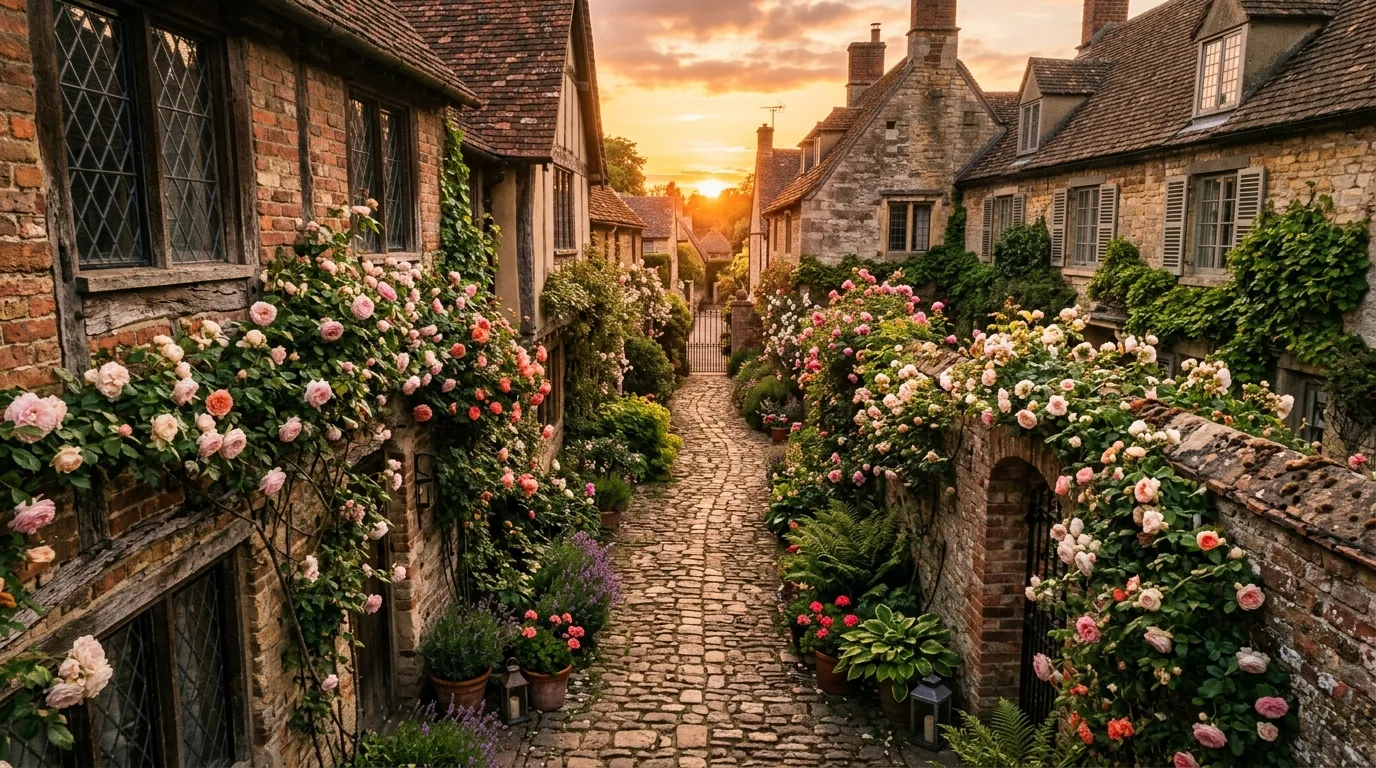
A little water feature turning the side yard into a retreat
Because these spaces are naturally enclosed, even a very small fountain can transform the mood between houses by adding sound and focus that make the corridor feel more like a destination. The experience becomes calmer and more private instantly.
Idea 10
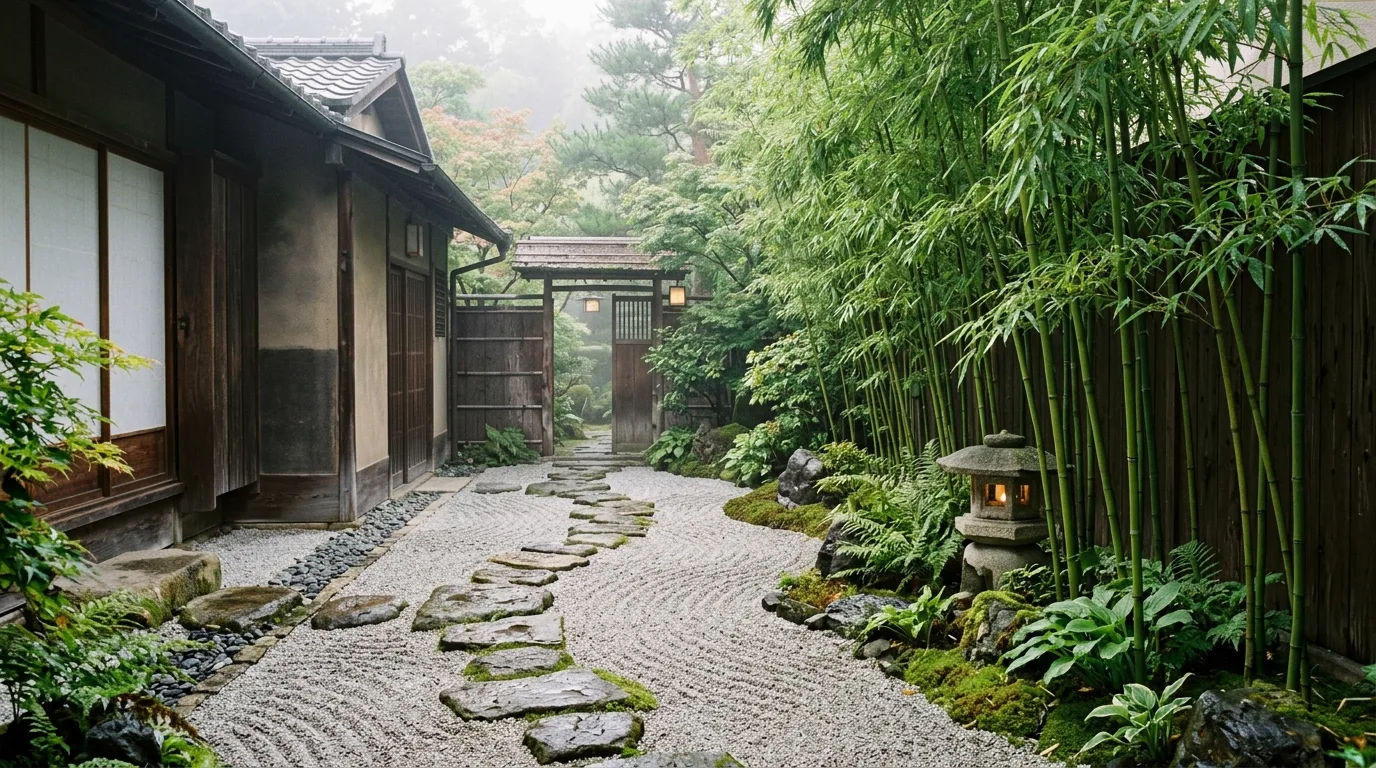
A herb-and-climber side garden that feels useful every day
Narrow gardens work especially well when they are given practical planting that people interact with regularly, and herbs or climbers can make the passage feel alive without taking up too much width. The strip becomes productive as well as beautiful.
Idea 11
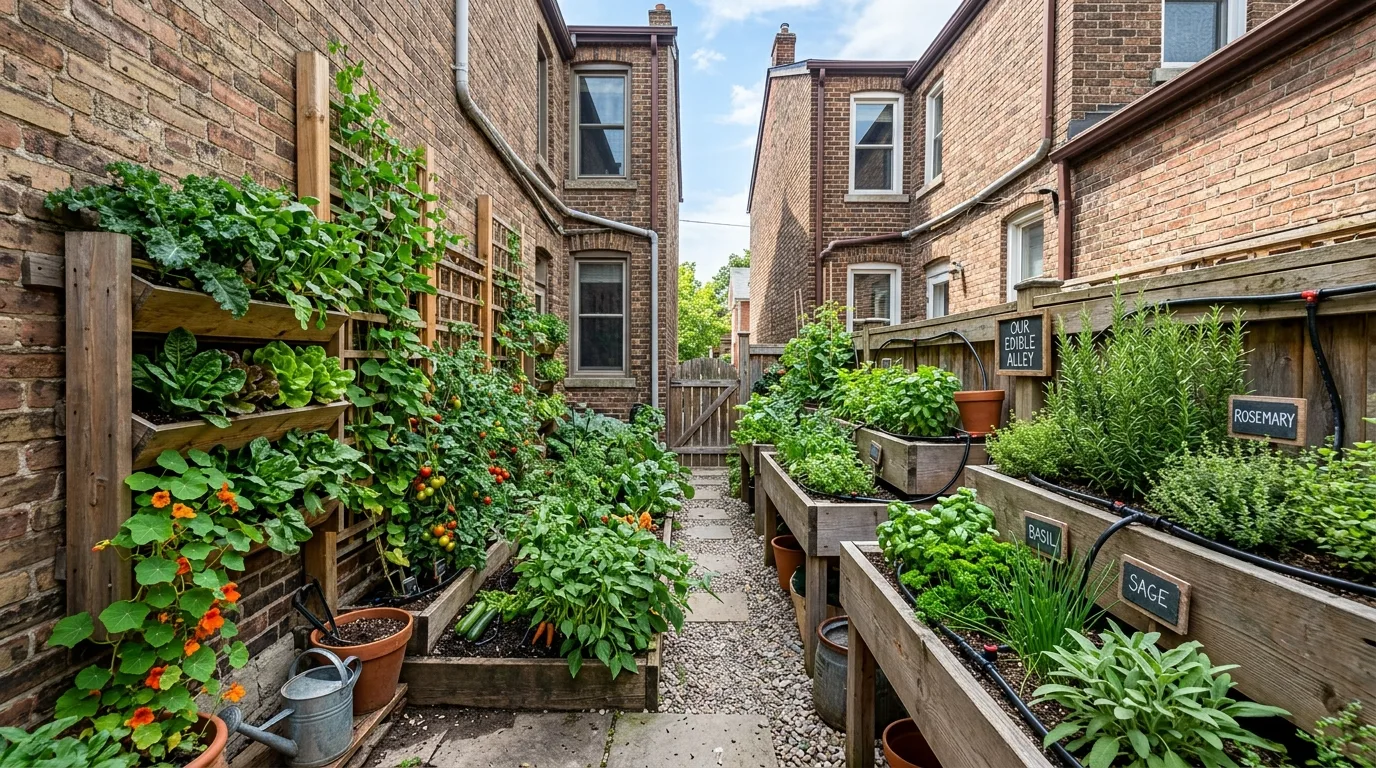
A family side yard path where storage and planting stay balanced
Some of the most successful between-house gardens accept that utility will always be part of the space, and they simply organize it better so storage, access, and greenery can coexist without visual chaos. The area feels much more manageable and complete.
Idea 12
A white-wall side garden brightened by repeated green texture
Light walls can help narrow passages feel wider, and when the planting stays in a limited green palette the whole side yard feels brighter and more spacious without needing flashy color or decoration. The simplicity makes the space feel fresh and calm.
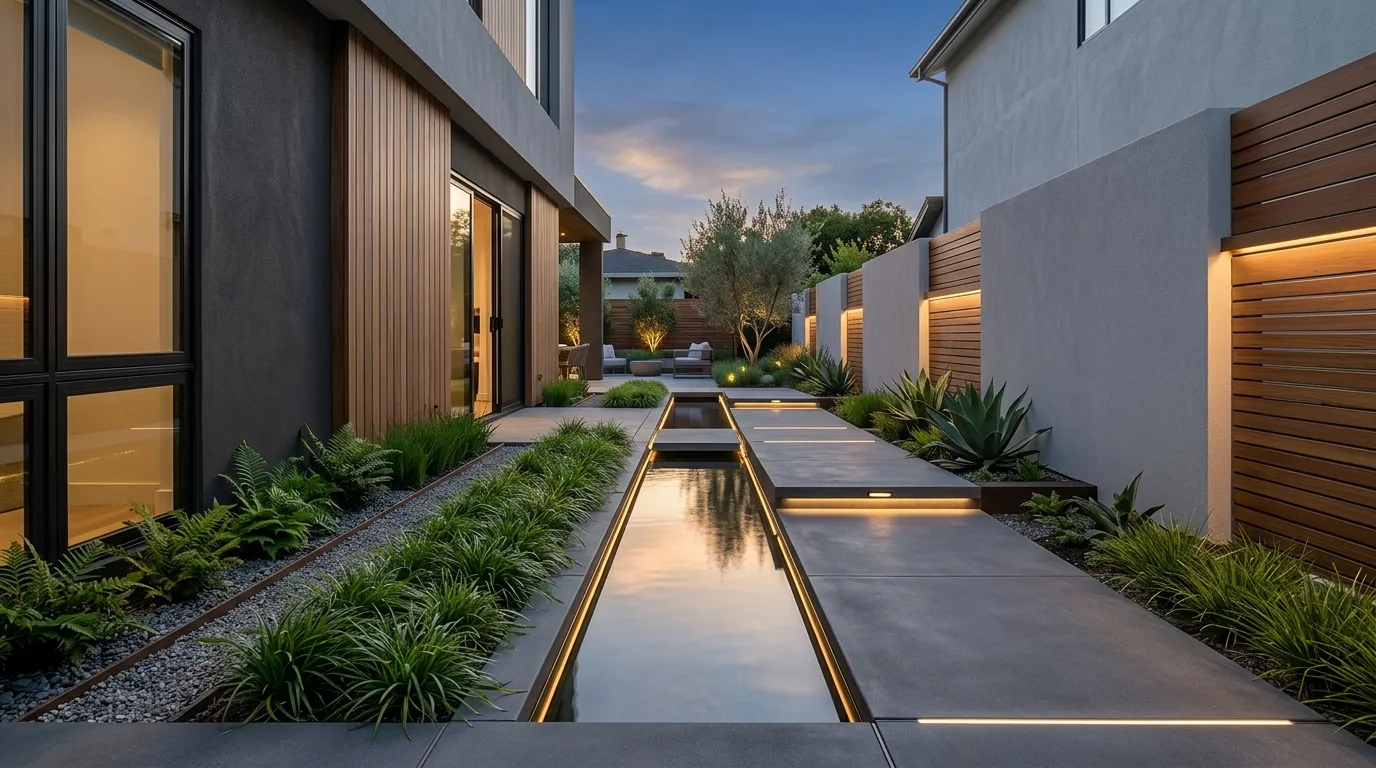
Idea 13
A narrow seating corner proving side yards can hold real comfort
One chair, one bench, or one small ledge can completely change how a side garden feels because the space shifts from being somewhere you pass through to somewhere you might choose to stay. That emotional change is often more important than size itself.
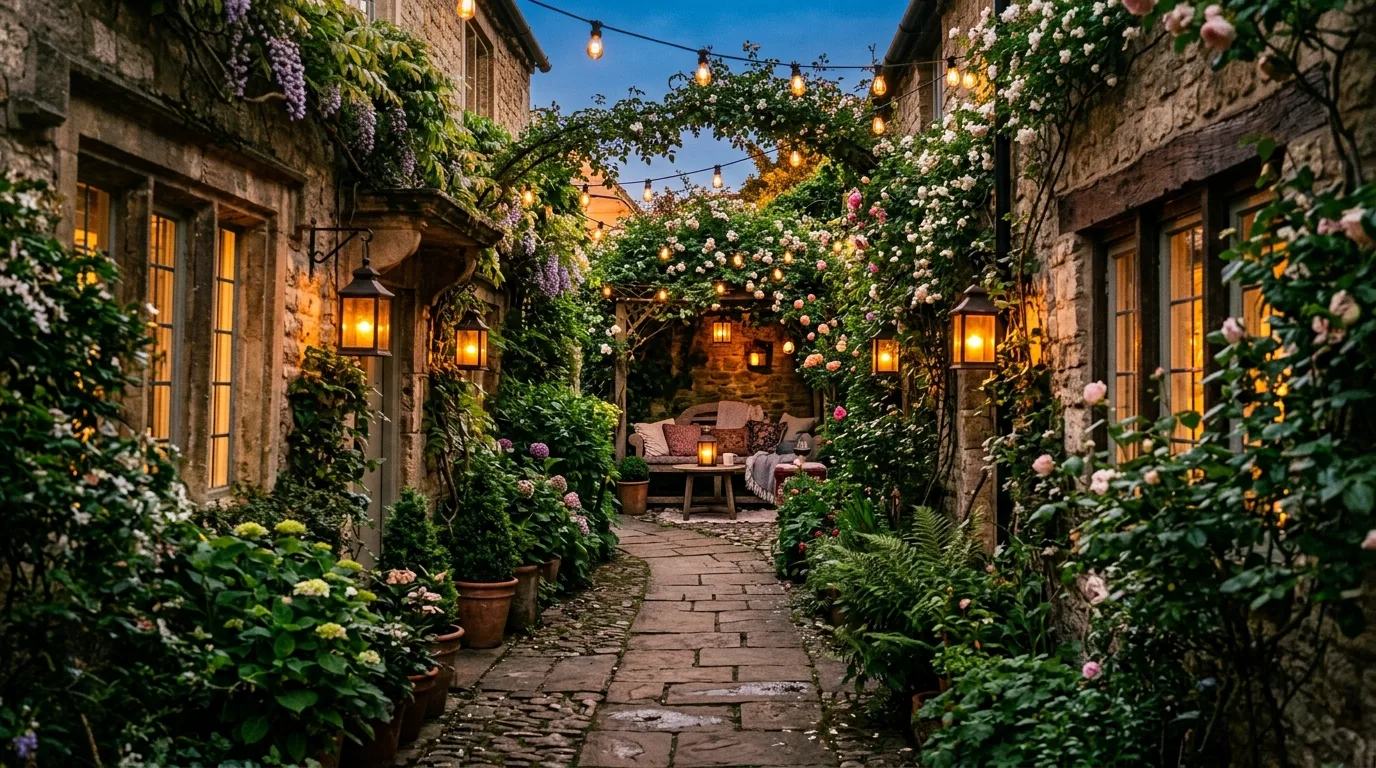
Idea 14
A beautifully used side yard where privacy, planting, and circulation all work together
The best gardens between houses succeed because they understand the space must do several jobs at once while still feeling visually calm and inviting. When circulation, privacy, and greenery stay balanced, even a narrow strip can become one of the smartest parts of the property.
Read next on Saw & Sprout
Edible Gardens
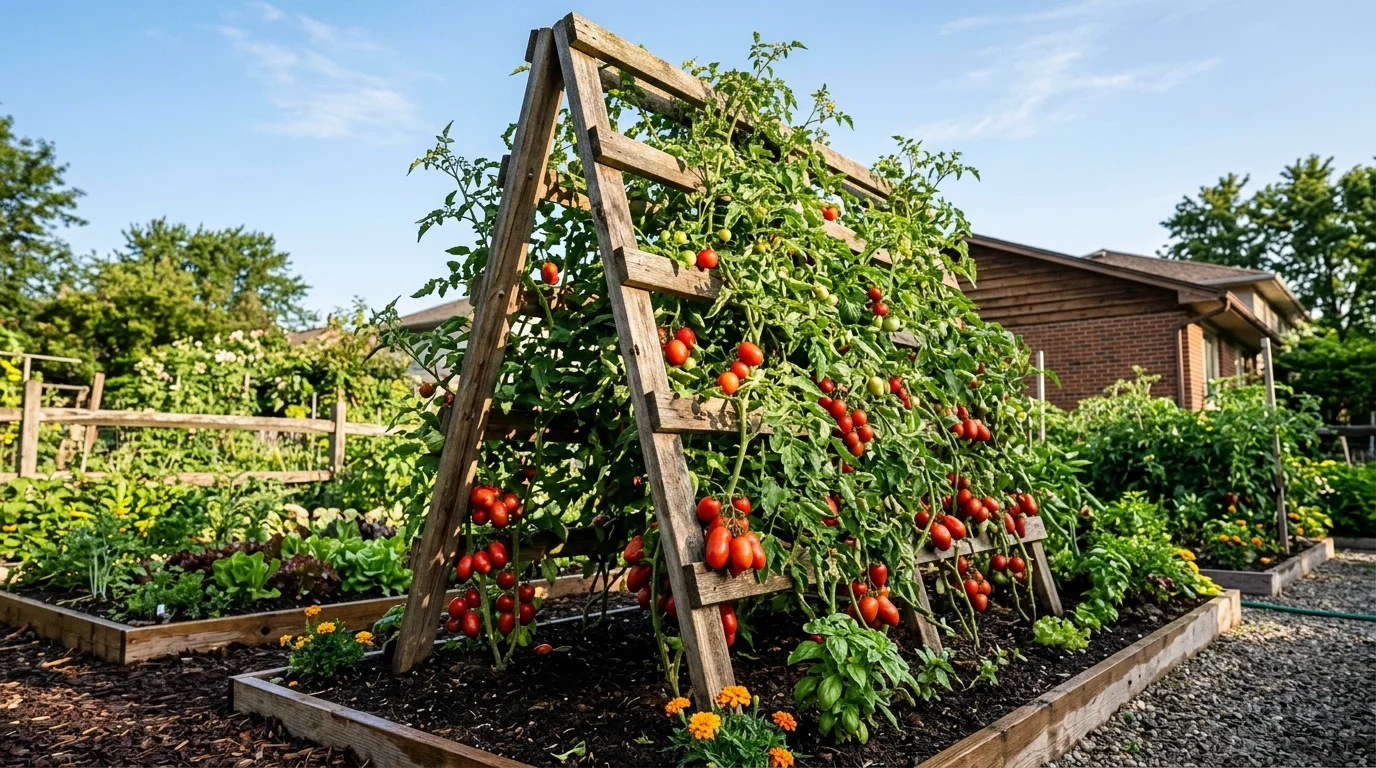
13 Clever Tomato Trellis Gardens for a Bountiful Harvest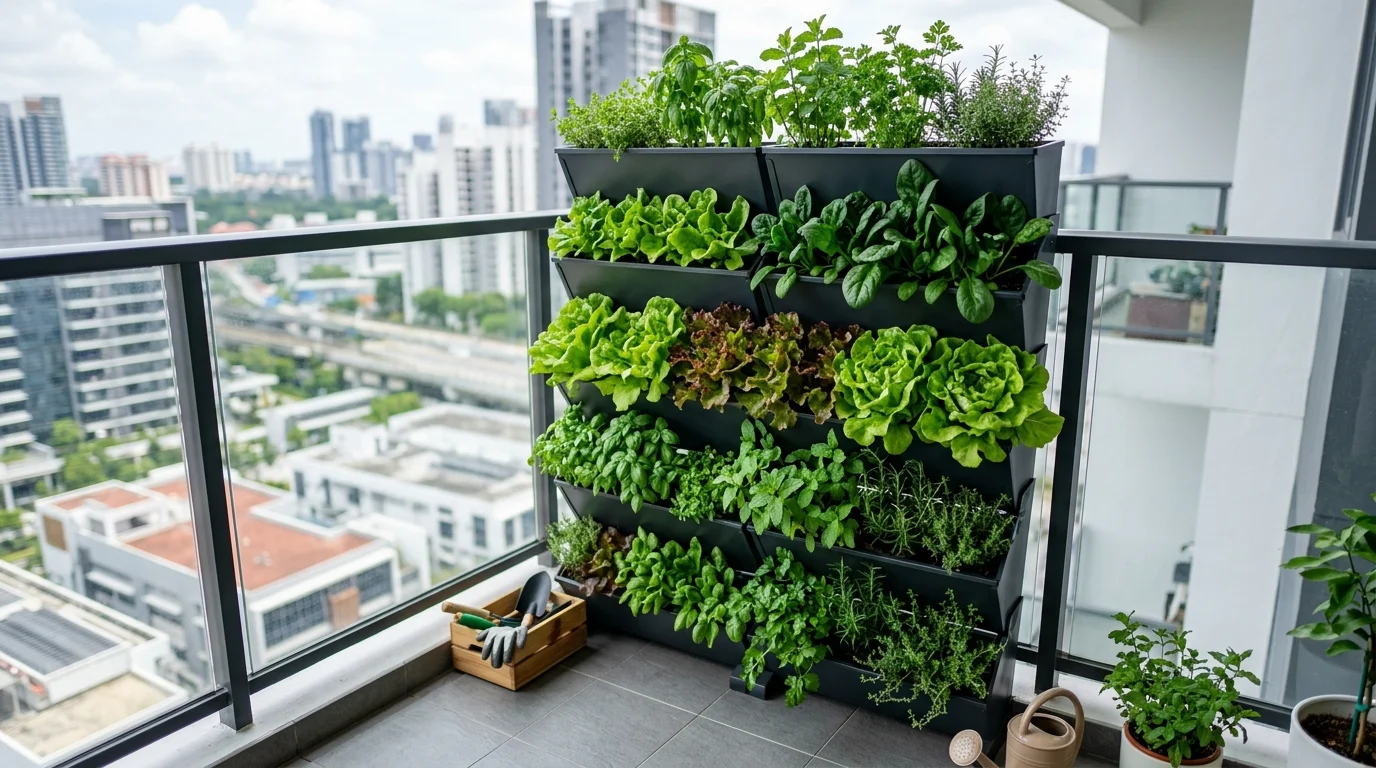
Small-Space Growing
14 Space-Saving Small Vegetable Gardens for Urban GrowersFrequently asked questions
How do you make a narrow side yard feel more useful?
Clear paths, vertical planting, lighting, and one defined purpose such as seating, herbs, or utility storage usually improve side yards quickly.
What plants work well between houses?
That depends on light, but ferns, climbers, compact shrubs, herbs, and other narrow-form or wall-friendly plants often work especially well.
Can the space between houses become a real garden?
Yes. Even very slim strips can feel like real gardens when the planting, path, and privacy are treated as part of one thoughtful design.