A loft bed can transform a small bedroom because it uses the room vertically and unlocks square footage that would otherwise be trapped under a standard bed footprint. That shift can make space for studying, lounging, storage, or even a second sleeping zone without moving walls or enlarging the room.
The strongest loft layouts do more than stack functions mechanically. They think about comfort, headroom, visual lightness, and how the lower zone should actually support the person who lives there every day.
These ideas focus on loft bed bedrooms that feel clever, useful, and livable rather than improvised. Some are for kids or teens, some for studios or adults, but all of them show how a small room can feel more flexible and far less cramped.
Quick planning notes
Measure ceiling height and head clearance carefully so the loft feels comfortable to use and not like a compromise that is too tight overhead.
Decide what the lower zone needs most before choosing the bed frame, because storage, desk use, seating, and open play space all call for different layouts.
Keep the room visually light through color and proportion so the loft structure does not make a small bedroom feel boxed in.
Use integrated storage whenever possible, since loft rooms work best when the added function is organized and not piled loosely underneath.
Idea 1
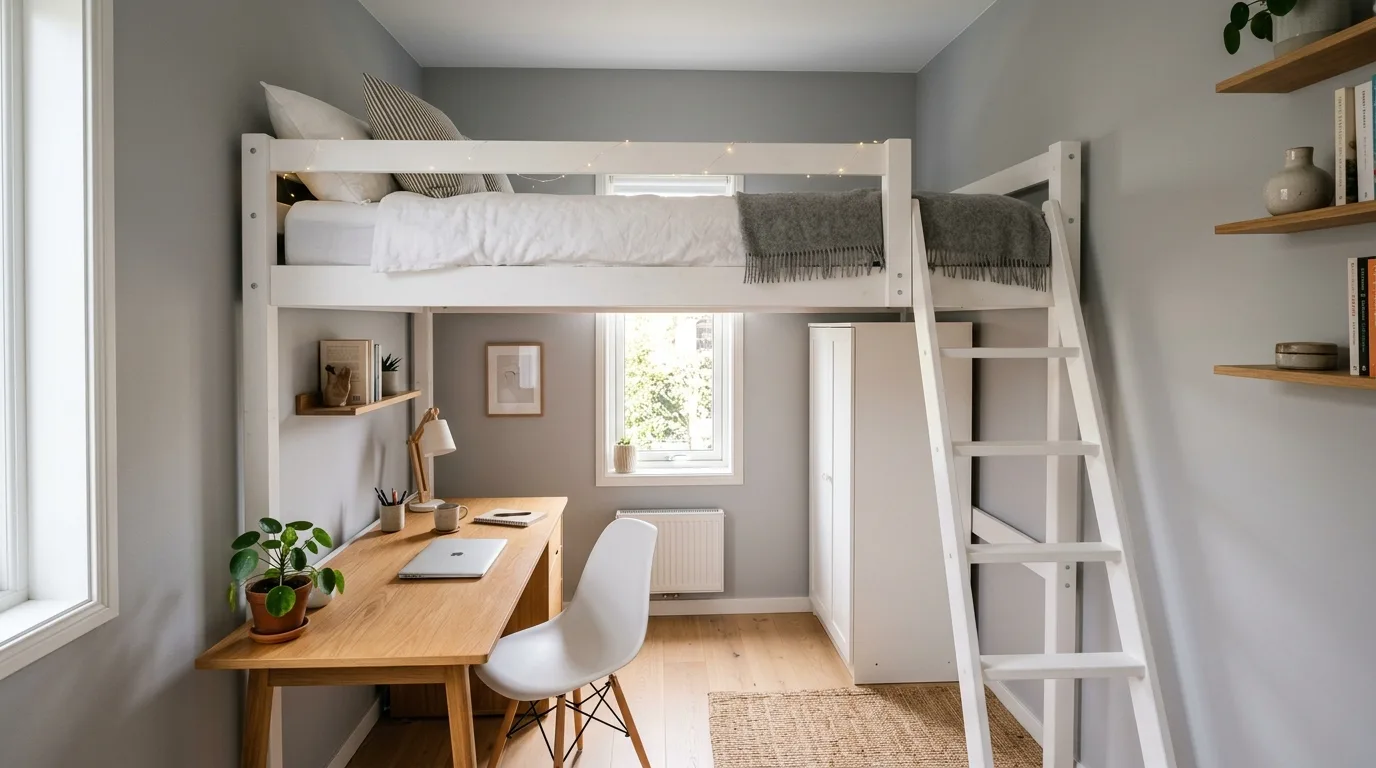
Loft bed with desk beneath and wall shelving for a compact study zone
A loft bed makes small rooms feel smarter because it turns vertical space into a real layout advantage instead of leaving the upper area unused. A desk and shelves below give the room a second function without making it feel overstuffed.
Idea 2
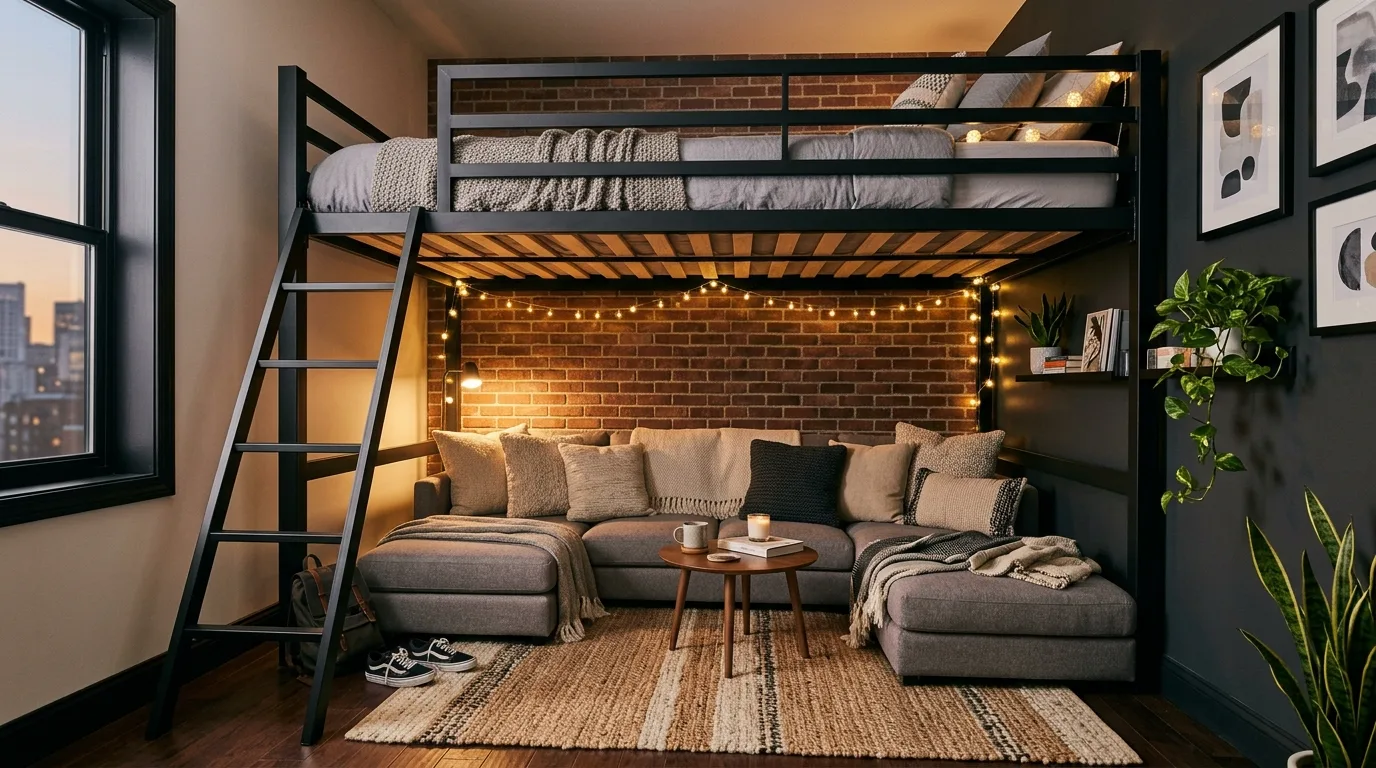
Teen room with loft bed, reading chair, and storage drawers below stairs
Adding a reading chair and stair storage makes a loft bed room feel more complete than simply placing a bed overhead and stopping there. The setup supports rest, storage, and hanging out, which is why it works so well for smaller teen rooms.
Idea 3
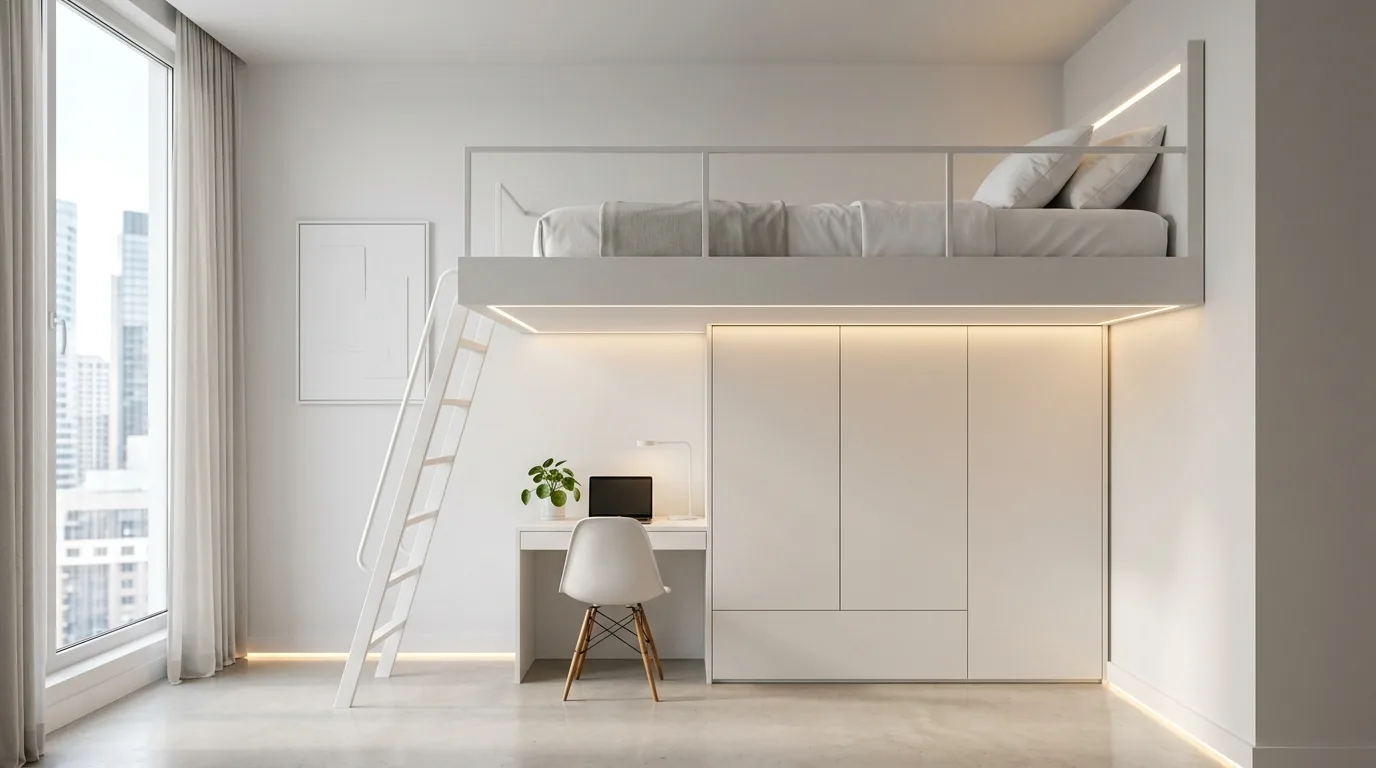
Minimal white loft room with wardrobe niche tucked underneath
A loft bed can create surprising order in a small bedroom when the space underneath becomes a wardrobe niche instead of leftover emptiness. Keeping the palette white helps the whole room stay light and open despite the added structure.
Idea 4
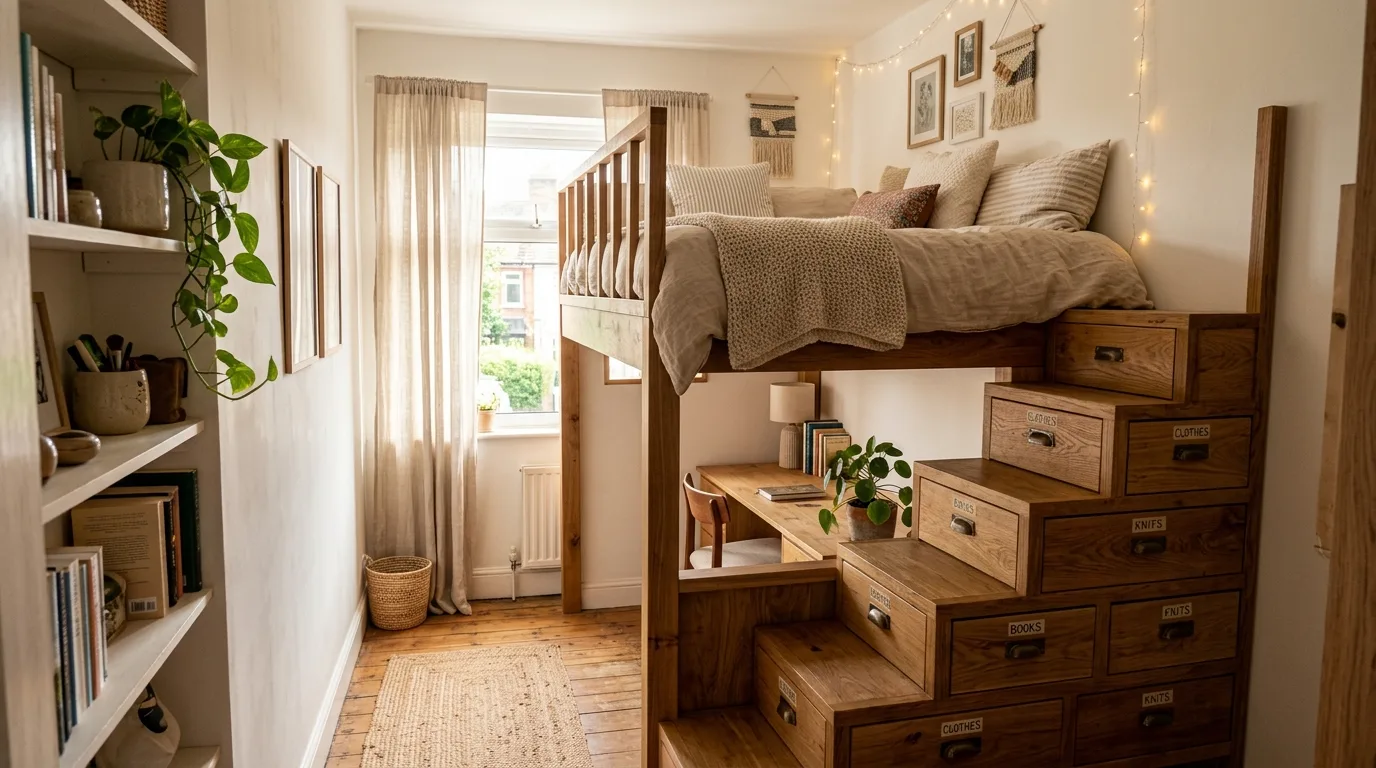
Kids room with playful loft bed and a floor play space kept open below
Using the lower area as open floor space can be just as valuable as filling it with furniture, especially in a child's room where movement matters. The loft keeps the bed out of the way, making the rest of the room feel freer and more versatile.
Idea 5
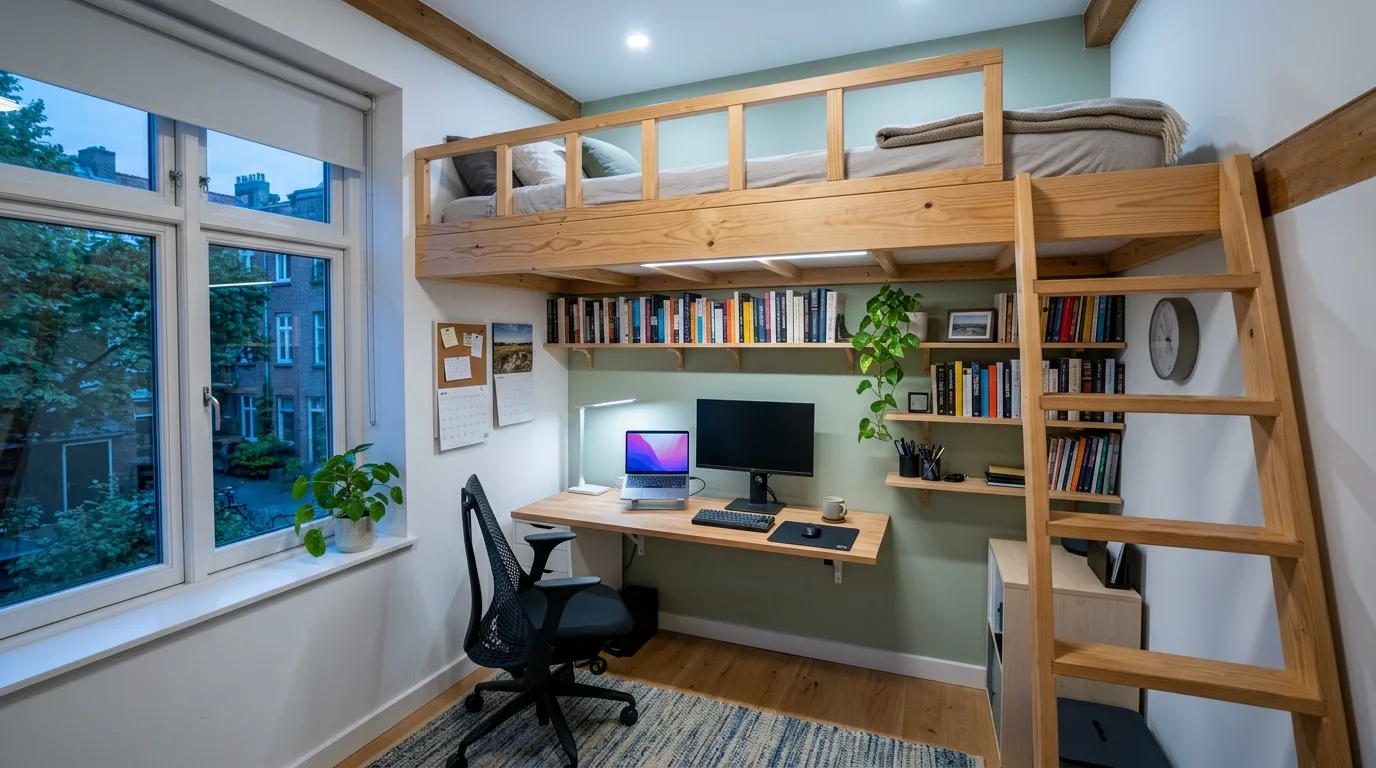
Studio apartment corner with loft bed over a compact lounge seat
In a studio, a loft bed can help carve out distinct zones where there would otherwise be only one uninterrupted room. A compact lounge spot beneath makes the corner work harder, giving the apartment more comfort without more square footage.
Idea 6
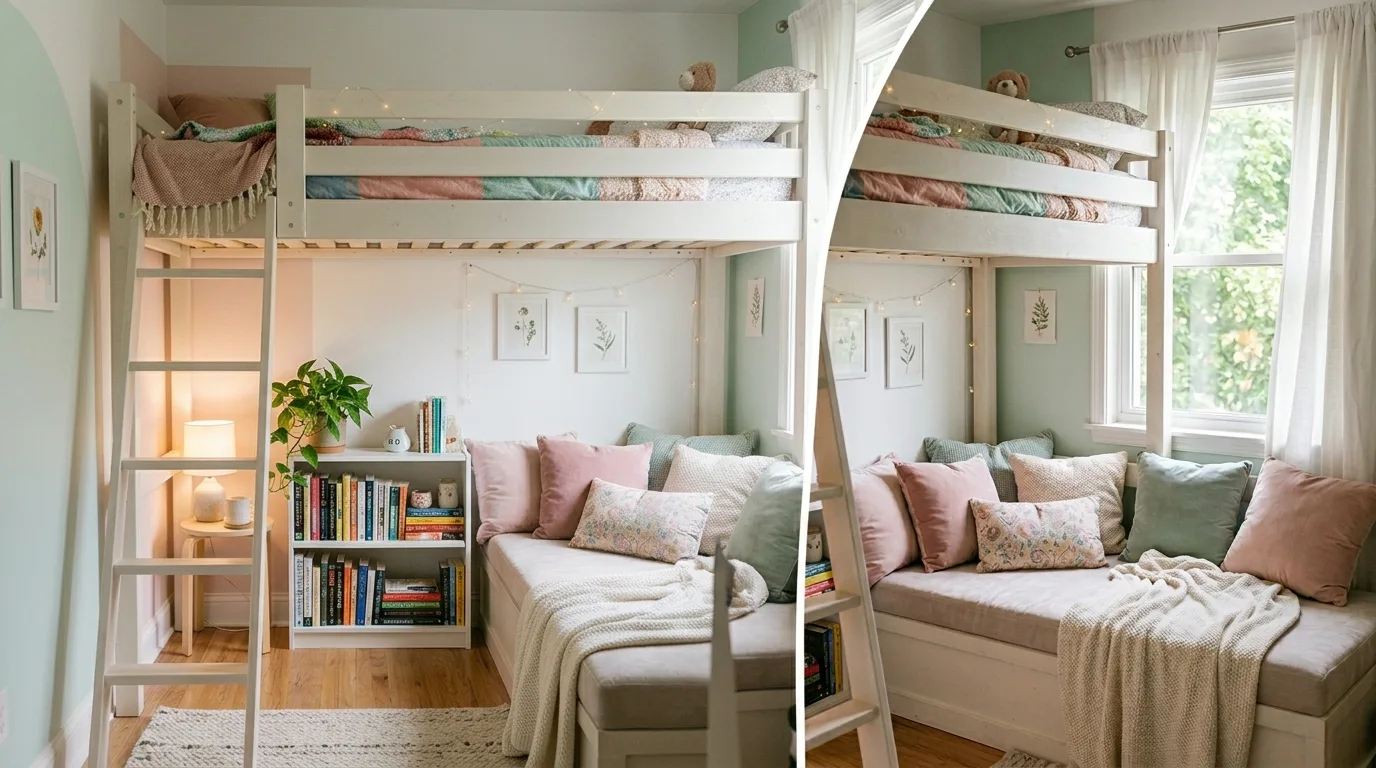
Wood loft bed with curtain enclosure and built in book cubbies
A curtain under or around a loft bed can make the sleeping zone feel more private and cocooning, especially in shared or multipurpose rooms. Built-in book cubbies add function without taking more floor area, which keeps the setup efficient and charming.
Idea 7
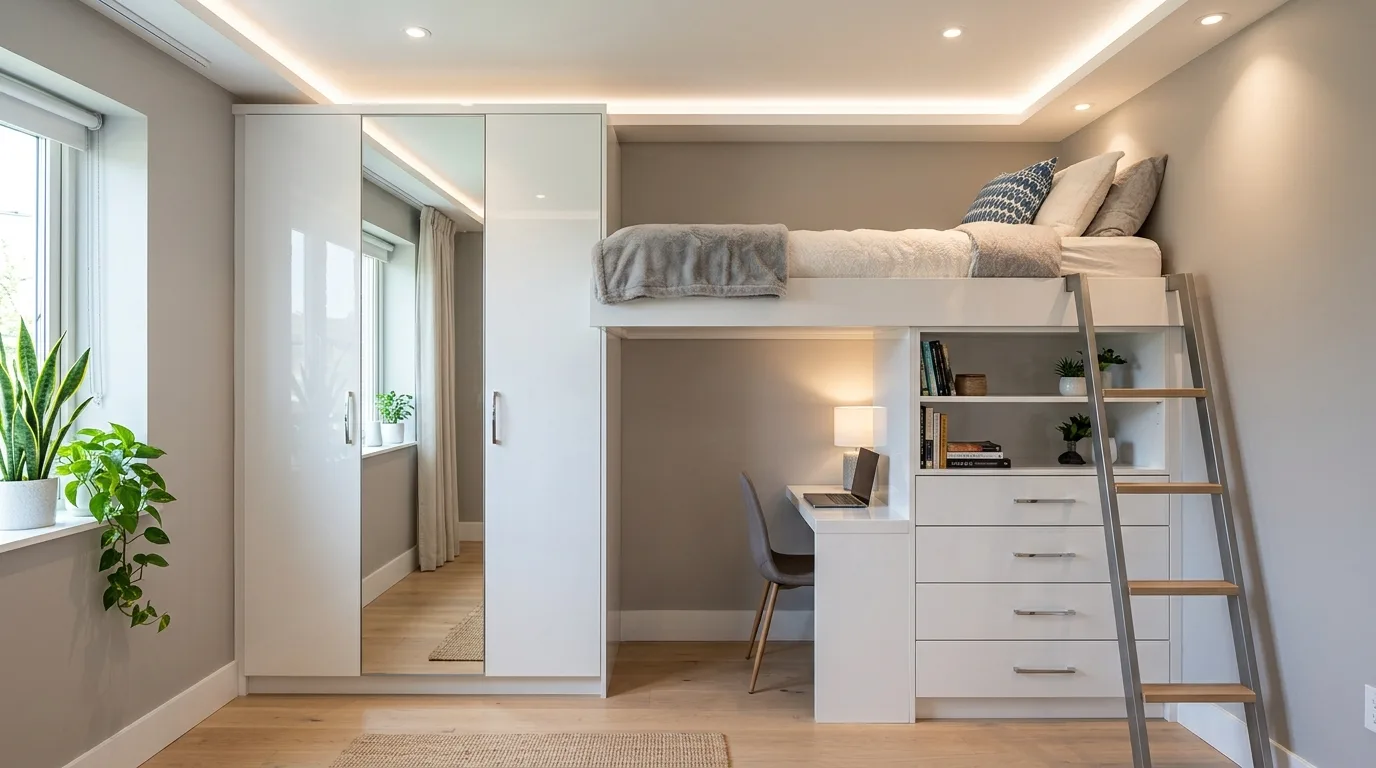
Twin loft setup with dresser storage and a narrow homework station
A twin loft arrangement works well when the furniture below is chosen to stay narrow and useful rather than bulky. Dresser storage and a homework station make the room feel complete, while the lifted bed preserves precious circulation space.
Idea 8
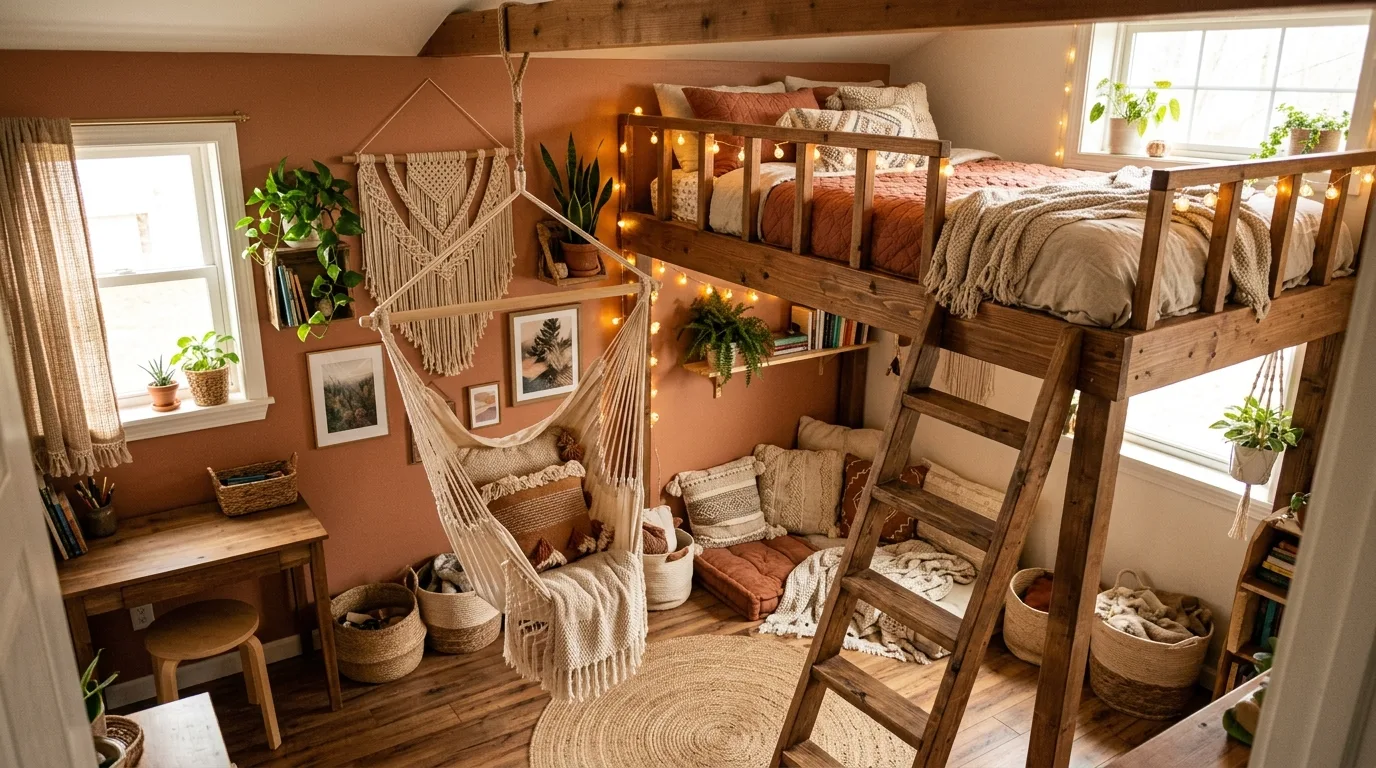
Adult loft bedroom with calm neutrals and a sofa tucked below
Loft beds are not only for kids when the materials and palette feel mature enough to support an adult room gracefully. Neutral tones and a small sofa underneath create a compact retreat that still feels composed and comfortable.
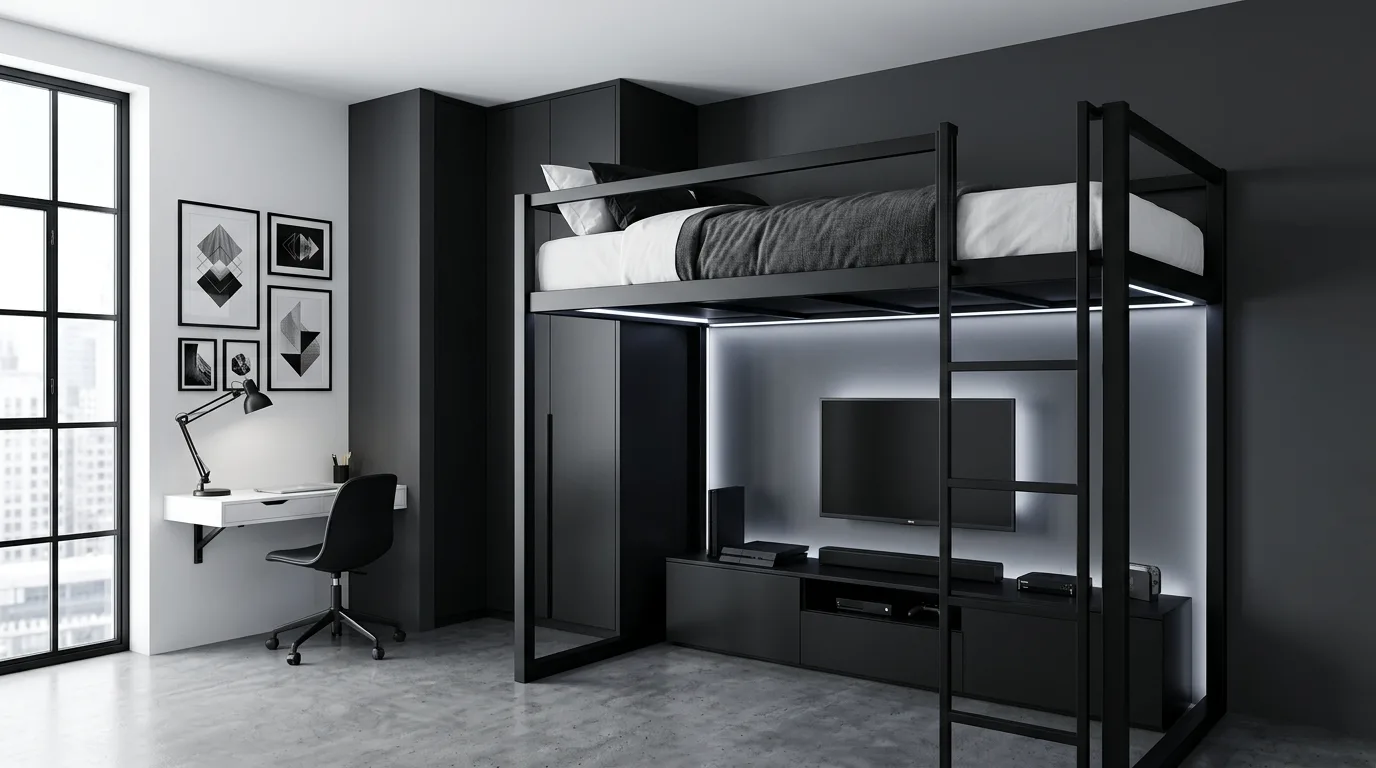
Idea 9
Corner loft bed with ladder shelving integrated into the side frame
Integrating shelving into the ladder side makes the loft bed feel more architectural and far less like an afterthought placed in a tight room. The result is efficient and visually tidy, which is exactly what small spaces need most.
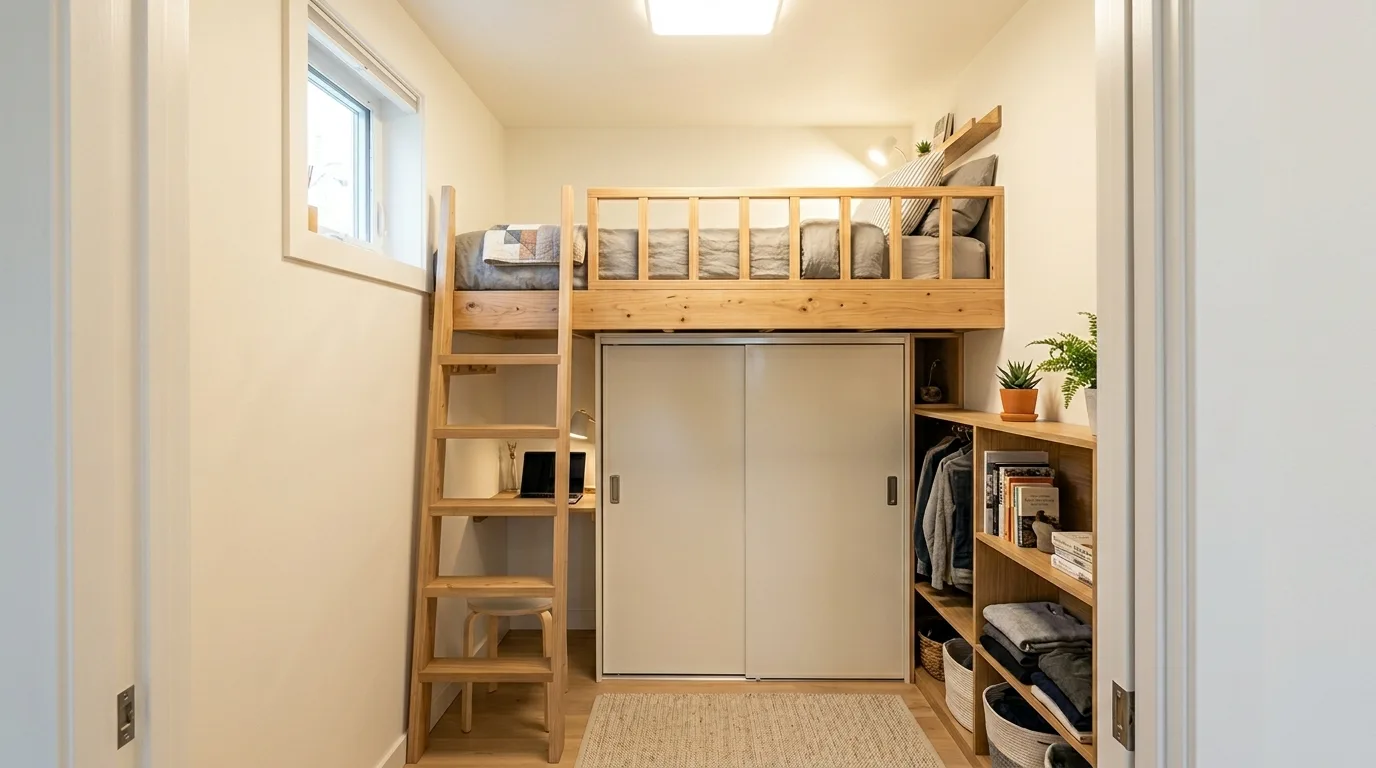
Idea 10
Shared sibling room with loft bed above and second bed nested beside storage
Shared rooms benefit from lofting because one raised bed can free enough floor area to place the second sleeping zone more comfortably. Storage between the beds keeps the arrangement organized, helping the room feel less crowded and more intentional.
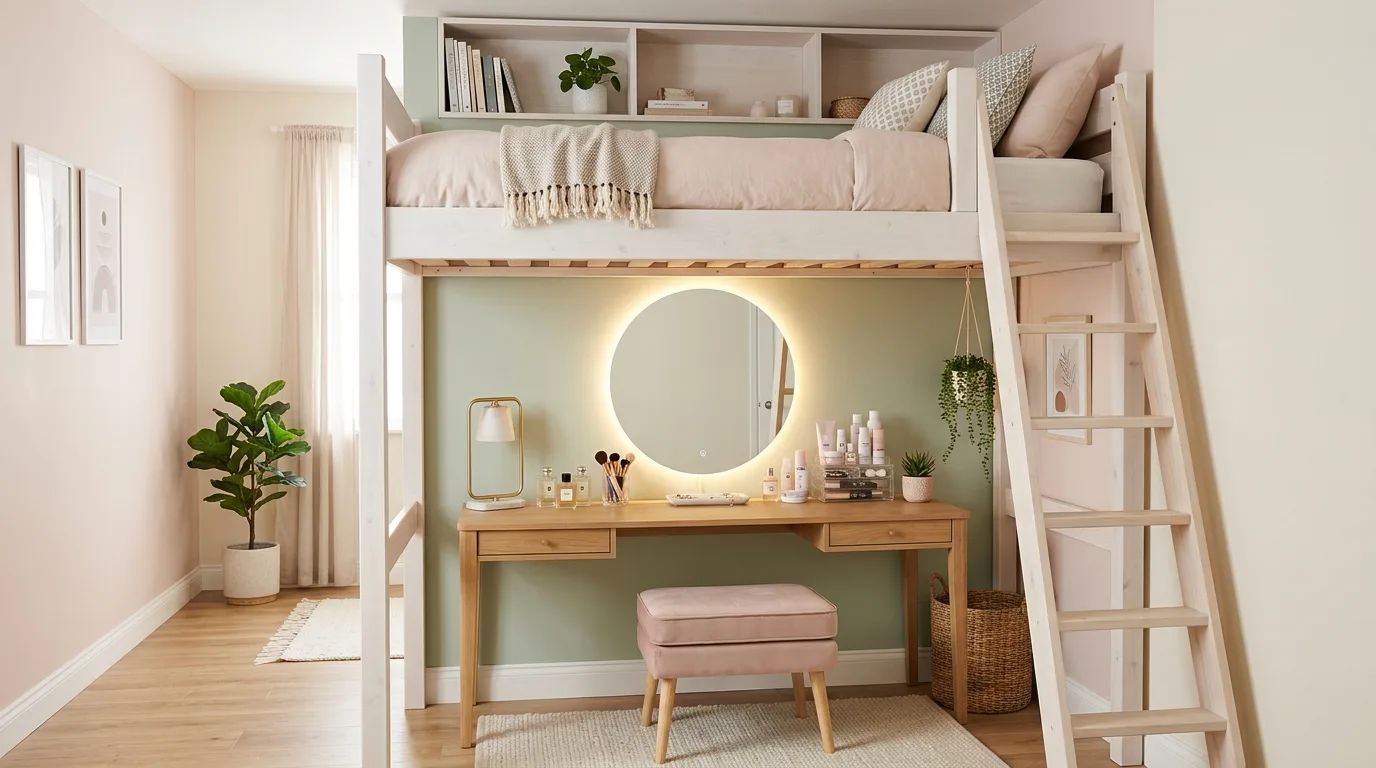
Idea 11
Loft bed over window bench nook with pillows and under seat baskets
Using the space below for a bench makes the room feel more layered and enjoyable instead of purely efficient. Pillows and baskets bring softness and order, turning the lower zone into a useful nook that gives the small bedroom more personality.
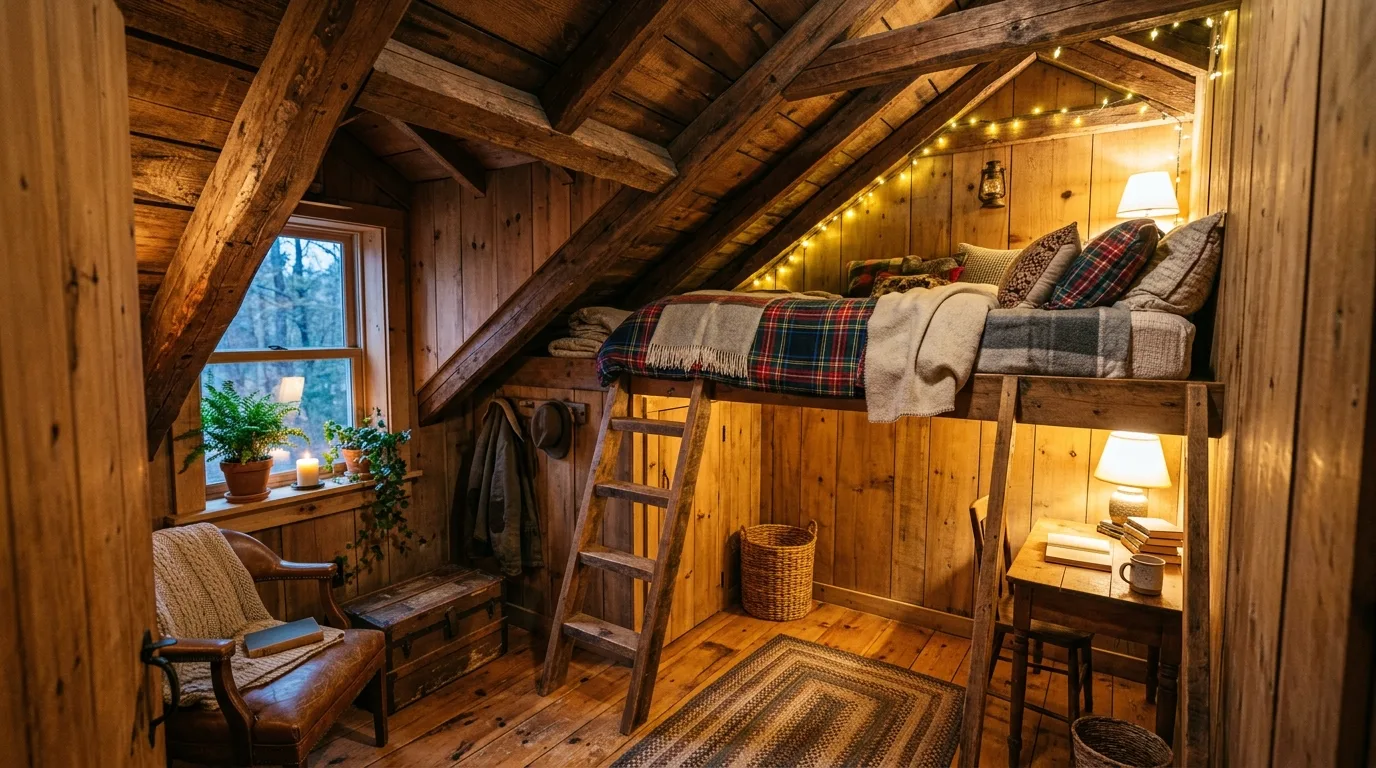
Idea 12
Compact modern room with black loft frame and warm wood study surface
A black frame can make a loft bed feel cleaner and more modern, especially when warm wood beneath it keeps the room from feeling too stark. The contrast helps the structure look deliberate and stylish instead of temporary or improvised.
Read next on Saw & Sprout


Edible Gardens
13 Clever Tomato Trellis Gardens for a Bountiful Harvest
Small-Space Growing
14 Space-Saving Small Vegetable Gardens for Urban GrowersFrequently asked questions
Why are loft beds so effective in small rooms?
They free up valuable floor space and let one compact bedroom support more than one function without expanding its footprint.
Are loft beds only for children?
No. They can work well for teens, studio apartments, guest rooms, and even adults when the design and proportions feel mature and safe.
What should go under a loft bed?
Desks, storage, seating, reading nooks, open play space, wardrobe zones, or even a second bed can all work depending on the room's priorities.