Rustic Italian decor feels enduring because it combines warmth, patina, and hospitality in a way that seems to grow more beautiful with age. Stone, plaster, terracotta, carved wood, linen, and olive tones all contribute to rooms that feel deeply rooted rather than quickly styled.
What gives the look its real charm is the balance between rustic substance and graceful living. The rooms often feel substantial and old, but never cold or severe, because texture, light, and everyday domestic objects keep everything soft and welcoming.
These ideas focus on Italian-inspired spaces that feel storied, sun-warmed, and full of old-world character. Some lean rustic-country, some more refined Mediterranean, but all of them show how home decor can feel both historic and warmly alive.
Quick planning notes
Choose materials that look better with use, because rustic Italian rooms gain much of their beauty from patina and age rather than fresh perfection.
Work with a palette of warm earth, faded plaster, olive, stone, and deep wood so the rooms feel cohesive and naturally sun-softened.
Use everyday objects such as pottery, boards, linen, and candles as part of the decor so the home feels hospitable and lived with.
Let arches, texture, and weightier furniture shapes carry some of the mood instead of depending only on accessories.
Idea 1
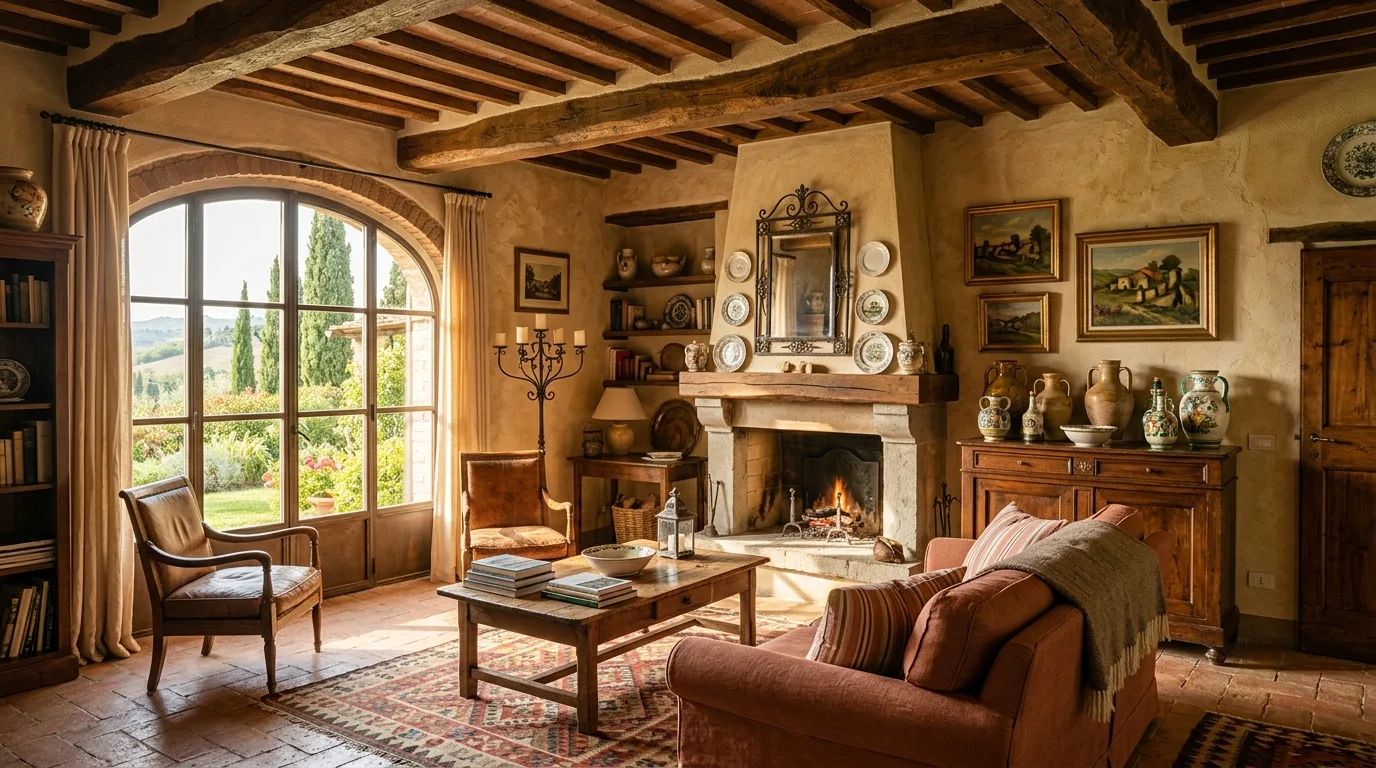
Terracotta and plaster living room with carved wood and olive branches
Rustic Italian decor feels deeply rooted when warm plaster walls, carved wood, and terracotta tones all work together in one relaxed palette. Olive branches add freshness, helping the room feel sun-warmed, old-world, and comfortably lived in.
Idea 2
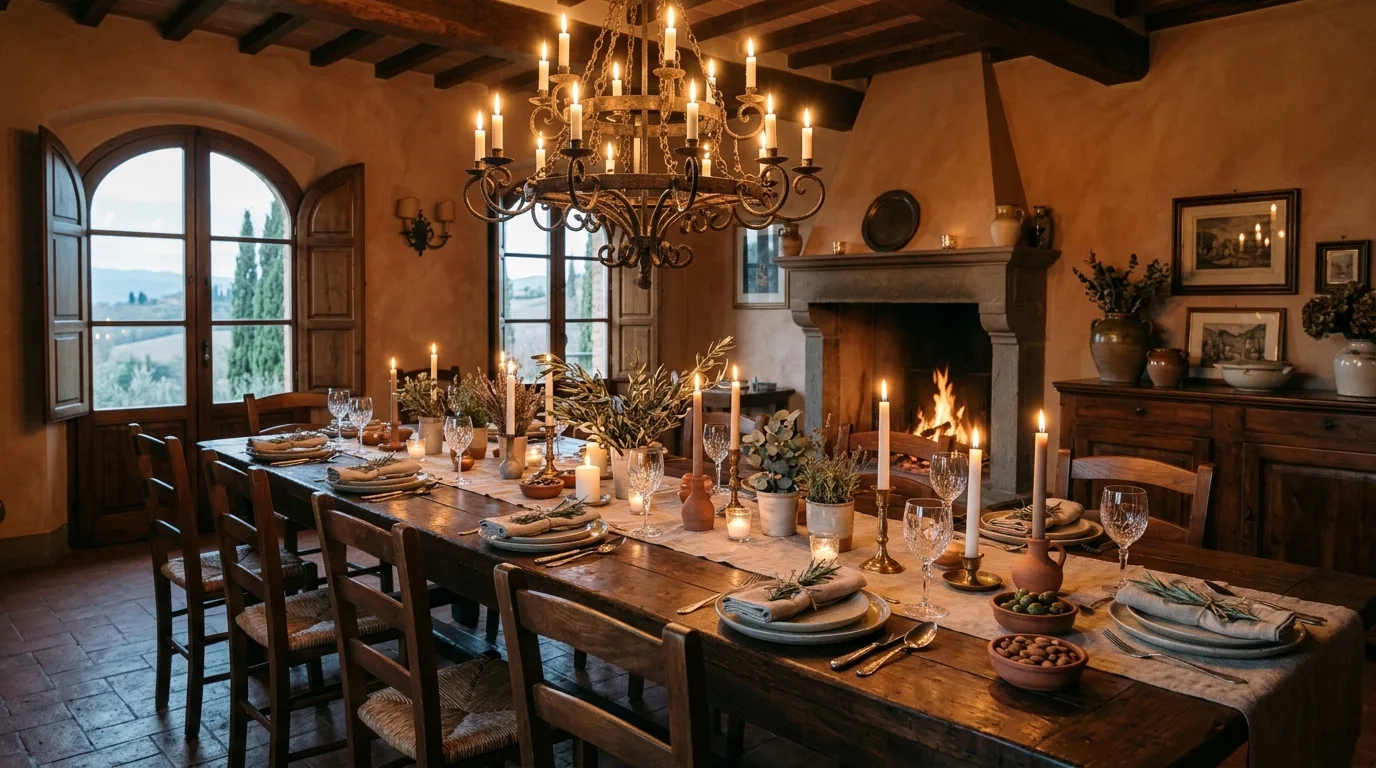
Stone dining room with linen runner, ceramic pitchers, and candlelight
A dining room takes on old-world charm quickly when stone, linen, and handmade ceramics create a table setting that feels timeless rather than staged. Candlelight completes the mood, making the whole room feel hospitable and quietly dramatic.
Idea 3
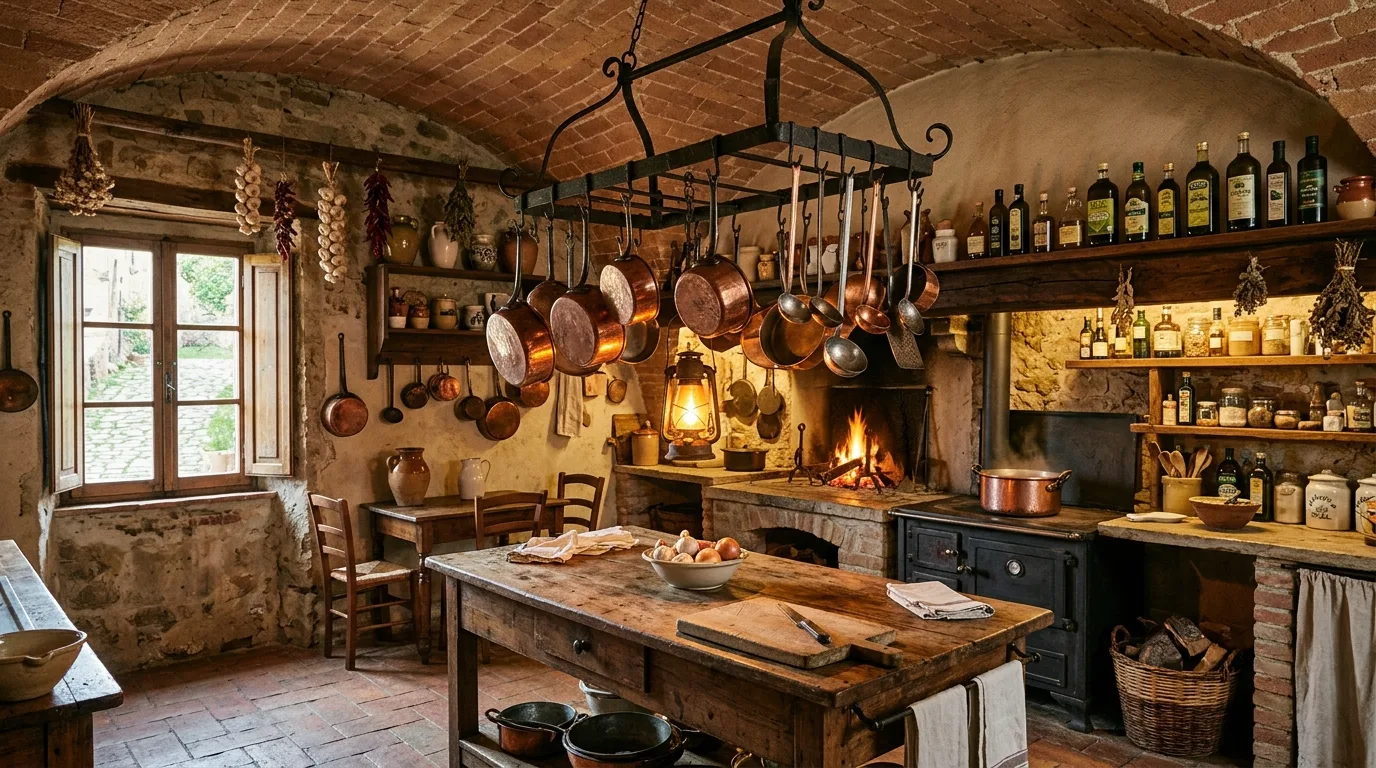
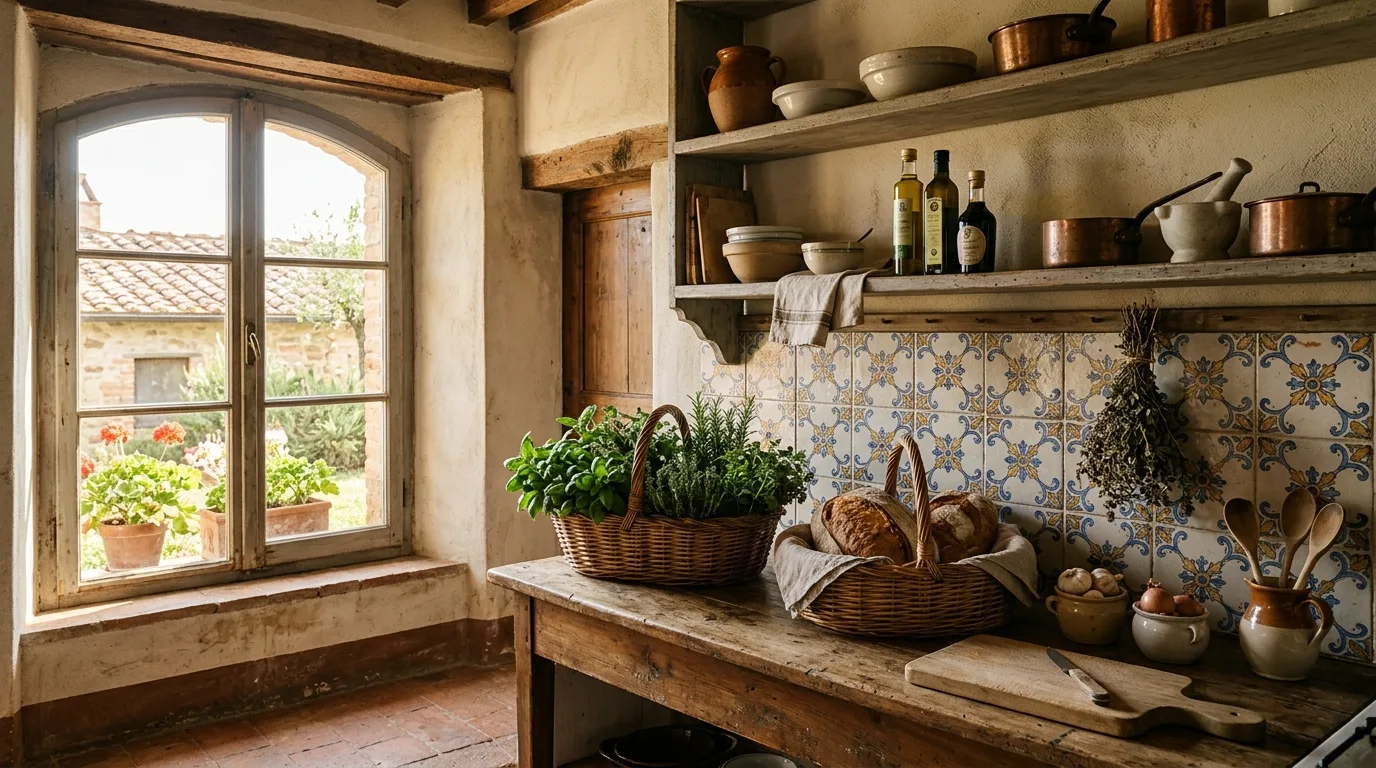
Kitchen with open crockery shelves, aged wood beams, and copper pans
Open shelves and copper give an Italian kitchen a practical romance because the everyday tools become part of the beauty. Aged beams reinforce the sense of history, making the cookspace feel warm, grounded, and full of honest character.
Idea 4
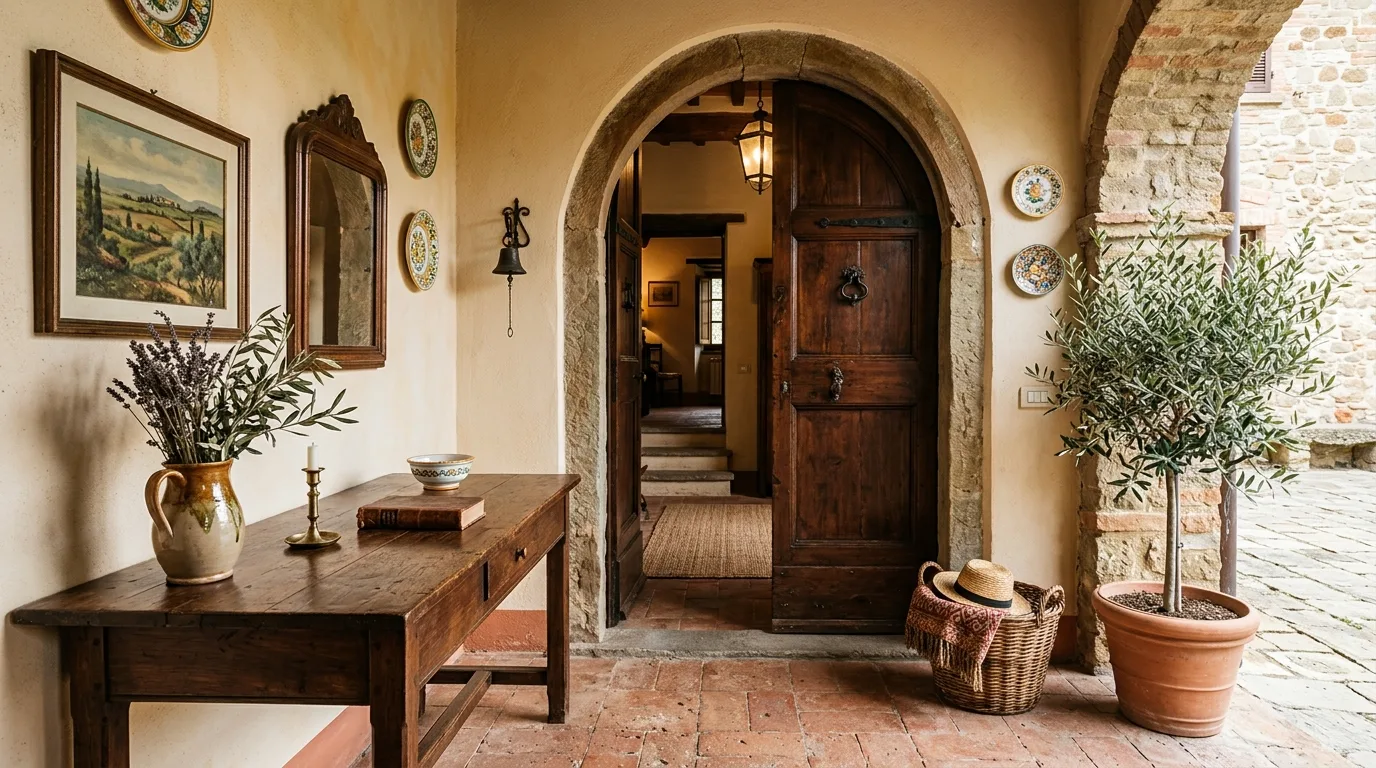
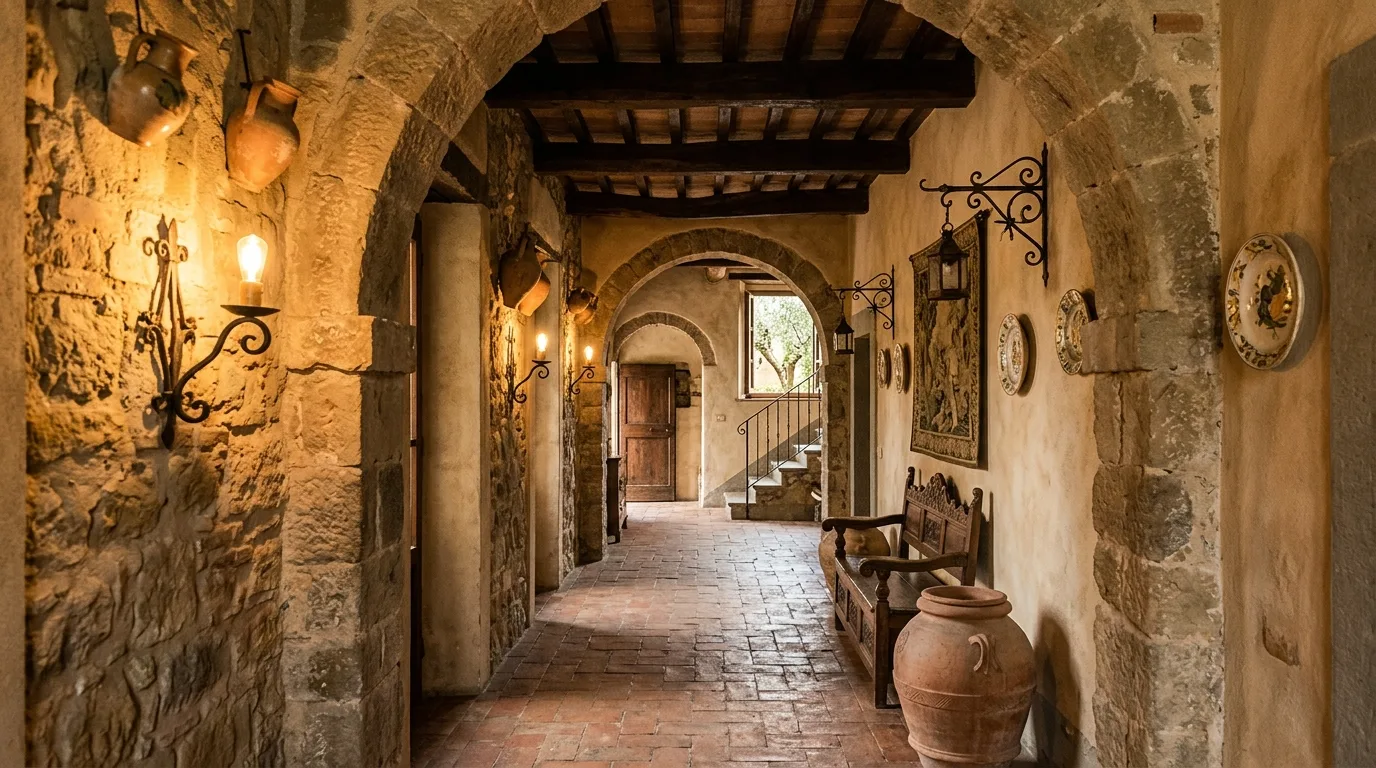
Entry hall with arched opening, worn chest, and travertine floor
An arched opening gives a home that unmistakable Mediterranean softness, especially when paired with a worn chest and a pale stone floor. The entry feels old-world and gracious, creating a first impression that is both solid and welcoming.
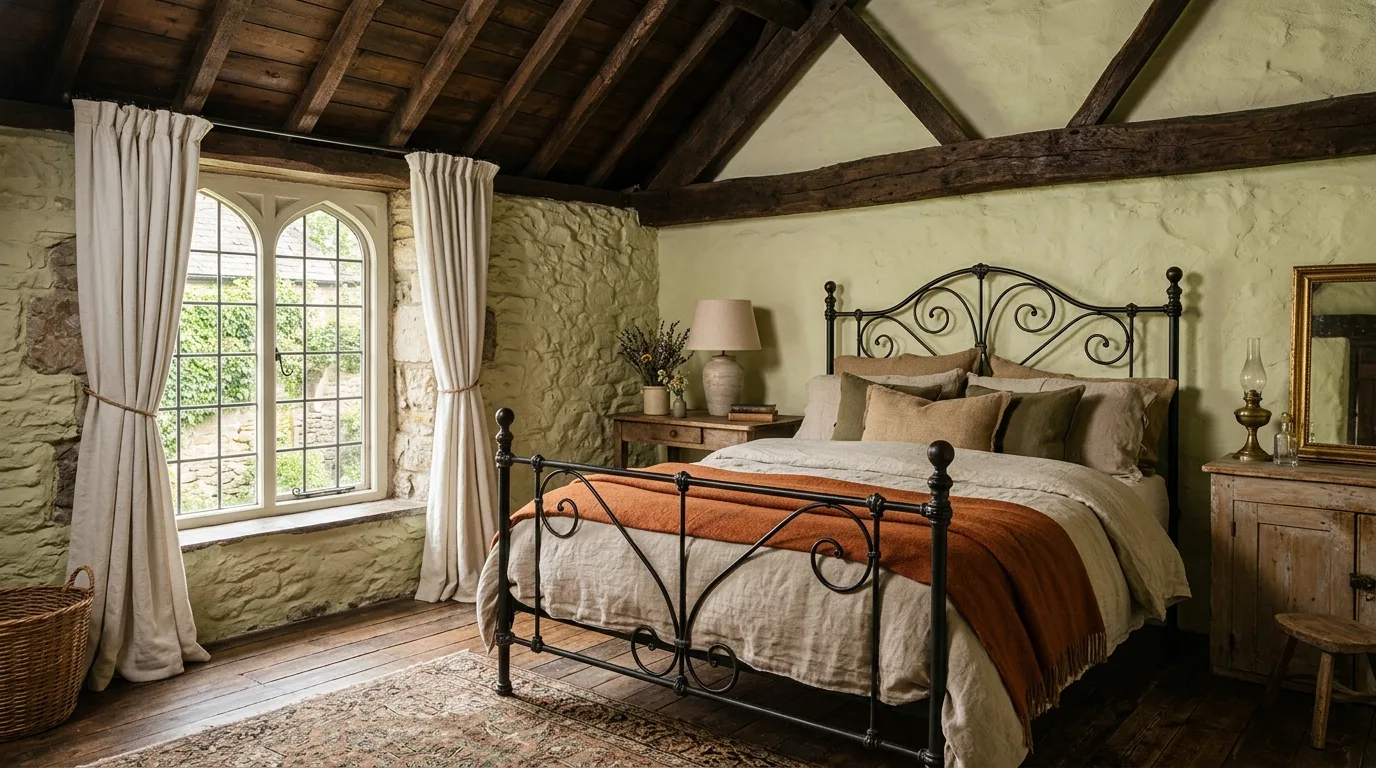
Idea 5
Bedroom with wrought iron bed, ochre textiles, and antique nightstands
Italian rustic bedrooms feel most convincing when the furniture has weight and age, but the textiles still bring warmth and softness into the scene. Ochre tones make the room glow, while antique nightstands keep it feeling storied and intimate.
Idea 6
Sunroom with shuttered windows, clay pots, and woven lounge chairs
Shuttered light and clay pots give a sunroom the kind of Mediterranean ease that defines rustic Italian decor so well. Woven seating keeps the room relaxed, making it feel like a place to linger through long afternoons rather than a formal sitting space.
Idea 7
Bathroom with tumbled stone, brass fixtures, and simple arched mirror
A bathroom takes on Italian character when the finishes feel tactile and aged instead of too glossy or precise. Tumbled stone and brass bring that depth naturally, while an arched mirror softens the room into something more graceful and timeless.
Idea 8
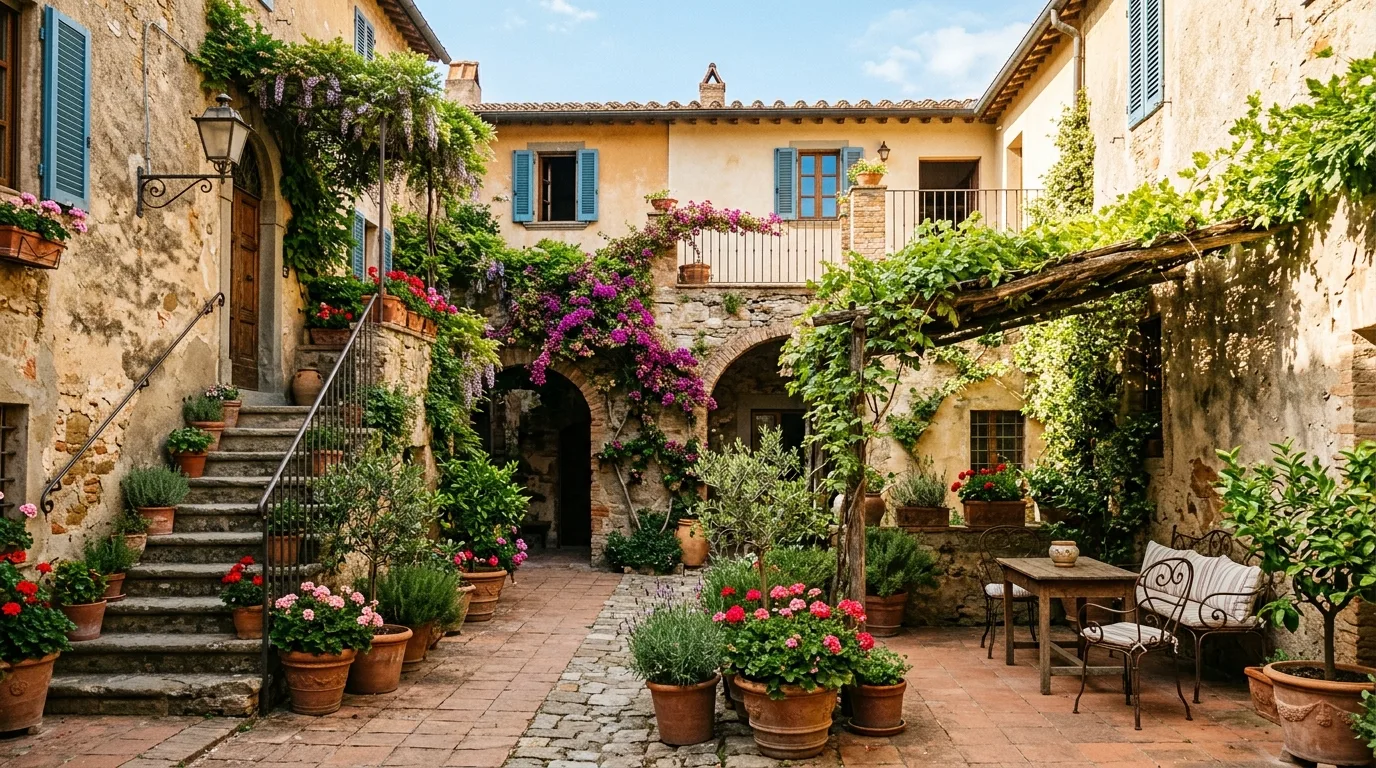
Courtyard corner with bistro table, lanterns, and potted rosemary
Even a small courtyard can channel old-world Italian warmth when the materials feel timeworn and fragrant. Lanterns and rosemary turn the corner into a place that feels atmospheric and welcoming, with just enough detail to suggest easy outdoor living.
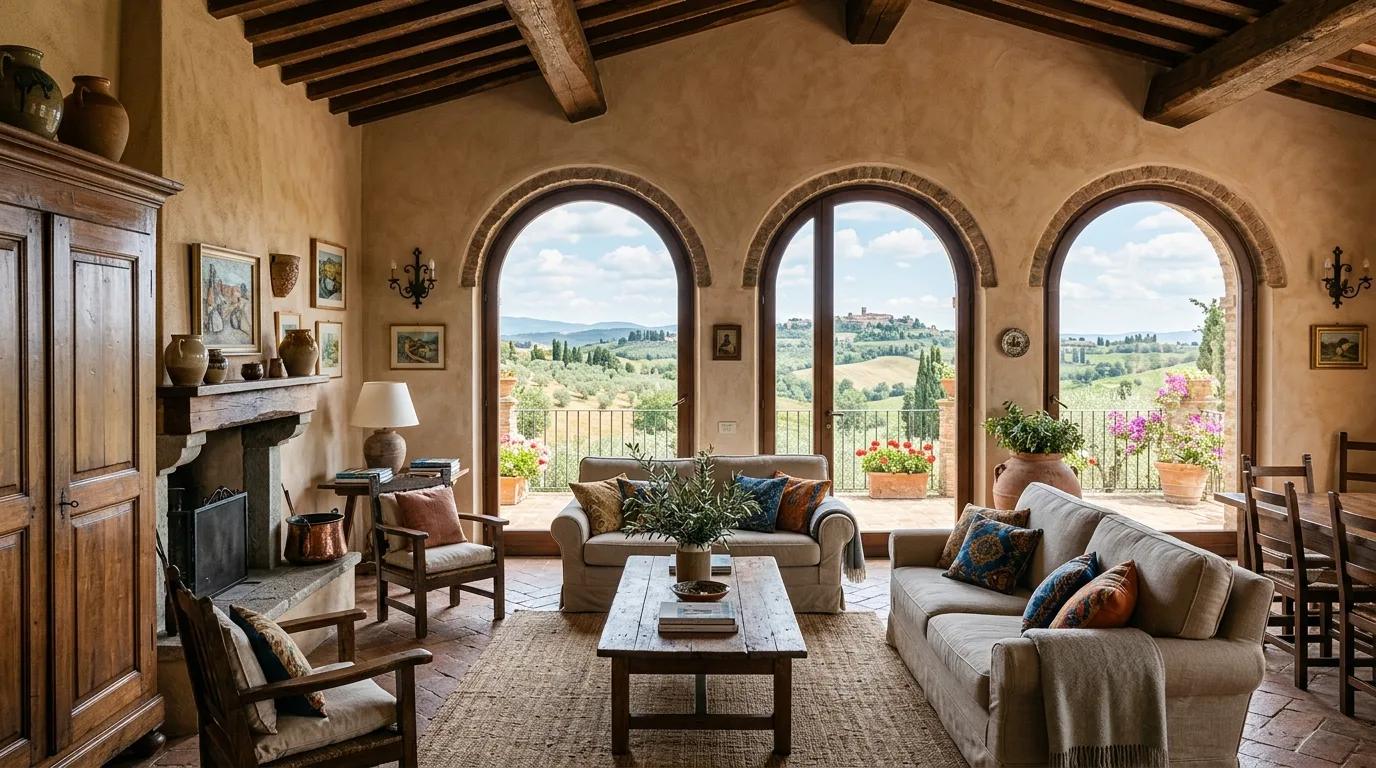
Idea 9
Home office with dark wood desk, plaster walls, and leather chair
A rustic Italian office works because the materials feel substantial without becoming heavy for their own sake. Plaster and leather create depth around the desk, giving the workspace a grounded and cultivated mood that still feels relaxed.
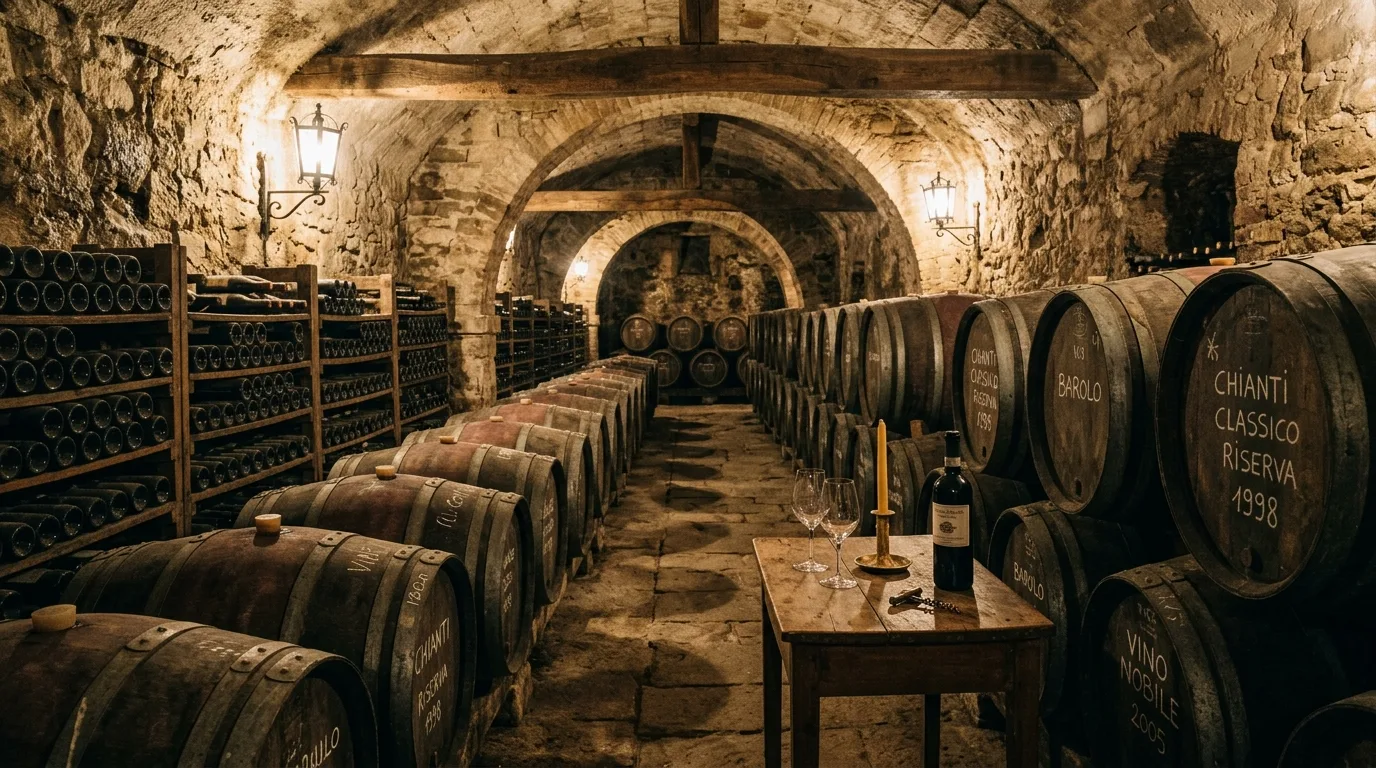
Idea 10
Kitchen nook with banquette seating, striped cushions, and olive green paint
Olive green and striped fabric bring a softer countryside energy into an Italian-style breakfast nook without losing sophistication. The banquette makes the room feel more rooted and social, turning a corner meal area into a warm gathering spot.
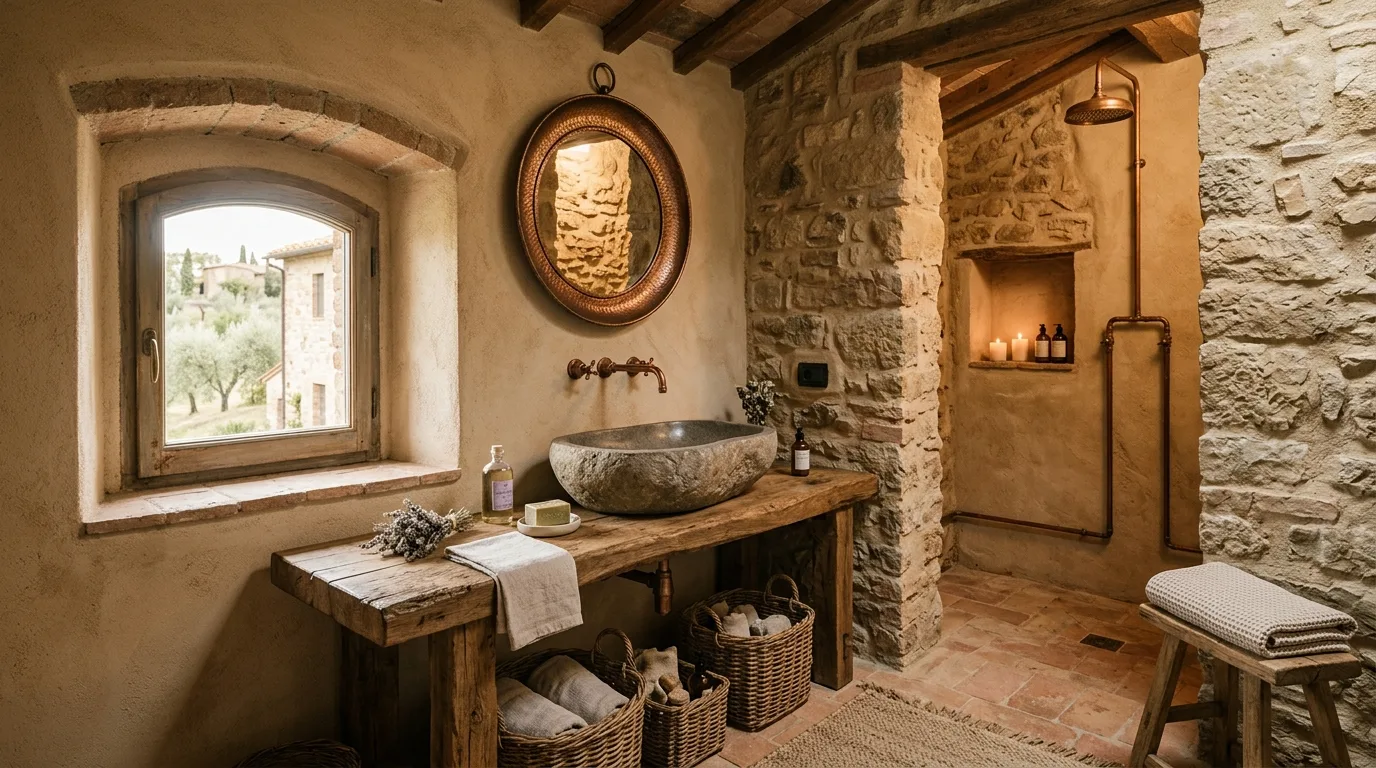
Idea 11
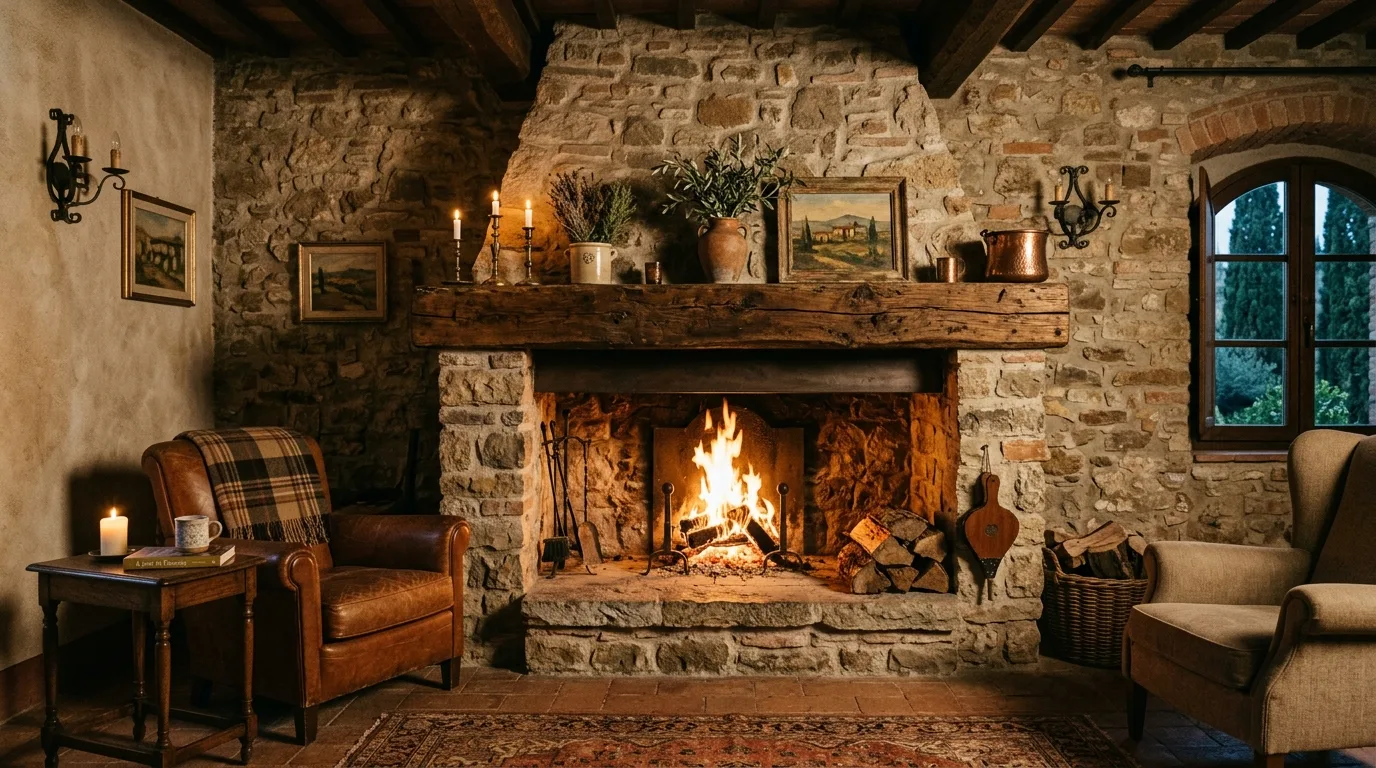
Living room with limestone fireplace, rustic table, and deep red accents
Limestone gives a room the pale solidity that makes red textiles and dark wood feel even richer by contrast. The result is dramatic without being flashy, creating a living space that feels warm, collected, and unmistakably old-world.
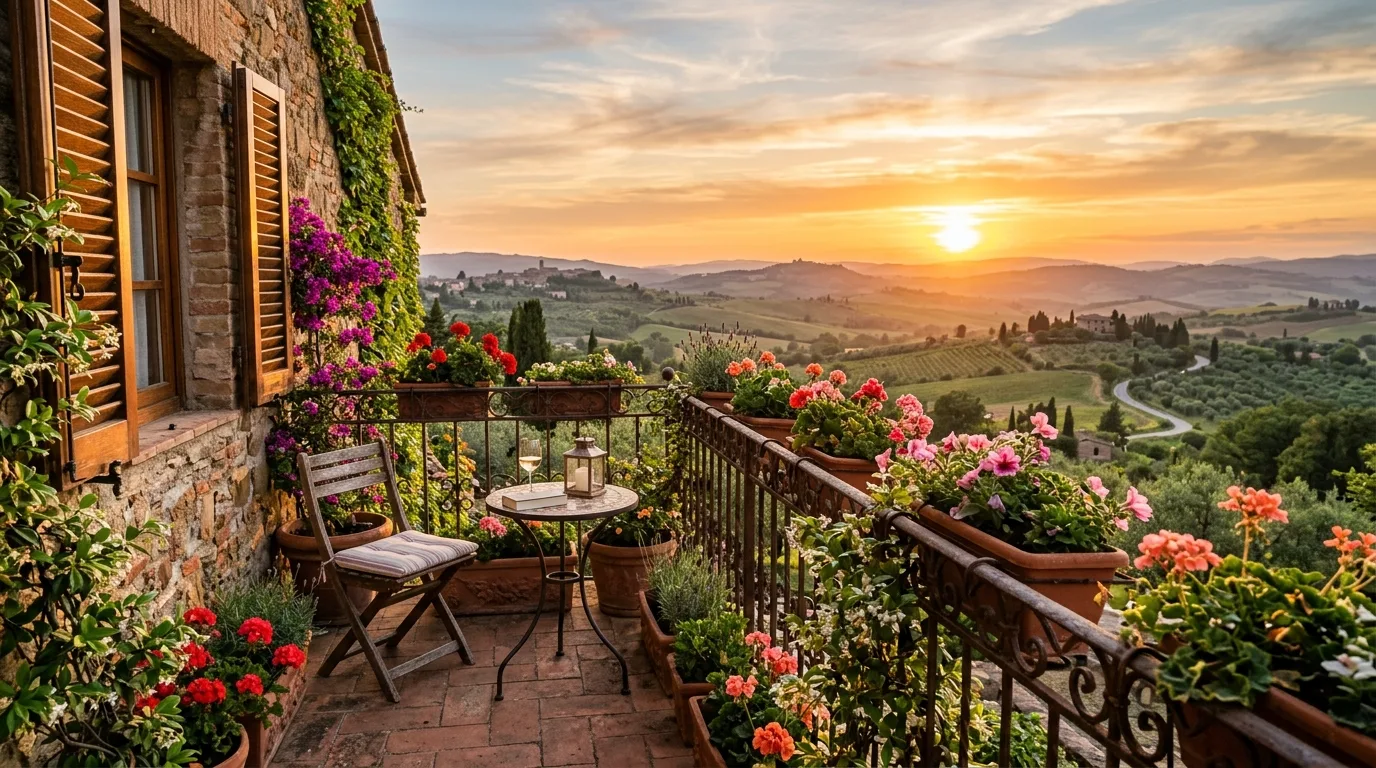
Idea 12
Guest room with embroidered linens, antique wardrobe, and faded fresco tones
A guest room can feel deeply Italian in spirit when the palette hints at faded frescoes and the furniture has enough age to suggest inheritance rather than purchase. Embroidered linens soften that history, making the room feel generous and quietly romantic.
Idea 13
Dining hutch styling with pottery stacks, wine bottles, and olive wood boards
Italian charm often lives in the objects of hospitality themselves, which is why a hutch filled with pottery, wine, and boards can feel so evocative. The arrangement suggests meals, gathering, and routine beauty, giving the whole room more soul.
Read next on Saw & Sprout
Edible Gardens
13 Clever Tomato Trellis Gardens for a Bountiful Harvest
Small-Space Growing
14 Space-Saving Small Vegetable Gardens for Urban GrowersFrequently asked questions
What gives rustic Italian decor its old-world charm?
Warm stone and plaster, terracotta tones, carved or aged wood, linen, pottery, and a sense of lived-in hospitality usually define the look.
Can Italian rustic style work in newer homes?
Yes. Texture, earth tones, and thoughtfully chosen furnishings can bring the atmosphere in without requiring historic architecture.
How do you keep old-world decor from feeling heavy?
Balancing darker materials with linen, soft light, pale plaster, and enough breathing room usually keeps the rooms warm instead of weighed down.