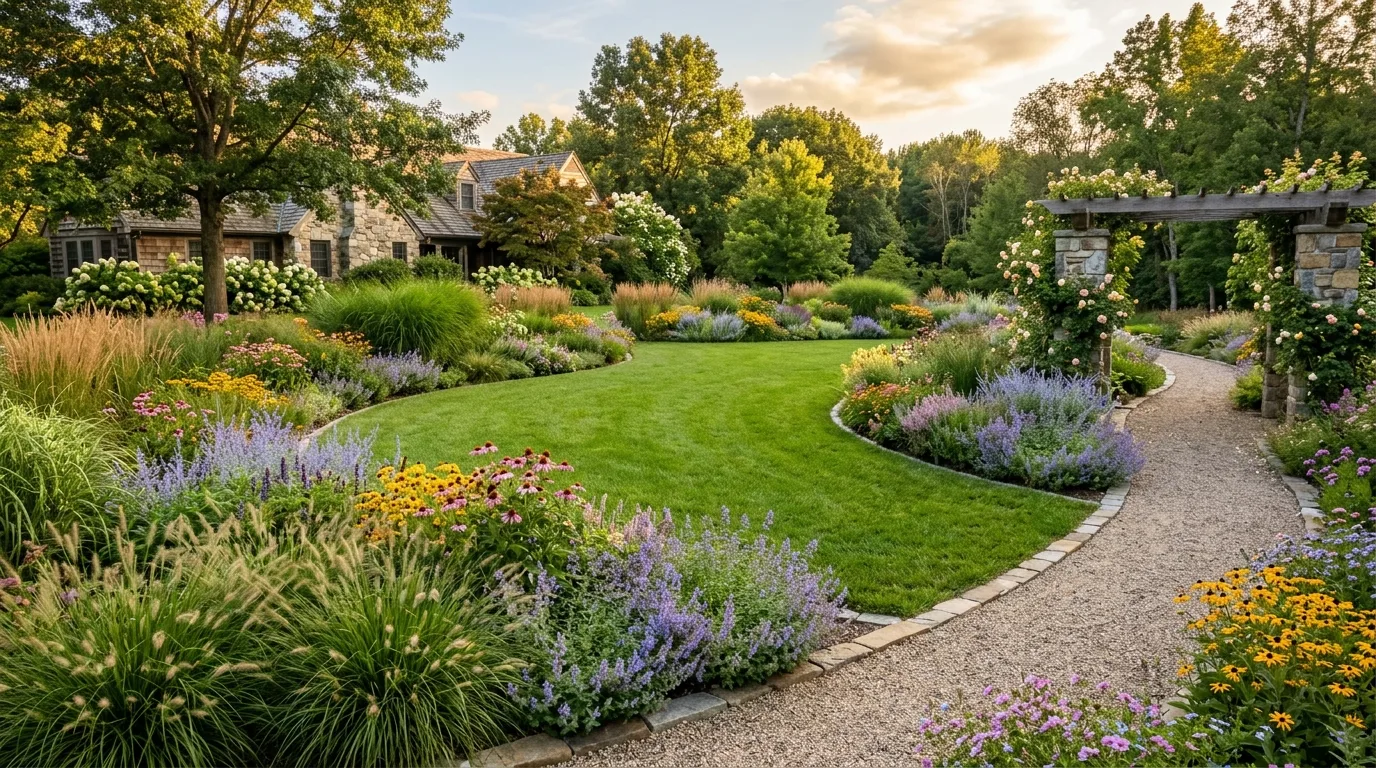
Curved landscape design can make a yard feel more relaxed and organic because the lines guide movement in a softer way than strict right angles and abrupt edges.
When curves are used thoughtfully, they can connect paths, lawns, patios, slopes, and water features into one flowing composition that feels natural instead of forced.
These curved landscape ideas explore gentle entry walks, rounded patios, contour planting, island beds, and winding details that bring organic flow to many kinds of yards.
Quick planning notes
Use broad, confident curves instead of many tight bends so the layout feels graceful and easy to read.
Let curved lines respond to movement, grade, or focal points rather than drawing them only for decoration.
Repeat the same language across paths, beds, and edges when possible so the whole design stays coherent.
Balance the softness with enough structure that the yard still feels intentional and manageable.
Idea 1
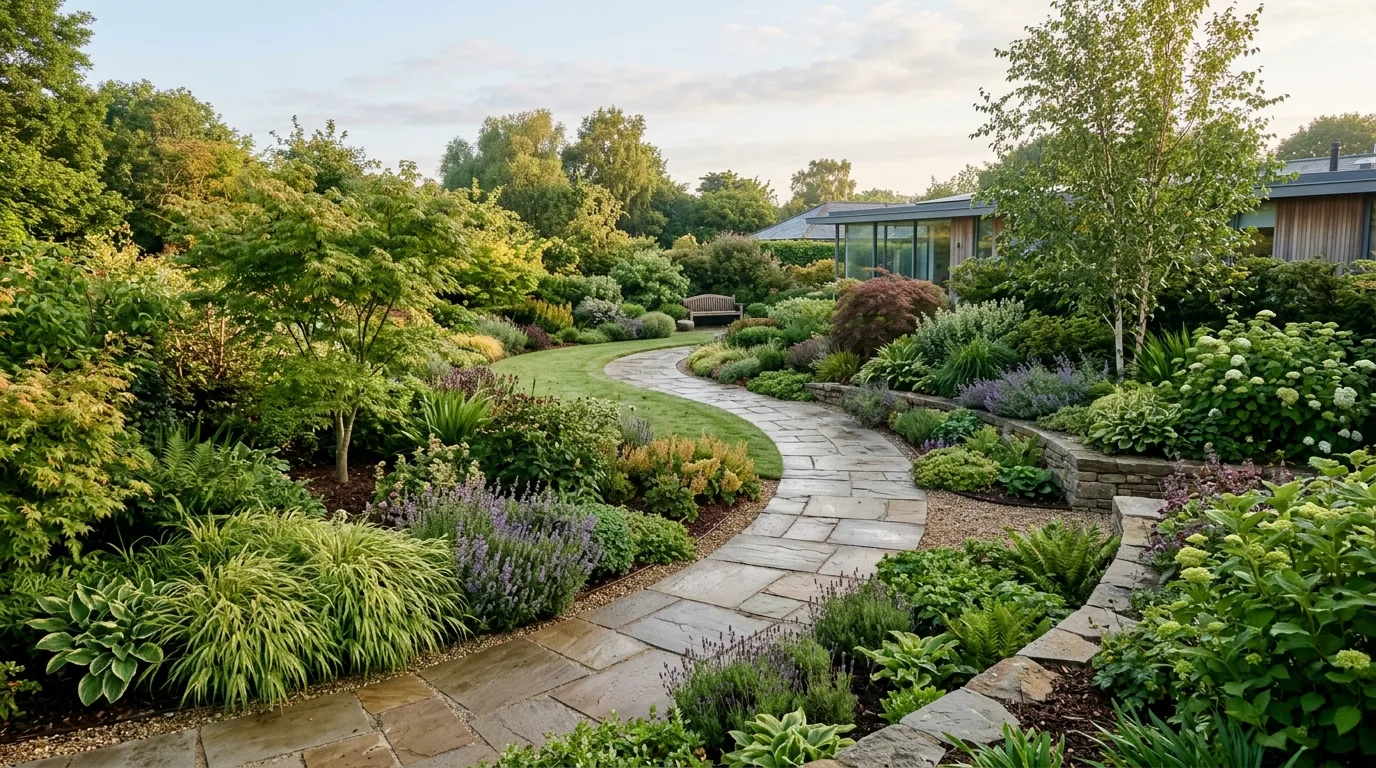
A sweeping front walk that softens the approach to the house
Curved lines can make an entry feel more gracious because they guide the eye and the body with a slower rhythm than straight geometry, giving the landscape a more natural and welcoming tone. The whole frontage feels gentler and more inviting.
Idea 2
A lawn border shaped in broad arcs with layered perennial drift
When borders curve generously instead of turning abruptly, the planting often feels more relaxed and visually continuous, especially with repeated perennials that follow the same movement. The whole yard gains flow without becoming loose or undefined.
Idea 3
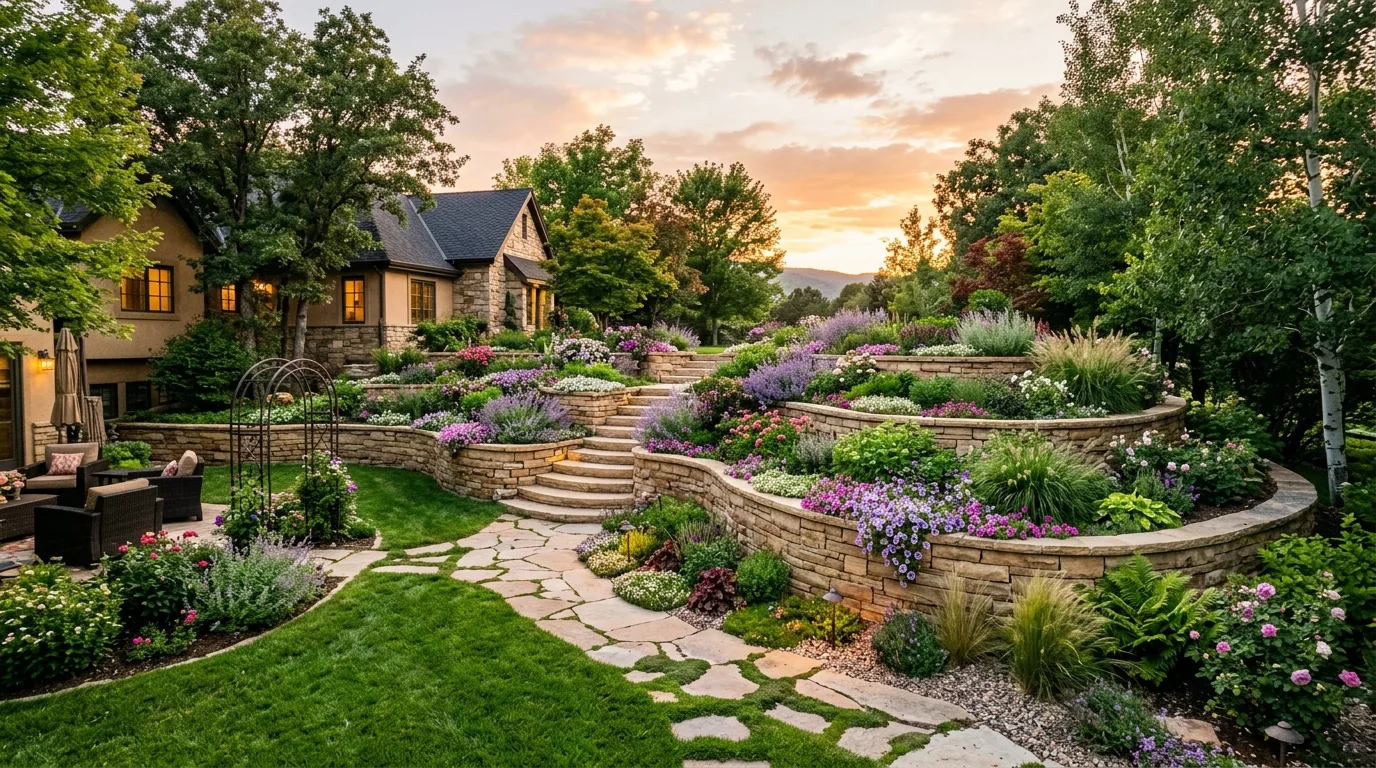
A circular patio edge blending into soft surrounding planting
Curved patios tend to feel more organic because the shape reduces the hard stop between paving and garden, helping the outdoor room settle more naturally into the site. The planting around it then feels like an extension rather than a border.
Idea 4
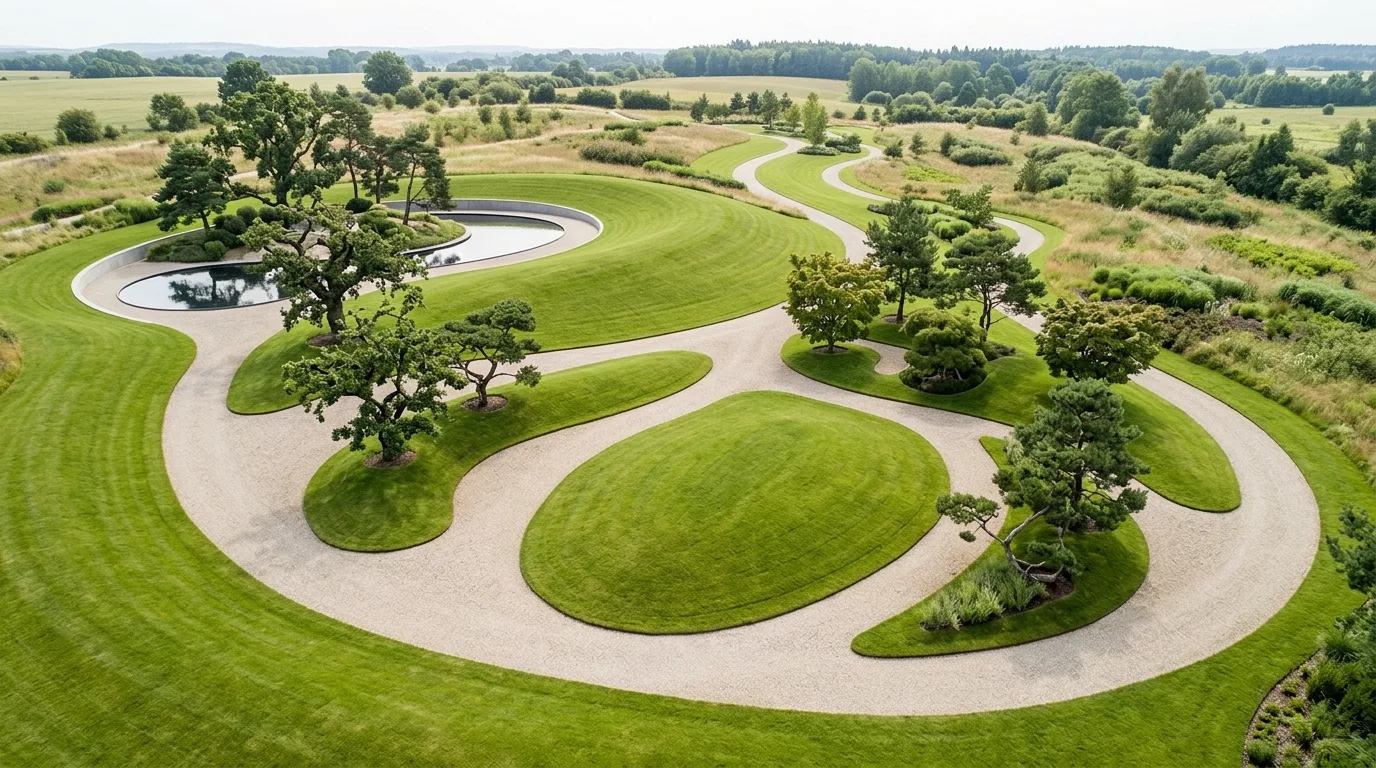
A dry creek line guiding the eye through the backyard
One of the smartest uses of curve is in a feature that suggests natural movement, and a winding dry creek can bring structure, drainage logic, and visual softness all at once. The yard feels more dynamic without relying on lots of separate objects.
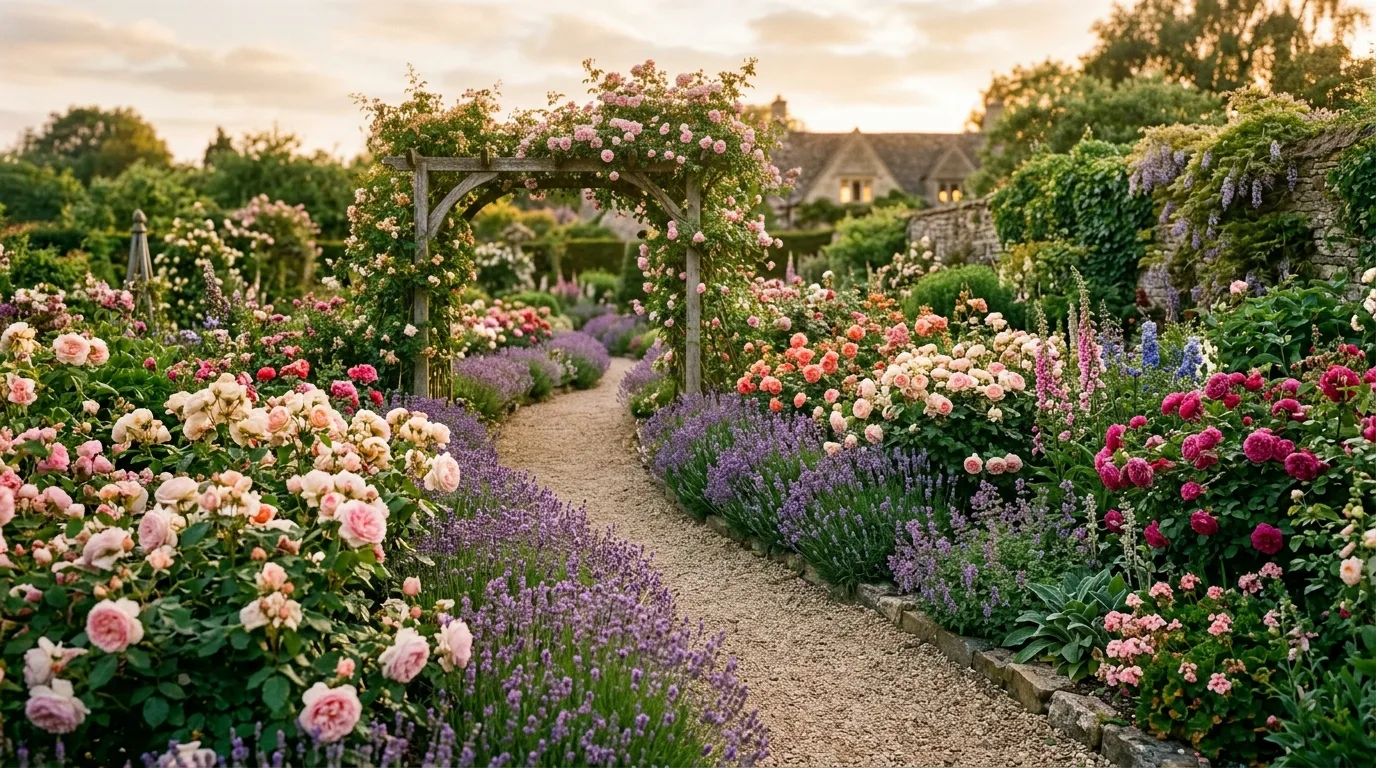
Idea 5
A driveway turn framed by curved planting beds and stone
Curves are especially useful where cars and paths already move on a radius, because the planting can reinforce that motion and make the paved area feel far more integrated with the garden around it. The frontage becomes smoother and more elegant.
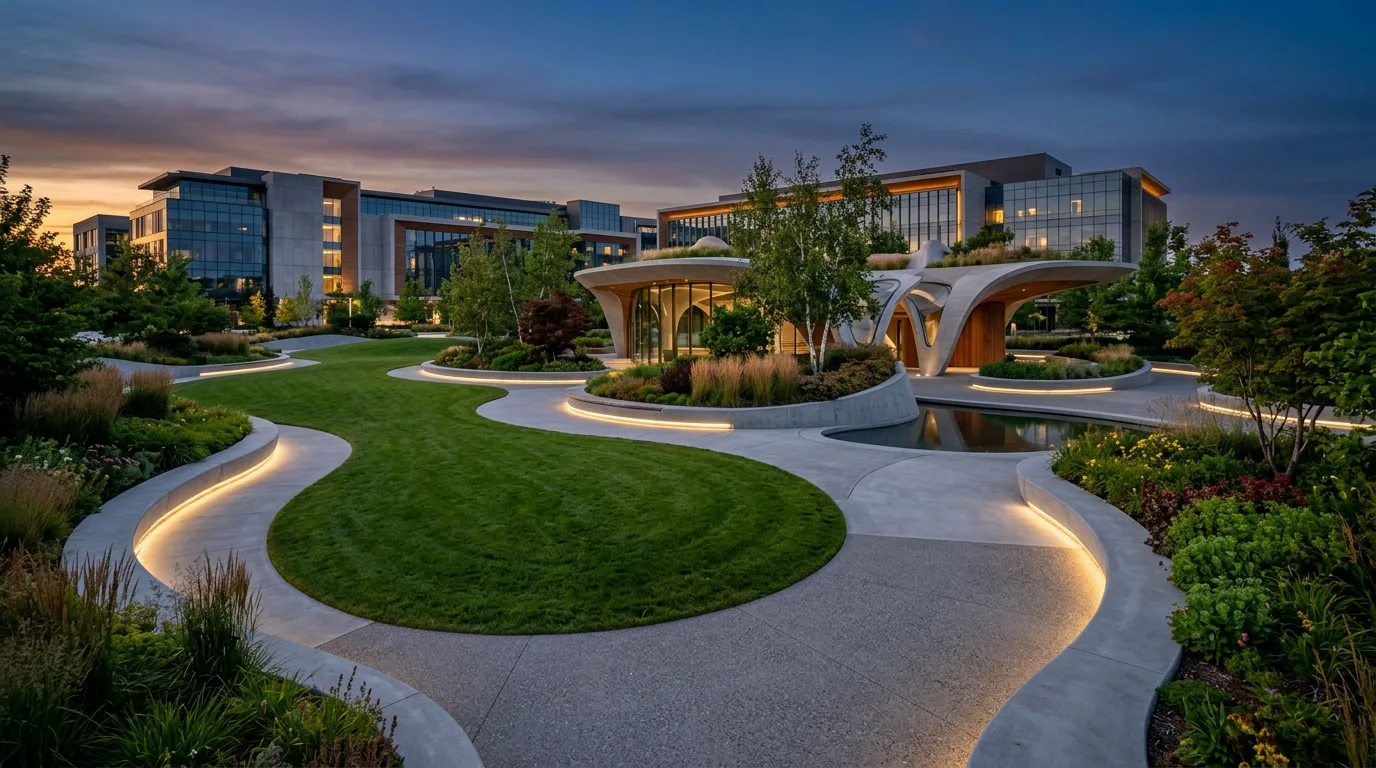
Idea 6
A small garden path using gentle bends to feel larger
Compact spaces often benefit from a little concealment, and a path that bends softly can make the garden seem deeper and more interesting than a straight route that reveals everything at once. The experience becomes slower and more immersive.
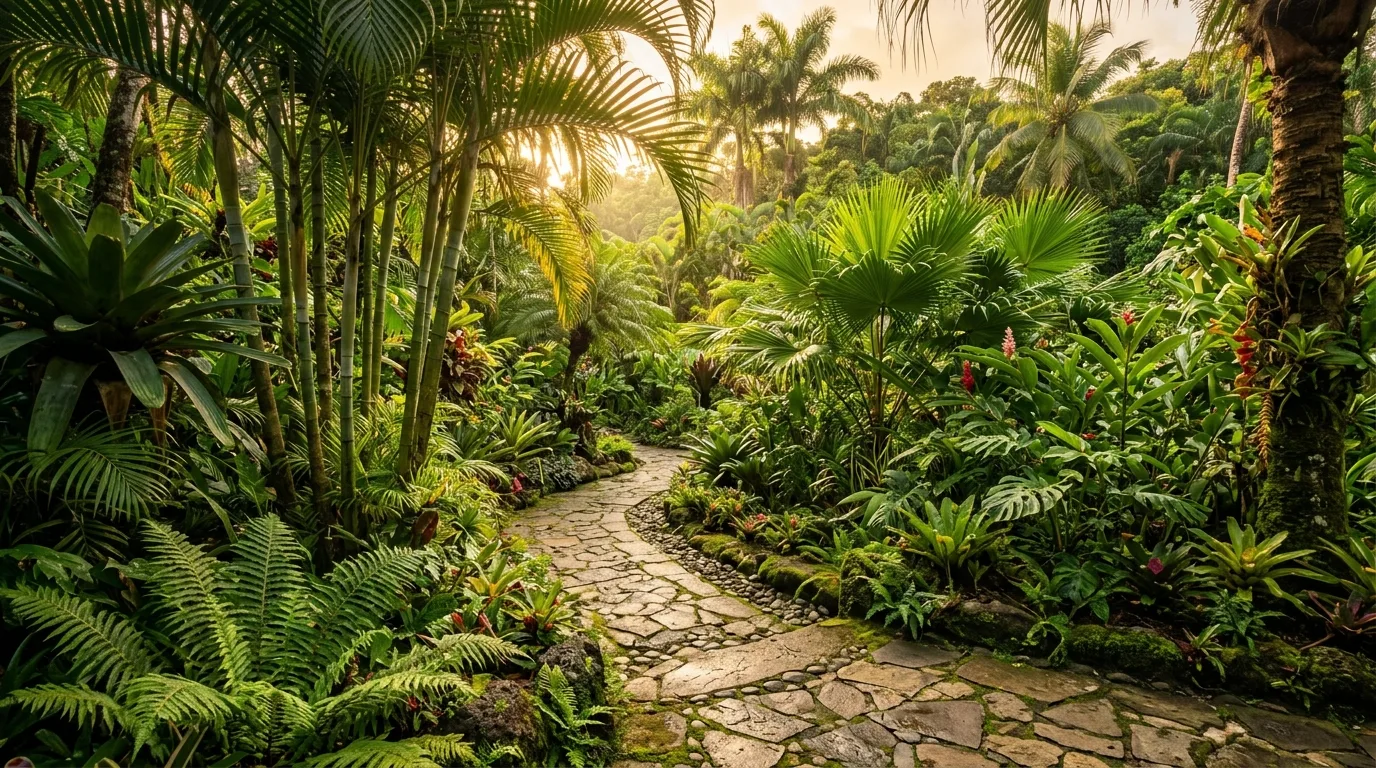
Idea 7
A pool surround where curves create a resort-like softness
Hardscaped outdoor spaces often feel more relaxed when one or two shapes break the strictness of rectangles, and a curved pool edge or border does that with immediate effect. The setting becomes more fluid and vacation-like without losing polish.
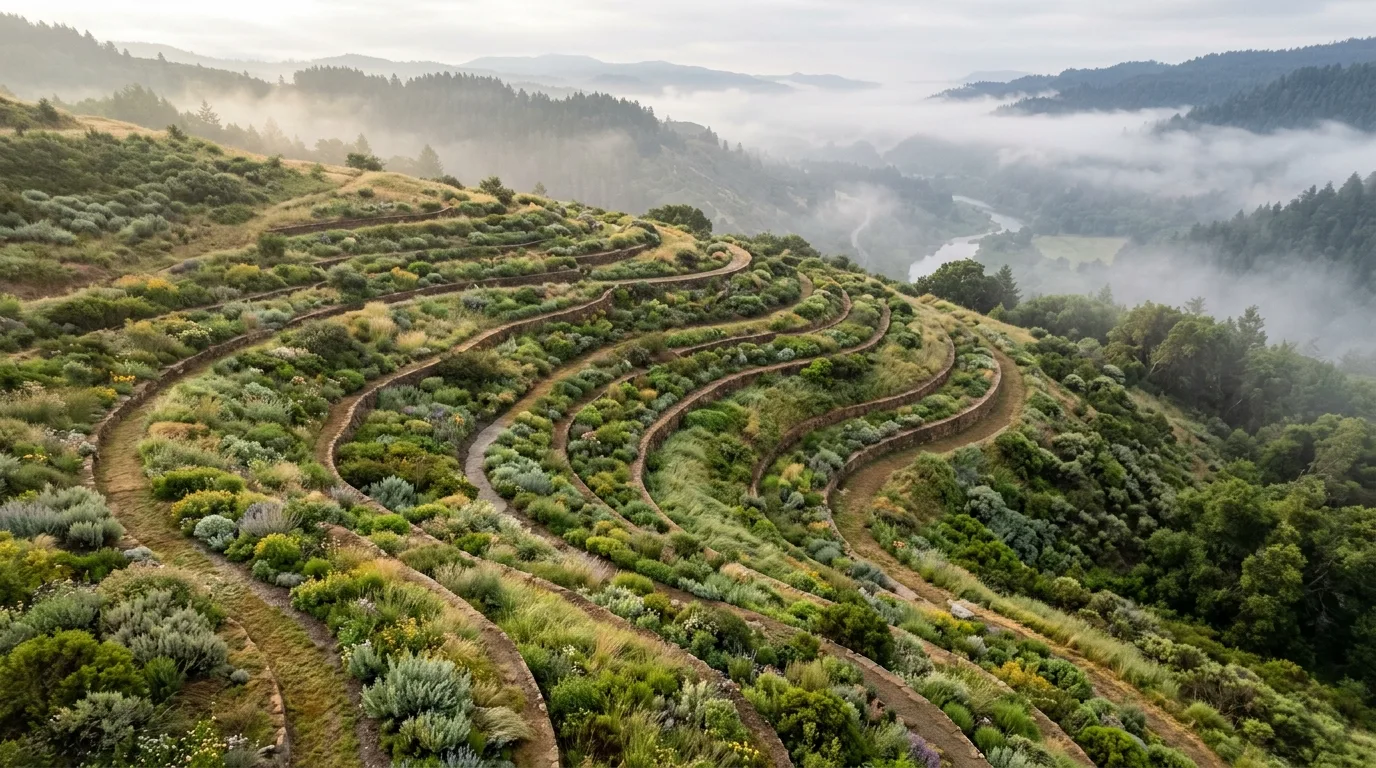
Idea 8
A hillside planting plan organized by repeating contour lines
Following the natural shape of the land with curved beds can make a slope feel more settled and easier to read because the design works with the grade instead of cutting across it harshly. The hillside gains flow and stronger visual stability.
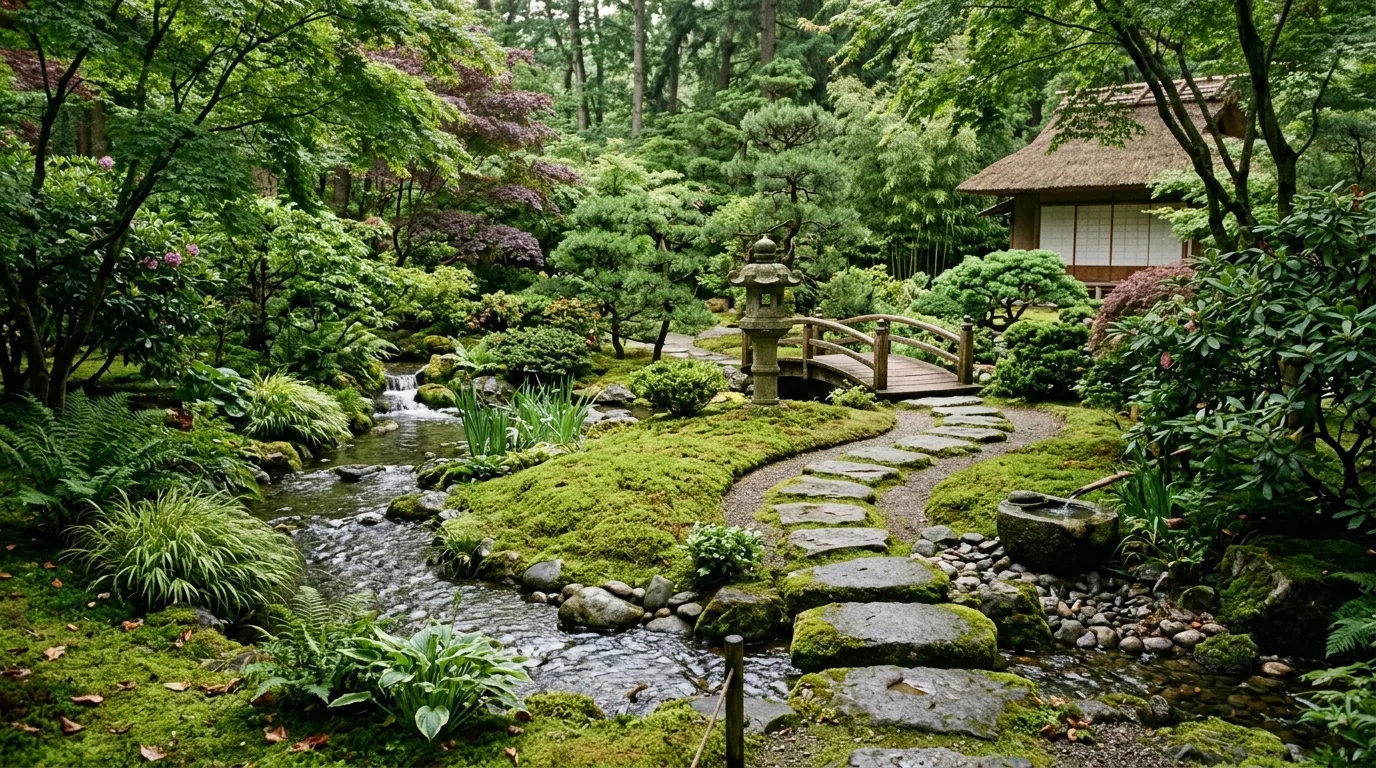
Idea 9
A courtyard bed where one soft line balances stronger architecture
Curved planting can be especially effective near rigid buildings because the contrast helps the structure feel more graceful without diminishing its strength. One well-shaped bed is often enough to change the whole mood of a courtyard.
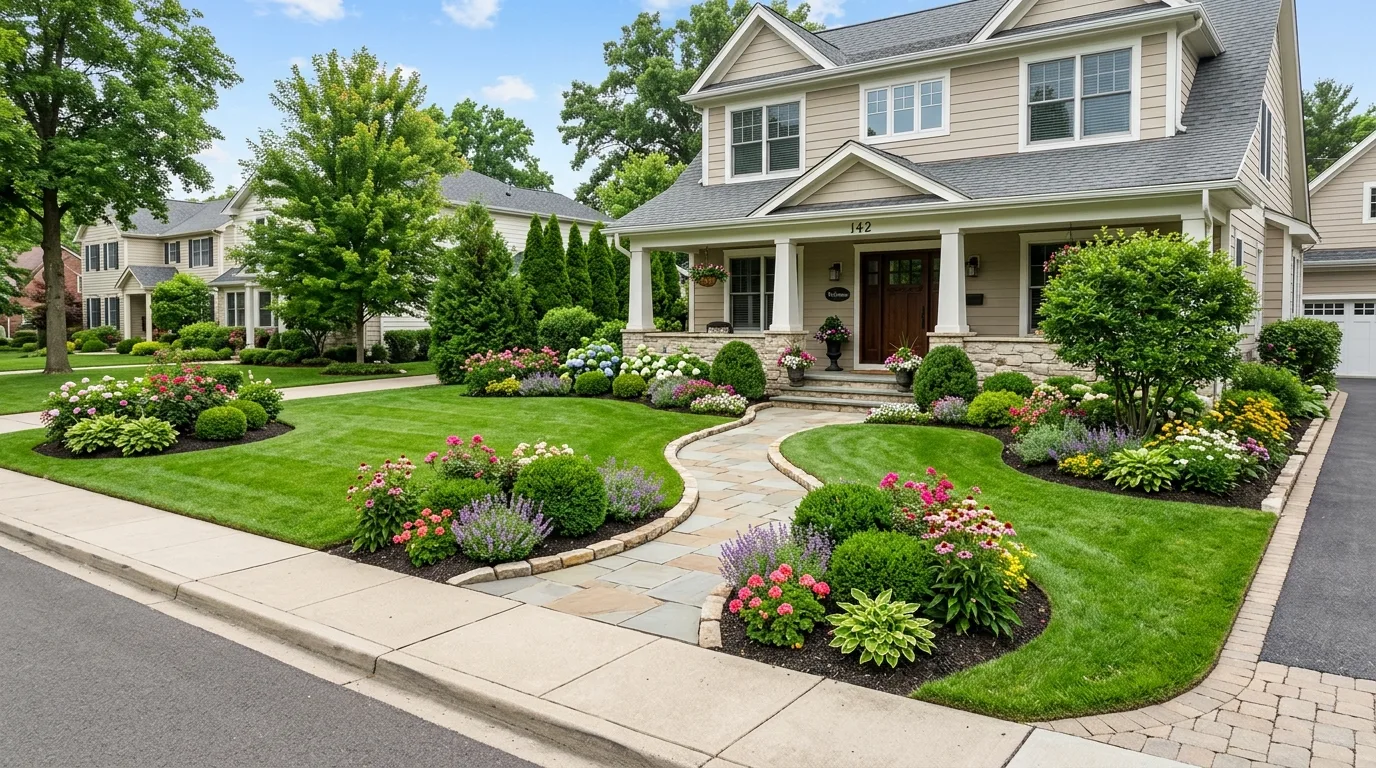
Idea 10
A pond edge with natural-looking curves and meadow planting
Water features generally feel more believable when their outlines have some variation and sweep, especially when the planting reinforces that movement with looser, softer forms. The result is calm, organic, and visually much richer than a sharper edge.
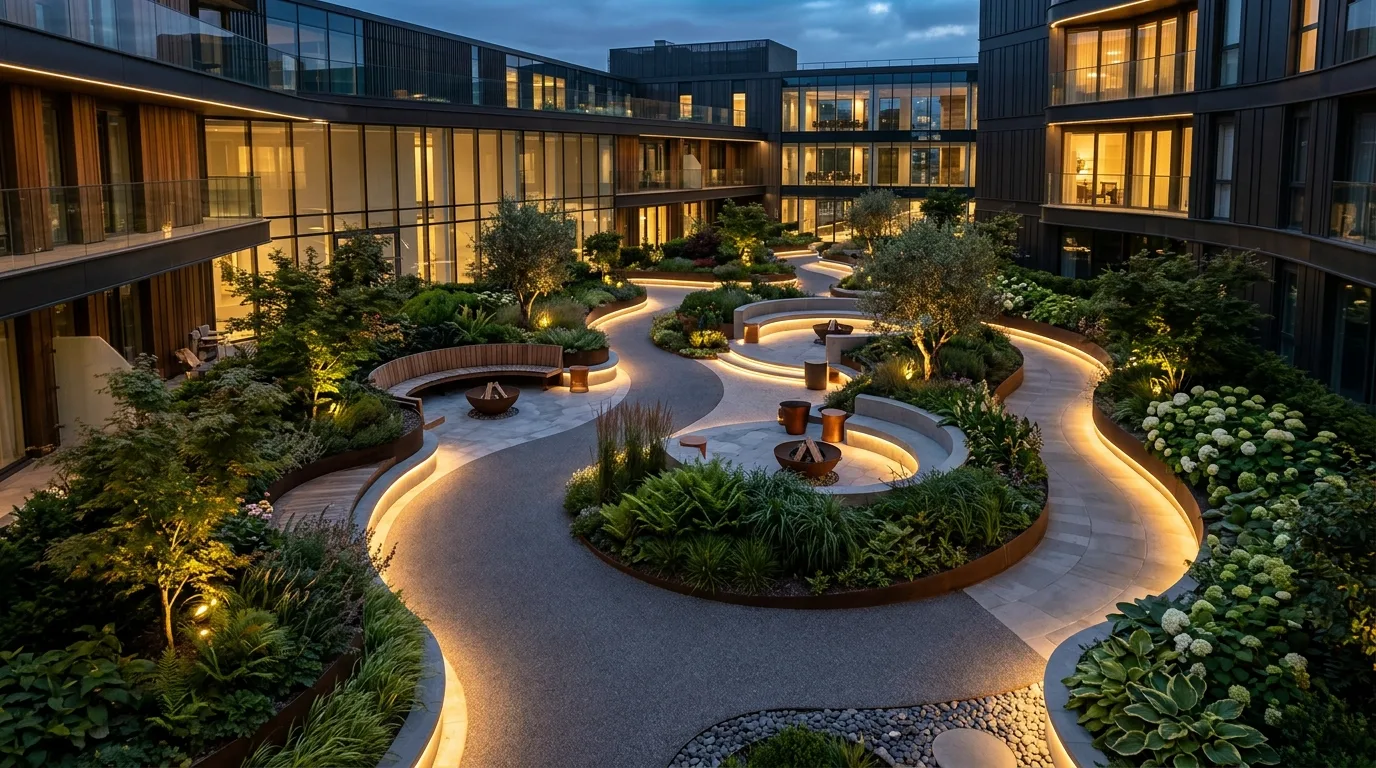
Idea 11
A front yard island bed shaped to draw movement around a tree
Curved island beds are useful because they can make a focal tree feel more embedded in the landscape while guiding mowing and circulation in a way that still feels easy and natural. The shape brings flow to the middle of the yard.
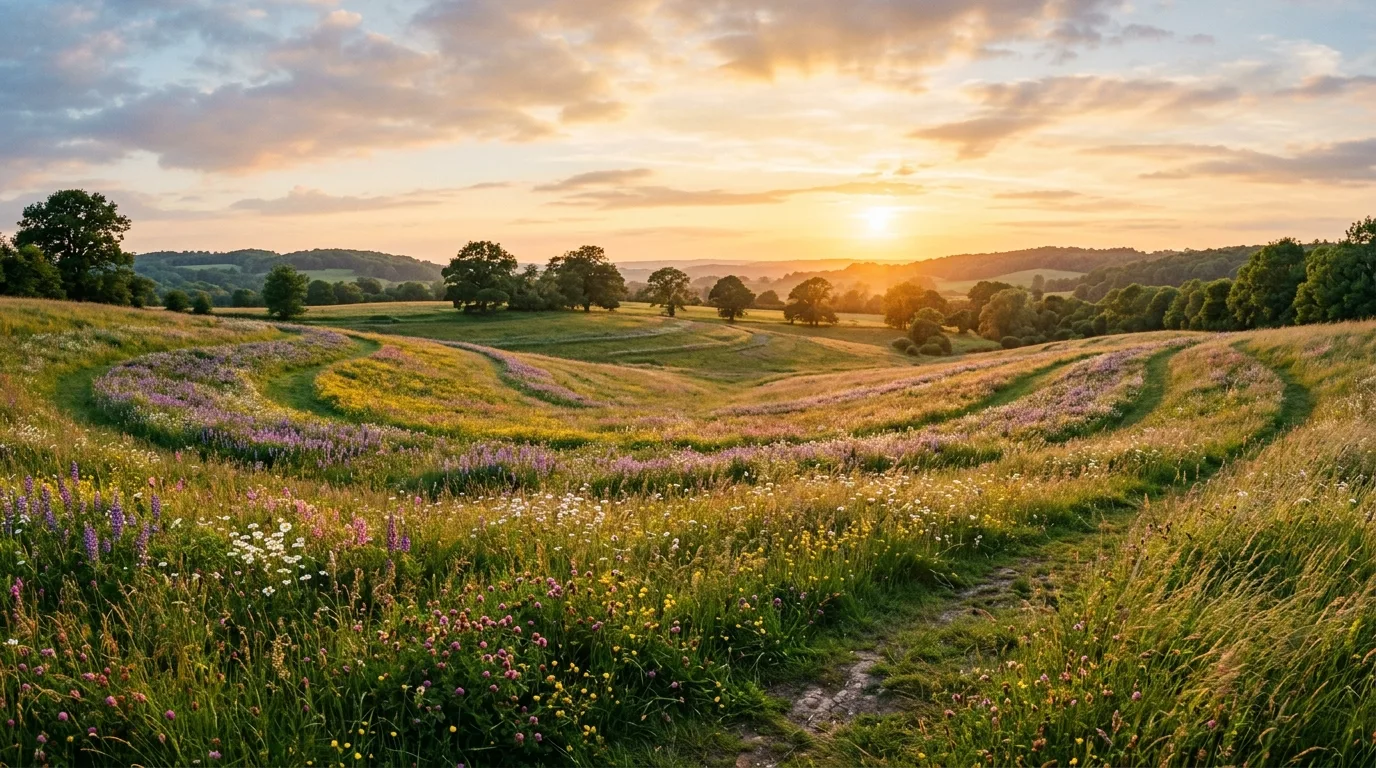
Idea 12
A border design where the eye travels smoothly from one zone to another
Good curved landscapes are not only about shape on paper but about how comfortably the eye moves through the whole garden without jarring stops or awkward transitions. That visual ease is what makes the yard feel more organic and complete.
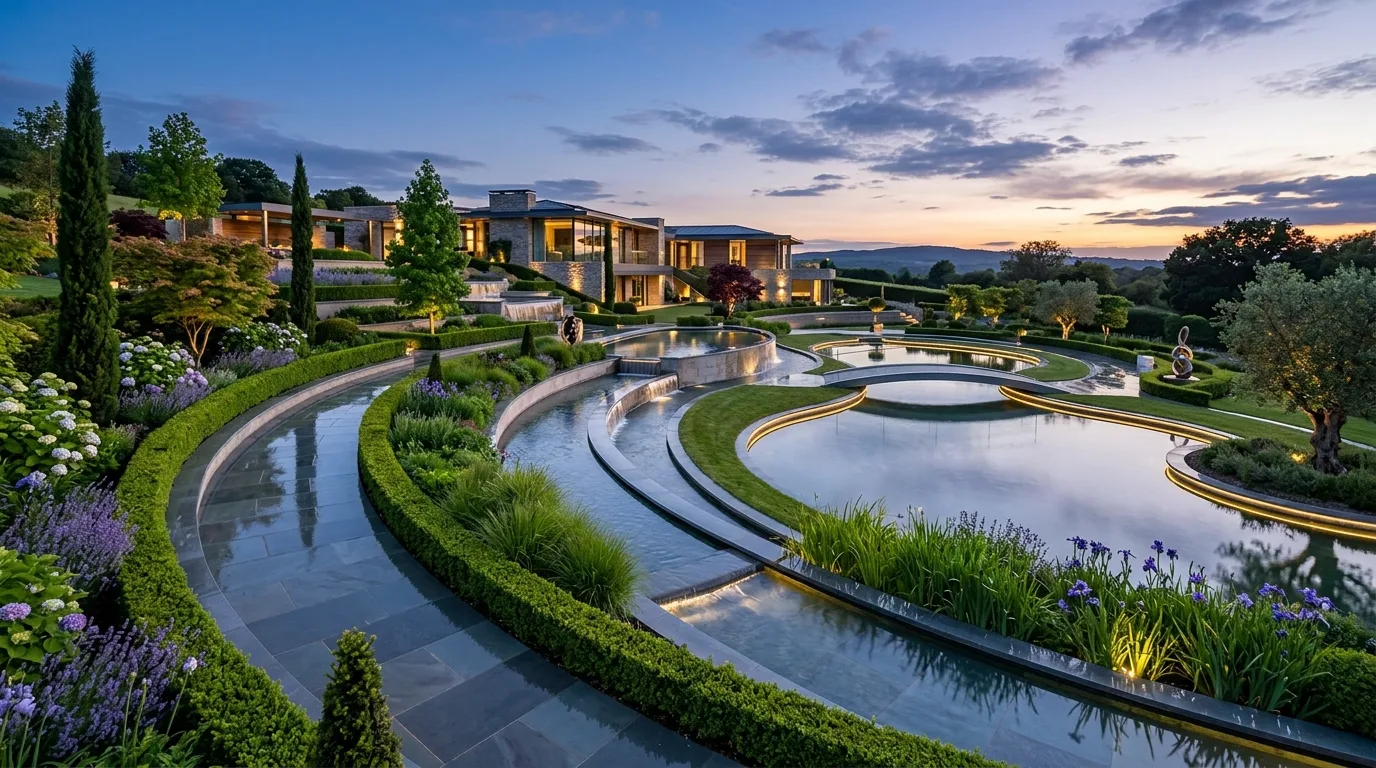
Idea 13
An organic garden layout where soft lines create harmony across the site
The best curved landscapes succeed because every bend feels connected to movement, planting, and the natural character of the site rather than decorative for its own sake. That consistency is what gives the design its graceful, harmonious flow.
Read next on Saw & Sprout
Edible Gardens
13 Clever Tomato Trellis Gardens for a Bountiful Harvest
Small-Space Growing
14 Space-Saving Small Vegetable Gardens for Urban GrowersFrequently asked questions
When do curves work best in landscape design?
They work especially well when you want softer movement, a more natural feel, or better transitions across lawns, paths, and planting beds.
Can curved landscapes still look neat?
Yes. Broad shapes, repeated planting, and clean edges can make curves feel just as polished as straight-line layouts.
How do you avoid awkward curves in a yard?
Keep them purposeful, generous, and connected to the overall layout instead of using many unrelated bends in different directions.