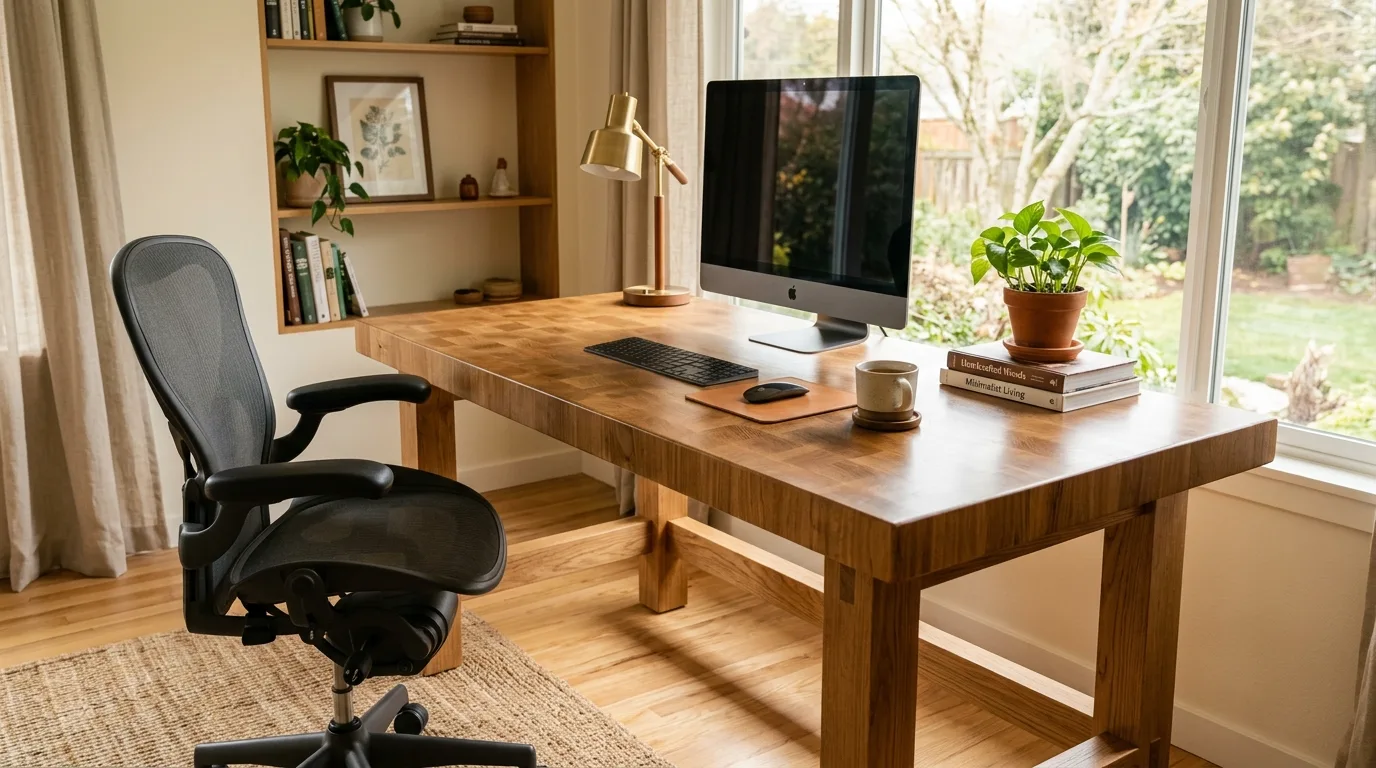
A butcher block desk can make a workspace feel more grounded immediately because the wood adds depth and warmth that many mass-market desks lack. Even a simple top on a clean base often feels more substantial, which can make the room easier to settle into for real work.
This material is especially useful in home offices because it works across many layouts. A floating nook, a wall-to-wall shared desk, a standing station, or a more furniture-like writing desk can all benefit from the same warm, durable surface.
These desk ideas focus on butcher block builds that feel sturdy, useful, and visually calm enough for everyday work. Some are minimal, some more built out, but each one turns the workspace into something more custom and more comfortable.
Quick planning notes
Build around how the desk will actually be used, because a writing nook, a dual-monitor setup, and a shared workspace each need different depth and storage.
Let the butcher block provide warmth while keeping the base structure clean, since that balance often makes a desk feel strong without becoming bulky.
Use surrounding walls, alcoves, and corners to your advantage so the desk responds to the room instead of acting like a generic freestanding piece.
Plan storage and cable handling early, because a warm desktop feels best when the rest of the workspace stays visually controlled.
Idea 1
Simple trestle desk with a thick butcher block top
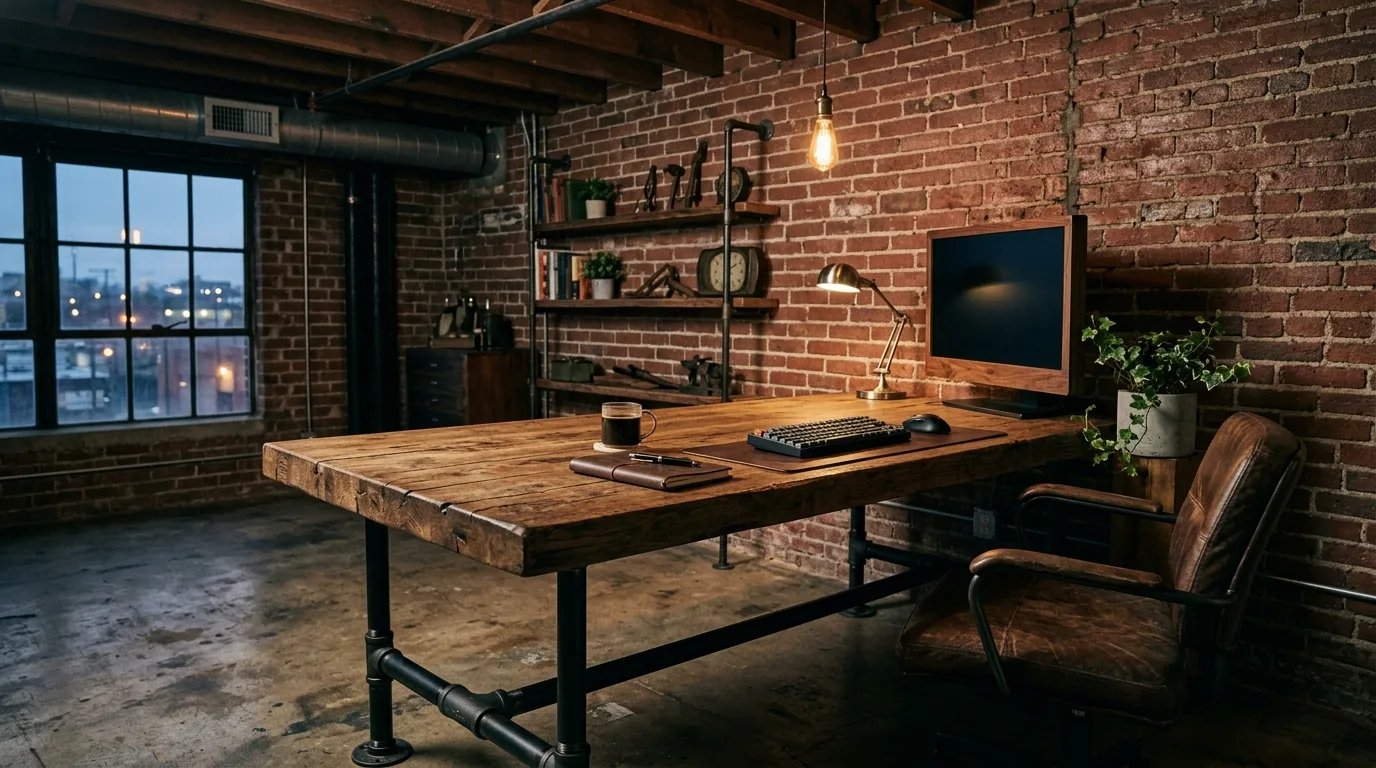
A trestle base paired with a butcher block top creates a desk that feels sturdy, open, and warm enough for long daily use. The wood adds natural character to the workspace, while the open base keeps the whole setup from feeling visually heavy.
Idea 2
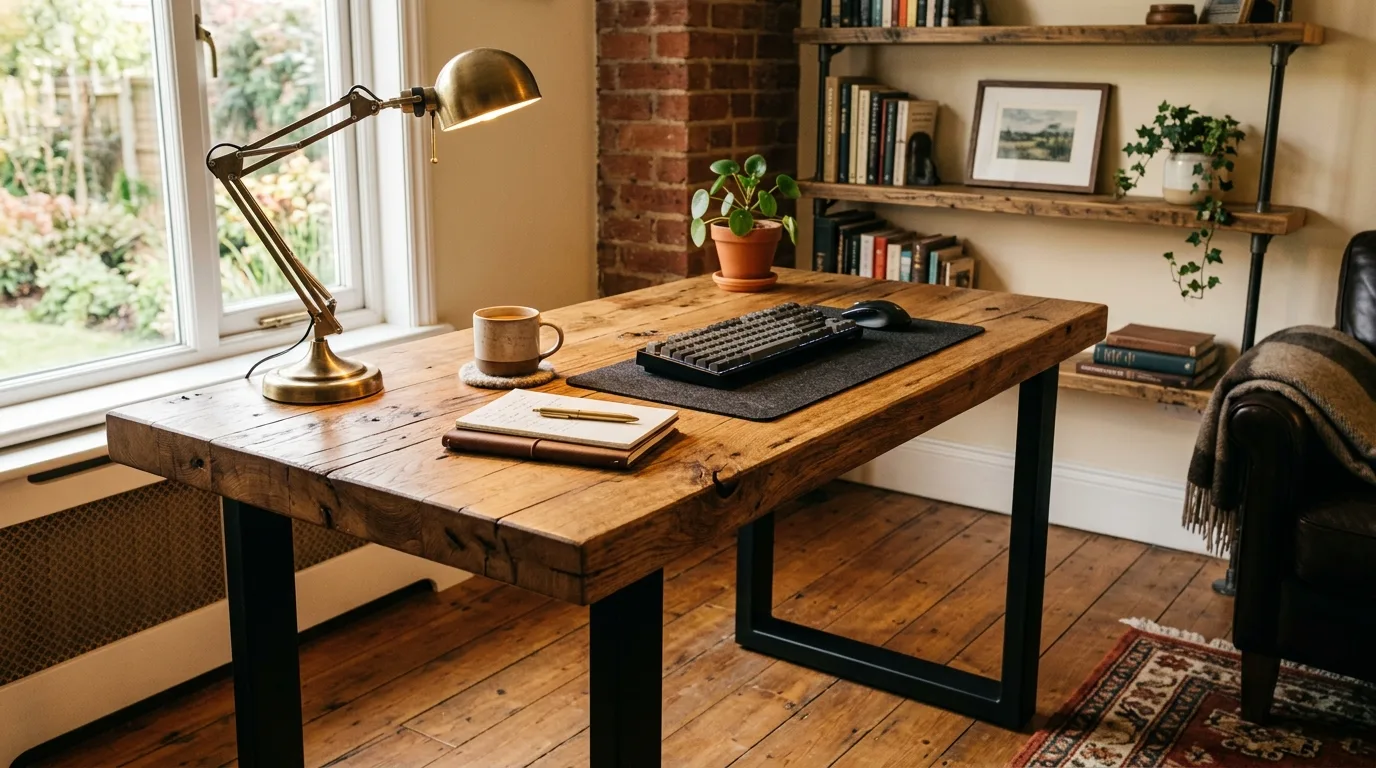
Wall to wall office desk with butcher block and floating drawers
A wall-to-wall butcher block desk makes a workspace feel genuinely custom because it uses every inch with intention. Floating drawers keep the lower area lighter, while the continuous wood surface gives the room a calm and durable foundation for work.
Idea 3
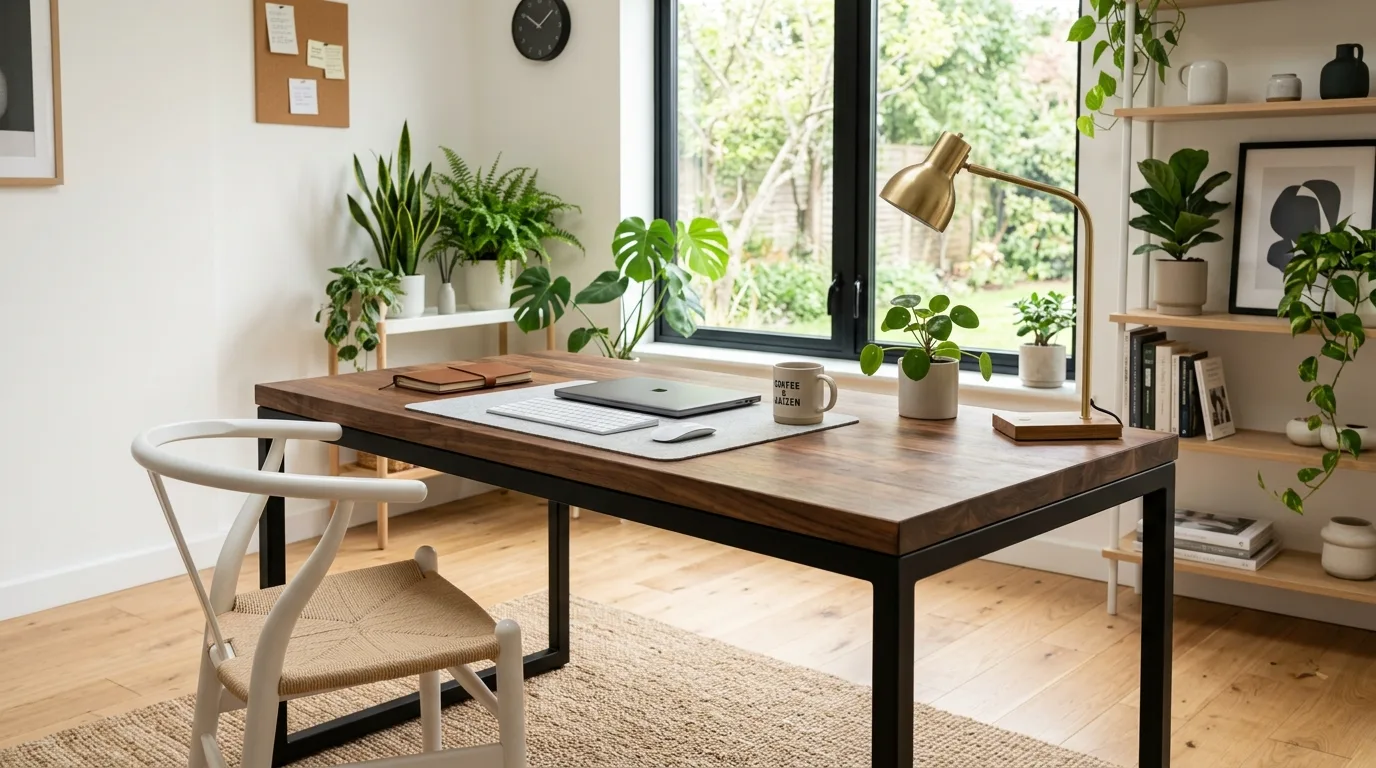
Black metal leg desk with a warm wood work surface
Black metal legs give a butcher block desk sharper definition, which can be helpful in modern offices that still need warmth. The contrast makes the workspace feel structured and contemporary, while the wood keeps it from becoming too cold or industrial.
Idea 4
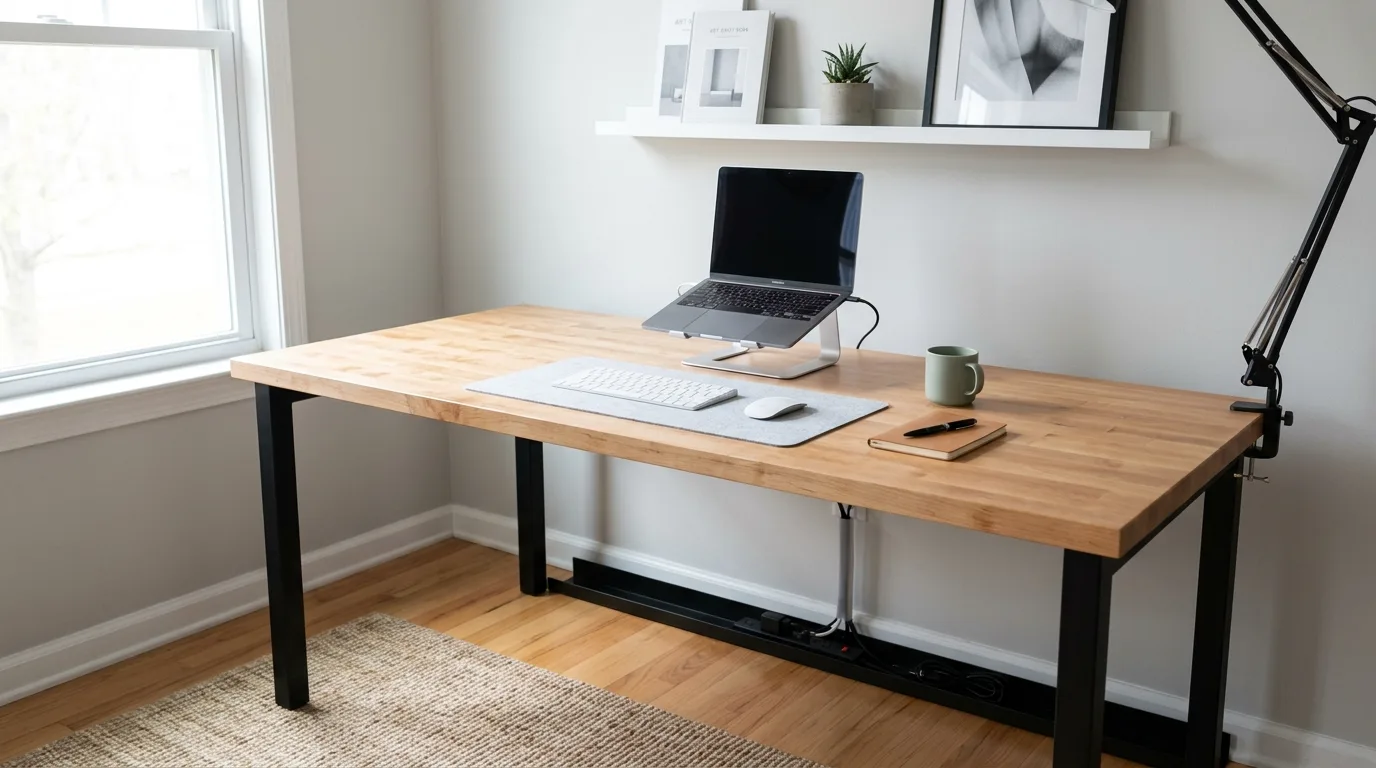
Corner desk build that wraps the room with continuous grain
A corner butcher block desk is especially effective in home offices because it creates more working surface without crowding the center of the room. When the grain runs continuously across both spans, the desk feels cleaner, calmer, and much more intentionally built.
Idea 5
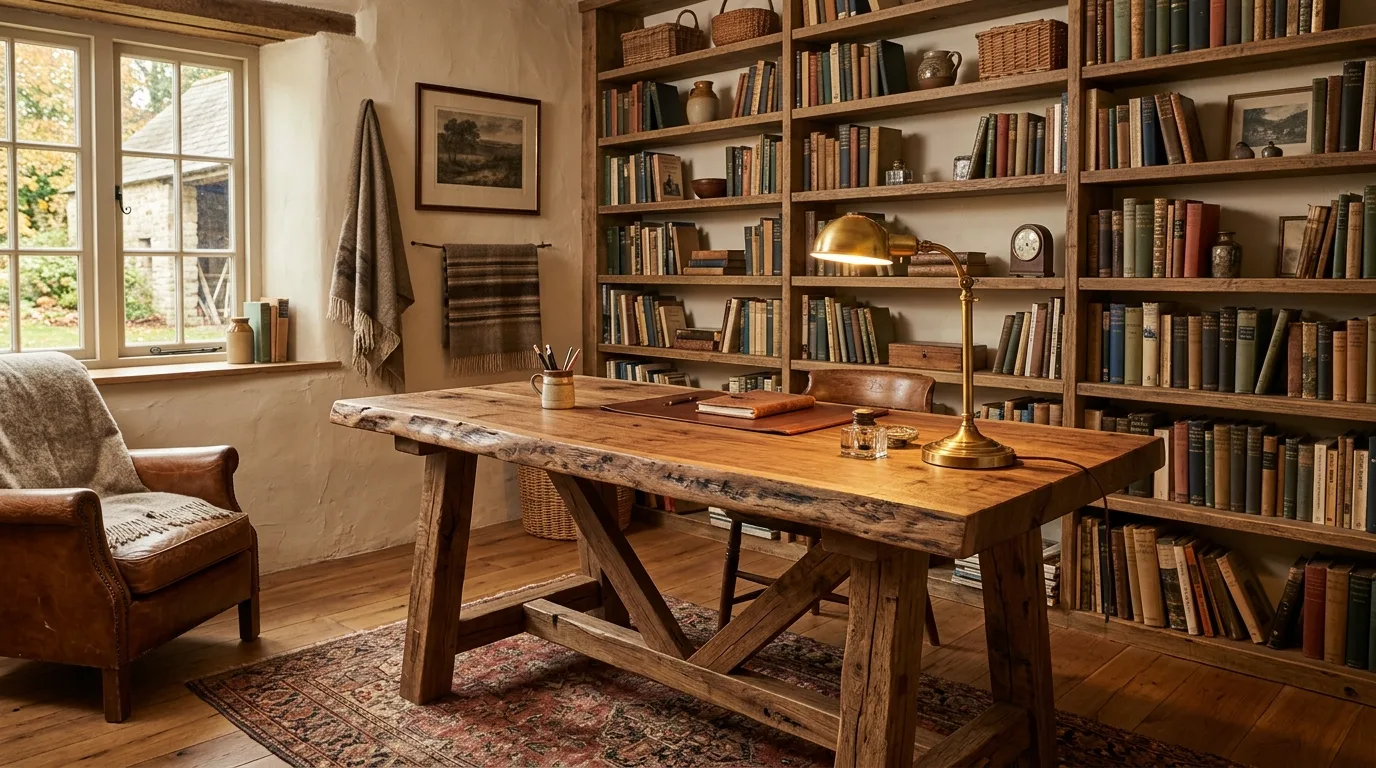
Compact writing desk with slim apron and natural oil finish
A compact butcher block writing desk proves that a small footprint can still feel substantial if the materials are right. The natural oil finish enriches the grain and gives the desk enough presence that it can anchor a bedroom or study nook beautifully.
Idea 6
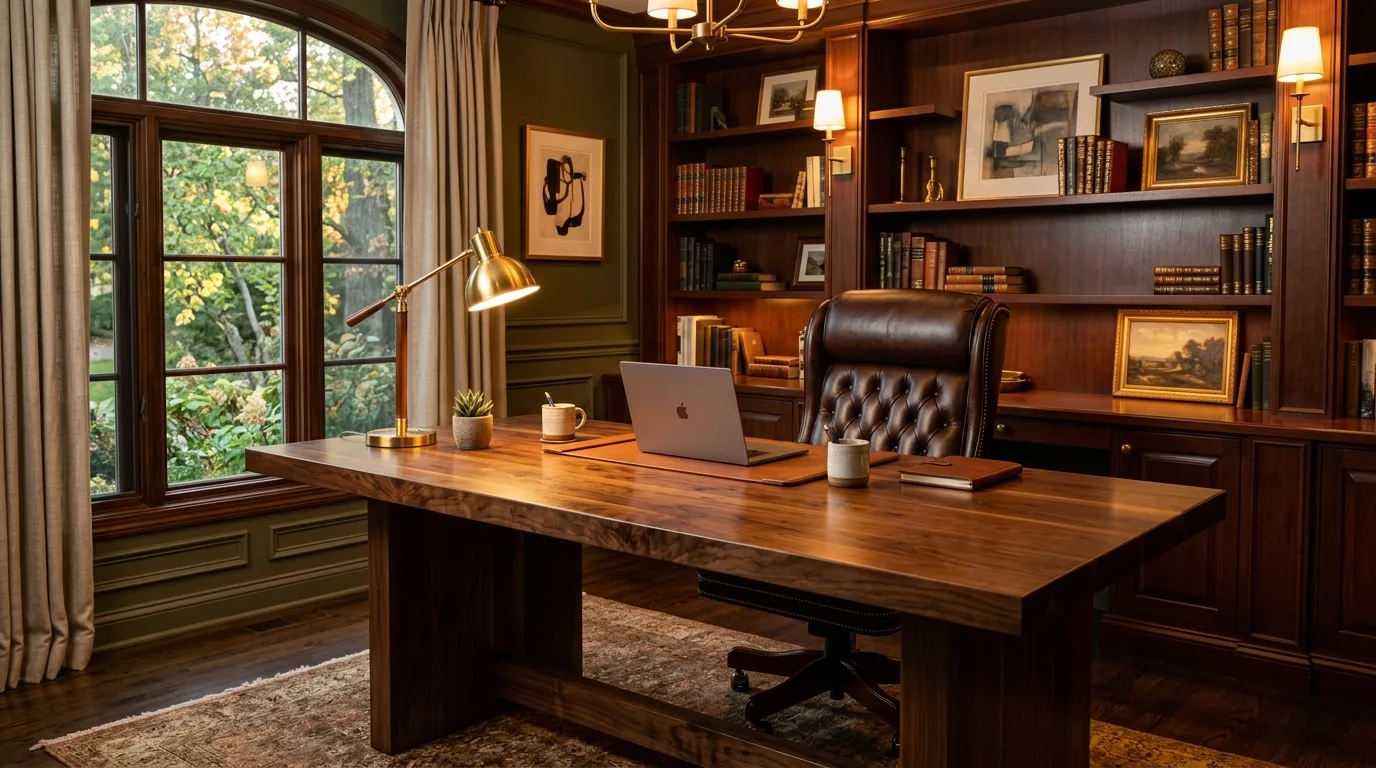
Two person workspace with butcher block and center drawer bank
A shared butcher block desk works best when the layout gives each person real elbow room and a clear storage zone of their own. A center drawer bank helps separate the stations while still letting the long wood surface feel unified and visually calm.
Idea 7
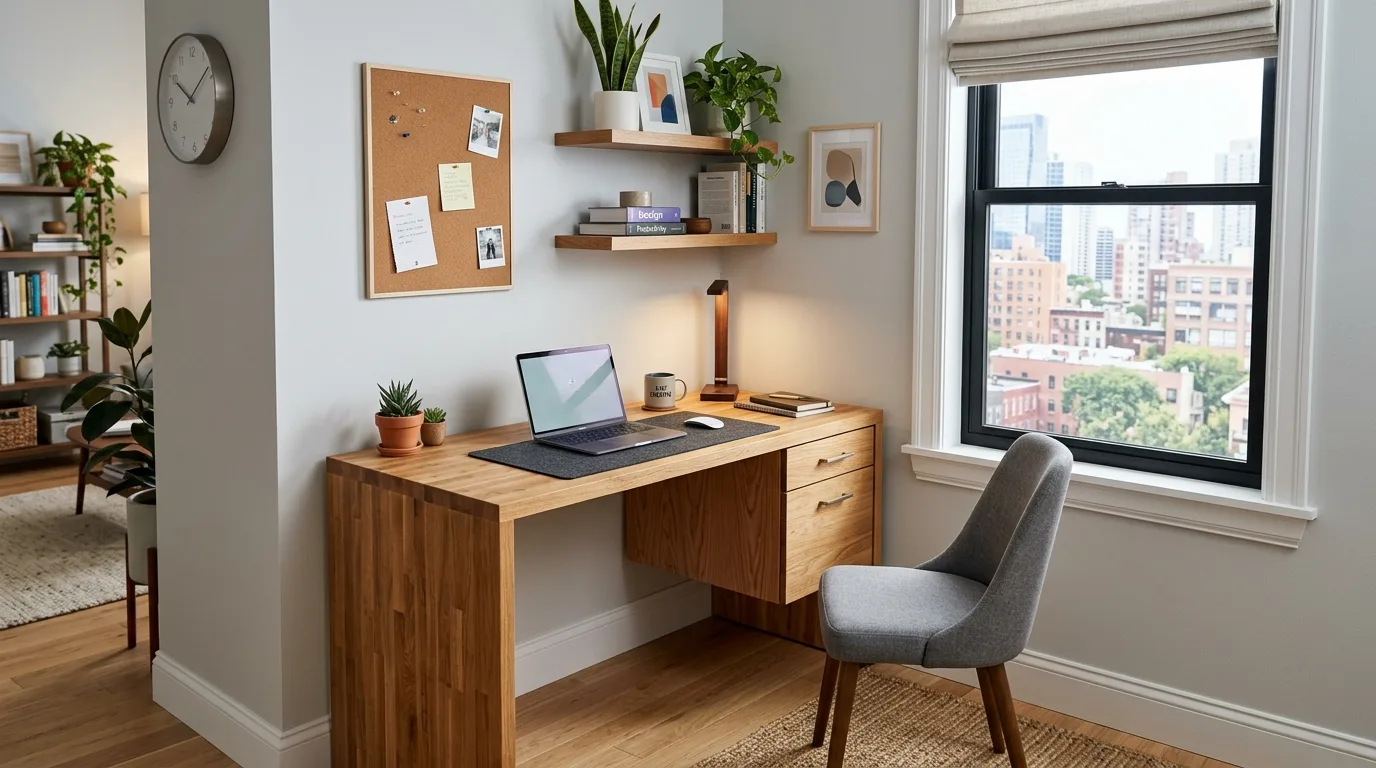
White base desk with butcher block top in a bright office
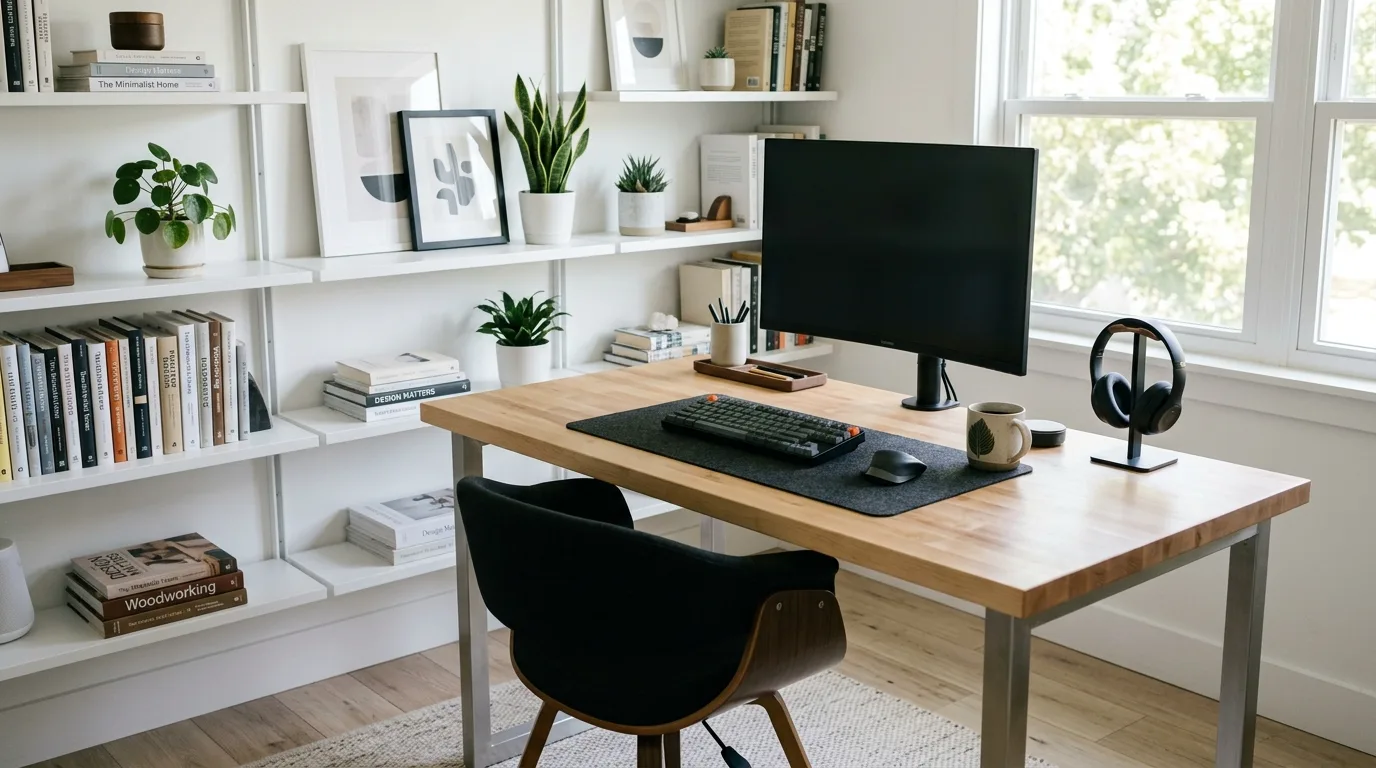
A white base keeps the office bright, while the butcher block top supplies the warmth that often makes home workspaces feel less sterile. It is a dependable mix for rooms that need to stay light but still benefit from a more grounded material palette.
Idea 8
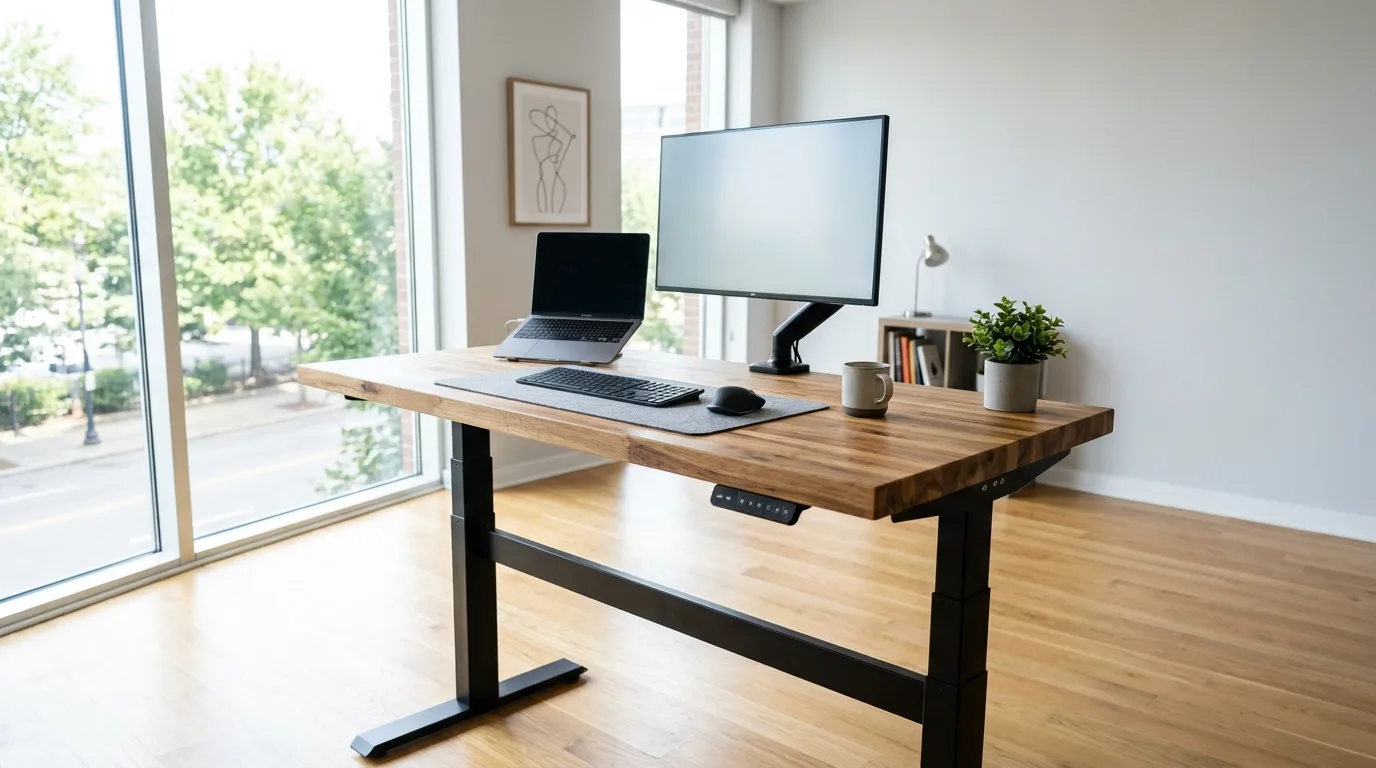
Standing height desk with shelves built beneath one side
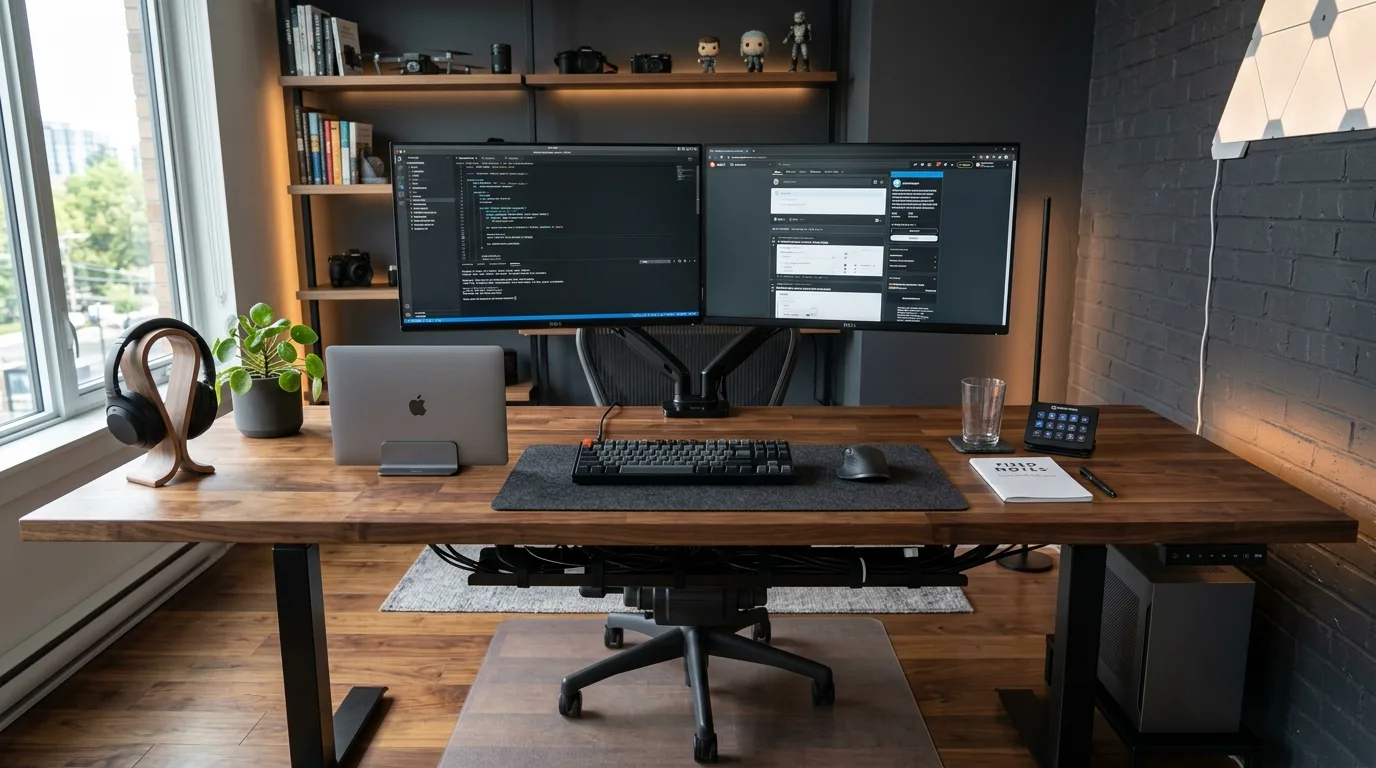
Using butcher block for a standing desk gives the workspace more solidity and warmth than many lightweight adjustable surfaces. Adding shelves beneath one side helps the desk handle printers, baskets, or supplies without taking away from its clean working zone.
Idea 9
Mid century inspired desk with tapered legs and rounded corners
Rounded corners and tapered legs can make a butcher block desk feel more graceful and furniture-like, which is useful when the office sits inside a bedroom or living space. The wood still keeps it practical, but the silhouette gives the room more design personality.
Idea 10
Built in nook desk with butcher block and upper pinboard wall
A built-in nook desk benefits from butcher block because the wood turns even a small alcove into something that feels intentional and grounded. Pairing it with a pinboard wall above adds function without crowding the desktop with extra organizers.
Idea 11
Drawer cabinet bases supporting a long butcher block slab
Using cabinet bases under a butcher block desktop gives the workspace substantial storage while preserving the warmth and continuity of one broad surface above. It is a practical setup for people who want custom office function without sacrificing visual order.
Idea 12
Minimal laptop desk with a floating butcher block top
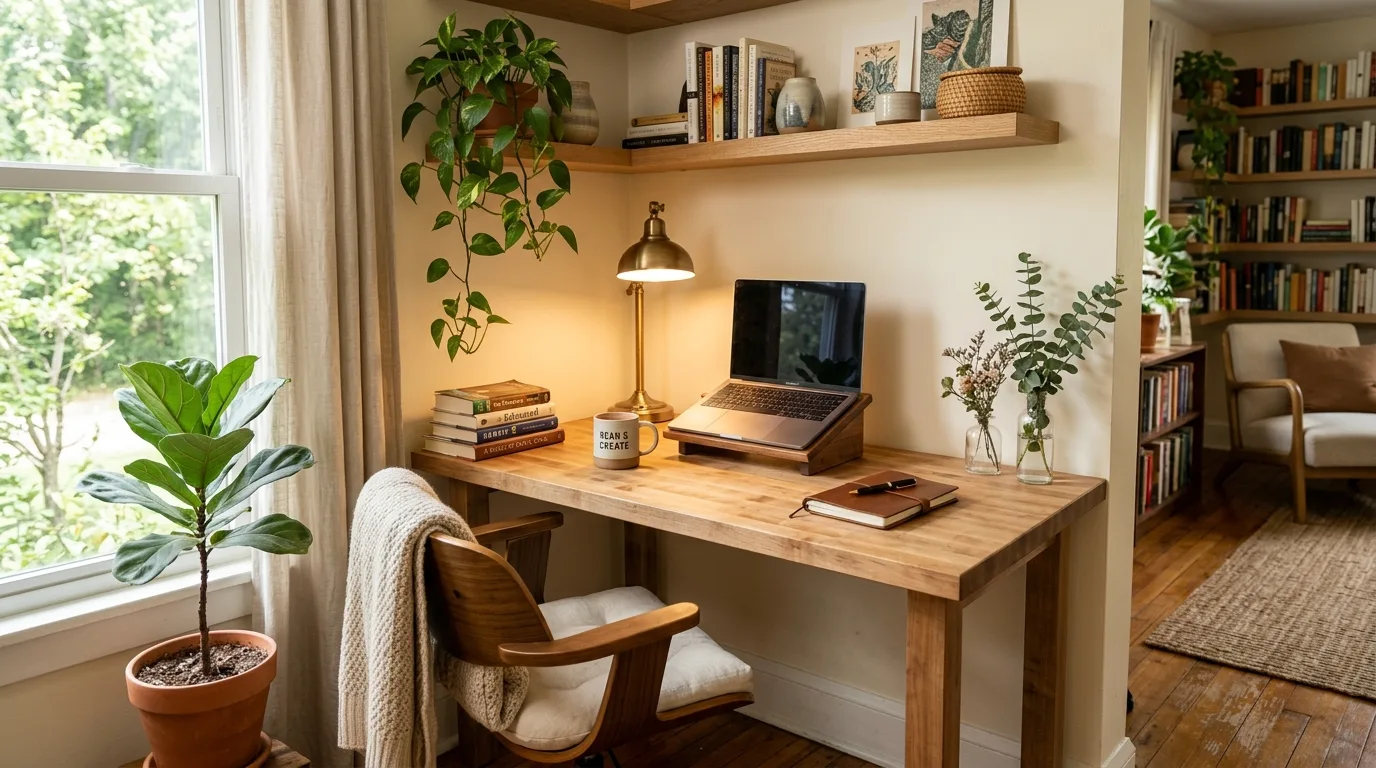
A floating butcher block top can make a minimal desk feel cleaner and more architectural, especially in a small office where every visual line matters. The wood keeps the setup from feeling too bare, adding just enough warmth to balance the stripped-back form.
Read next on Saw & Sprout


Edible Gardens
13 Clever Tomato Trellis Gardens for a Bountiful Harvest
Small-Space Growing
14 Space-Saving Small Vegetable Gardens for Urban GrowersFrequently asked questions
Why is butcher block a good material for a desk?
It feels sturdy, looks warm, and works across many office styles while providing a durable surface for daily use.
Can a butcher block desk work in small rooms?
Yes. Floating tops, corner layouts, and wall-mounted builds can all bring the material into compact workspaces without overwhelming them.
What kind of base works best under a butcher block desk?
Trestles, drawer cabinets, metal legs, and built-in wall supports all work well depending on how much storage and visual weight the room can handle.