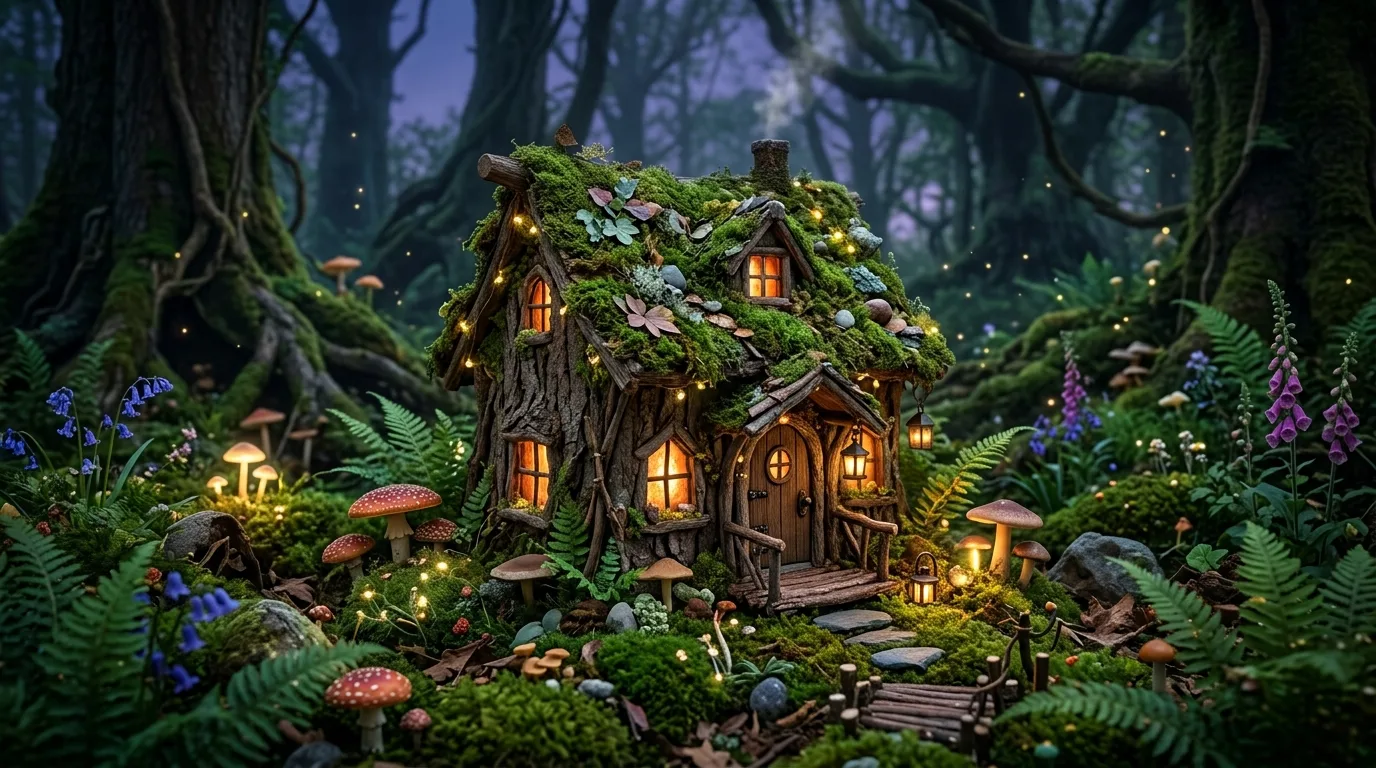
Fairy houses feel most magical when they look as if they could have appeared quietly in the garden on their own. Bark, moss, twigs, acorns, stones, and weathered wood all help the structures blend into real planting, which is often what gives them their storybook charm.
The strongest versions are not just cute miniatures sitting on top of soil. They create a tiny sense of place, with paths, porches, roofs, doors, and hidden corners that make the whole scene feel a little more believable and immersive.
These fairy house ideas focus on natural materials that already belong in the garden visually, so the finished projects feel more enchanted and less artificial. Each one offers a different kind of woodland character, from tucked away cottages to little village style displays.
Quick planning notes
Use materials that already suit the garden setting, because bark, moss, stones, and seed pods help the house feel rooted in its surroundings instead of set on top of them.
Build around one strong shape, such as a stump, rock, hollow log, or bark shell, so the structure has a clear identity before the decorative details are added.
Add only a few tiny path, porch, or window details that improve the scene, because fairy projects often look better when they stay suggestive rather than overloaded.
Place the house where foliage can partially soften it, since a little concealment is often what gives a fairy structure its sense of discovery and magic.
Idea 1
Twig and bark cottage tucked under a fern
A fairy house made from bark and twigs feels right at home beneath real garden planting because the textures echo the woodland floor around it. That natural blending is what makes the little structure feel magical instead of simply decorative.
Idea 2
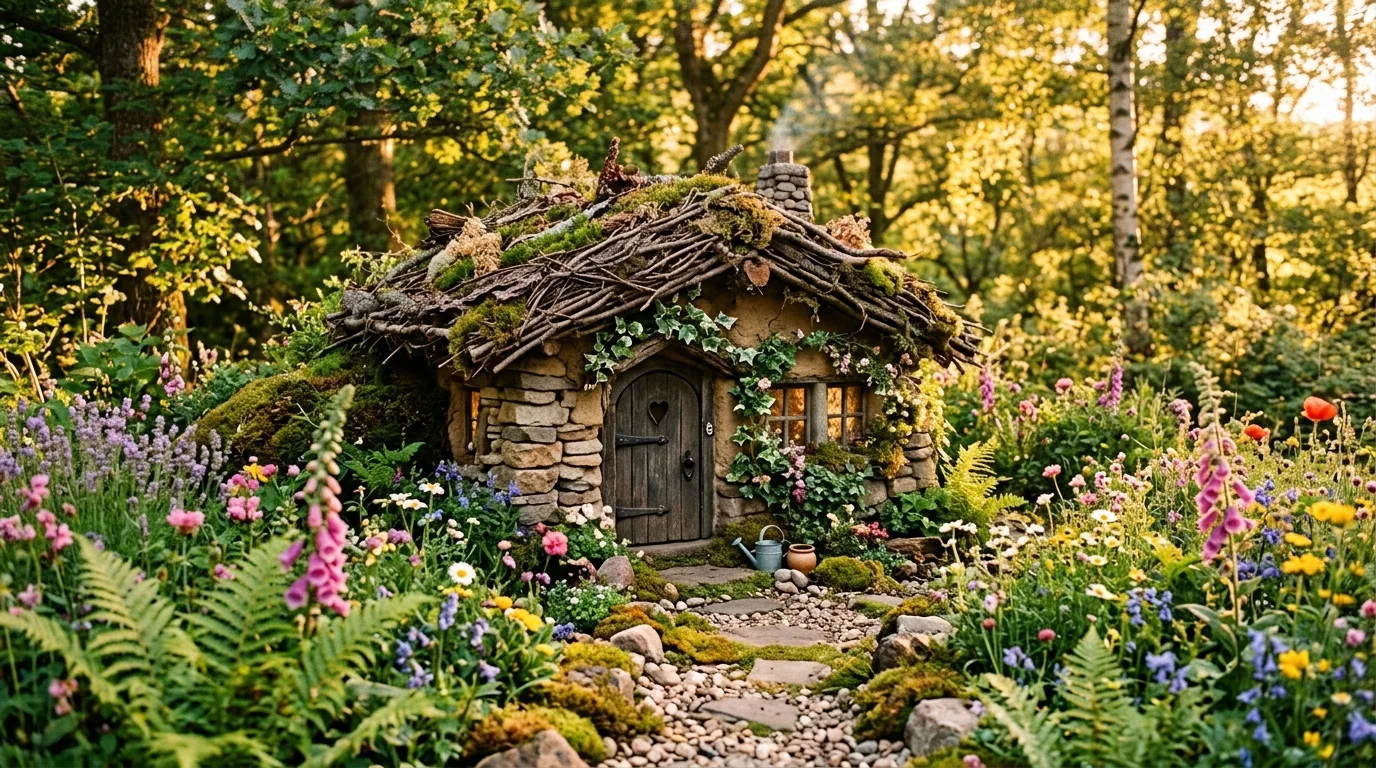
Acorn roof house with a pebble front path
An acorn roof gives the house a charming storybook silhouette, and a tiny pebble path makes the whole scene feel more complete and believable. Small details like that are often what turn a craft project into something that feels genuinely enchanting.
Idea 3
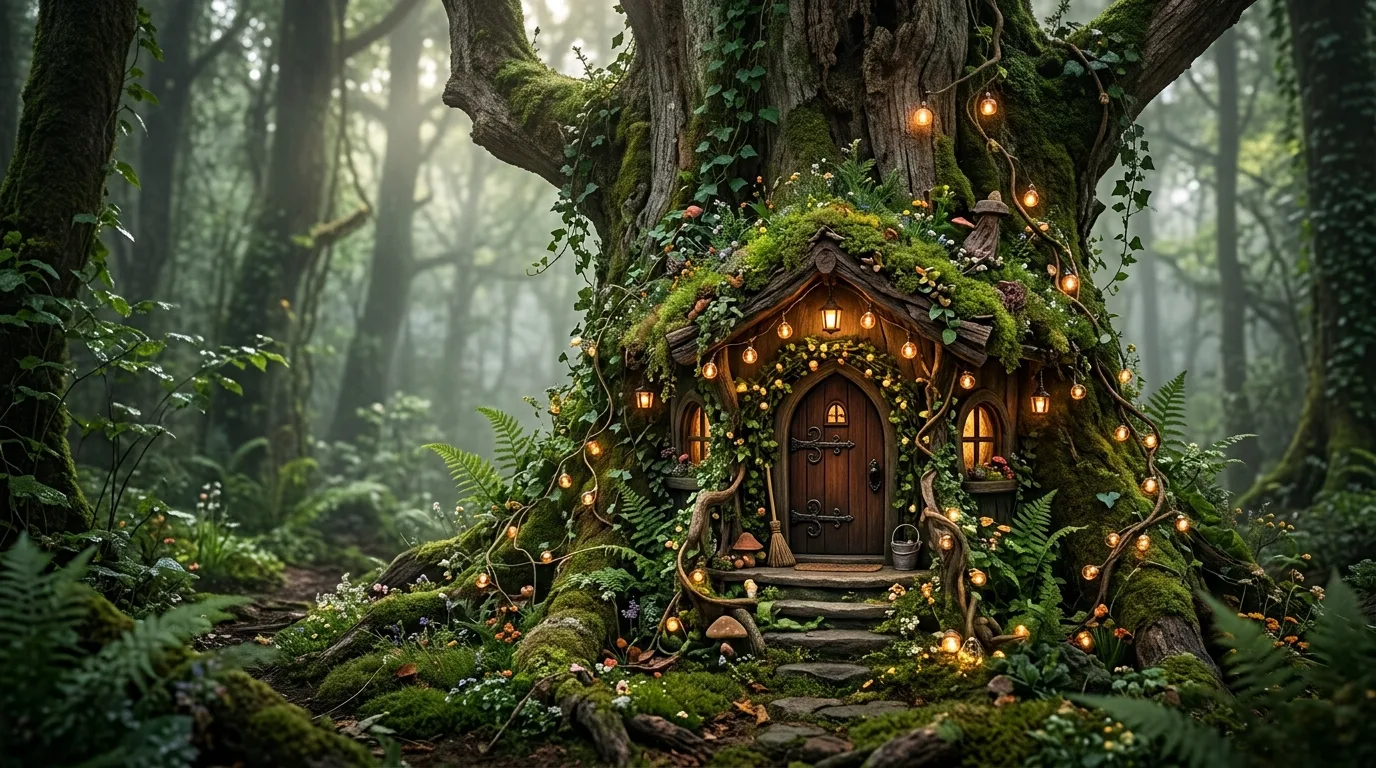
Moss covered stump house with a round wooden door
Using moss to soften a stump house keeps the project connected to the garden and gives it that settled, hidden quality people tend to love in fairy scenes. The round door adds a whimsical focal point without needing much else around it.
Idea 4
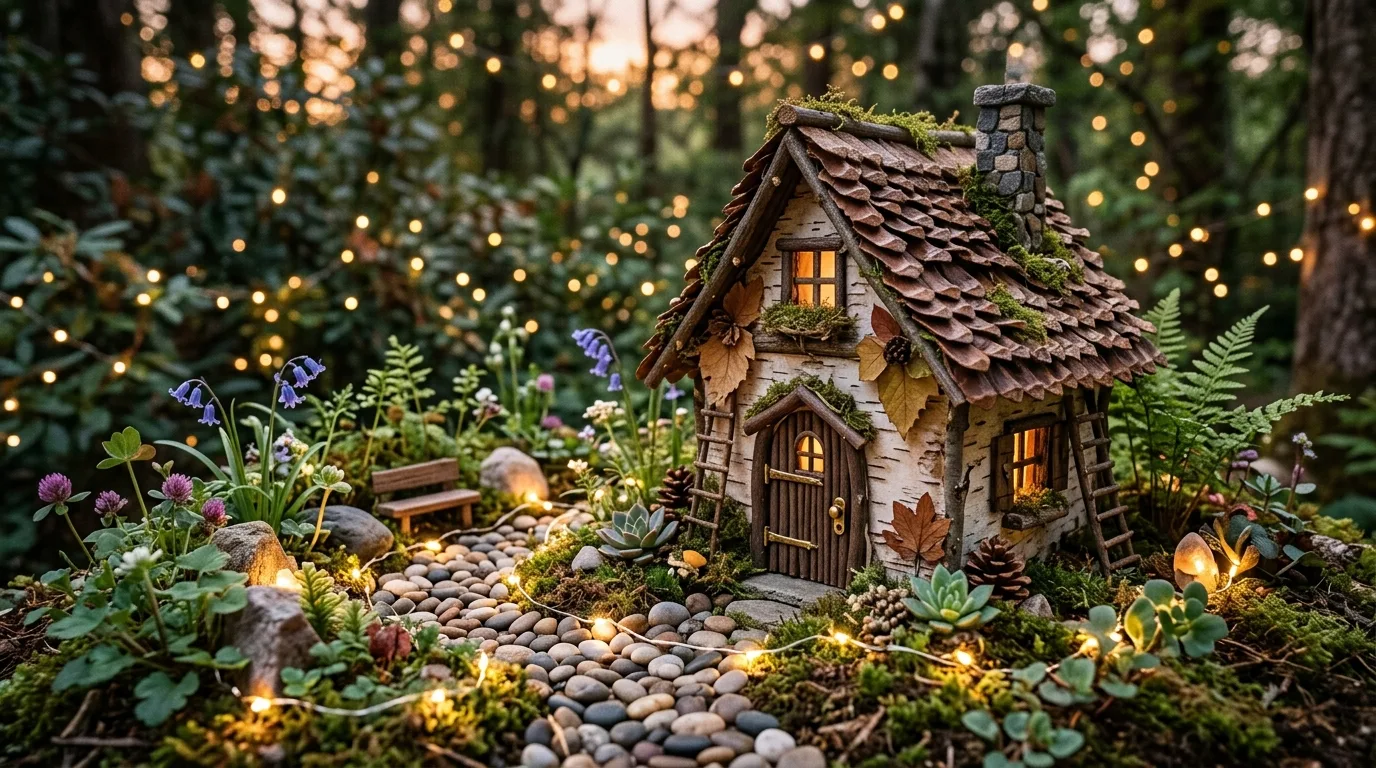
Stone base cottage with dried flower window trim
A low stone base makes the house feel sturdy and grounded, while tiny dried flowers around the windows add a softer romantic note. That balance works especially well if you want the fairy house to feel handmade but still carefully finished.
Idea 5
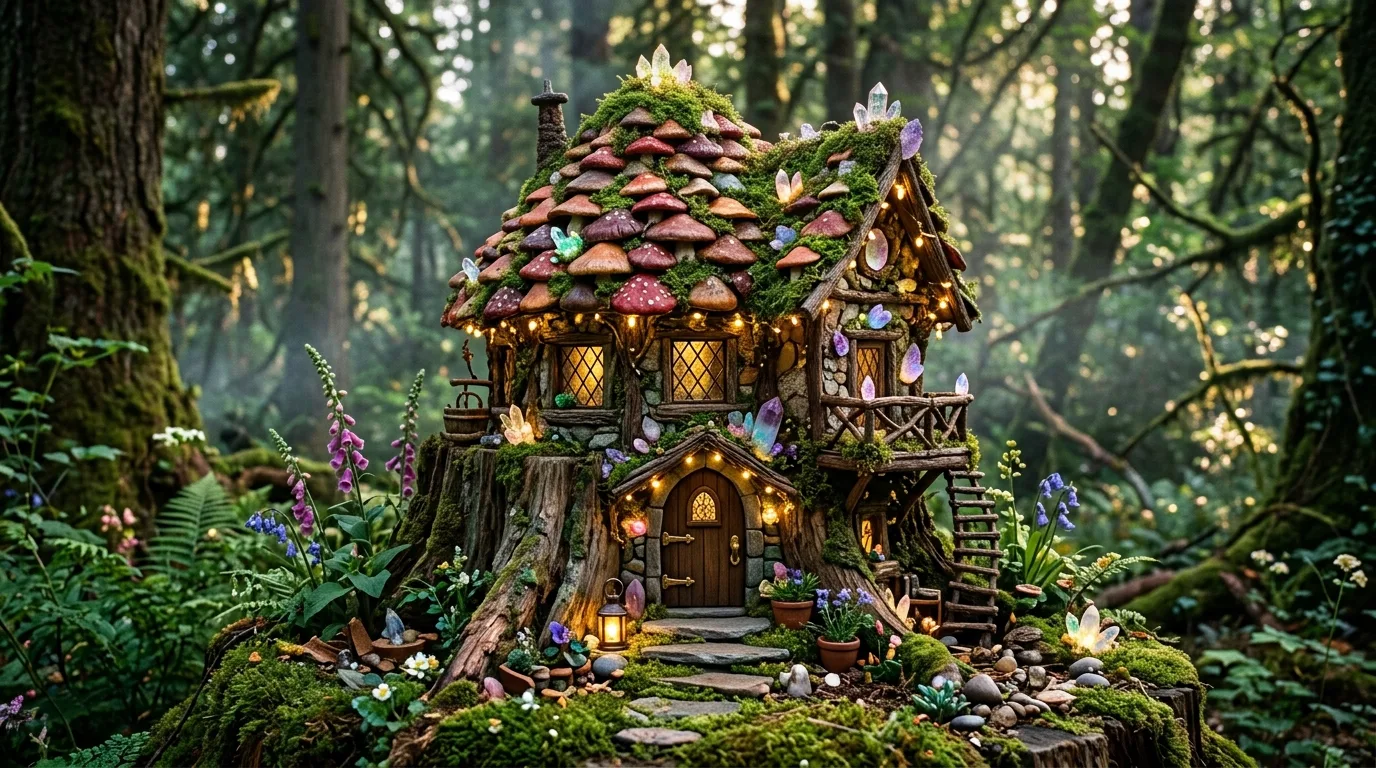
Pinecone roof house hidden in a shade garden
A pinecone roof gives the structure a slightly wild and woodsy texture that fits beautifully in darker garden corners where moss and shade plants already thrive. It feels as if the house belongs there naturally, which is part of the magic.
Idea 6
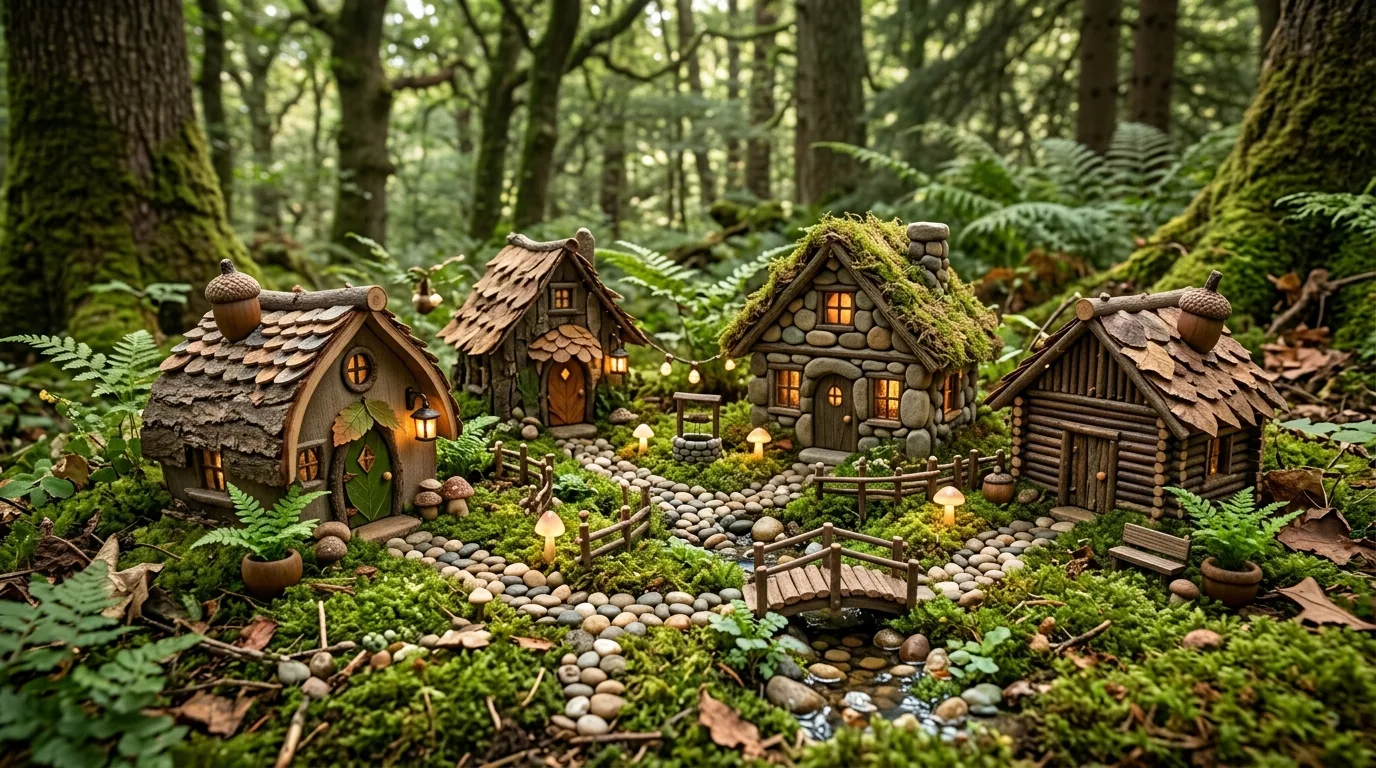
Fairy doorway built into a large garden rock
Turning a rock into the setting for a fairy door makes the installation feel more permanent and more integrated than a freestanding miniature alone. It is a clever way to use what is already in the garden and still create a strong focal surprise.
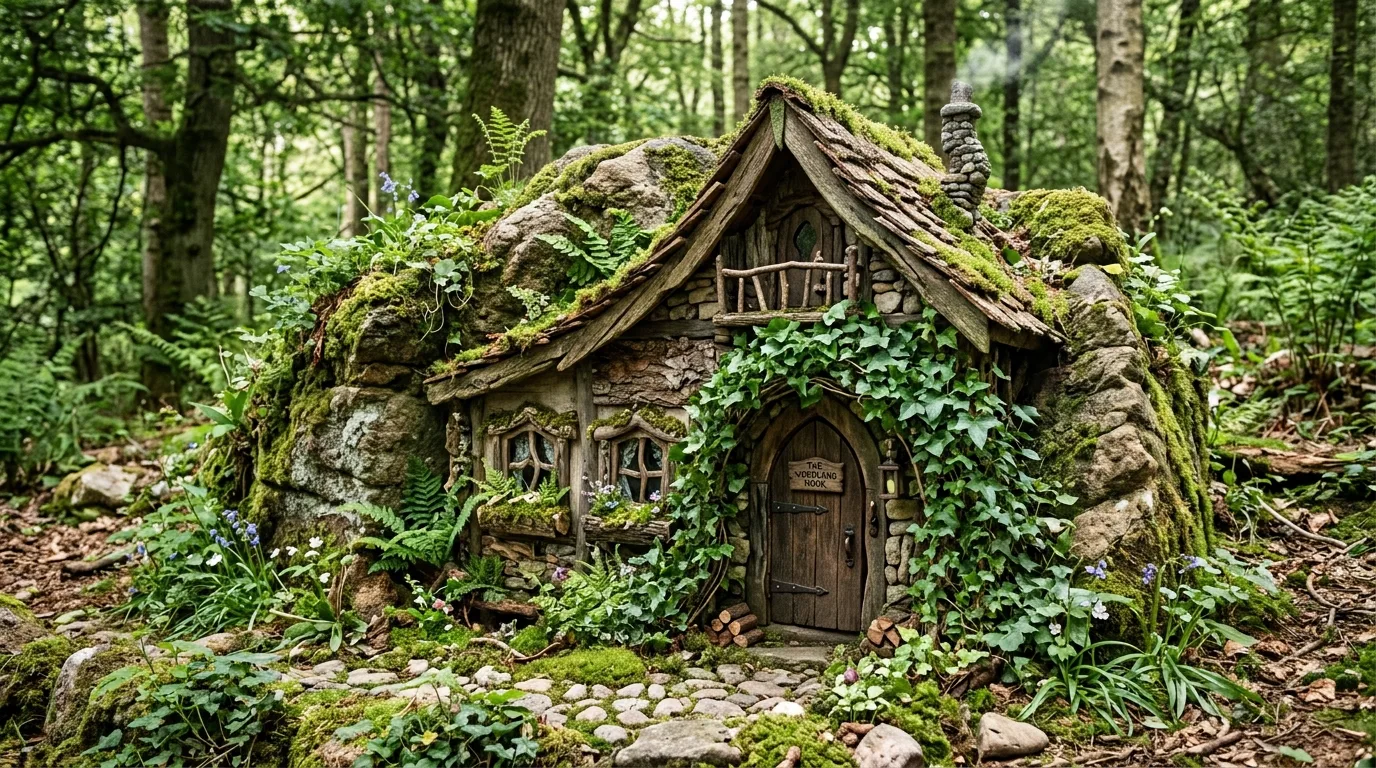
Idea 7
Bark tower house with a leaf shaped front awning
A taller house shape helps the little structure stand out in fuller planting, and a leaf awning adds just enough delicacy to keep it from feeling too rough. The mix of vertical form and soft detail makes it especially eye catching from a short distance.
Idea 8
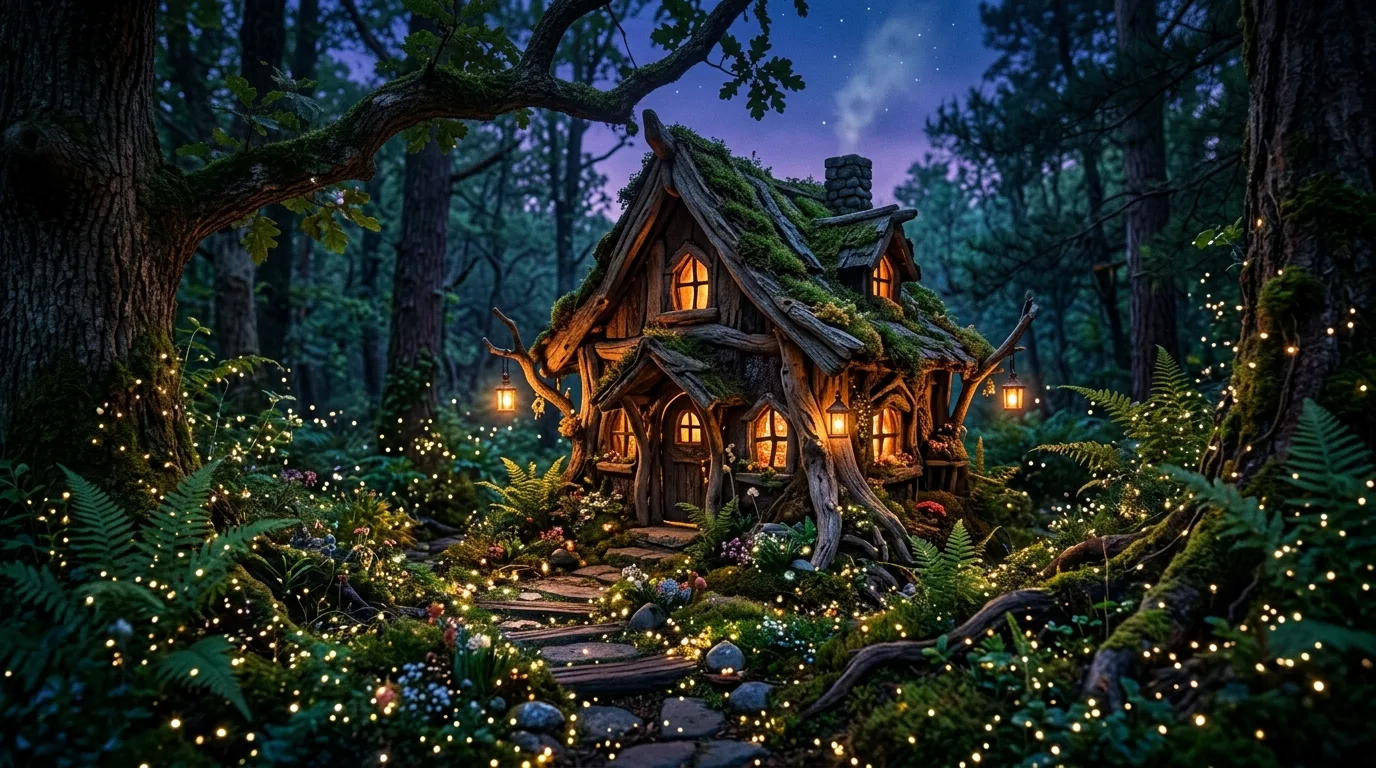
Shell and twig house for a whimsical mixed texture look
Adding shells to a twig house gives the whole project a more collected, imaginative feel and keeps it from looking like every other woodland miniature. It is a good choice when you want the house to feel handmade and slightly eccentric in a charming way.
Idea 9
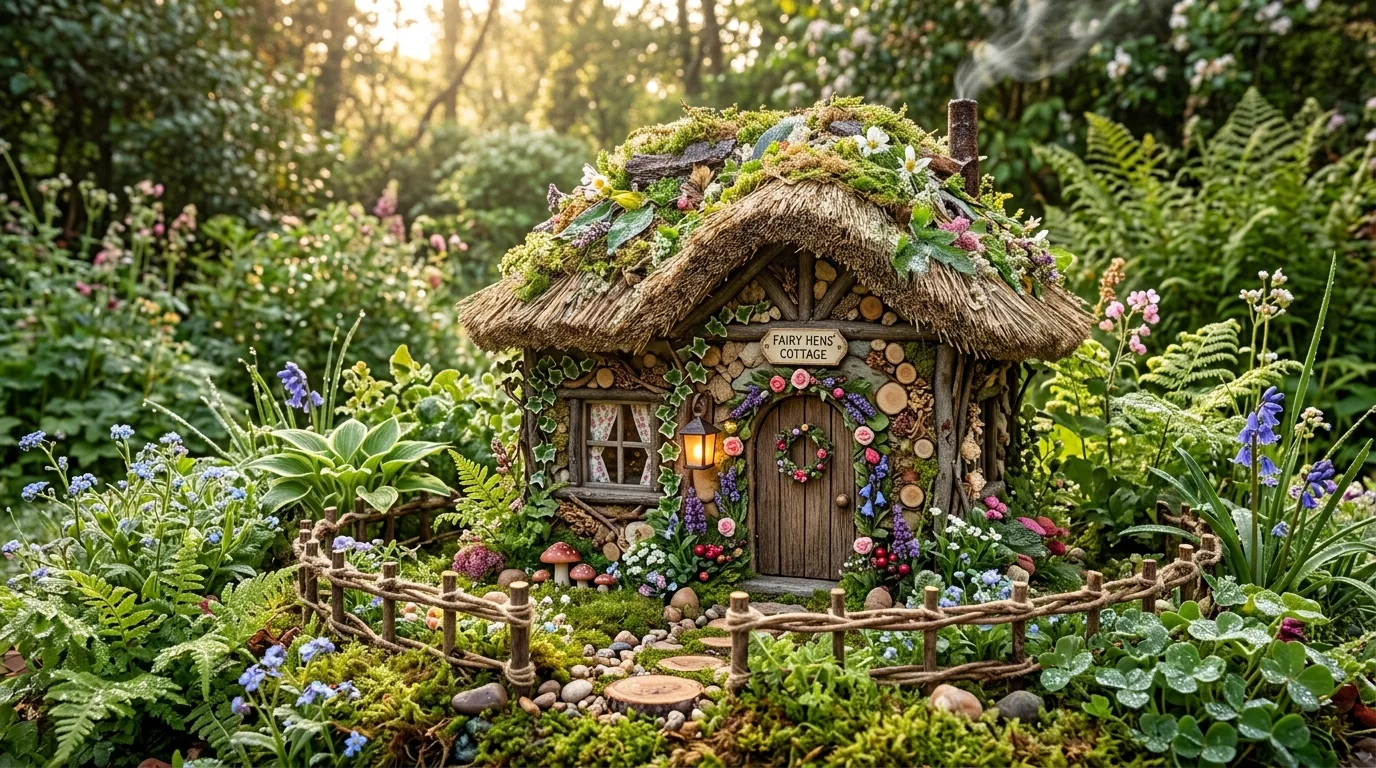
Mini lantern lit fairy porch under low branches
A tiny porch with lantern details gives the house warmth and helps the whole composition feel inhabited, even though it is only a miniature. Those welcoming touches can make a fairy garden scene feel much richer without adding many materials.
Idea 10
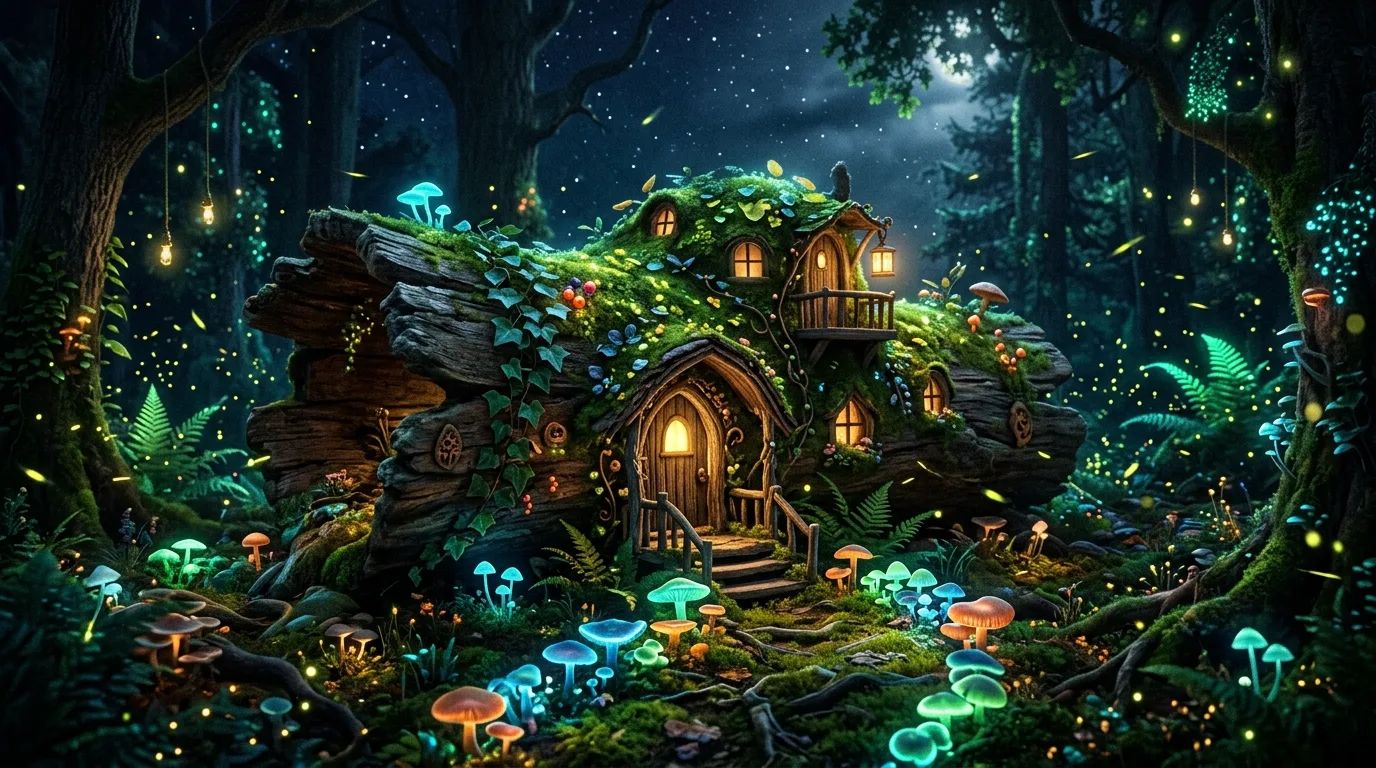
Hollow log house with stepping stones and moss seams
Working with a hollow log gives the structure a ready made sense of age and character, while moss seams help all the crafted parts disappear into the material. The result feels organic and wonderfully hidden, which is exactly what many fairy houses need.
Idea 11
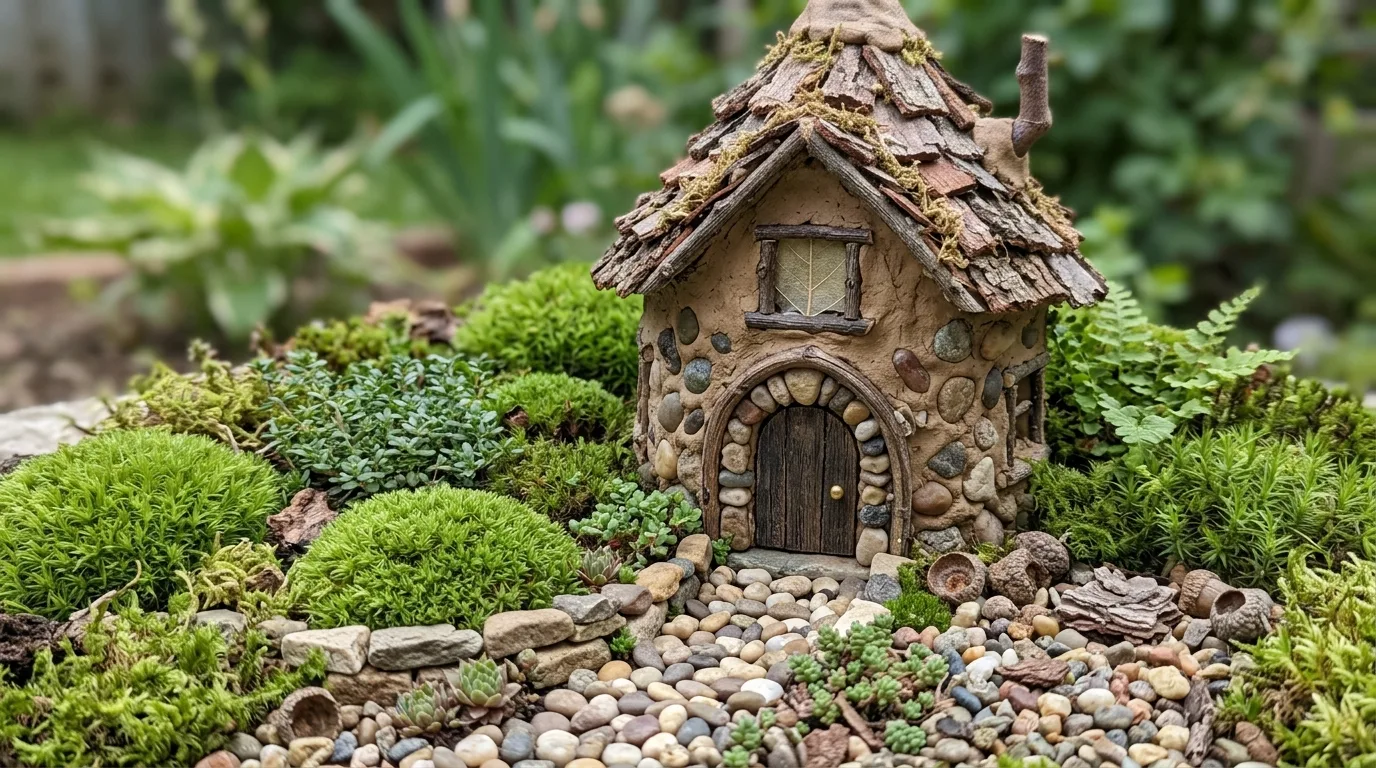
Flower pot fairy village built with bark and gravel lanes
Using a large flower pot as the setting makes the whole display easier to place on a patio or porch while still creating a complete tiny world. The gravel lanes and bark houses turn the planter into more than a single object and make it fun to look through.
Idea 12
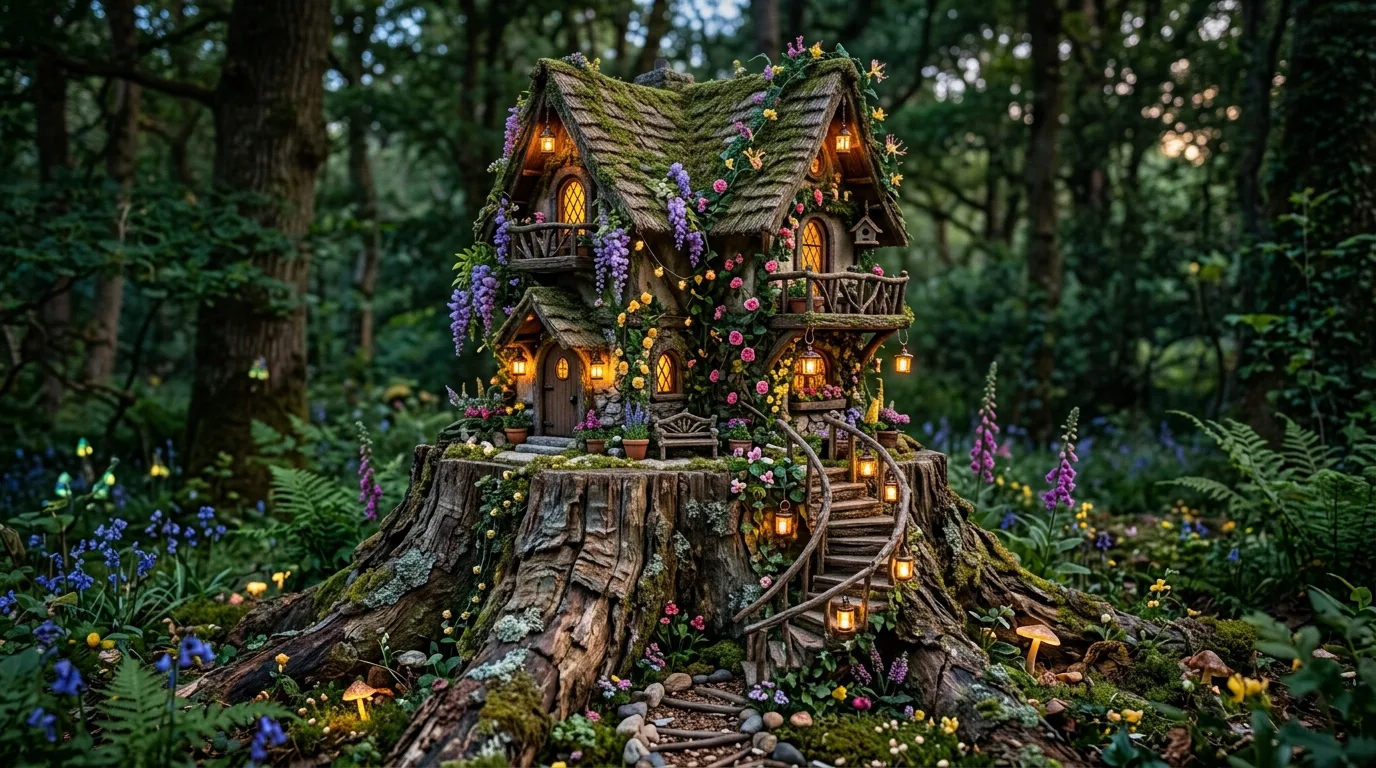
Mushroom inspired house with a curved wooden doorway
The mushroom shape gives the project an instantly playful silhouette, and the curved door keeps the front elevation from feeling too rigid or craft-store neat. It is a sweet design if you want the house to feel unmistakably magical at first glance.
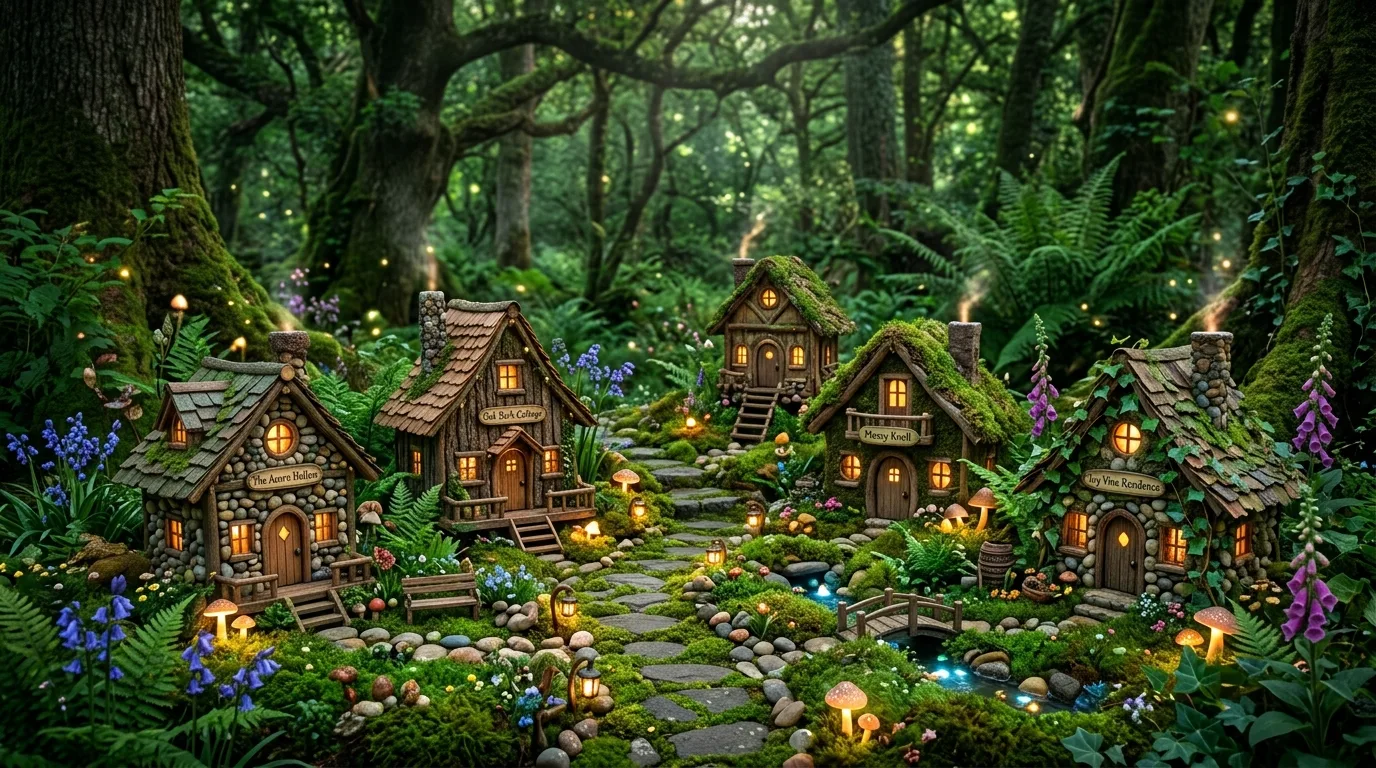
Idea 13
Layered forest floor scene with multiple tiny homes
Building several tiny homes into one planted scene creates the feeling of a hidden fairy neighborhood instead of a single accent piece. That extra depth makes the display feel more immersive and gives the eye more little discoveries to enjoy.
Read next on Saw & Sprout
Edible Gardens
13 Clever Tomato Trellis Gardens for a Bountiful Harvest
Small-Space Growing
14 Space-Saving Small Vegetable Gardens for Urban GrowersFrequently asked questions
What natural materials are best for fairy houses?
Twigs, bark, moss, pebbles, acorns, pinecones, shells, and weathered wood all work well because they feel organic and visually connected to the garden.
Do fairy houses need to be placed in the ground?
No. They can sit in planters, on stumps, beside rocks, under shrubs, or in a dedicated fairy garden tray as long as the scene still feels cohesive.
What makes a fairy house look enchanting instead of crafty?
Good scale, restrained detail, and materials that blend with the landscape usually make the biggest difference. A fairy house feels more magical when it looks naturally at home in its setting.