Paver patios remain popular because they combine durability with design flexibility in a way that few outdoor flooring options can match. They can look traditional or modern, formal or relaxed, depending on the pattern, color, and edges chosen.
The best paver patios do more than provide a hard surface. They support the outdoor layout, connect naturally to the house or garden, and create a floor that feels thoughtfully integrated with the space around it.
These paver patio ideas explore classic outdoor floors that hold up well while still contributing real style. Some focus on pattern, some on tone or shape, but all of them show how pavers can anchor a beautiful backyard.
Quick planning notes
Choose the paver size and pattern based on the style of the house and the scale of the patio so the floor feels appropriate and balanced.
Use edges, steps, or planting transitions thoughtfully because they often determine whether the patio looks finished and well resolved.
Think about tone as well as pattern, since warmer or cooler pavers can completely change the mood of the outdoor room.
Let the patio support how the space is used, whether that means dining, lounging, gathering, or connecting multiple backyard zones.
Idea 1
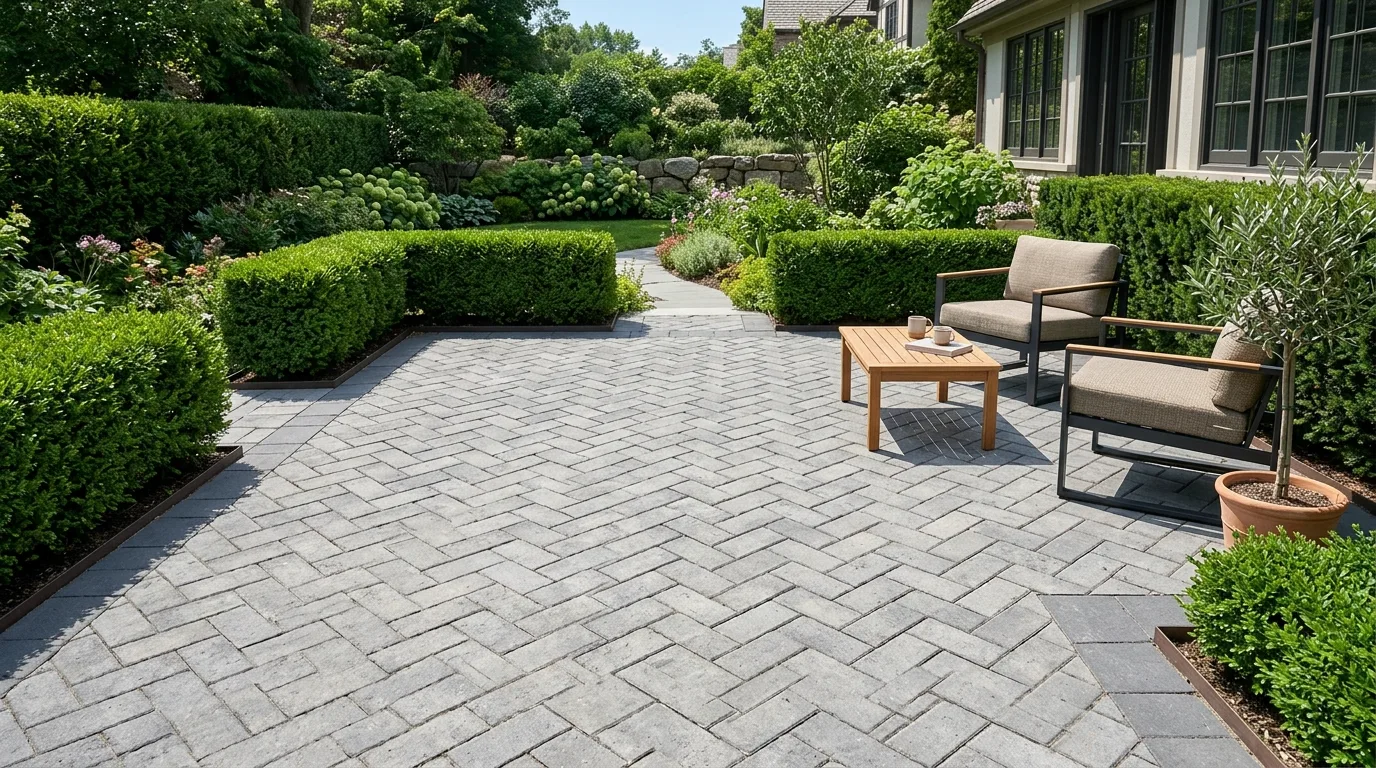
A classic herringbone layout adding quiet sophistication
Paver patios feel timeless when the layout itself carries some of the design weight, and herringbone is especially effective for that reason. The pattern adds visual richness without becoming loud, giving the outdoor floor a classic and durable elegance.
Idea 2
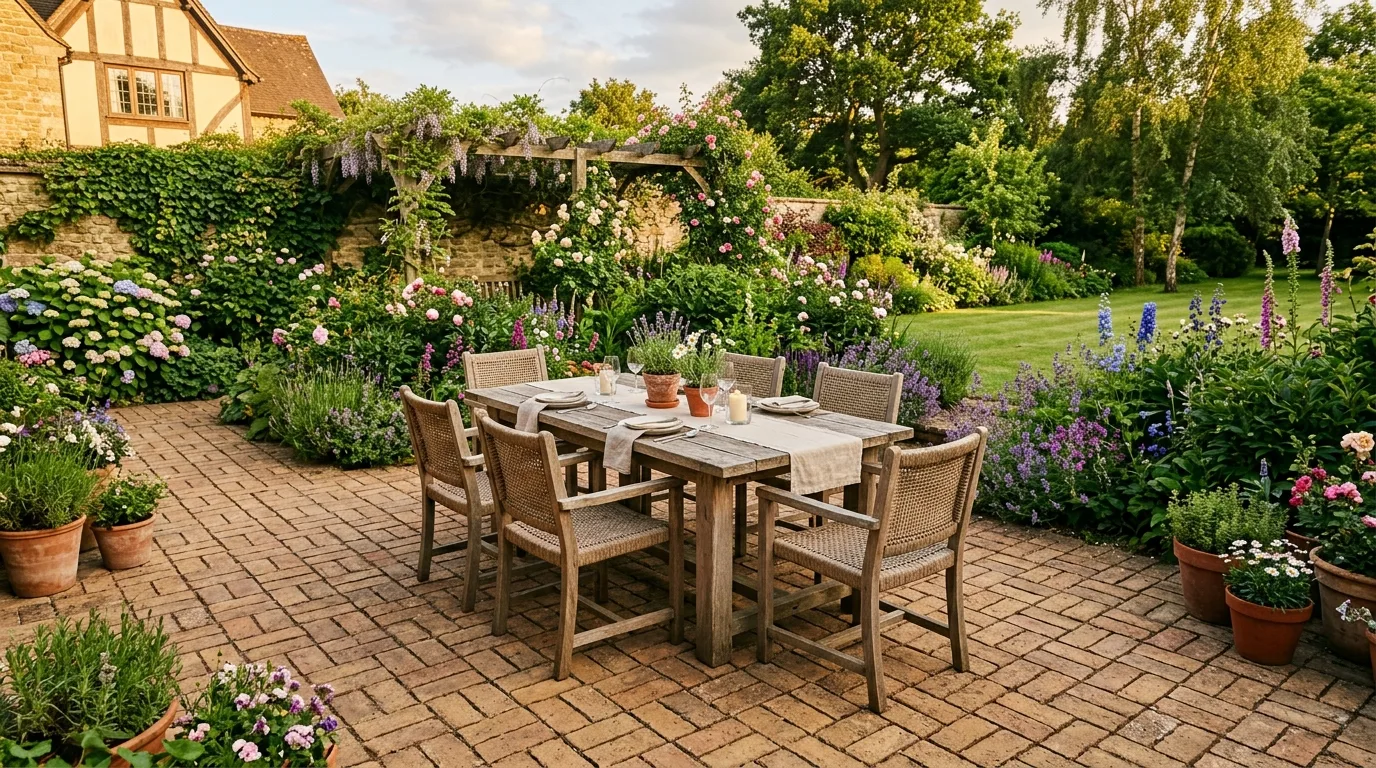
Large-format pavers creating a cleaner modern patio look
Bigger pavers reduce visual busyness and can make a patio feel calmer and more current, especially in modern landscapes. The clean lines help the whole outdoor space read more clearly while still preserving the lasting practicality of paver construction.
Idea 3
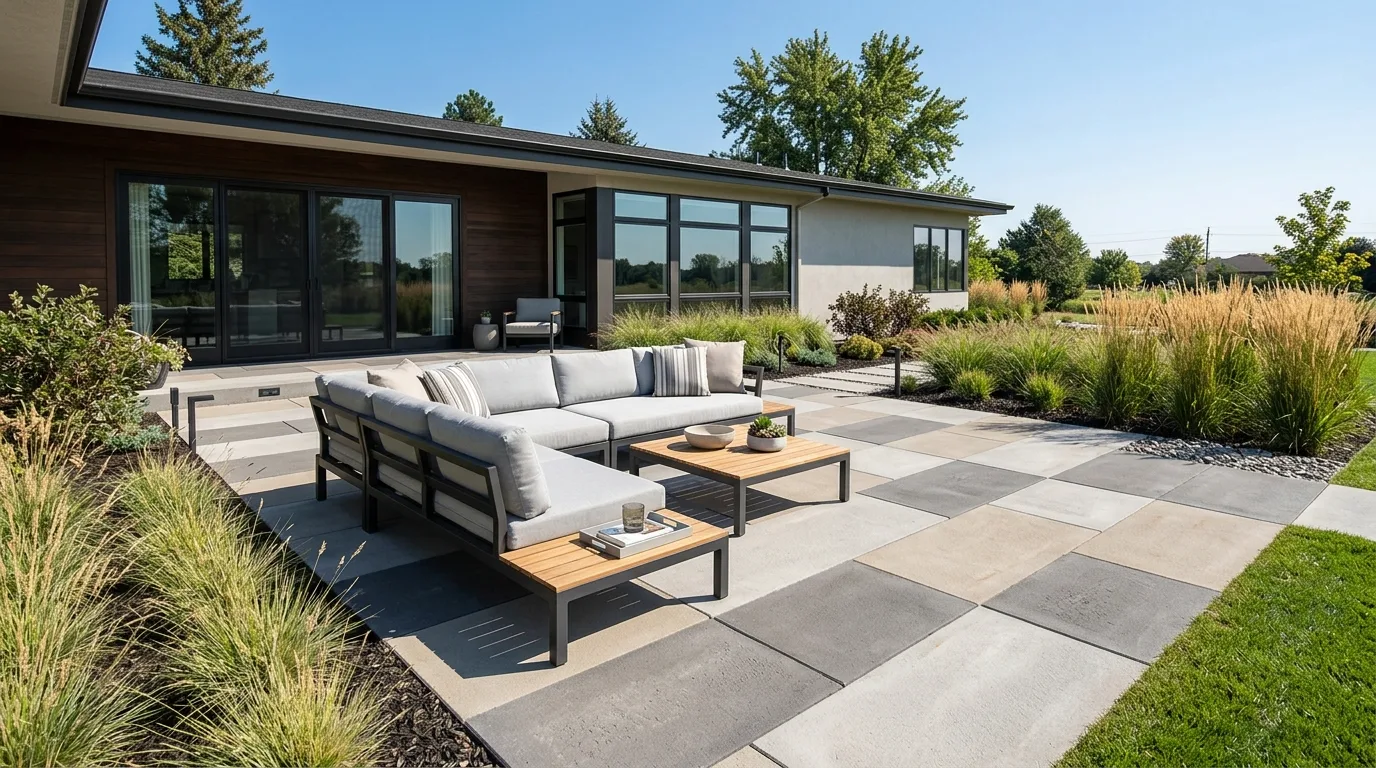
Warm-toned pavers softening a family gathering space
The color of pavers has a major effect on how welcoming the patio feels, and warmer tones often make the whole area feel more comfortable and lived in. Paired with planting and simple seating, they create a very approachable outdoor floor.
Idea 4
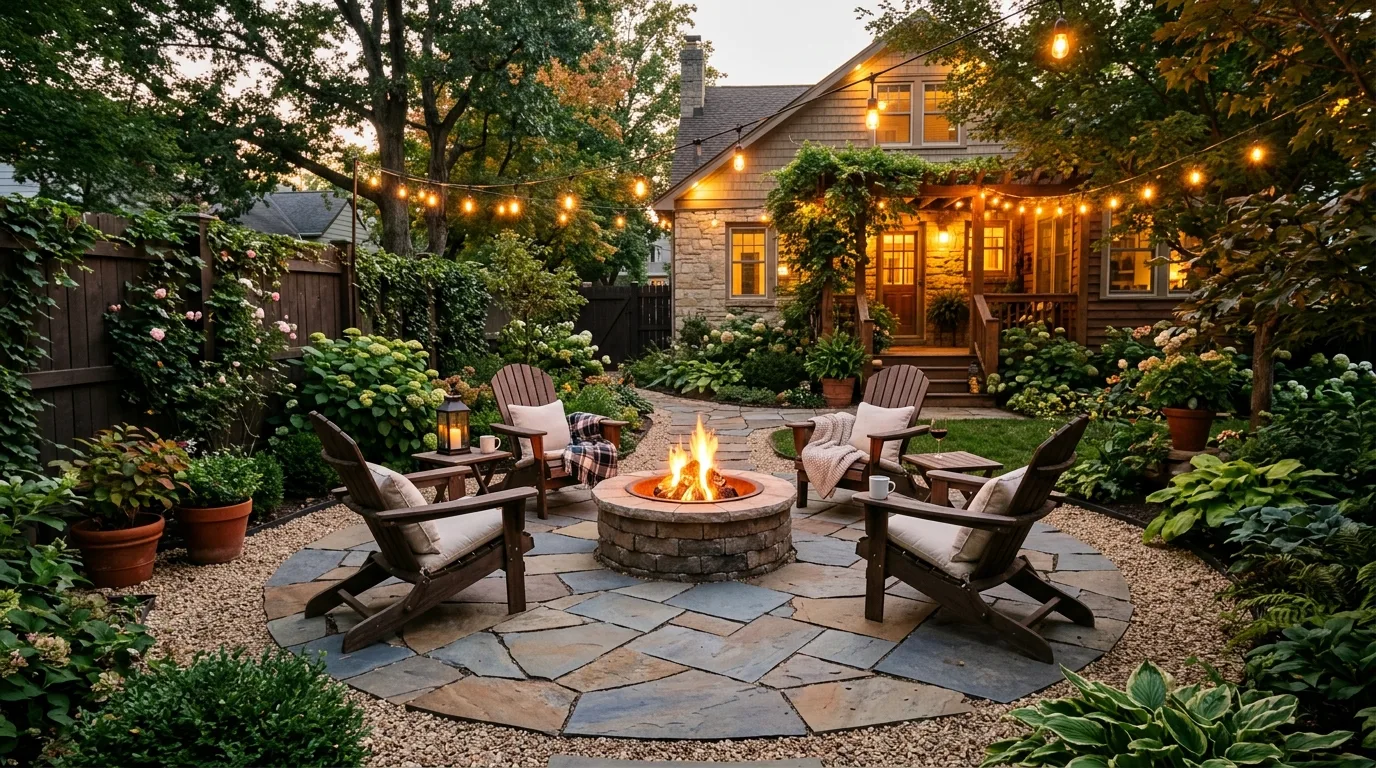
Paver edging that defines the patio with more structure
A well-defined edge makes a paver patio feel more polished because it gives the surface a clearer outline against surrounding lawn, gravel, or planting. That crisp perimeter helps the patio look deliberate and professionally resolved.
Idea 5
A fire pit patio centered on symmetrical paver geometry
Pavers are ideal around fire features because they can define the gathering zone with clean and durable geometry. A symmetrical arrangement gives the patio a more orderly presence while still feeling warm and social in use.
Idea 6
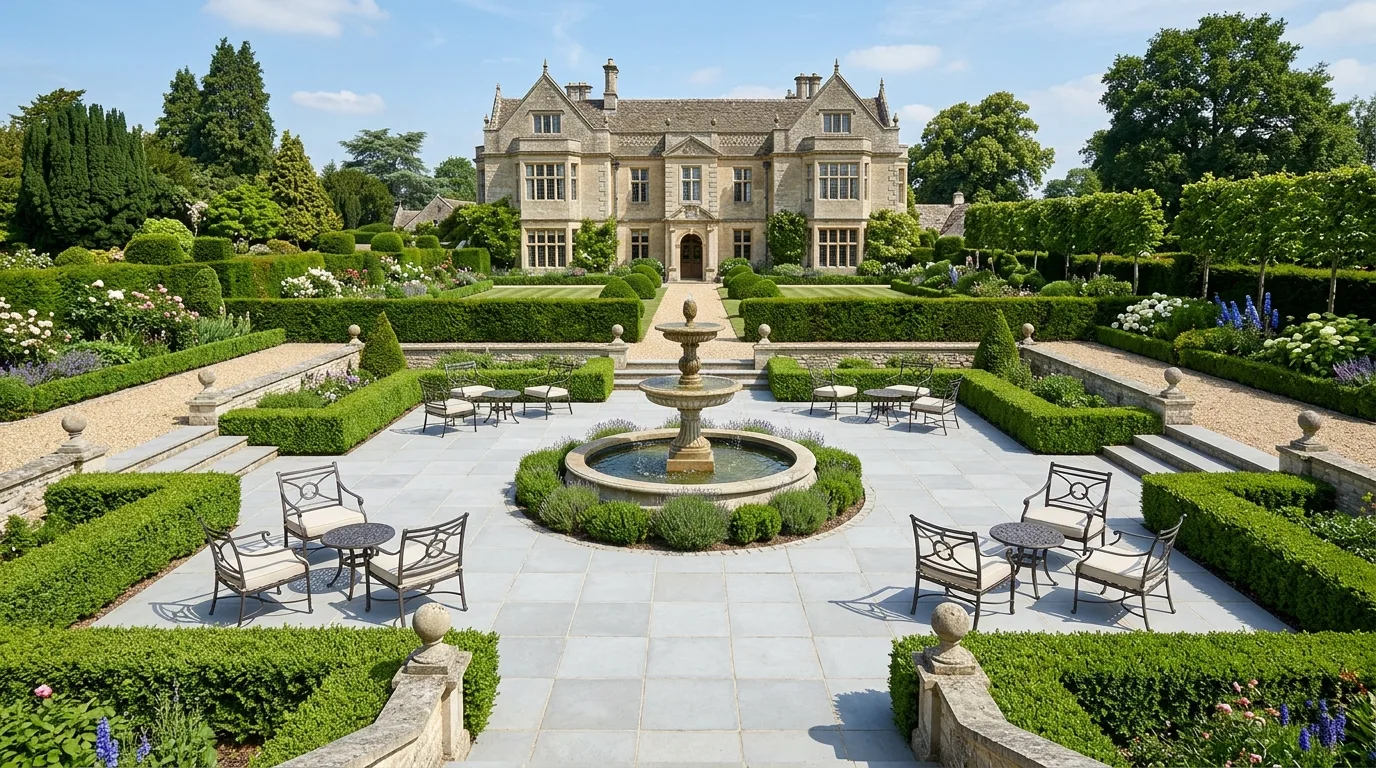
Mixed paver tones creating subtle texture underfoot
Patios can gain extra depth when the pavers include a restrained mix of related tones rather than one flat color. The texture is subtle but effective, helping the surface feel richer while still staying classic and easy to live with.
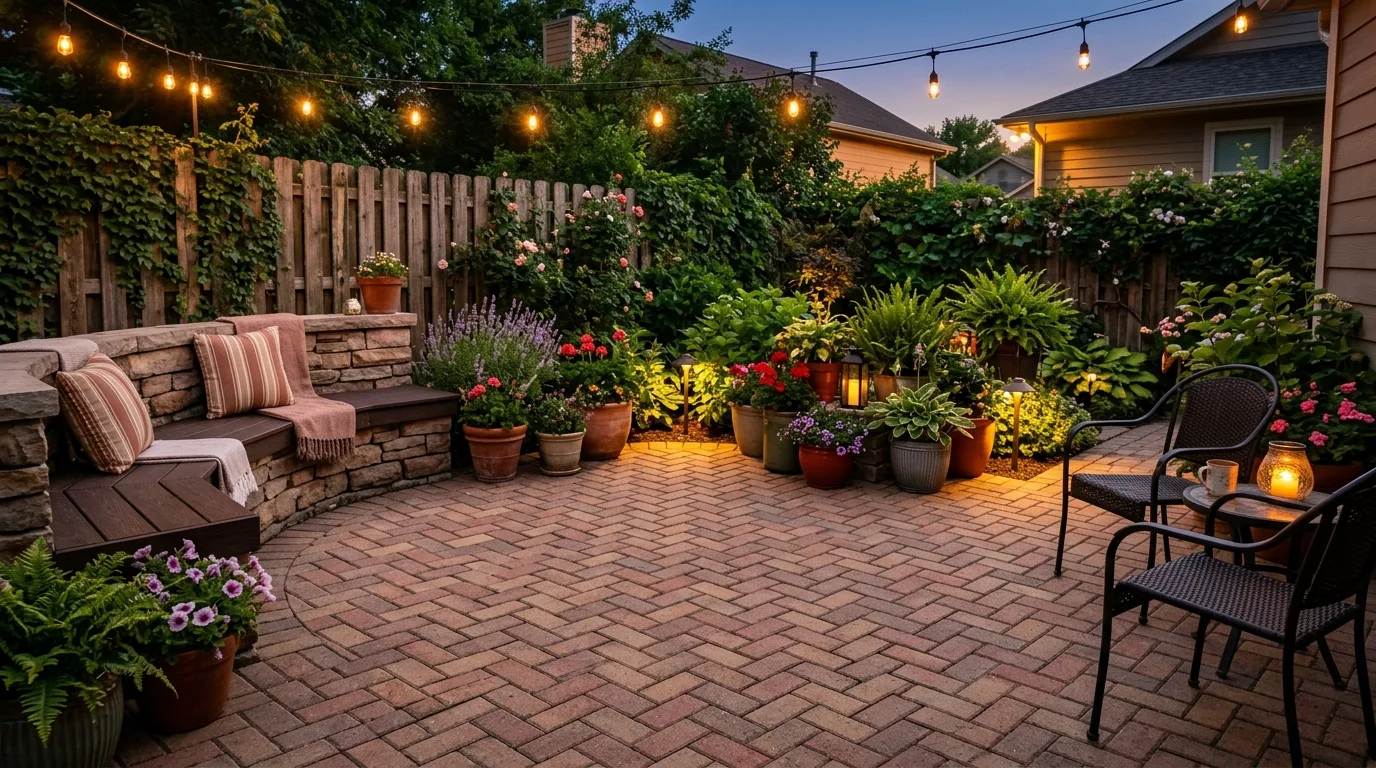
Idea 7
A dining patio linked to the house with coordinated pavers
Matching or echoing the paver tone with the home's exterior materials can make the patio feel more integrated from the start. That continuity helps the outdoor room read as a natural extension of the house rather than a separate hardscape patch.
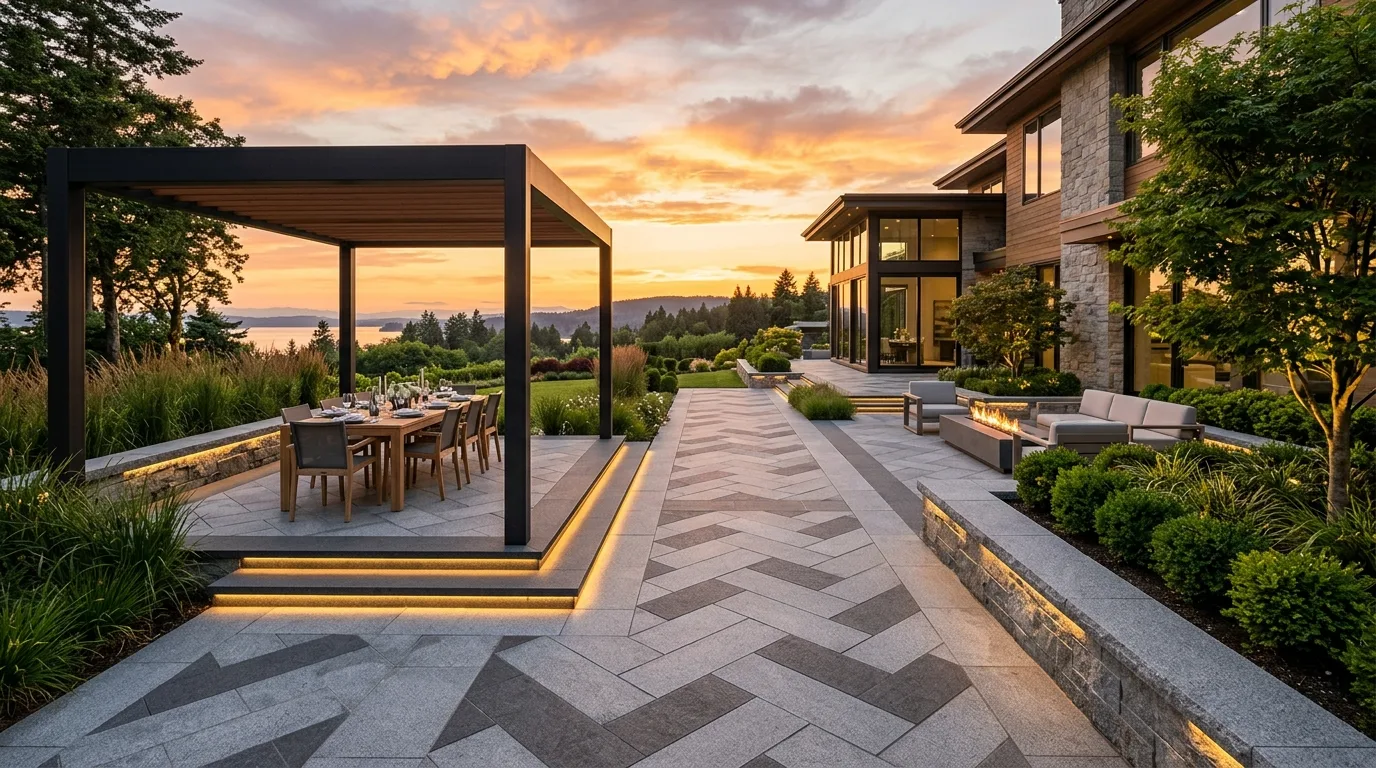
Idea 8
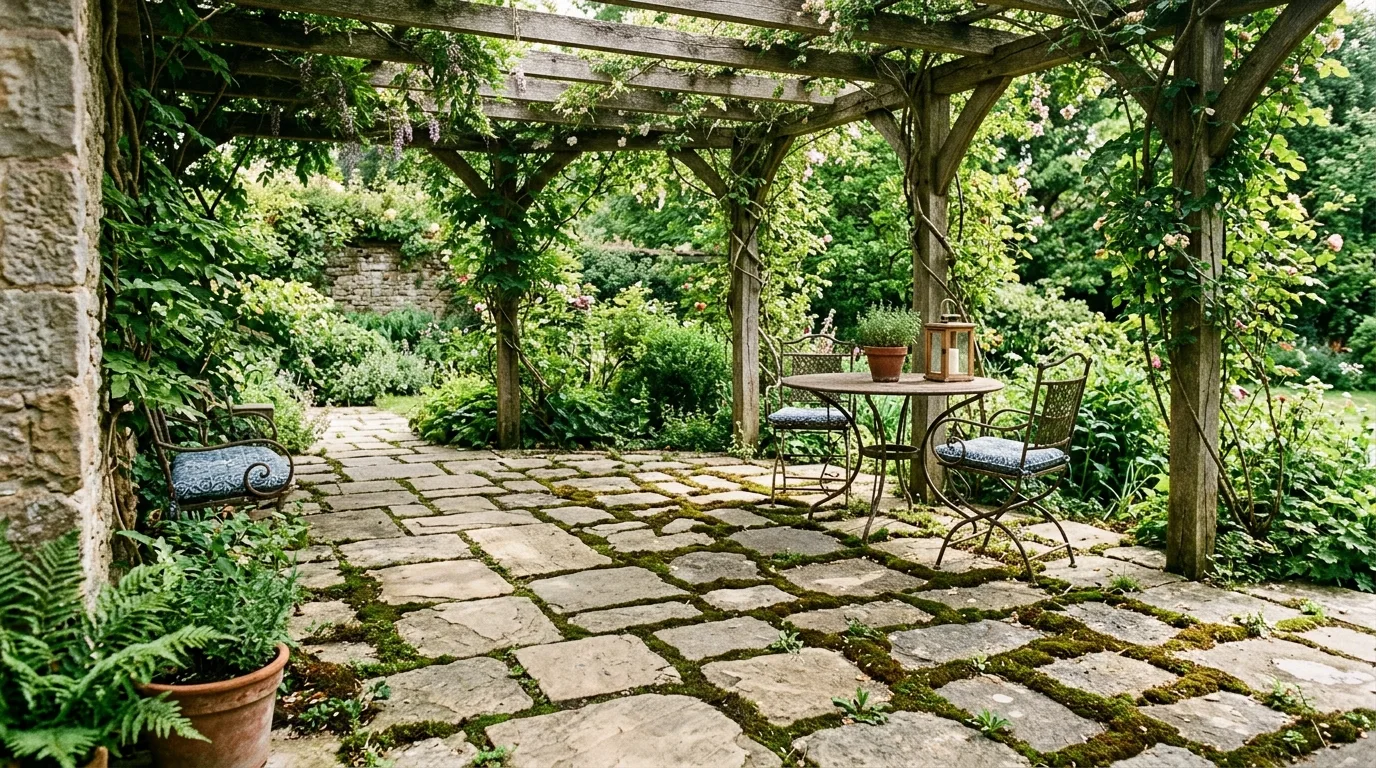
A garden patio with pavers softened by creeping groundcover
Pavers feel especially charming when greenery is allowed to soften some of their edges and joints rather than leaving everything hard and severe. Creeping groundcover adds a relaxed garden quality while the surface still retains its durability and structure.
Idea 9
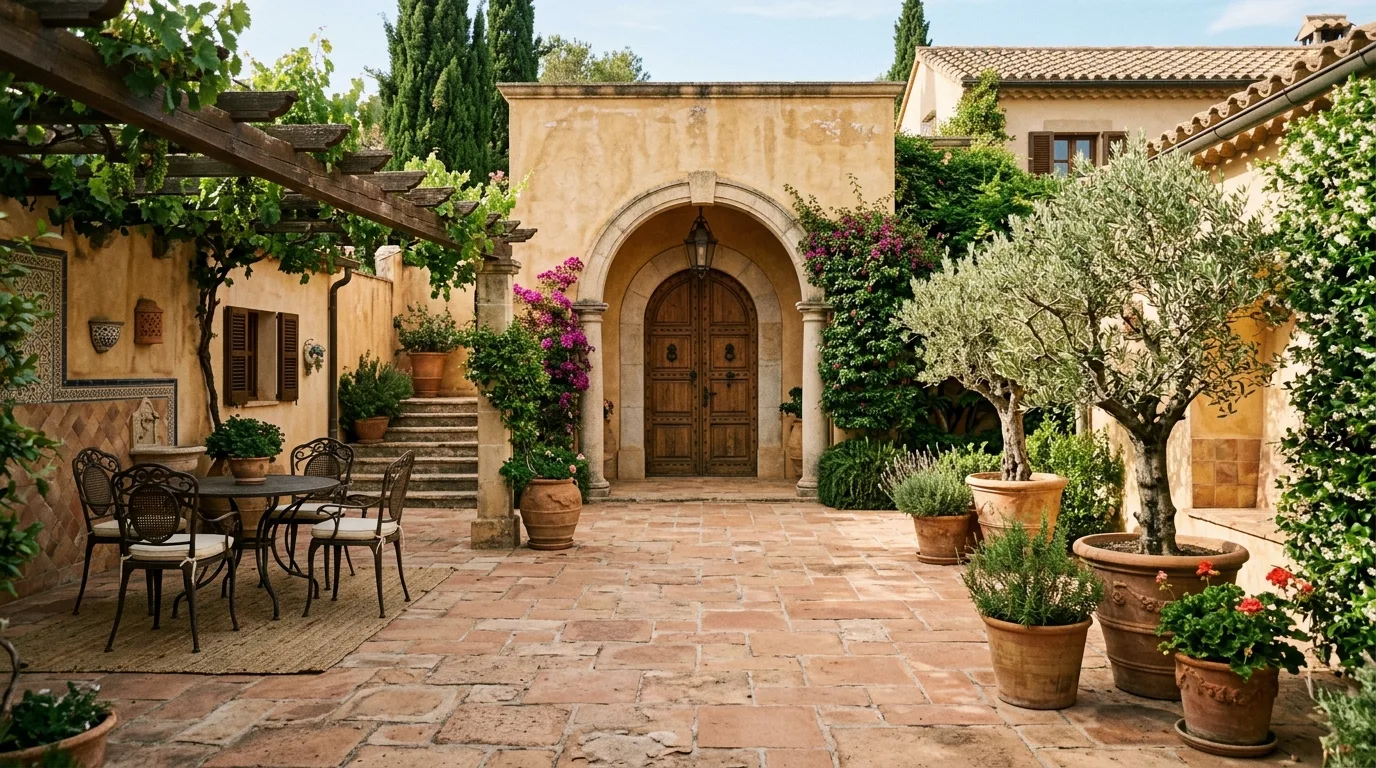
A compact paver patio arranged for easy small-space use
Small patios benefit from pavers because they can provide order and long-term durability without making the space feel overbuilt. In a compact backyard, a simple paver layout keeps the patio useful, tidy, and visually grounded.
Idea 10
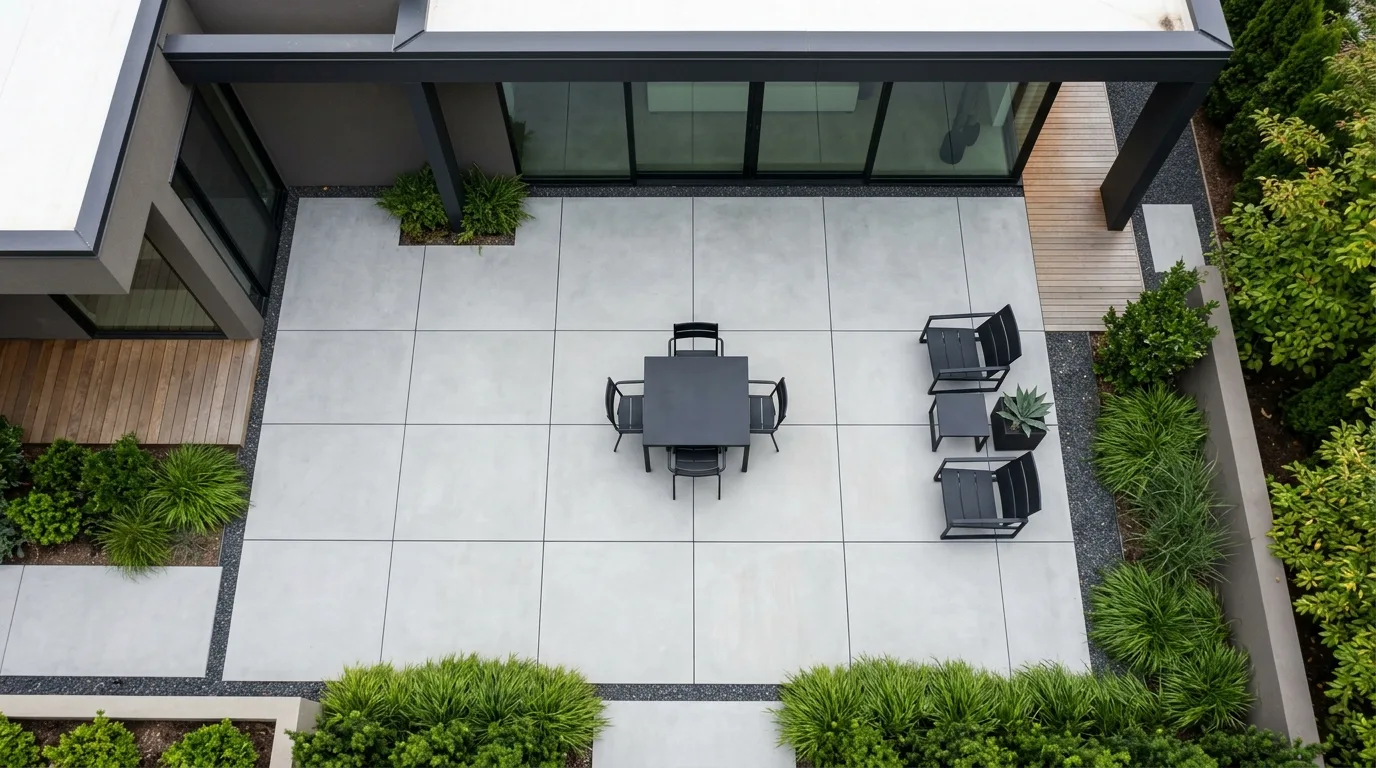
A curved patio outline making the hardscape feel gentler
Straight paver lines are not the only option, and a subtle curve can make the patio feel more relaxed and more connected to surrounding planting. This softer geometry is especially appealing in garden-centered backyards that want warmth as well as structure.
Idea 11
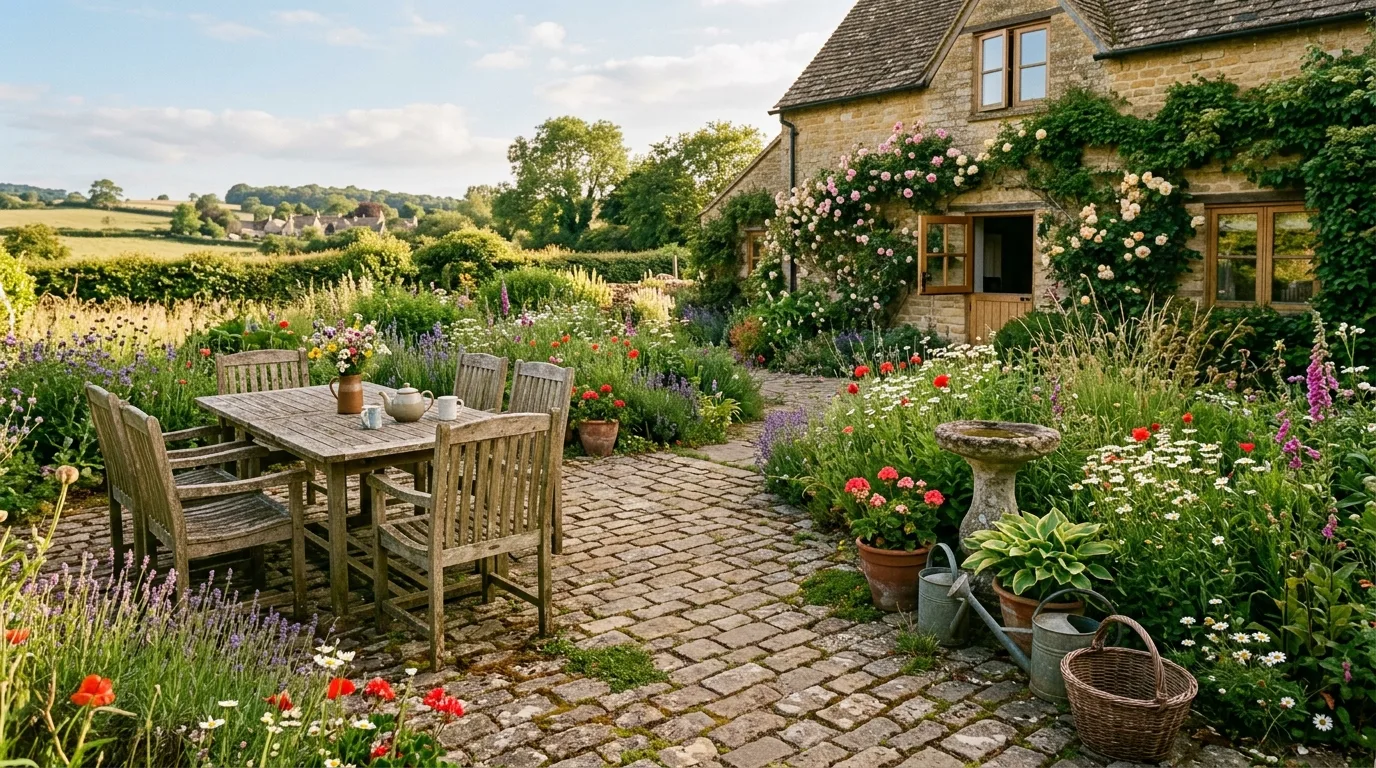
A pergola patio where pavers support a stronger outdoor room
Pavers work especially well beneath pergolas because they create a durable, finished base for furniture and daily use while the overhead structure defines the room. Together they make the patio feel complete and much more comfortable to inhabit.
Idea 12
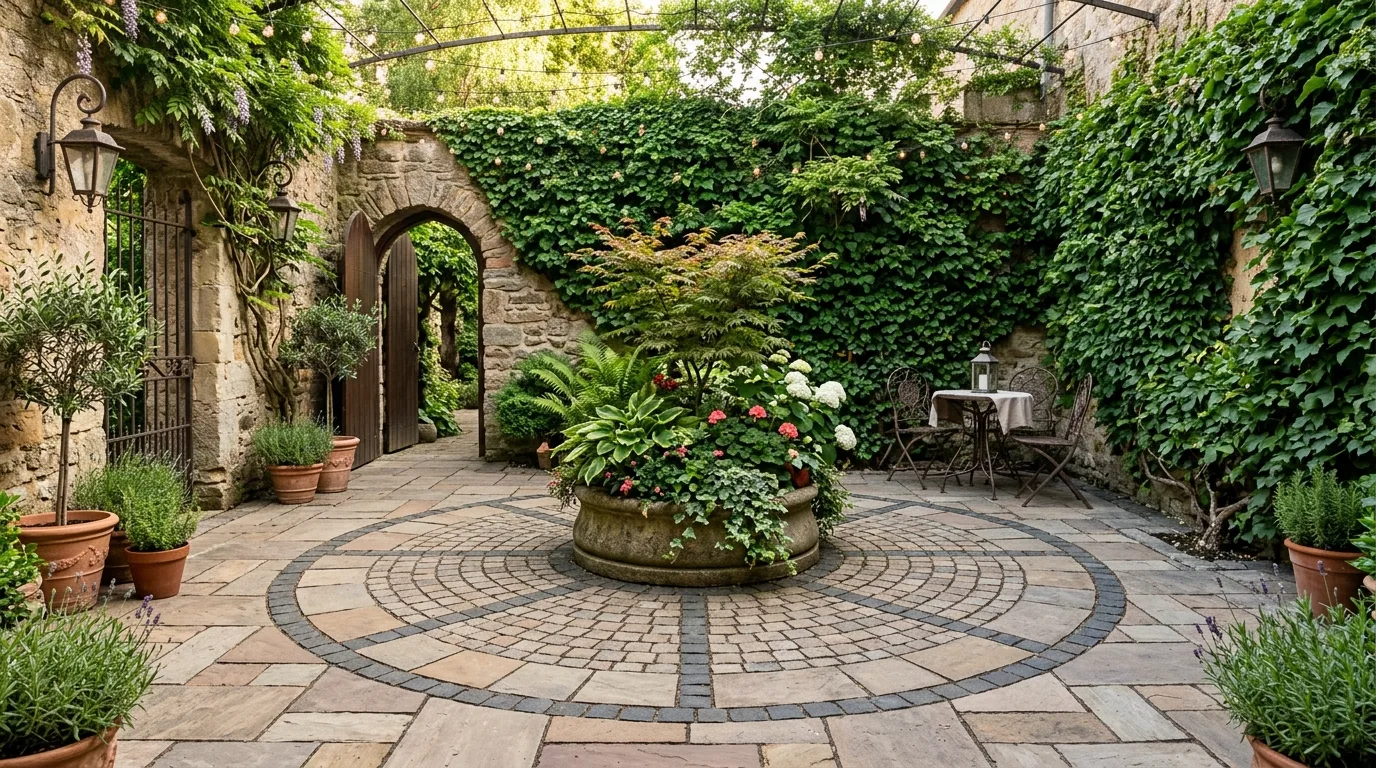
A classic gray paver floor brightened with planted borders
Gray pavers can be wonderfully versatile when the surrounding planting provides enough softness and color. The neutral floor keeps the patio feeling timeless, while the planted edges prevent the hardscape from becoming too stark or heavy.
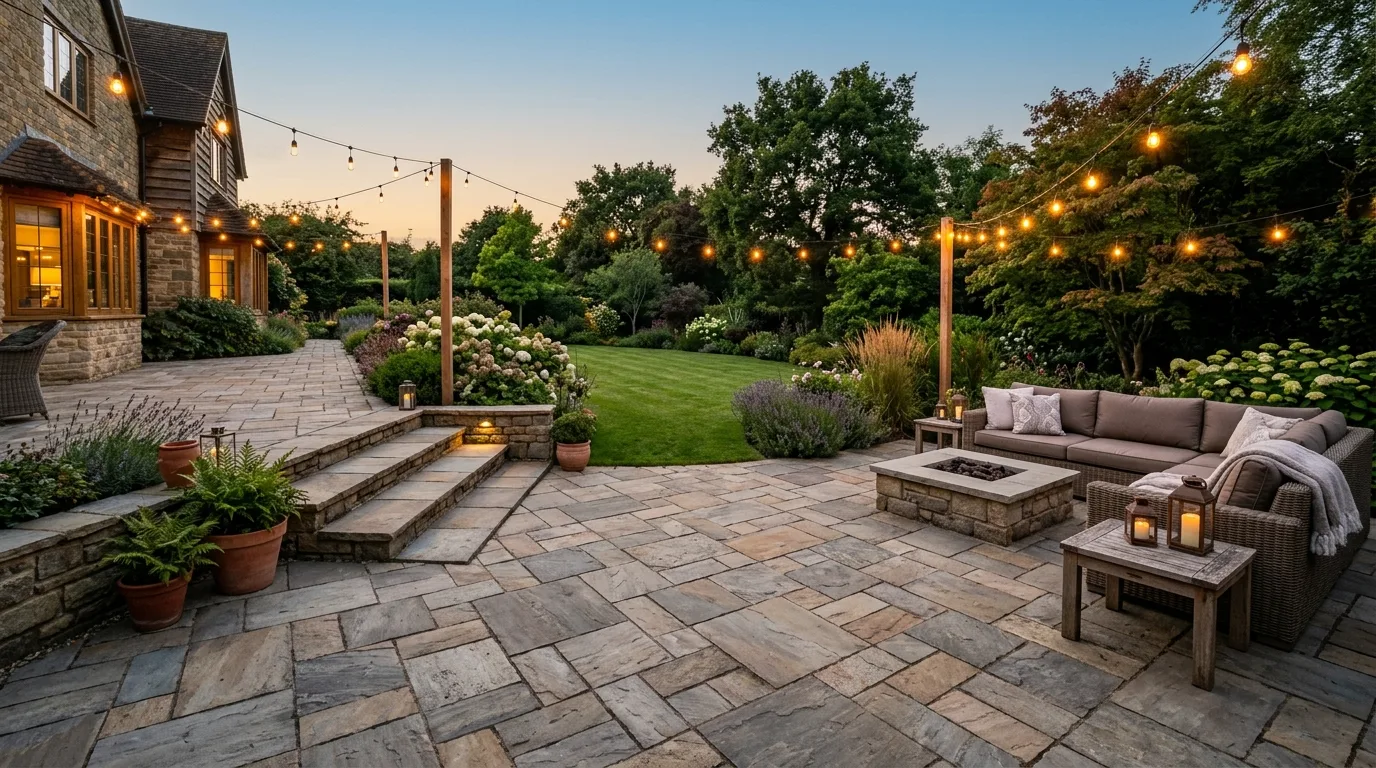
Idea 13
A layered entertaining patio combining pavers and steps
Changes in level often make a paver patio feel more custom because steps and zones give the hardscape extra dimension. In an entertaining backyard, that layering helps organize dining, lounging, and circulation without losing a cohesive look.
Read next on Saw & Sprout
Edible Gardens
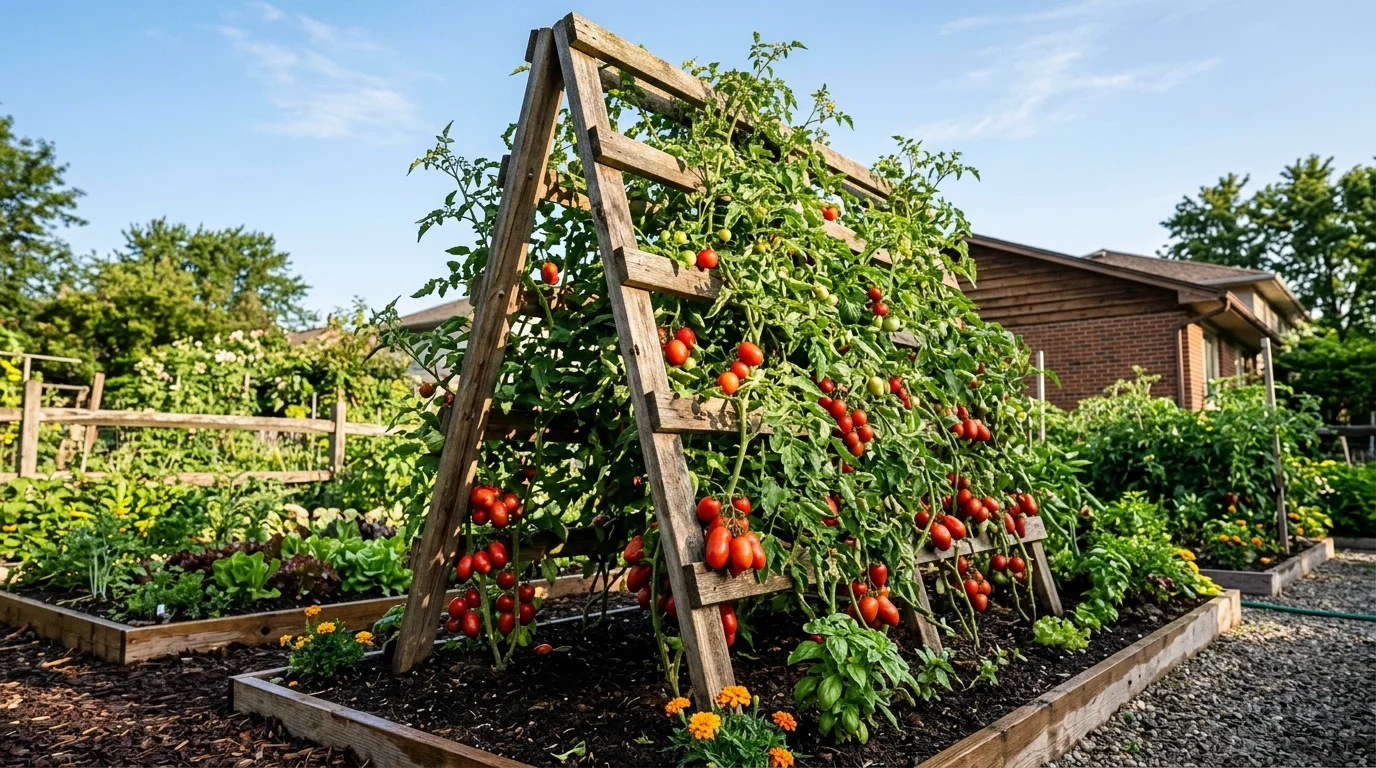
13 Clever Tomato Trellis Gardens for a Bountiful Harvest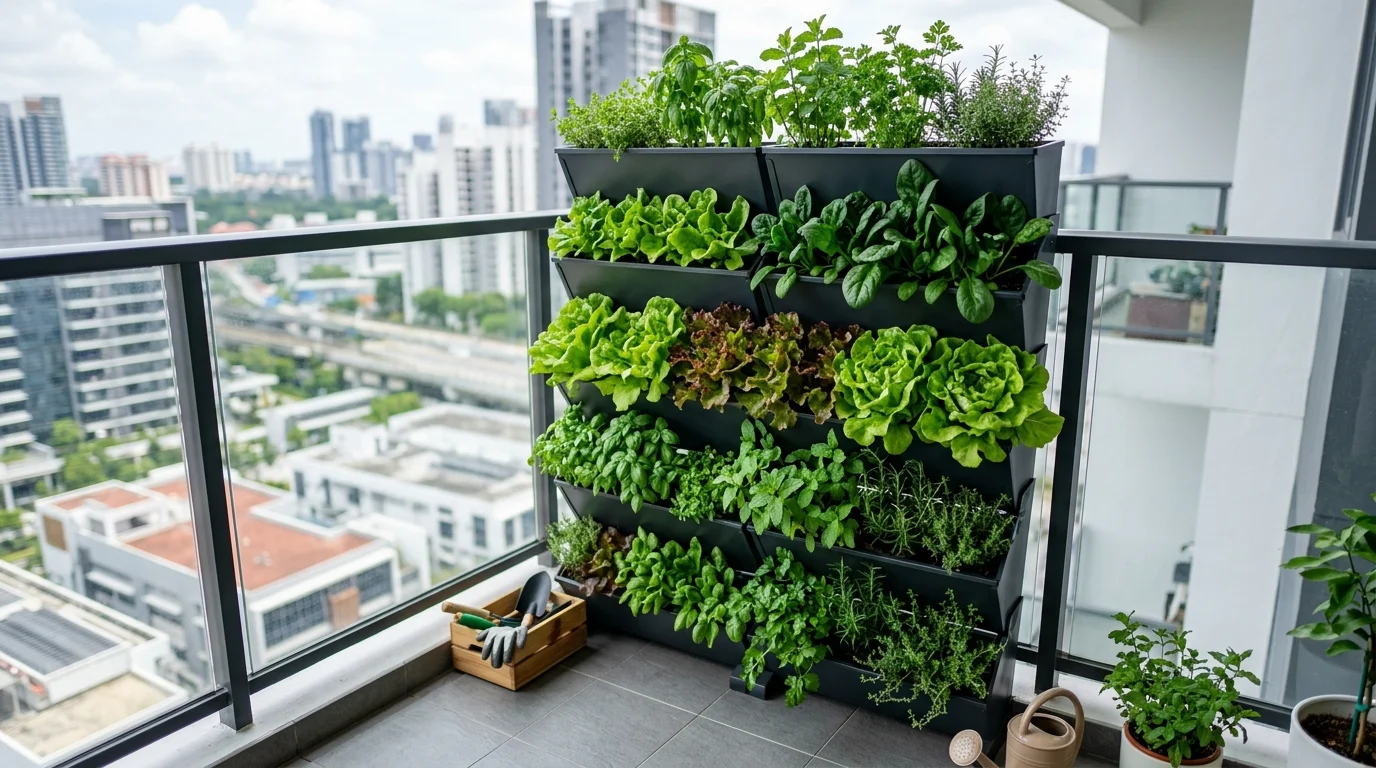
Small-Space Growing
14 Space-Saving Small Vegetable Gardens for Urban GrowersFrequently asked questions
Why are paver patios such a lasting choice?
They are durable, versatile in appearance, and easy to adapt to different patio sizes, shapes, and outdoor styles.
Can paver patios look modern as well as classic?
Yes. Larger formats, simpler layouts, and restrained colors can make pavers feel very current while still keeping their durability.
How do you keep a paver patio from looking too hard?
Soft planting, thoughtful edges, and materials that relate well to the house or landscape usually help balance the hardscape.