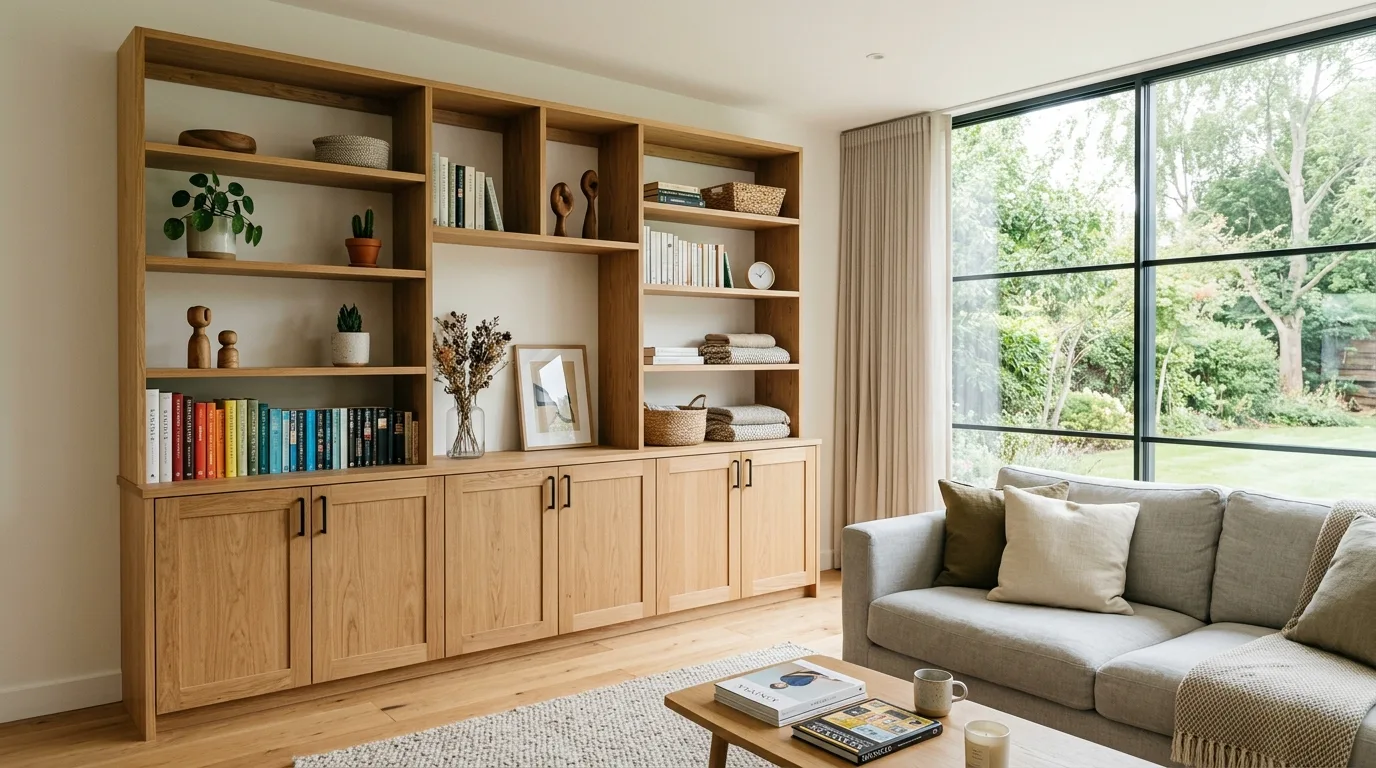
A good storage cabinet earns its keep by doing more than simply holding things behind closed doors. It helps a room feel calmer, more usable, and more complete because the clutter finally has a defined home instead of drifting from surface to surface.
What makes storage cabinets so versatile is how easily they adapt to different rooms and routines. A hallway cabinet solves a very different problem than a craft room wall or a mudroom bench unit, yet the core idea is the same: better structure makes everyday life easier.
These cabinet ideas focus on practical storage that still feels considered and attractive. Some are freestanding, some built in, and some tailored to awkward corners or busy family zones, but each one is designed to make the room work harder without feeling heavier.
Quick planning notes
Start by deciding what the cabinet needs to hide, display, or support daily, because that purpose should shape the interior much more than the outer style alone.
Use the room dimensions carefully so the cabinet adds order without shrinking circulation, especially in hallways, entries, and smaller bedrooms.
Mix drawers, doors, and open sections only when each one serves a clear job, since too many storage types can make a cabinet feel busy rather than versatile.
Tie the finish and proportions to the surrounding room so the cabinet feels intentional and not like a bulky utility object dropped into place.
Idea 1
Slim hallway cabinet with drawers and a closed lower base
A narrow hallway cabinet can turn an underused passage into practical storage without making circulation feel tight or heavy. When drawers handle small daily items and the lower doors hide bulkier pieces, the whole setup feels balanced, tidy, and much more intentional than leaving the wall blank.
Idea 2
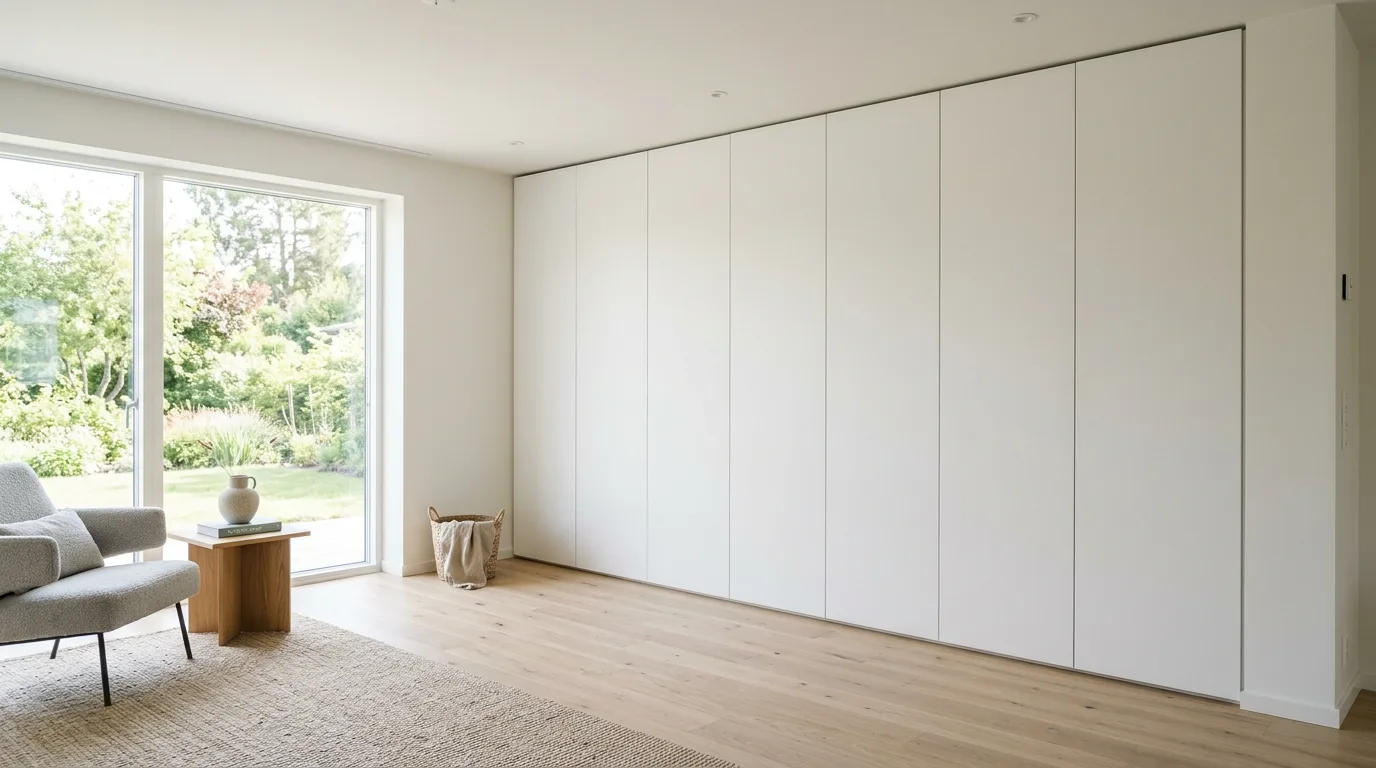
Living room storage cabinet with fluted doors and open display top
Combining hidden storage with a lighter display zone is a smart way to keep the living room useful while still leaving room for styling. Fluted doors add texture and polish, making the cabinet feel more like a curated furniture piece than a purely practical container.
Idea 3
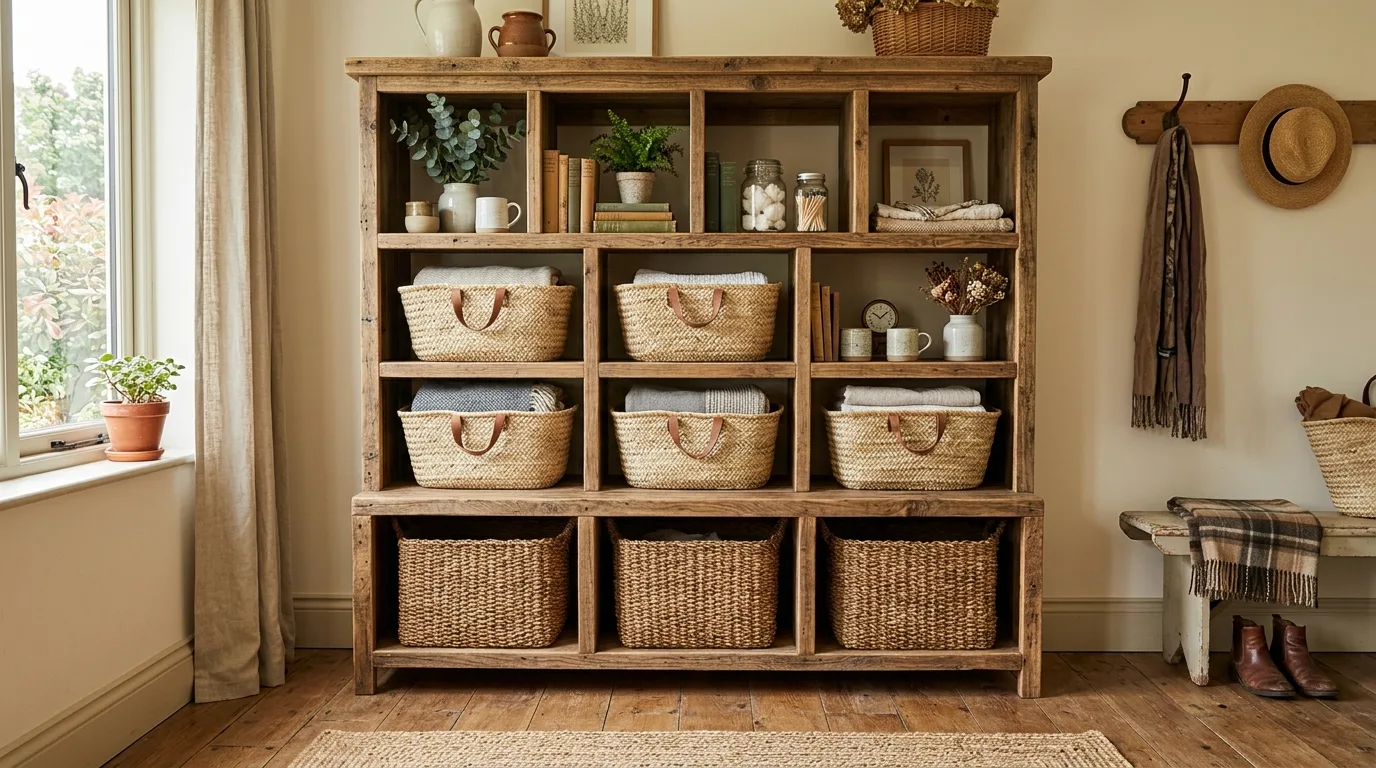
Mudroom cabinet wall with baskets, hooks, and bench storage
A mudroom cabinet works hardest when it supports the whole arrival routine instead of solving only one storage problem. Baskets, hooks, and a bench base create a layered system that keeps shoes, bags, and seasonal clutter from spilling into the rest of the house.
Idea 4
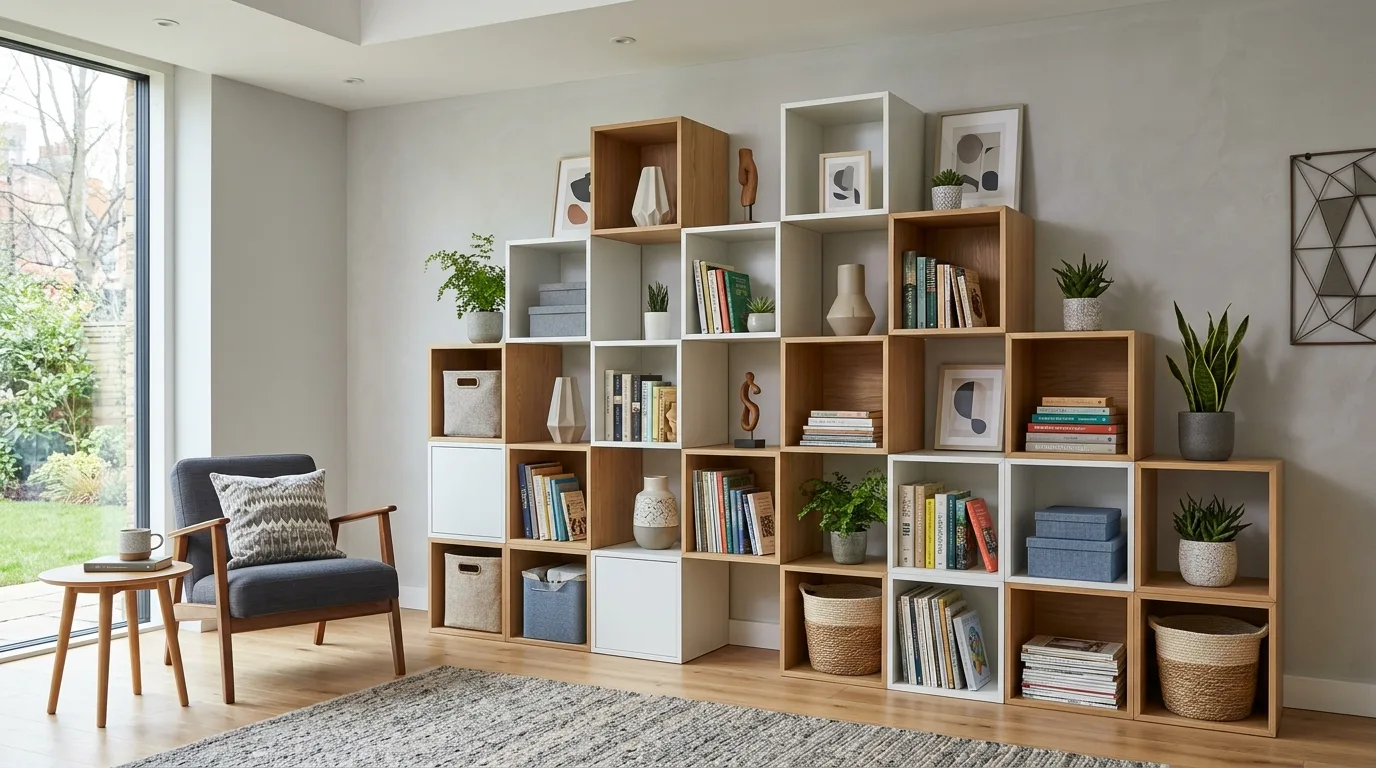
Office storage cabinet with printer shelf and supply drawers
Home offices feel calmer when the supplies, paper, and devices all disappear into one cabinet rather than spreading across every surface. A layout that includes a printer shelf and well-sized drawers keeps the workspace functional while preserving a cleaner visual rhythm around the desk.
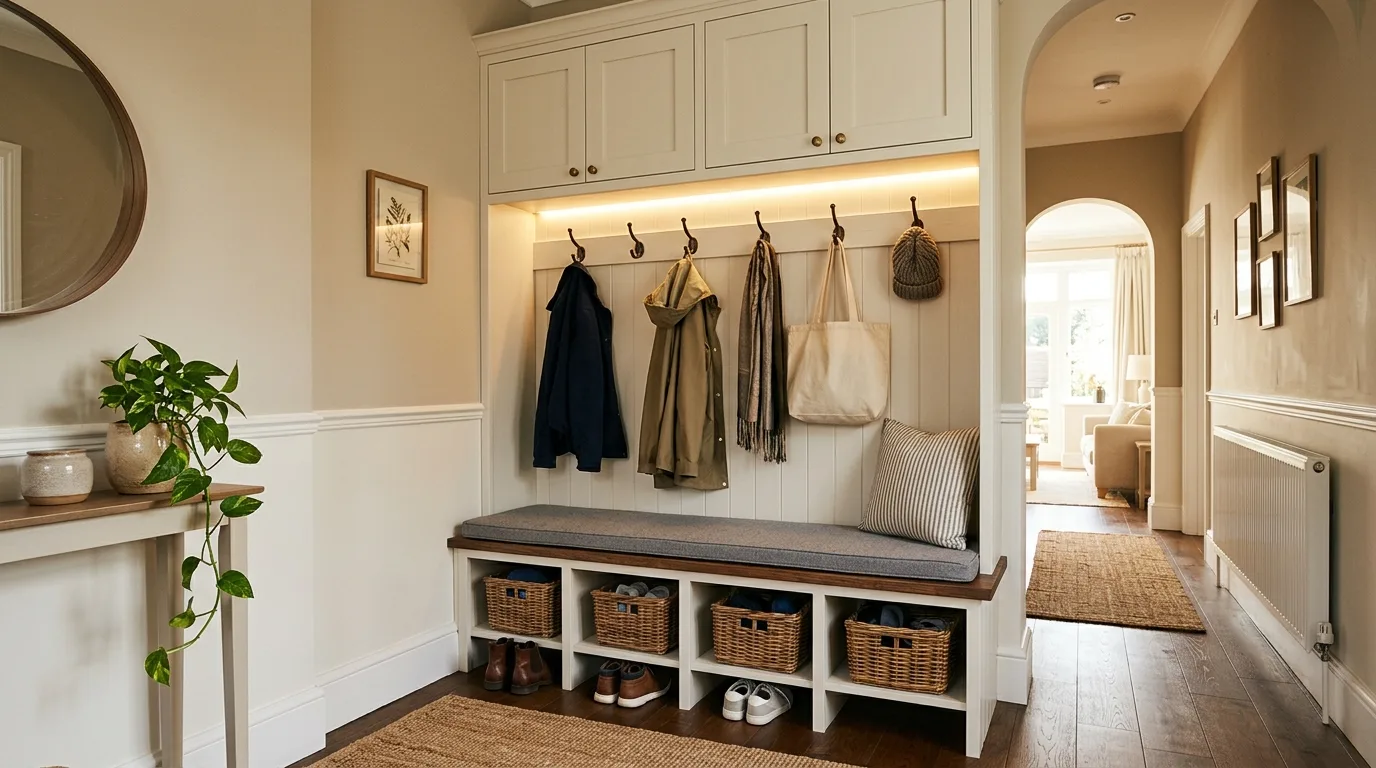
Idea 5
Bedroom wardrobe style cabinet with double doors and top bins
A wardrobe-inspired storage cabinet is especially useful in bedrooms that need more closed storage without adding the weight of a full built in wall. The double-door layout keeps the room looking simple, while upper bins make use of height that often goes completely wasted.
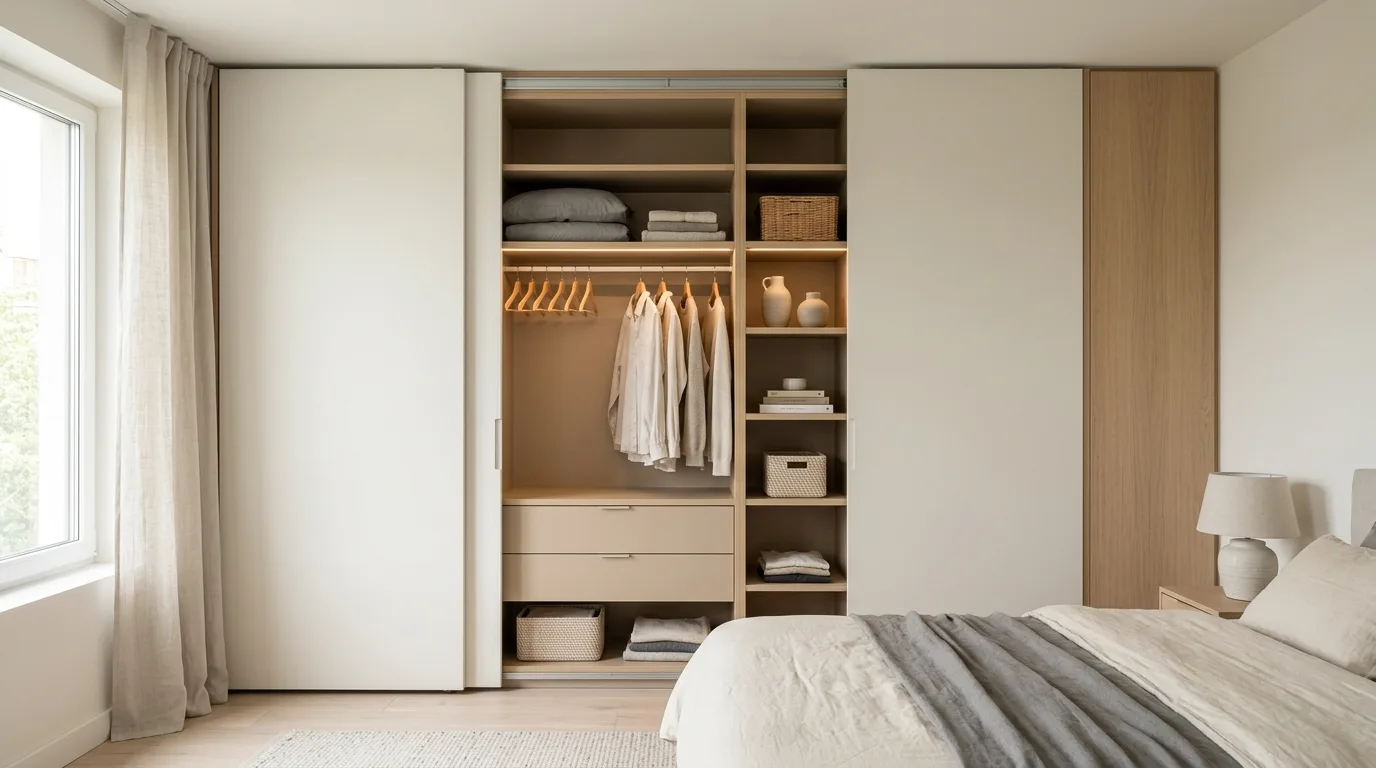
Idea 6
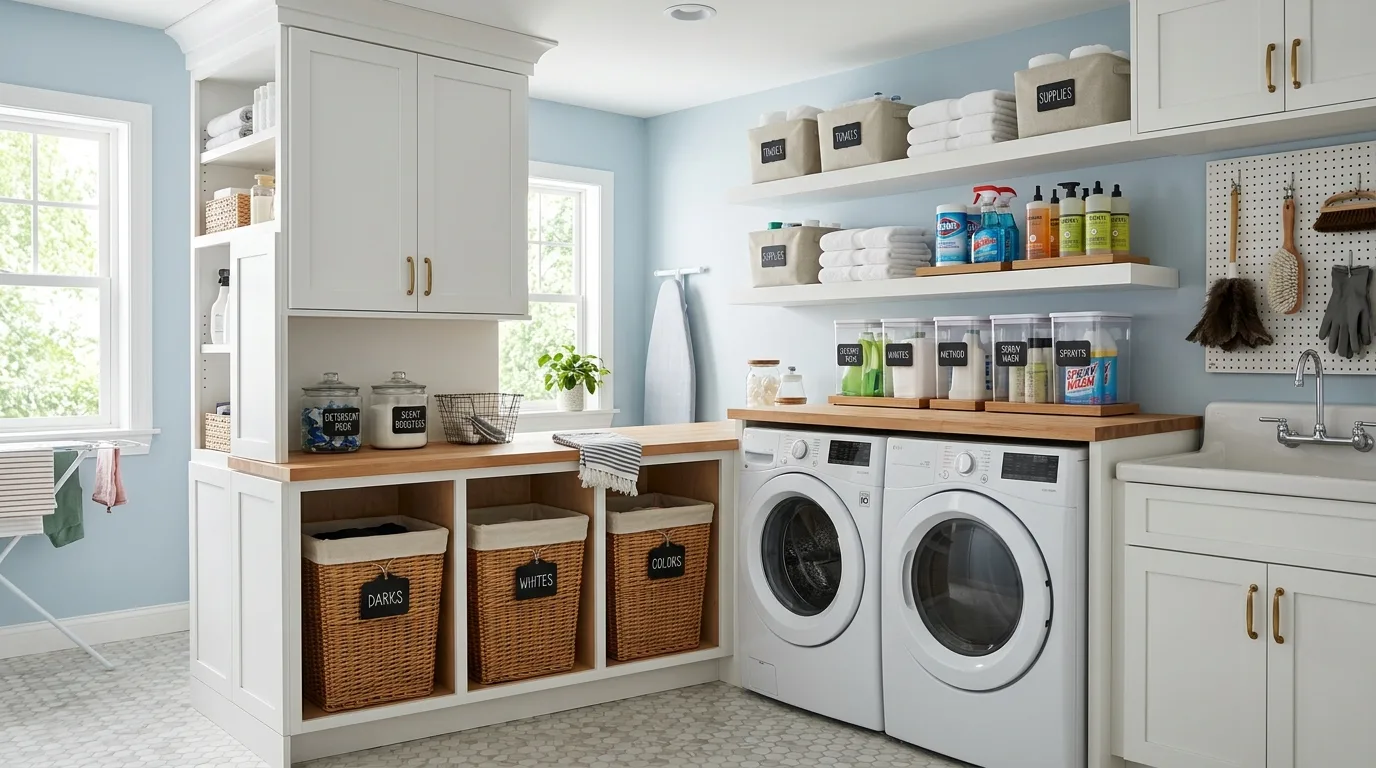
Laundry overflow cabinet with tall broom section and shelves
Tall utility cabinets shine when they solve the awkward items that never fit neatly on standard shelves. Giving one section over to mops, brooms, and taller cleaning tools creates a more disciplined room and helps the rest of the shelving stay clear for easier-to-stack supplies.
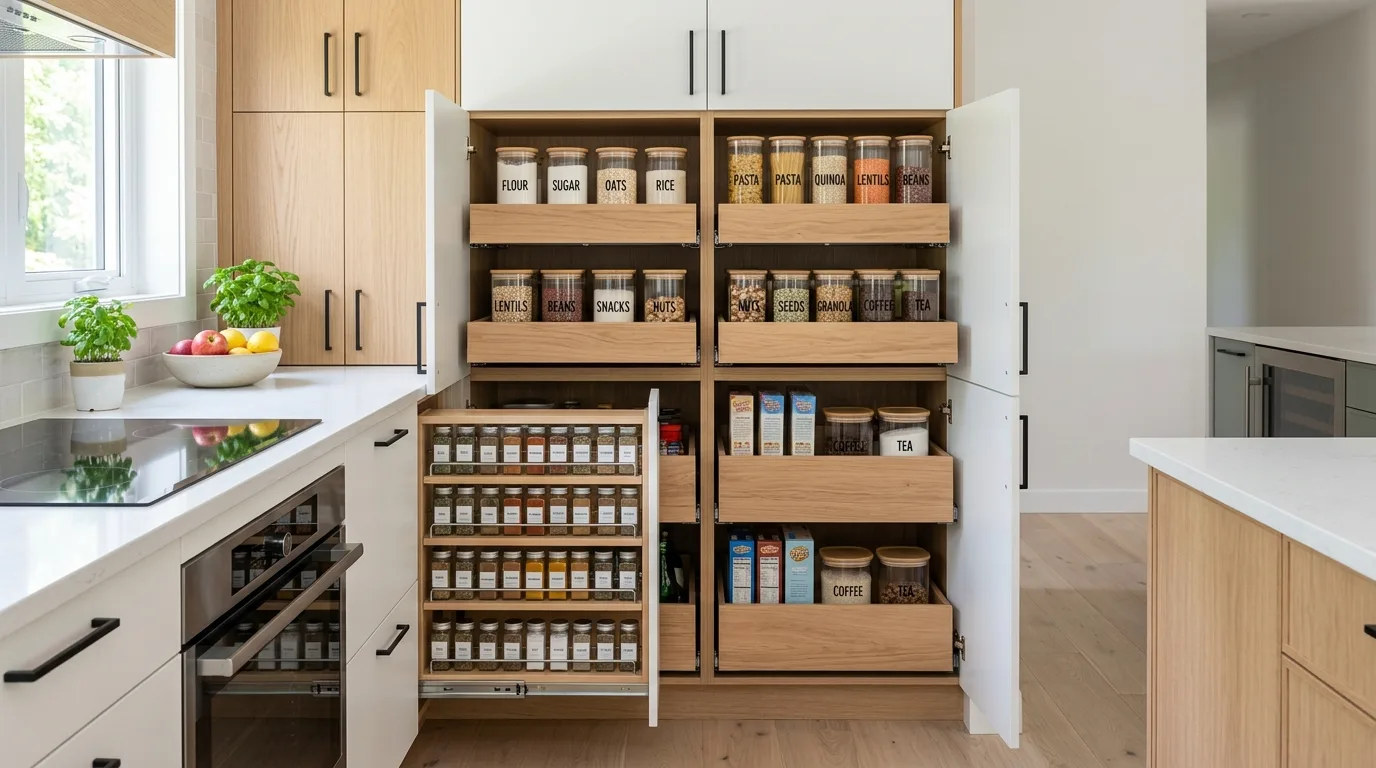
Idea 7
Dining room sideboard cabinet with deep hidden serving storage
A sideboard-style storage cabinet can carry a surprising amount when the interior is planned for platters, linens, and entertaining pieces instead of generic shelves alone. It keeps the dining room looking refined while quietly supporting gatherings in a way that feels deeply practical.
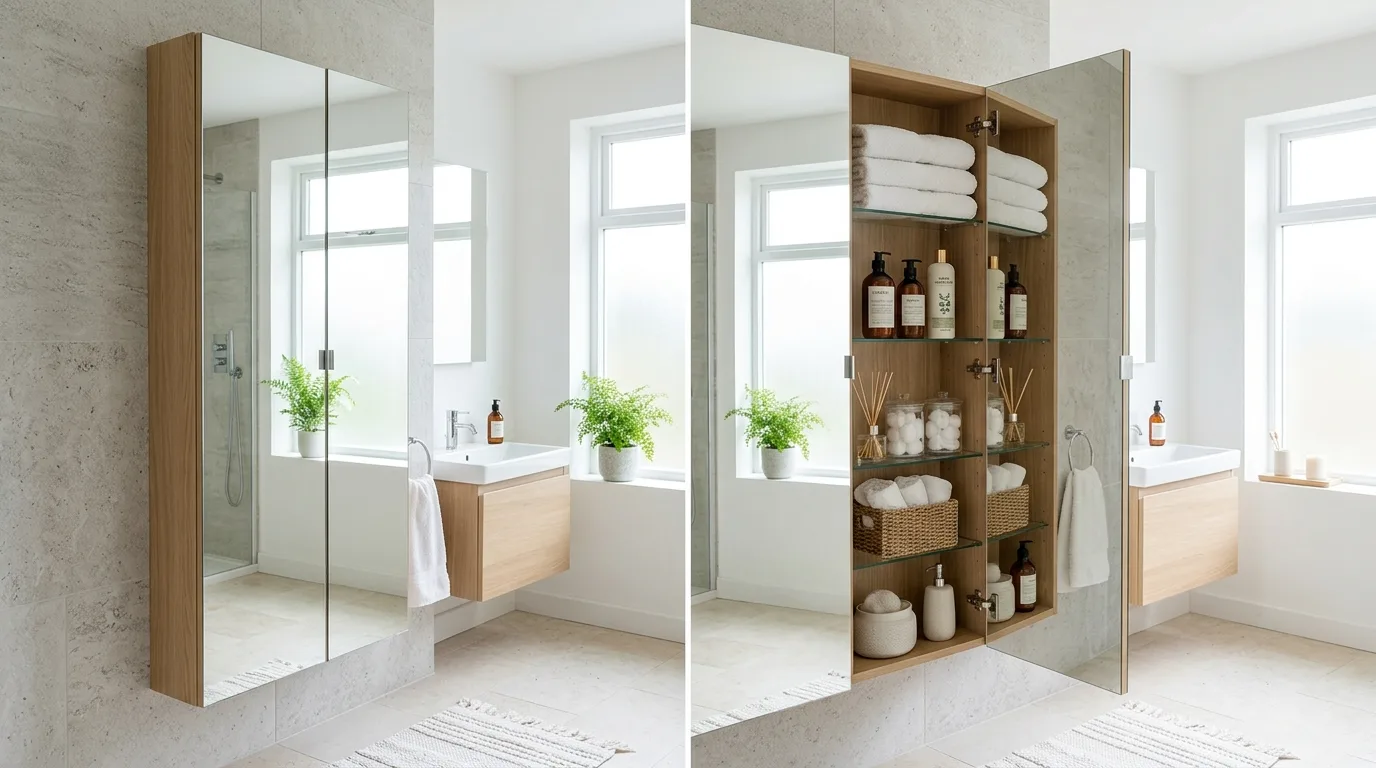
Idea 8
Playroom cabinet with labeled cubbies behind simple doors
In a playroom, closed storage often works better than exposed bins because it helps the space reset quickly at the end of the day. Doors over labeled cubbies bring enough structure to manage toys well while still keeping the room visually softer and less chaotic.
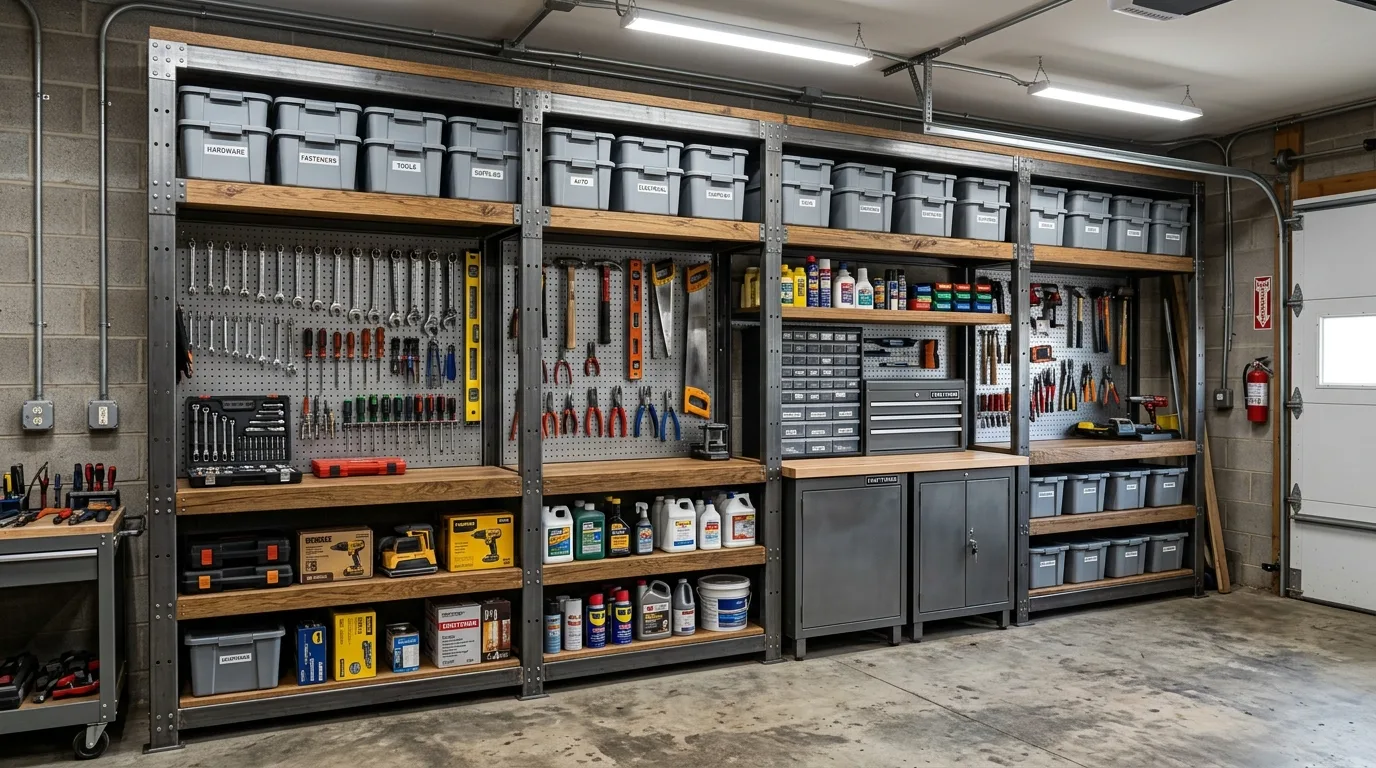
Idea 9
Bathroom linen cabinet with open niche and lower pullouts
A bathroom storage cabinet feels more useful when it mixes display, quick access, and concealed zones instead of repeating one format from top to bottom. An open niche can hold daily towels beautifully while lower pullouts keep bulkier supplies easy to reach without looking messy.
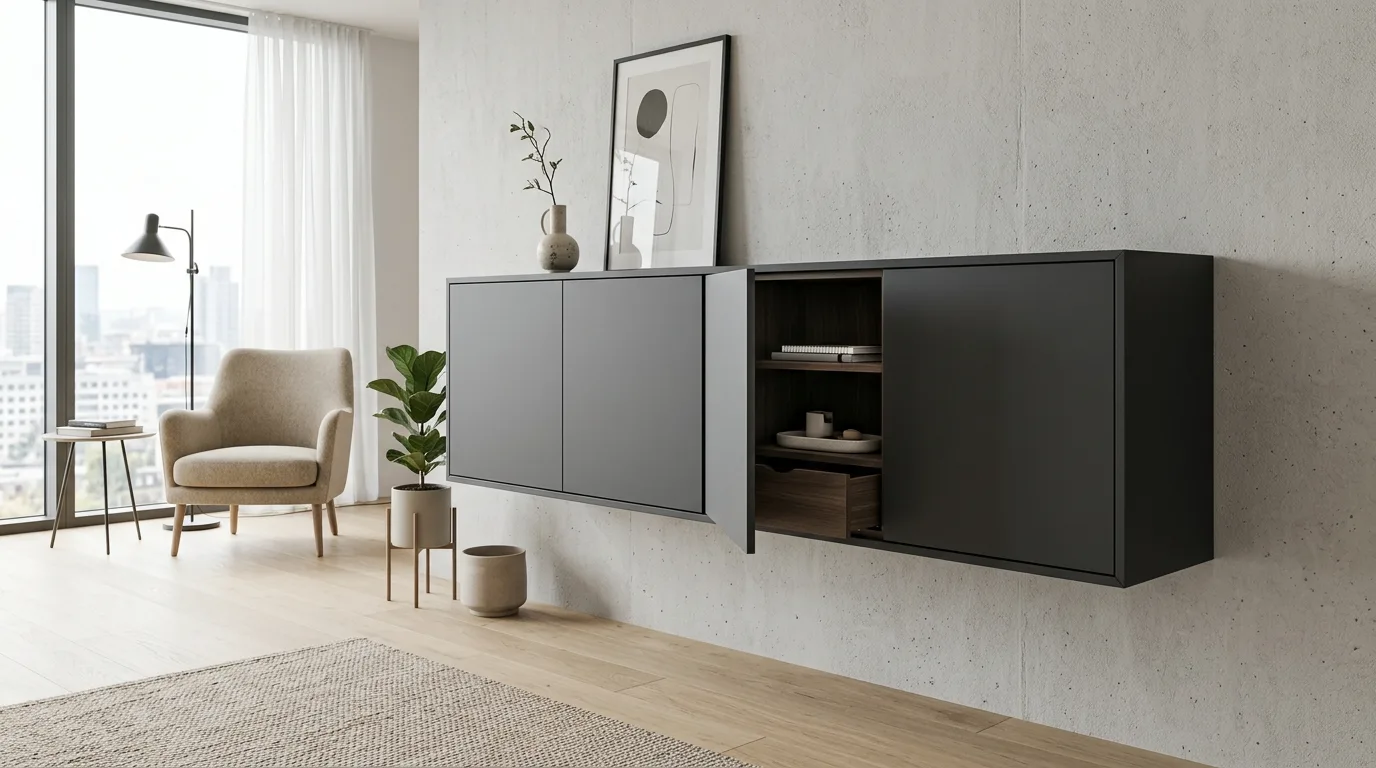
Idea 10
Garage entry cabinet with charging drawer and shoe shelves
Near a garage entry, a storage cabinet can act like a small command center for the entire household. Including shoe shelves, a charging drawer, and closed sections for bags or seasonal extras helps that threshold feel more managed and far less clutter-prone.
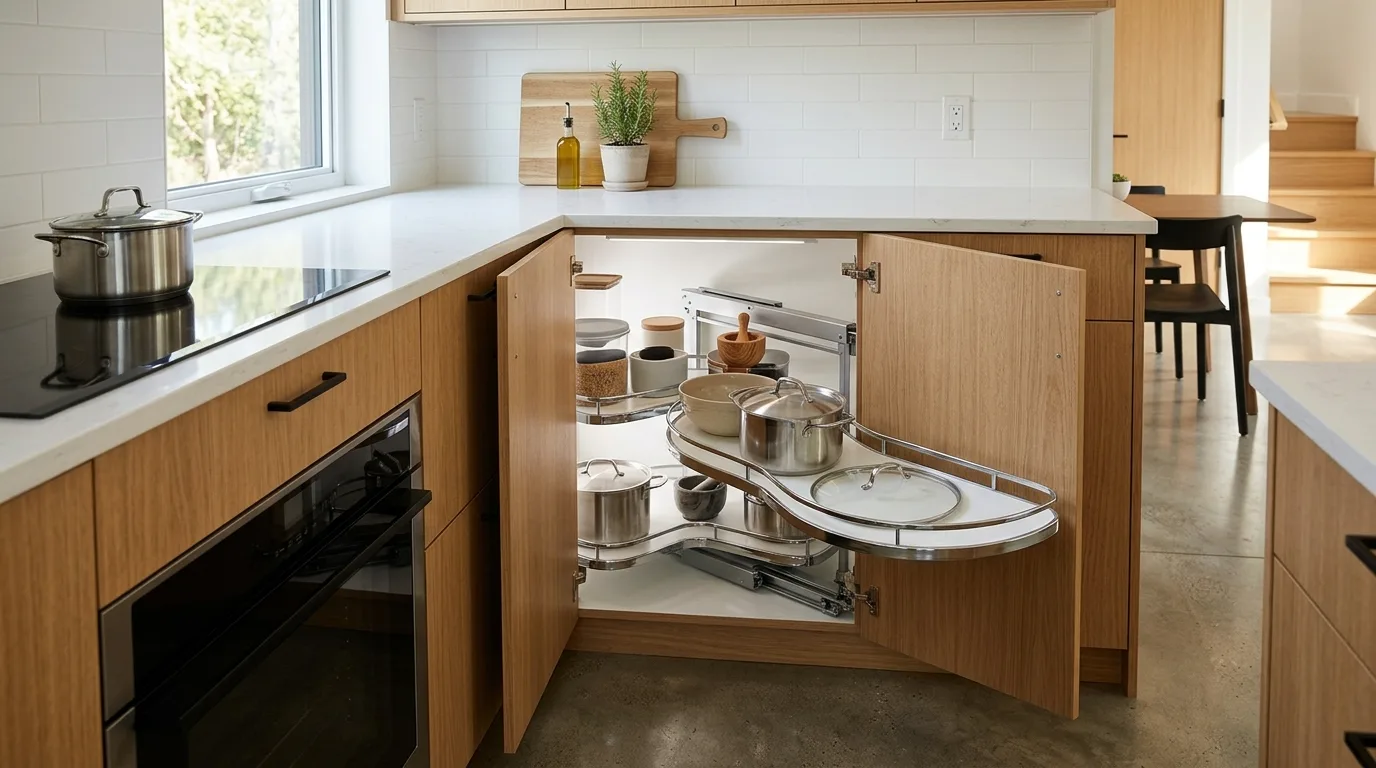
Idea 11
Kitchen utility cabinet with appliance lift and pantry doors
A utility cabinet becomes far more valuable when it reduces both countertop crowding and pantry overflow at the same time. Pairing pantry-style doors with a dedicated appliance lift keeps the kitchen looking cleaner while still making the daily equipment easy to use.
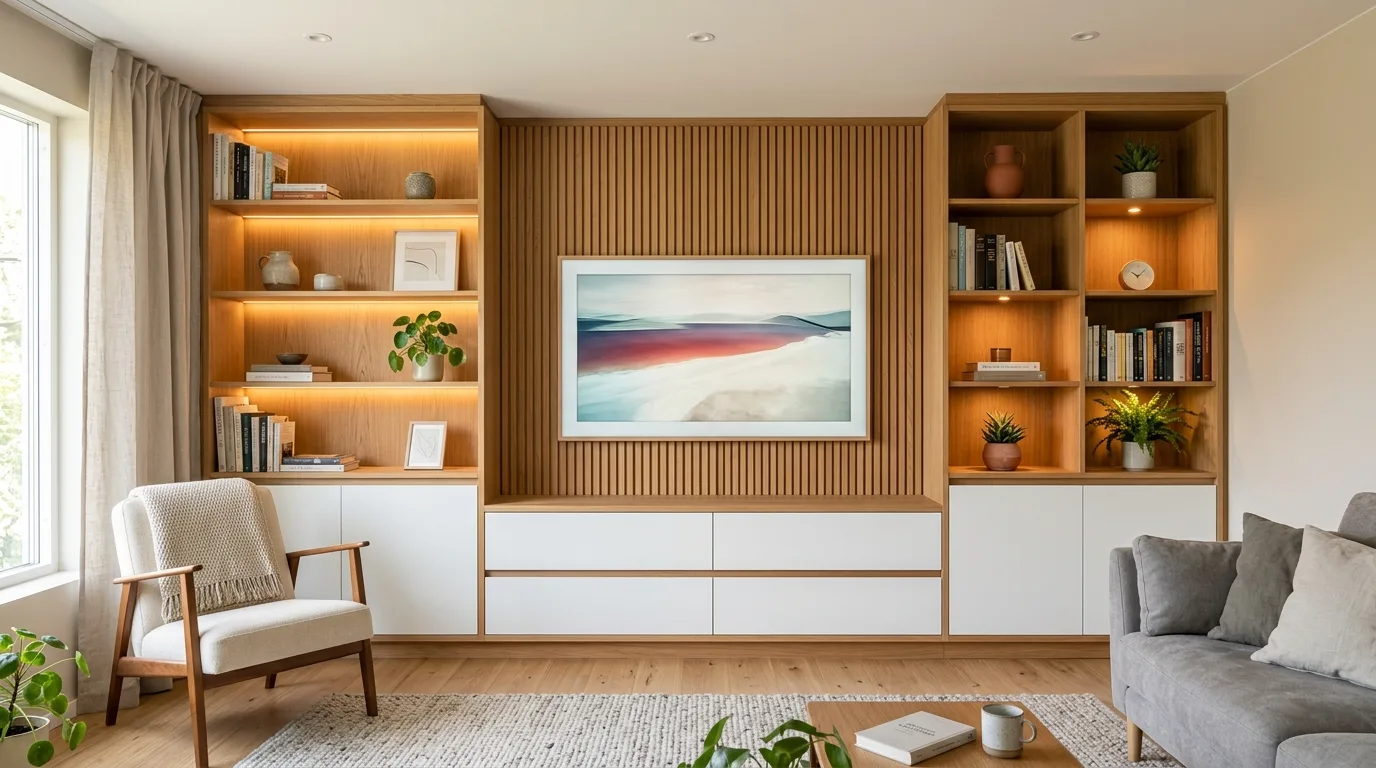
Idea 12
Freestanding nursery cabinet with soft paint and book ledge
A nursery cabinet does not need to feel bulky to be helpful. Soft paint, a compact footprint, and a small book ledge can turn it into a gentle-looking piece that still handles diapers, blankets, and changing supplies with much more order than open baskets alone.
Idea 13
Under stairs storage cabinet with mixed drawers and doors
Under-stairs storage works best when the cabinet design responds directly to the sloped shape instead of fighting it. Mixing drawers and doors across the angled front helps every inch feel useful, which is exactly what makes this kind of custom storage so satisfying.
Idea 14
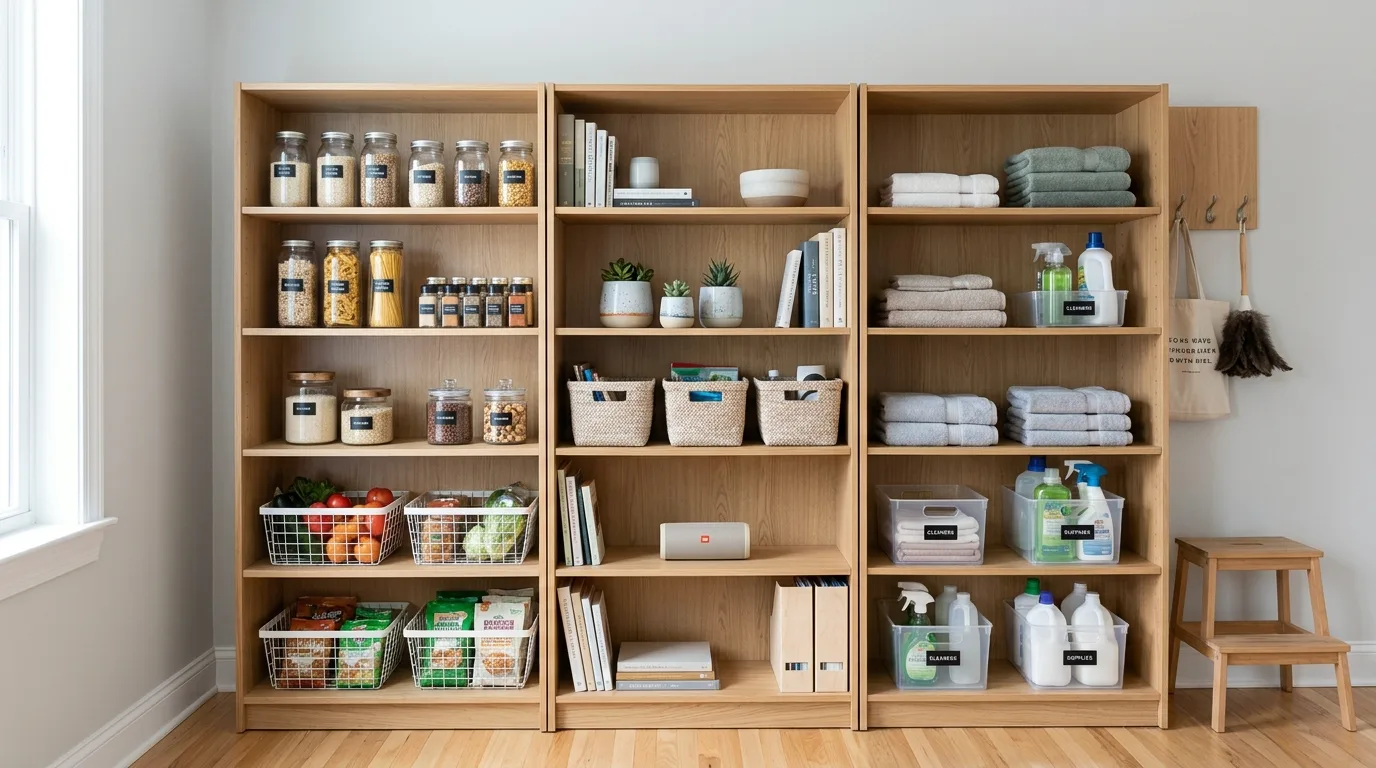
Craft room cabinet wall with shallow uppers and deep base storage
Craft rooms benefit from storage that separates tools by frequency and size instead of stacking everything into a few giant boxes. Shallow upper cabinets keep small supplies visible enough to use, while deeper base units handle bulk materials without overwhelming the work zone.
Read next on Saw & Sprout

Edible Gardens
13 Clever Tomato Trellis Gardens for a Bountiful Harvest
Small-Space Growing
14 Space-Saving Small Vegetable Gardens for Urban GrowersFrequently asked questions
What makes a storage cabinet versatile?
A versatile cabinet adapts to the needs of the room, whether that means hidden clutter control, open display, utility storage, or a mix of all three.
Where do storage cabinets make the biggest difference?
Entries, living rooms, offices, laundry rooms, bathrooms, and bedrooms usually benefit most because those rooms often collect everyday clutter quickly.
Should a storage cabinet always be fully closed?
Not necessarily. A small amount of open display or accessible storage can help, but the balance should match how tidy or busy you want the room to feel.