Backyard playgrounds work best when they support real family life, giving children room to move and imagine while still fitting naturally into the comfort and design of the overall yard.
The most enjoyable setups balance safety, supervision, and beauty, treating the play space as part of the landscape instead of an unrelated structure dropped onto the lawn.
These playground design ideas explore forts, swings, natural play areas, urban corners, family patios, and multi-age layouts built for lasting backyard fun.
Quick planning notes
Start with age range and supervision needs so the play area fits how your family actually uses the yard.
Use surfacing, shade, and clear layout to make the zone safer and more comfortable throughout the day.
Integrate the play space with planting and seating so the whole backyard still feels connected.
Choose structures that suit the scale of the yard instead of overwhelming the outdoor space with one oversized element.
Idea 1
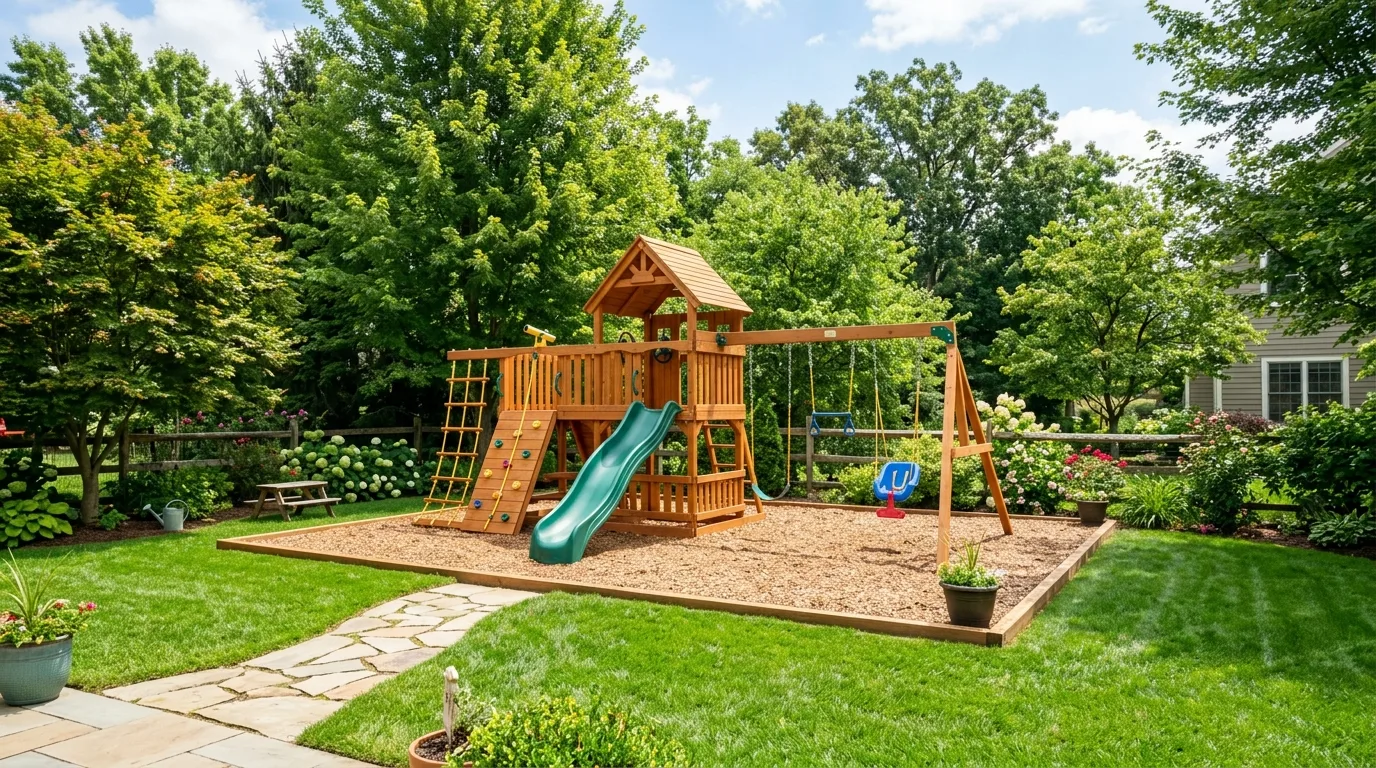
A wooden play fort with slides tucked into a shaded lawn edge
Backyard playgrounds feel more successful when they are integrated with the landscape instead of dropped into it, and a fort near shade and open grass gives kids excitement while keeping the overall yard comfortable and visually balanced. The setup feels playful but well placed.
Idea 2
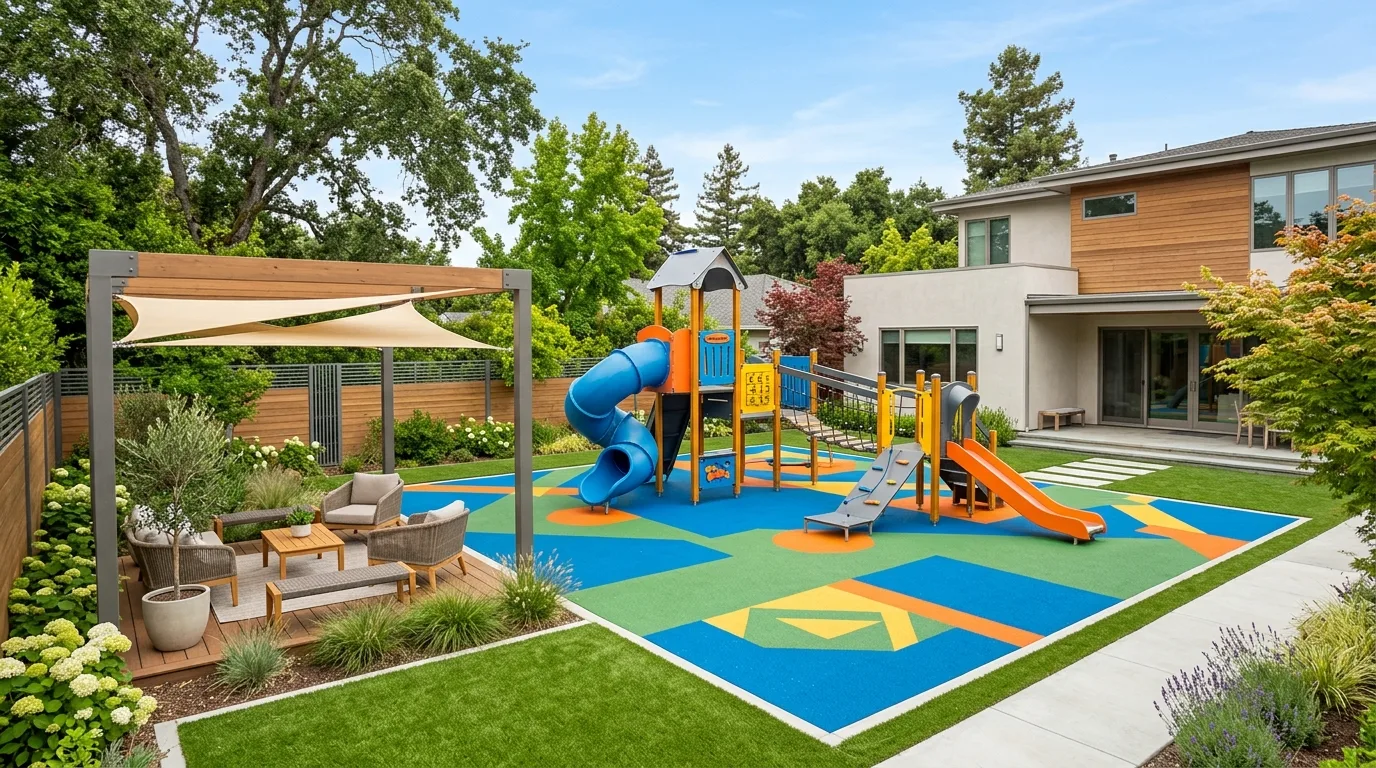
A swing set framed by mulch, trees, and a clear safety border
Simple playground zones often work best when the active equipment is surrounded by enough soft surfacing and open clearance to feel safe and easy to supervise from nearby seating. The layout becomes cleaner and more relaxed for everyone using it.
Idea 3
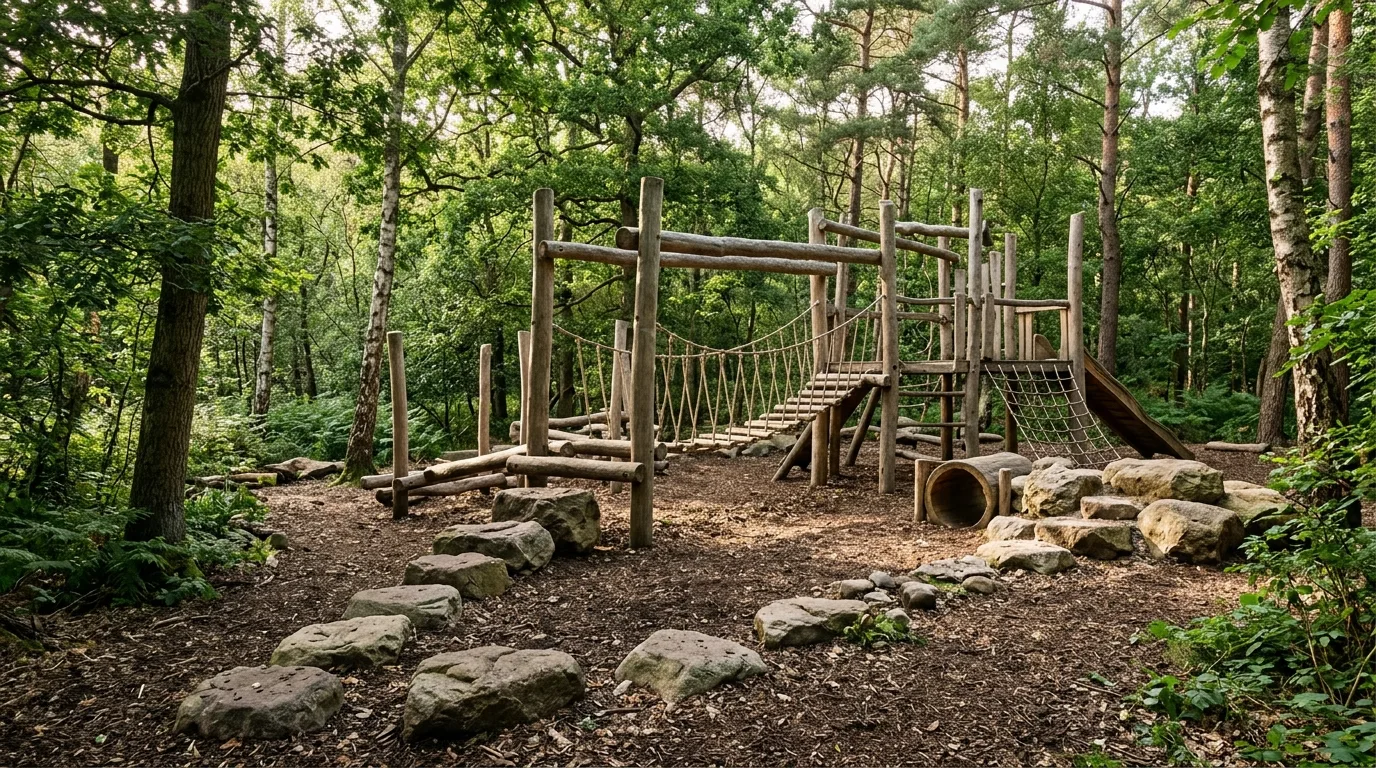
A compact urban play corner with climbing wall and bench seating
Small yards can still support meaningful play when the equipment goes vertical and the adult seating stays close enough to make supervision natural rather than inconvenient. The corner feels purposeful, energetic, and surprisingly efficient.
Idea 4
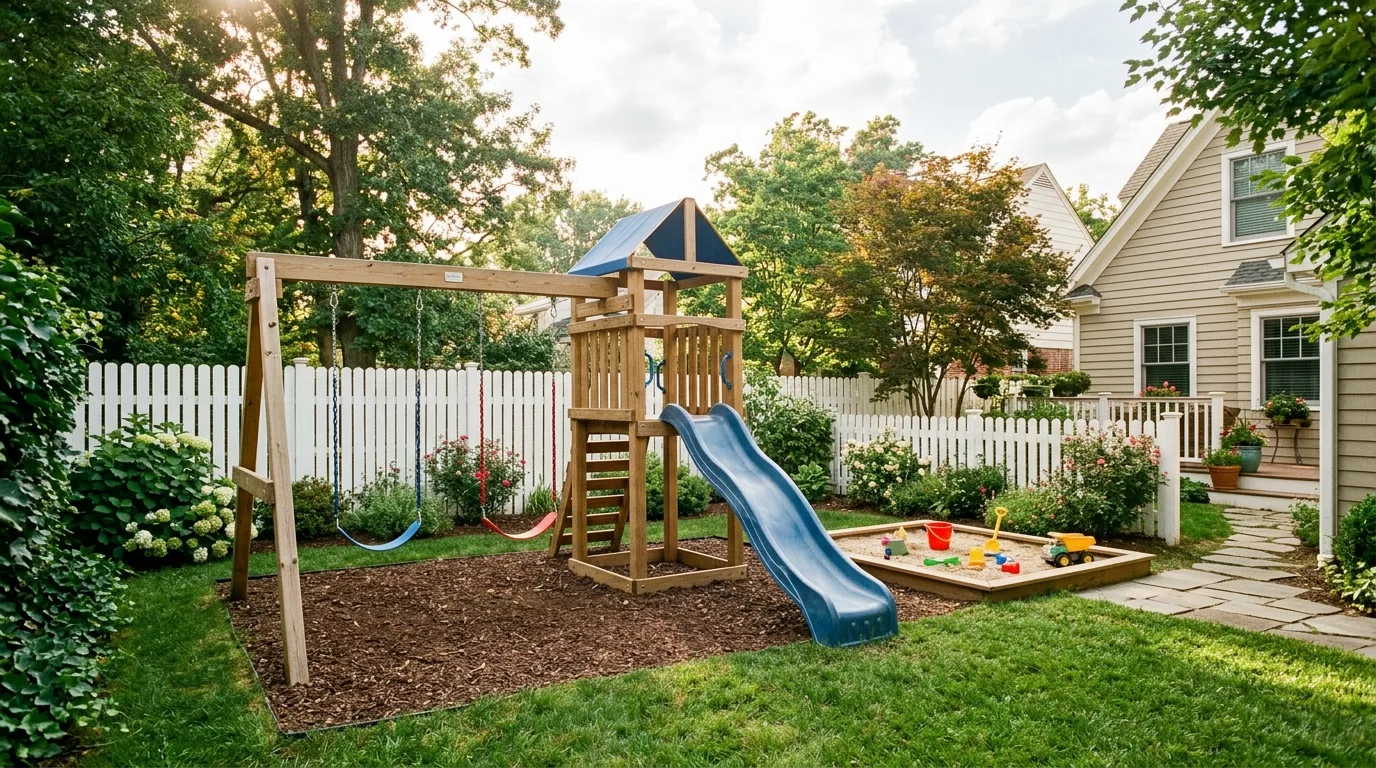
A natural playground using logs, boulders, and a sand area
Nature-based play spaces often age beautifully because they feel less like bright plastic installations and more like part of the garden itself, while still giving children plenty of chances to climb, dig, and imagine. The whole yard feels warmer and more creative.
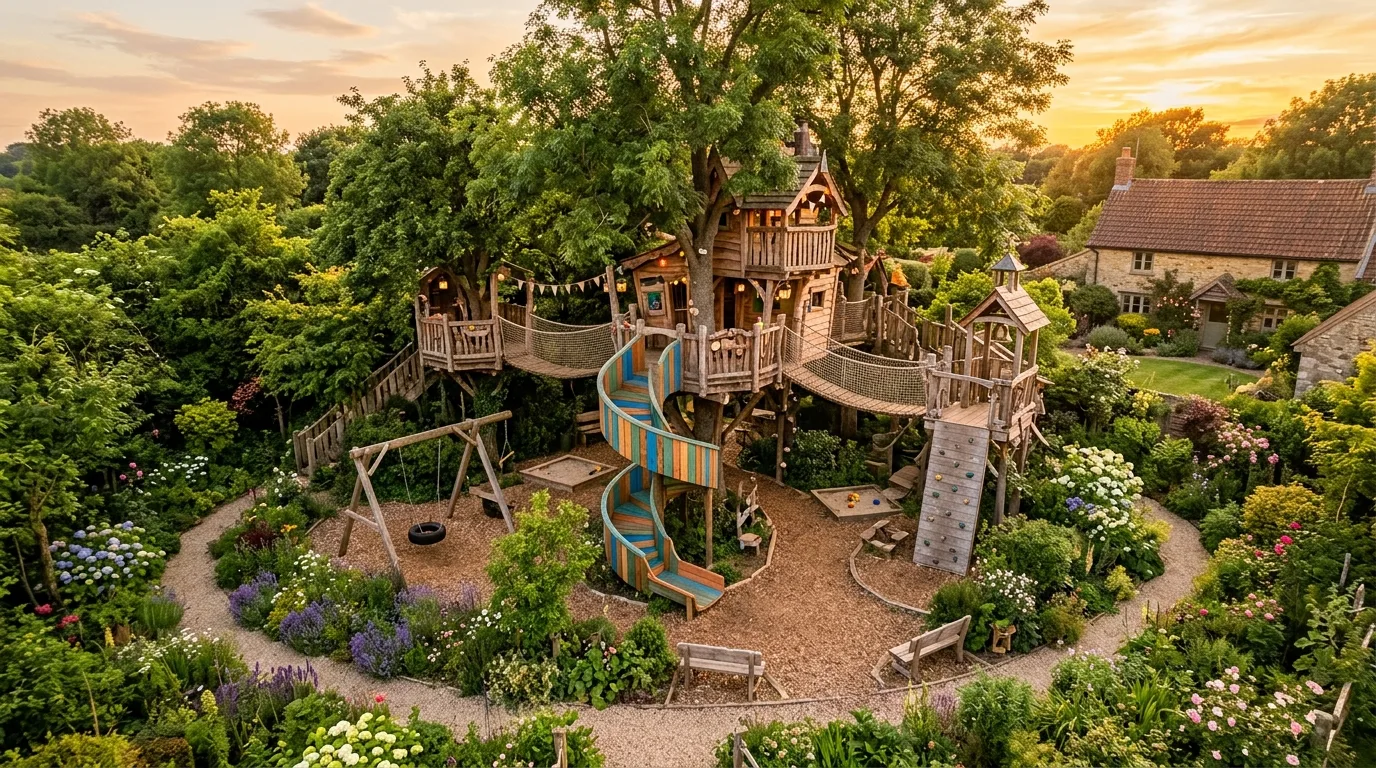
Idea 5
A play lawn with stepping stumps and a simple rope course
Not every fun backyard needs a huge structure, and sometimes a few interactive elements across an open lawn create more flexible movement and imagination than a single oversized set. The design stays easy to maintain while still encouraging active play.
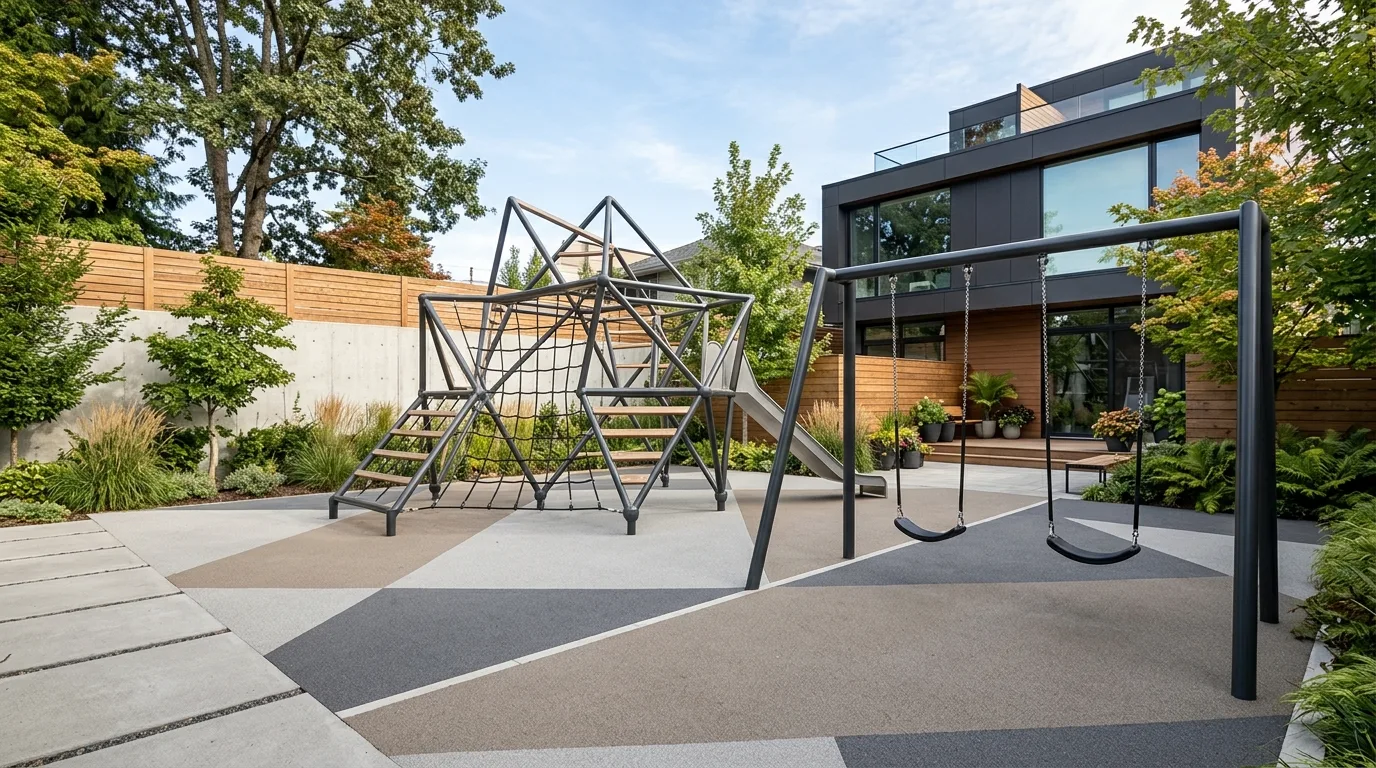
Idea 6
A pergola-shaded family zone linking patio seating to play space
Family-friendly landscapes work best when adults and children can share the same general area comfortably, and a shaded seating zone beside the playground keeps the backyard social instead of splitting everyone apart. The yard feels more connected and easier to use daily.
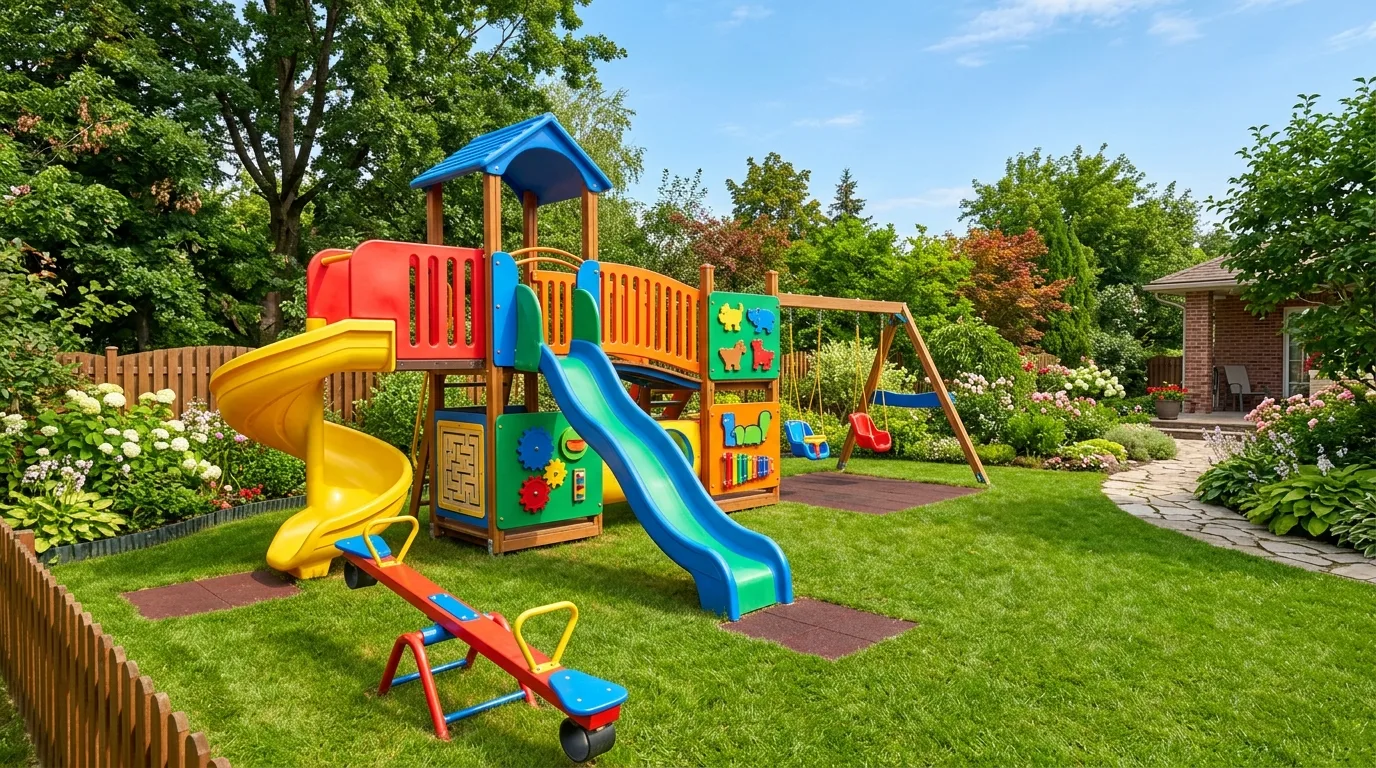
Idea 7
A side-yard adventure strip with monkey bars and soft planting
Long narrow yards can become more exciting when they are treated as movement corridors, using linear play elements that keep children active without consuming the whole backyard. The planting around the edge helps the strip feel integrated and finished.
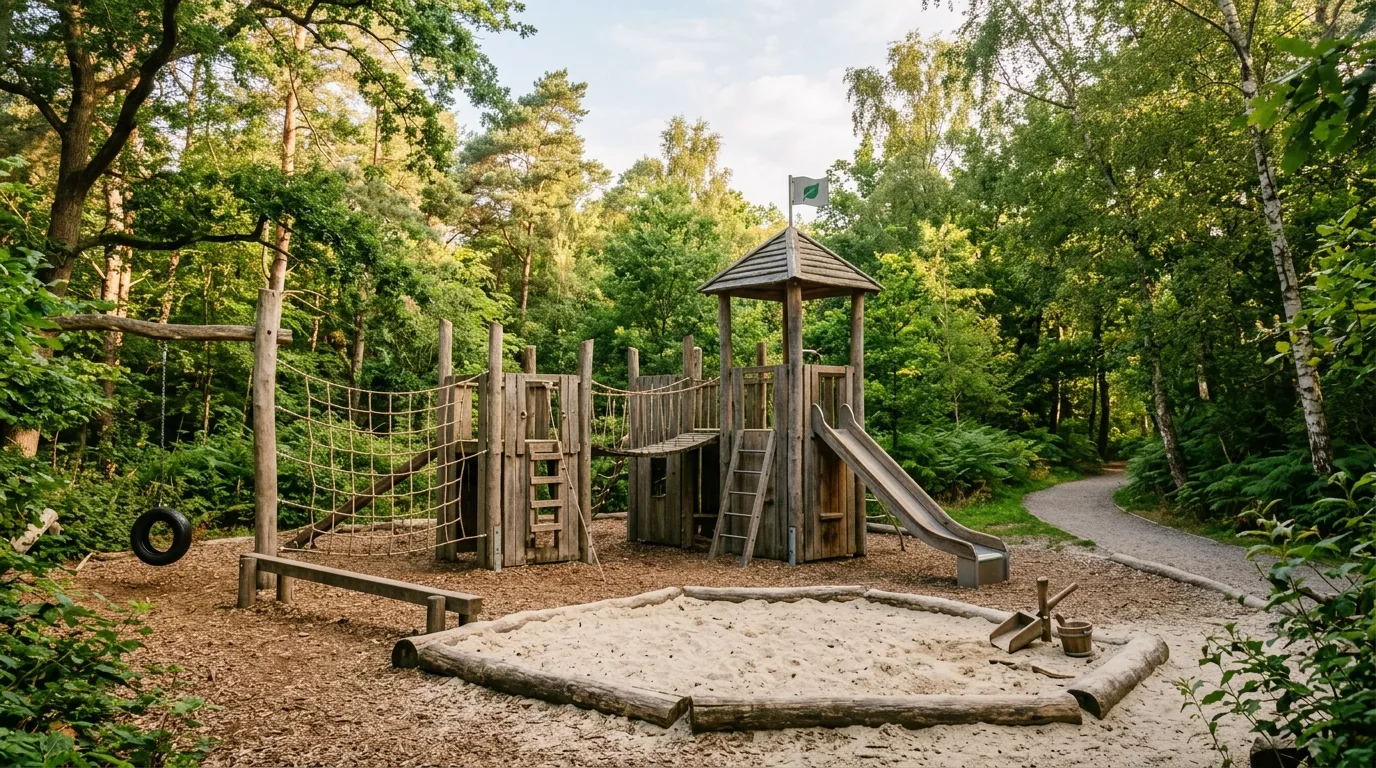
Idea 8
A playhouse garden with flowers and a child-sized path
Play areas often become more charming when they include a little landscape storytelling of their own, and a small path through flowers to a playhouse can make the whole scene feel magical instead of only functional. The backyard gains personality for all ages.
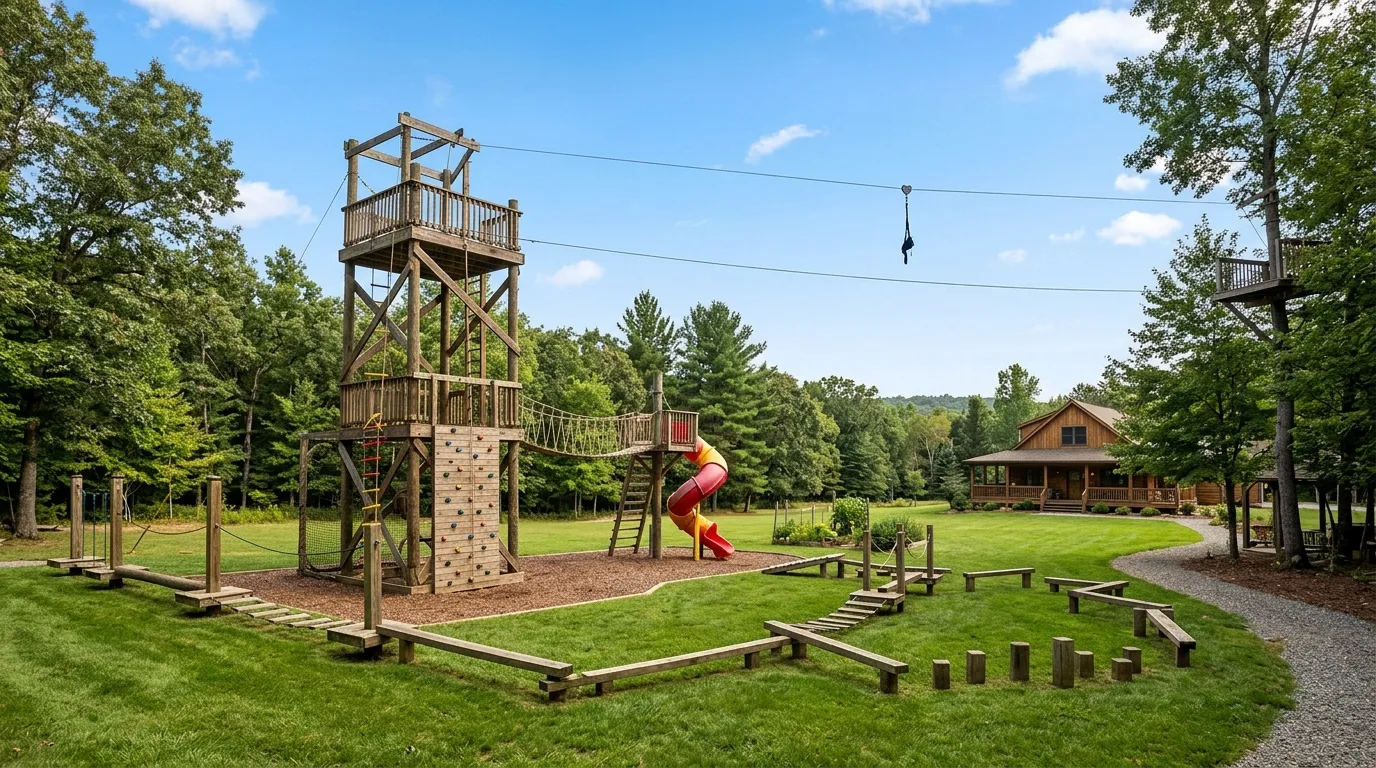
Idea 9
A modern play zone using black timber and simple geometry
Playground design can feel stylish when the structure and surfacing are chosen with the rest of the yard in mind, using cleaner materials that still support fun without clashing with a more contemporary home. The result feels deliberate rather than temporary.
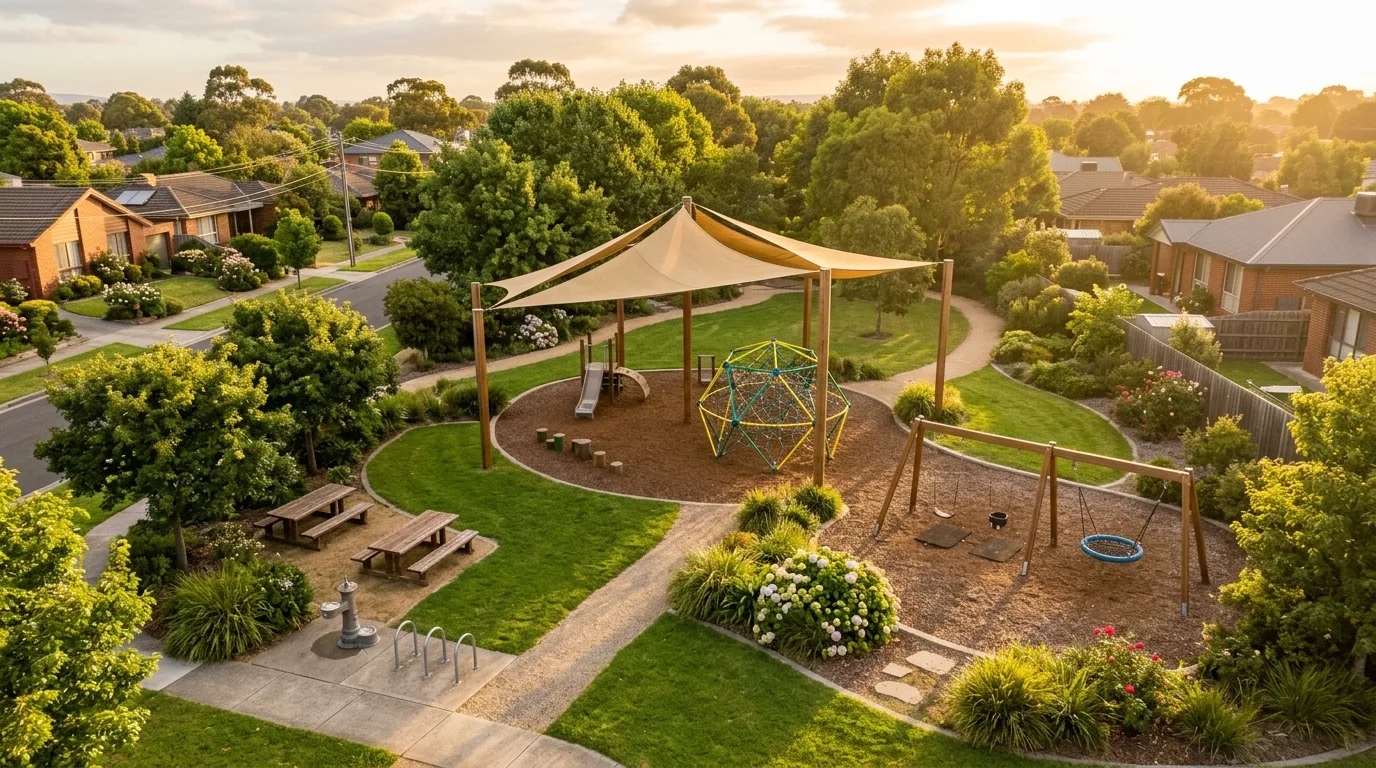
Idea 10
A tree swing corner that turns one mature branch into a feature
Sometimes the most memorable play elements are the simplest, and a swing beneath a beautiful tree can create a classic backyard moment that feels both nostalgic and naturally connected to the garden. The landscape itself becomes part of the play experience.
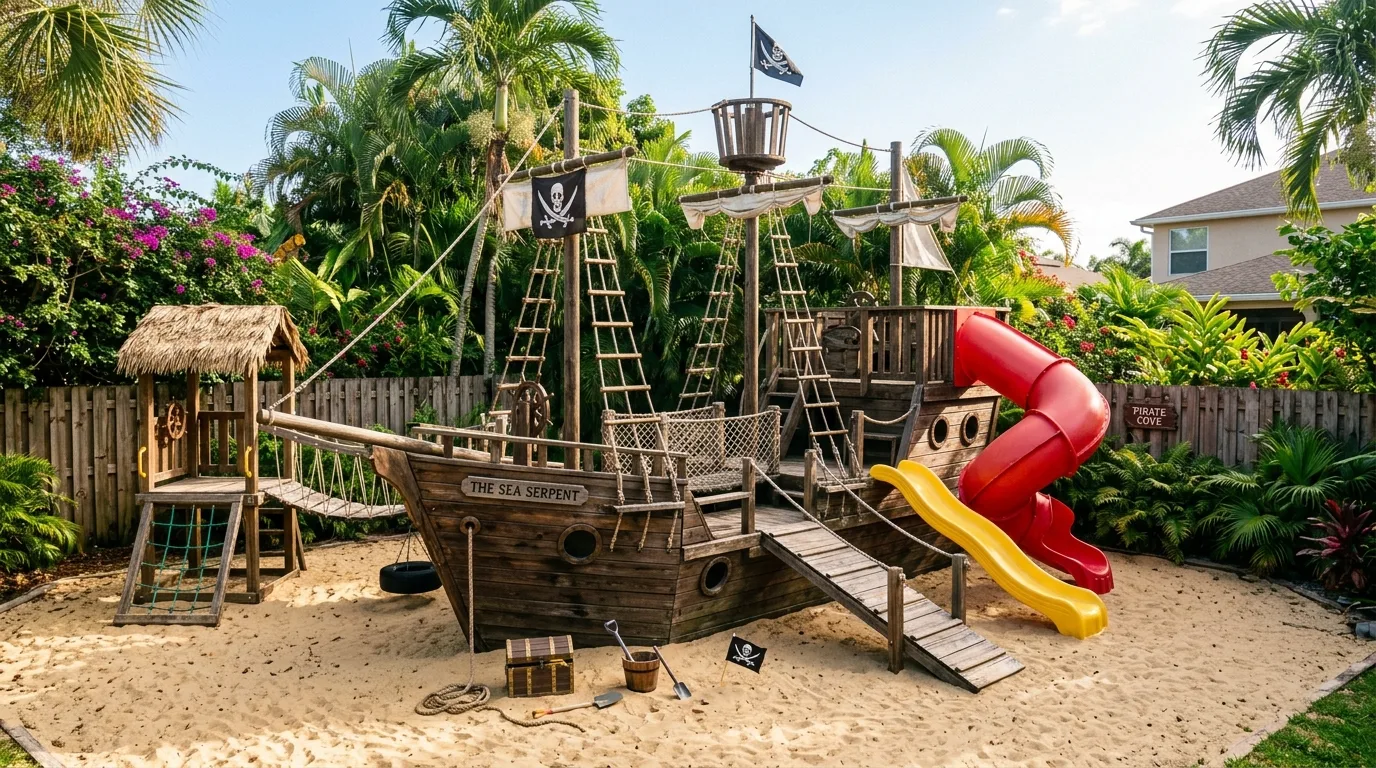
Idea 11
A multi-age yard with separate zones for toddlers and bigger kids
Families often get better long-term use from a play yard when the space is organized for different ages instead of assuming one setup suits everyone equally well. Clear zones make the backyard safer, calmer, and more adaptable as children grow.
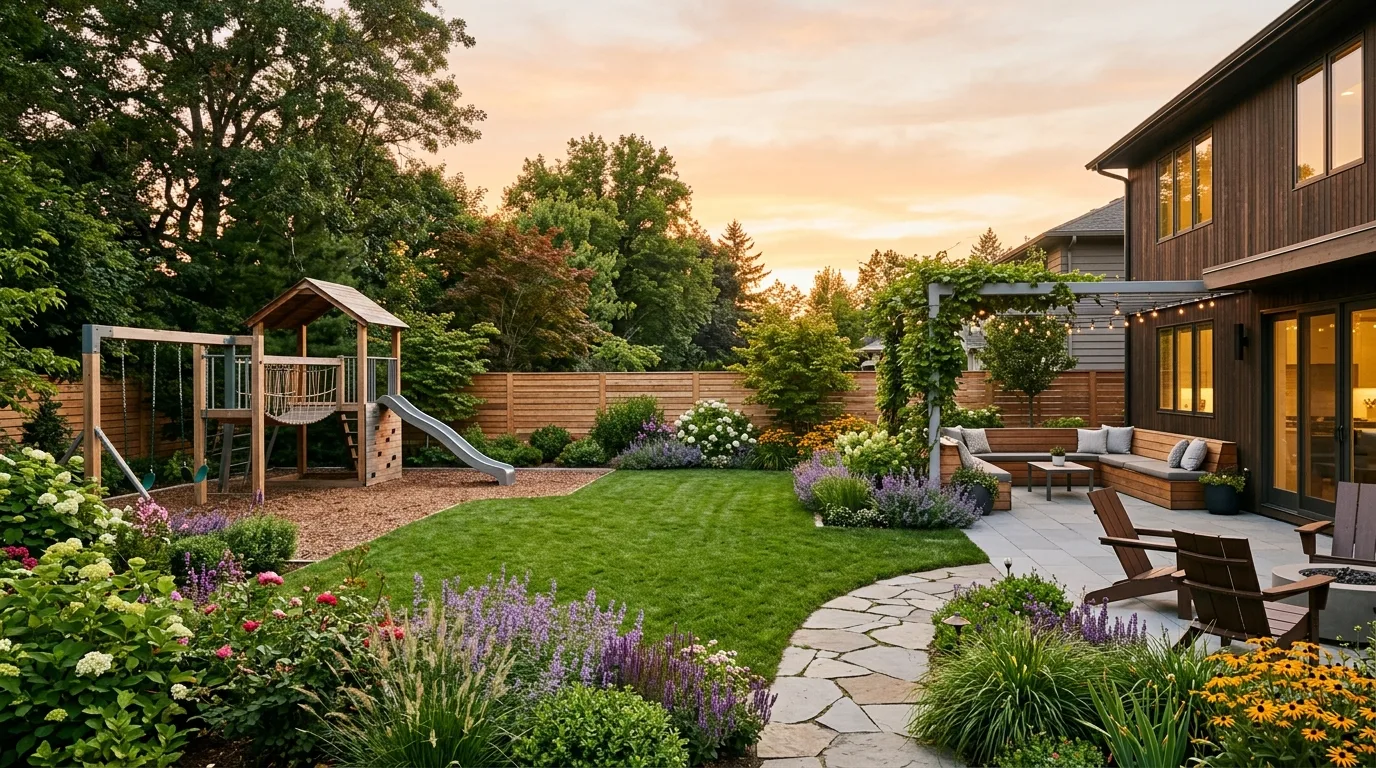
Idea 12
A playful family garden where safety, fun, and good design all work together
The best backyard playgrounds succeed because they support active play without sacrificing the comfort, beauty, and day-to-day usability of the rest of the landscape. That balance is what makes the space enjoyable for the whole family rather than only the equipment itself.
Read next on Saw & Sprout
Edible Gardens
13 Clever Tomato Trellis Gardens for a Bountiful Harvest
Small-Space Growing
14 Space-Saving Small Vegetable Gardens for Urban GrowersFrequently asked questions
What makes a backyard playground feel well designed?
A good layout, safe surfacing, clear sightlines, age-appropriate features, and strong integration with the rest of the yard usually matter most.
Can small backyards still include a playground?
Yes. Compact climbing zones, swings, natural play elements, and vertical structures can create plenty of fun in limited space.
How do you keep a play yard attractive for adults too?
Use better materials, tie the play zone into nearby seating and planting, and keep the overall layout organized and easy to live with.