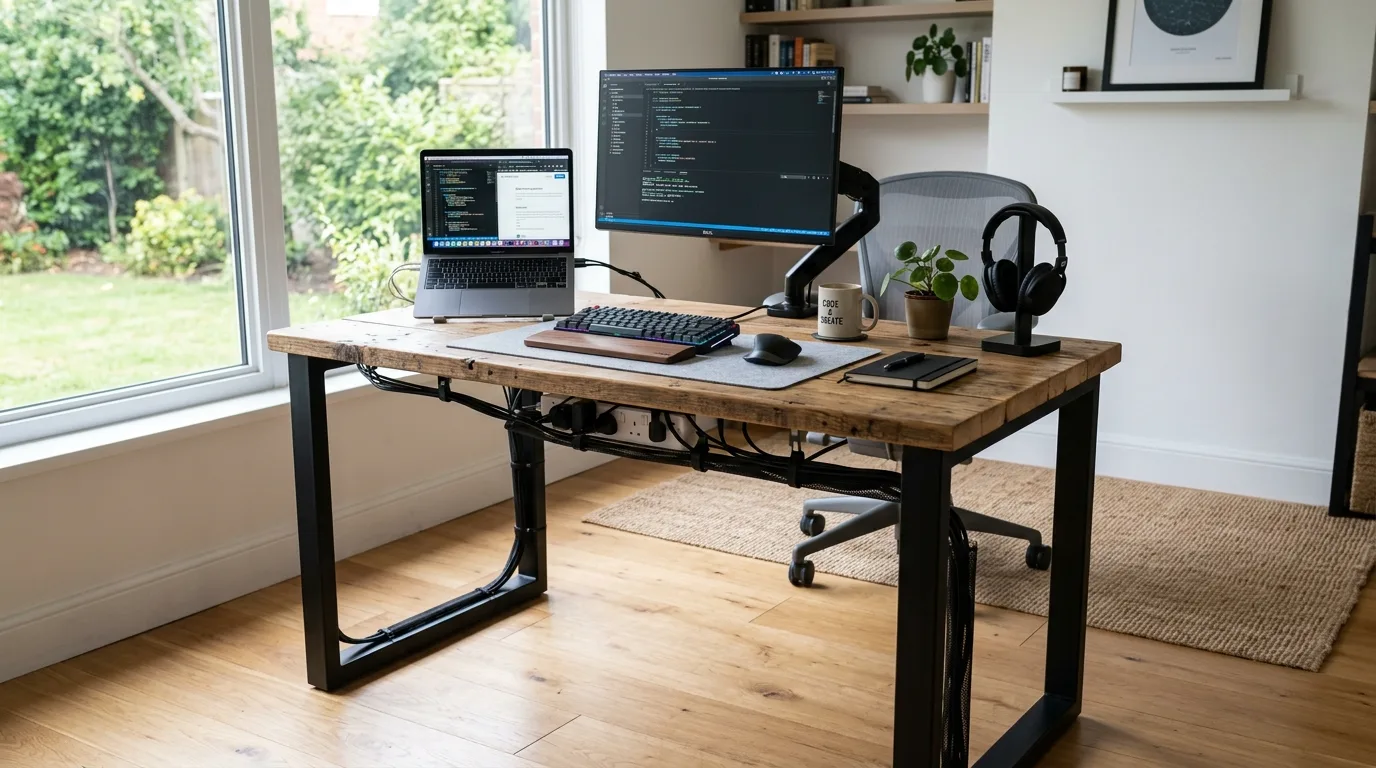
A good DIY computer desk is more than a flat surface with legs. It needs to support the way you actually work, hold the devices you use most, and fit the room well enough that the workspace feels planned instead of improvised.
What makes custom desks so useful is the ability to control the things mass market furniture often gets wrong, such as depth, cable handling, monitor space, drawer placement, and how the desk meets the wall or window around it. Those choices can change how comfortable the room feels every day.
These desk ideas focus on layouts that feel practical, thoughtful, and realistic for working at home. Some are compact, some built in, some designed for two people, but each one aims to make the workspace feel more tailored and more efficient.
Quick planning notes
Measure for monitors, chairs, and storage before building the top, because desk depth and leg clearance matter as much as the overall look once you start using the workspace daily.
Decide whether the desk needs to solve one problem or several, such as shared use, printer storage, cable control, or a corner layout, so the design stays purposeful.
Use the wall and room shape to your advantage, because alcoves, corners, narrow rooms, and window walls often suggest better desk layouts than generic freestanding shapes.
Build in cable planning early, since hidden cords and power access are often what make a custom desk feel truly finished once the equipment is set up.
Idea 1
Simple plywood desk with open leg room and clean lines
A straightforward plywood desk can look surprisingly polished when the proportions are right and the finish is kept clean, which makes it a strong base for a custom workspace. The open leg room also keeps the setup feeling lighter and easier to use every day.
Idea 2
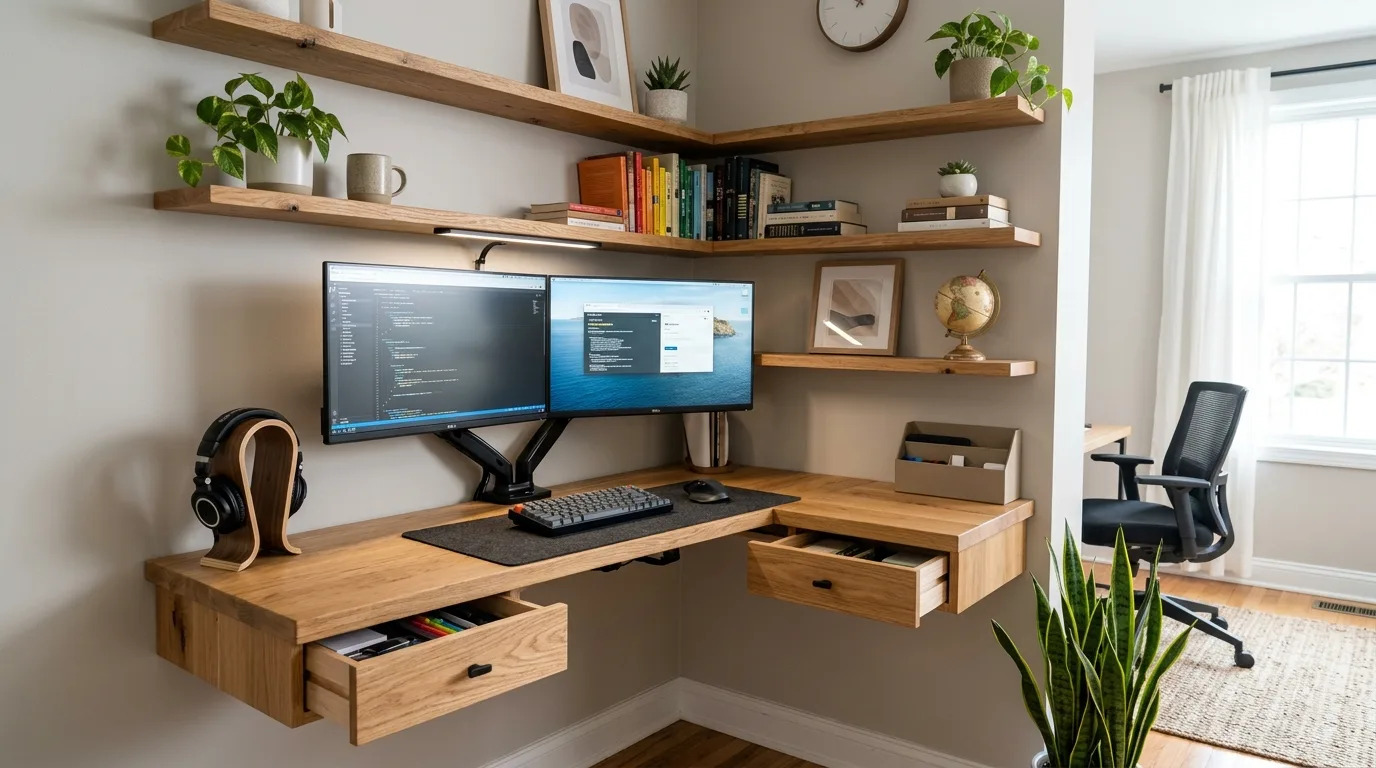
Wall to wall desk built for a narrow home office
A desk that spans the full width of a room uses every inch more effectively and often makes a narrow office feel more deliberate rather than cramped. It is a great solution when you need serious surface area but want the room to stay uncluttered.
Idea 3
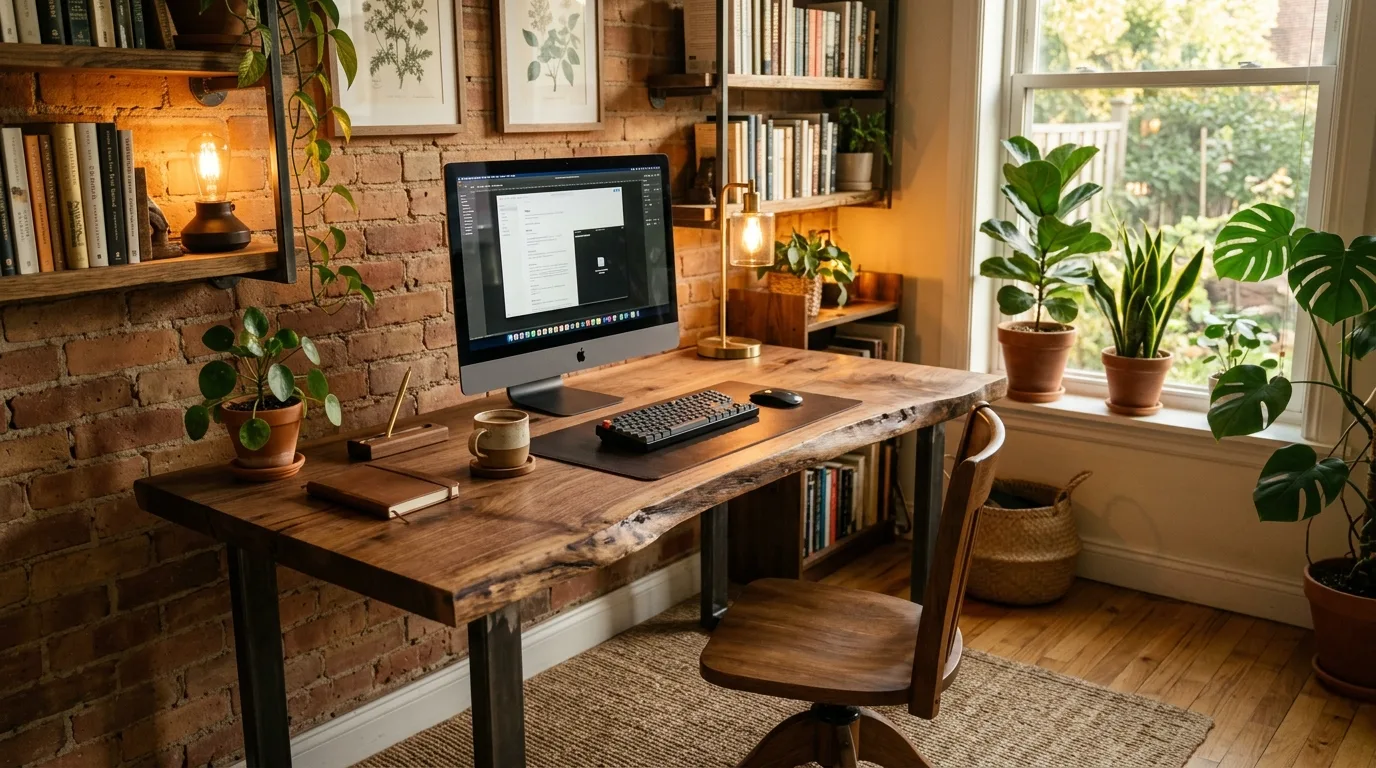
Corner desk with extra monitor depth and storage
A corner design gives you more monitor space and a stronger sense of enclosure, which can make focused computer work easier over long stretches. It is especially practical for people who need a larger screen setup but still want the workspace to feel organized.
Idea 4
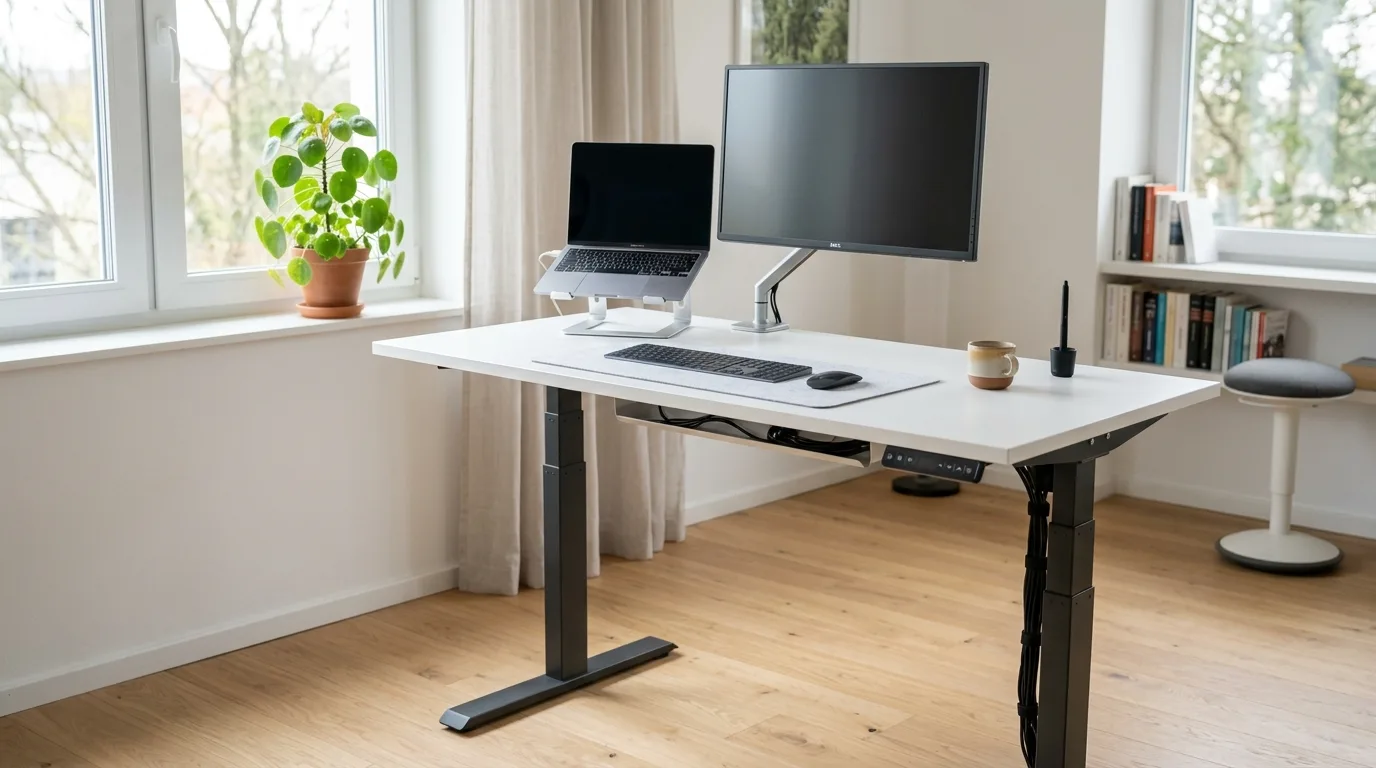
Butcher block desk top paired with black metal supports
A butcher block surface warms the whole room and gives the desk a more durable, finished feel, while black supports keep the base visually light. That combination works well when you want a workspace that feels sturdy without looking heavy.
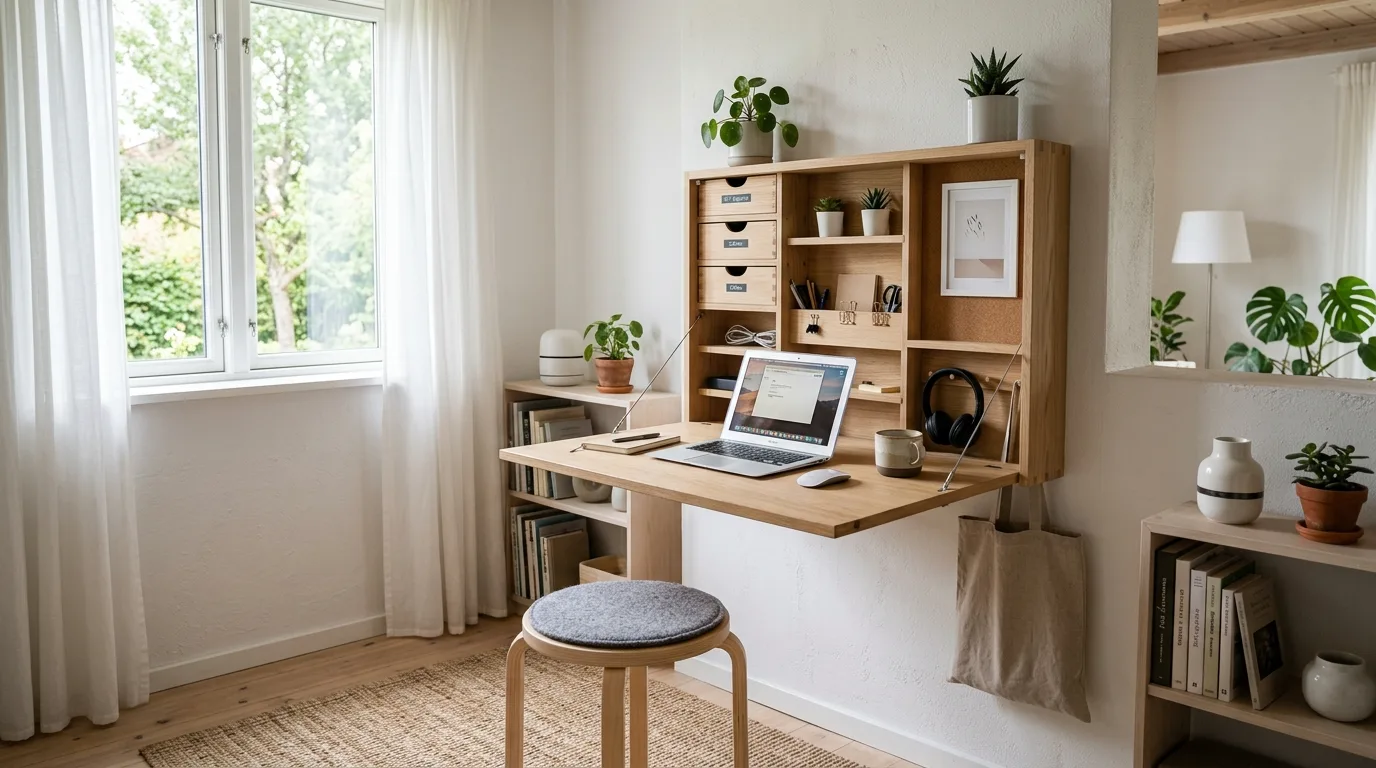
Idea 5
Built in alcove desk with shelves wrapped around it
Using an alcove for a built in desk makes the workspace feel intentional and can turn an awkward niche into one of the most useful parts of the house. Shelves around the desk also help keep tools and books close without crowding the work surface.
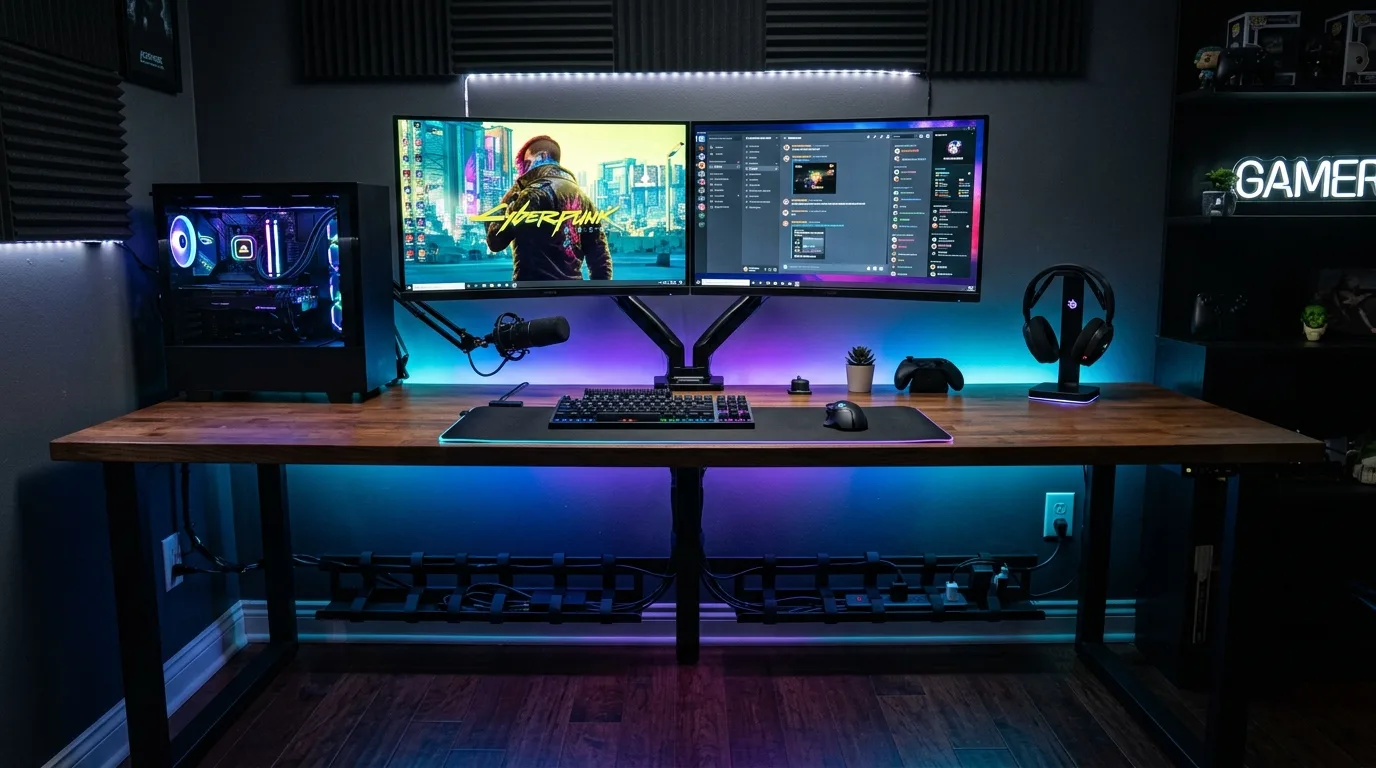
Idea 6
Compact desk with drawer storage for a bedroom office
A small desk with a few well placed drawers can make bedroom working feel much more manageable because it keeps clutter contained and the footprint controlled. It is a smart build when the office has to share space with everyday living.
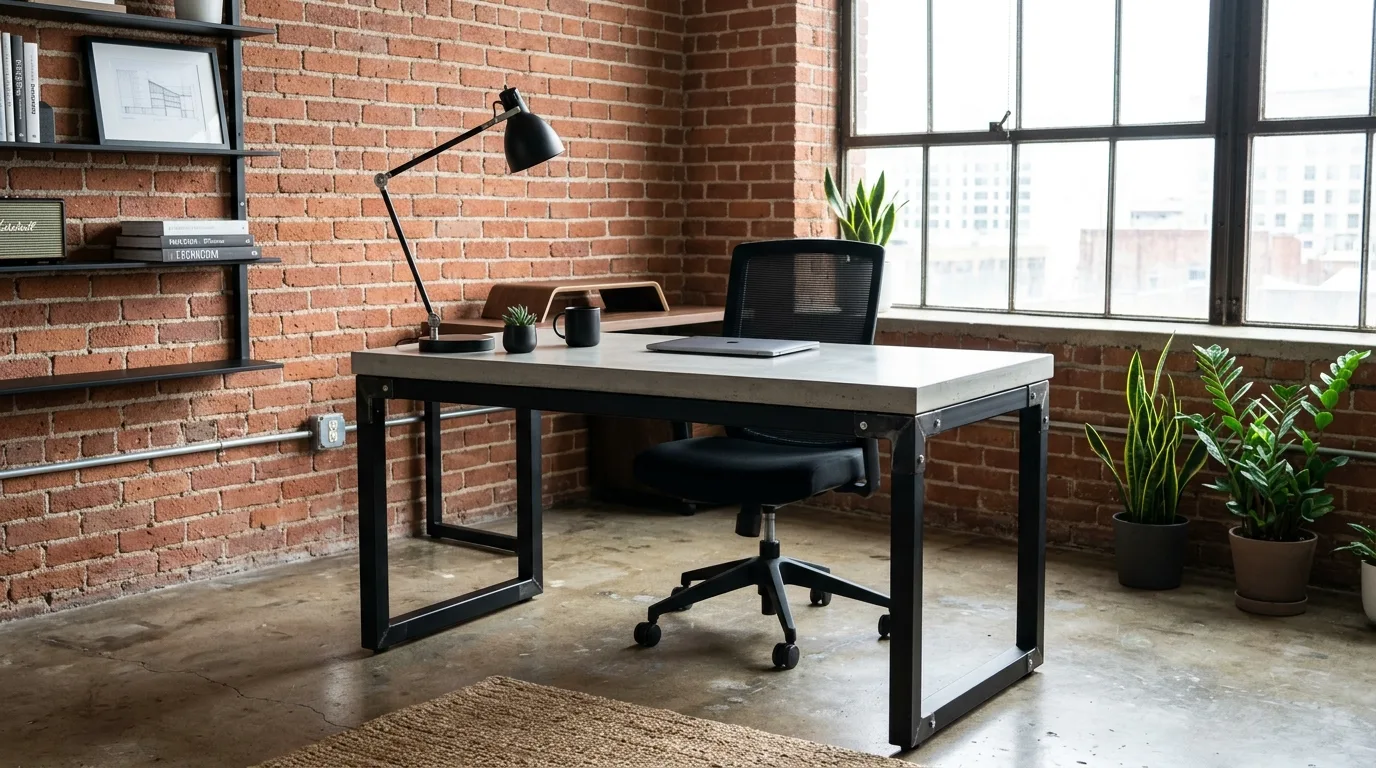
Idea 7
Floating desk layout that keeps the floor visually open
A floating desktop helps a room feel cleaner because the floor stays visible underneath, and that often makes even a tight office corner feel less crowded. The effect is especially good in modern interiors where simpler lines matter.
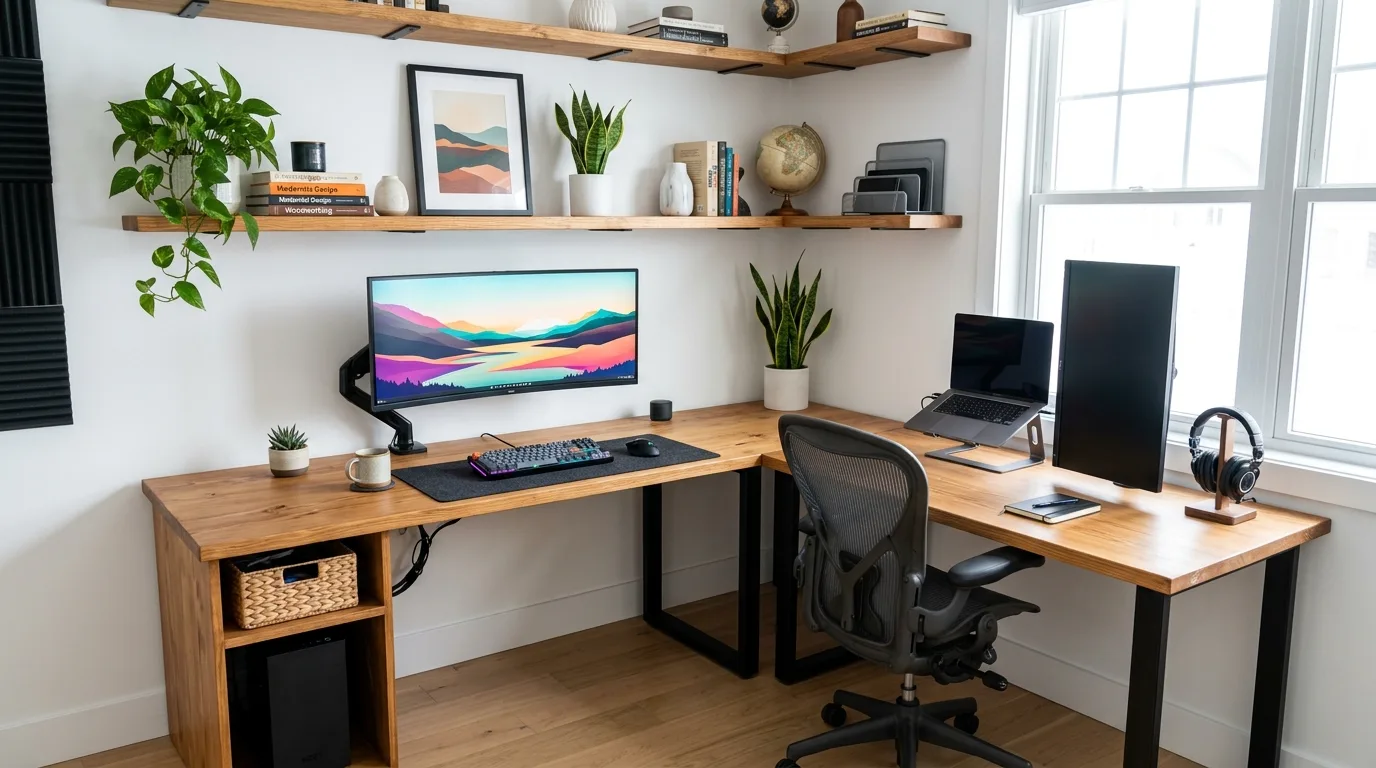
Idea 8
Double workstation desk for a shared office setup
A two person desk can keep a shared room more harmonious because each user has a clear zone while the materials and layout still feel unified. It is a practical build for couples, siblings, or collaborative work from home setups.
Idea 9
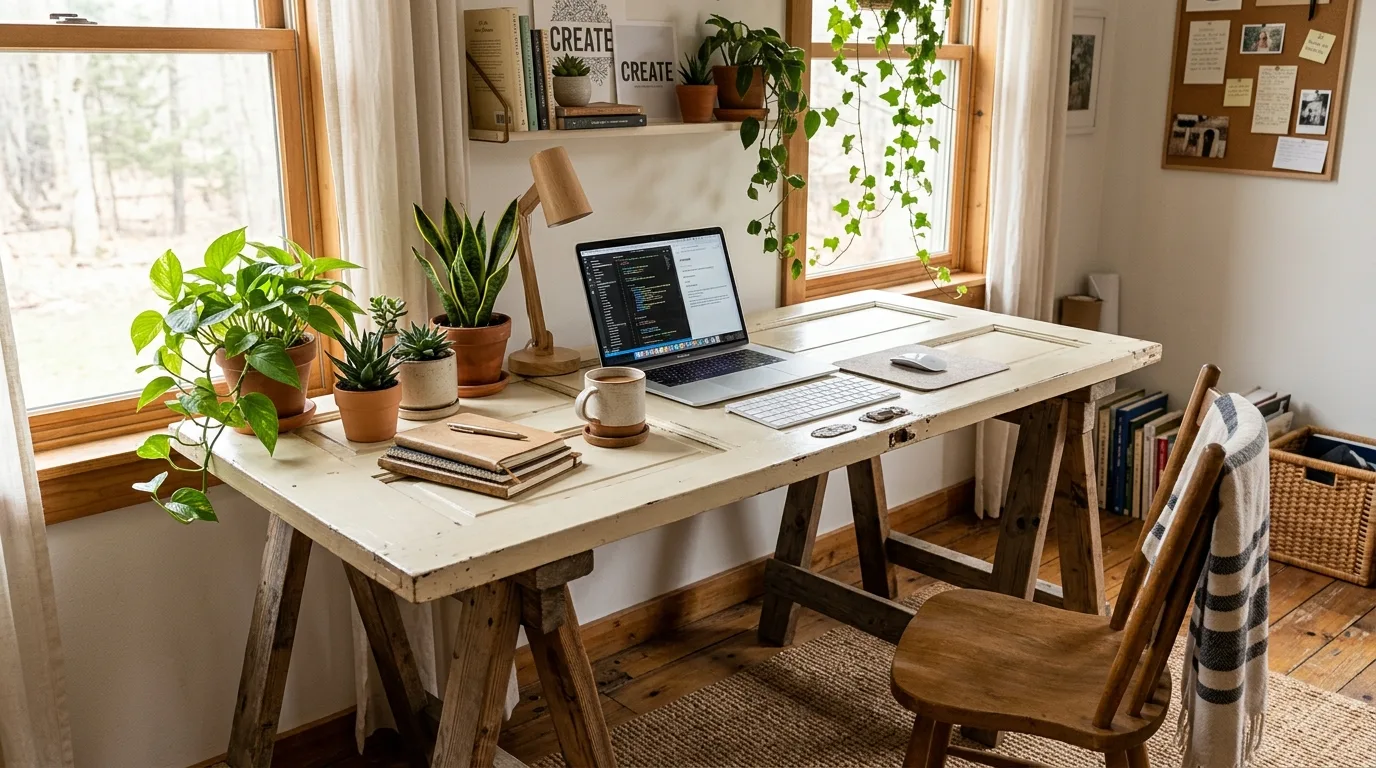
Desk with cable management panel and hidden power strip
A good desk build gets much better once the cords disappear, because hidden power access makes the whole workspace feel calmer and more professional. This kind of thoughtful detail is often what separates a homemade desk from one that feels fully custom.
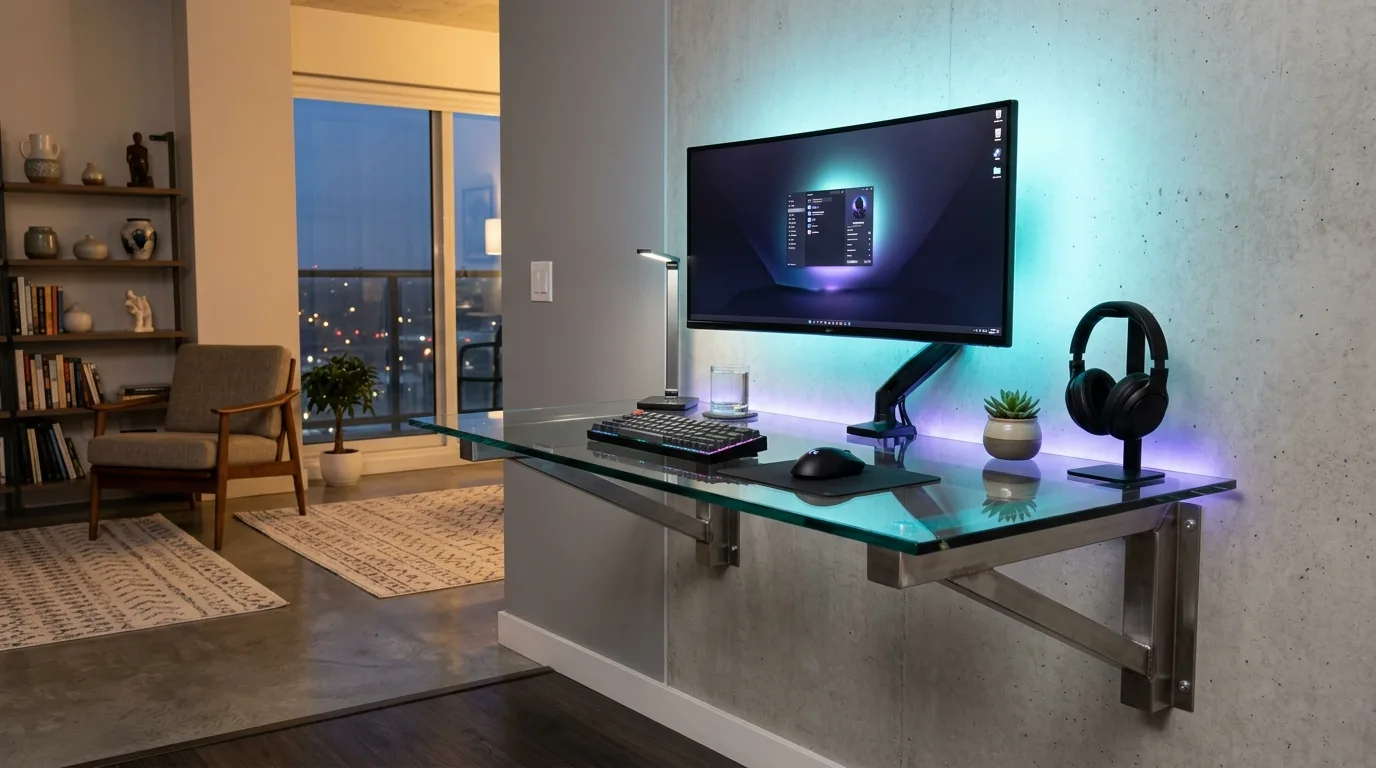
Idea 10
Industrial style desk with pipe legs and wood slab top
Pipe legs and a solid wood top create a rugged desk with lots of character, especially if the room already leans industrial or masculine. The build feels strong and visually grounded, which suits larger monitors and heavier equipment well.
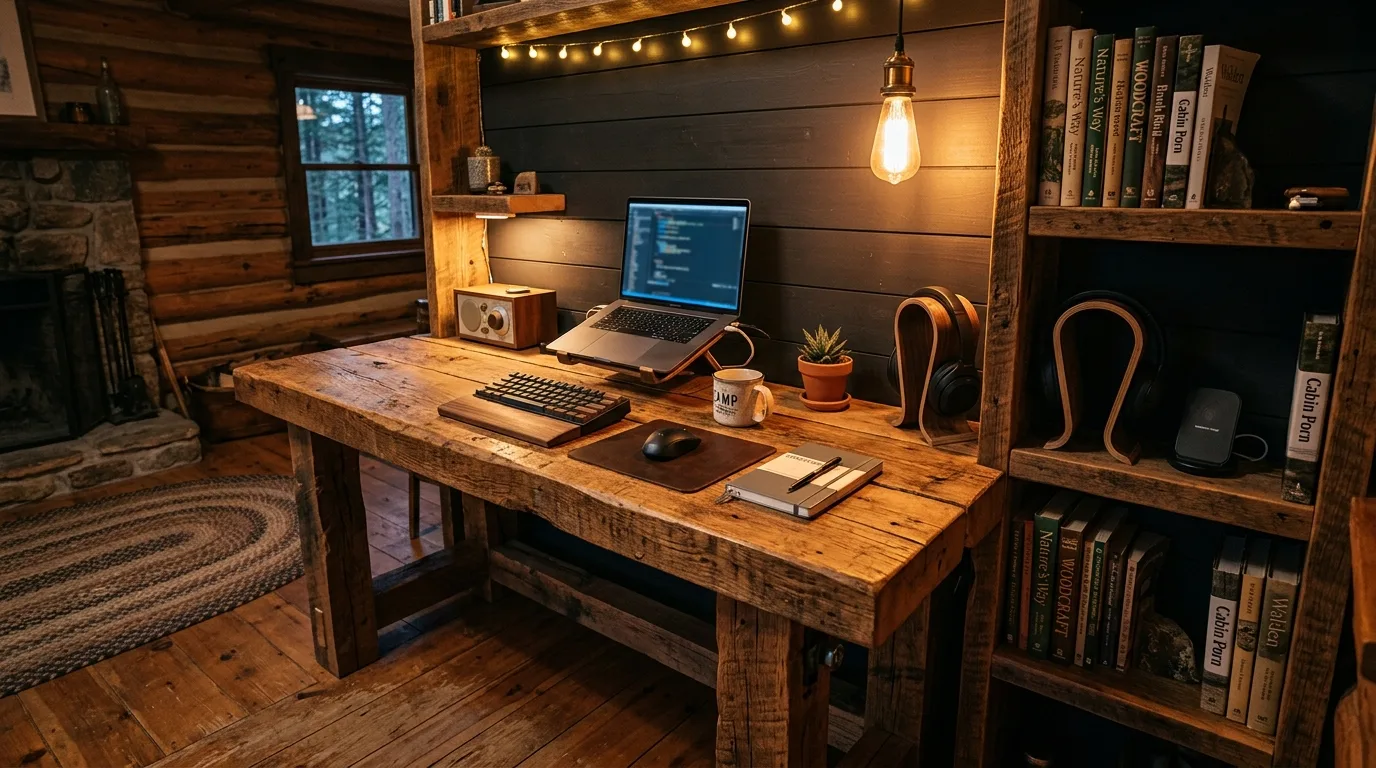
Idea 11
L shaped desk with printer shelf and side return
An L shaped layout gives you a main work zone and a secondary landing area, which helps keep papers, printers, and devices from taking over the center of the desk. It is ideal when your workspace needs to handle more than one kind of task.
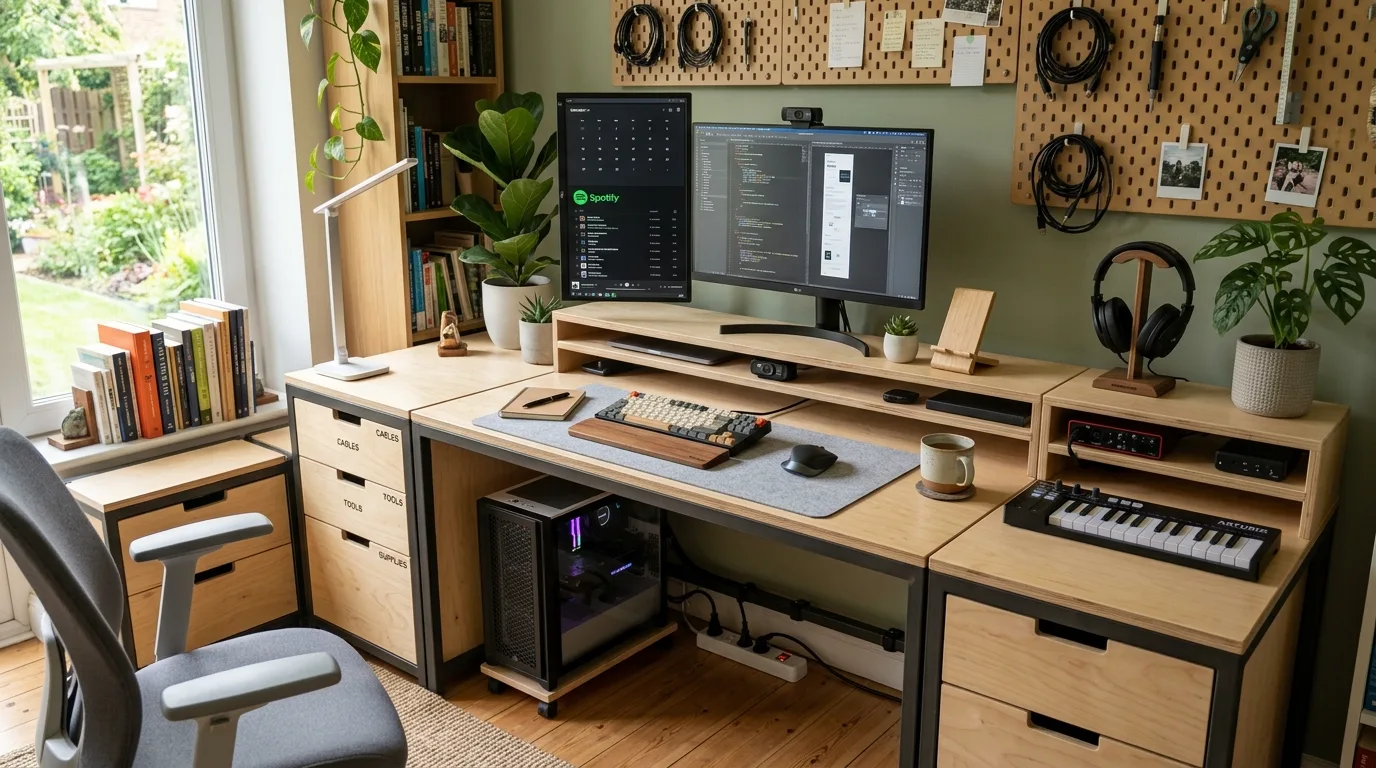
Idea 12
Minimal desk on trestle bases for a lighter studio feel
Trestle bases make the desk feel airy and easy to move around visually, which can be very helpful in multiuse rooms or creative studios. The look stays simple, but the overall setup still feels custom once the top and spacing are chosen carefully.
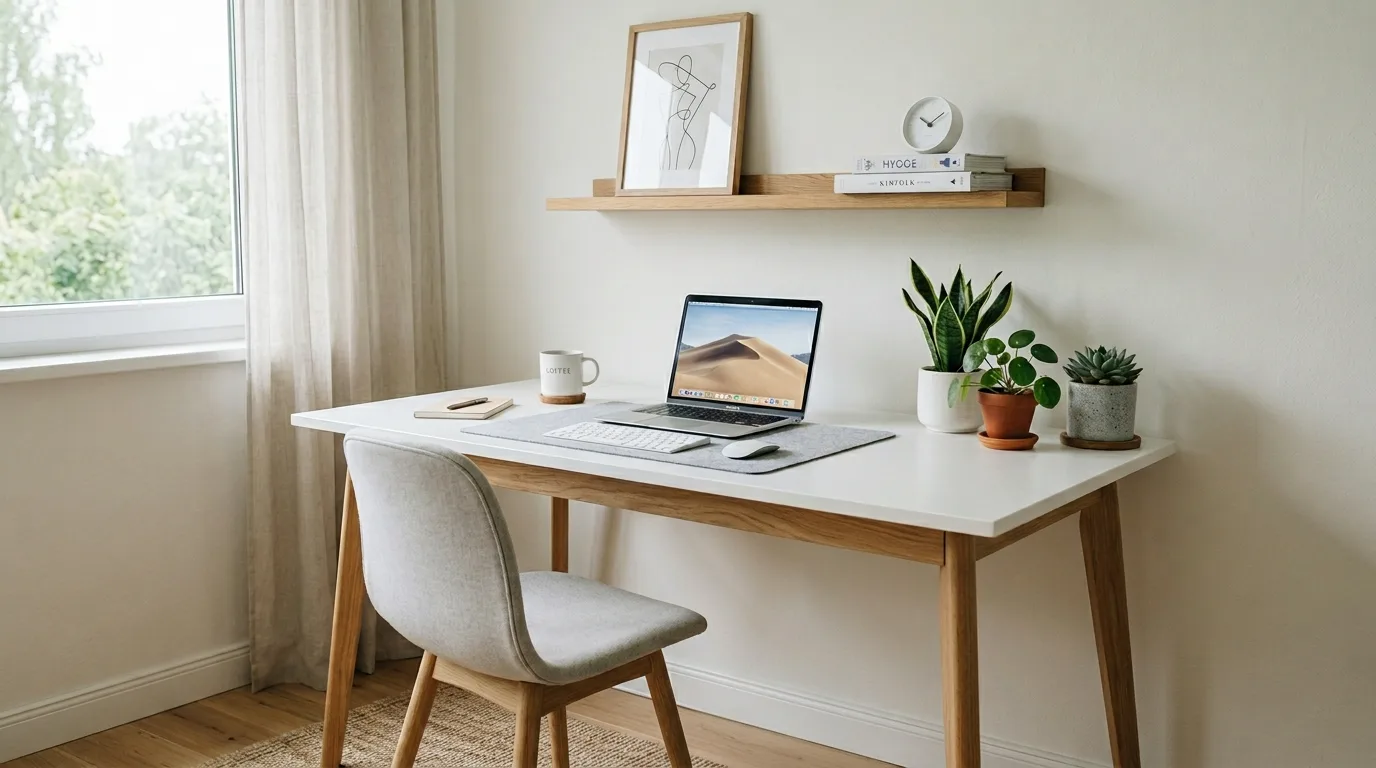
Idea 13
Desk with pegboard wall for tools and daily supplies
A pegboard behind the desk turns the wall into part of the workspace, which can free up surface space and make the setup far more efficient. It is especially useful for people who mix computer work with craft tools, notes, or stationery.
Read next on Saw & Sprout


Edible Gardens
13 Clever Tomato Trellis Gardens for a Bountiful Harvest
Small-Space Growing
14 Space-Saving Small Vegetable Gardens for Urban GrowersFrequently asked questions
What makes a DIY computer desk feel custom instead of basic?
Thoughtful proportions, monitor depth, cable handling, built in storage, and a layout that responds to the exact room usually make the biggest difference.
Should a computer desk be built around the room shape?
Usually yes. Corners, alcoves, narrow walls, and shared office layouts often benefit most from custom dimensions that standard desks do not provide.
What is the most useful desk upgrade to include?
Good cable management is one of the most valuable upgrades because it keeps the workspace cleaner, calmer, and far easier to live with every day.