Sloped yards can feel challenging at first, but they also offer opportunities that flat ground cannot match, including stronger views, layered planting, and far more dramatic movement through the landscape.
The smartest hillside designs work with the grade instead of fighting it. Retaining, drainage, planting, and circulation all need to support one another if the slope is going to feel both stable and beautiful.
These slope landscape ideas show how terraces, dry creeks, boulders, paths, and climate-appropriate planting can turn difficult hills into some of the strongest areas of the property.
Quick planning notes
Solve drainage first because water movement shapes nearly every successful decision on a slope.
Break the hill into clear layers or zones so the landscape feels readable and easier to maintain.
Choose plants that suit the sun, exposure, and runoff patterns of the site instead of forcing a flat-yard palette onto the slope.
Use paths, steps, or landings intentionally so the hillside becomes more usable and not only more attractive.
Idea 1
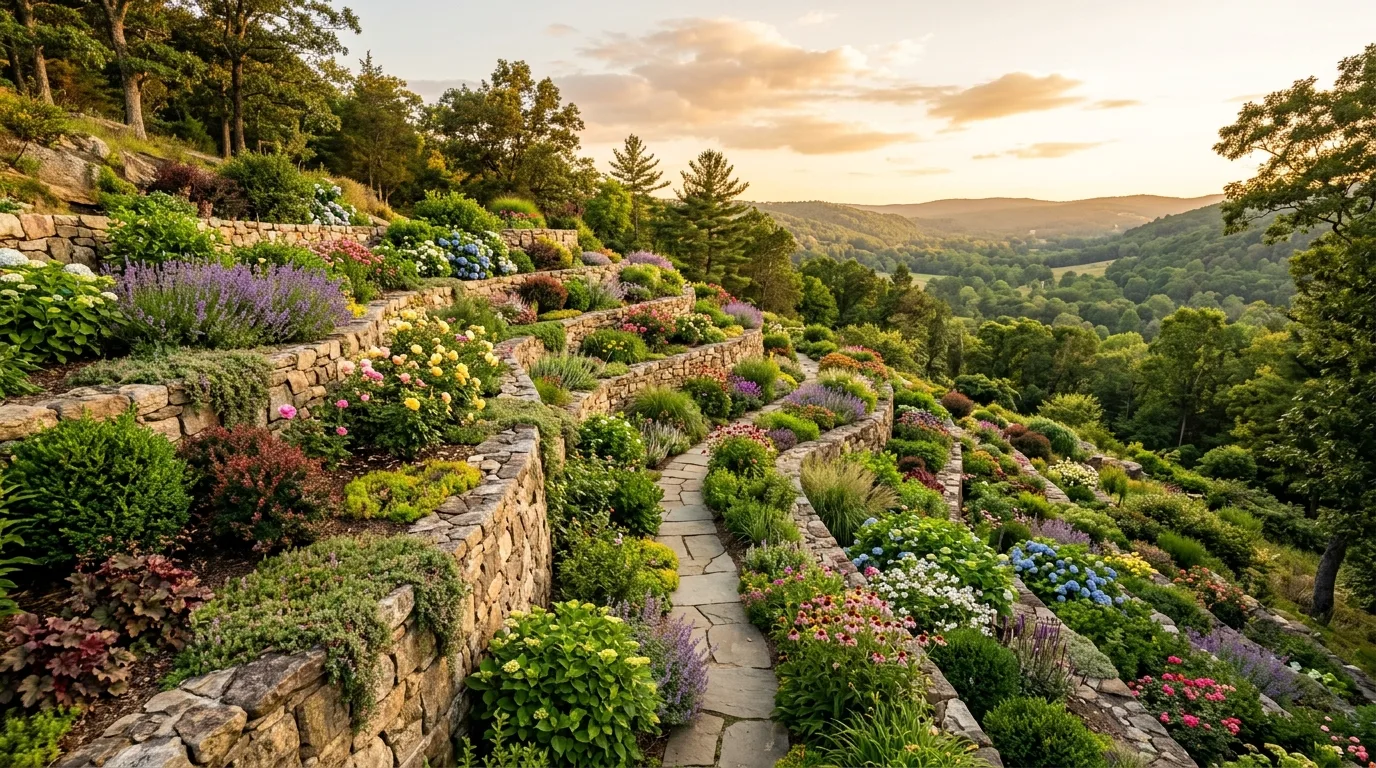
A terraced flower slope with stone steps through the planting
Steep ground becomes much easier to enjoy when low terraces and steps organize the grade into readable layers that can each hold their own planting character. The hillside feels purposeful and beautiful instead of unruly because movement and structure are finally working together.
Idea 2
A dry creek bed solving drainage with natural character
One of the smartest things a sloped yard can do is turn runoff into a design feature, and a dry creek bed makes that practical need feel scenic rather than purely technical. The rock-lined channel adds movement and texture even when it is not carrying water.
Idea 3
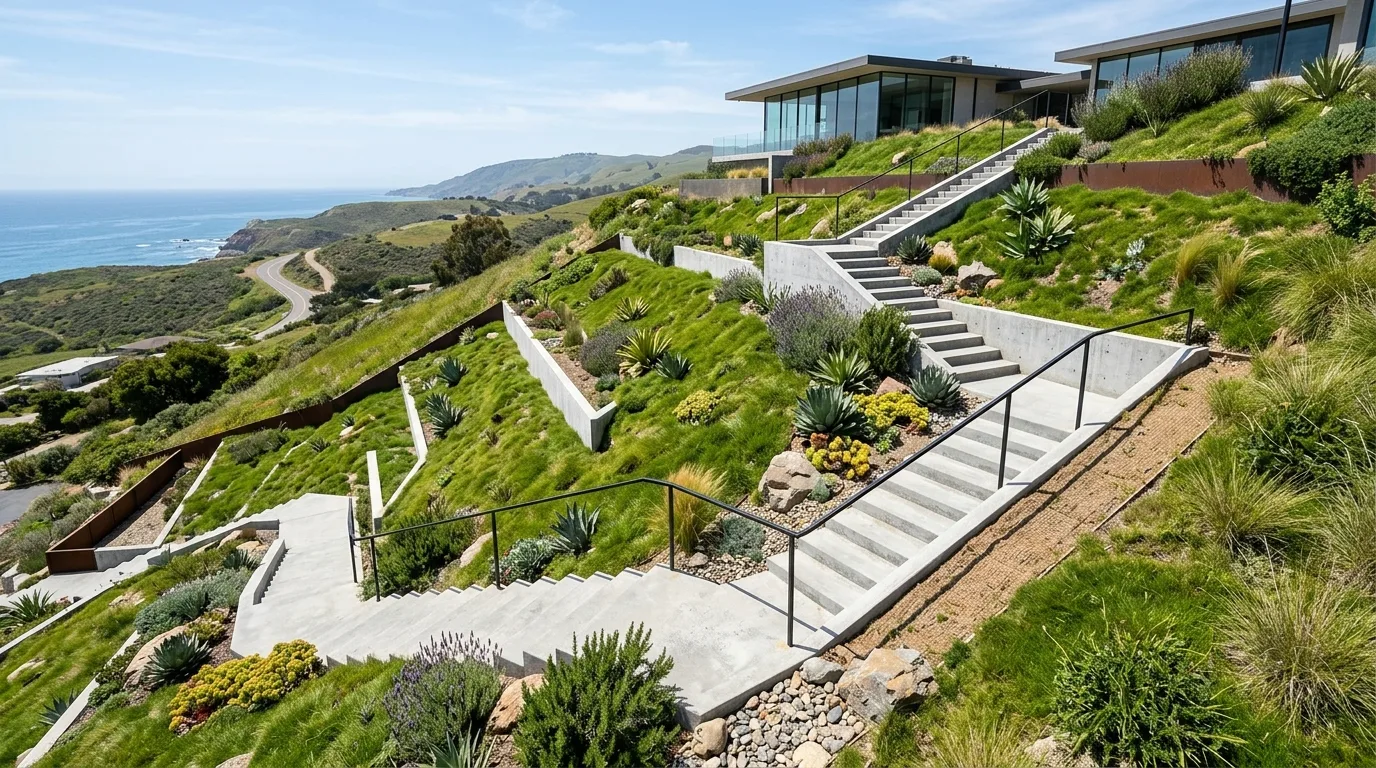
A hillside lawn broken into manageable green platforms
Large grassy slopes can become more usable and far easier to maintain when the incline is interrupted by broad shallow levels that still preserve the open look of the yard. The result keeps the classic green feel while giving the hill more logic and stability.
Idea 4
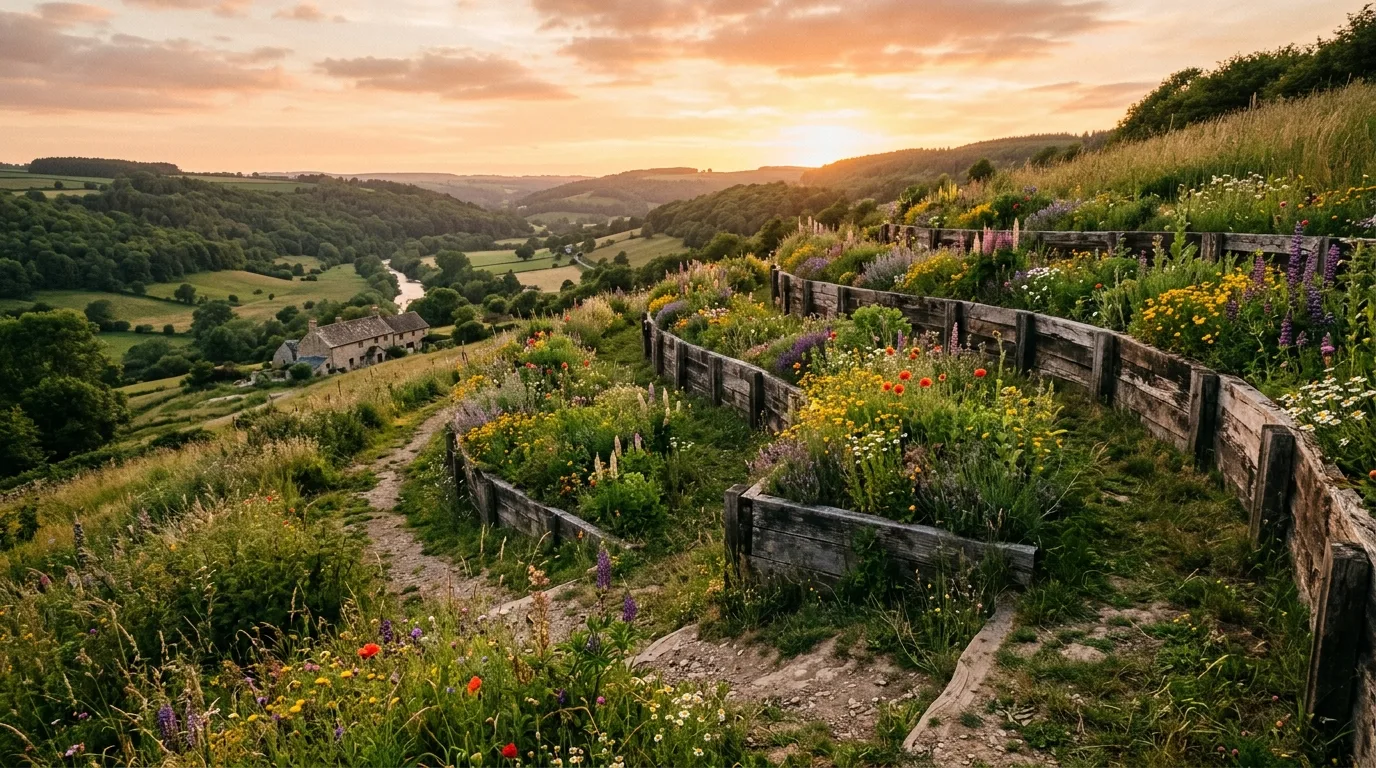
A retaining-wall garden using warm timber and soft grasses
Timber walls can make a hillside feel friendlier than harsher materials because they introduce warmth while still holding soil in a clean and practical way. When grasses and softer planting spill around them, the slope reads as designed rather than engineered only for control.
Idea 5
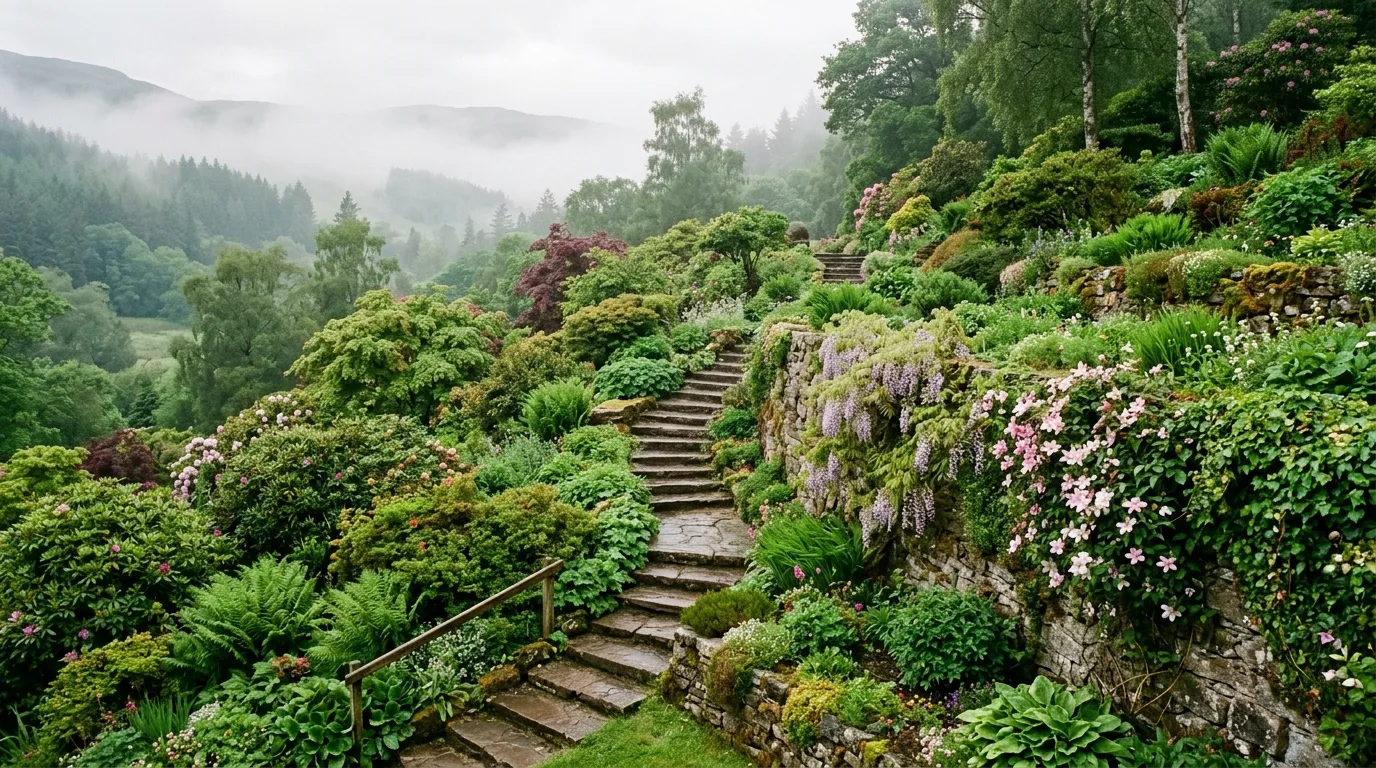
A woodland slope planted with shade-loving layers
Not every slope needs formal shaping to look good, and wooded inclines often become more compelling when the planting echoes a natural understory with ferns, shrubs, and textured groundcovers. The hill feels calmer because the design works with its conditions instead of resisting them.
Idea 6
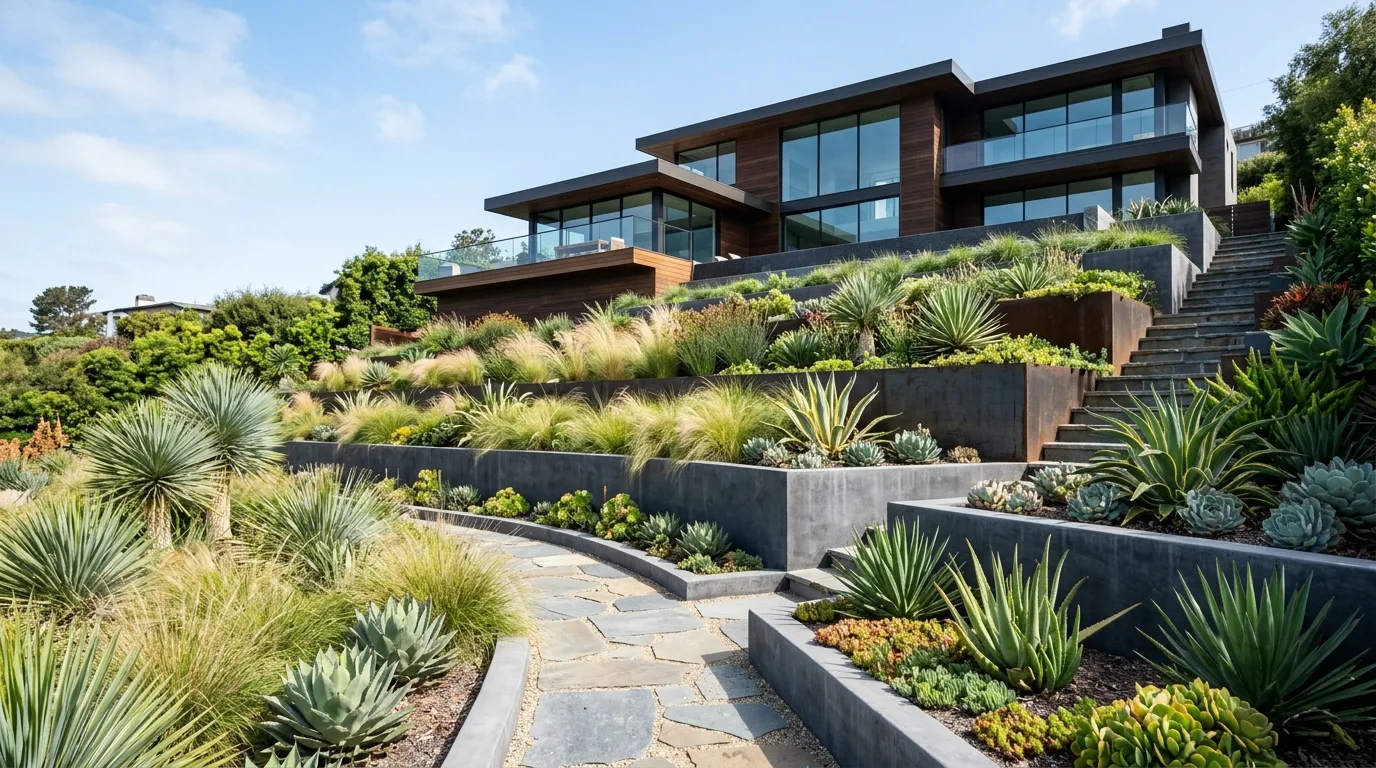
A succulent hillside for low-water structure and color
Sunny slopes are ideal places for drought-tolerant plants because the drainage is often excellent and the strong shapes of succulents read clearly from a distance. The hillside gains bold pattern and much easier maintenance without losing visual impact.
Idea 7
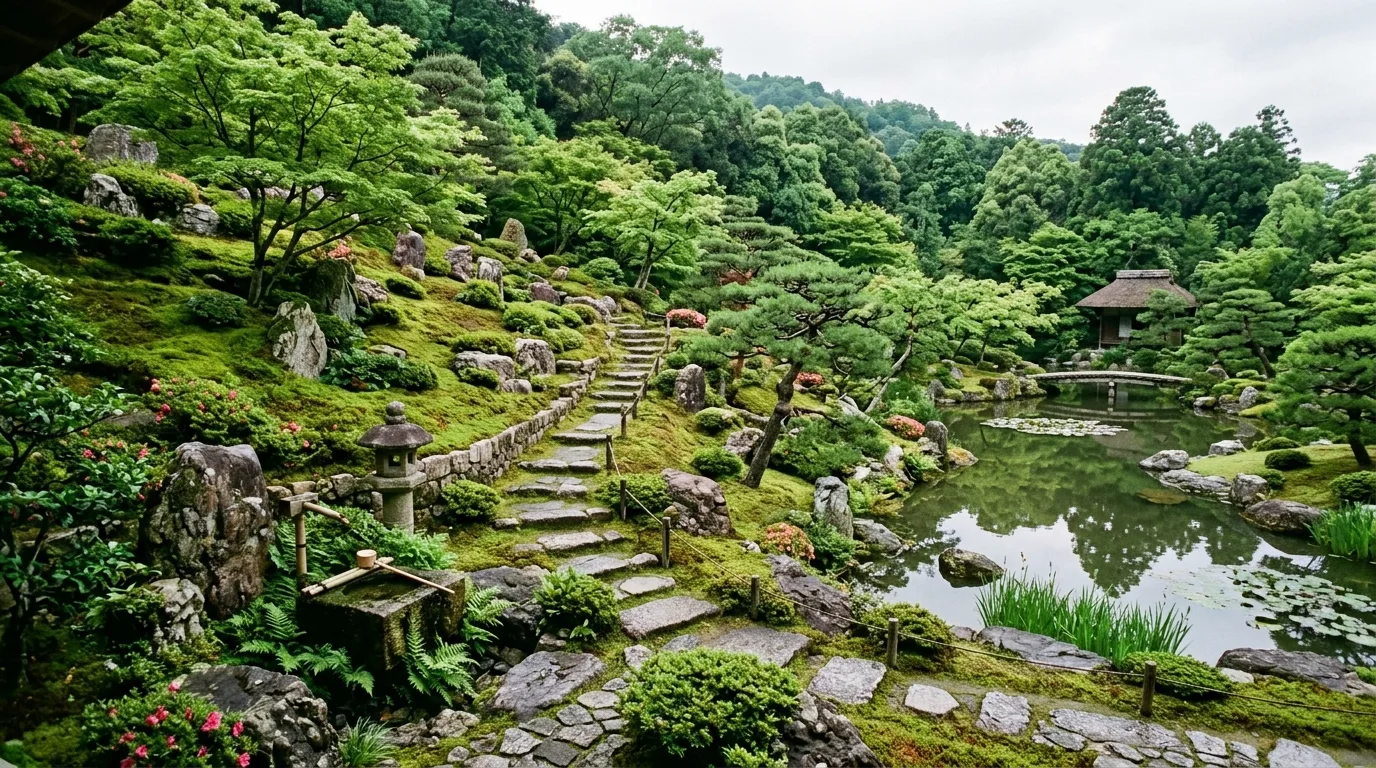
A stair-and-bench landing tucked into the grade
Breaking a climb with one small resting point can change the whole experience of a sloped garden because the hill becomes a place to inhabit rather than just pass through. The bench also gives the surrounding planting a stronger reason to feel enclosing and thoughtful.

Idea 8
A boulder-led hillside that feels anchored and natural
Large rocks can give a slope immediate authority because they visually pin the terrain in place while helping the planting composition feel rooted and believable. Used carefully, they make the hillside look settled by nature rather than patched after the fact.
Idea 9
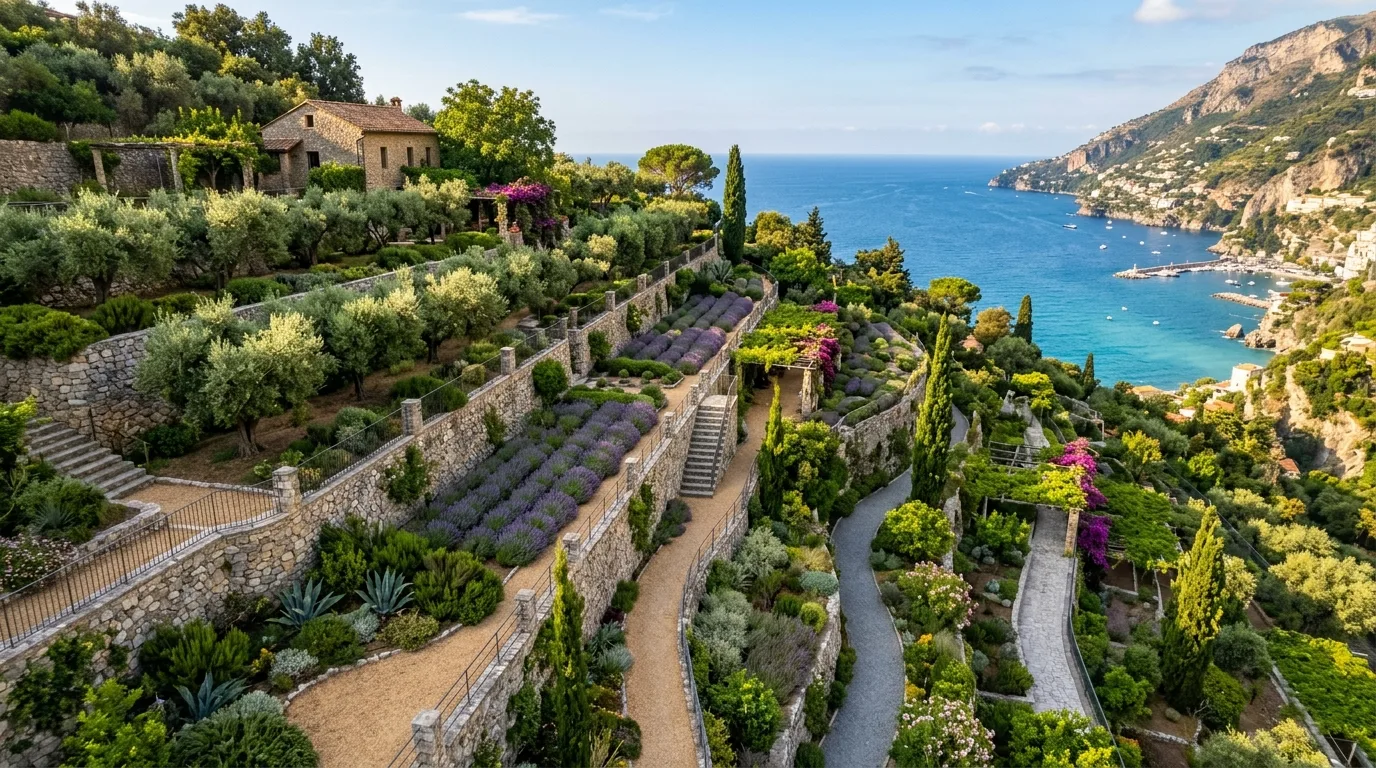
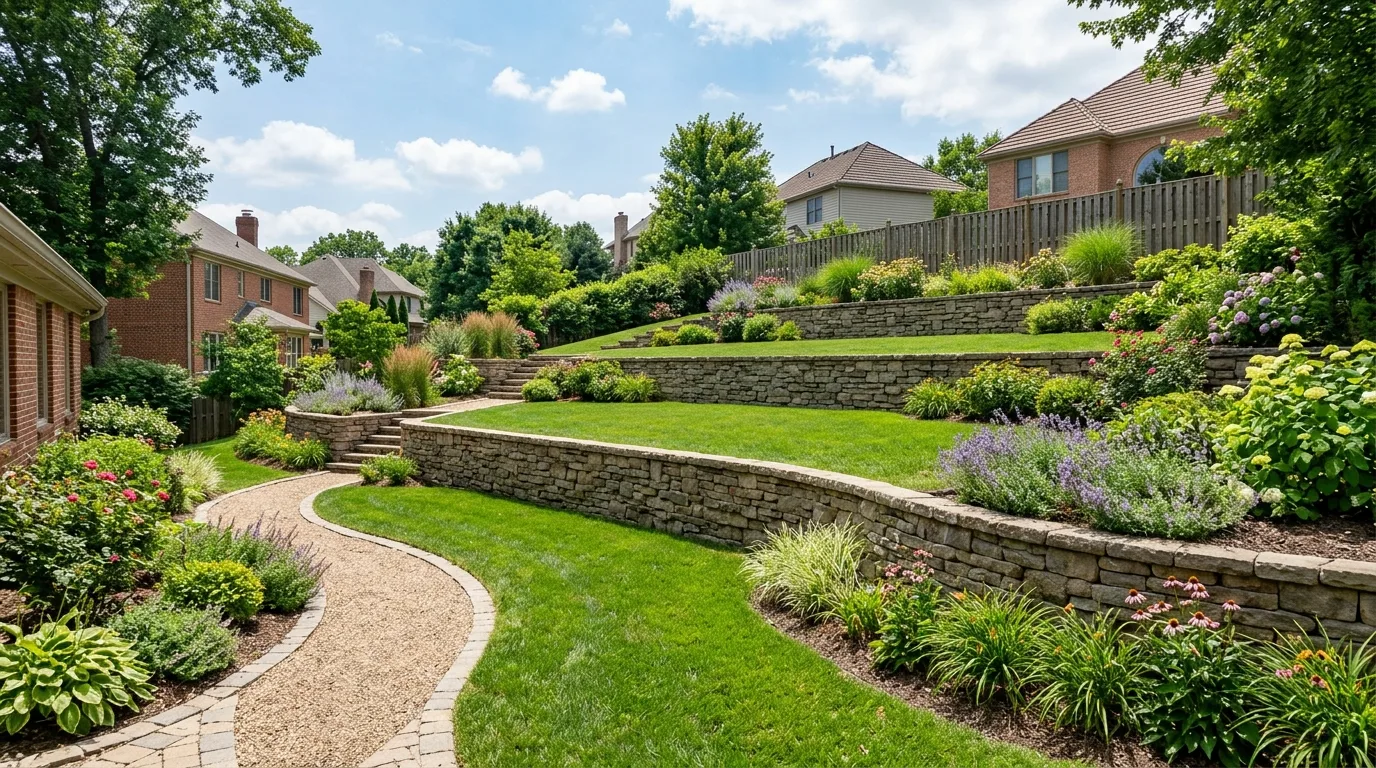
A front-yard slope reshaped with symmetrical retaining lines
Entry-facing hillsides often benefit from clearer geometry because the front of the house needs the slope to feel orderly and supportive rather than messy or hard to maintain. Simple retaining lines can provide that control without making the planting feel stiff.
Idea 10
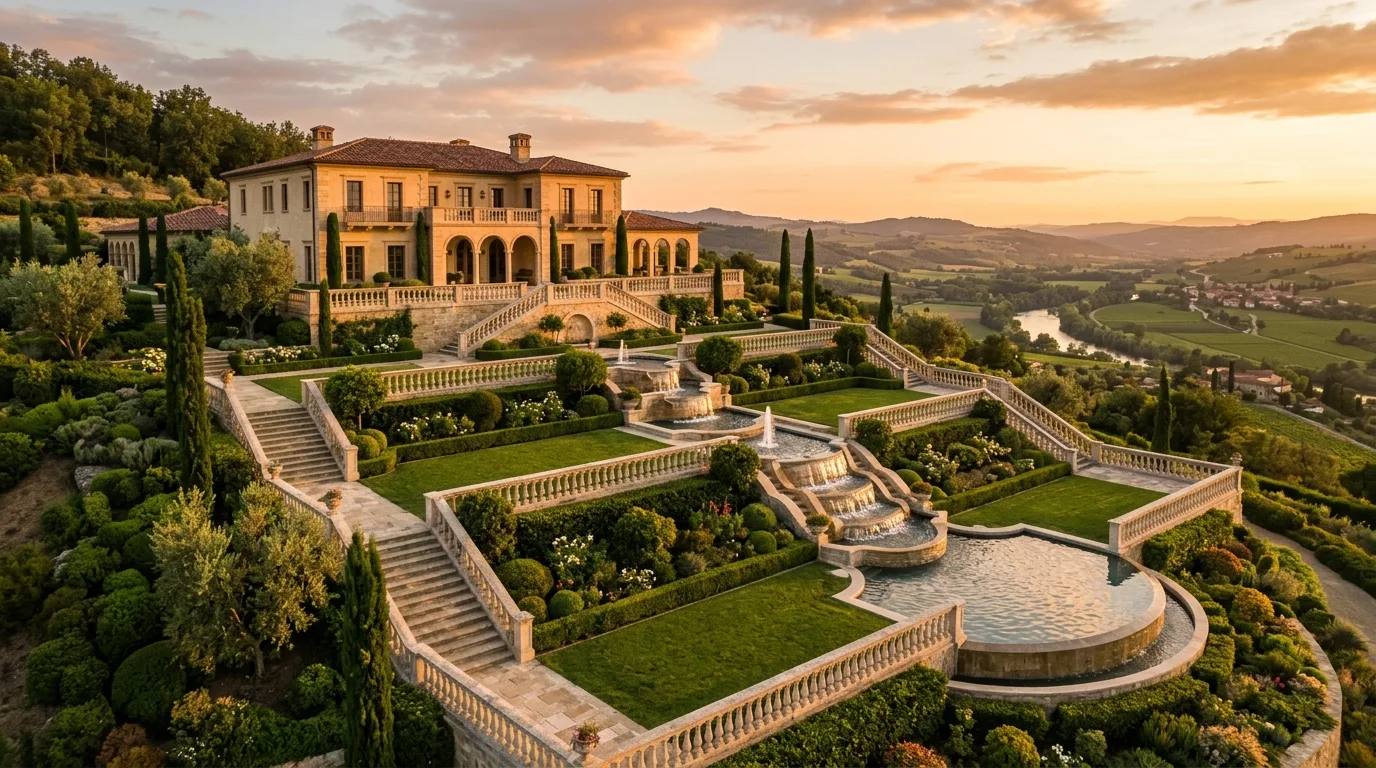
A pollinator slope buzzing with repeated drifts of bloom
Hillsides can make wonderful pollinator gardens because repeated flowering drifts are highly visible there and the incline helps different plant heights read more clearly from below. The slope becomes vibrant and ecological while still looking intentionally composed.
Idea 11
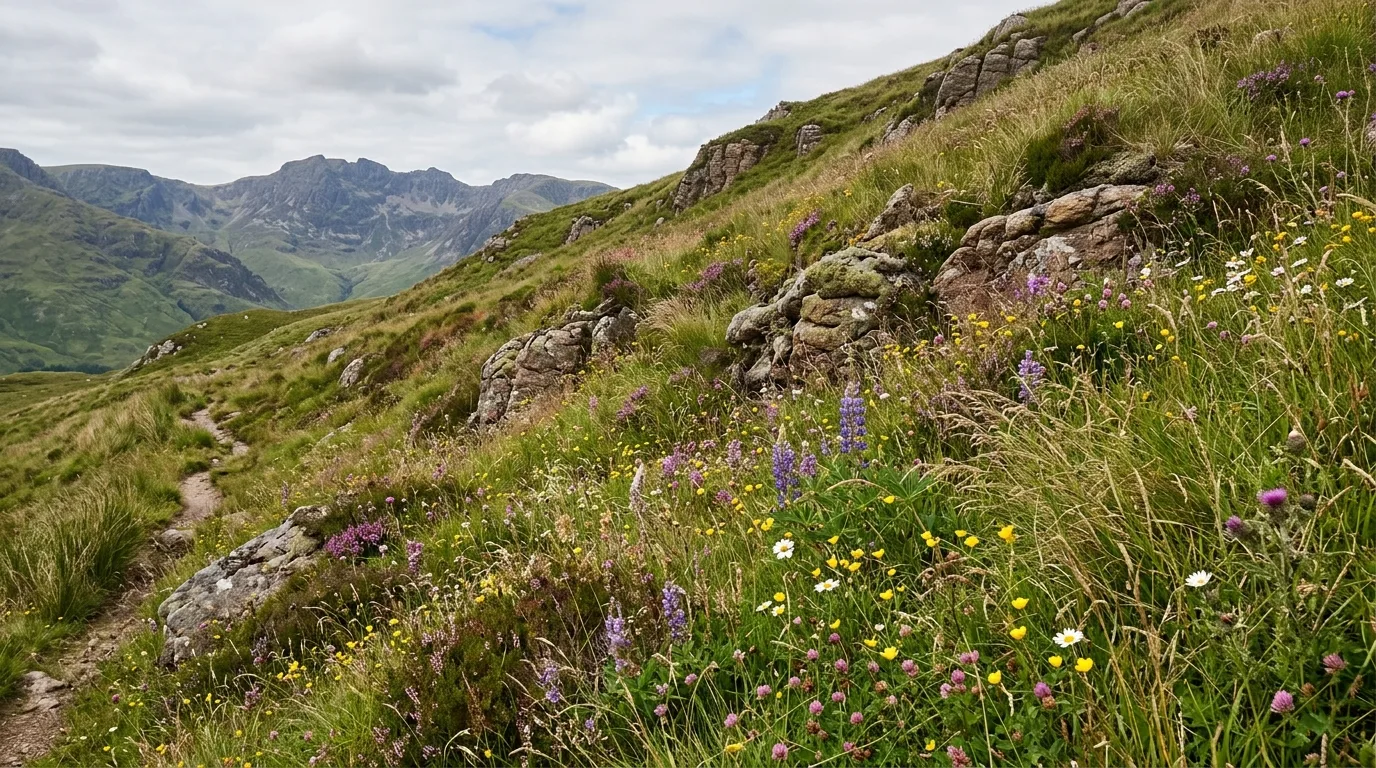
A minimalist gravel slope with repeated structural shrubs
Simple materials often calm a difficult hill more effectively than trying to pack it with many unrelated plants, and gravel with repeated shrubs can make the incline feel cleaner and easier to manage. The repetition brings order while the slope keeps the composition dynamic.
Idea 12
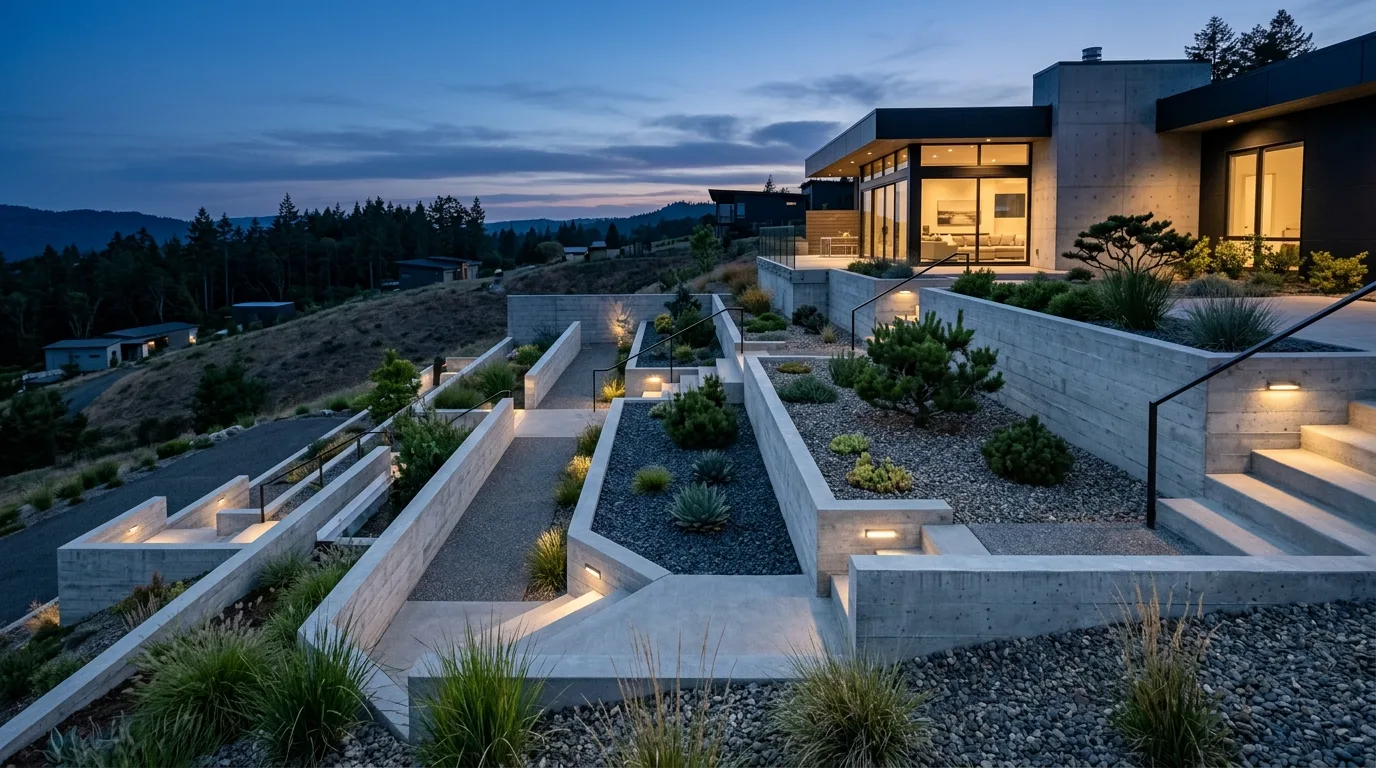
A hillside path that reveals the garden slowly from below
Path design is especially powerful on slopes because every turn changes the viewpoint, and a gently curving route can make the garden feel more spacious and more rewarding to move through. The incline becomes part of the storytelling rather than a problem to hide.
Idea 13
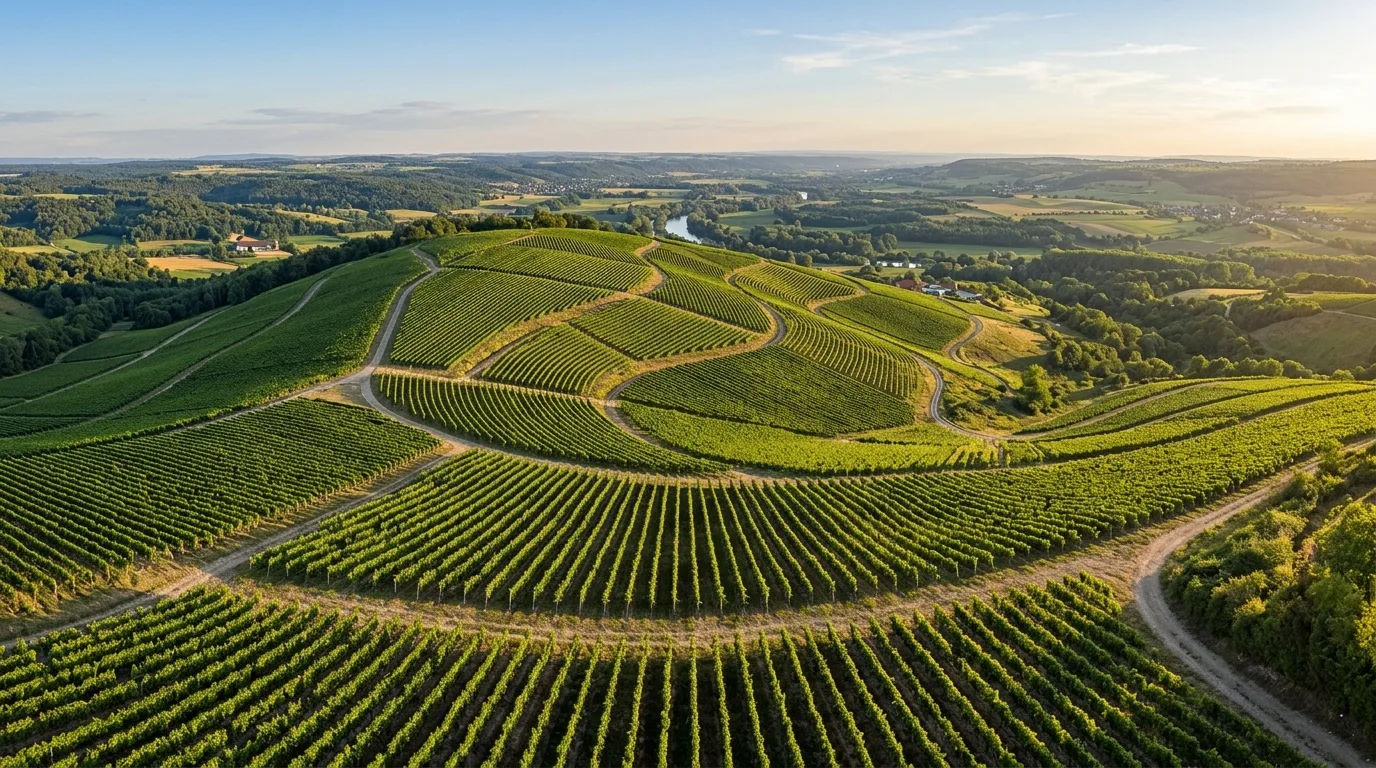
A finished slope where engineering and beauty feel equally considered
The best hillside landscapes succeed because drainage, retaining, planting, and circulation all support one another instead of competing for attention. When that coordination is right, a challenging slope turns into one of the most impressive and useful parts of the property.
Read next on Saw & Sprout
Edible Gardens
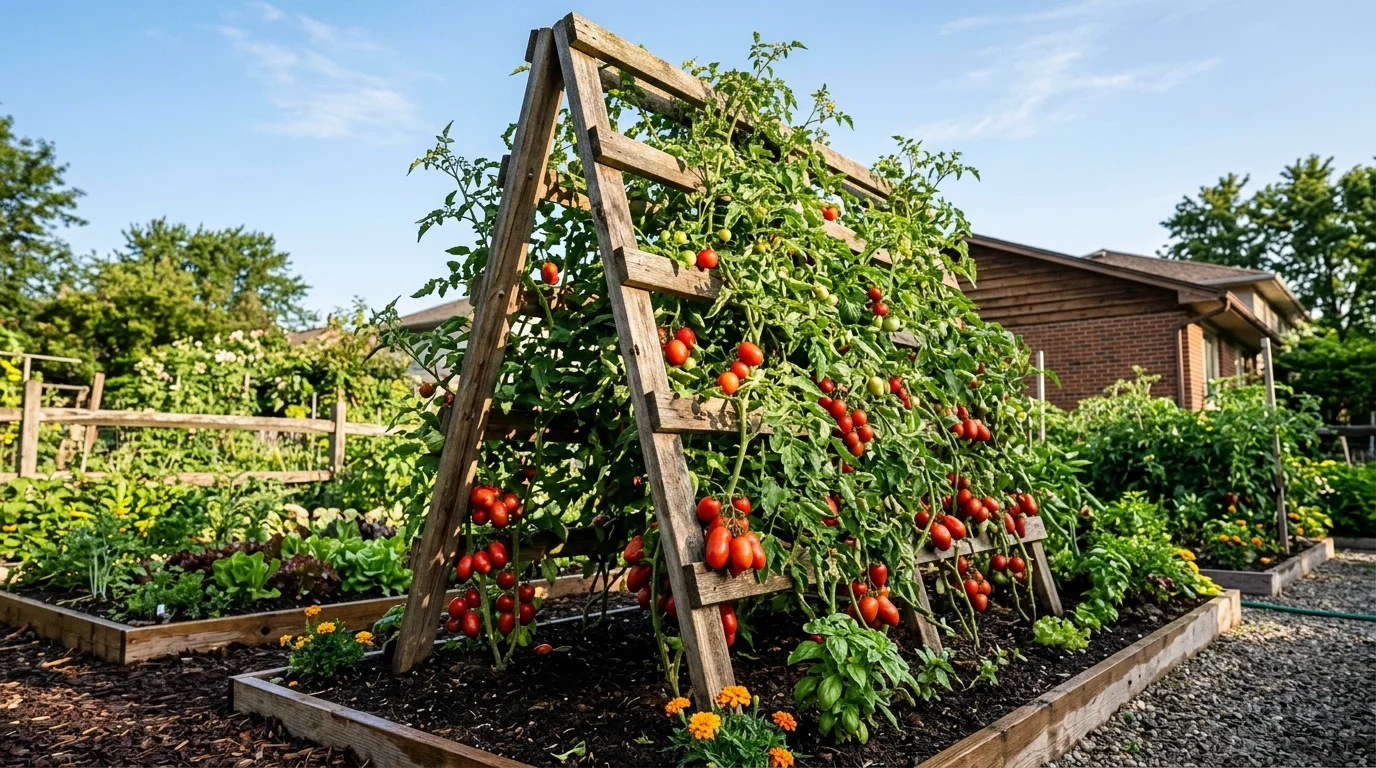
13 Clever Tomato Trellis Gardens for a Bountiful Harvest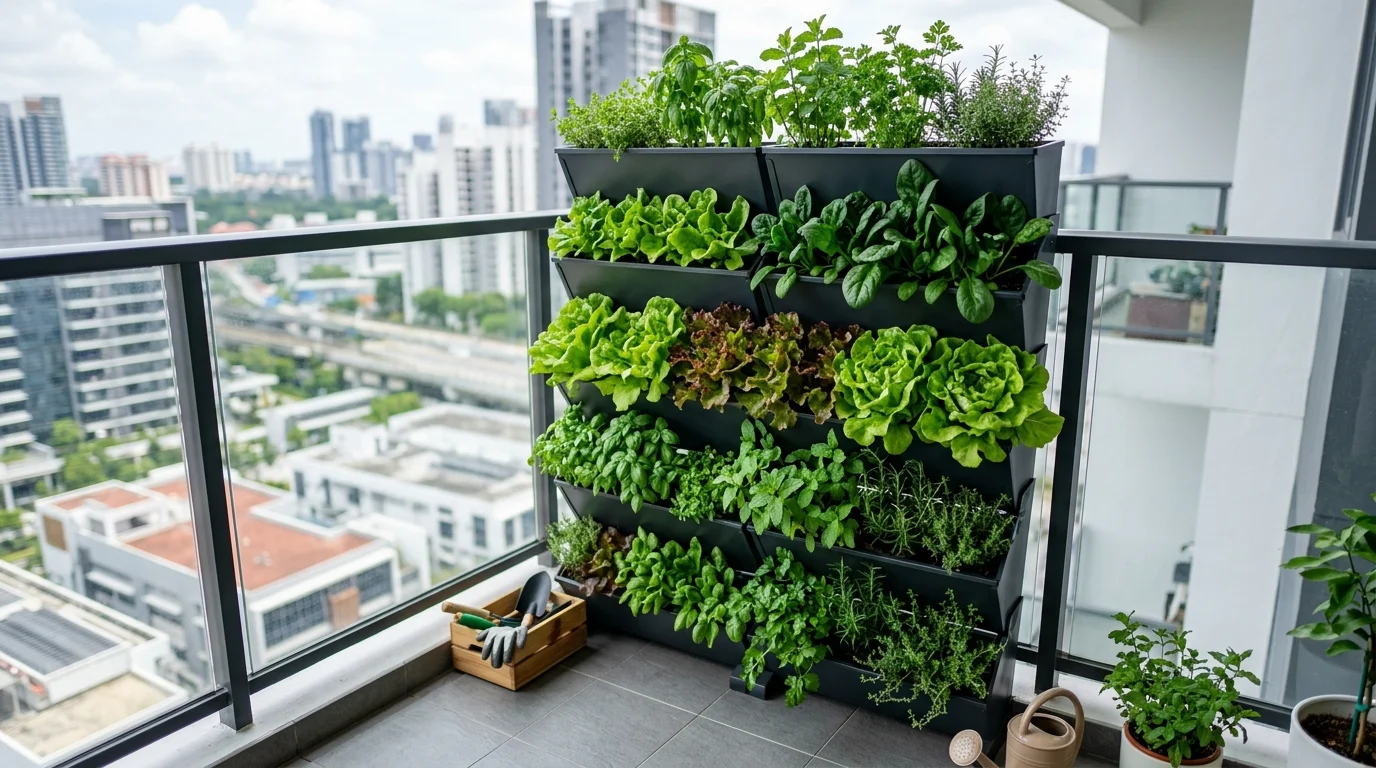
Small-Space Growing
14 Space-Saving Small Vegetable Gardens for Urban GrowersFrequently asked questions
What is the most important part of landscaping a slope?
Drainage and stabilization come first, because once those are handled well the planting and visual design can perform much more successfully.
Can sloped yards still have seating or usable outdoor areas?
Yes. Terraces, landings, and strategically placed patios or benches can make a hillside much more livable.
How do you make a slope look intentional instead of messy?
Use strong structure, repeated planting, and clear circulation so the hillside reads as a composed design rather than scattered problem-solving.