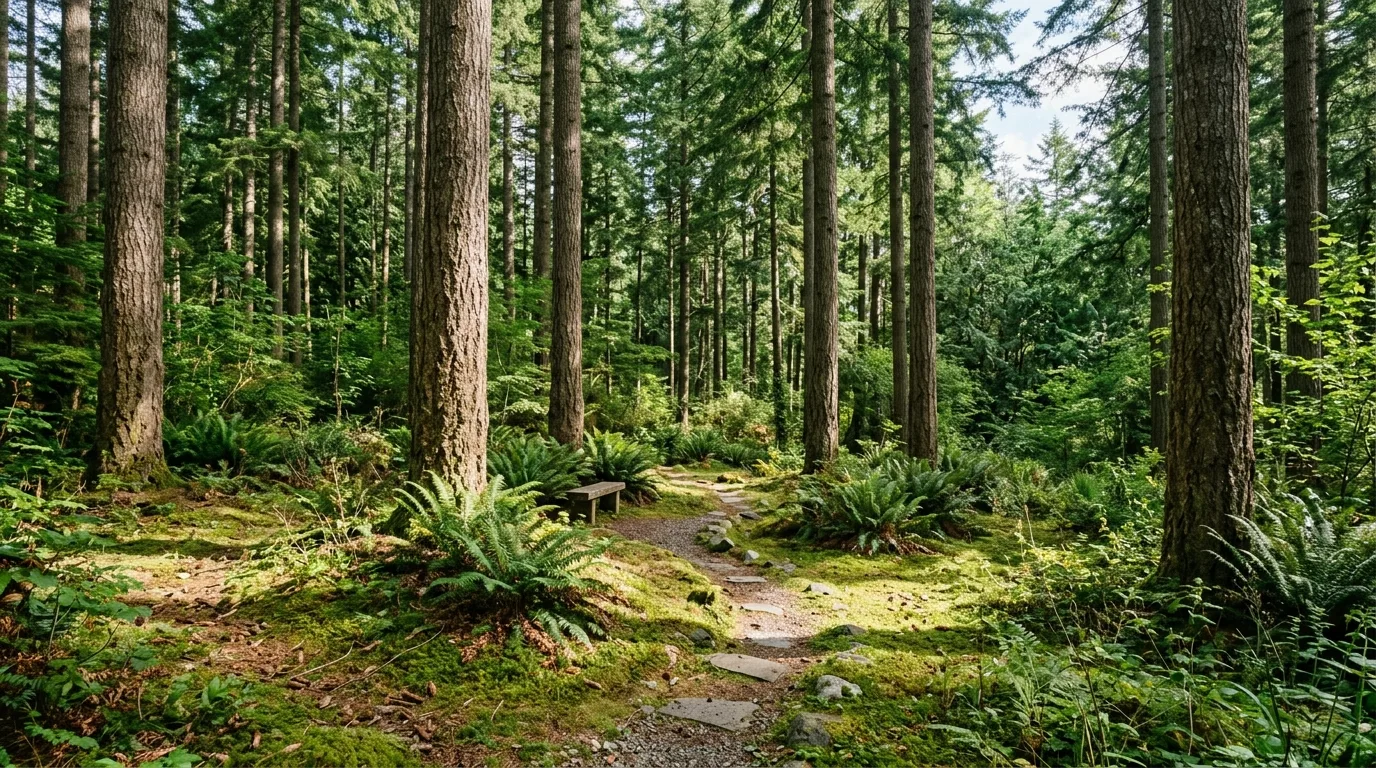
Forest-yard landscapes are most beautiful when they work with the existing trees, shade, moisture, and quiet character of the site rather than trying to turn woodland ground into a suburban lawn.
Paths, ferns, moss, stone, understory shrubs, and carefully placed clearings can all help a wooded property feel more usable and more magical without losing its natural identity.
These forest-yard landscape ideas explore slopes, streams, patios, paths, and openings that bring woodland beauty into daily life while respecting the setting.
Quick planning notes
Choose plants that genuinely suit woodland conditions so the landscape feels effortless and healthy.
Use paths and small clearings to make the property more livable without over-clearing the trees.
Let natural materials like bark, stone, and gravel support the woodland mood.
Preserve the quieter character of the site by avoiding too many bright or overly formal elements.
Idea 1
A winding woodland path through ferns and filtered light
Forest-yard landscapes feel most magical when movement through the space is allowed to unfold gradually, with paths that respond to trees and understory rather than imposing hard geometry on the site. The garden becomes more atmospheric with every turn.
Idea 2
A mossy clearing anchored by one simple bench
Small open pockets within woodland gardens can feel deeply peaceful because they give the eye and body a place to rest after richer, more layered surroundings. A single bench lets the quiet beauty of moss and shade become the real focal point.
Idea 3
A layered tree-edge garden with shrubs that suit the shade
Good forest-yard design respects the conditions under mature trees, using shrubs and perennials that actually enjoy the filtered light so the planting looks effortless and healthy instead of forced. The whole edge feels settled and believable.
Idea 4
A stone stair climbing gently through a wooded slope
Grade changes in a forest setting can become one of the most beautiful parts of the landscape when stone steps are tucked into the terrain with enough care to feel discovered rather than installed. The hillside becomes more usable and more romantic at once.
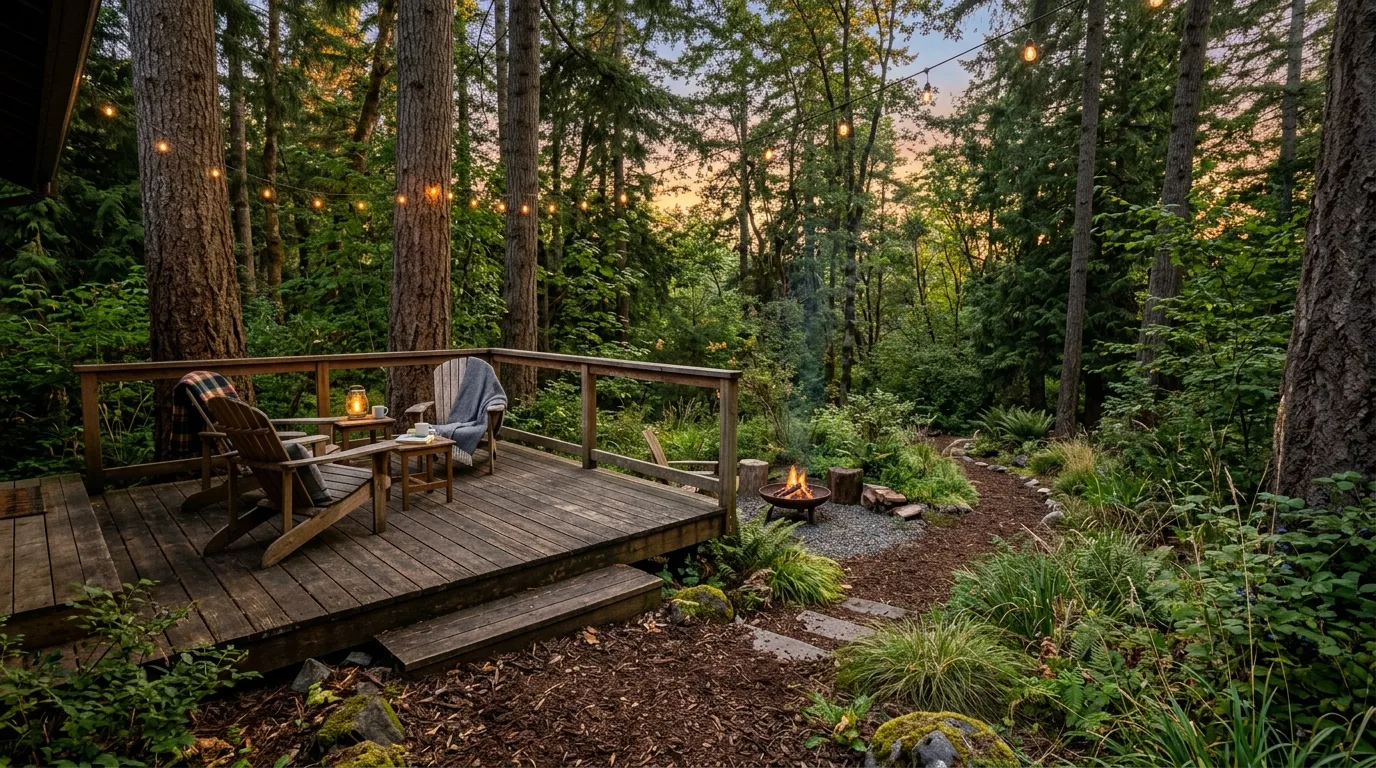
Idea 5
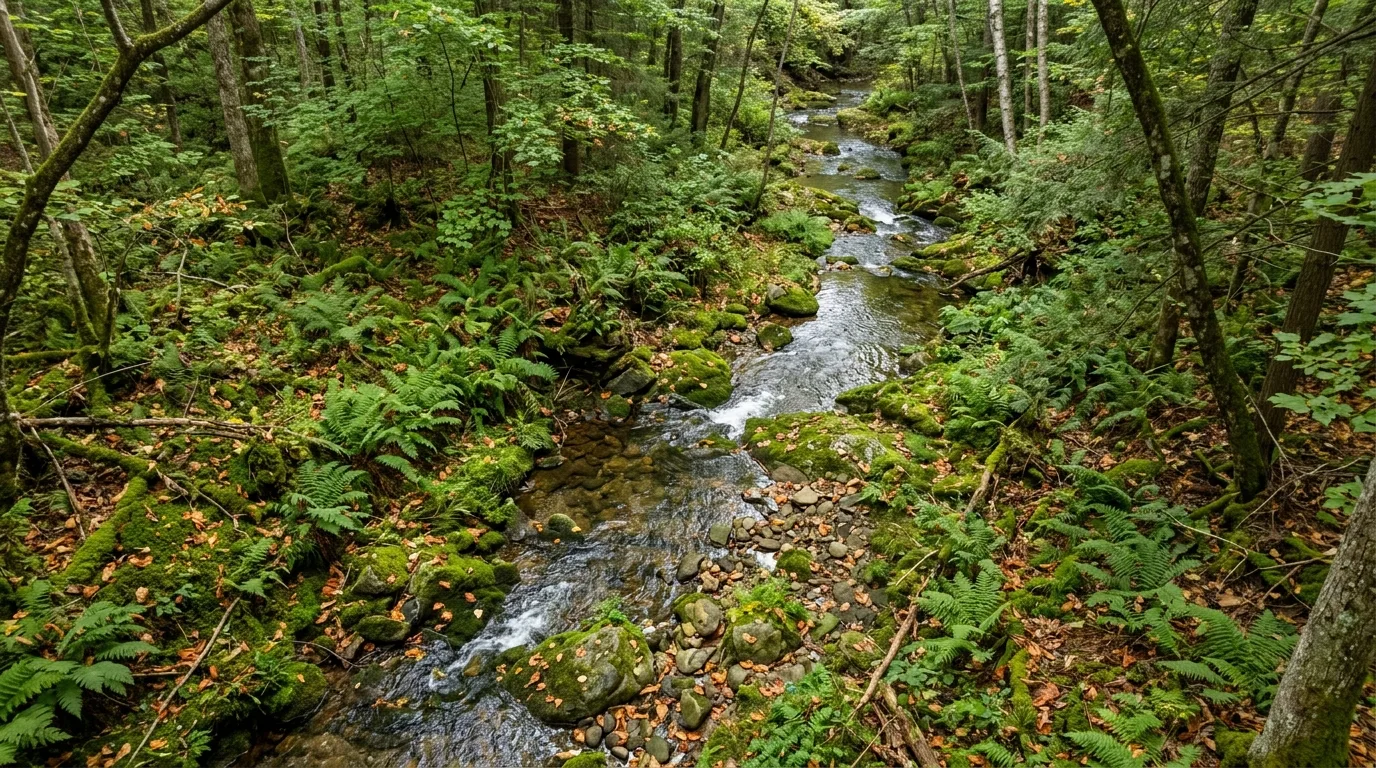
A stream-side garden where moisture-loving plants create softness
Water and woodland pair naturally, and planting that responds to that dampness can make a stream edge feel rich, cool, and highly integrated with the forest character of the property. The whole scene becomes more layered without seeming busy.
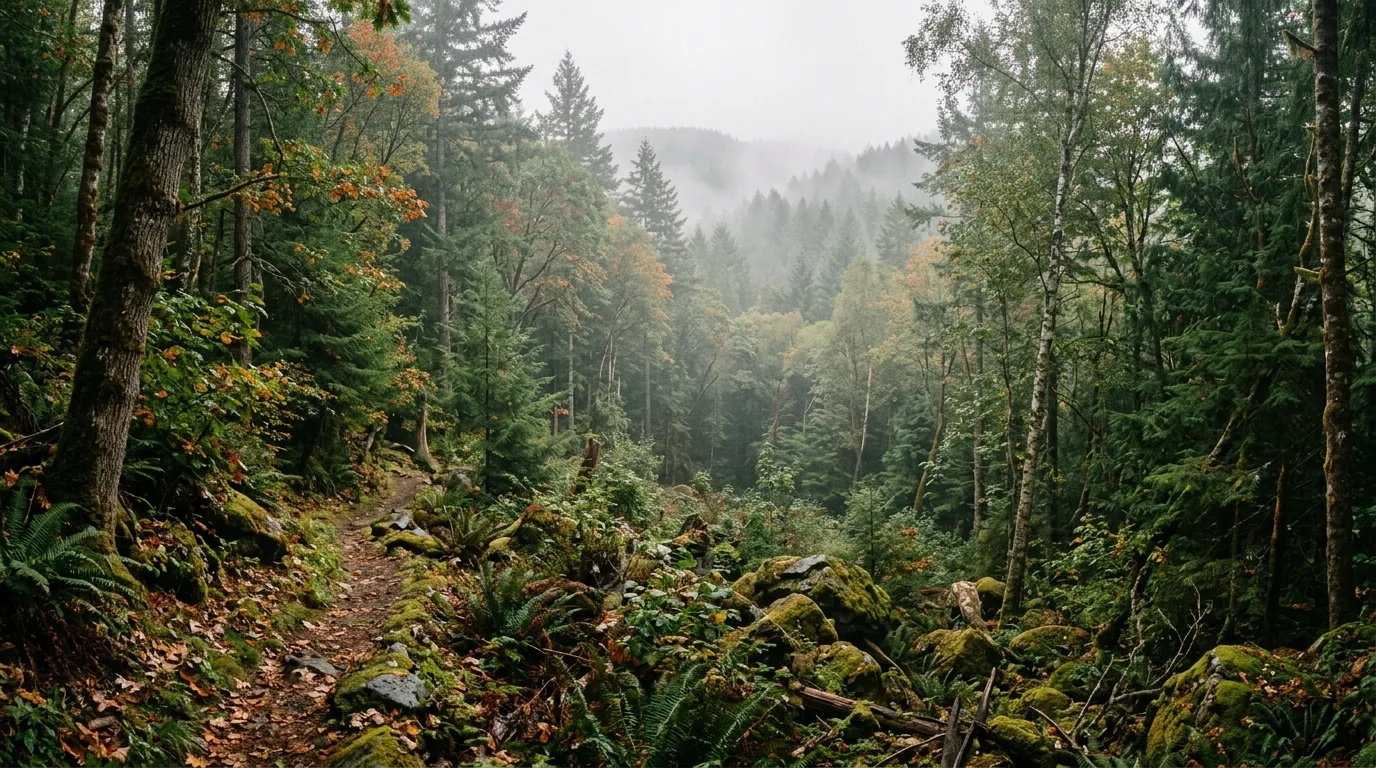
Idea 6
A front yard woodland approach with bark, gravel, and quiet structure
Forest-fronted properties often benefit from a restrained arrival sequence that acknowledges the larger tree canopy without competing with it, using simple materials and hardy planting to provide clarity. The house feels more connected to the site immediately.
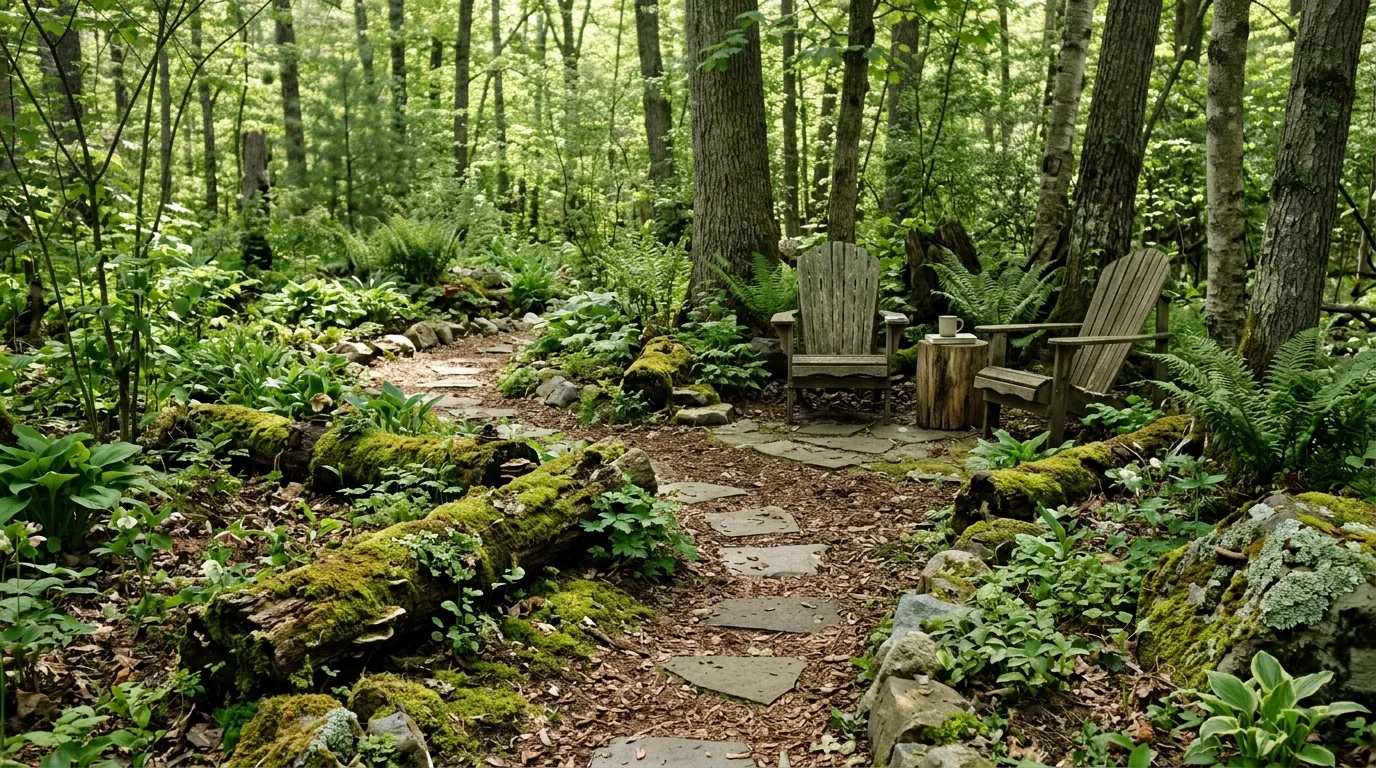
Idea 7
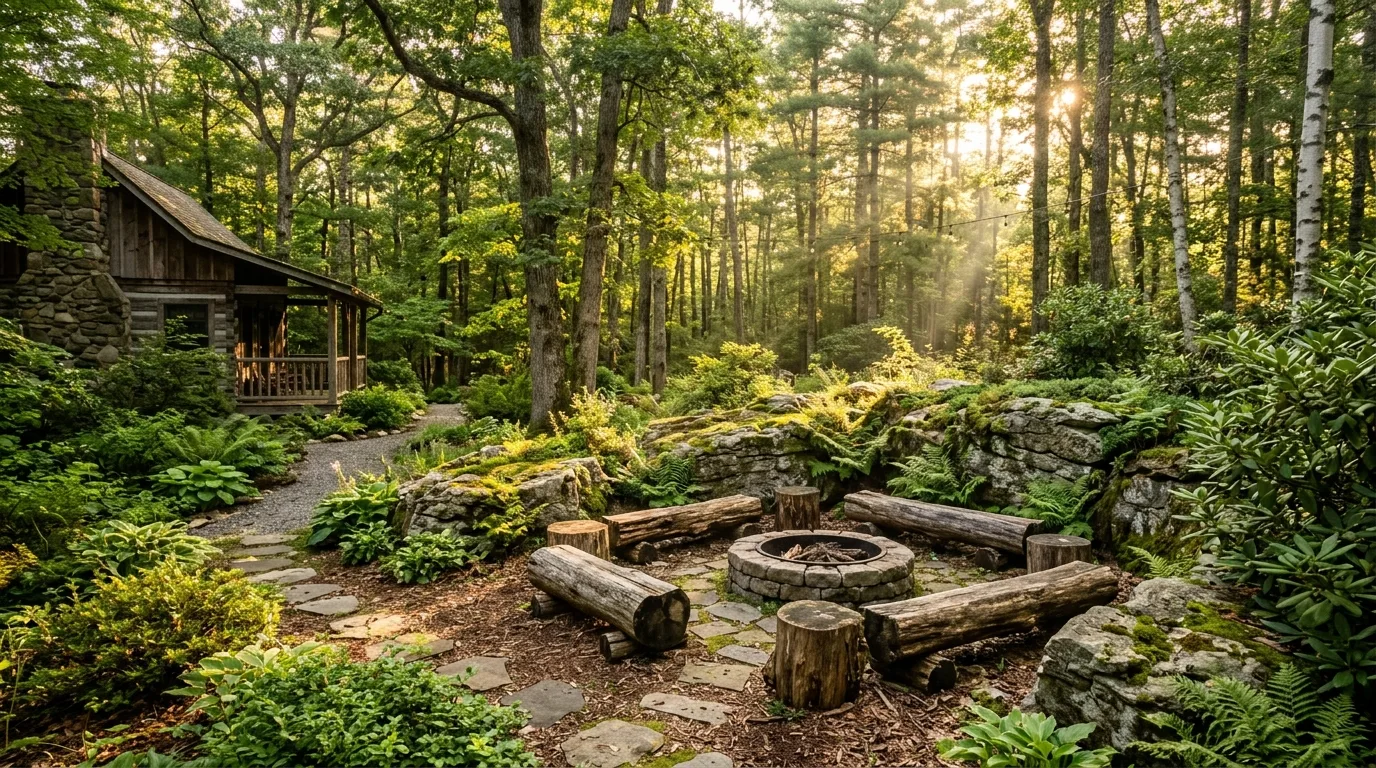
A fire circle tucked into the trees for evening gathering
Outdoor gathering spaces feel especially memorable in wooded yards because the surrounding trunks and shadow create natural enclosure that makes the firelight more intimate and atmospheric. The retreat feels secluded without needing extra built privacy.
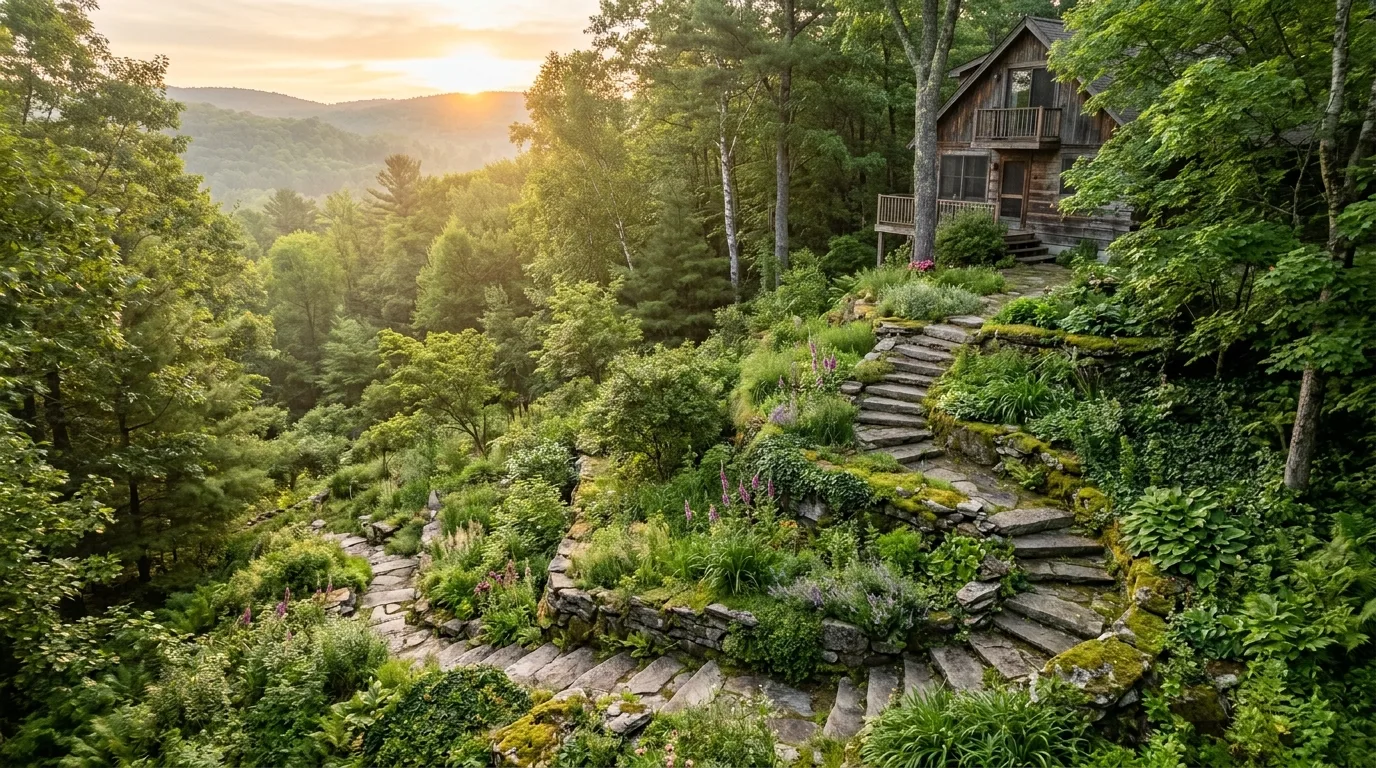
Idea 8
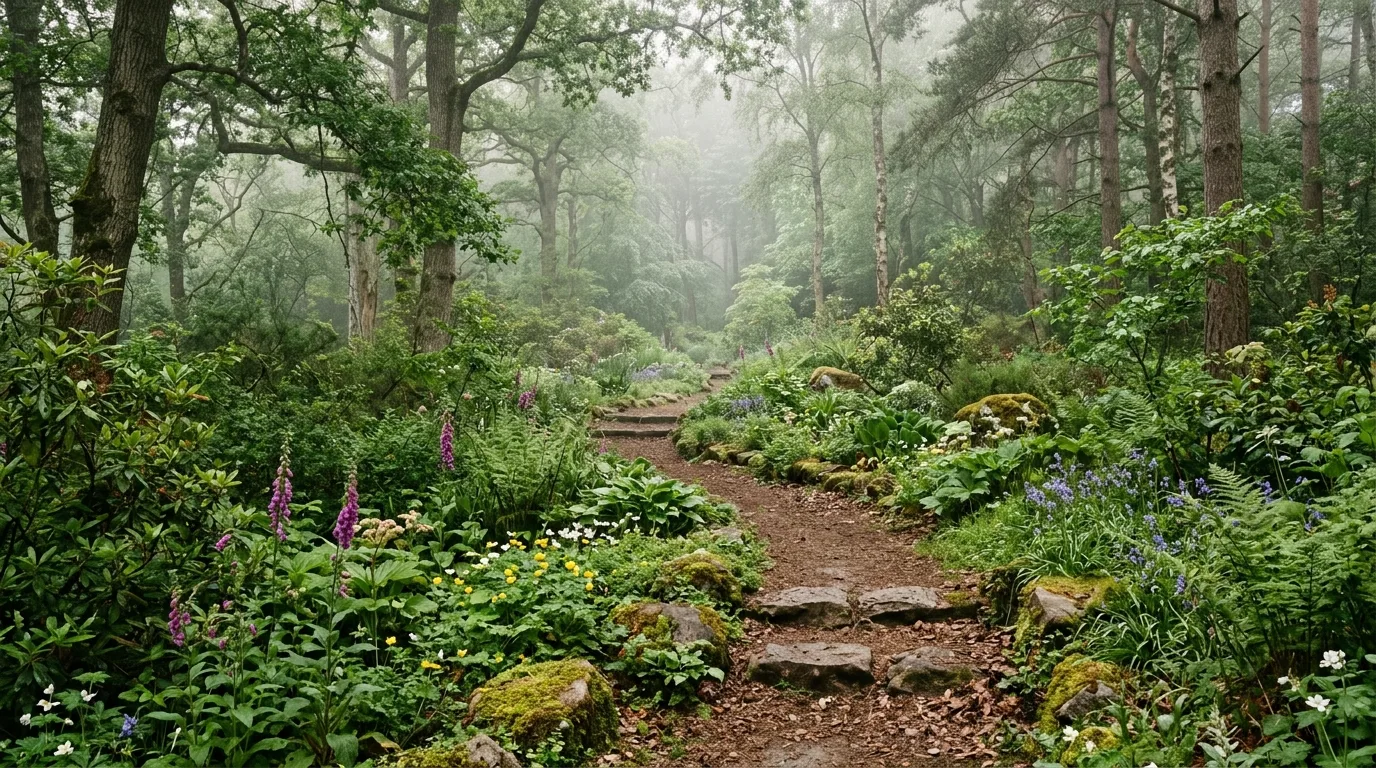
A rain-washed path lined with hostas and woodland texture
Some gardens become more beautiful in damp weather, and a forest path bordered by broad-leaf shade plants can feel especially fresh and alive when the leaves glisten and the ground darkens under rain. The mood stays soft, grounded, and immersive.
Idea 9
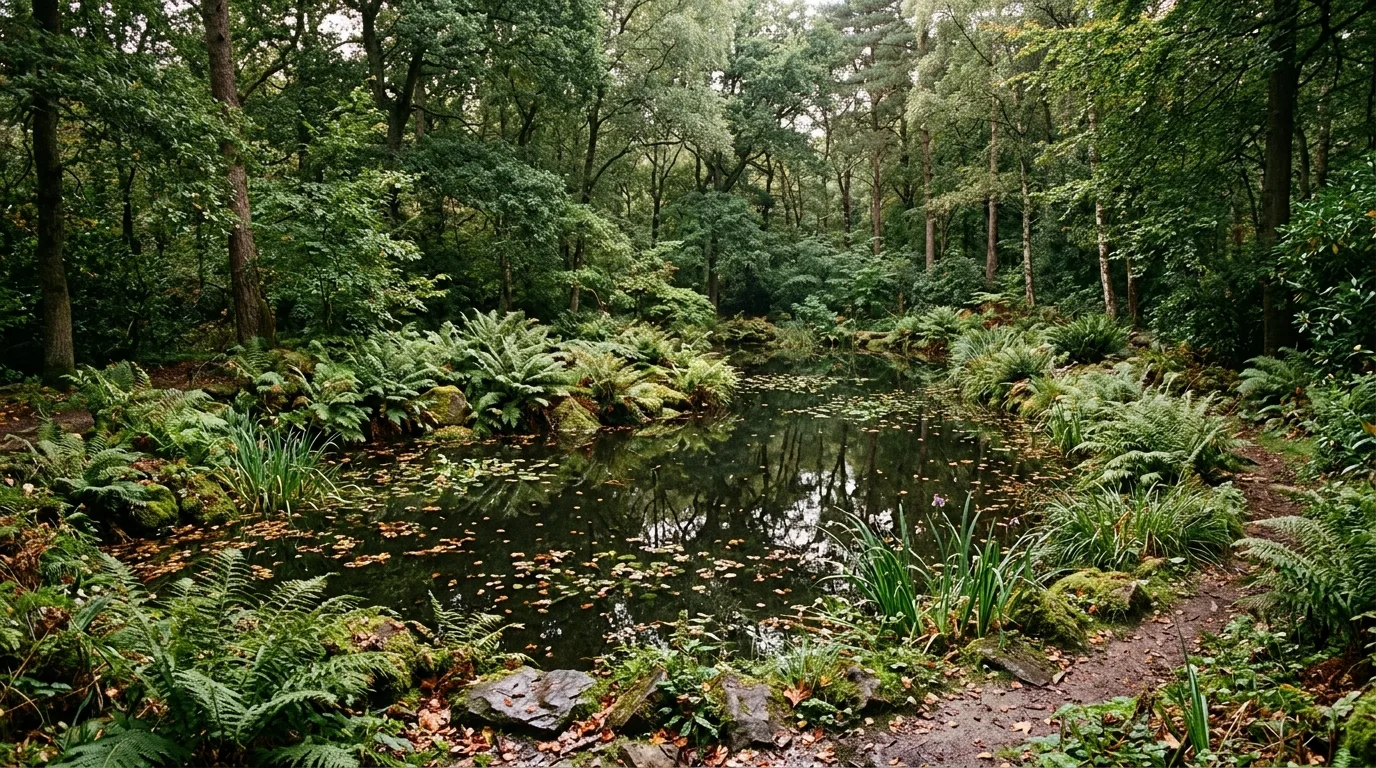
A naturalistic front border where the house disappears into green
One of the pleasures of a forest yard is letting architecture soften into the landscape rather than stand apart from it too sharply, and layered planting at the front can create that effect beautifully. The property feels rooted, calm, and more private.
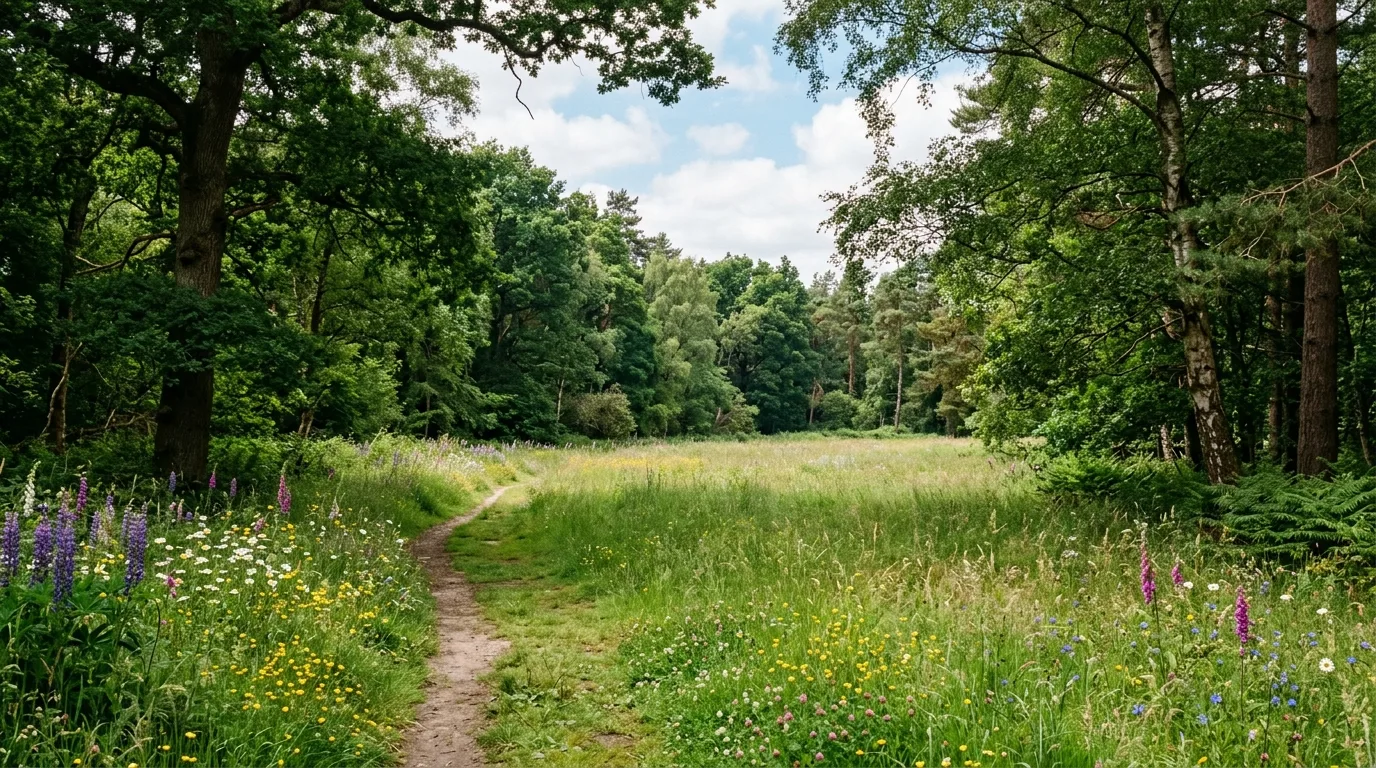
Idea 10
A woodland patio with low lighting and deep green enclosure
Patios in the woods often need very little decoration because the tree canopy and surrounding understory already provide mood, texture, and enclosure in abundance. Subtle lighting is enough to make the space feel intimate and usable after sunset.
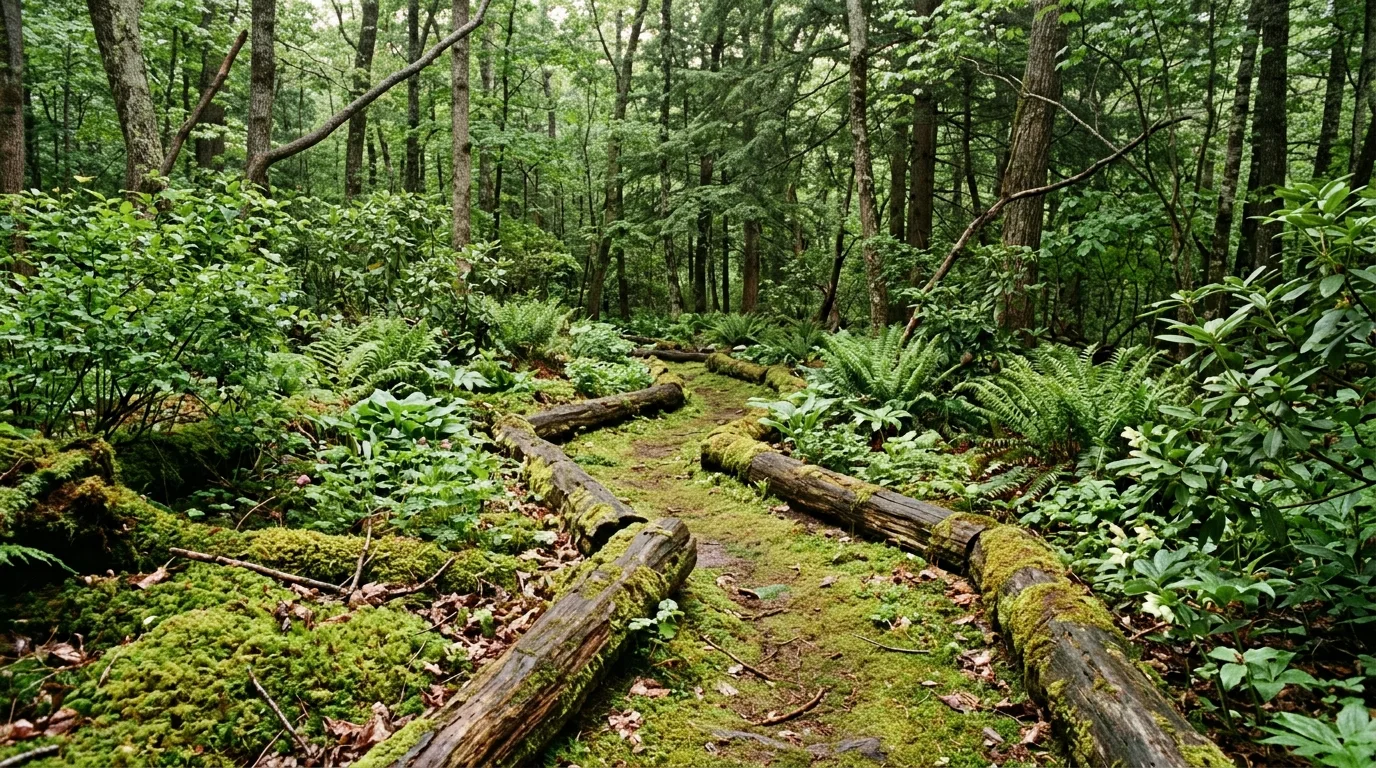
Idea 11
A bridge crossing a shaded garden swale
Bridges can feel especially poetic in forest settings because they respond to small land shifts and water movement in a way that makes the whole garden experience feel more intentional and story-like. Even a short crossing can transform the mood of the site.
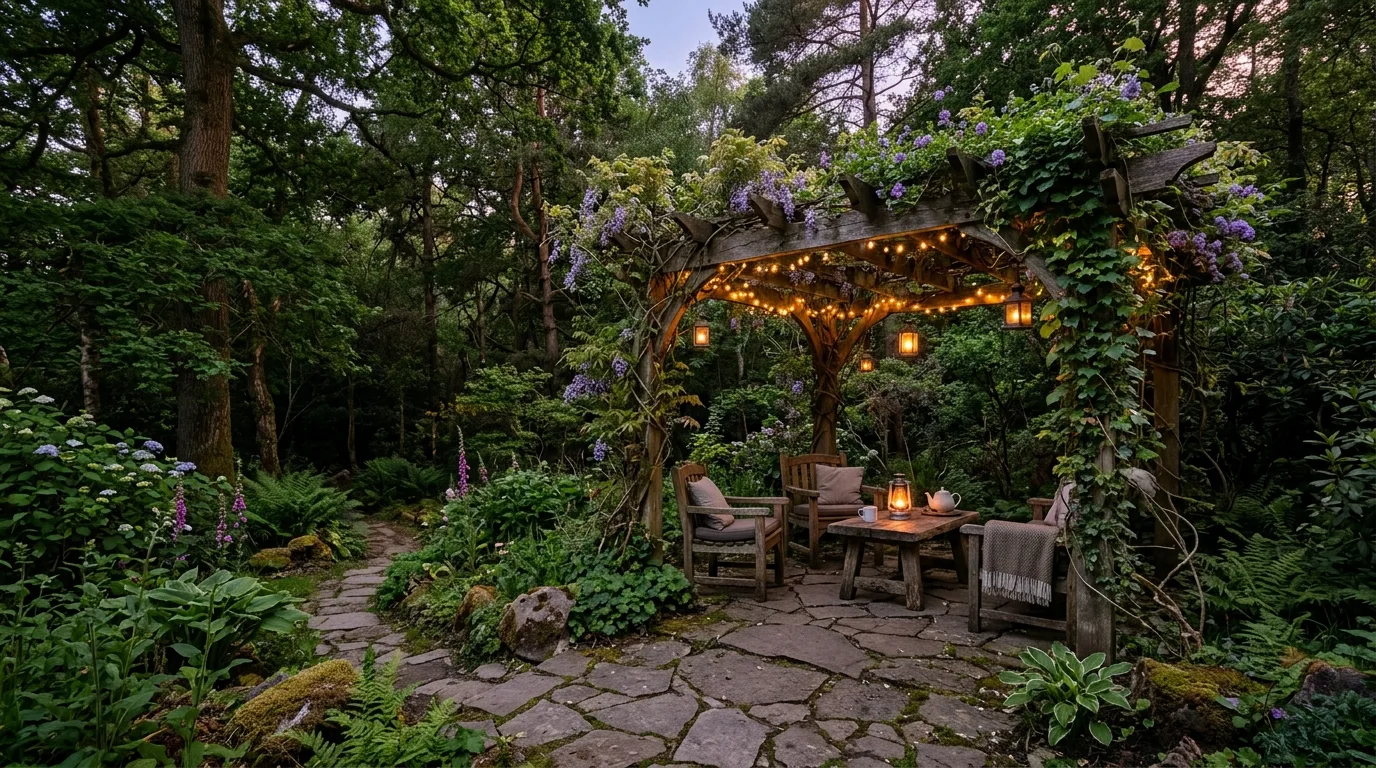
Idea 12
A meadow opening within the trees for seasonal sunlight and bloom
Not every forest yard needs to stay fully shaded, and one sunny opening can create a wonderful contrast by giving flowers and grasses room to thrive within the broader woodland frame. The clearing adds brightness without breaking the natural character.
Idea 13
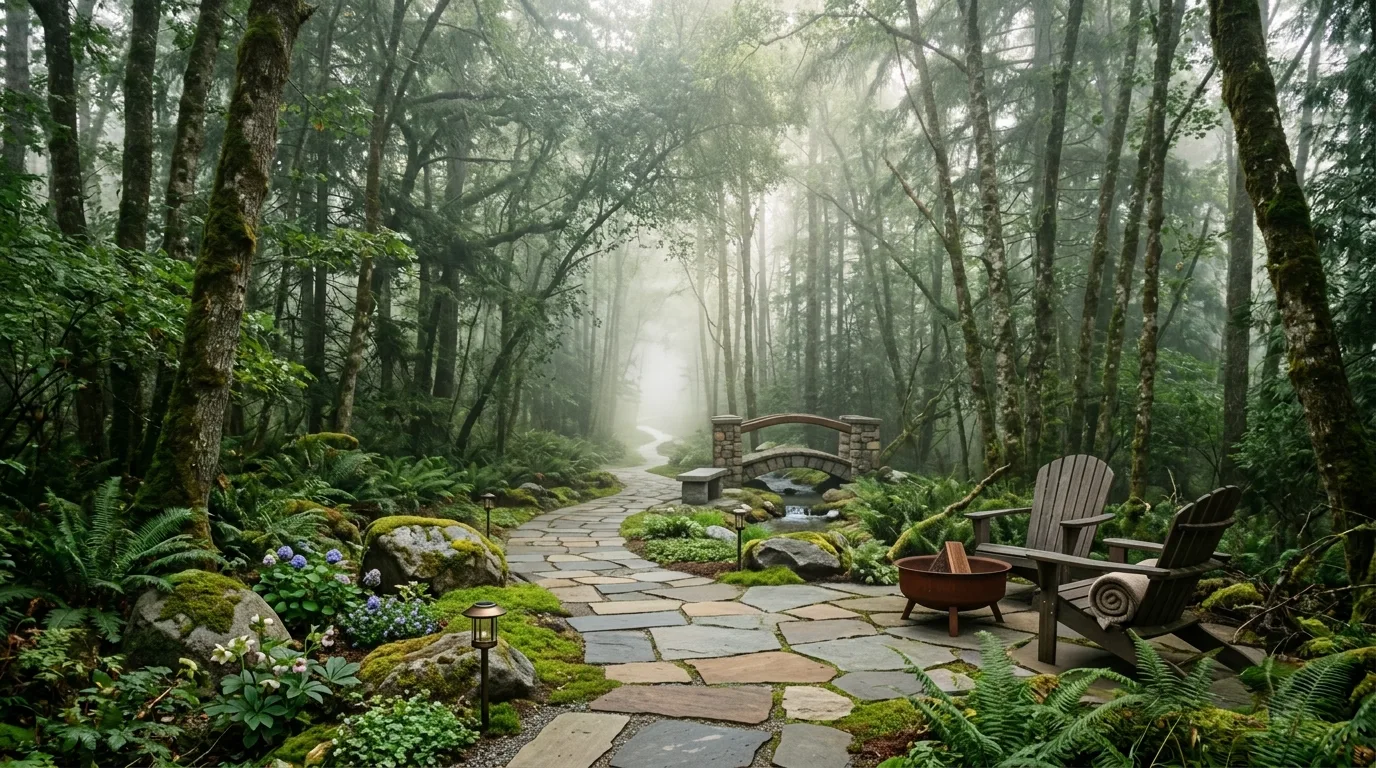
A fern-led woodland border that stays rich through the seasons
Ferns are especially effective in forest landscapes because they bring texture and movement without feeling visually loud, allowing the quieter character of the trees and ground plane to remain central. The garden feels deep, soft, and entirely at home in the woods.
Idea 14
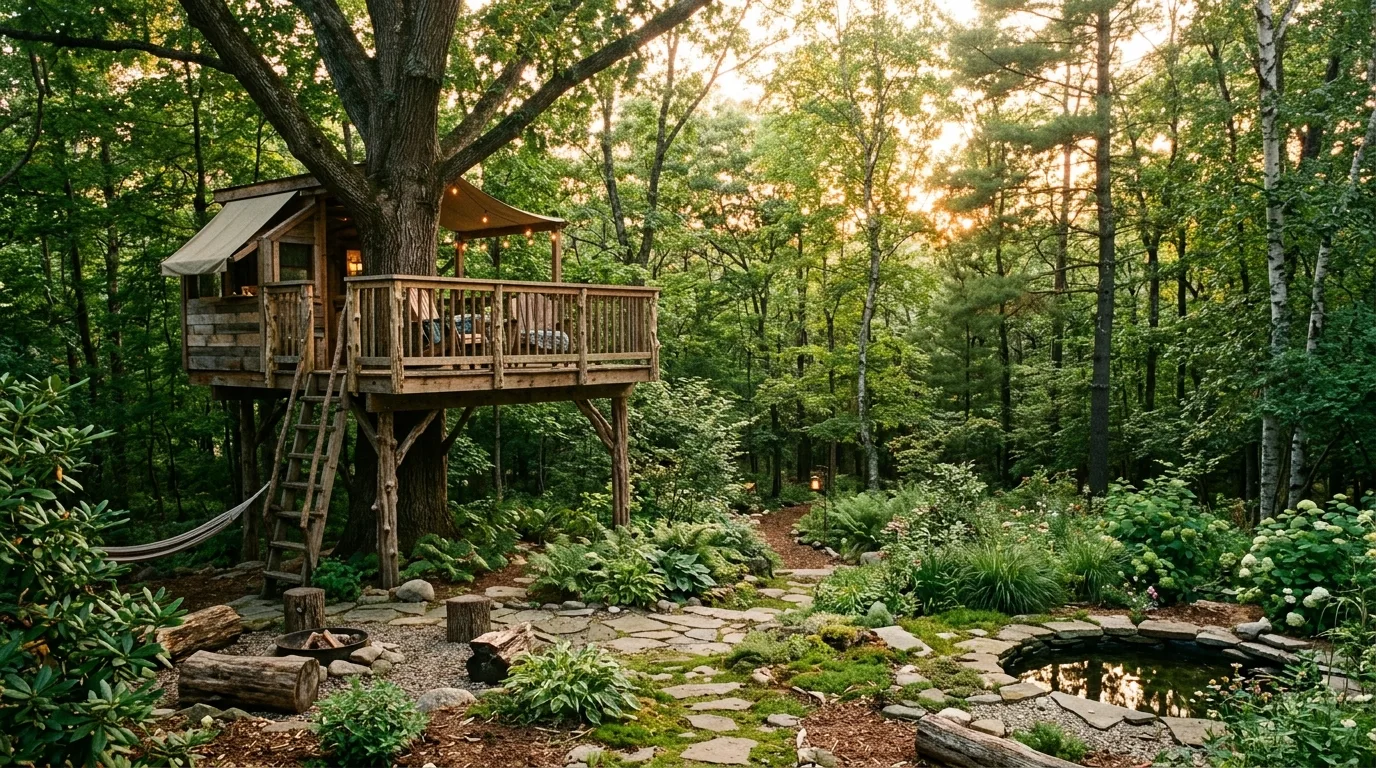
A wooded property where paths, shade, and texture create lasting beauty
The best forest-yard landscapes succeed because they work with the site’s existing trees, light, and moisture instead of trying to remake the land into something it never wanted to be. That respect is what gives woodland gardens their enduring beauty.
Read next on Saw & Sprout
Edible Gardens
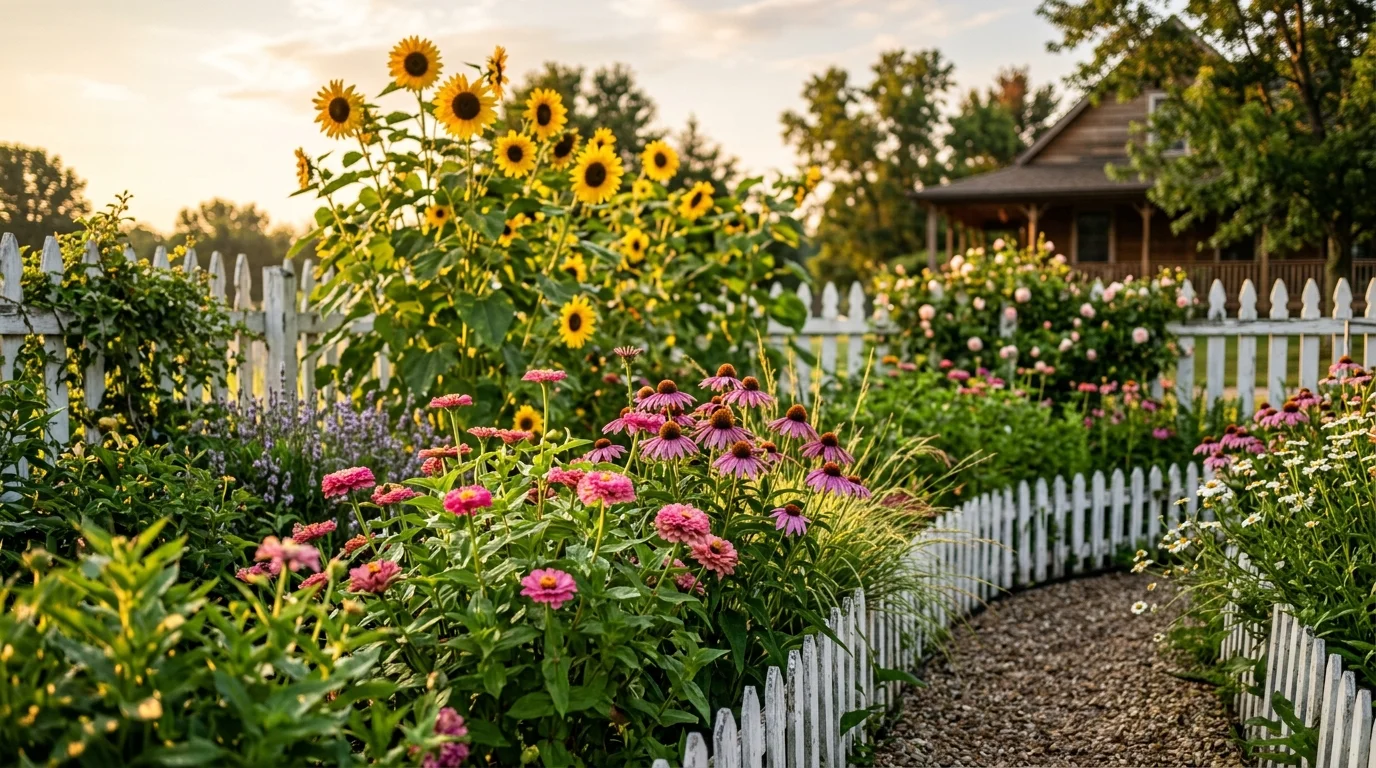
13 Clever Tomato Trellis Gardens for a Bountiful Harvest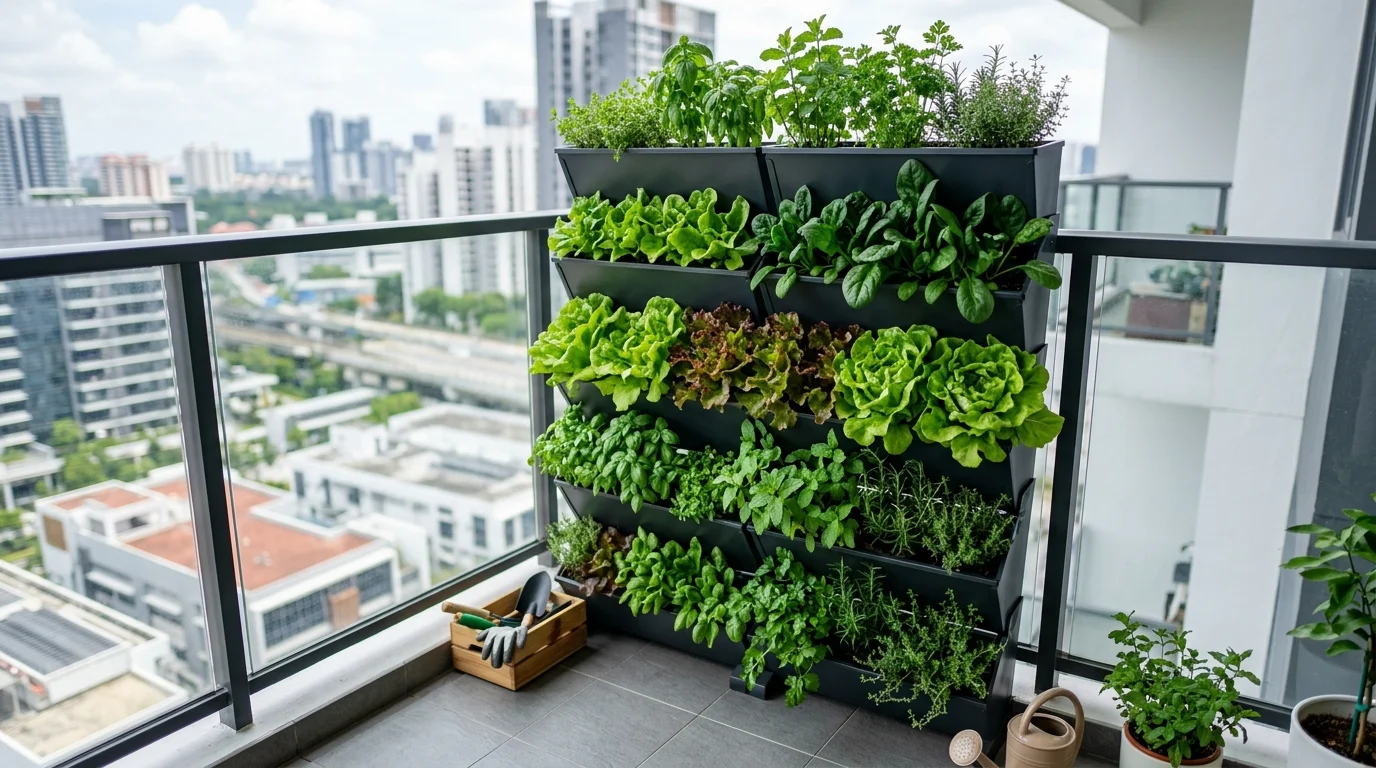
Small-Space Growing
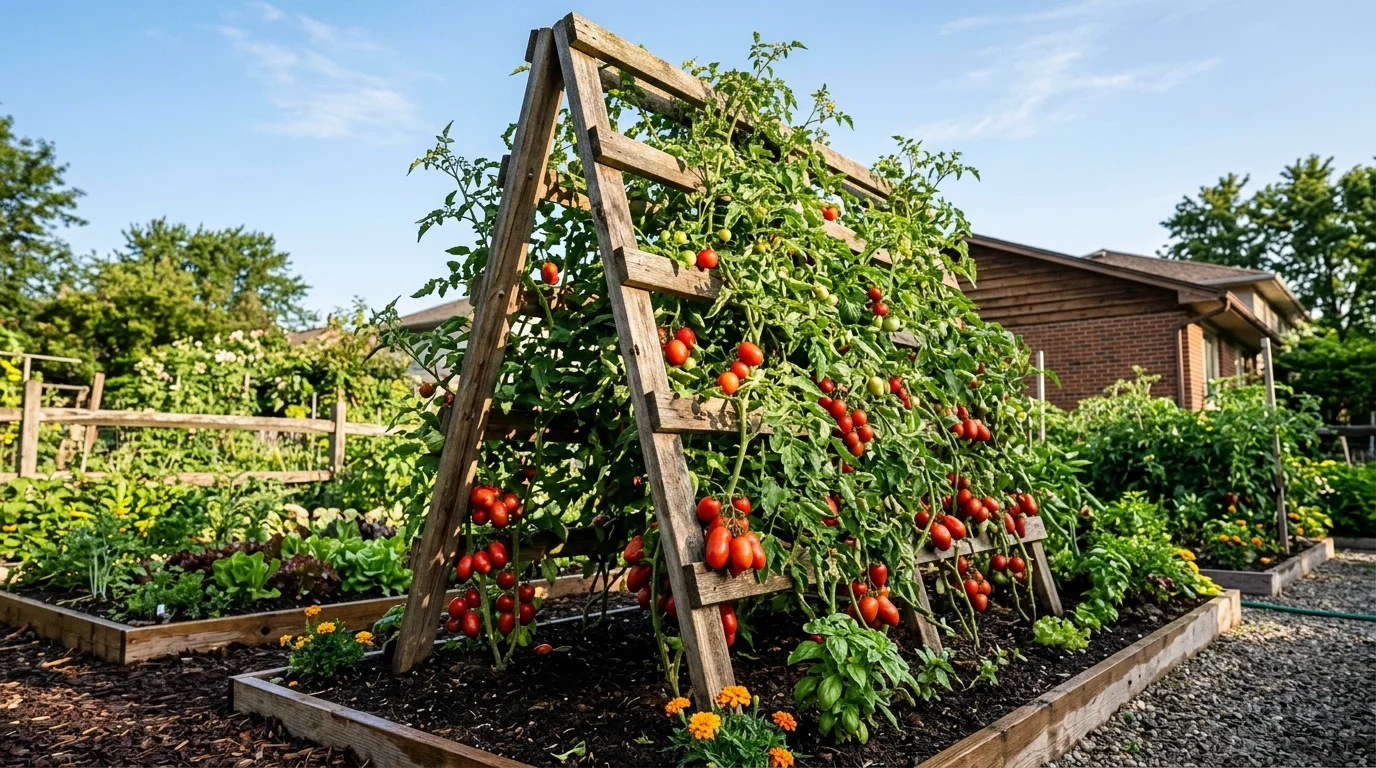
14 Space-Saving Small Vegetable Gardens for Urban GrowersFrequently asked questions
What plants work best in a forest yard?
Ferns, hostas, woodland shrubs, moss, shade-loving perennials, and native understory plants usually suit forest-yard conditions very well.
How do you make a wooded yard feel intentional?
Paths, seating clearings, careful understory planting, and a few well-placed structural elements usually give woodland properties stronger design clarity.
Should forest yards keep a natural look?
Usually yes. They tend to be most beautiful when the design supports the natural setting instead of trying to erase it.