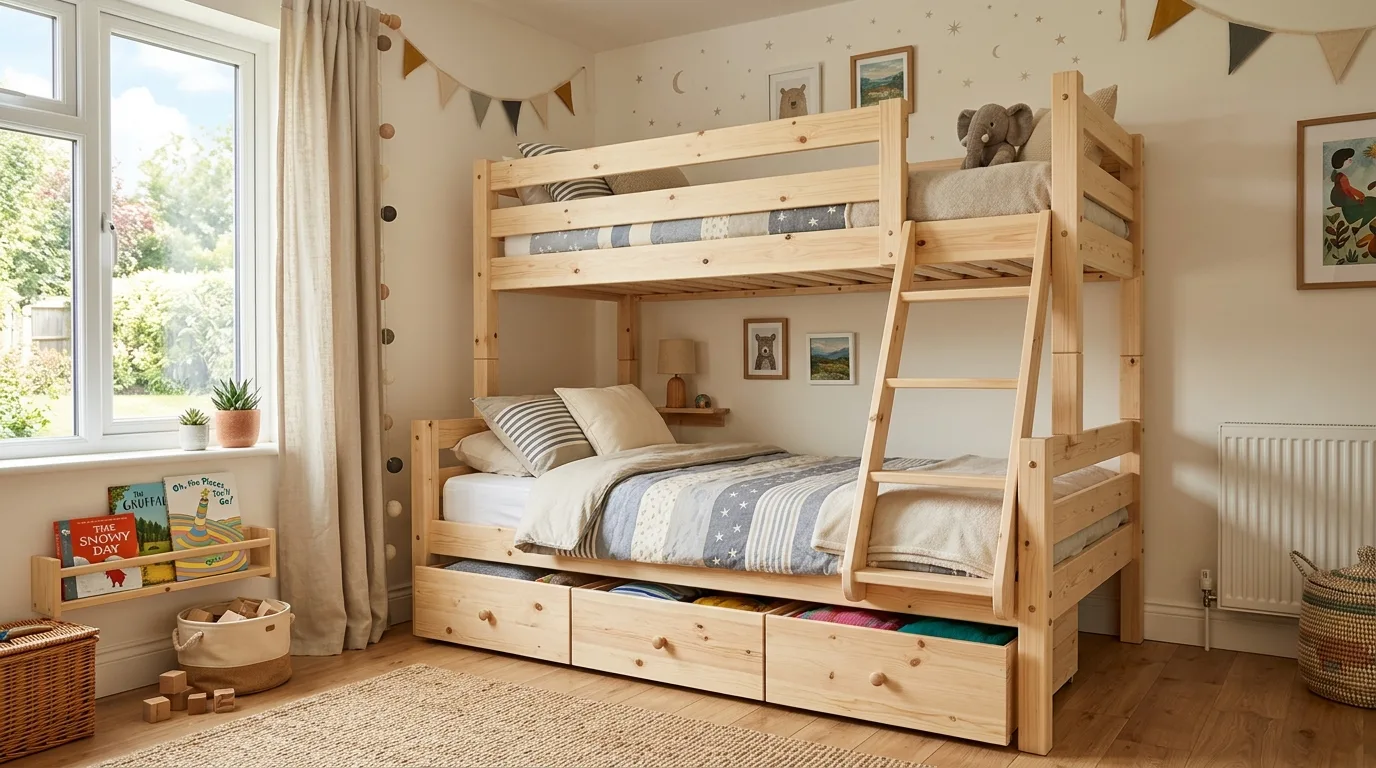
Bunk beds are valuable because they free up floor space without giving up sleep space, which can completely change how a small bedroom or guest room functions. A well designed bunk can make a room feel more organized and more useful instead of simply more crowded vertically.
The best DIY versions usually think beyond the mattresses themselves. Storage stairs, drawers, reading nooks, desk zones, guard rails, and how the frame meets the wall all influence whether the finished bed feels smart and integrated or merely stacked.
These bunk bed ideas focus on layouts that make the most of compact rooms while still feeling comfortable and visually considered. Some are playful, some more architectural, and some deeply practical, but each one uses vertical space with a clear purpose.
Quick planning notes
Work from the room dimensions and mattress sizes first, because bunk beds need careful planning around ceiling height, ladder space, and clear movement through the room.
Choose whether the bed should solve only sleeping needs or also include storage, seating, or a desk so the structure stays purposeful instead of overly complicated.
Keep safety and access cleanly integrated, since guard rails, stairs, and ladders should feel part of the design rather than attached at the last minute.
Use the wall placement strategically so the bunk opens the rest of the room, because a good position often matters as much as the frame details themselves.
Idea 1
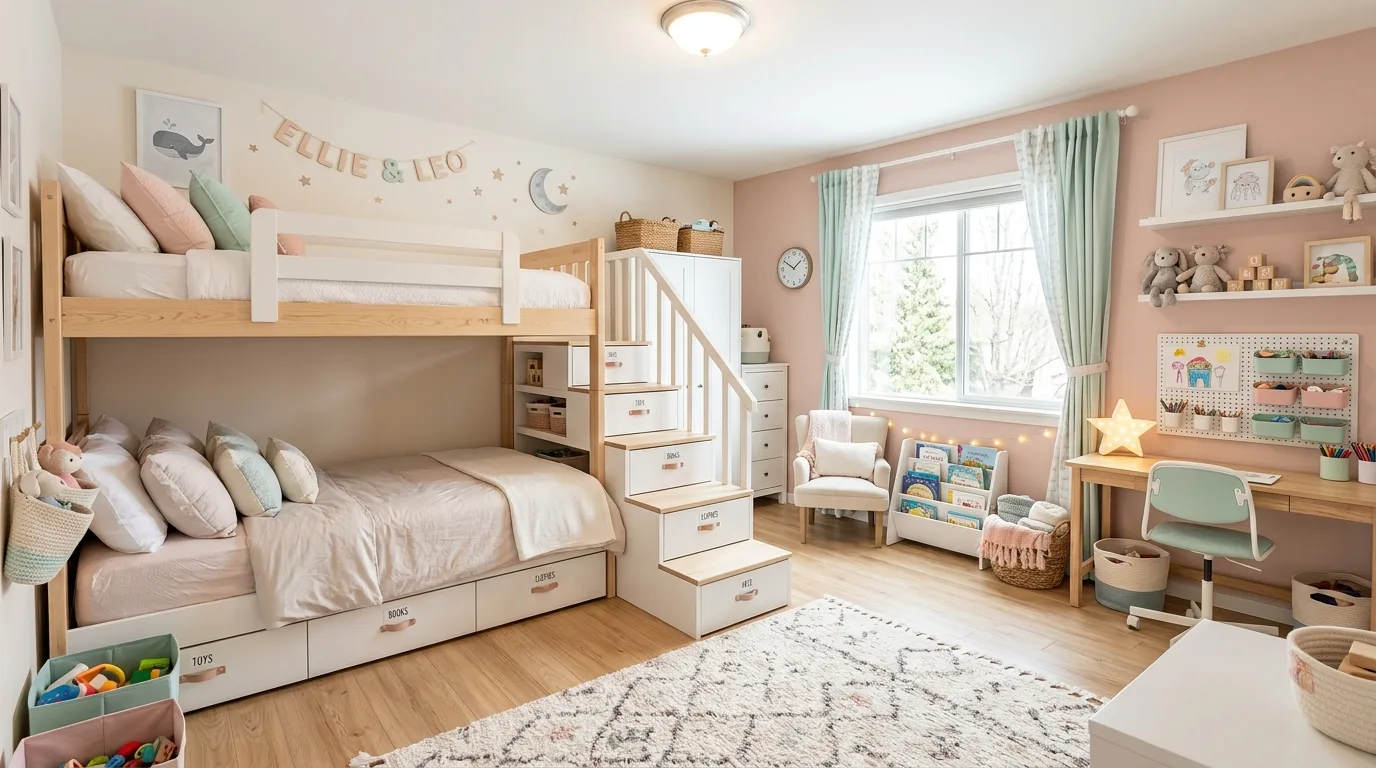
Built in wall bunk with deep storage stairs
A built in bunk with stair storage uses vertical space beautifully and turns the bed structure into part of the room architecture instead of treating it like separate furniture. It is especially useful in shared kids rooms where every inch matters.
Idea 2
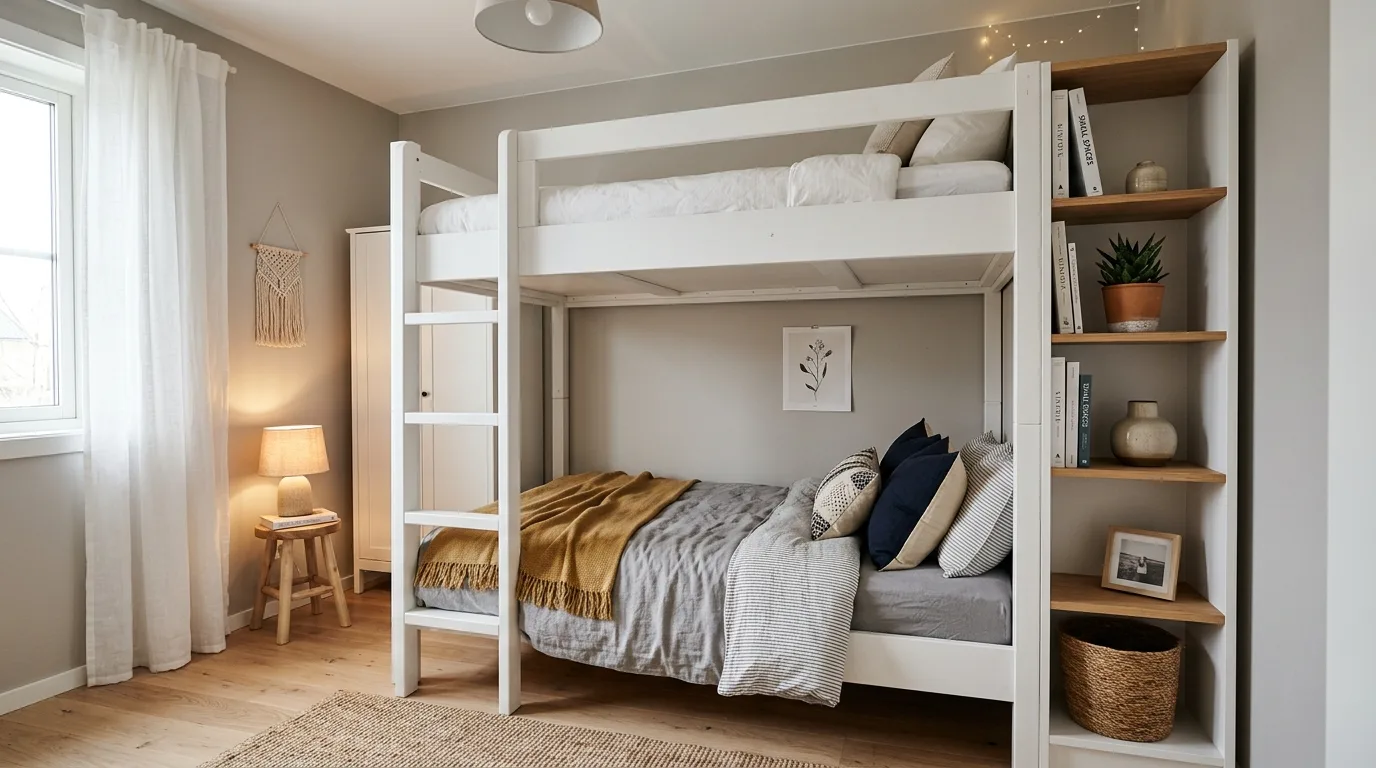
Simple wooden bunk with a low profile for smaller rooms
Keeping the frame simple and not overly bulky helps a bunk bed fit better in smaller rooms where heavy furniture can quickly make the space feel tight. The cleaner shape still gives you the function without overwhelming the room visually.
Idea 3
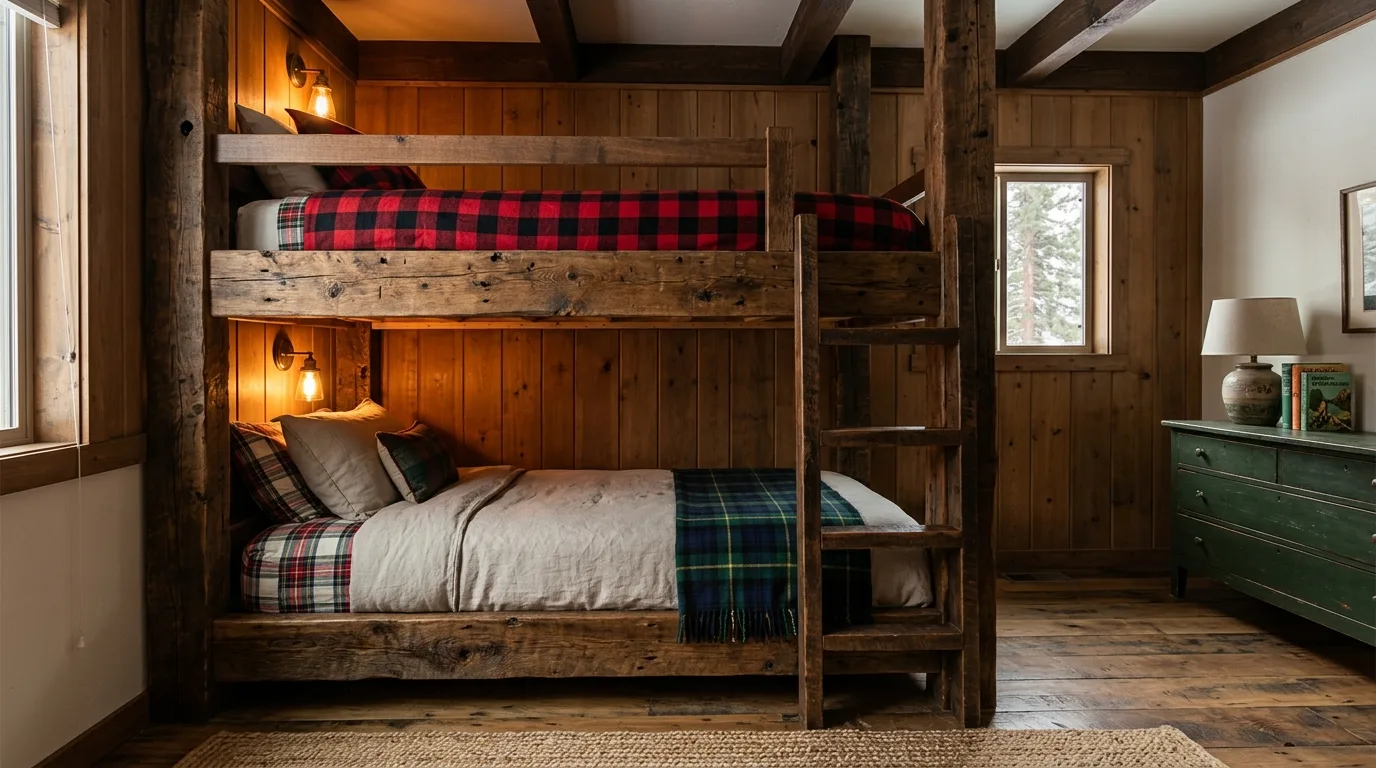
Rustic bunk frame with a warm cabin inspired feel
Chunkier wood and visible grain can give a bunk bed a cozy cabin quality that feels warm and reassuring, especially in guest rooms or vacation spaces. The stronger material presence helps the bed feel sturdy and intentionally handmade.
Idea 4
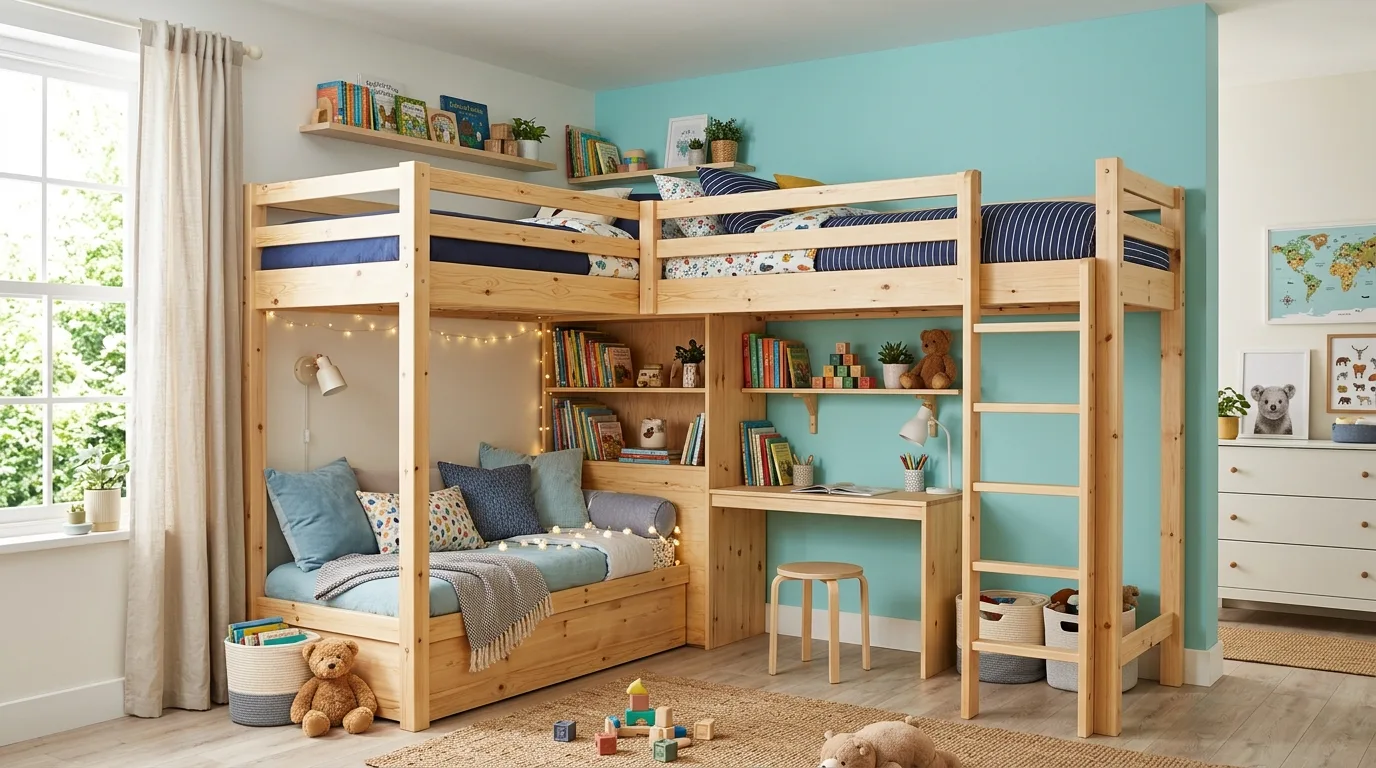
Twin over full bunk for a flexible family setup
A twin over full arrangement gives you more sleeping flexibility without asking the room to hold two separate beds on the floor, which can be a huge advantage in busy family homes. It is practical and still looks balanced when the frame is designed well.
Idea 5
Bunk bed with a reading nook tucked underneath
Using the lower area for a reading nook instead of a second bed can turn the structure into a much richer part of the room, especially if the house already has enough sleeping space elsewhere. It makes the project feel more custom and more fun to use.
Idea 6
Corner bunk layout that opens the center of the room
A corner oriented bunk can free up the middle of the room and make play or storage easier without sacrificing sleep space. The layout often feels more natural in compact bedrooms because it works with the walls instead of cutting across the floor plan.
Idea 7
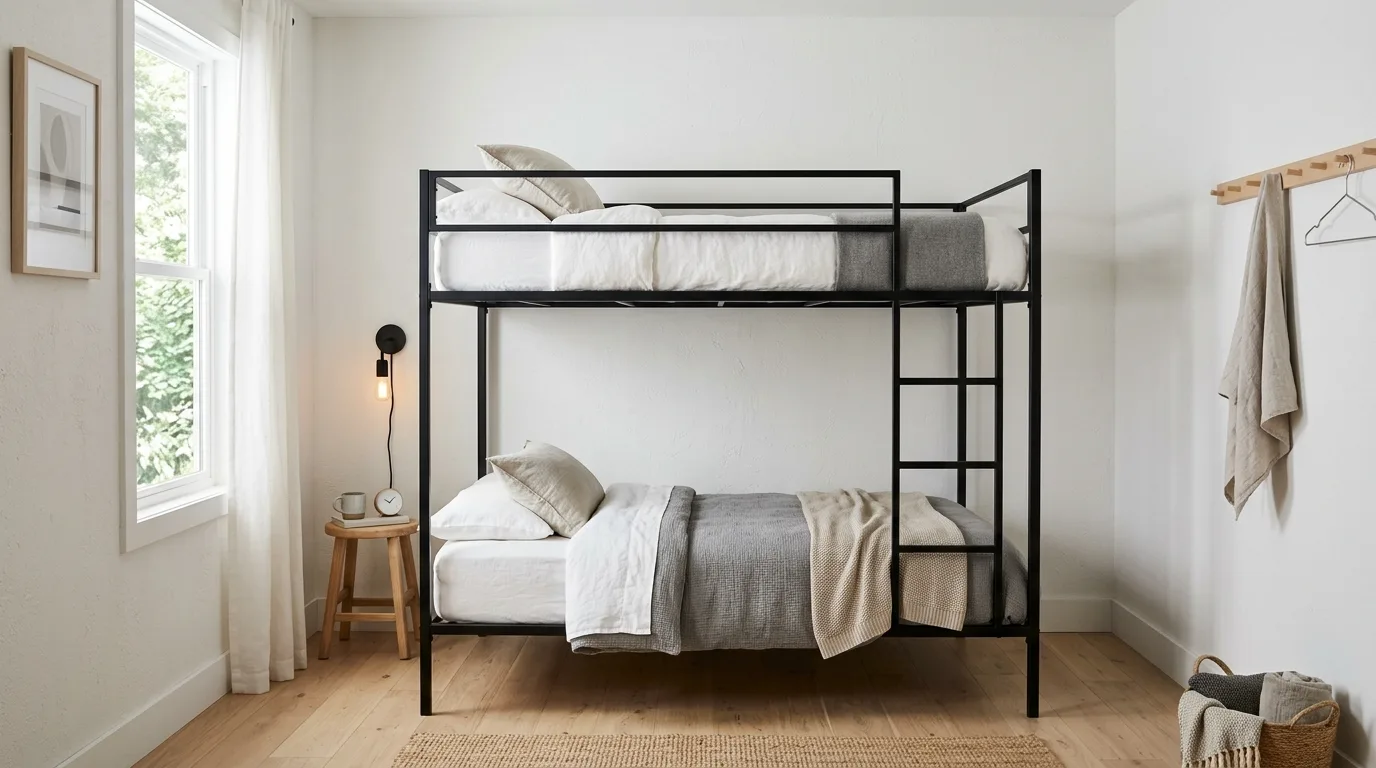
Bunk with guard rails and a slim ladder built in
Strong guard rails and a narrow integrated ladder keep the design safer and visually cleaner than a separate ladder leaning into the room. The bed feels simpler and more controlled, which matters a lot in smaller bedrooms.
Idea 8
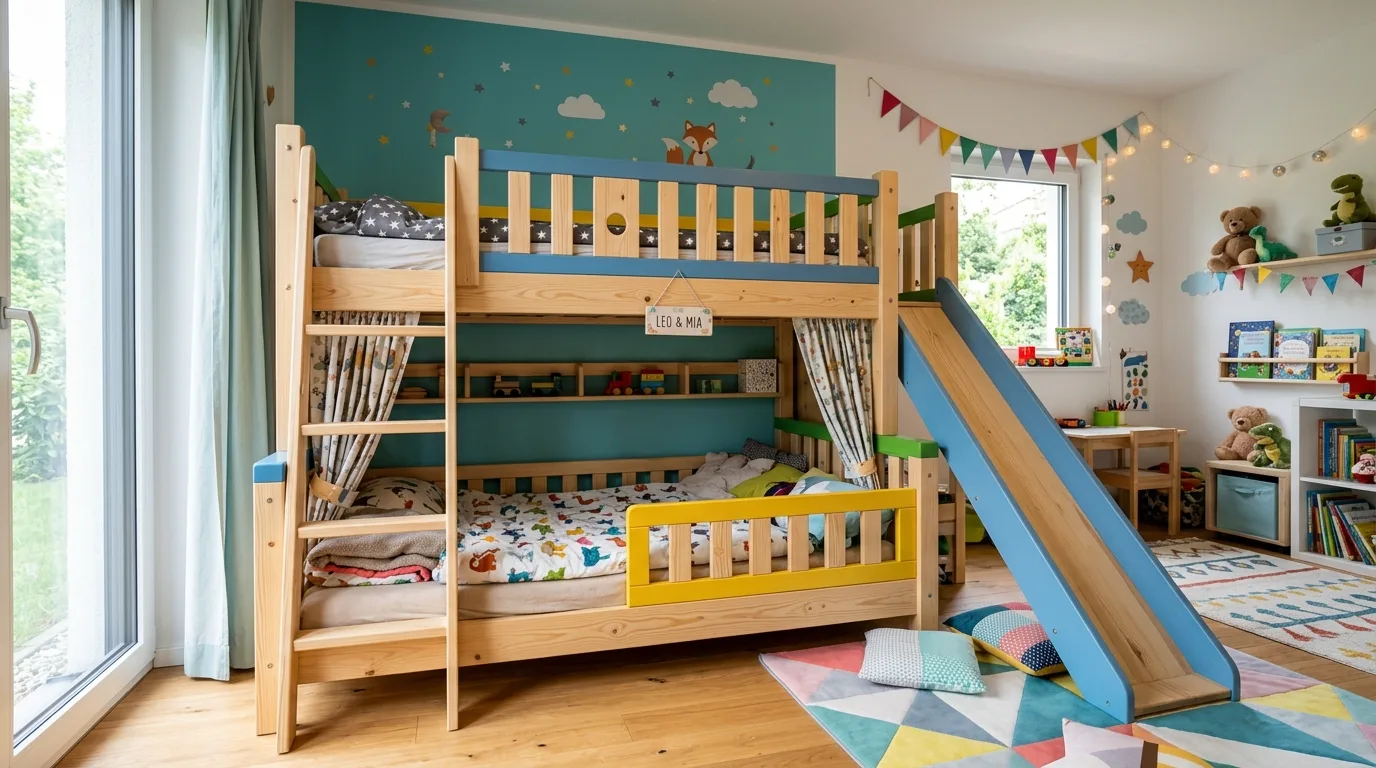
Painted bunk bed with hidden drawer storage below
Hidden drawers beneath the lower bunk can absorb toys, bedding, or seasonal clothes without adding another piece of furniture to the room, which is often the smartest use of the footprint. A painted finish also helps the bed blend more cleanly into the decor.
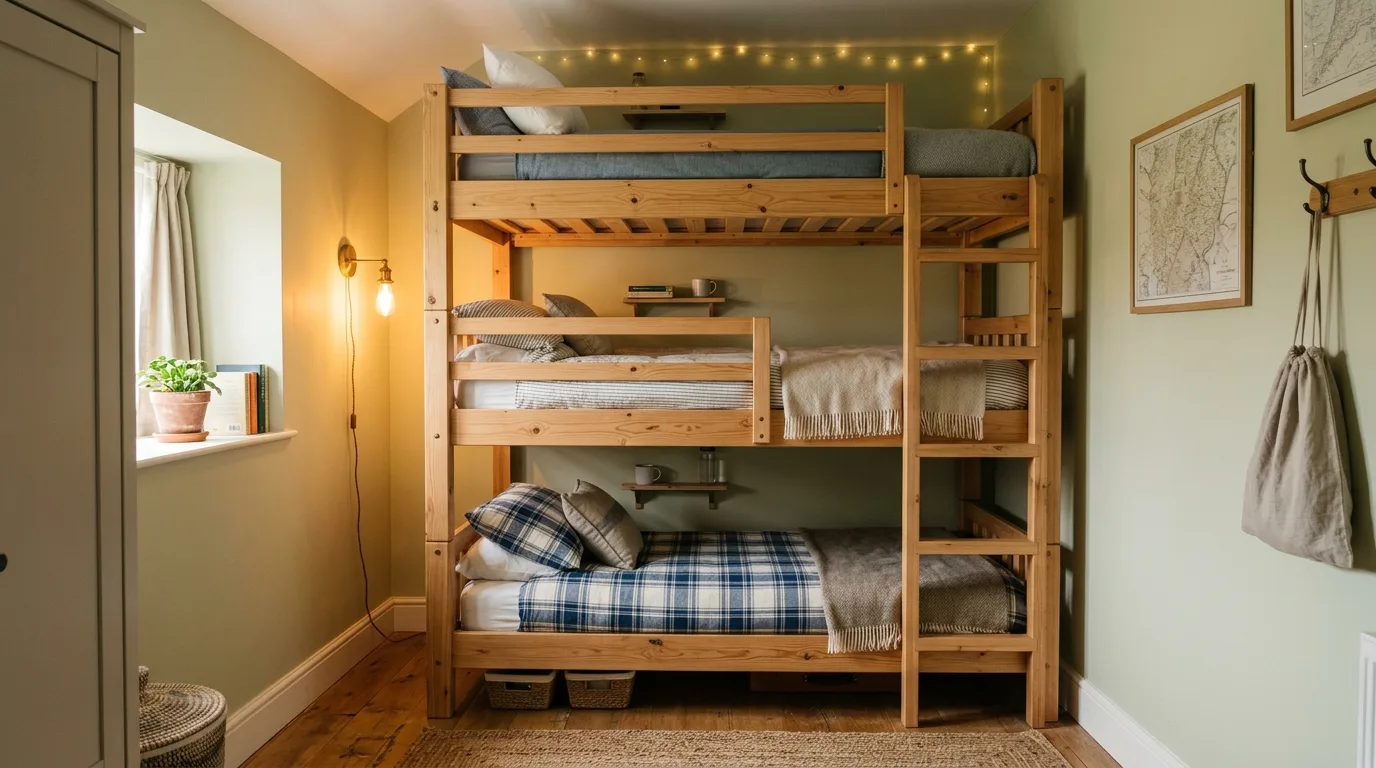
Idea 9
Guest room bunk with hotel style bedding and sconces
A bunk bed for guests works best when it feels considered rather than improvised, and details like proper sconces and layered bedding help a lot. The structure can still be simple, but the styling makes it feel welcoming and complete.
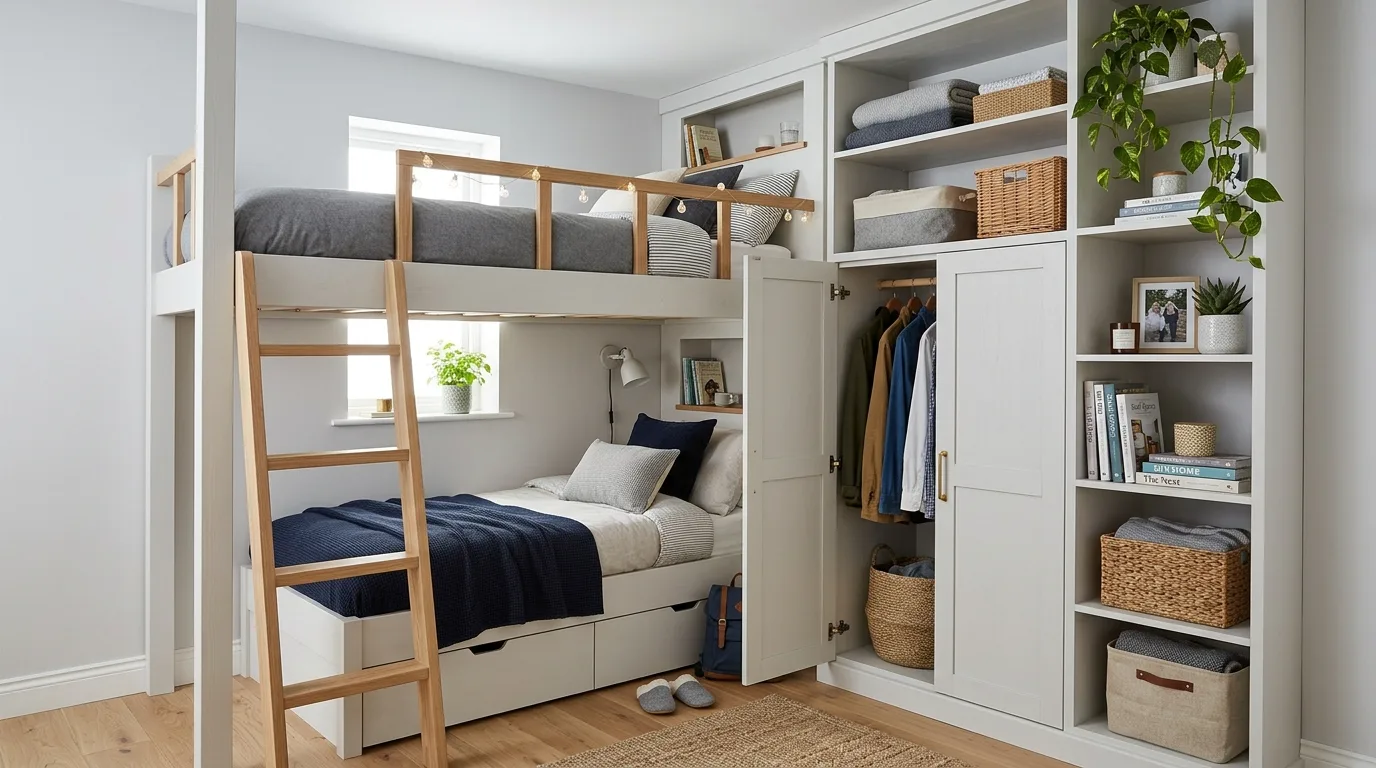
Idea 10
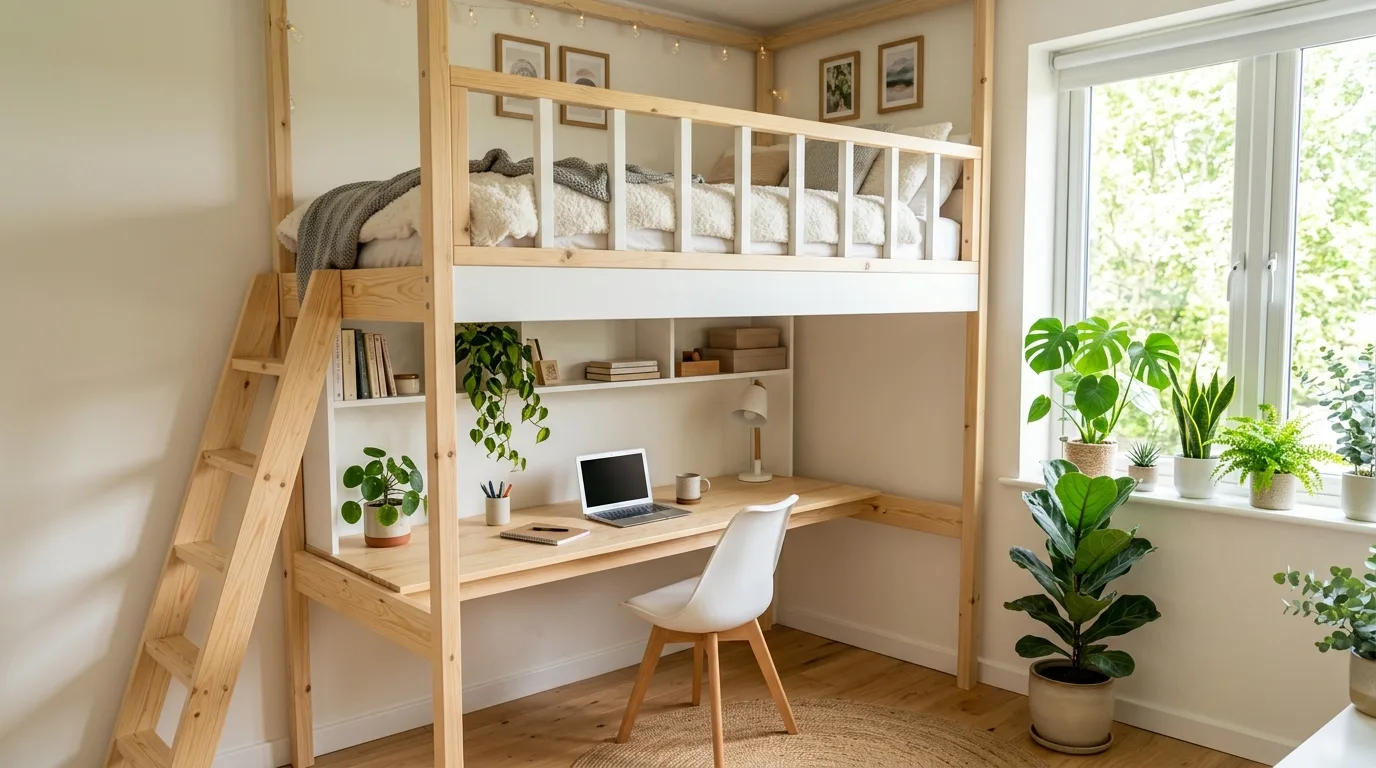
Lofted upper bunk with a desk zone below
Placing a desk beneath the upper bed makes the build do double duty, which can transform a small bedroom into both a place to sleep and a place to focus. It is one of the most efficient ways to reclaim floor space in a compact room.
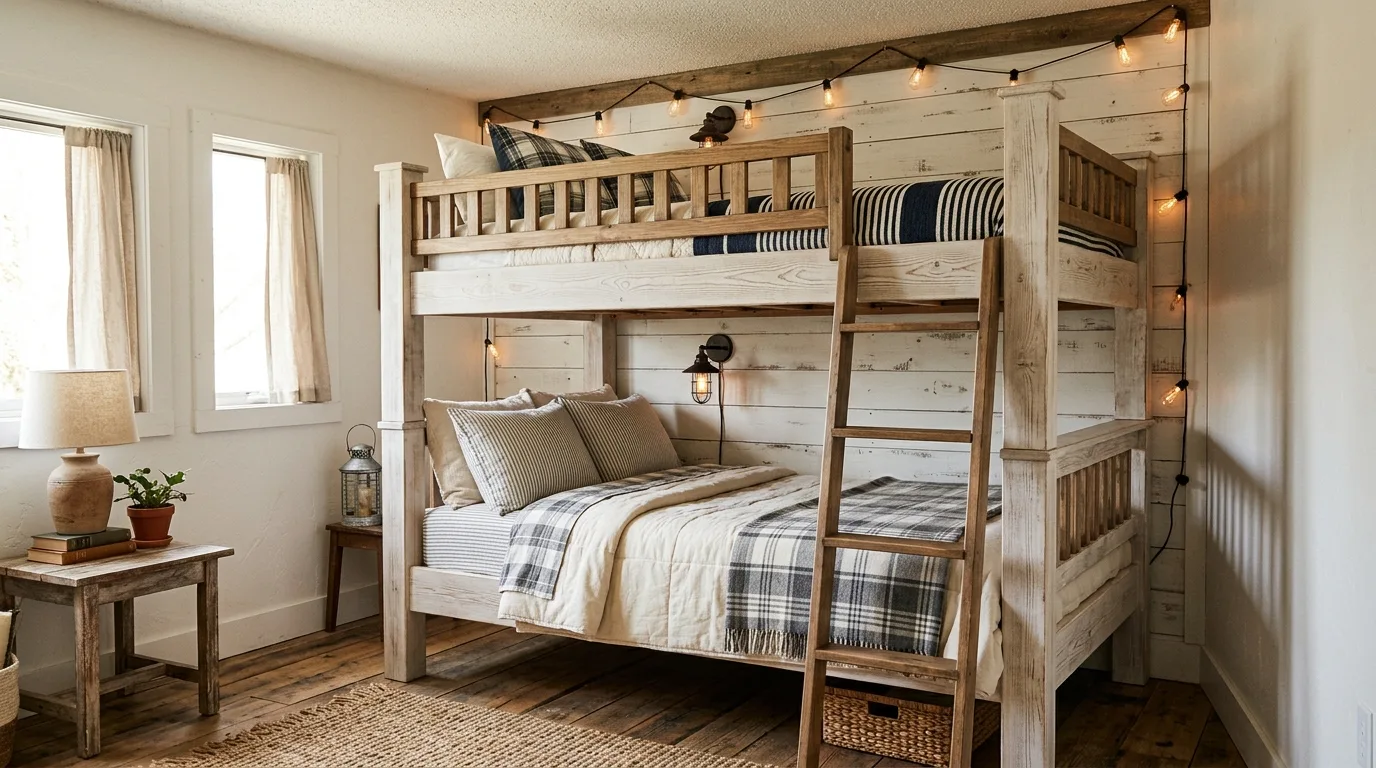
Idea 11
Farmhouse style bunk with cross rail details
Cross rail details give the frame more personality and help the bunk feel like it belongs with farmhouse or cottage style interiors rather than reading as purely functional. The project feels warm and decorative while still staying very useful.
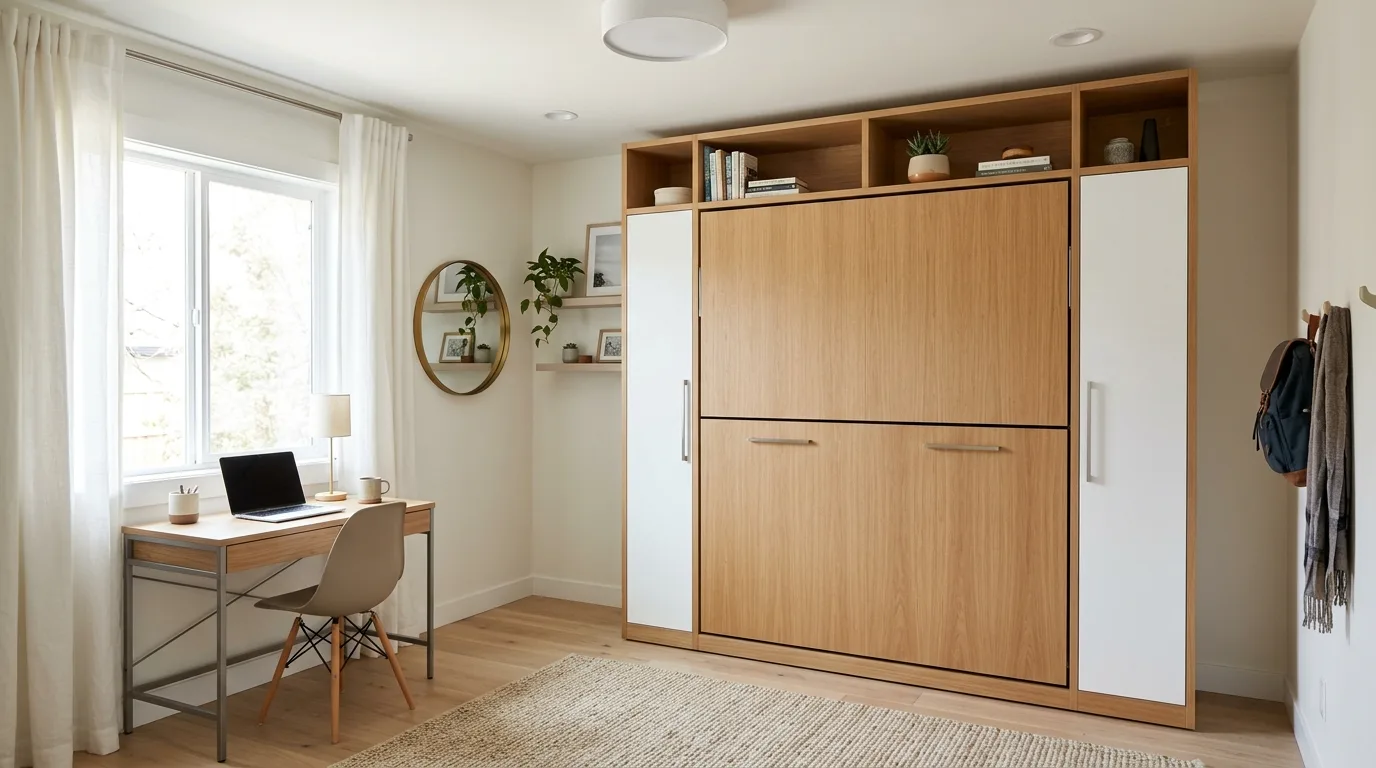
Idea 12
Window side bunk build with shelves at the head
Adding shelves near the head of each bunk makes the bed much more livable because books, small lights, and essentials stay close without needing separate nightstands. That kind of thoughtful detail can make a homemade build feel finished and smart.
Read next on Saw & Sprout
Edible Gardens
13 Clever Tomato Trellis Gardens for a Bountiful Harvest
Small-Space Growing
14 Space-Saving Small Vegetable Gardens for Urban GrowersFrequently asked questions
What makes a bunk bed a good space saving solution?
The best bunk beds free floor area for storage, play, desks, or circulation while still keeping the sleeping setup safe, comfortable, and visually well integrated.
Should DIY bunk beds include storage?
If the room is small, storage can add a lot of value. Drawers, stair cubbies, shelves, and under bed zones often make the structure far more useful overall.
Can bunk beds work in guest rooms too?
Yes. When the styling is thoughtful and the proportions are right, bunk beds can make guest rooms much more flexible for families, visitors, and vacation spaces.