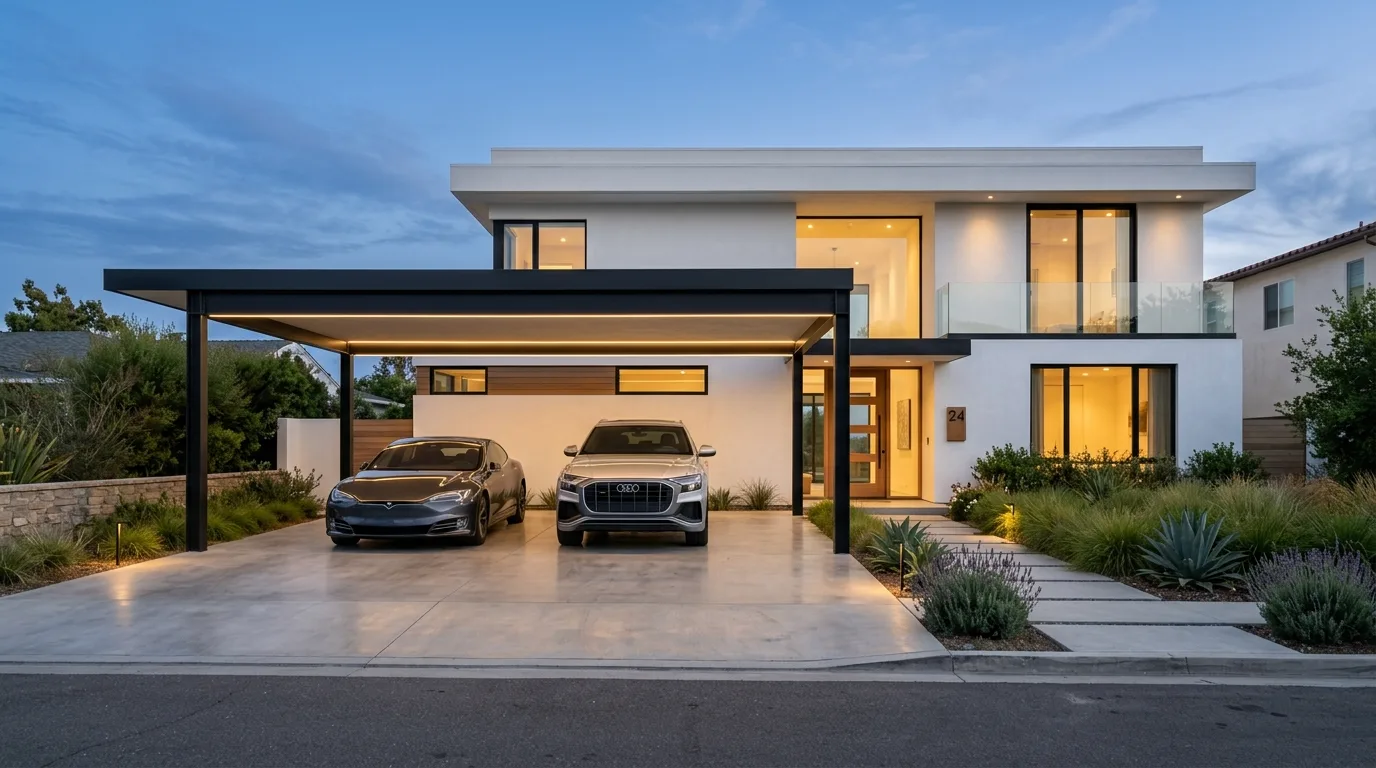
A front carport has a major effect on curb appeal because it occupies valuable visual space at the front of the home and often sits right beside the main approach. When it is designed thoughtfully, it can feel architectural and stylish instead of purely practical.
The best carports borrow cues from the house itself. Proportion, materials, roof shape, and landscape integration all determine whether the structure reads as part of the home or as a separate element added for necessity alone.
These front carport ideas focus on designs that strengthen the overall facade while still doing their practical job well. Some are minimal, some warmer and more textured, but all of them aim for a cleaner and more modern first impression.
Quick planning notes
Let the carport echo the home's architecture so the structure feels integrated rather than visually detached from the facade.
Use materials with enough warmth or texture to prevent the frontage from feeling overly utilitarian.
Soften the edges with landscape design so the transition from driveway to house feels more welcoming and finished.
Consider how the carport looks at night too, because lighting can make a major difference to curb appeal after sunset.
Idea 1
A flat-roof carport paired with clean horizontal lines
A front carport looks most modern when its roofline and support structure echo the architecture of the house instead of competing with it. Clean horizontal emphasis helps the whole facade feel calmer, sharper, and more intentionally designed.
Idea 2
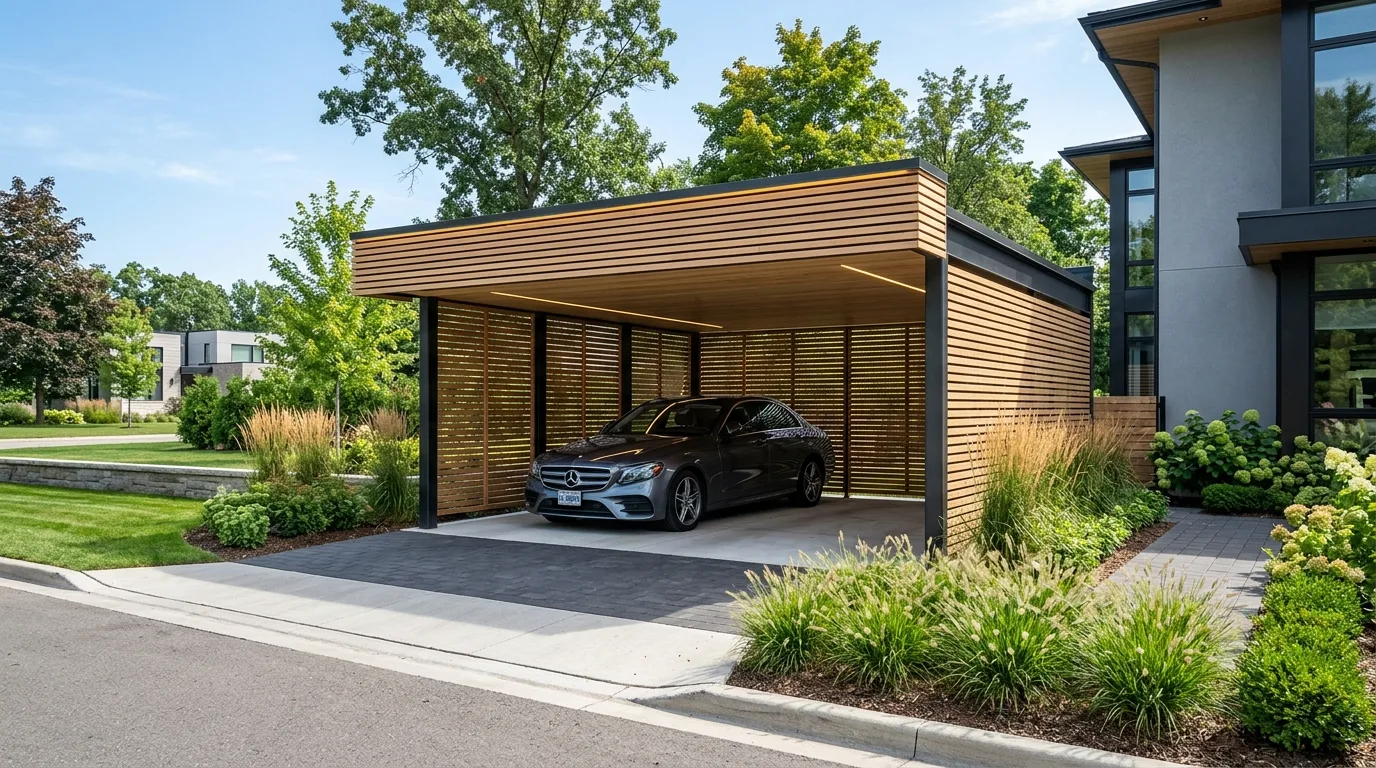
Warm wood slats softening a sleek carport frame
Wood slats can make a carport feel much more welcoming because they bring warmth to what might otherwise be a purely utilitarian structure. Against steel or darker finishes, the timber adds texture and helps the frontage feel more residential and refined.
Idea 3
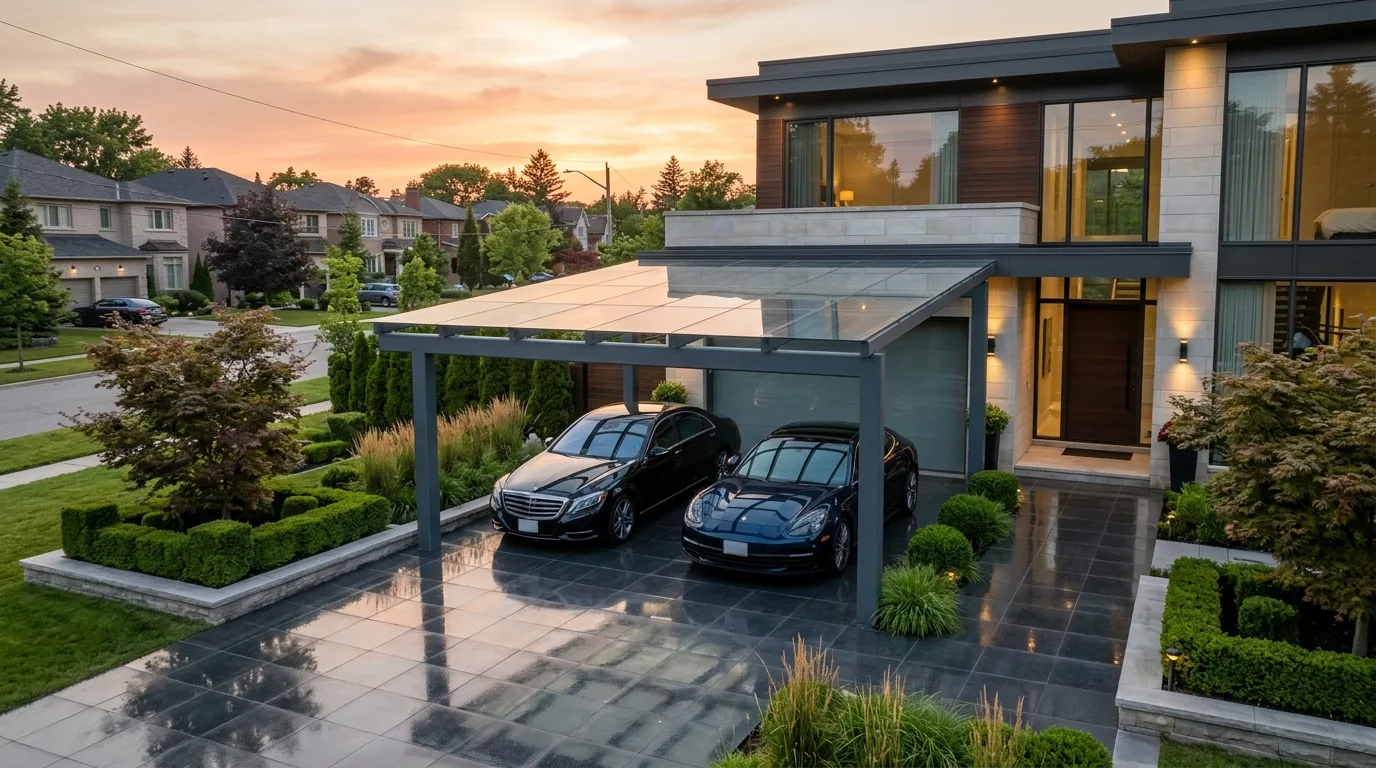
A minimalist white carport blending with a bright facade
When the house exterior is already light and streamlined, a white carport can disappear into the architecture in a very elegant way. The result feels integrated and fresh, allowing the structure to support curb appeal rather than dominate it.
Idea 4
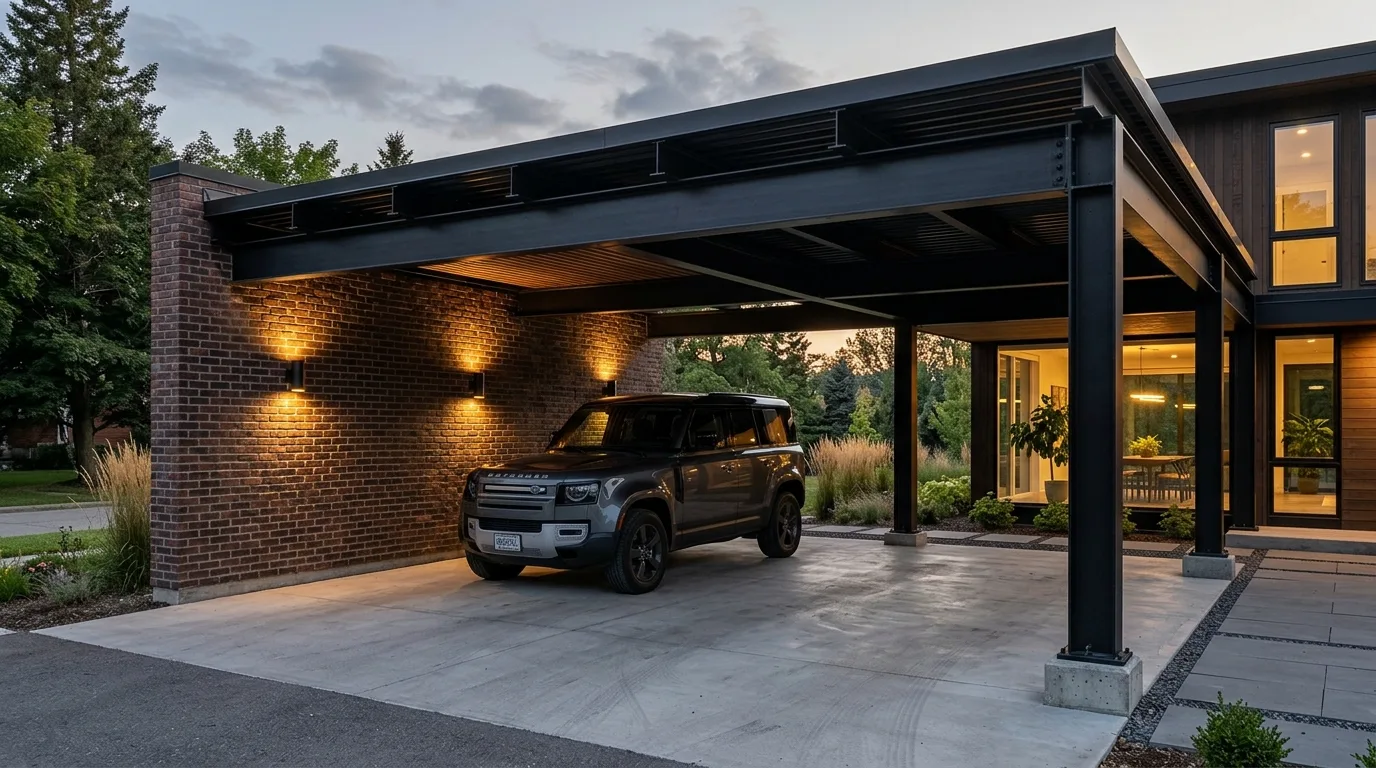
A black steel carport adding strong visual definition
Black steel gives a front carport crisp contrast that can sharpen the entire facade, especially on lighter homes. The darker frame reads as deliberate and graphic, helping the structure feel stylish rather than like an afterthought attached to the driveway.
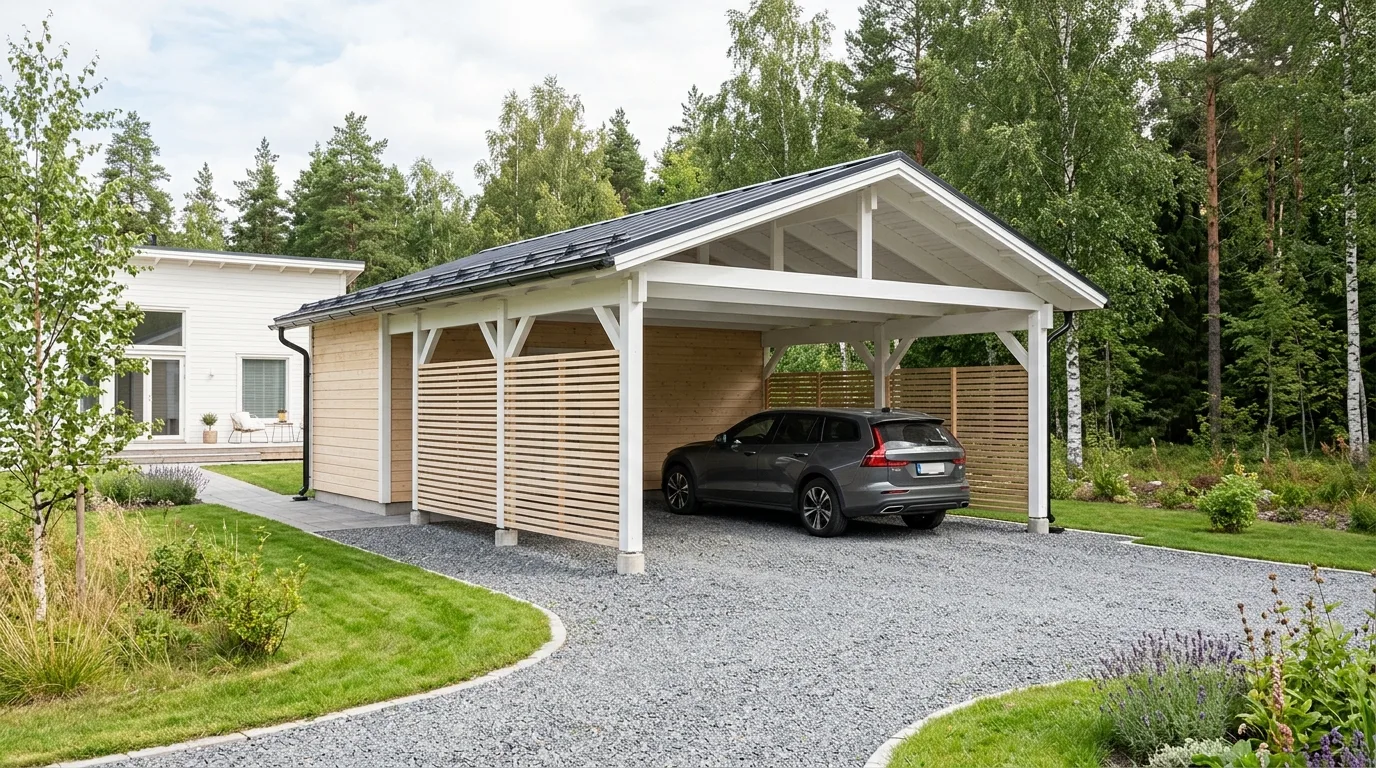
Idea 5
Integrated planting around the posts softening the driveway edge
One of the easiest ways to improve a front carport is to make it feel rooted in the landscape with thoughtful planting around its base. Soft greenery and flowers help the driveway edge feel friendlier and make the structure seem more finished overall.
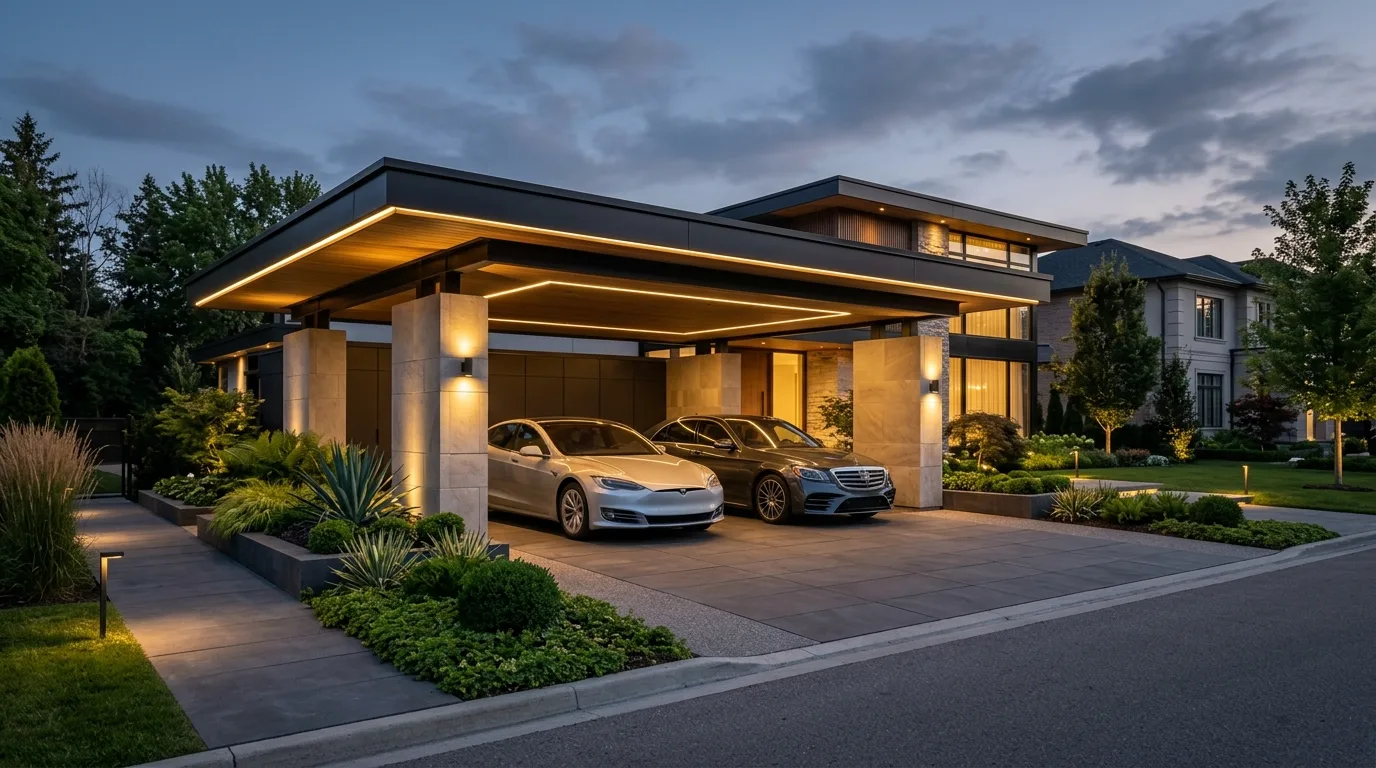
Idea 6
A pergola-style carport with filtered light and shadow
A pergola-inspired carport can add character to the front of a house because the slatted roof creates shadow play and lightness. It still offers visual cover for the car while helping the entry experience feel more architectural and distinctive.
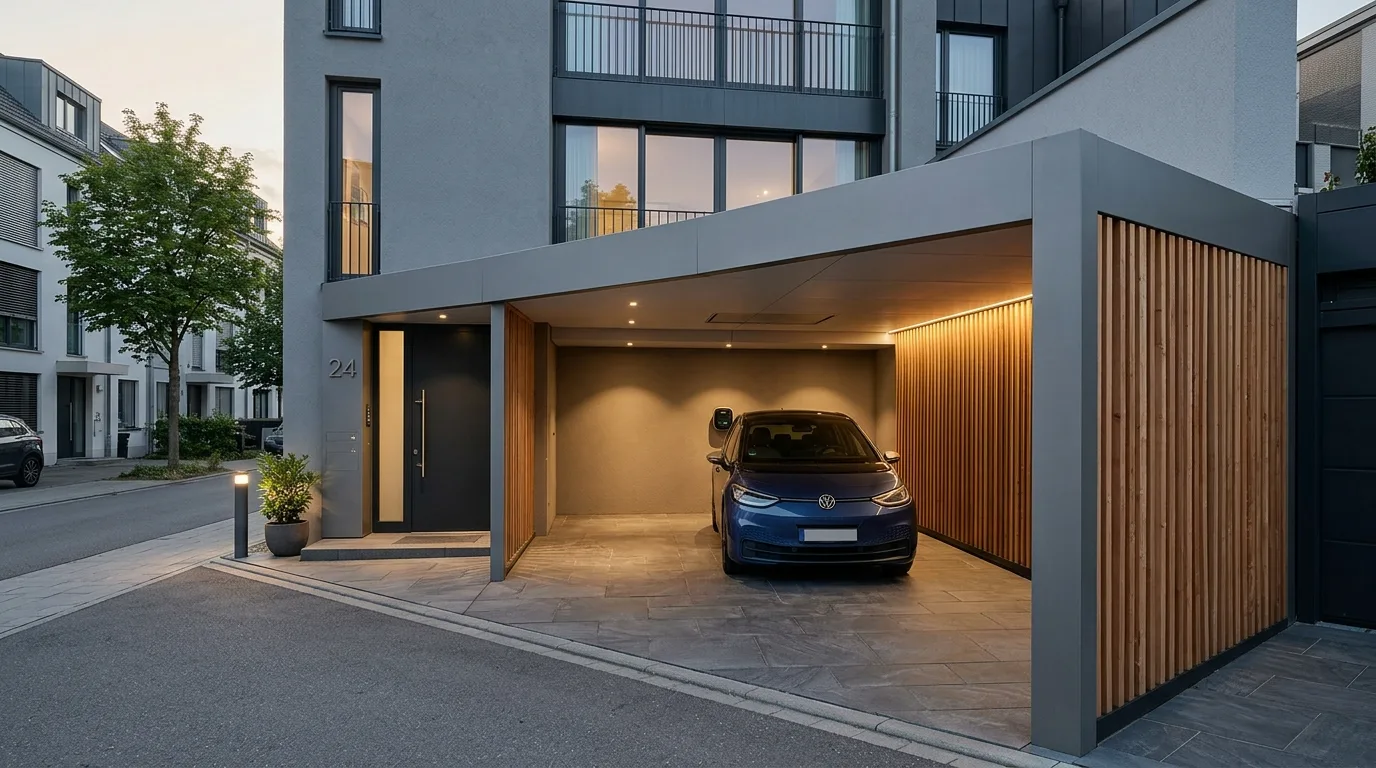
Idea 7
A carport and front walk designed as one cohesive entry
Curb appeal improves when the carport and pedestrian path feel part of one overall composition instead of separate zones. Shared materials, aligned edges, and clear transitions make the frontage feel more organized and more upscale.
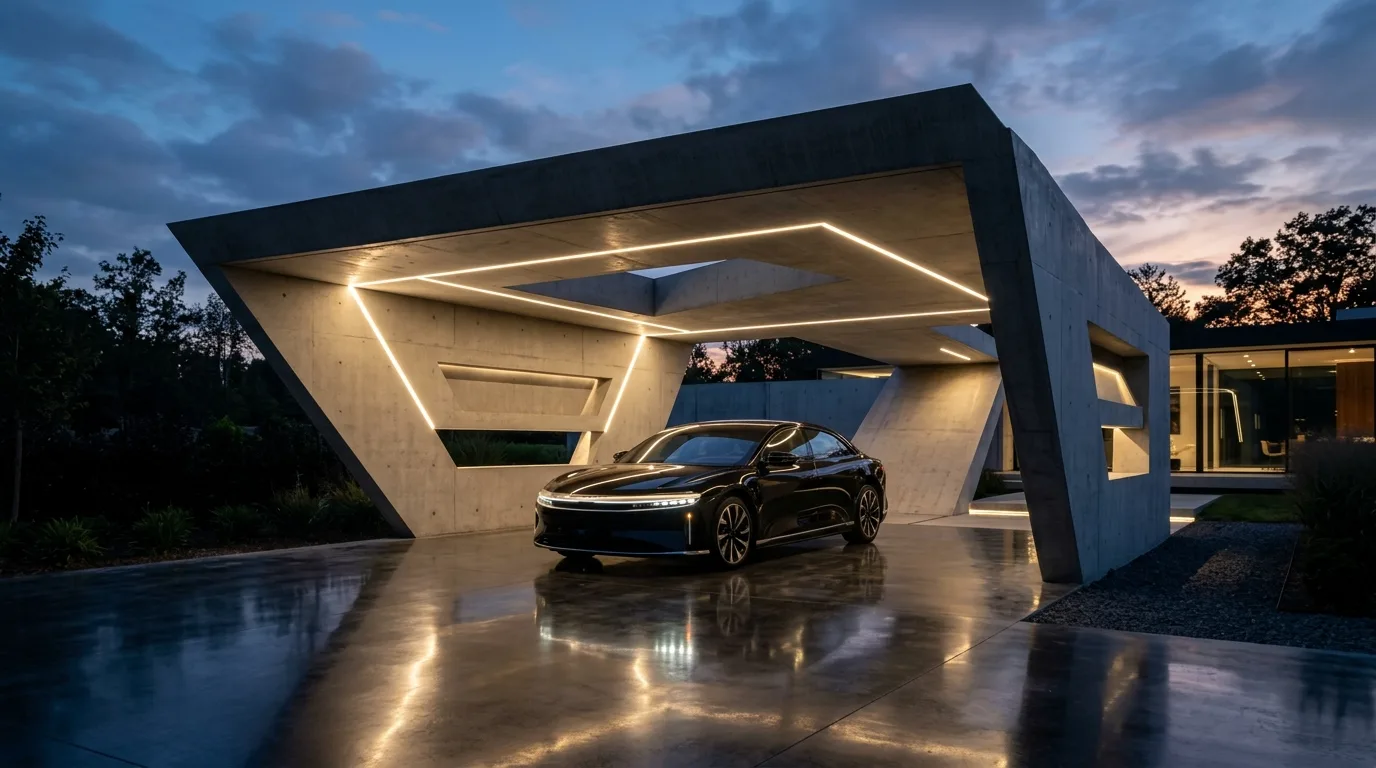
Idea 8
A side-screened carport that hides visual clutter
Screening one side of a front carport can make the structure look far more polished by hiding stored items and reducing the visual emphasis on the parked vehicle itself. The result feels cleaner, calmer, and more in keeping with a thoughtful facade.
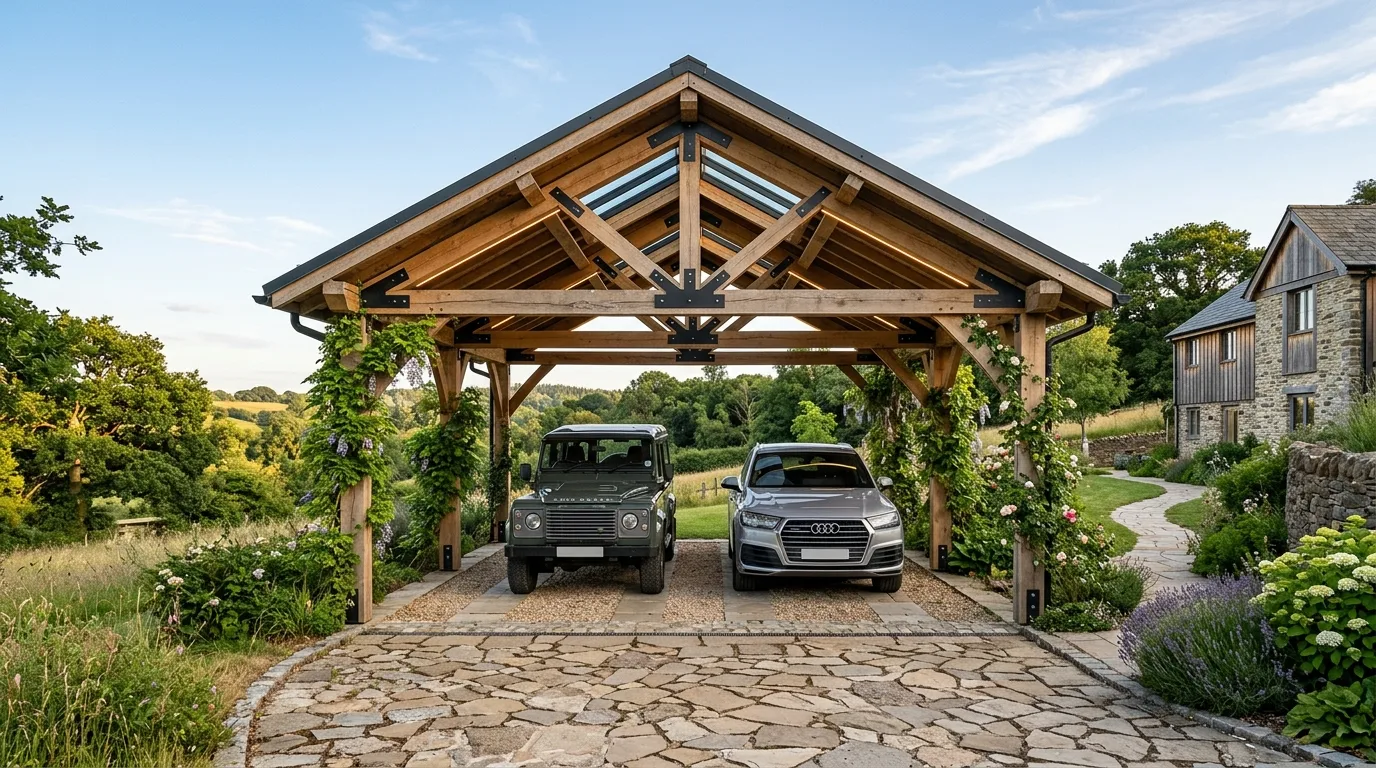
Idea 9
A carport roof echoed by the home's modern geometry
Carports feel strongest when they borrow proportions and shapes from the house, because that relationship helps them read as architecture rather than accessory. Matching angles or volumes can make even a simple carport look custom and expensive.
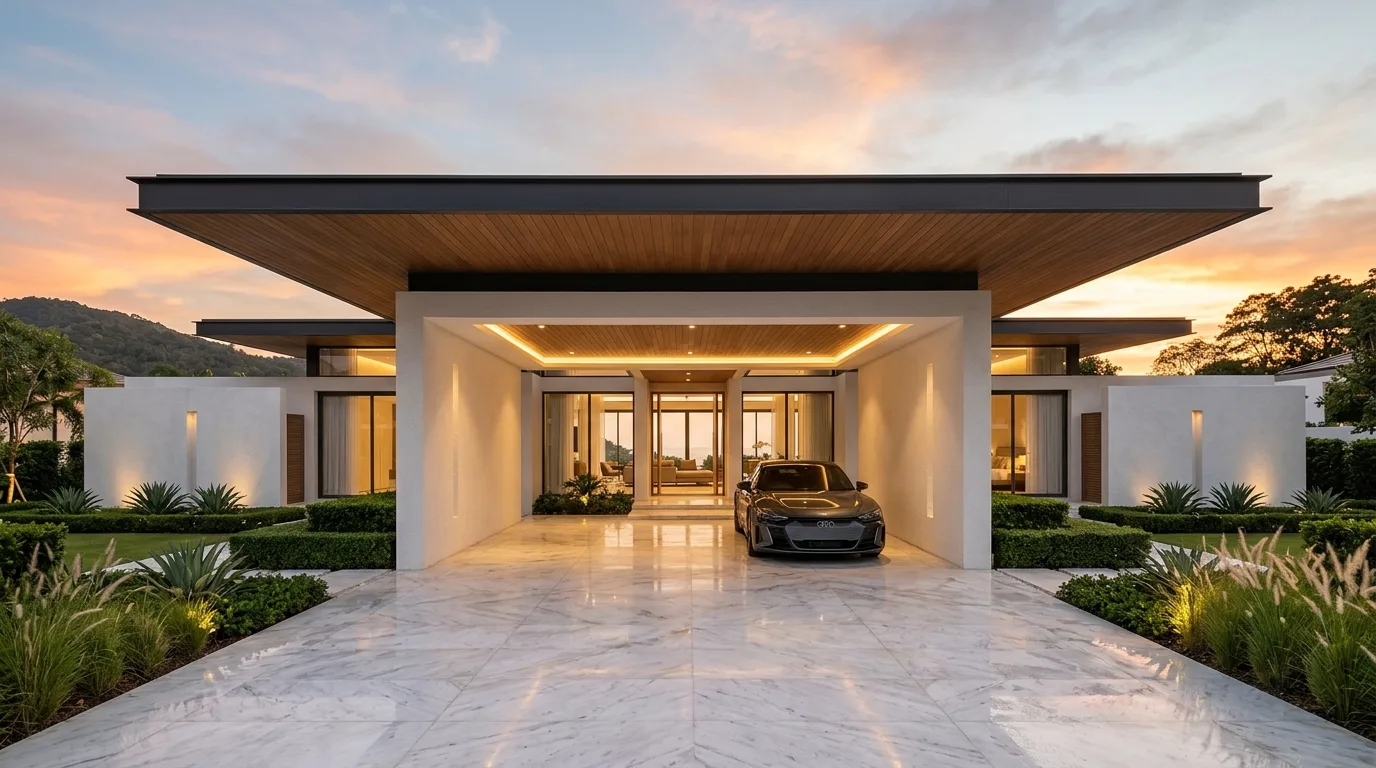
Idea 10
Stone and timber details adding richness to the frontage
Material contrast can elevate a front carport quickly, especially when stone and timber add depth to a simpler structural frame. Those richer surfaces help the frontage feel more substantial and tie the carport into the broader curb-appeal story of the home.
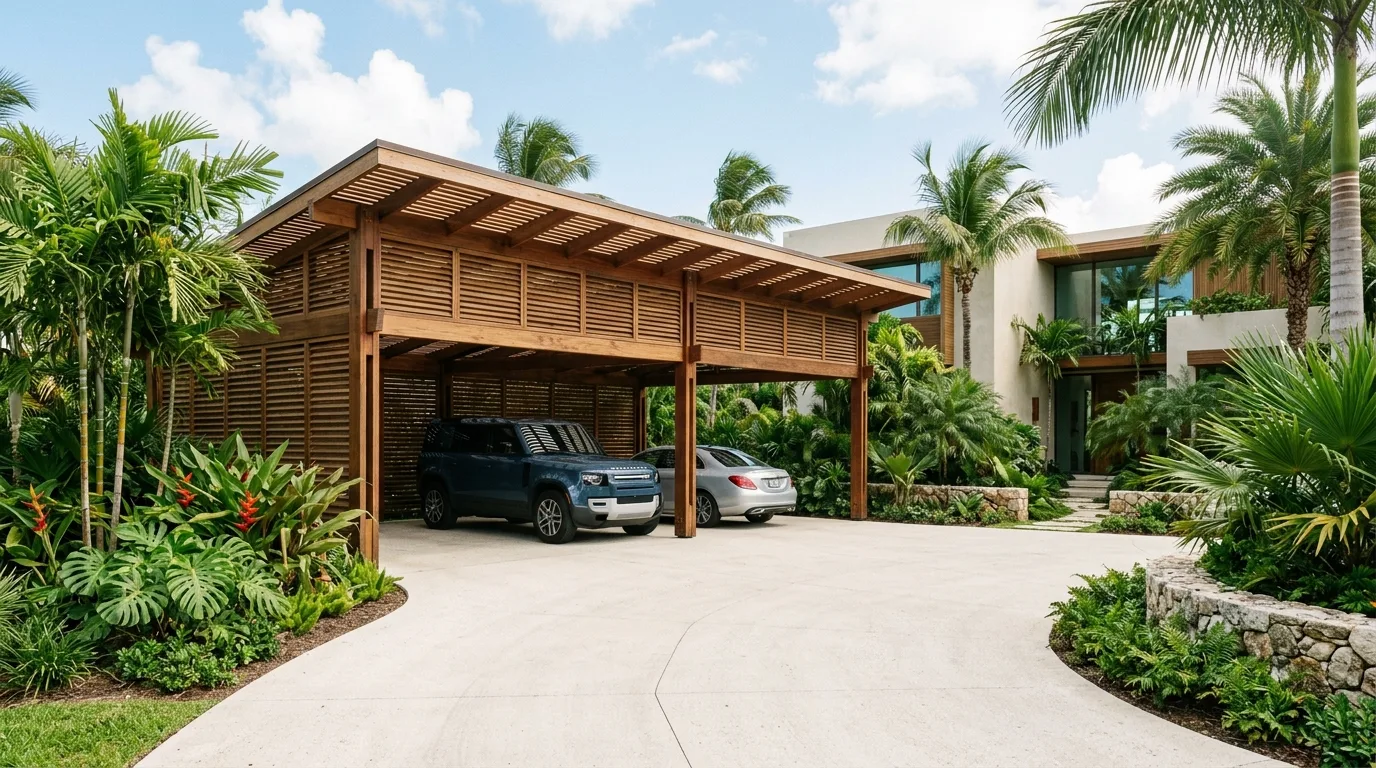
Idea 11
A double-car layout that still feels visually light
Larger front carports need careful proportion so they protect enough space without making the facade feel bulky. Slim supports, clean rooflines, and open side views help a double-car setup remain elegant and balanced from the street.
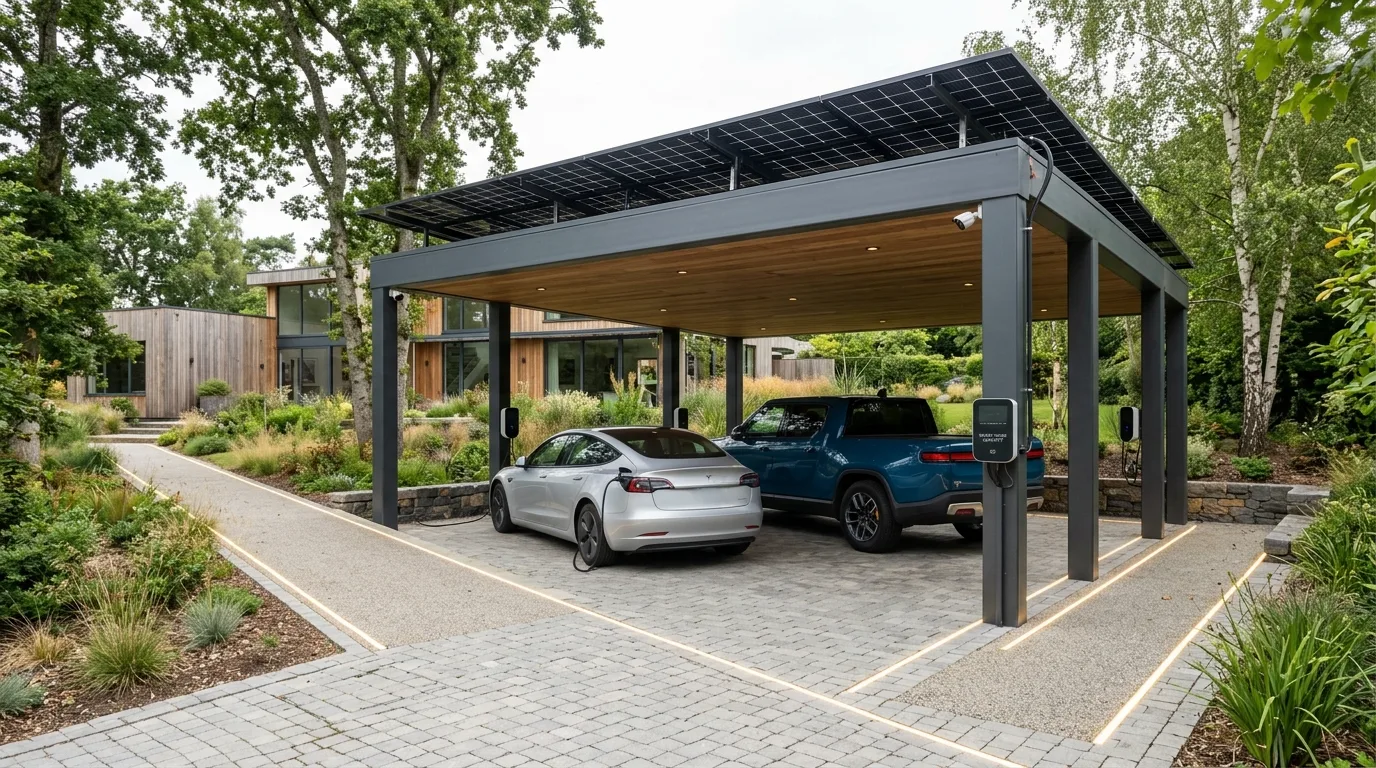
Idea 12
A carport lit warmly for better evening curb appeal
Lighting can make a front carport feel far more intentional after dark, turning a practical structure into part of the nighttime curb appeal. Warm fixtures under the roofline help the entrance feel safer, richer, and more welcoming overall.
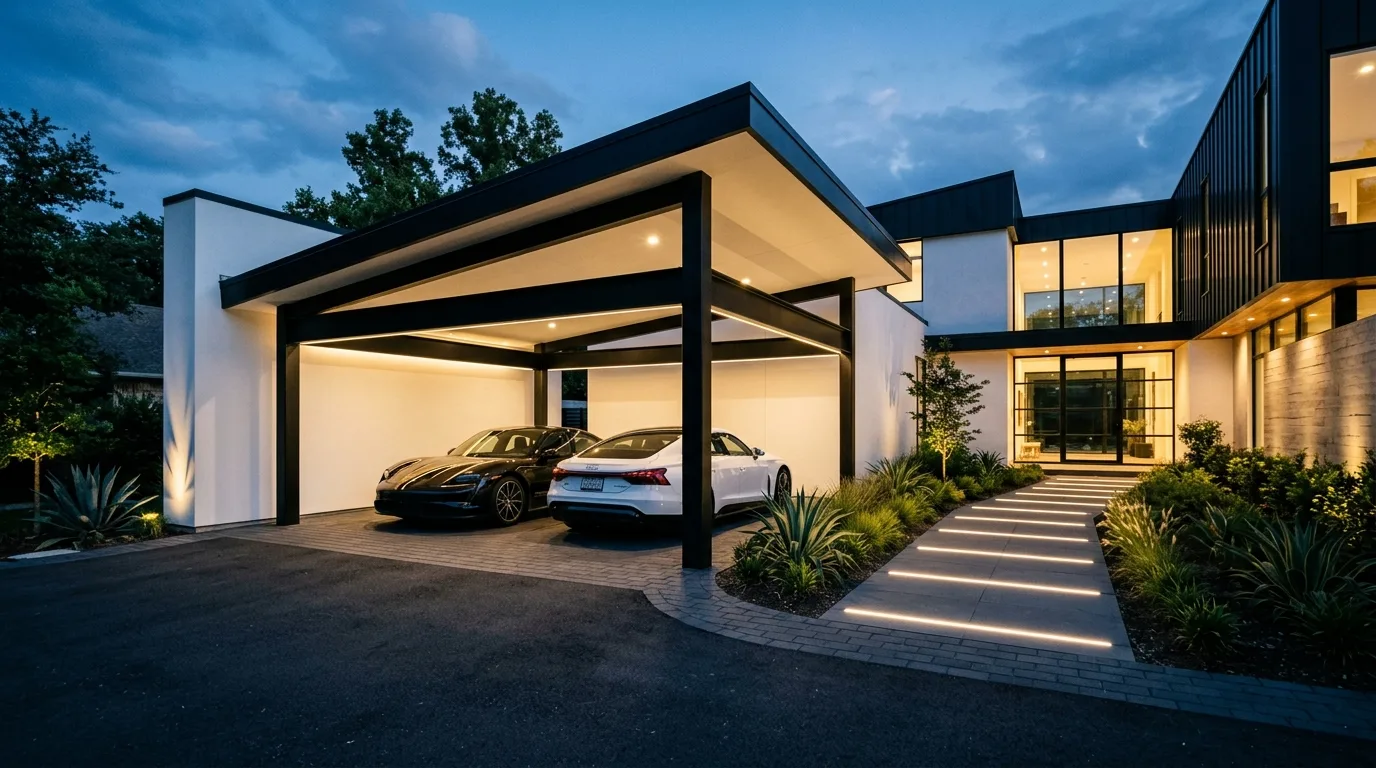
Idea 13
A low-profile modern carport paired with simple landscaping
Sometimes the most stylish carport is the one that does not ask for too much attention. A low-profile structure with simple landscaping keeps the frontage calm and contemporary, allowing the carport to support the home rather than compete with it.
Read next on Saw & Sprout
Edible Gardens
13 Clever Tomato Trellis Gardens for a Bountiful Harvest
Small-Space Growing
14 Space-Saving Small Vegetable Gardens for Urban GrowersFrequently asked questions
What makes a front carport look modern?
Clean rooflines, slim supports, integrated materials, and a layout that matches the home's architecture usually create the most modern look.
How do you keep a carport from hurting curb appeal?
Match it to the house, add warm materials or good landscaping, and avoid bulky proportions that overpower the facade.
Should front carports include screening or planting?
Often yes. Screening and soft landscaping can make a carport feel cleaner, more private, and better integrated into the home's frontage.