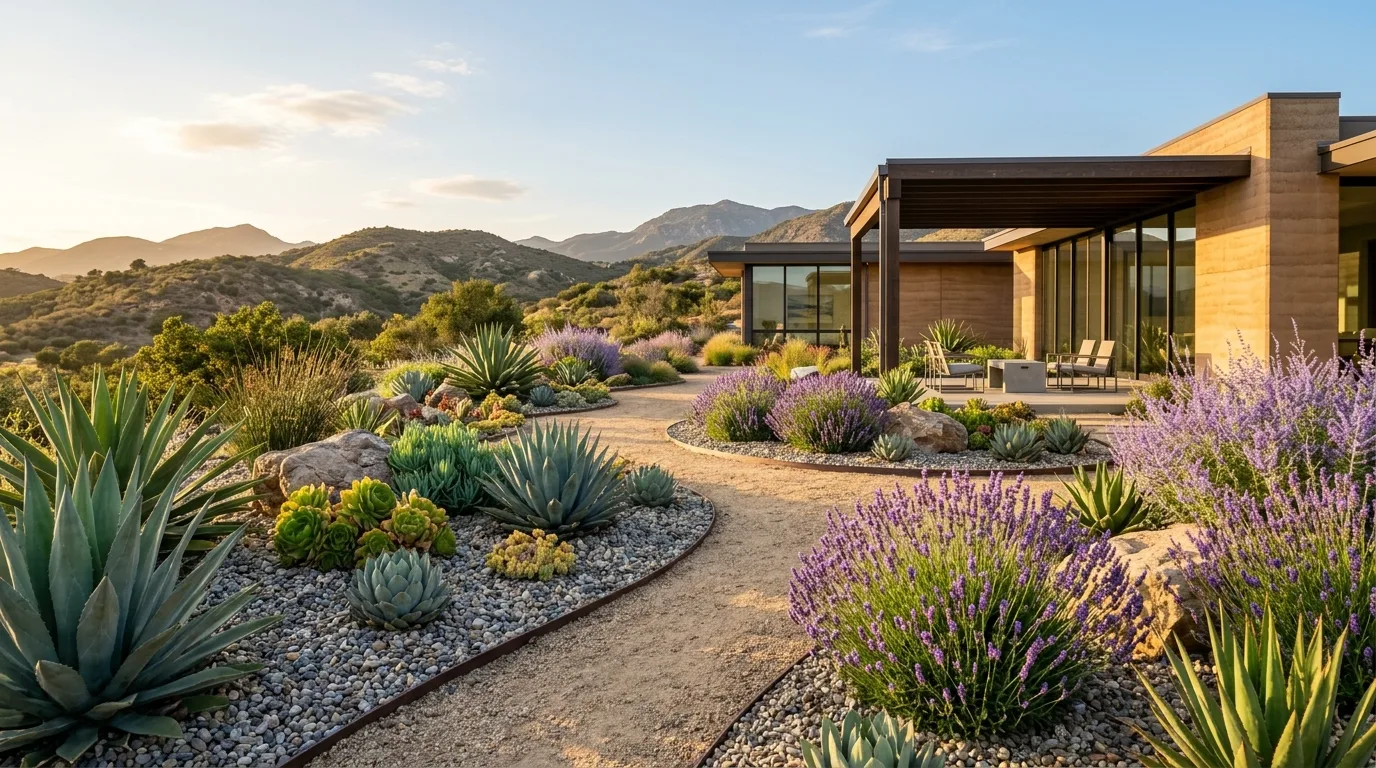
California landscape design feels best when it works with the climate instead of fighting it. Drought-tolerant planting, gravel, native textures, and breezy outdoor living spaces all help create gardens that feel naturally beautiful while using water more responsibly.
The look can shift from coastal and soft to desert-like and sculptural, but the strongest versions always balance resilience with atmosphere. Good low-water design is not just practical; it can also be relaxed, elegant, and deeply suited to the place.
These California landscape ideas explore ways to create outdoor spaces that feel airy, sunlit, and visually rich without depending on thirsty planting. Each one shows how structure, texture, and plant choice can come together for real drought-tolerant beauty.
Quick planning notes
Choose plants that genuinely fit the site conditions so the low-water strategy works in practice as well as in appearance.
Use texture, repetition, and layered forms to make drought-tolerant planting feel full rather than sparse.
Let hardscape materials support the regional mood, whether that means gravel, decomposed granite, stone, or warm-toned paving.
Think about shade and outdoor living early because comfort is a major part of why California gardens feel so successful.
Idea 1
A gravel and grass mix built around drought-tolerant structure
California landscape design often feels strongest when it embraces the climate directly, using gravel, structural grasses, and hardy planting to create beauty without pretending water is limitless. The result is breezy, textural, and naturally suited to long dry periods.
Idea 2
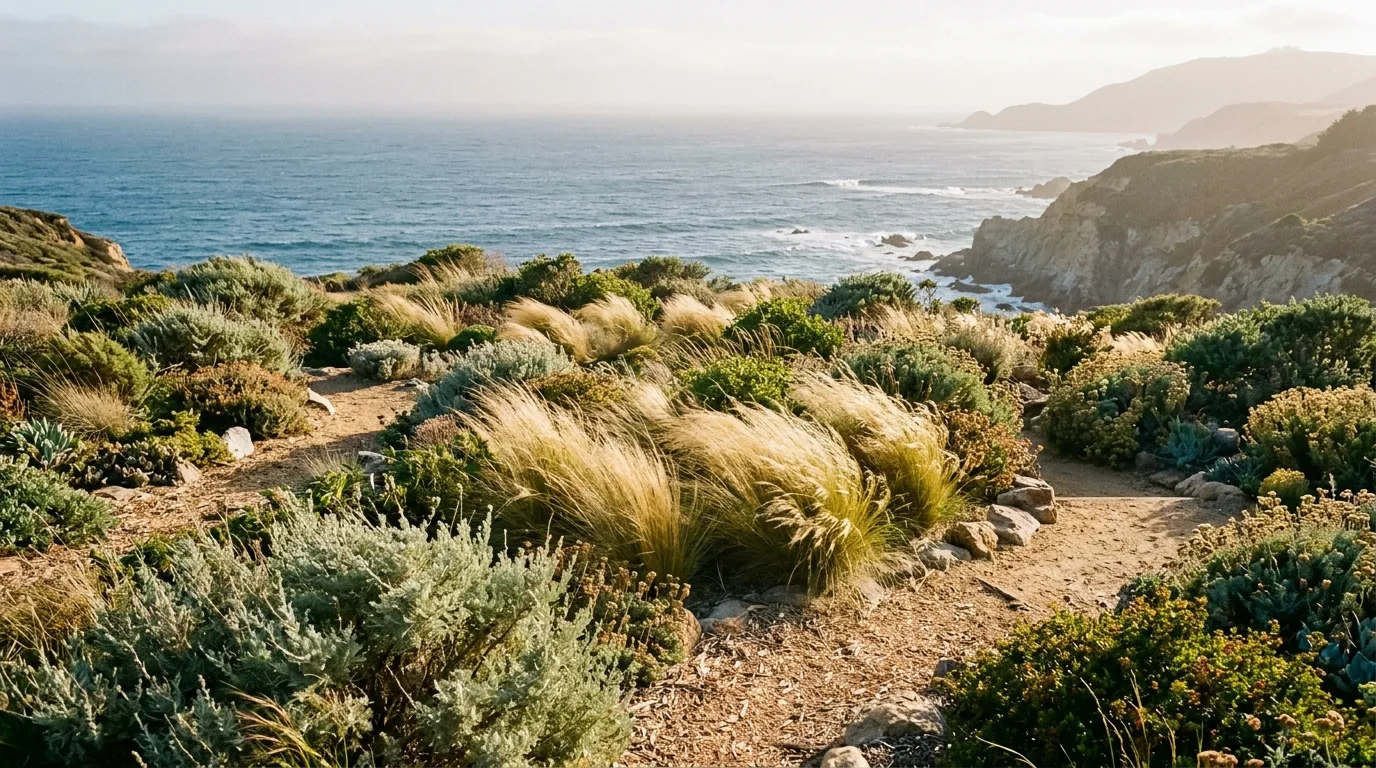
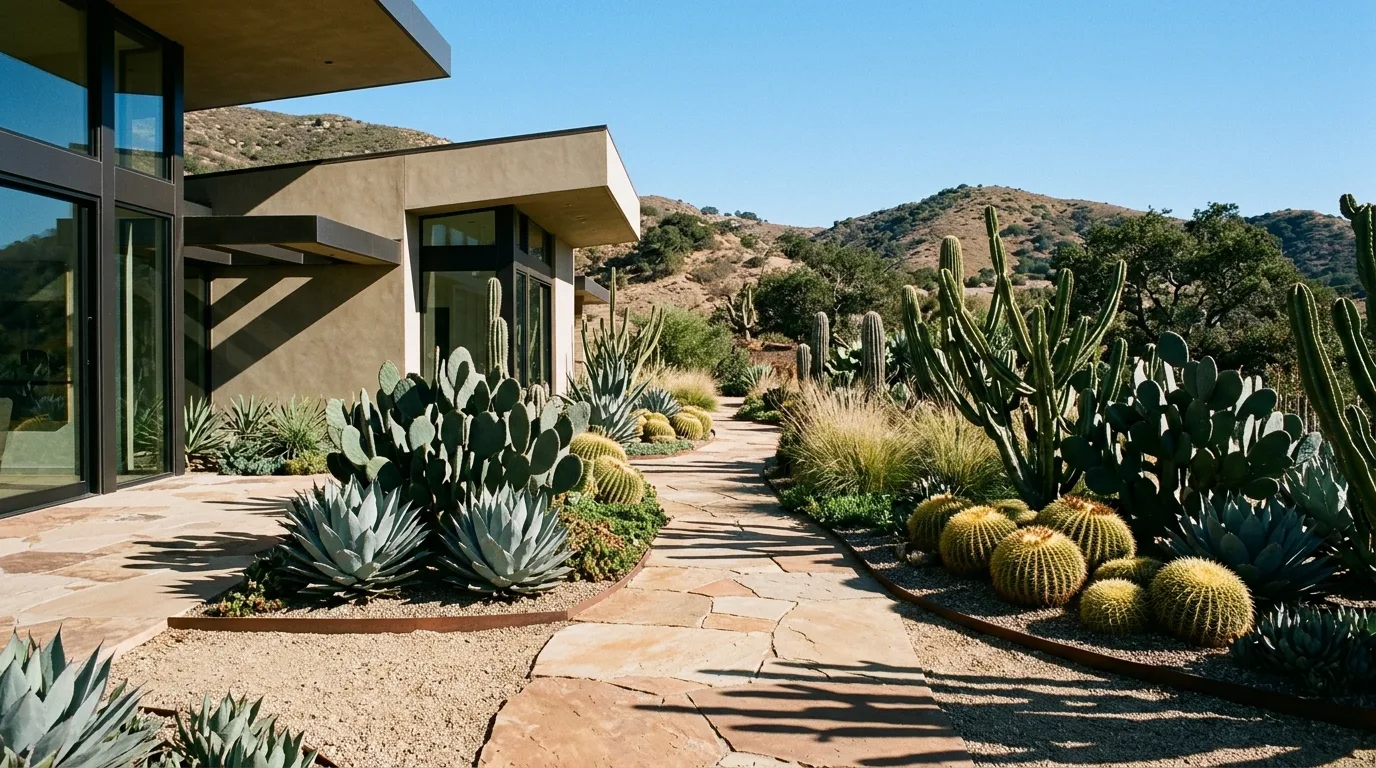
A front yard of sculptural agaves and warm decomposed granite
Agaves bring a clean sculptural quality that suits California gardens perfectly, especially when paired with warm granular groundcover that reflects light and keeps the palette sunbaked and relaxed. The combination feels modern, low-water, and visually confident.
Idea 3
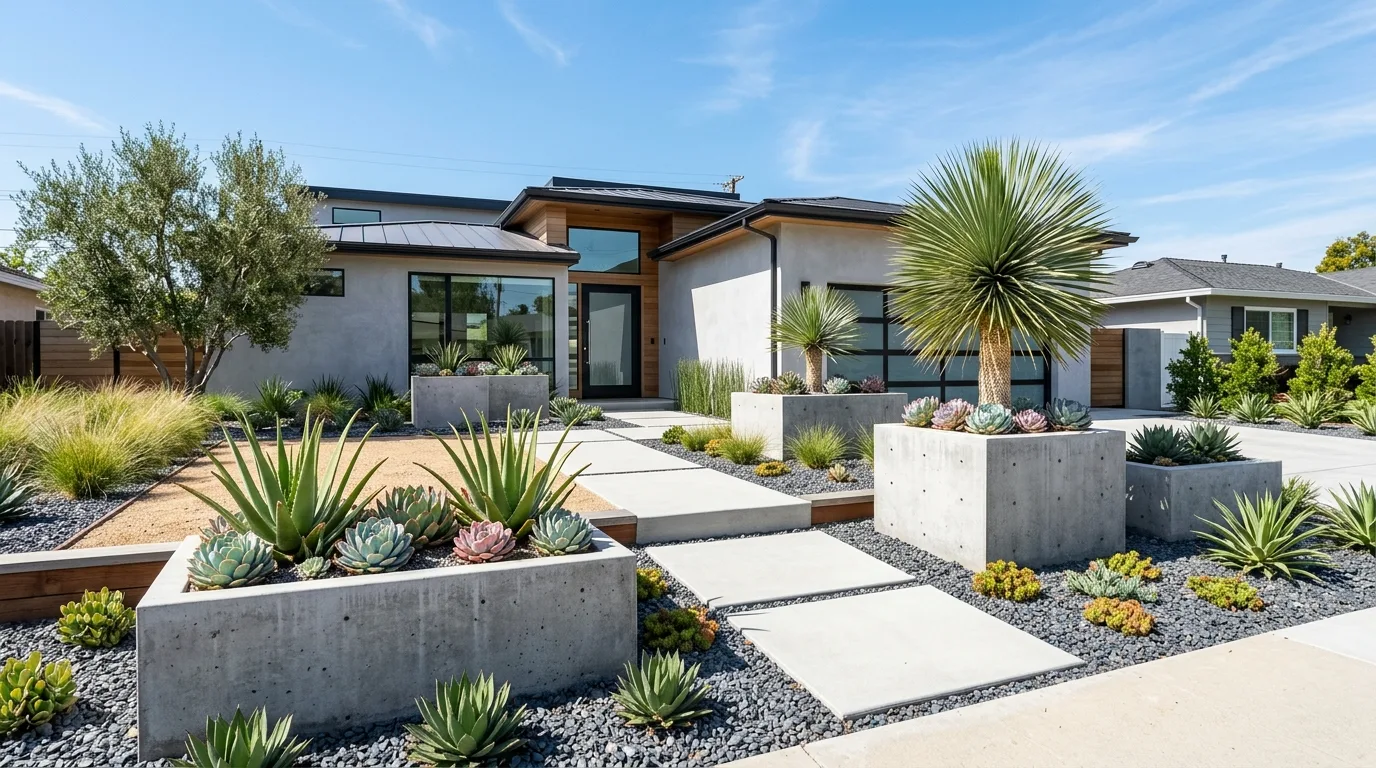
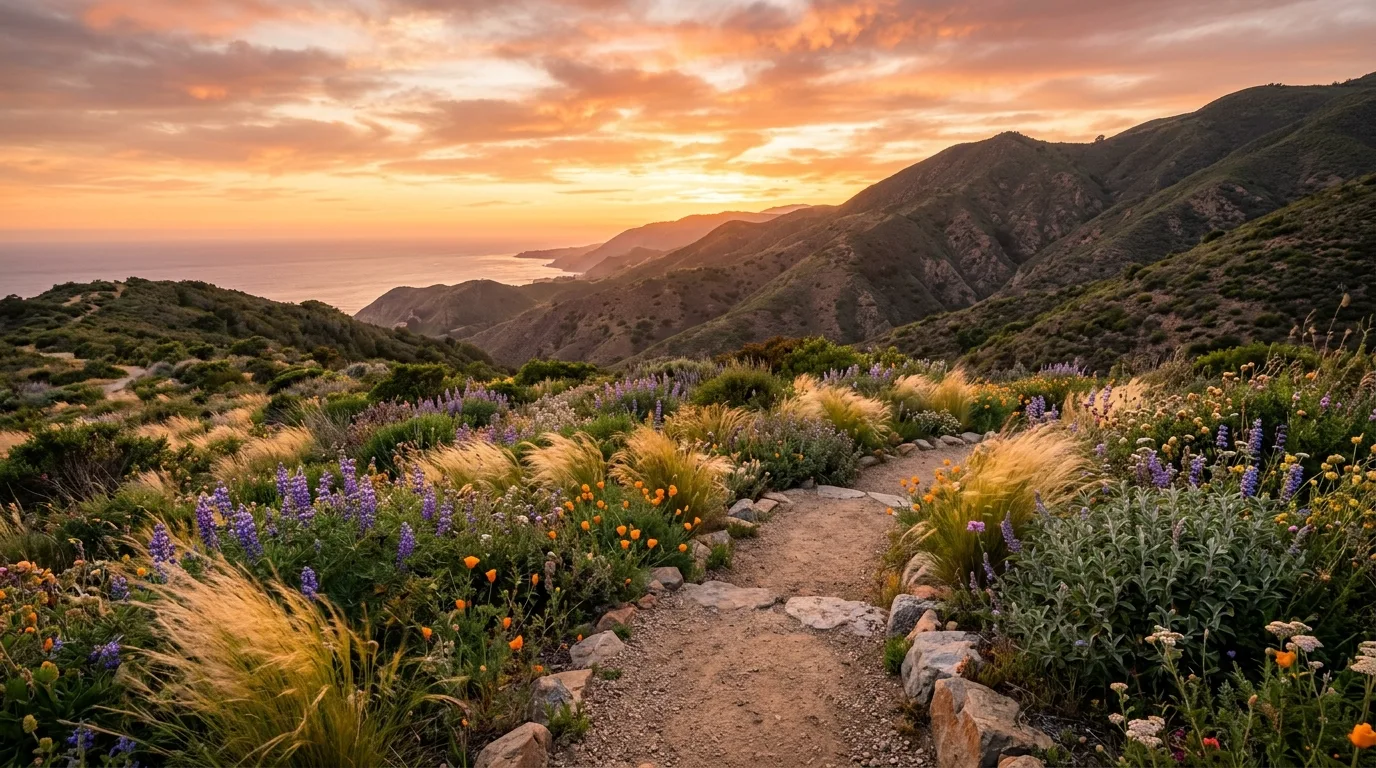
A soft meadow planting that moves beautifully in coastal light
Not every drought-tolerant garden has to feel sharp or desert-like, and a meadow-inspired planting with airy grasses and light bloom can create a softer California mood that still respects water limits. The movement is what makes it feel especially breezy and alive.
Idea 4
A courtyard lounge shaded by trees and hardy underplanting
California outdoor living works best when the planting supports comfort as much as appearance, which is why a lightly shaded lounge with resilient ground-level planting feels so successful. The garden becomes both beautiful and genuinely usable through hot weather.
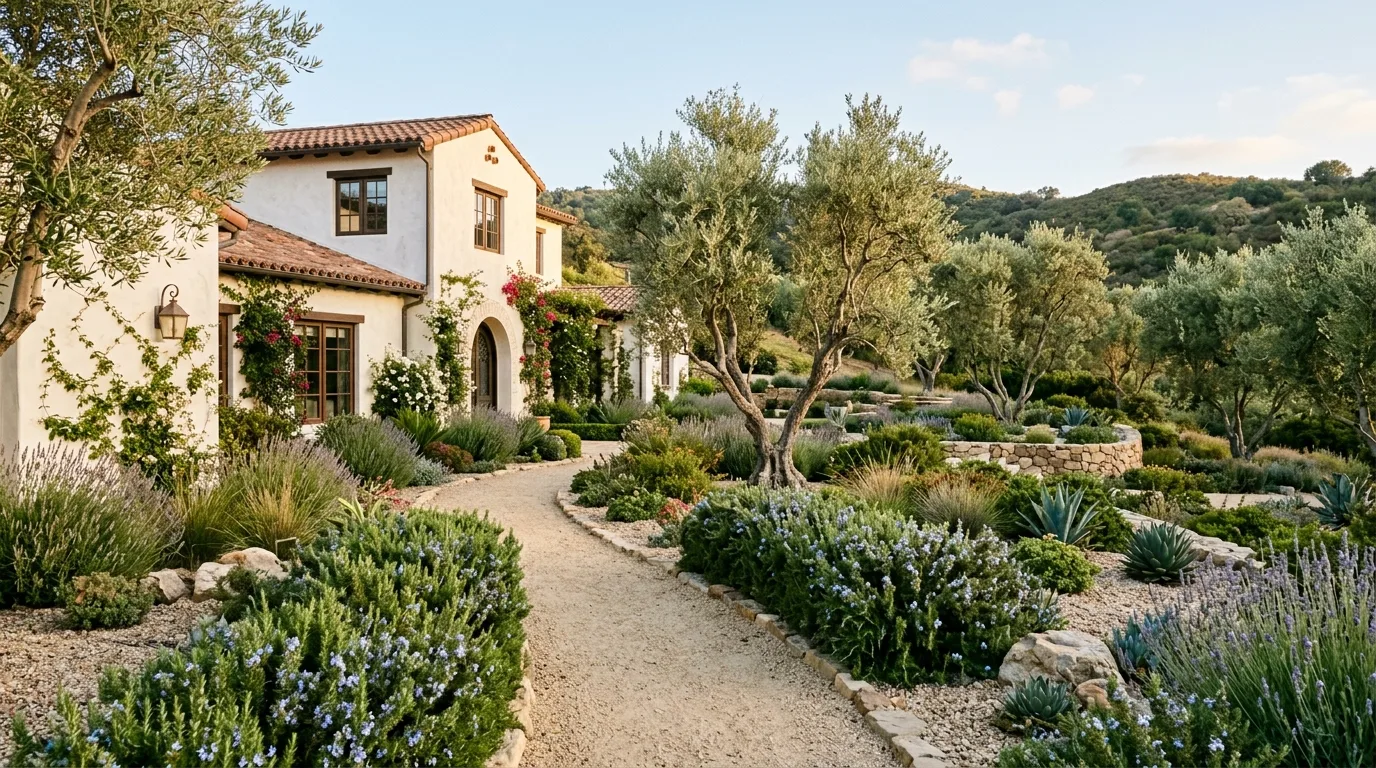
Idea 5
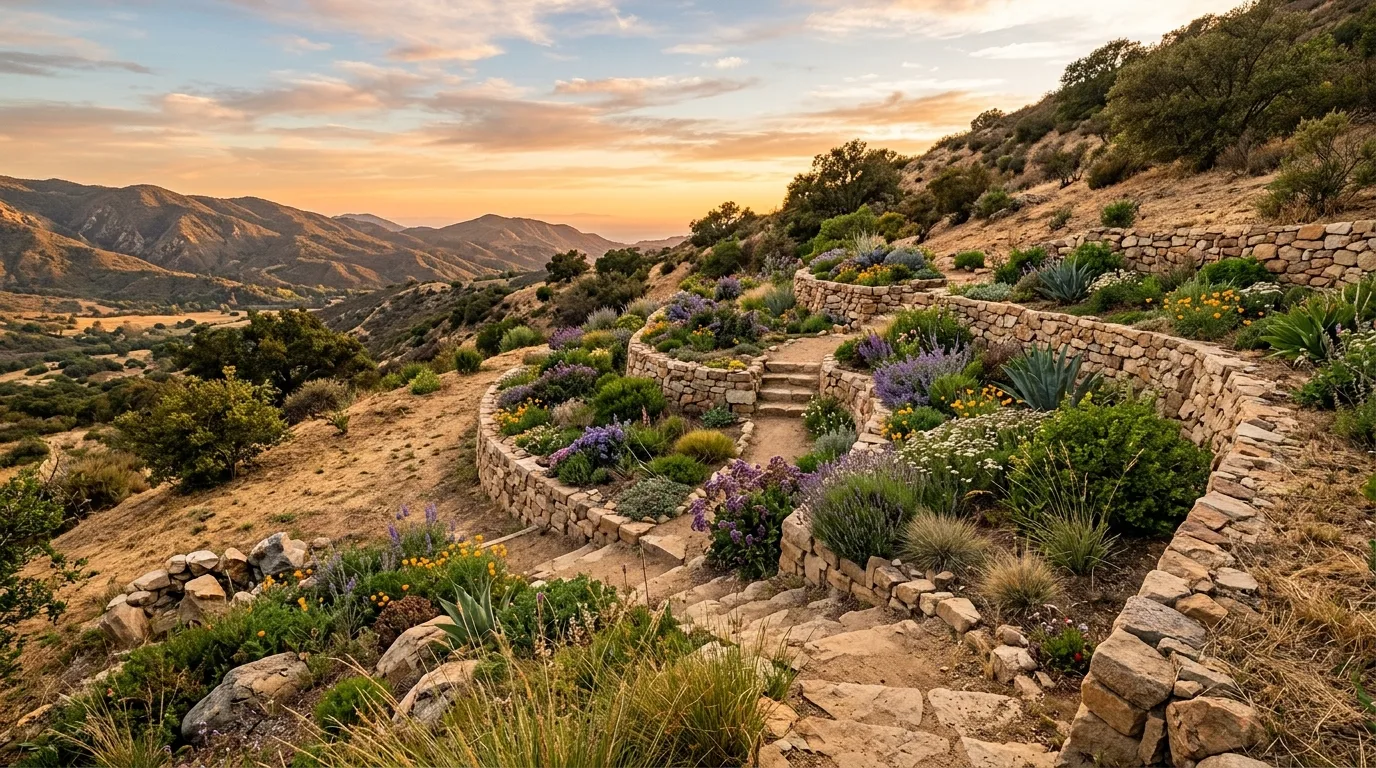
A hillside scheme using layered natives for erosion-friendly beauty
Sloped sites need planting that can hold the land while still looking intentional, and layered native species are often the smartest answer because they suit the conditions and create a richer, more rooted appearance. The beauty comes from matching the place rather than fighting it.
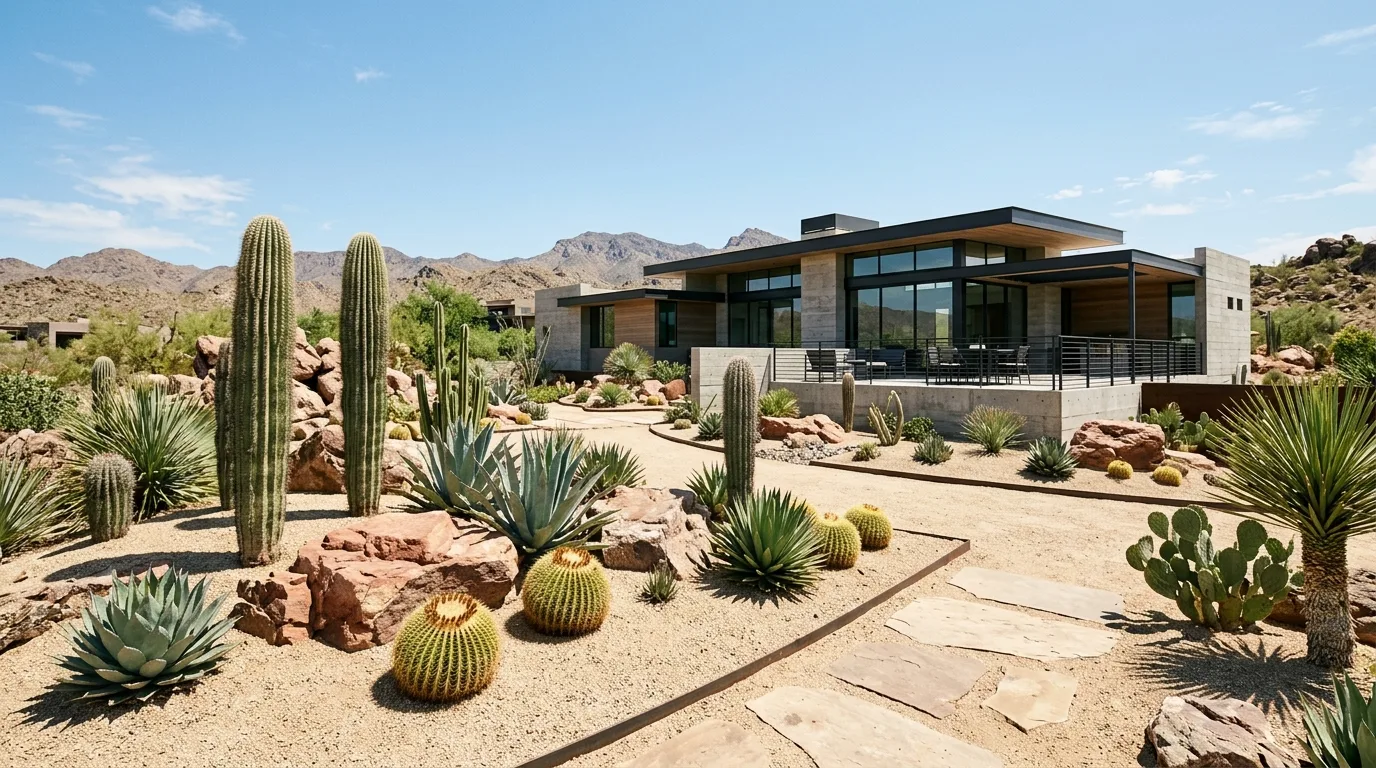
Idea 6
A poolside garden with palms, stone, and restrained bloom
Pool landscapes in California often feel best when the palette is disciplined and the planting shapes are bold enough to stand up to expanses of paving and reflected light. Palms, stone, and carefully chosen flowers create a resort-like mood without asking for lush water-heavy beds.
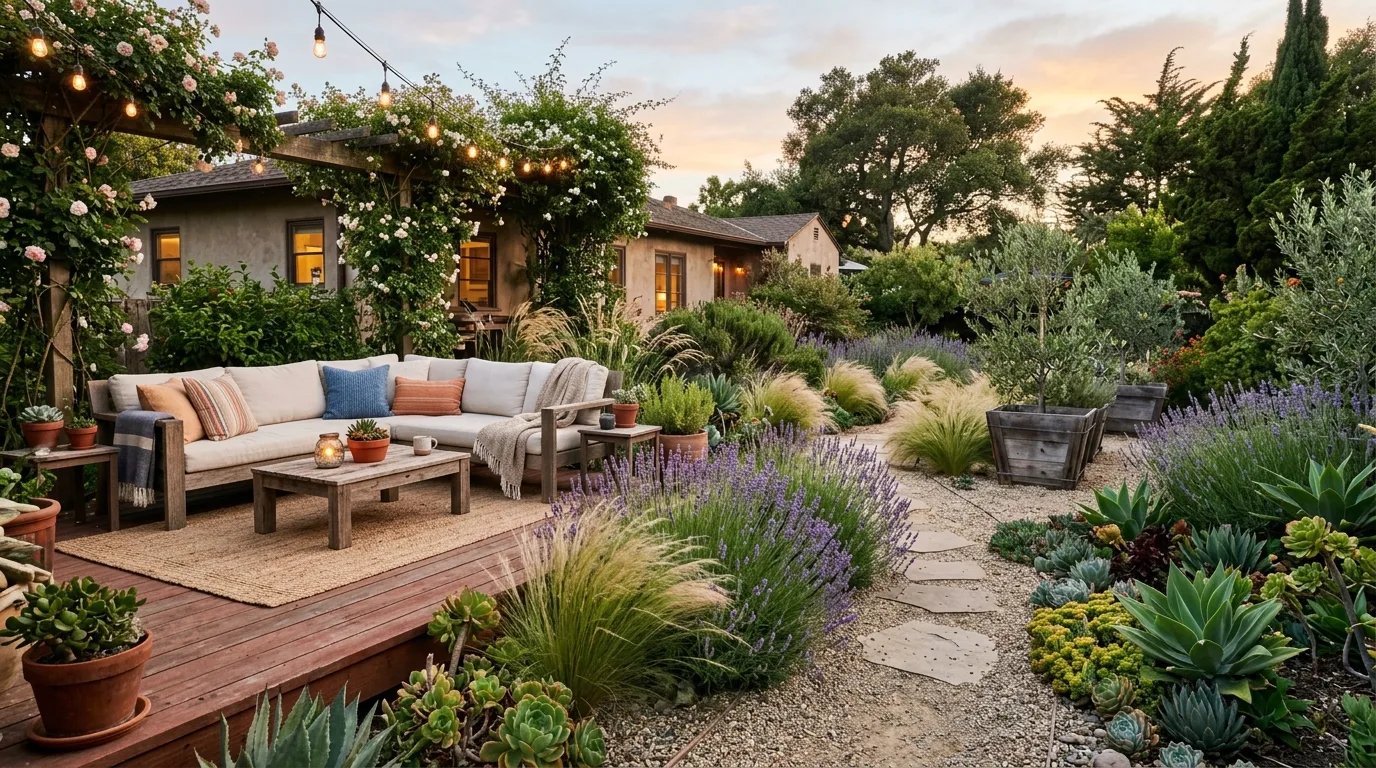
Idea 7
A modern entry softened by succulents and low silver planting
Succulents can feel surprisingly welcoming when they are combined with softer low planting rather than used alone, and that mix is especially effective at a front entry where architecture can otherwise dominate. The contrast creates a cleaner but still livable first impression.
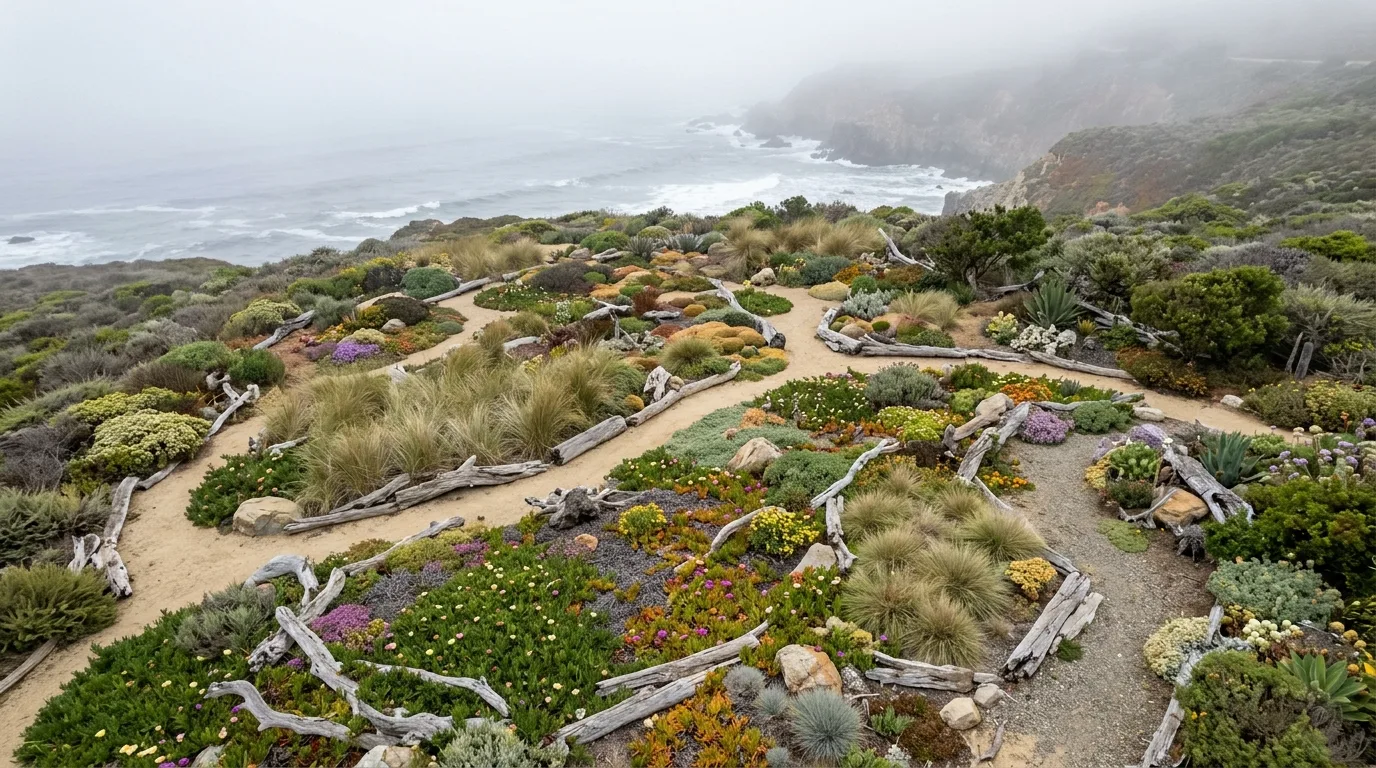
Idea 8
A backyard dining zone woven into aromatic Mediterranean plants
California gardens often borrow successfully from Mediterranean planting because the fragrance, drought tolerance, and loose form suit both the climate and the lifestyle. Around a dining area, that combination creates an outdoor room that feels relaxed, useful, and naturally beautiful.
Idea 9
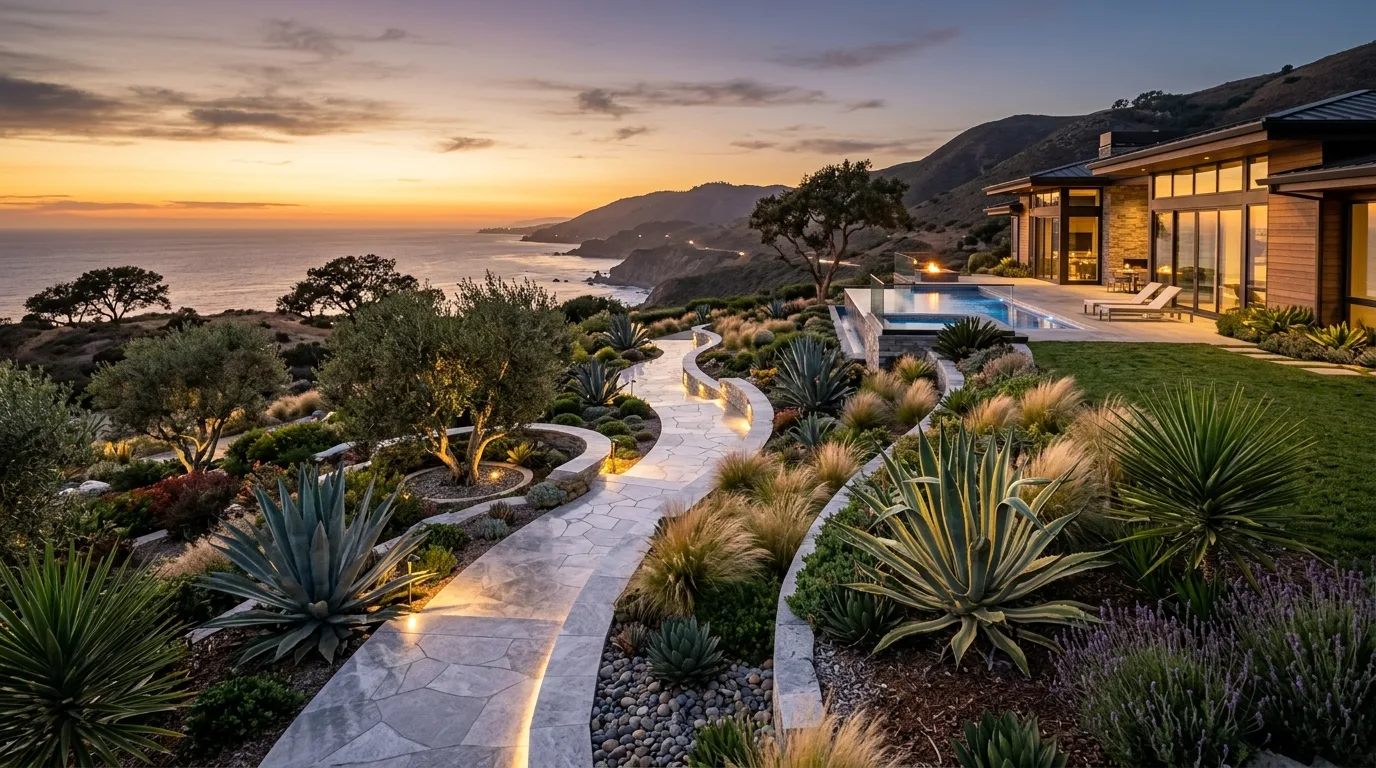
A narrow side yard turned into a dry garden passage
Side yards can become more interesting when they are treated as simple procession spaces rather than leftover strips, and a dry garden palette is often the easiest way to do that in California conditions. Gravel, repeated planting, and filtered light make the passage feel composed and calm.
Idea 10
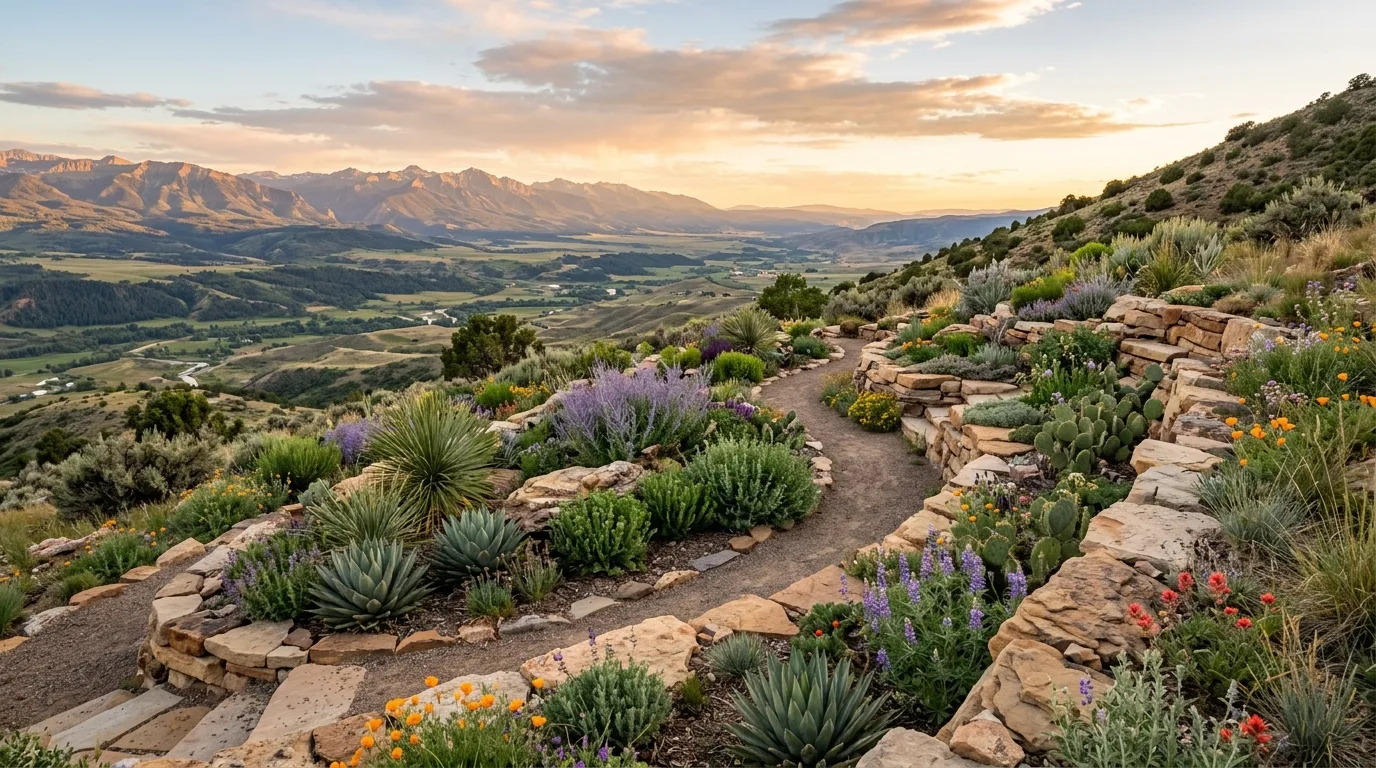
A cactus and bloom pairing that feels vivid but controlled
California drought-tolerant landscapes do not have to be colorless, and pairing cacti with carefully chosen flowering accents can create brightness without sacrificing resilience. The key is letting strong forms carry most of the design while bloom provides punctuation.
Idea 11
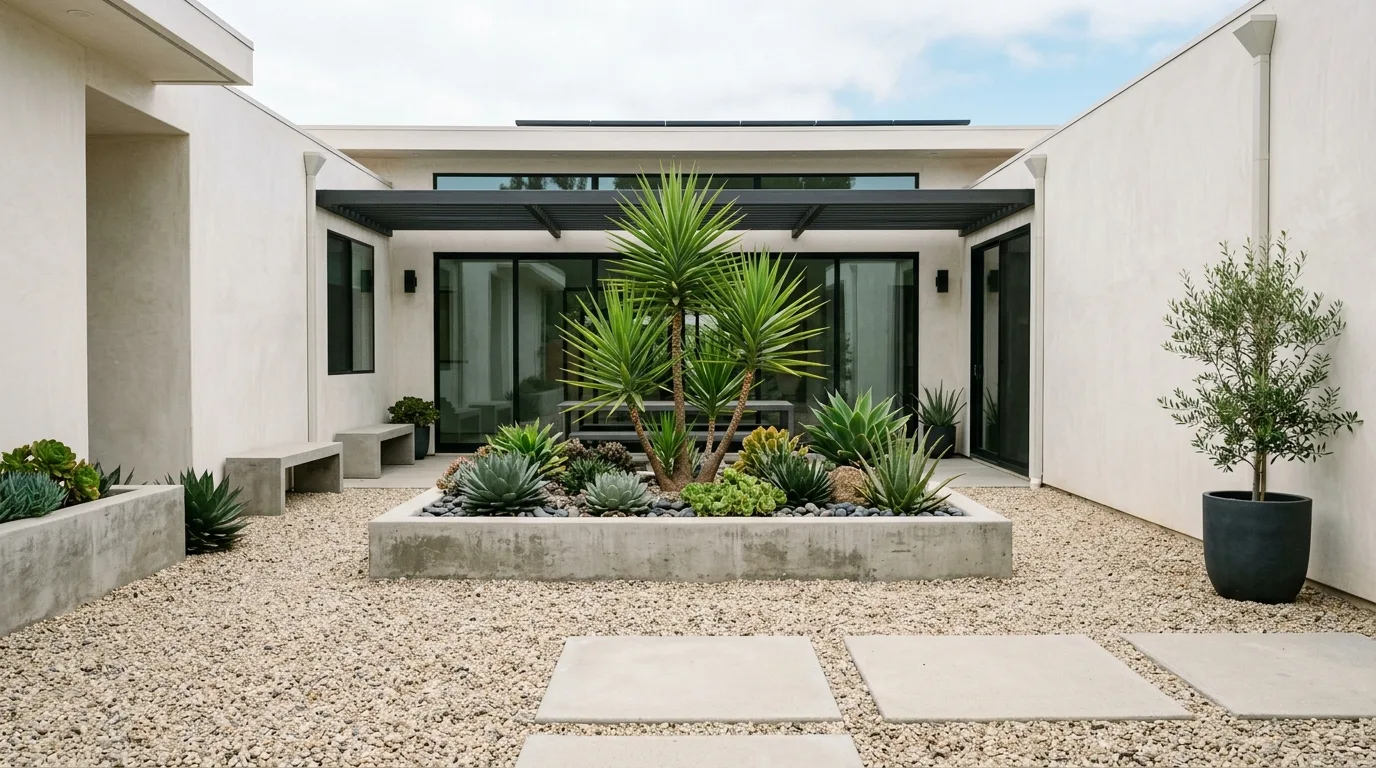
A relaxed coastal palette of sage, sand, and pale green
Nearer the coast, a softer color story often feels more appropriate than desert heat tones, and pale foliage with sandy surfaces creates a calm breezy look that still performs well with limited water. The whole garden feels effortless because the palette stays close to the environment.
Idea 12
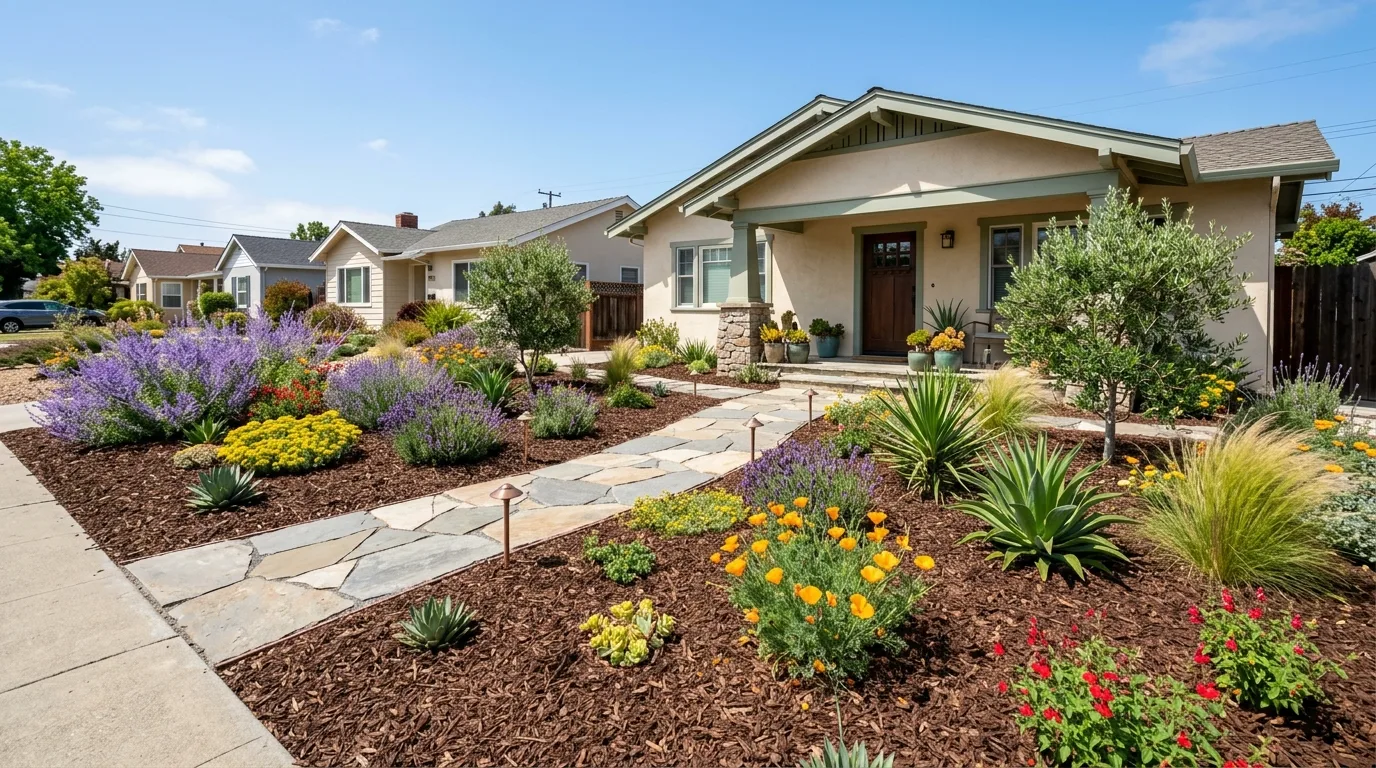
A fire-wise planting layout that still feels inviting
Practical concerns do not have to remove beauty from a California landscape, and fire-wise design can still look welcoming when spacing, material transitions, and plant choices are handled with care. Good structure allows the garden to feel safe, attractive, and thoughtfully composed all at once.
Idea 13
A courtyard fountain surrounded by drought-friendly texture
Water features can still belong in low-water gardens when they are used selectively and surrounded by planting that keeps the overall landscape climate-conscious. In a California courtyard, that contrast between a small fountain and dry textures can feel especially refined.
Idea 14
A layered front garden that makes low-water planting feel lush
The strongest drought-tolerant landscapes avoid looking sparse by relying on layering, repetition, and a smart range of plant forms that create fullness without high irrigation demands. When done well, the front yard feels abundant, sunlit, and entirely in tune with its California setting.
Read next on Saw & Sprout
Edible Gardens
13 Clever Tomato Trellis Gardens for a Bountiful Harvest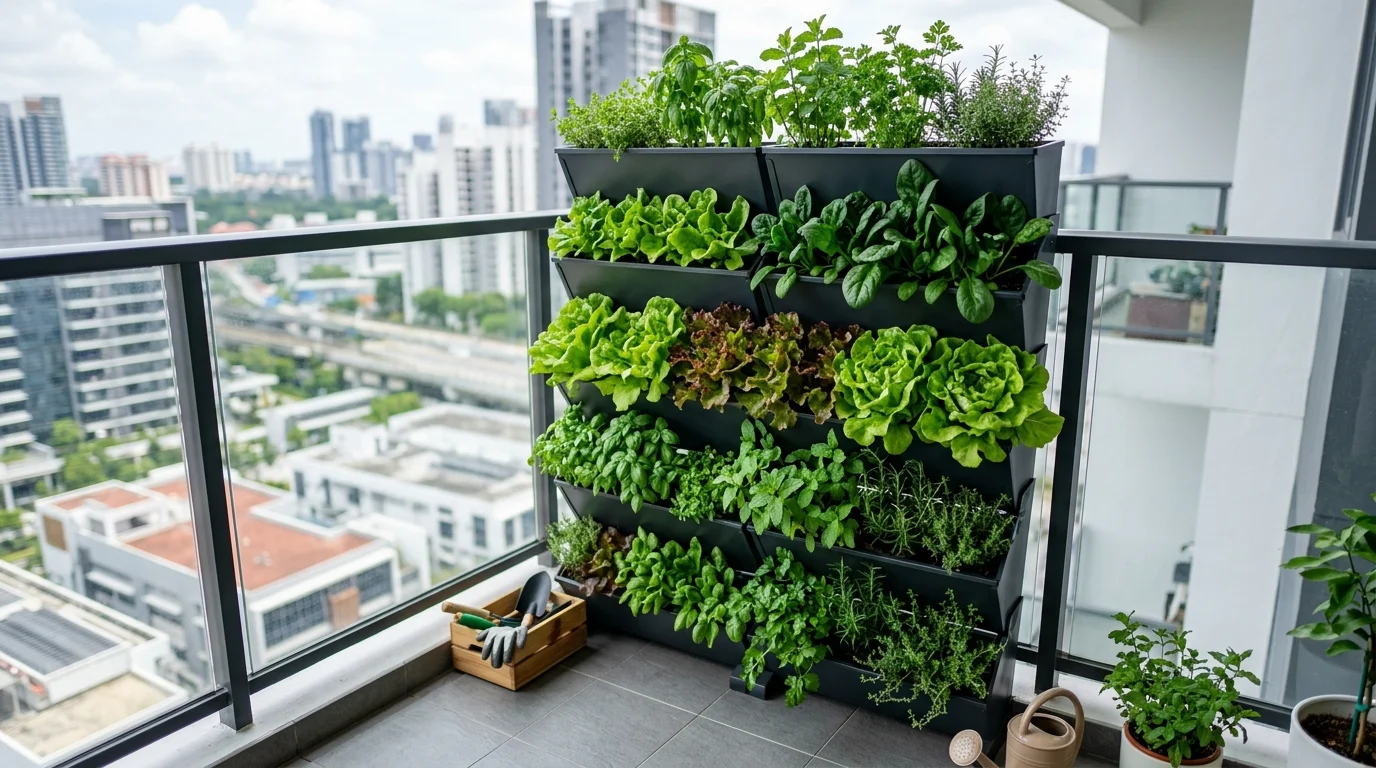
Small-Space Growing
14 Space-Saving Small Vegetable Gardens for Urban GrowersFrequently asked questions
What defines a California landscape style?
It often combines drought-tolerant planting, relaxed outdoor living, strong texture, and a palette that suits bright sun and dry conditions.
Can drought-tolerant landscaping still look lush?
Yes. Layering, repetition, varied plant forms, and smart material choices can make low-water gardens feel rich and inviting.
Which plants suit California-style low-water gardens?
Agaves, grasses, succulents, Mediterranean herbs, and many regional native plants are commonly used because they handle the conditions well.