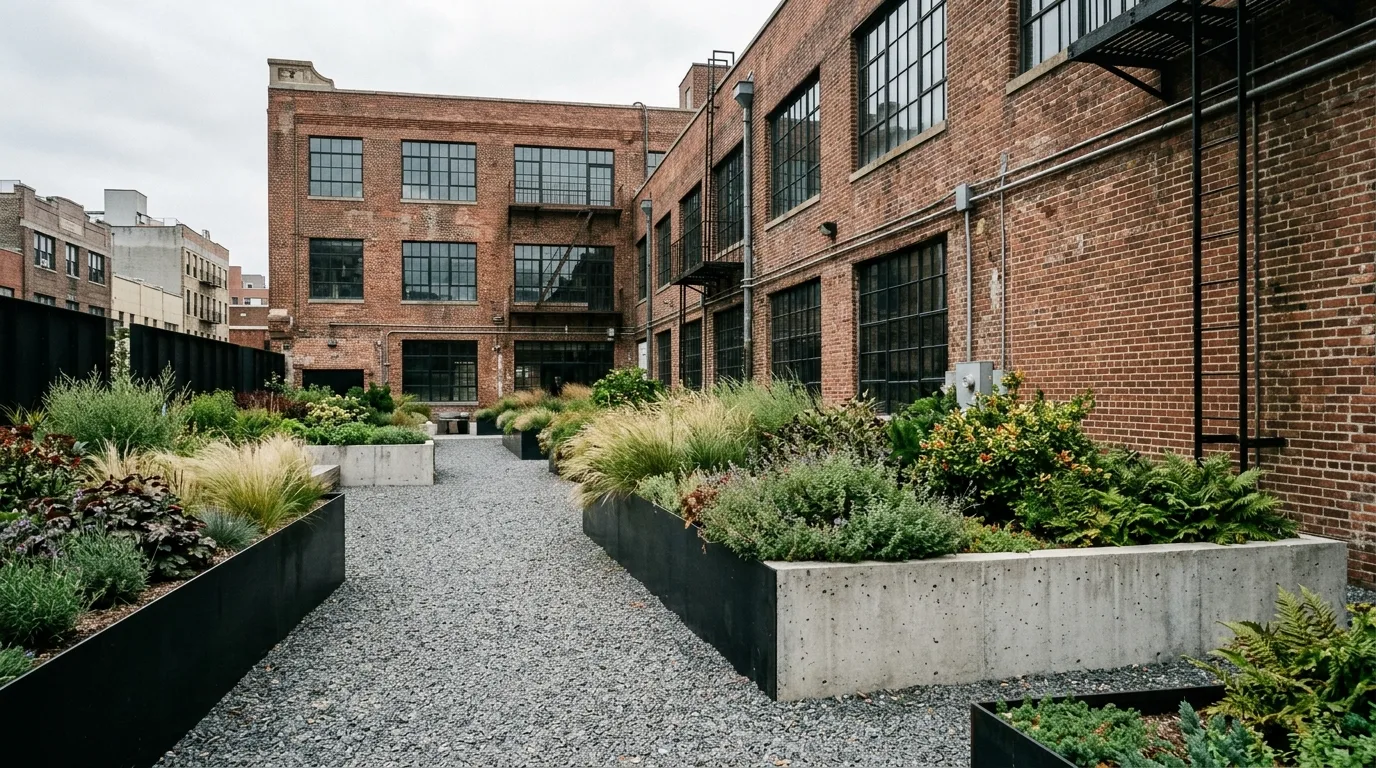
Industrial landscape design works when raw materials stay honest and visible, while the planting is used just enough to soften the scene without erasing its urban edge.
Concrete, brick, gravel, steel, mesh, and disciplined lighting can turn an outdoor space into something that feels loft-inspired, textural, and highly intentional.
These industrial landscape ideas show how courtyards, patios, side yards, rooftops, and compact city gardens can all carry that edgy style while still feeling usable and inviting.
Quick planning notes
Choose a small set of strong materials so the space feels coherent and not like a random collection of rough finishes.
Use planting as contrast rather than camouflage because the industrial mood depends on keeping the hard materials legible.
Bring in warmth through fire, lighting, or timber so the garden stays livable and not overly severe.
Keep layouts crisp and repeated where possible because order helps raw materials look more elevated.
Idea 1
A steel-edged gravel yard with sculptural grasses and concrete
Industrial landscapes feel strongest when they celebrate raw materials openly, and steel edging against gravel and concrete gives the planting a sharp framework that looks purposeful rather than accidental. The whole yard reads as urban, textural, and confident.
Idea 2
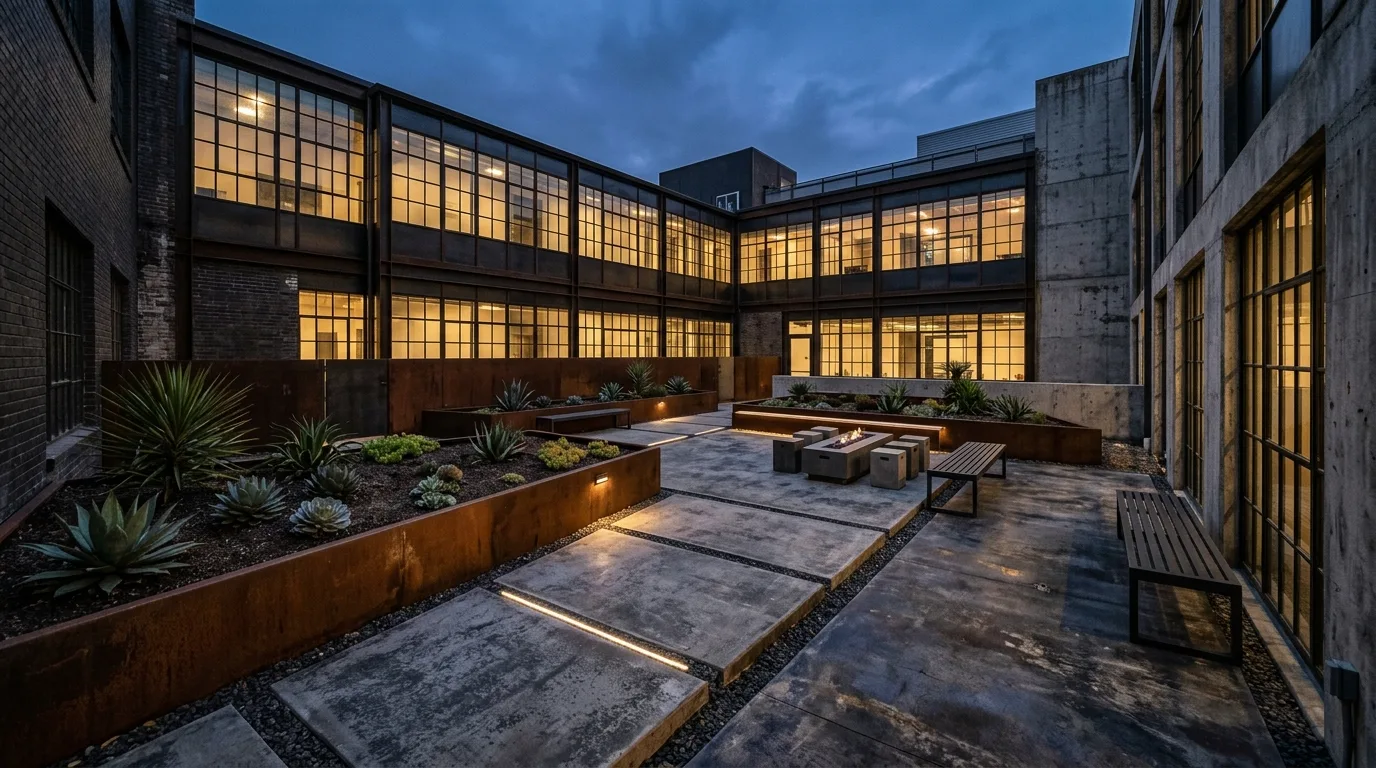
A brick-walled courtyard softened by black planters and olive trees
Old masonry and cleaner industrial details can work beautifully together because the roughness of brick gains new structure when paired with disciplined containers and upright greenery. The space feels edgy, but still warm enough to linger in.
Idea 3
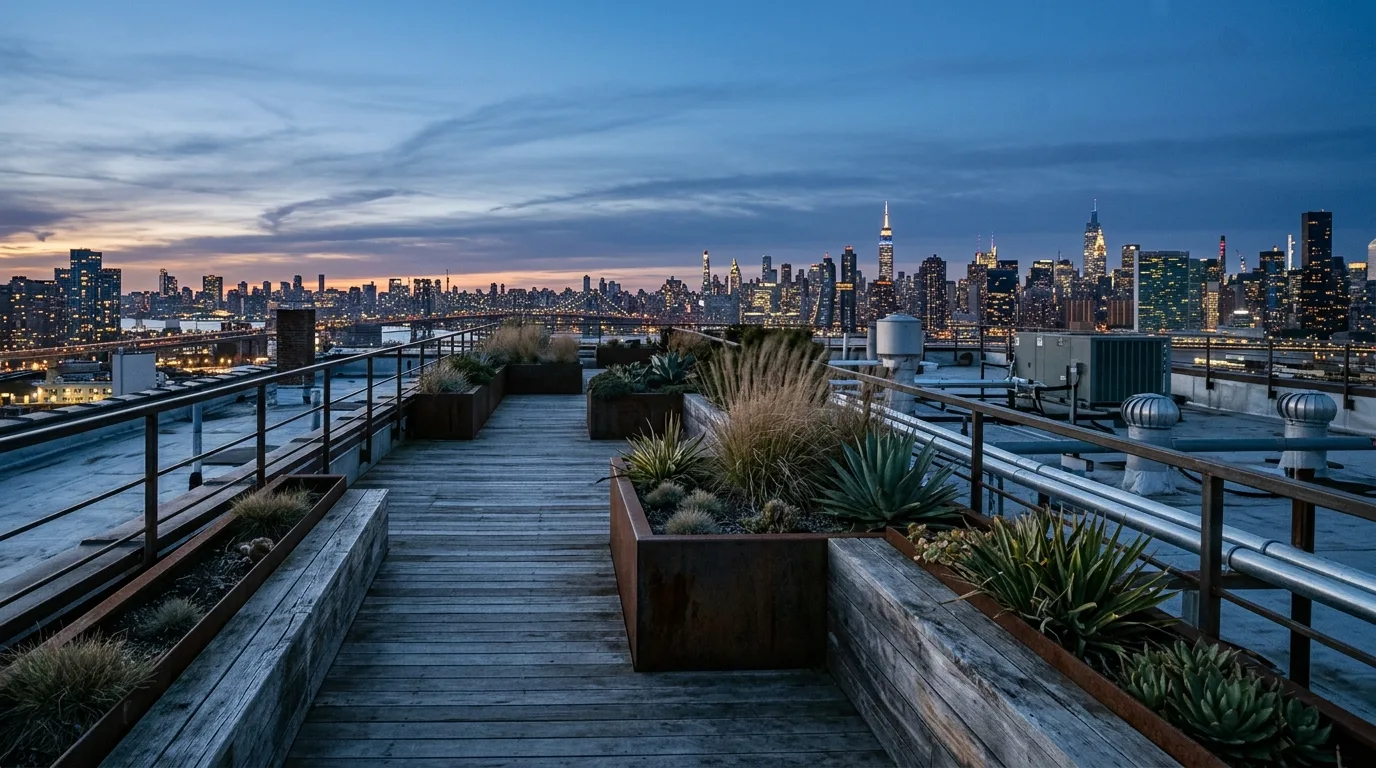
A loft-style patio with corten screens and sparse planting
Industrial design often becomes more convincing outdoors when the screening, paving, and planting all stay restrained enough to let material character lead the mood. Rusted steel and limited greenery create a gritty sophistication that feels deliberate and urban.
Idea 4
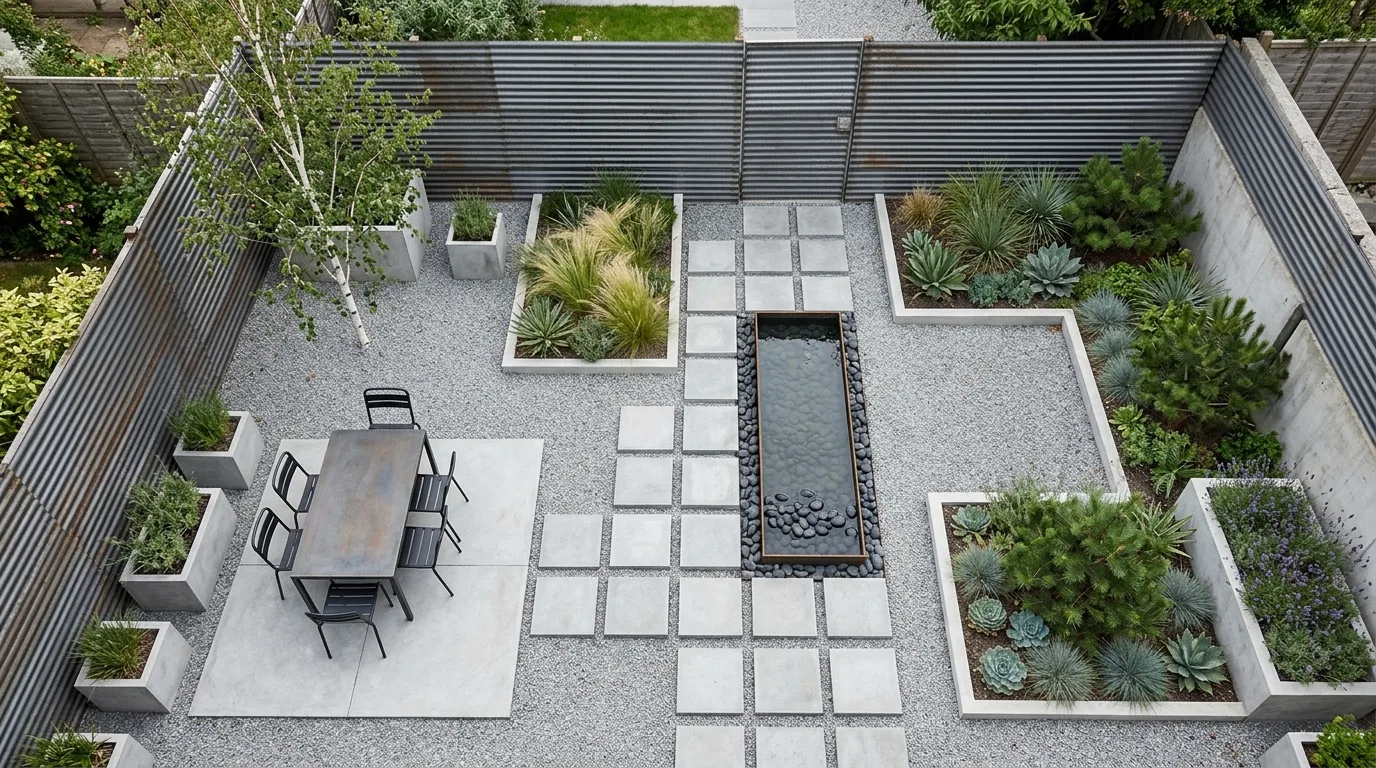
A side yard passage lit against dark metal and stone textures
Narrow urban spaces can feel unexpectedly dramatic when hard surfaces are treated like an exterior gallery, using light to pull out texture in metal, stone, and concrete. The planting remains minimal, but the atmosphere becomes much more memorable.
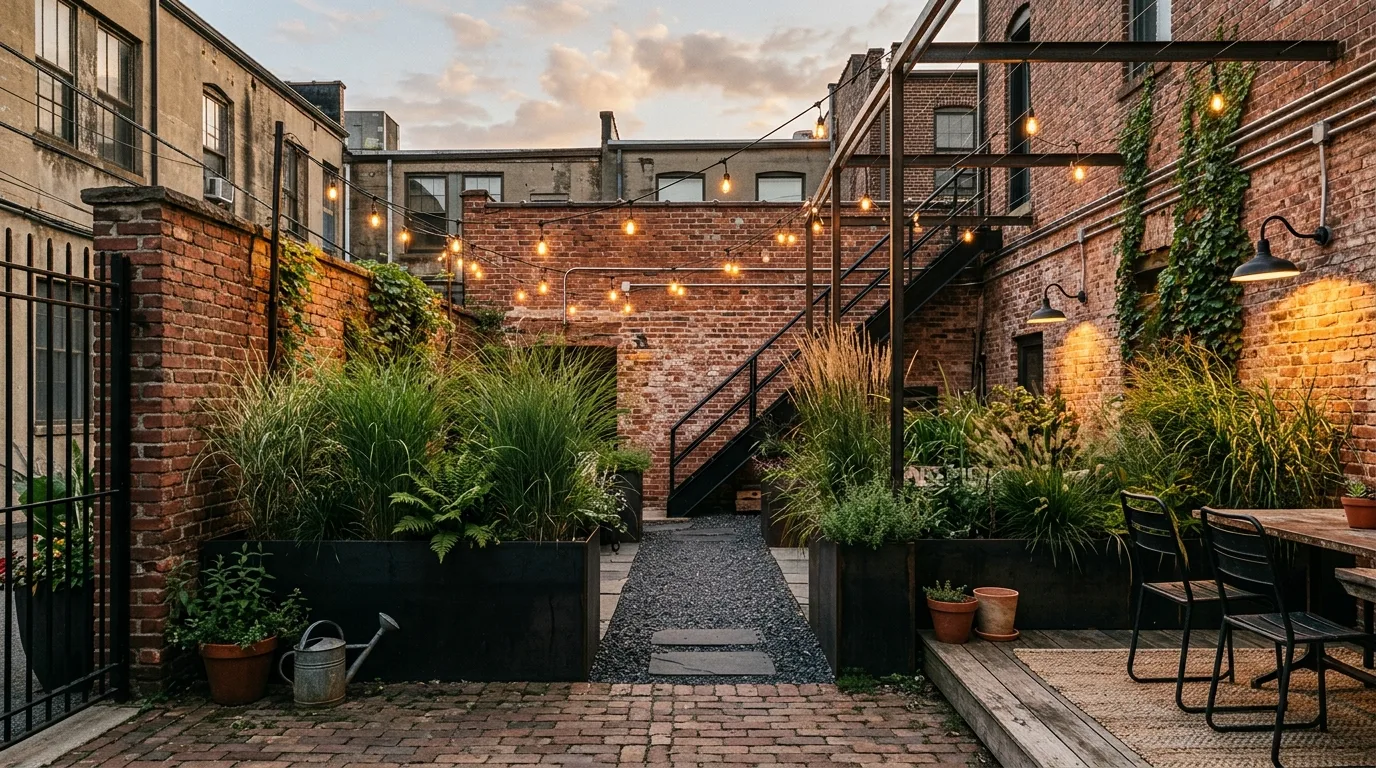
Idea 5
A rooftop-inspired garden with planters, mesh, and open sky
Industrial landscapes often borrow from rooftop design by keeping the structure visible and letting the planting punctuate the space instead of covering it completely. That openness gives the garden an energetic city character without making it feel barren.
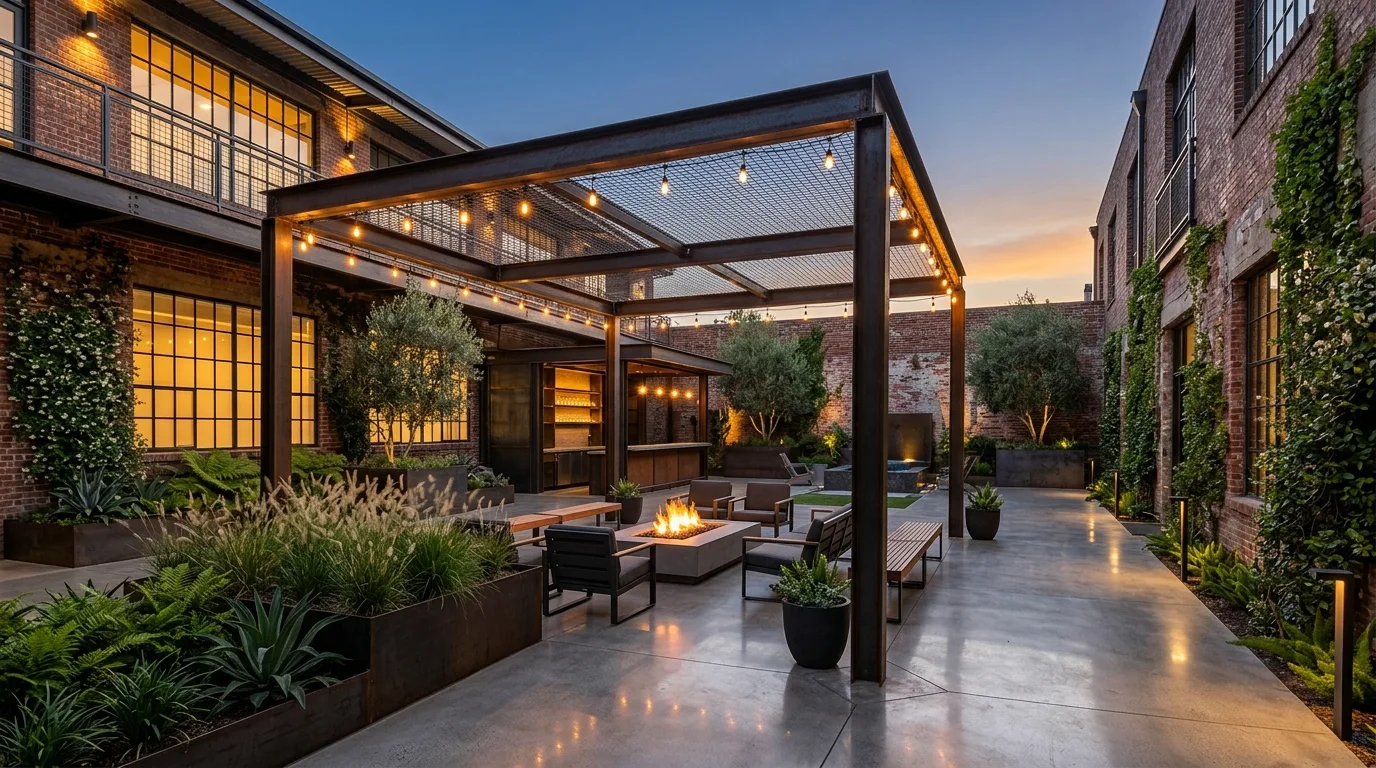
Idea 6
A concrete bench composition with upright grasses for contrast
Hard industrial surfaces benefit from one softer but still architectural plant form, and tall grasses are perfect because they move enough to keep the yard from feeling static while preserving its graphic strength. The contrast feels crisp and balanced.
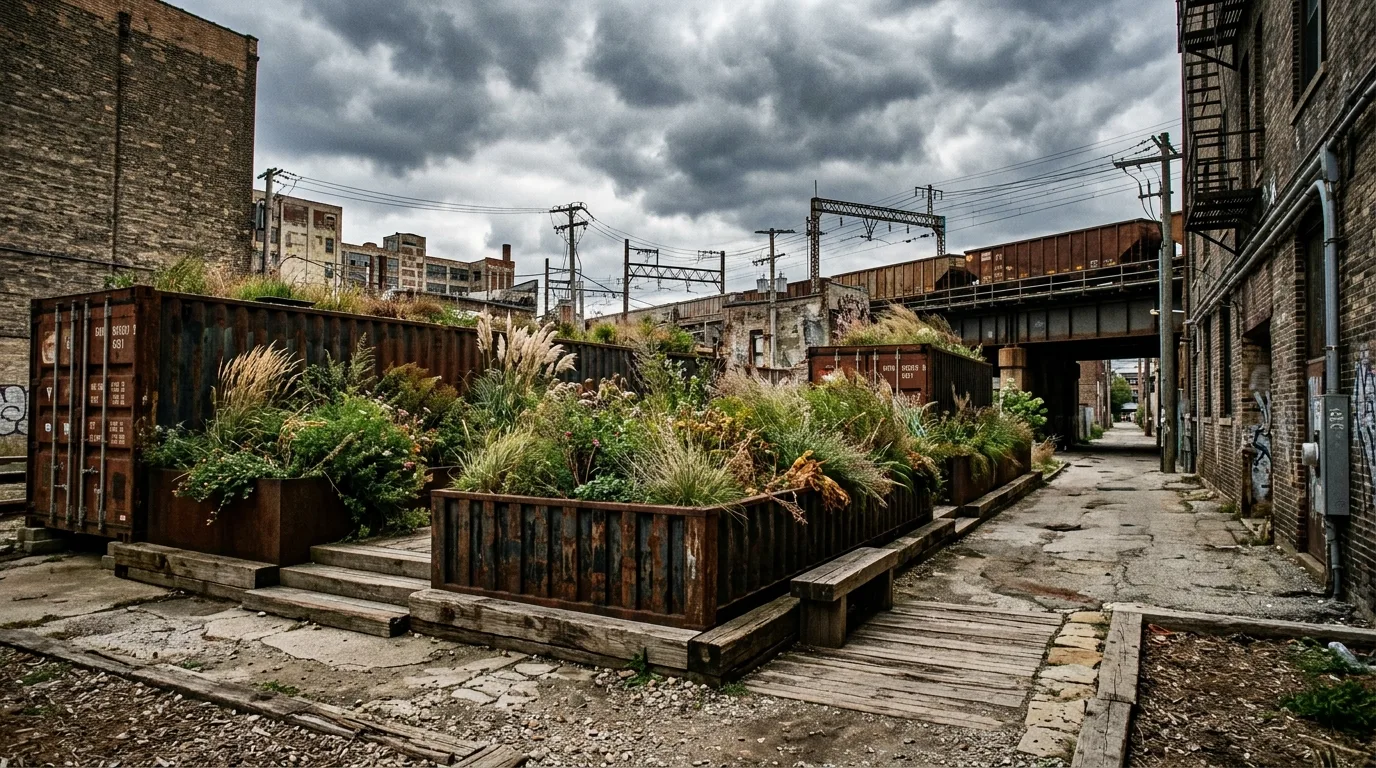
Idea 7
A water trough feature adding reflection to a raw-material yard
Reflective water can deepen an industrial scheme by introducing calm and shine against matte concrete, brick, and metal, which keeps the outdoor room from becoming visually dry. The trough shape still suits the utilitarian language beautifully.
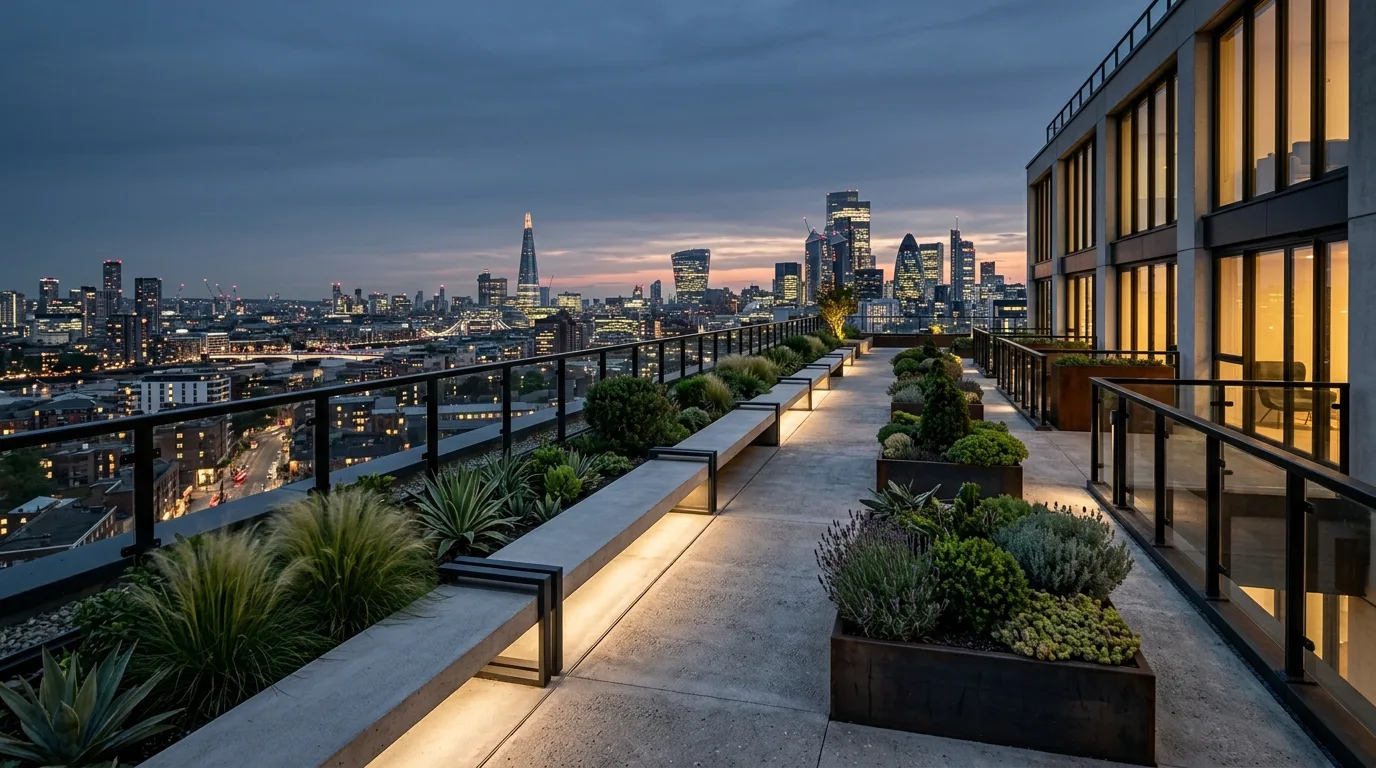
Idea 8
A small urban garden with charcoal pavers and repeated containers
Repetition is especially useful in industrial outdoor spaces because it creates order without relying on decorative abundance, and charcoal pavers with matched planters make a small yard feel composed very quickly. The result is clean, urban, and strong.
Idea 9
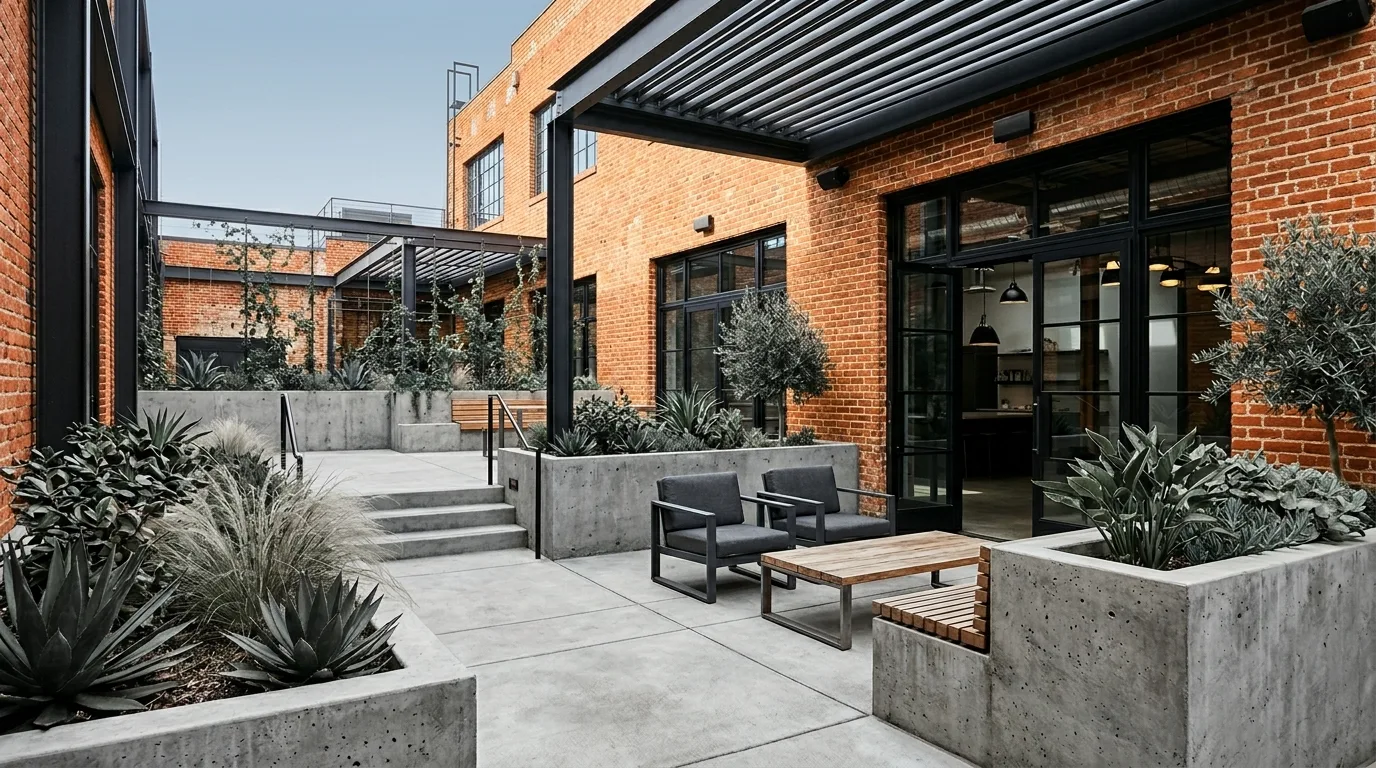
A warehouse-style wall garden mixing metal grids with vines
Industrial gardens do not have to stay hard all the way through, and vines on metal grids are an especially good compromise because they add life while still honoring the underlying raw structure. The wall becomes both softened and more visually layered.
Idea 10
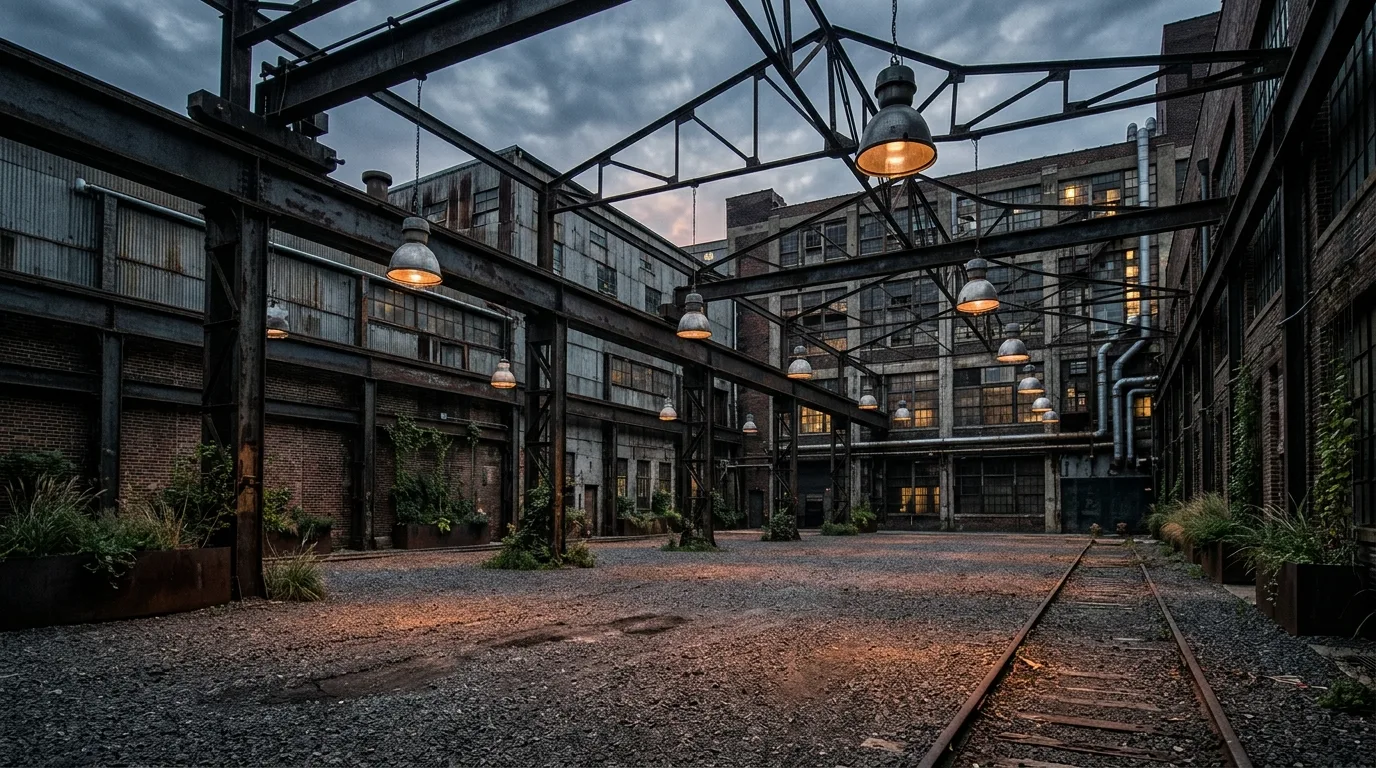
A fire-table court framed by dark timber and rusted steel
Warmth is important in industrial outdoor design because the raw materials can feel severe without it, and a fire feature paired with timber helps the space stay inviting while preserving its tough urban identity. The mood becomes far more livable at dusk.
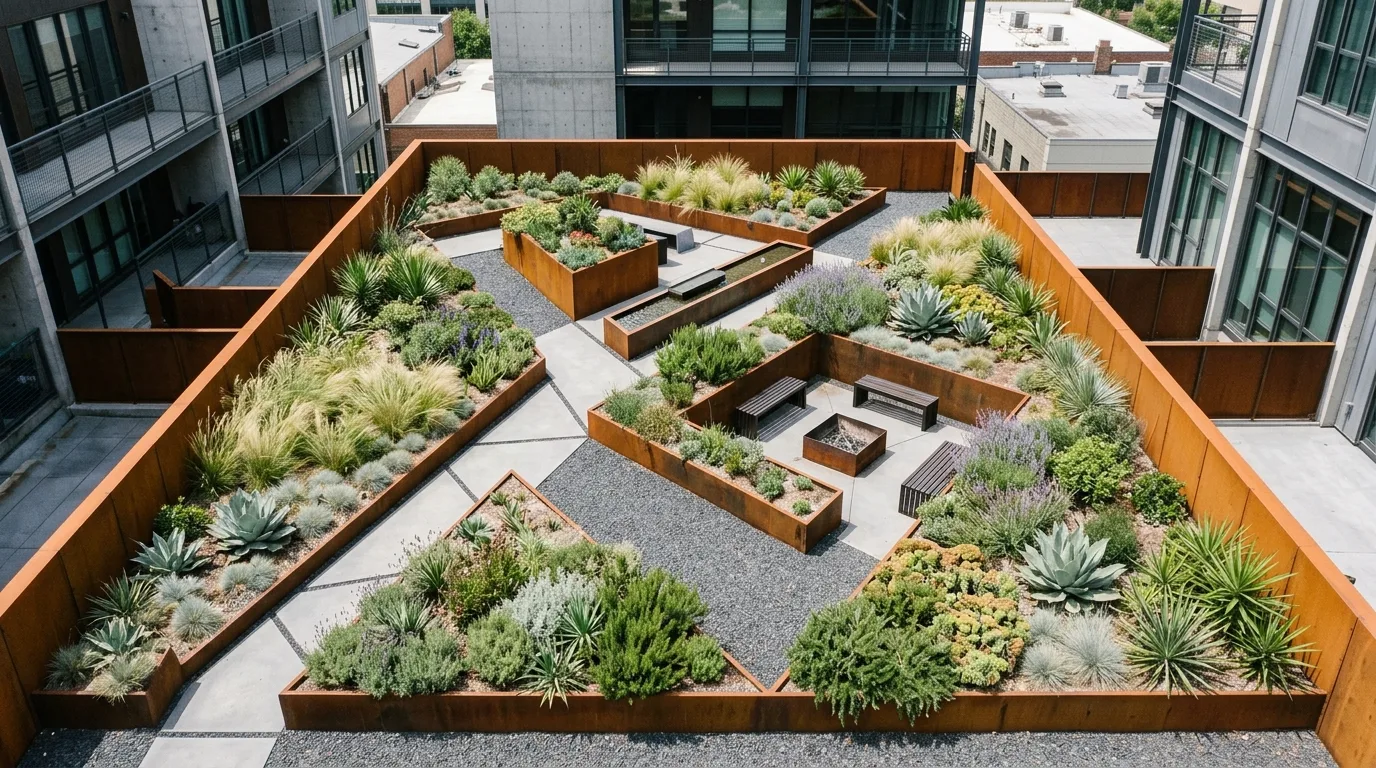
Idea 11
A gravel-and-slab layout that feels like an outdoor studio floor
Some of the best industrial landscapes treat the ground plane almost like interior flooring, using a disciplined pattern that gives the outdoor room a working-loft clarity and rhythm. The planting then acts as punctuation rather than decoration for its own sake.
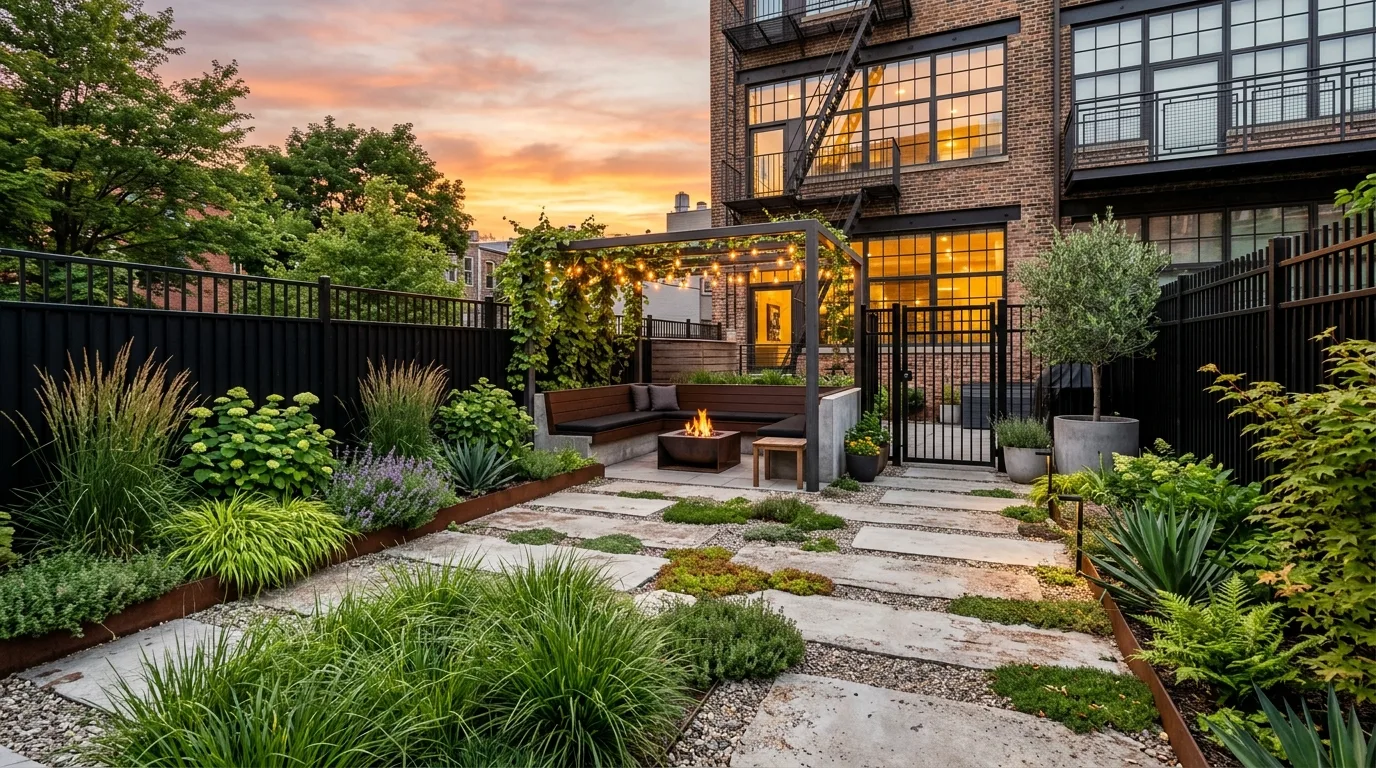
Idea 12
A black-fence backdrop making the foliage look sharper and cleaner
Dark boundaries are especially effective in industrial gardens because they intensify the graphic lines of both the hardscape and the plants, making every shape appear more intentional. Even a small amount of greenery gains stronger presence against that backdrop.
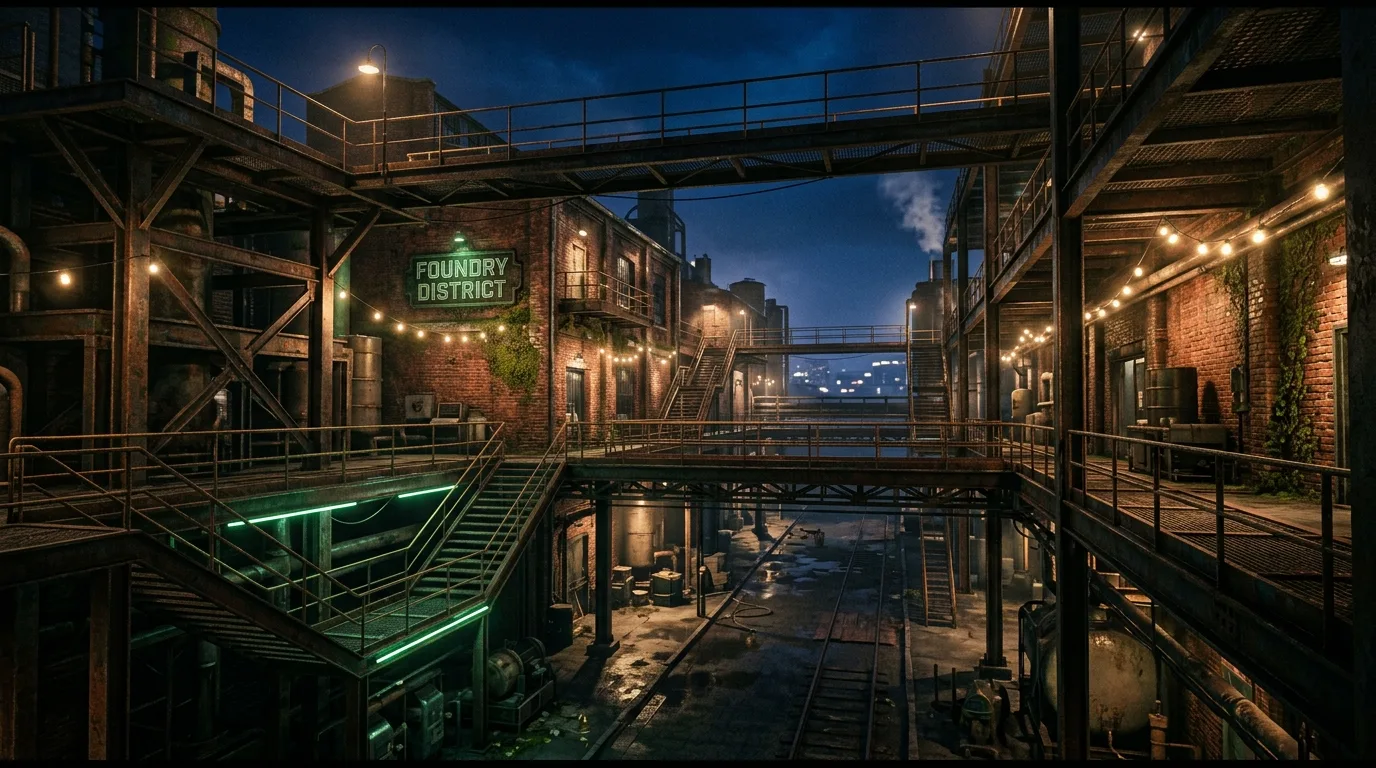
Idea 13
An urban loft-style yard where raw materials and planting stay in tension
The best industrial landscapes work because they never fully smooth away their hardness, instead letting stone, brick, and steel stay honest while plants bring just enough life and relief. That tension is what gives the style its distinctive edge.
Read next on Saw & Sprout
Edible Gardens
13 Clever Tomato Trellis Gardens for a Bountiful Harvest
Small-Space Growing
14 Space-Saving Small Vegetable Gardens for Urban GrowersFrequently asked questions
What defines an industrial landscape?
Raw materials like steel, concrete, brick, gravel, and dark metal details paired with disciplined planting usually create the clearest industrial look.
Can industrial gardens still feel warm?
Yes. Timber, firelight, repeated planting, and strong atmosphere can make industrial spaces feel welcoming without losing their edge.
Is industrial style only for very modern homes?
No. It can work with converted, urban, rustic, or mixed-style buildings as long as the material language feels deliberate and cohesive.