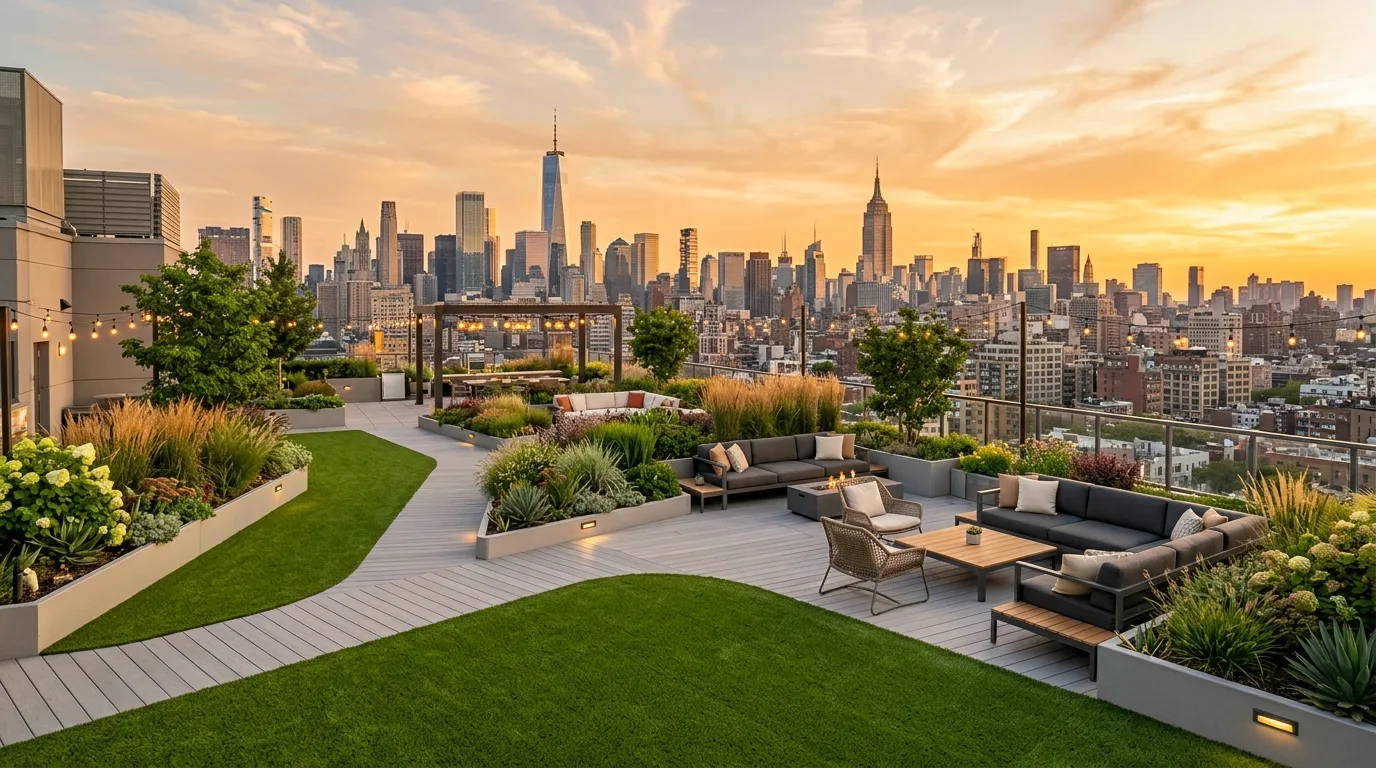
Rooftop landscapes are special because they combine the openness of sky and view with the intimacy of a carefully designed outdoor room high above the city.
The strongest roof gardens balance planting, privacy, shade, and seating without blocking what makes the space unique in the first place, which is the feeling of elevation and connection to the skyline.
These rooftop landscape ideas explore lounges, dining terraces, edible gardens, pergola retreats, and compact urban green spaces designed for real use and real atmosphere.
Quick planning notes
Protect the best views while still giving the roof enough planting to feel like a garden and not only a deck.
Use long planters, screens, and furniture groupings to define spaces without overloading the terrace.
Plan for exposure, wind, and sun early because rooftop comfort depends heavily on those conditions.
Keep the palette disciplined so the space stays visually calm against the bigger city backdrop.
Idea 1
A rooftop lounge with layered planters and skyline framing
Rooftop gardens feel most successful when they make the city view part of the composition, using planting to soften the edges without blocking the sense of height and openness that makes the space special. The terrace becomes green, but still urban and expansive.
Idea 2
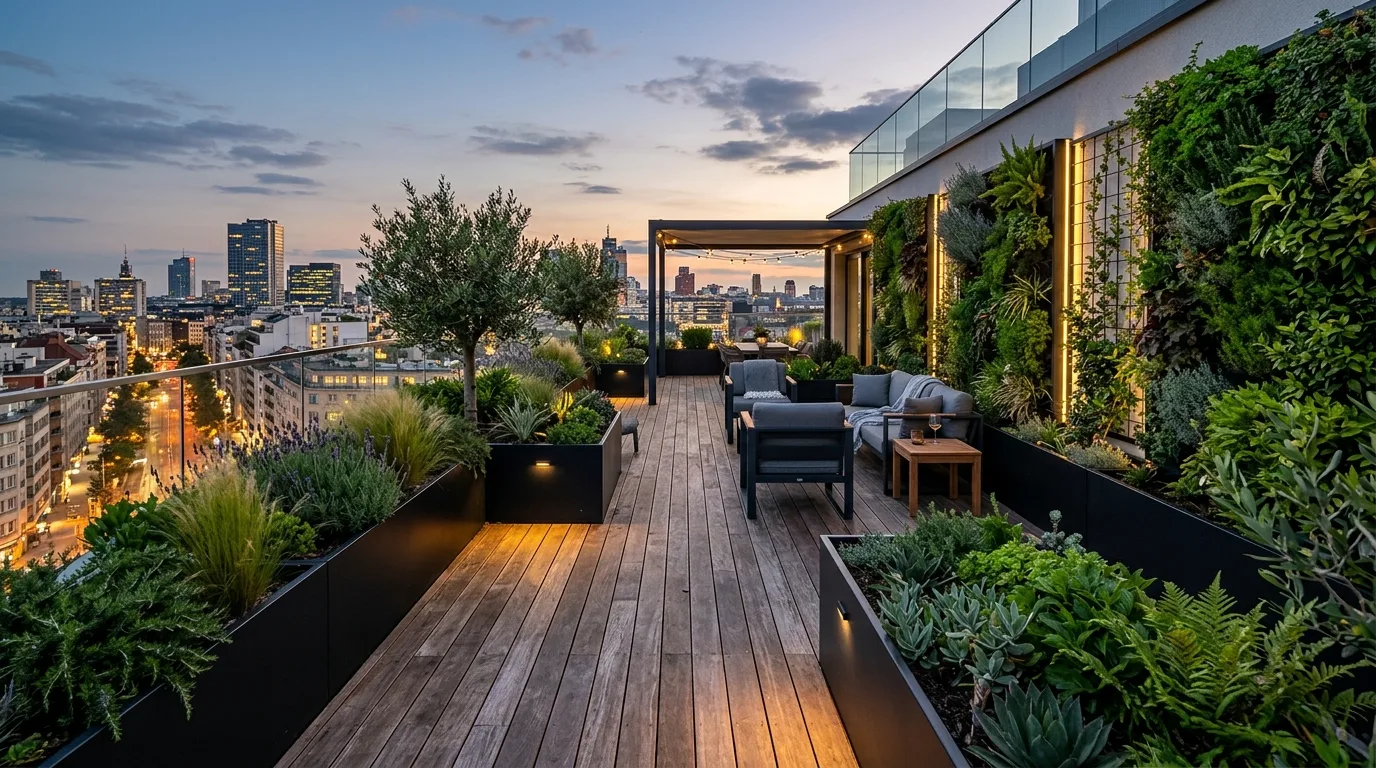
A dining terrace with long planters and warm evening light
Linear planters are especially effective on rooftops because they define outdoor rooms without the heaviness of walls, while evening light turns the exposed setting into something far more intimate and inviting. The whole space feels lifted yet grounded.
Idea 3
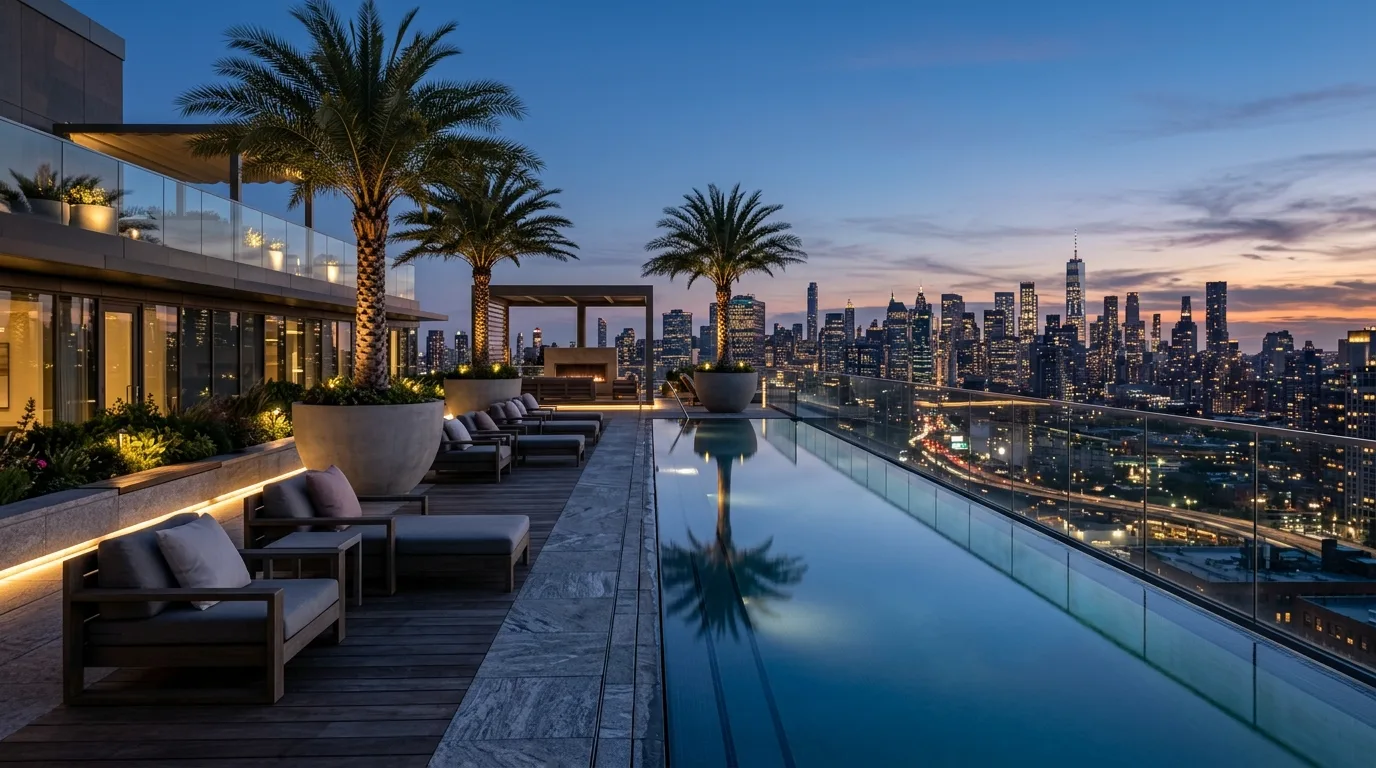
A compact roof garden using vertical greens for privacy
Privacy matters even more on exposed roofs, and vertical planting can create a soft screen that still allows air, light, and sky to remain part of the experience. The terrace feels more protected without losing its urban openness.
Idea 4
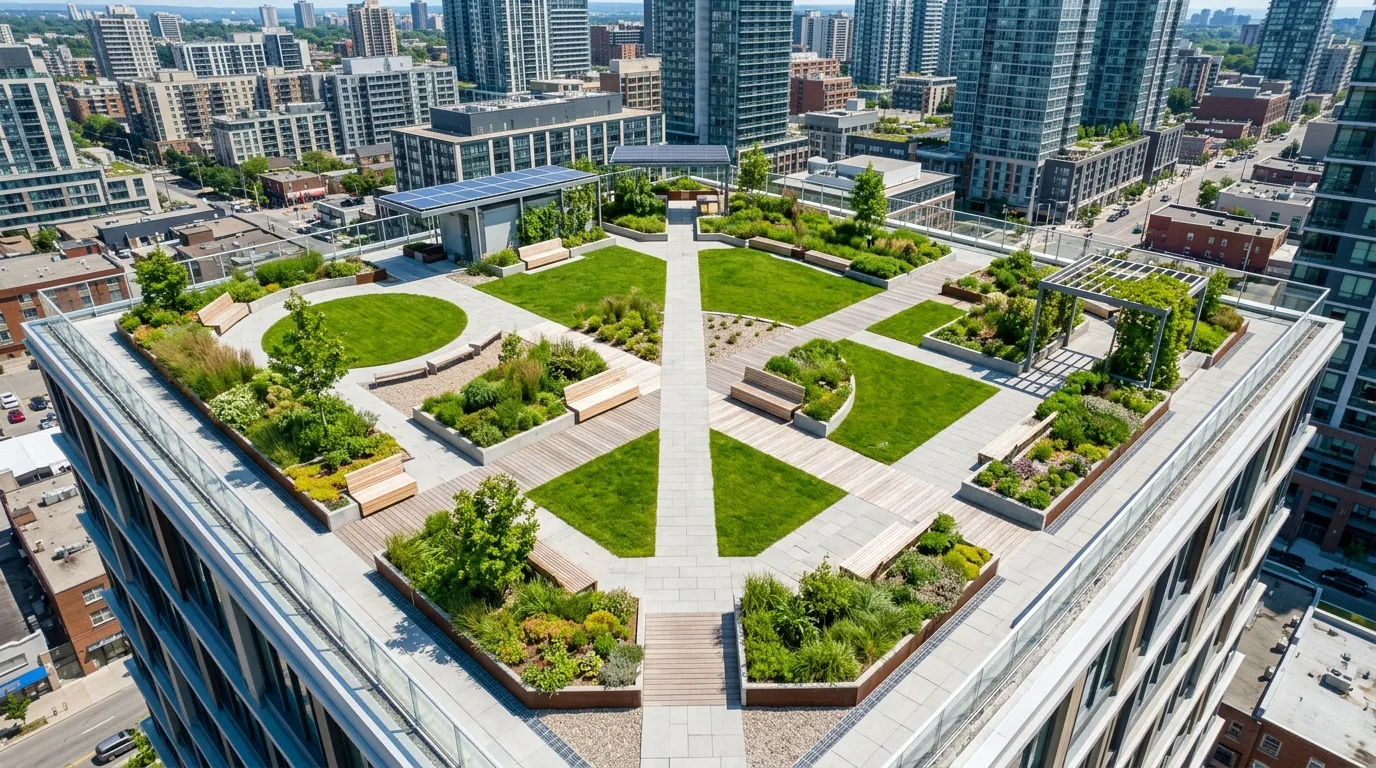
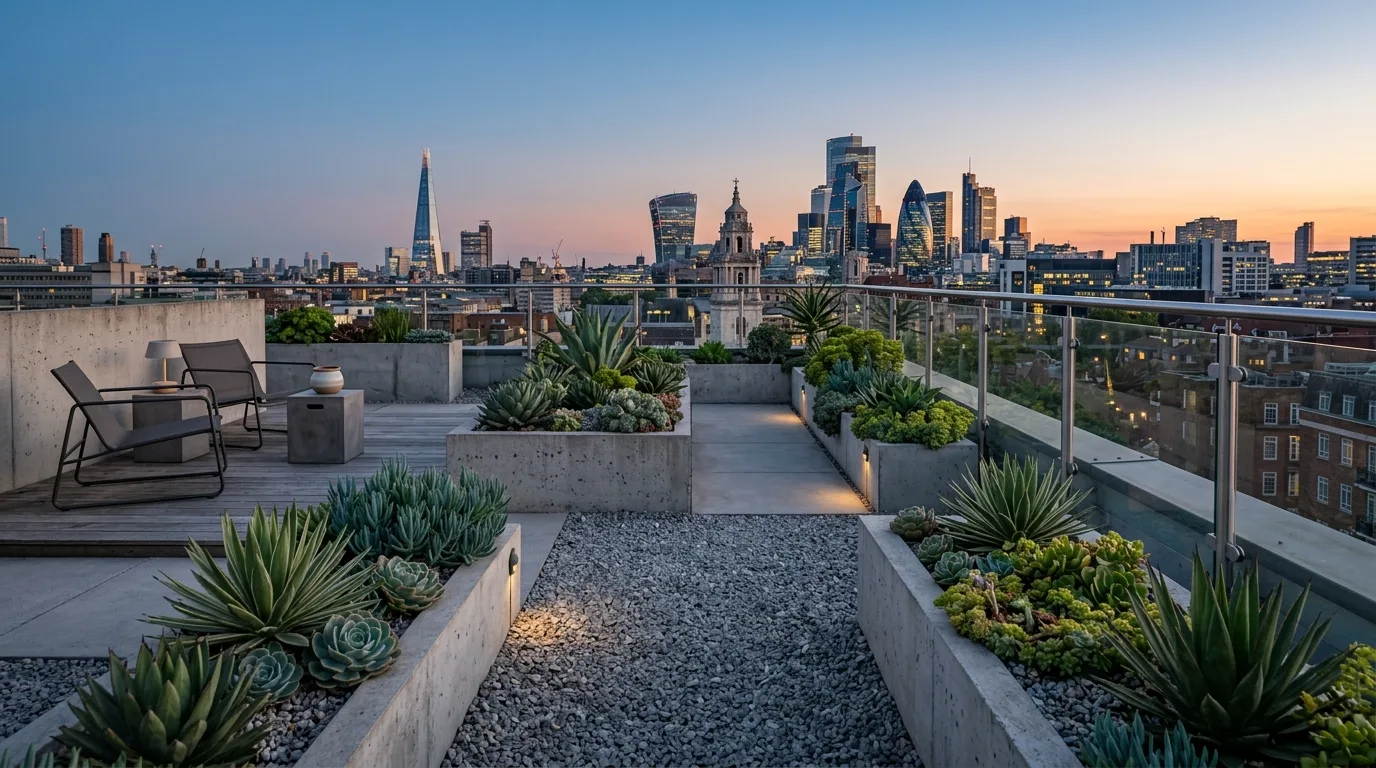
A modern roof deck with gravel, timber, and sculptural pots
Strong material contrast can make a rooftop feel highly designed because gravel, timber, and well-scaled containers give the floor plane depth while still keeping the palette simple enough to suit the architecture. The result is calm, stylish, and easy to maintain.
Idea 5
A pollinator-friendly roof garden full of movement and bloom
Rooftops can become remarkable ecological spaces when the planting supports insects and seasonal change, especially because the open sky and sunlight make flowers and grasses feel especially animated. The garden becomes lively without sacrificing design quality.
Idea 6
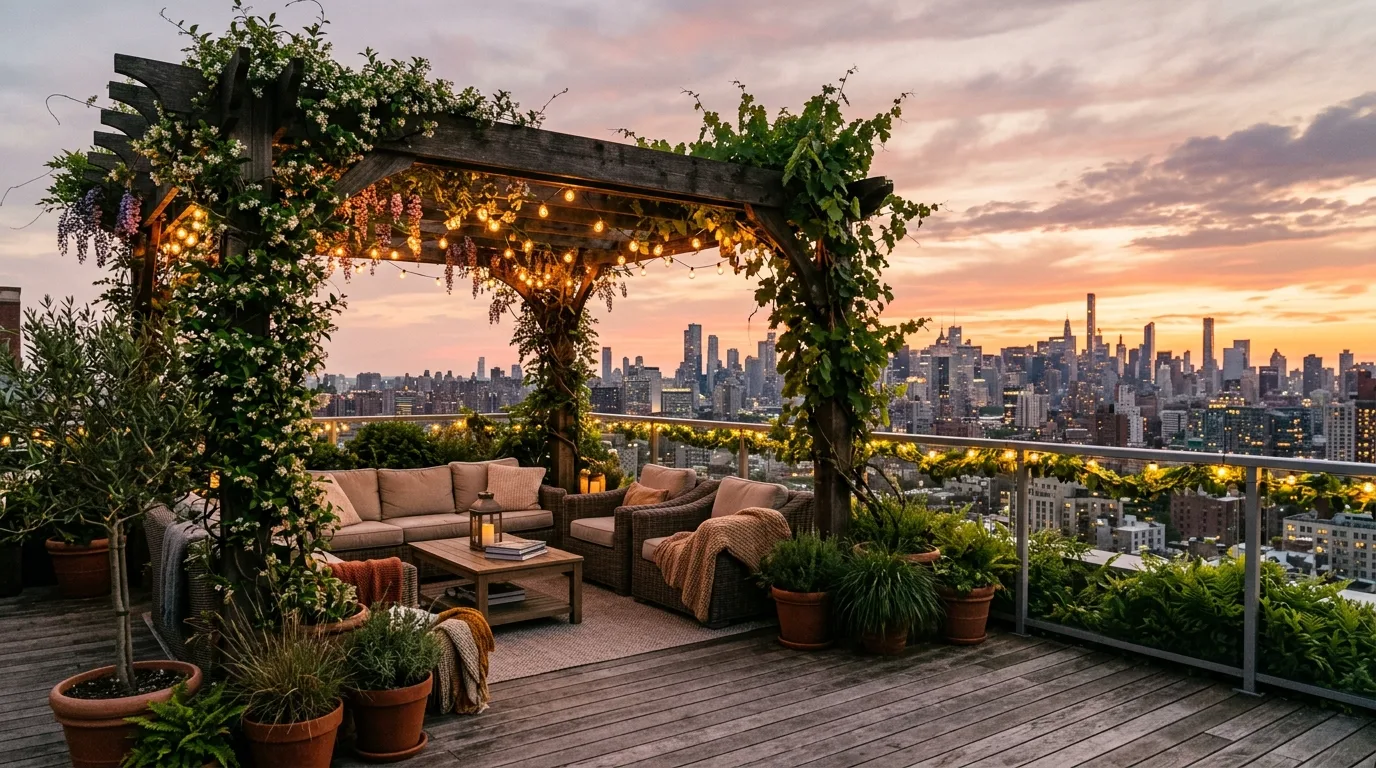
A shaded pergola retreat softening the exposed roof edge
Shade structures are often essential on rooftops because they make the space feel more livable in strong sun while also adding a room-like quality that keeps the terrace from feeling too open. Planting around the frame then helps the retreat feel complete.
Idea 7
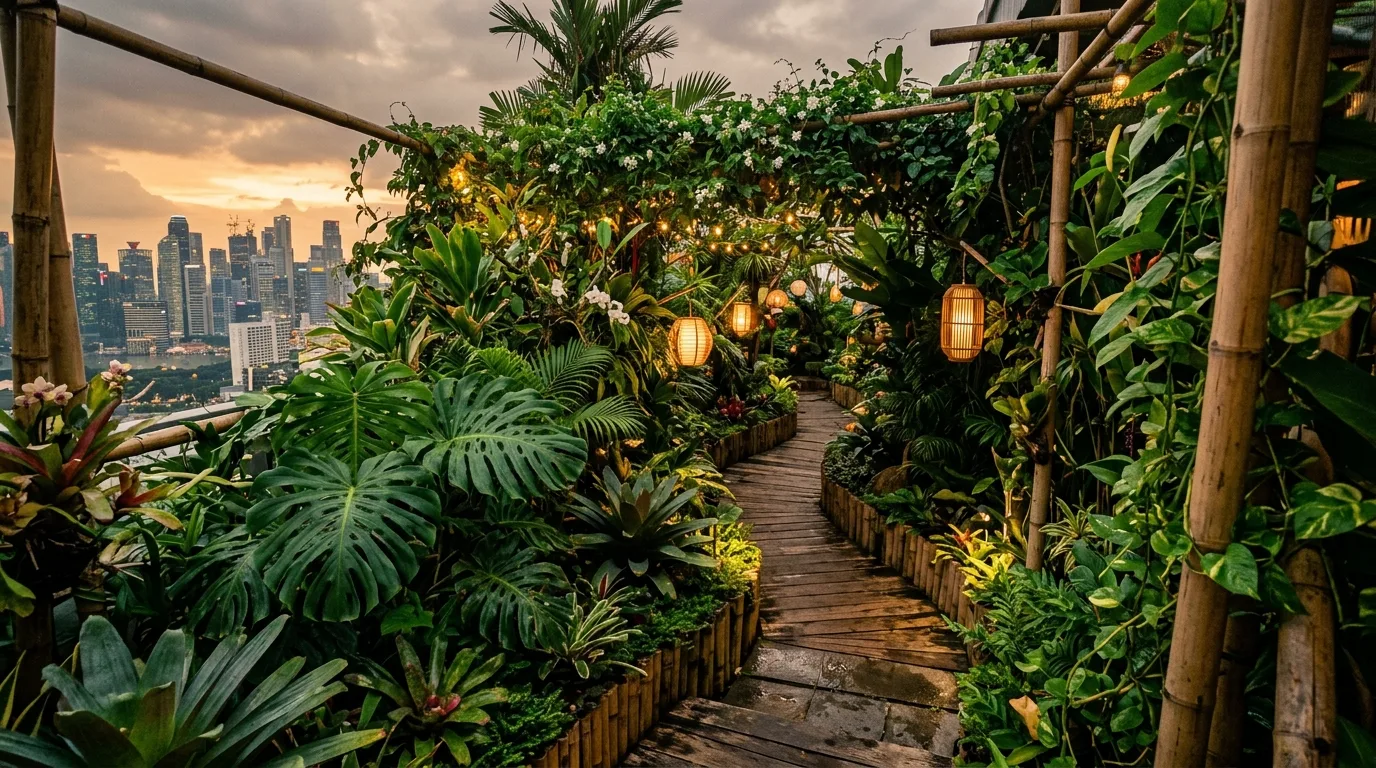
A narrow rooftop path garden leading to a hidden seating nook
Even on a roof, the idea of discovery can make a landscape feel larger and more rewarding, especially when circulation is shaped carefully with planting and one destination space at the end. The terrace becomes more than a single open platform.
Idea 8
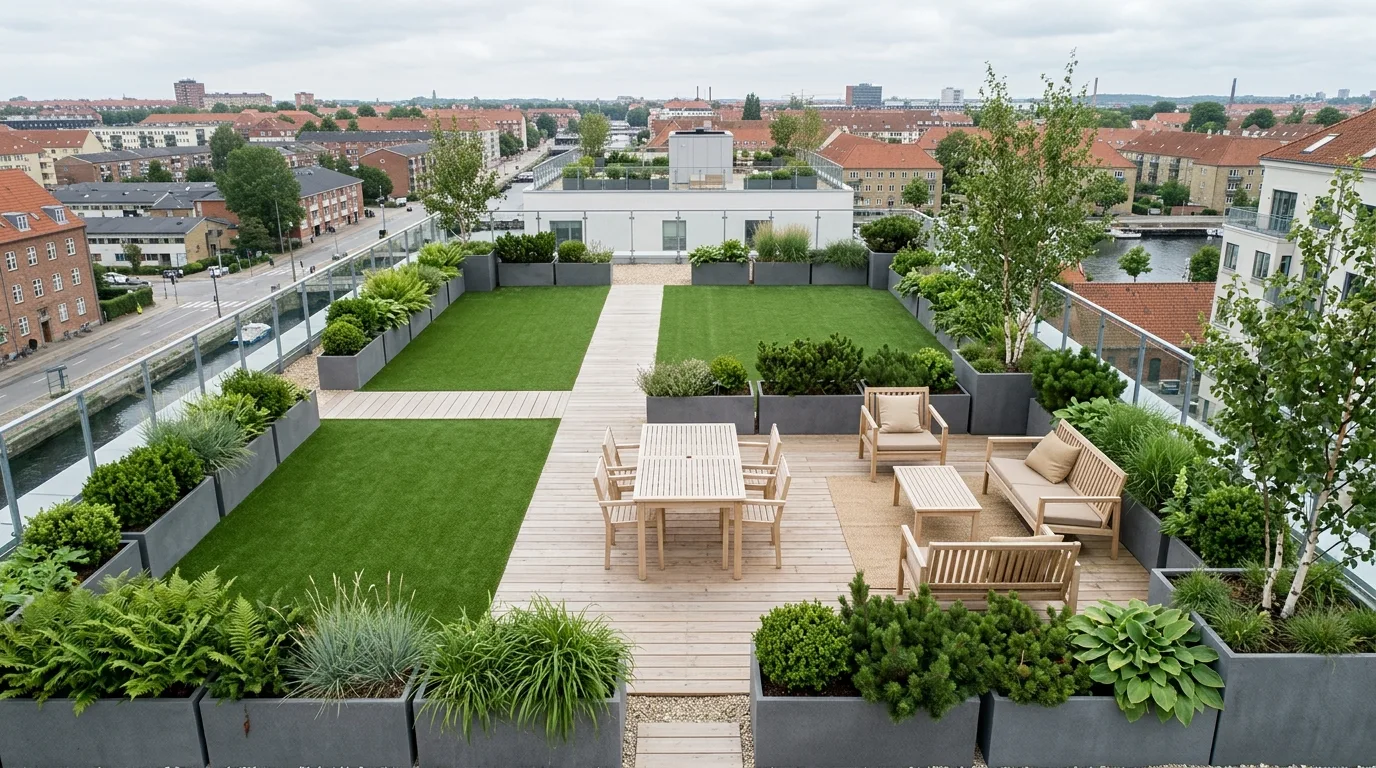
A black-and-green roof terrace with crisp modern structure
Dark materials can be very effective on rooftops because they sharpen the outline of the planting and furniture against the brighter sky, making the whole composition look more graphic and intentional. The garden feels sleek, urban, and dramatic.
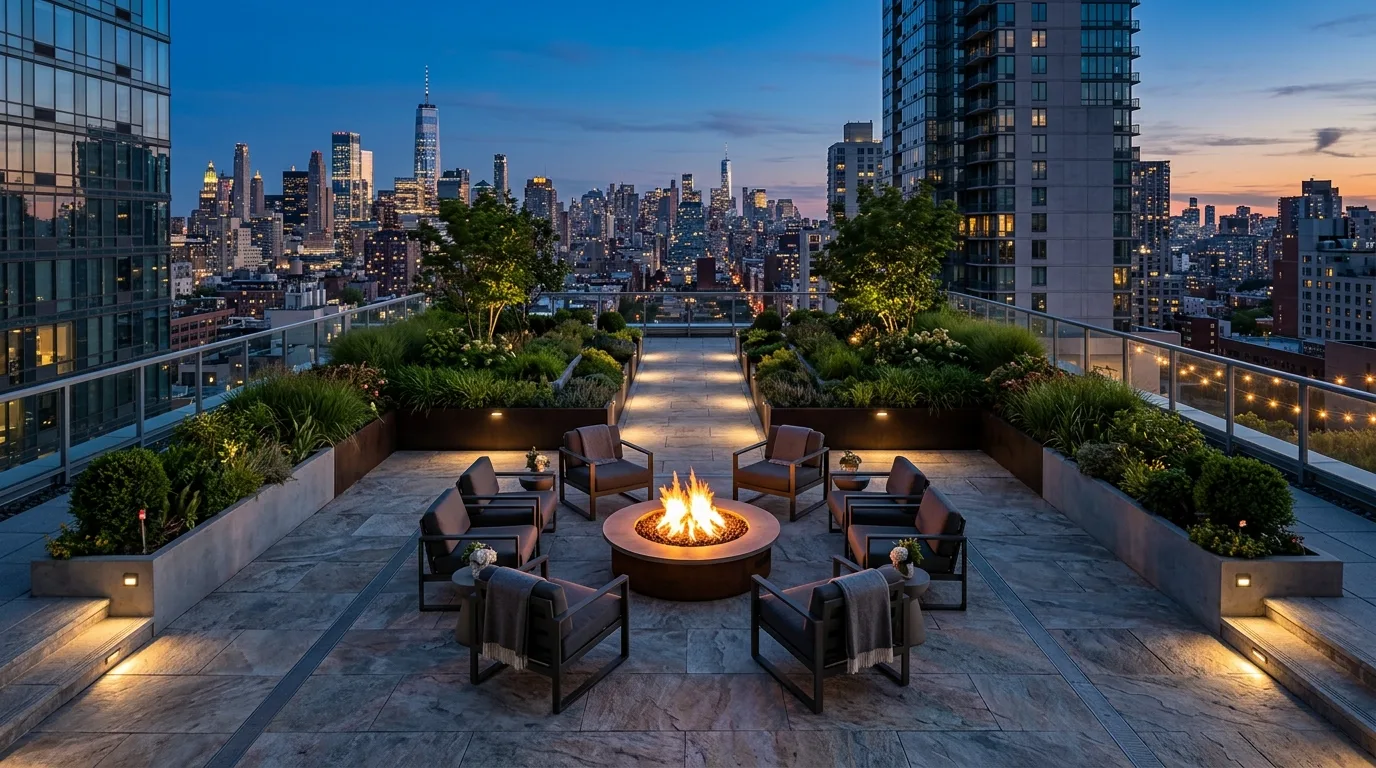
Idea 9
A rooftop lawn panel that gives the terrace a softer center
A small area of turf can make a roof garden feel much more relaxed by introducing a familiar green surface that balances the harder paving and container edges around it. The contrast helps the terrace feel less exposed and more garden-like.
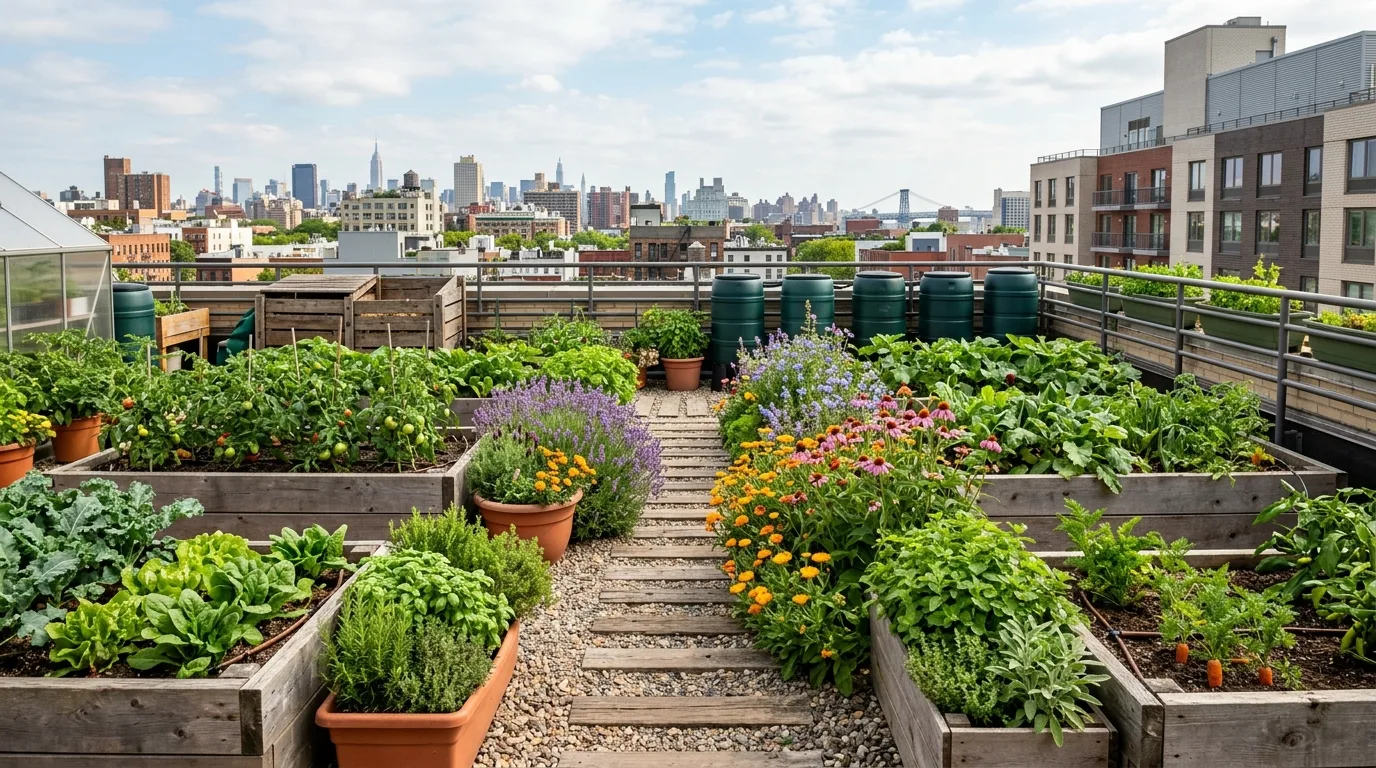
Idea 10
A fire-table roof court for cool evenings above the city
Fire is especially compelling on rooftops because the glow and warmth intensify the feeling of being suspended above the city while still enjoying a comfortable outdoor room. The terrace becomes social, atmospheric, and memorable after dark.
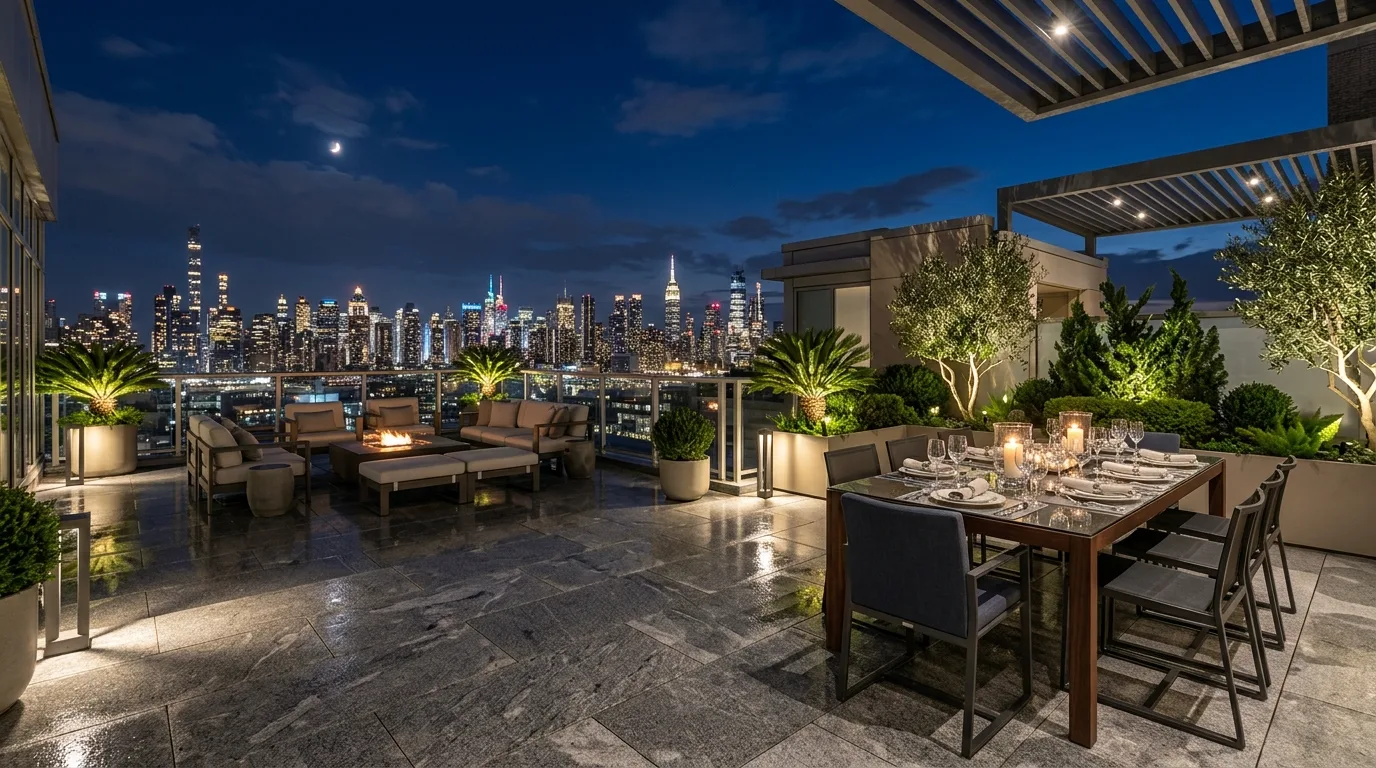
Idea 11
A herb-and-edible roof garden that feels both beautiful and useful
Rooftops are often perfect places for productive planting because the containers can be tightly organized and the sun exposure can be excellent for herbs and compact edibles. The design feels practical, fresh, and satisfying every day.
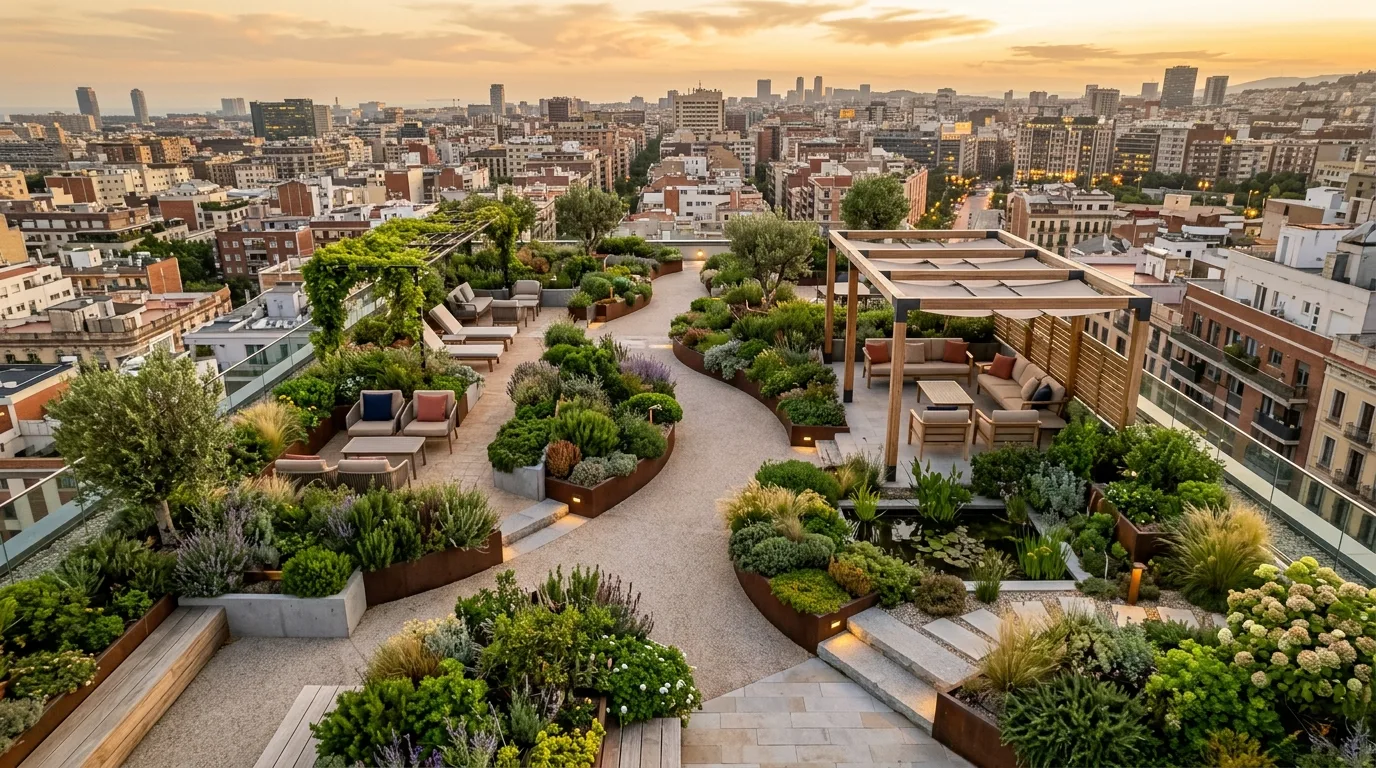
Idea 12
A wellness roof terrace with simple seating and calming greenery
Some of the best urban roof gardens succeed not through entertainment features but through quiet comfort, using low seating and restrained greenery to create a place that feels separated from the pace of the city below. The atmosphere becomes restorative and deeply livable.
Idea 13
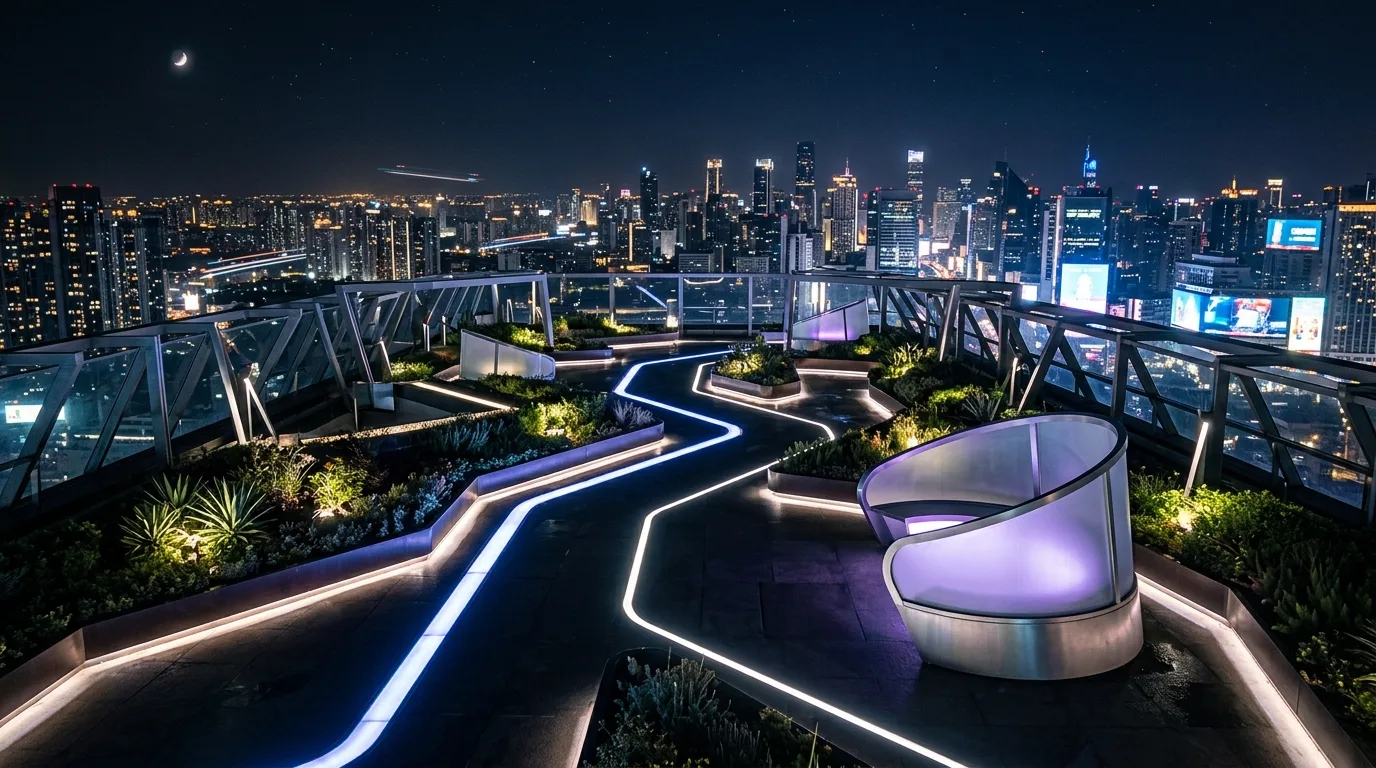
An urban green space where planting and skyline stay beautifully balanced
The most successful rooftop landscapes understand that the view and the garden should support one another, with enough greenery to soften the setting and enough openness to preserve the drama of being high above the street. That balance gives the terrace its unique power.
Read next on Saw & Sprout
Edible Gardens
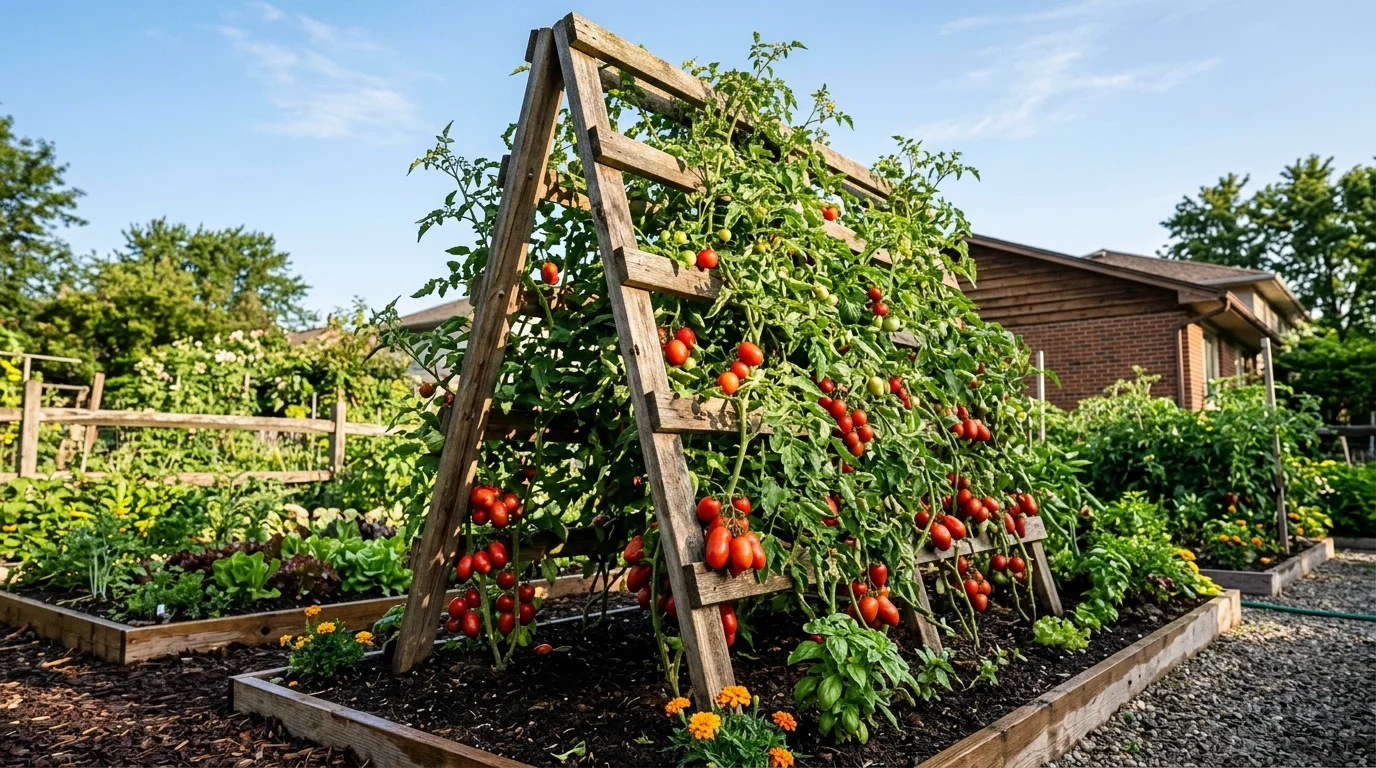
13 Clever Tomato Trellis Gardens for a Bountiful Harvest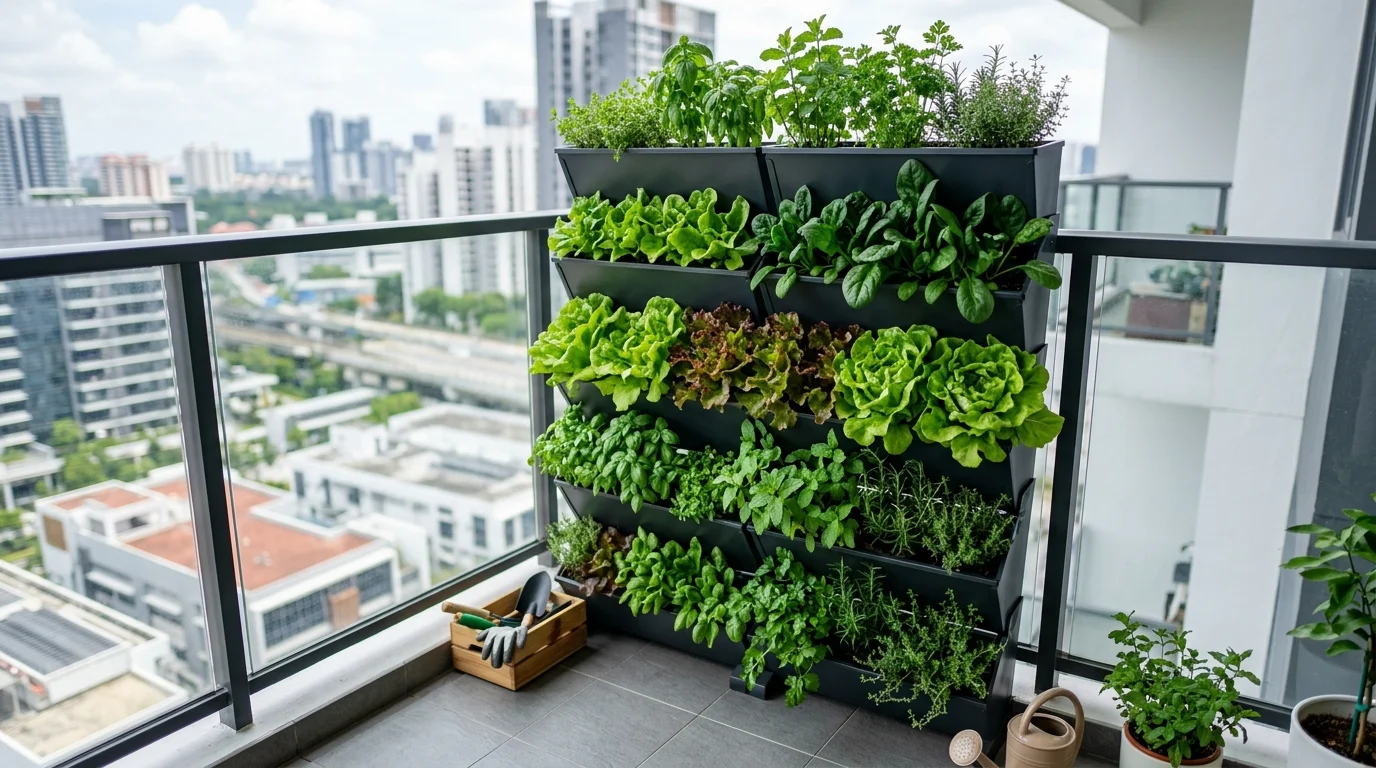
Small-Space Growing
14 Space-Saving Small Vegetable Gardens for Urban GrowersFrequently asked questions
What makes a rooftop garden feel successful?
A good balance of planting, privacy, seating, and view preservation usually makes the biggest difference in how livable a rooftop feels.
Can small rooftops still feel green and useful?
Yes. Even compact roofs can hold planters, shade, dining, or seating when the layout is organized carefully.
How do you add privacy to a rooftop without closing it in?
Use vertical planting, screens, and strategic furniture placement so the terrace feels sheltered while still open to air and skyline.