Rugs do more than soften an open floor plan because they can quietly organize the room into places that feel legible, comfortable, and emotionally distinct. In the absence of walls, they often become one of the most effective tools for telling the eye where living, dining, working, or reading should happen.
The trick is choosing rugs that divide without fragmenting. Scale, pattern, tone, and relation between multiple rugs all determine whether the plan feels thoughtfully zoned or simply broken into unrelated patches.
These ideas focus on rug strategies that make open rooms feel more grounded, more useful, and much easier to read. Some are bold, some subtle, but all of them help define zones without sacrificing the openness that makes these layouts appealing.
Quick planning notes
Decide which zones need the strongest definition first so the rugs can support priority areas instead of competing equally across the room.
Use scale generously, because undersized rugs often weaken the very sense of structure open plans need most.
Coordinate multiple rugs through palette or texture so the spaces feel related even when each zone has its own identity.
Think about chair movement, circulation, and furniture placement so the rug defines the zone while still serving daily function well.
Idea 1
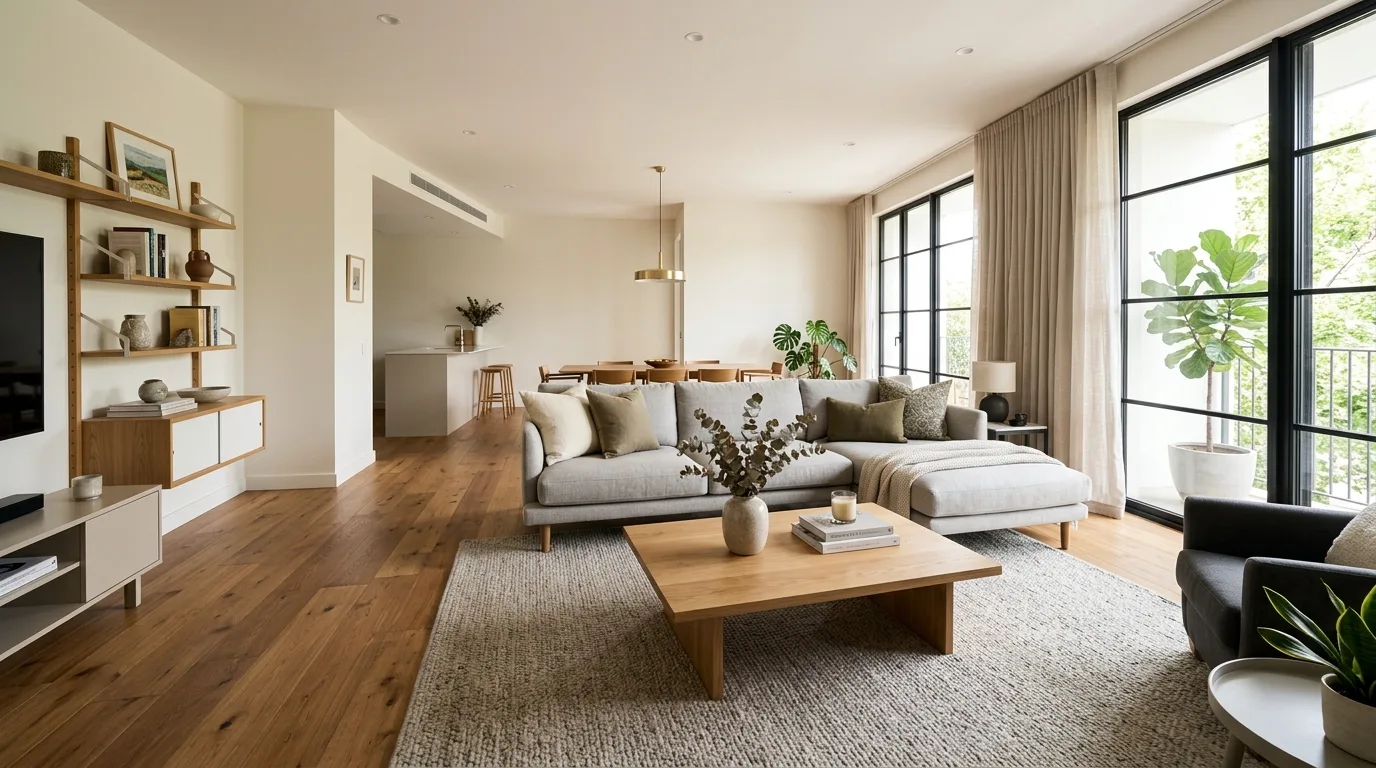
Large living rug anchoring sofa zone while dining stays on bare floor
In an open plan, one oversized rug can establish the living room as its own destination without needing physical dividers. Letting the dining area stay uncovered creates contrast, which helps both zones feel clearer and more intentional.
Idea 2
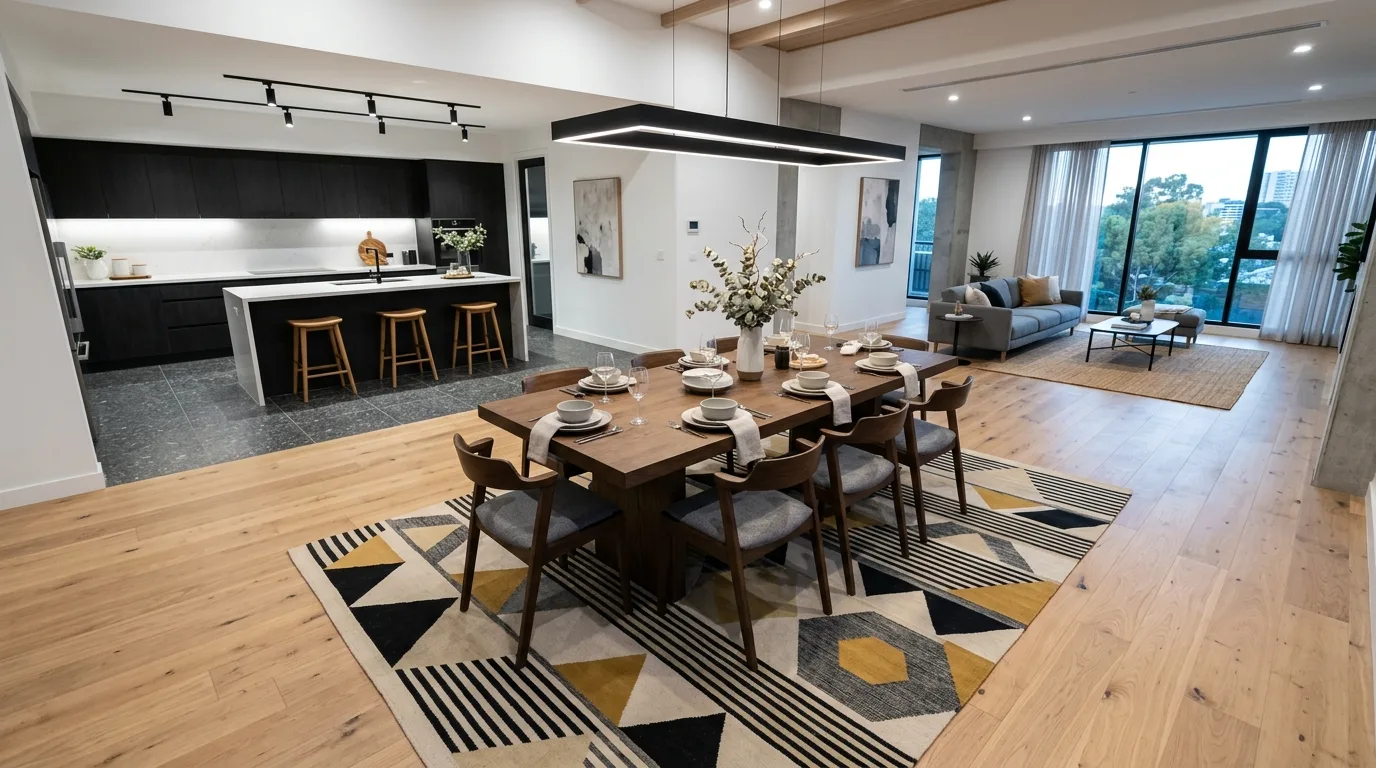
Two related rugs using shared tones to separate lounge and dining spaces
Matching the palette of two rugs can define separate zones without making the room feel chopped up or visually disconnected. The strategy gives each area identity while still letting the broader open plan feel cohesive and calm.
Idea 3
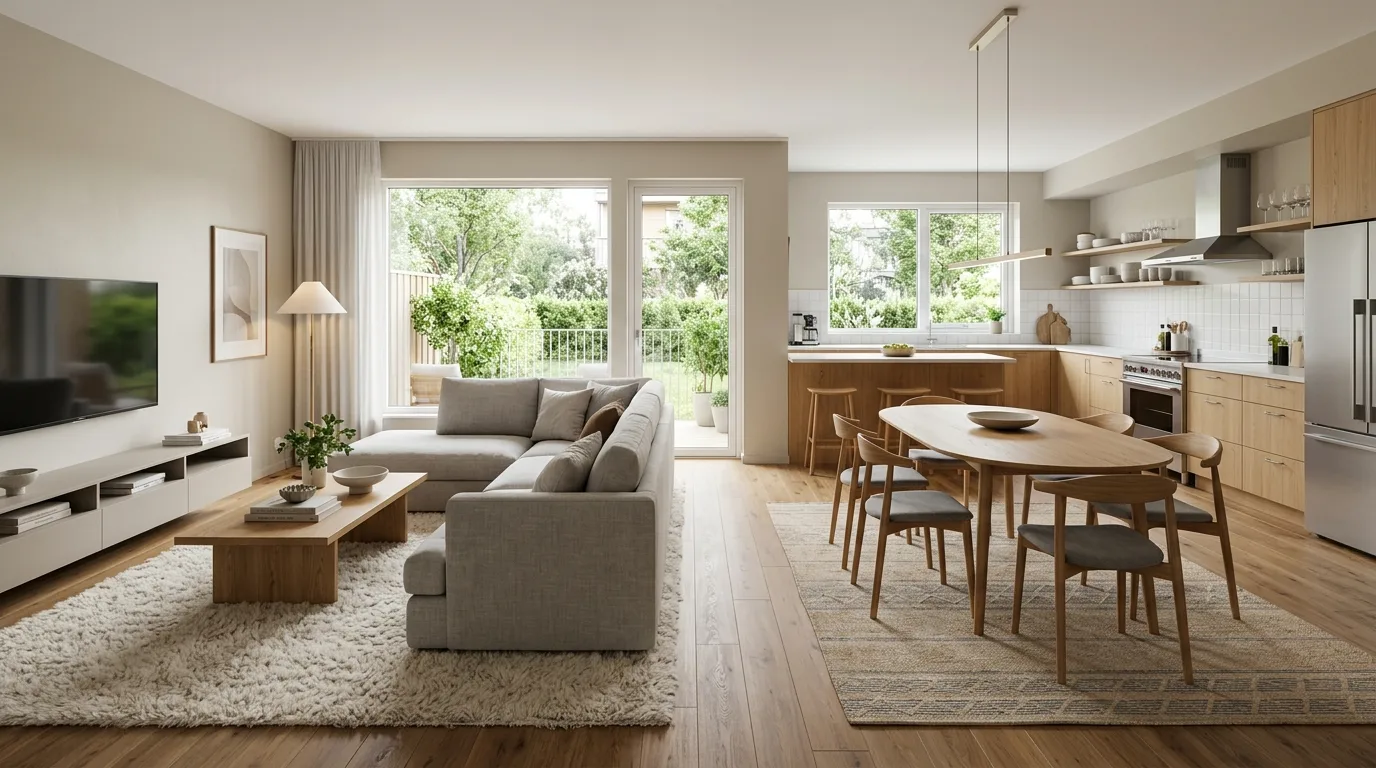
Round rug beneath a breakfast table softening a hard-edged open kitchen
A round rug can be especially useful when the rest of the open space is full of straight lines from cabinetry, islands, and walls. Under a breakfast table, it softens the geometry and helps the eating area feel more distinct and welcoming.
Idea 4
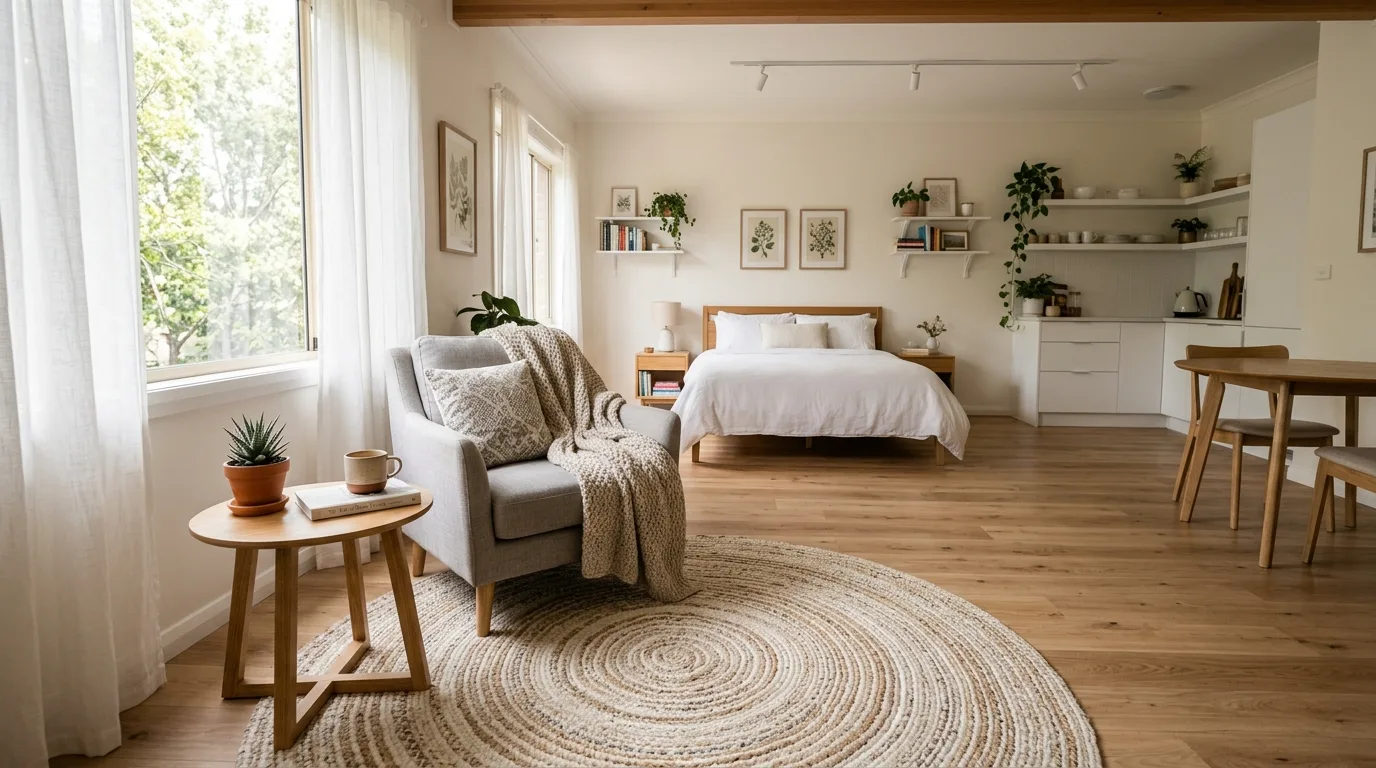
Layered jute and patterned rug combination for a warmer seating island
Layering rugs creates depth that can make a seating area feel more intimate inside a broad open room. Jute adds the grounded base, while a patterned layer gives the zone personality without needing extra furniture to define it.
Idea 5
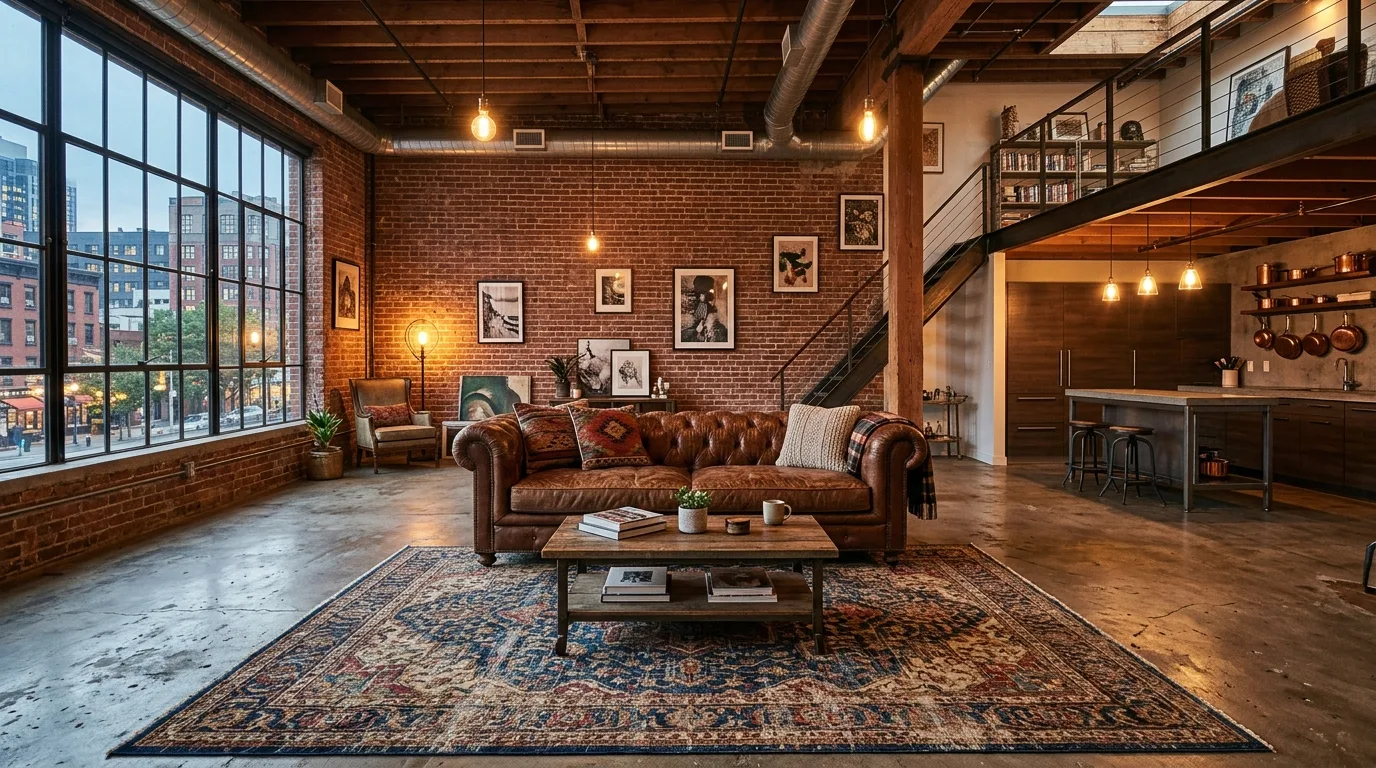
Long runner style rug guiding movement through a narrow open concept
In narrower open plans, a long runner can direct circulation while still helping one side of the room feel like a destination rather than a corridor. The rug works almost like a visual pathway, adding order and softness at the same time.
Idea 6
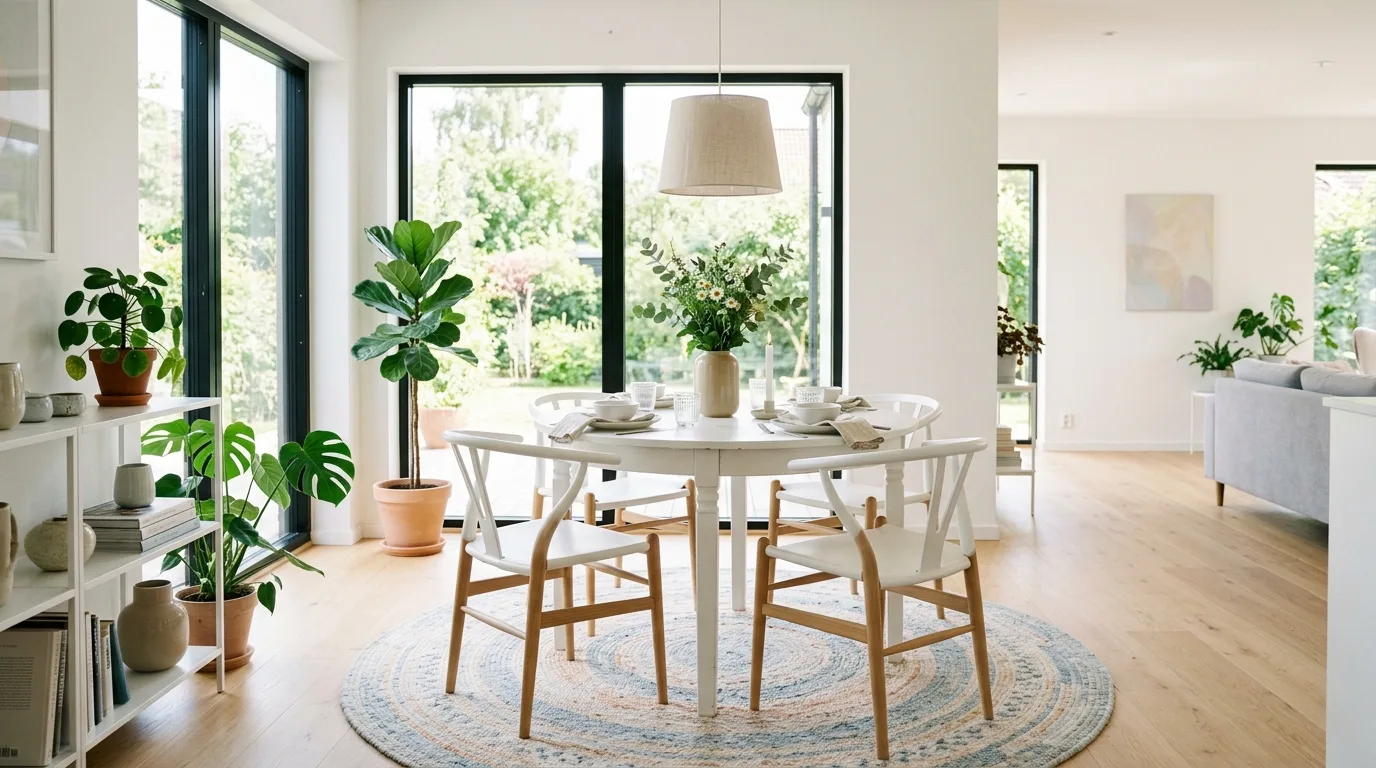
High contrast rug under sectional making the lounge zone read clearly
A stronger contrast rug is useful when the room needs the living area to stand out decisively within a larger shared space. The sectional feels more anchored, and the whole lounge zone becomes easier to read from across the room.
Idea 7
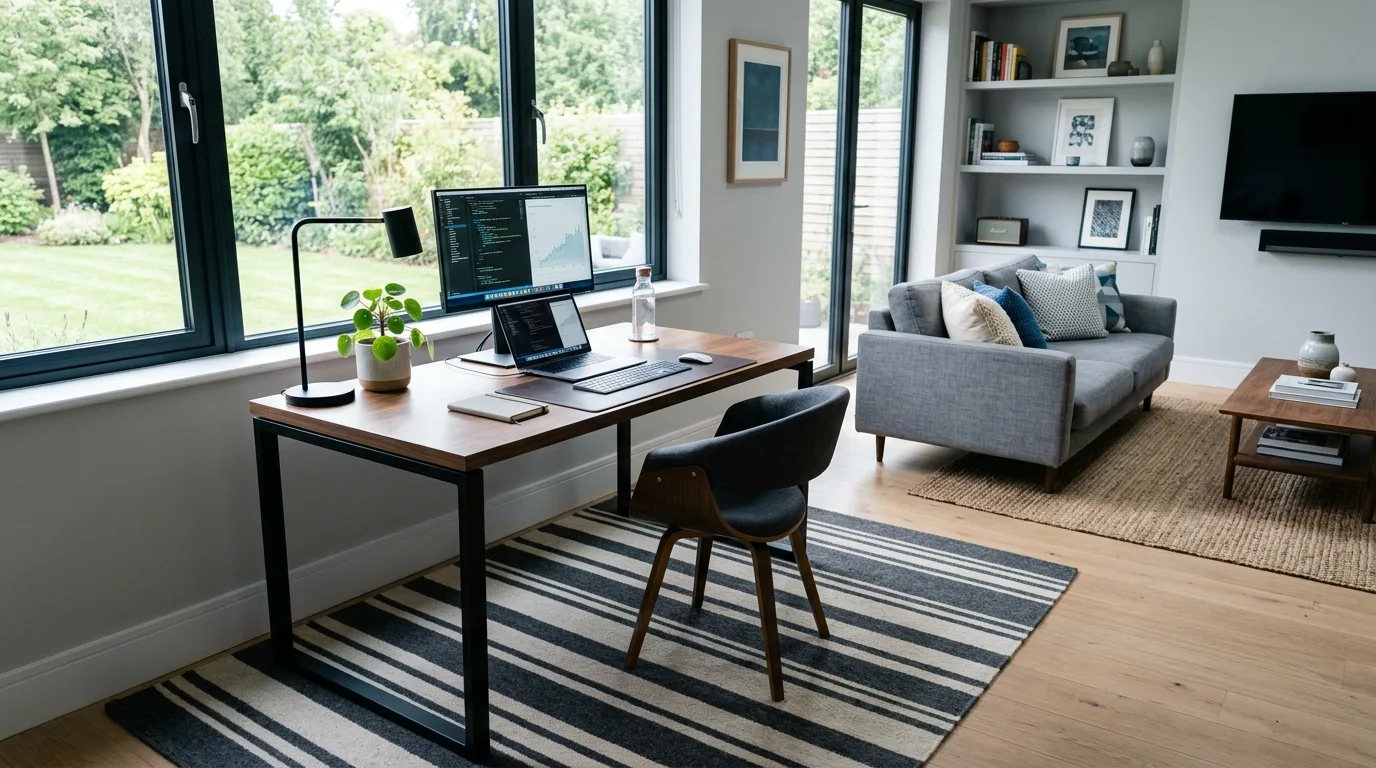
Quiet tonal rug beneath dining chairs reducing visual clutter in big rooms
Not every open plan needs a statement rug, and a tonal dining rug can define the table area while keeping the room from feeling too busy. The effect is subtle but powerful because the boundaries become clearer without much visual noise.
Idea 8
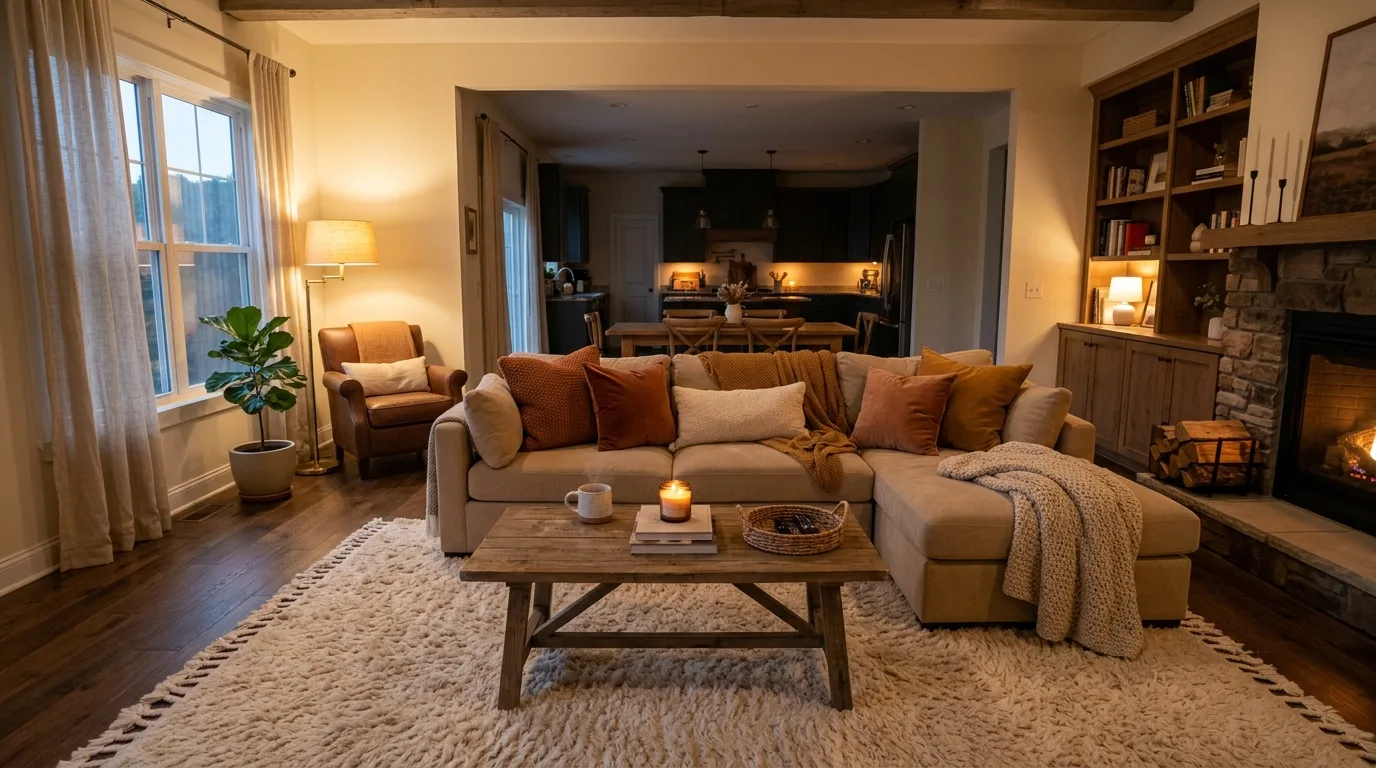
Small rug under accent chairs creating a secondary conversation nook
A second smaller rug can carve out a reading or conversation nook inside a large open plan, which makes the room feel more layered and useful. The zone becomes its own mini-room without adding permanent barriers or heavy furniture.
Idea 9
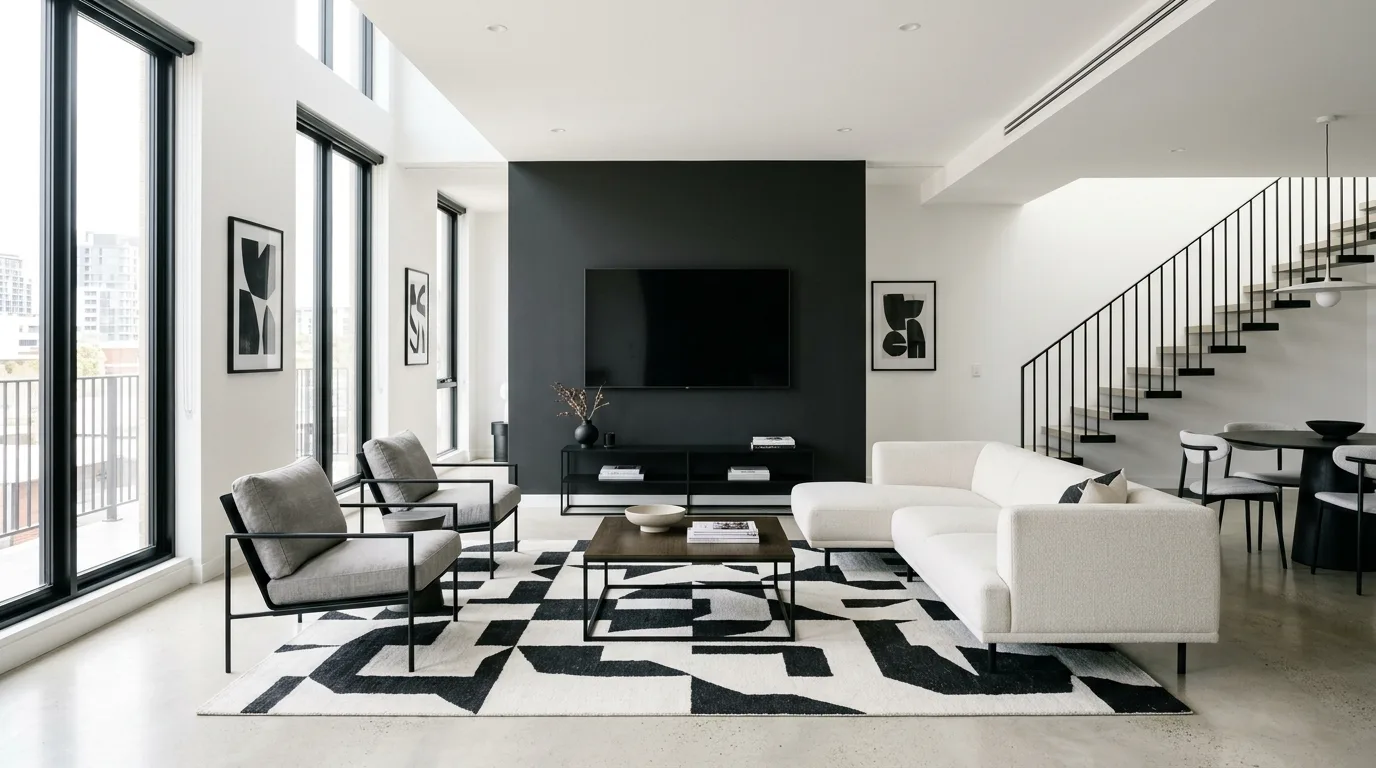
Natural fiber rug linking kitchen and eating area with one calm foundation
Using one larger natural fiber rug across the eating side of an open plan can help the kitchen and dining space feel related without blending into the lounge area. The texture stays quiet, allowing the room to feel connected but still organized.
Idea 10
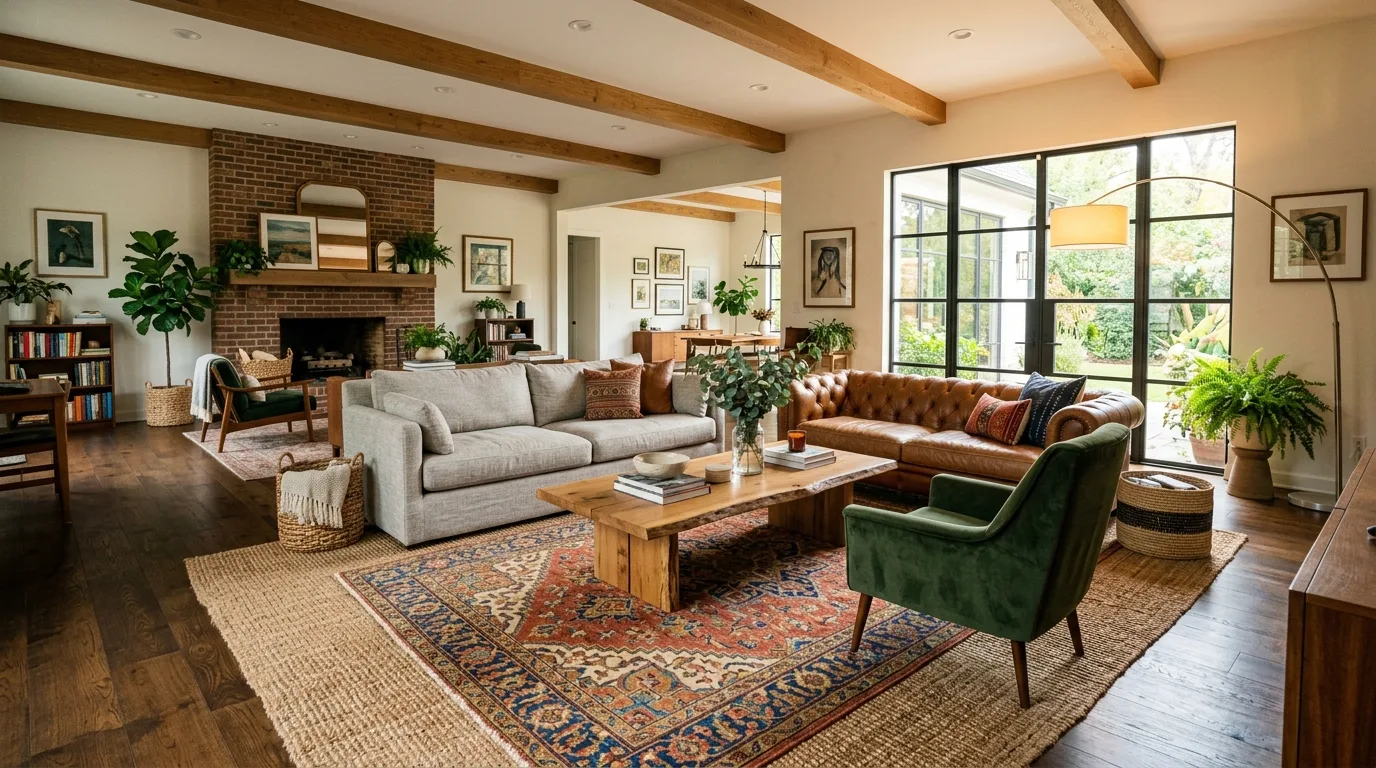
Bold geometric rug setting the office corner apart inside a living room
When a home office sits inside an open plan living room, a geometric rug can help it claim visual territory without needing a wall. The shape and pattern make the corner feel purposeful, which helps the work zone coexist more gracefully with the rest of the room.
Idea 11
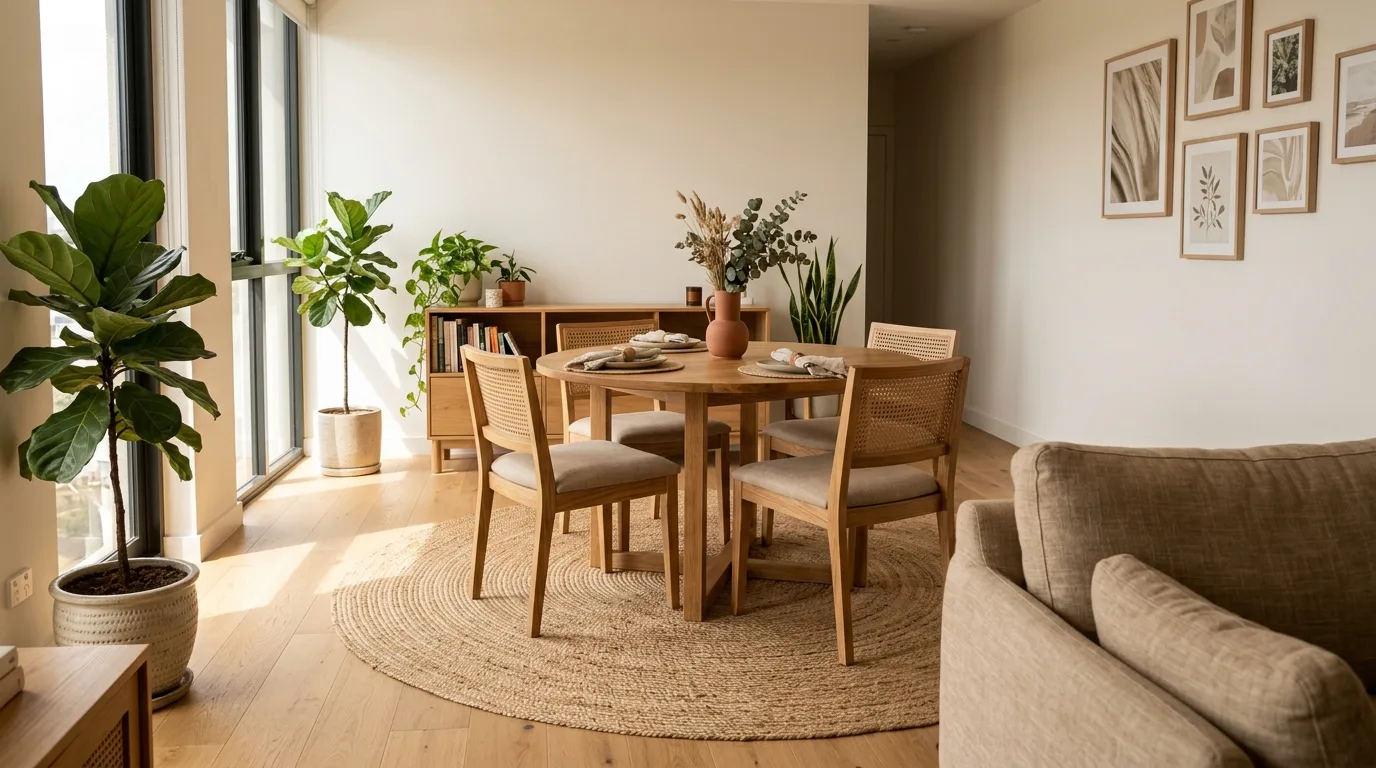
Soft neutral rug under a media wall balancing a brighter dining side
A neutral rug can be the right move when another zone already carries more pattern or color and the room needs one calmer anchor. Under a media wall, it grounds the seating area and stops the open plan from feeling visually overextended.
Idea 12
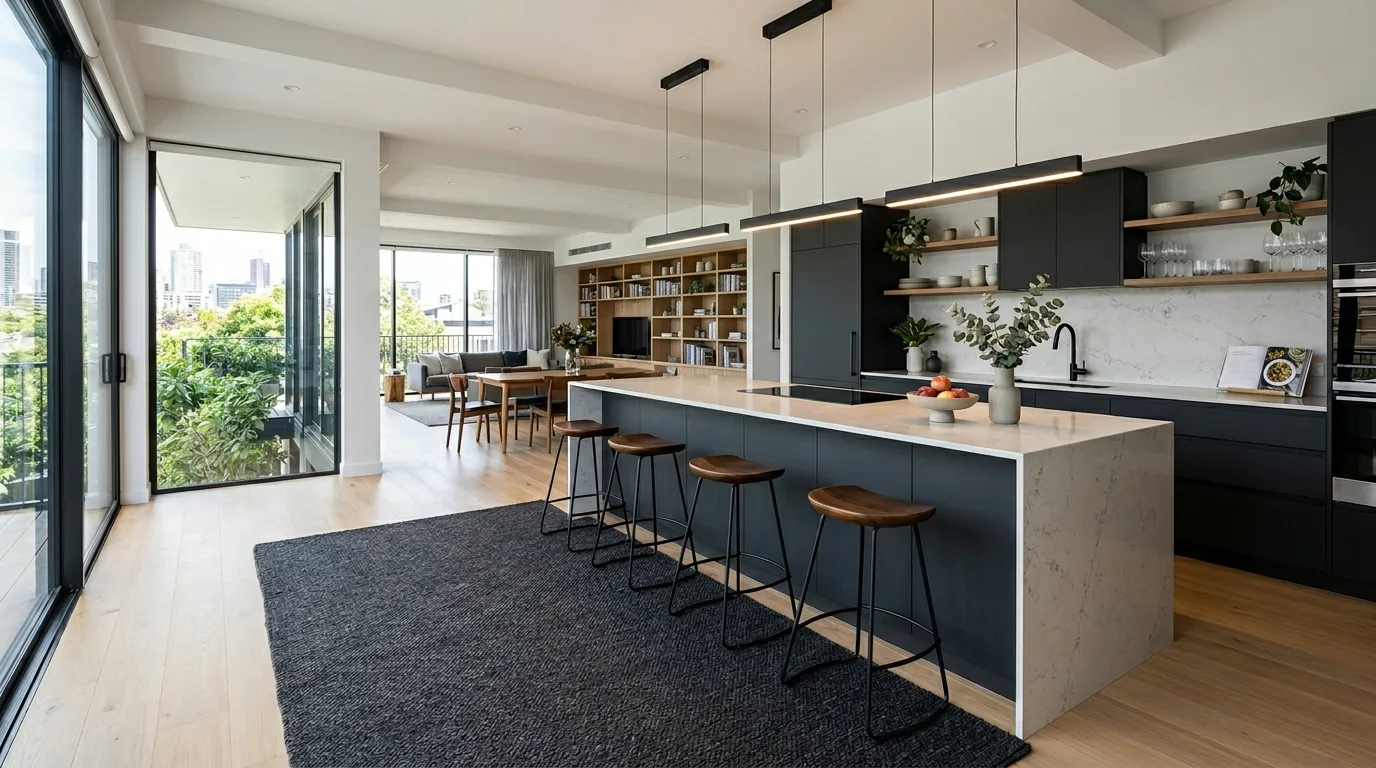
Checker or stripe rug giving a playful family area more definition
Playful rugs can be especially helpful in family-focused open plans because they define activity spaces through pattern in a way that feels cheerful rather than formal. A checker or stripe gives the area energy while still doing the practical zoning work.
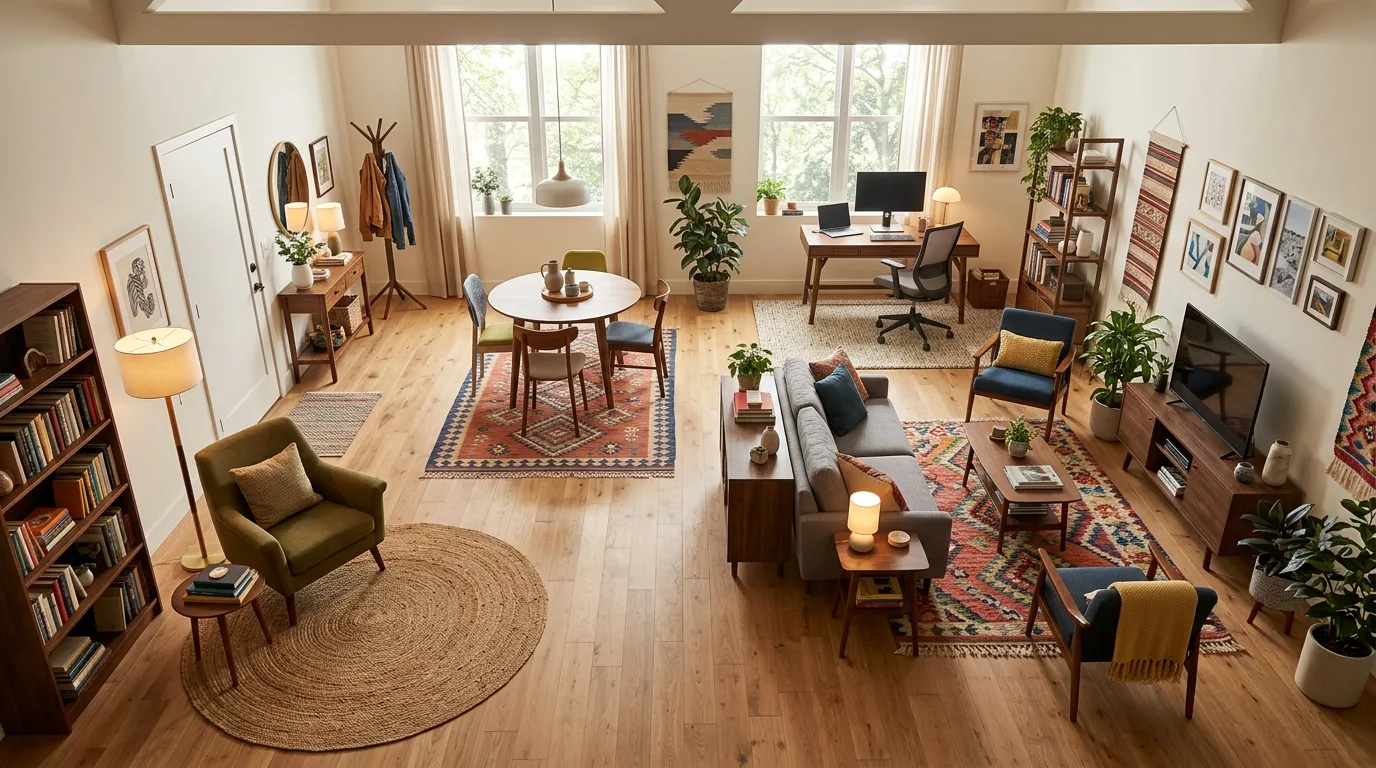
Idea 13
Oversized rug extending beyond furniture to create a full room within a room
An oversized rug often works best in open layouts because it lets the furniture sit comfortably inside one visual field instead of perching awkwardly on the edge. The result is a stronger room-within-a-room effect that makes the whole plan feel more resolved.
Read next on Saw & Sprout


Edible Gardens
13 Clever Tomato Trellis Gardens for a Bountiful Harvest
Small-Space Growing
14 Space-Saving Small Vegetable Gardens for Urban GrowersFrequently asked questions
Why are rugs so helpful in open floor plans?
They create visual boundaries, anchor furniture, soften acoustics, and help each activity area feel more intentional without adding walls.
Should every zone in an open plan have a rug?
Not always. Some rooms feel better when one or two zones are defined strongly and others remain visually lighter.
What is the biggest rug mistake in open layouts?
Using rugs that are too small is one of the most common mistakes because it weakens the furniture grouping instead of clarifying it.