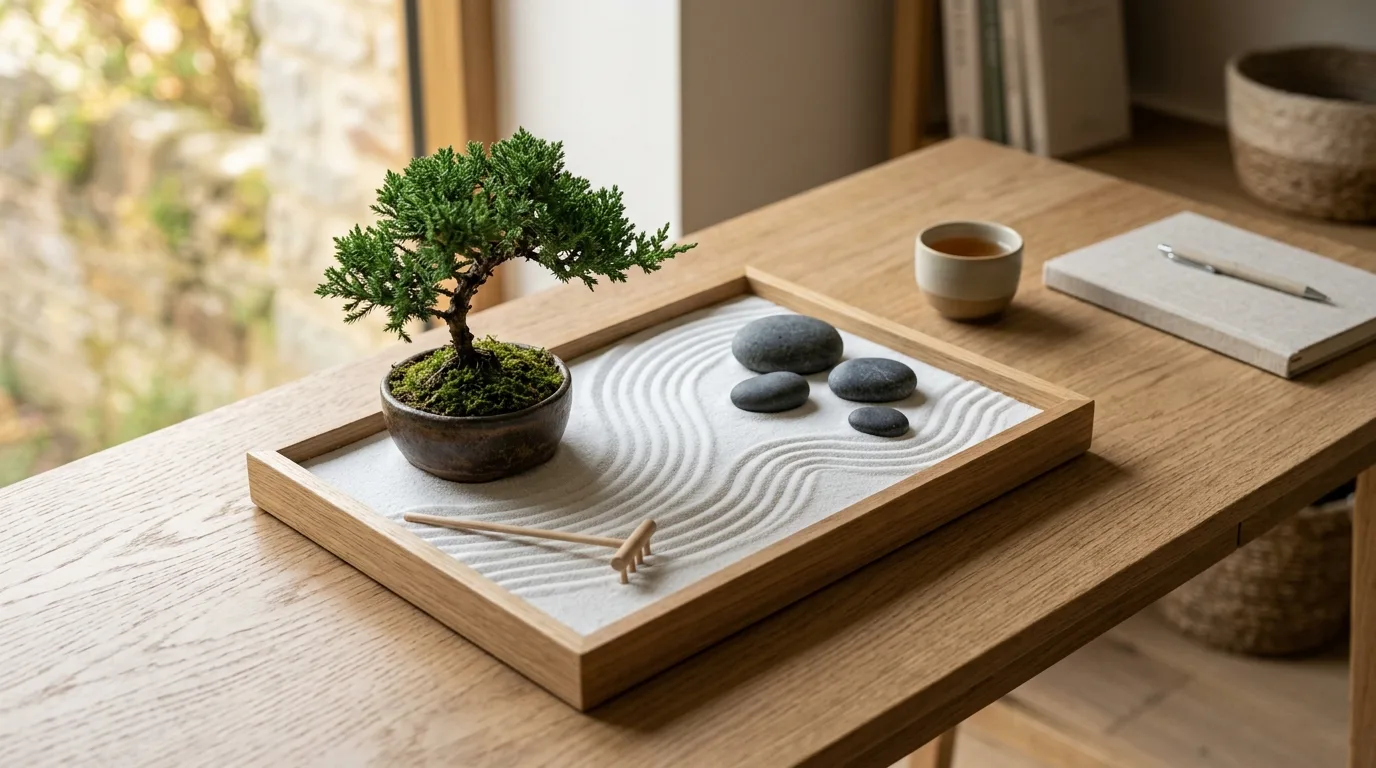
A mini zen garden works best when it feels simple enough to quiet the eye but intentional enough to feel worth keeping on the desk. The right tray, stone balance, and sand pattern can turn a tiny object into a calming ritual instead of just another office accessory.
What makes these little gardens appealing is not only their look but also the pause they invite. Raking sand, adjusting stones, or simply glancing at a calmer surface can give a workday a much softer rhythm, especially in rooms filled with screens and hard edges.
The ideas below focus on small zen gardens that feel decorative, usable, and genuinely restful. Each one uses a compact footprint, but the best versions still create a sense of order, balance, and quiet that reaches beyond their size.
Quick planning notes
Choose a tray or bowl that suits the desk surface, because the container shape strongly influences whether the garden feels modern, rustic, soft, or more architectural.
Limit the number of stones and accents so the composition stays calm and the sand still has enough open space to feel like part of the design.
Place the garden where it can catch natural light or sit just outside the busiest work zone, because that often makes it feel more peaceful and less like clutter.
Keep the rake accessible and the surface easy to reset so interacting with the garden stays simple enough to become part of your routine.
Idea 1
Raked white sand tray with one black river stone
A shallow tray of white sand and a single dark stone can make a desk feel calmer in seconds because the contrast is clean, quiet, and easy on the eye. This kind of simple arrangement works best when you want a meditation object that feels intentional without taking up much room.
Idea 2
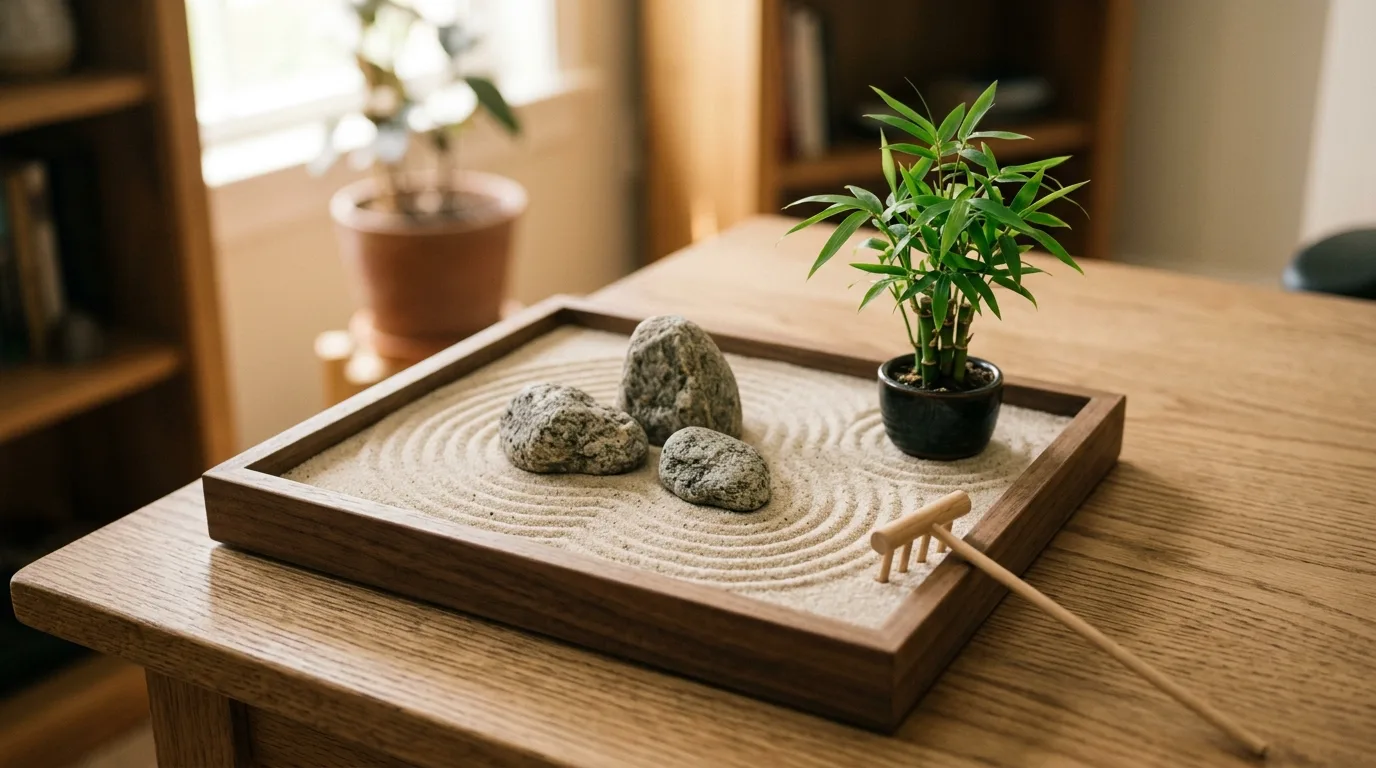
Bamboo framed garden with a tiny moss island
The bamboo edge gives the tray a warmer handmade feeling while a small patch of moss breaks up the sand beautifully and keeps the display from feeling too stark. It is a lovely option if you want a desktop garden that reads soft and grounded instead of minimalist only.
Idea 3
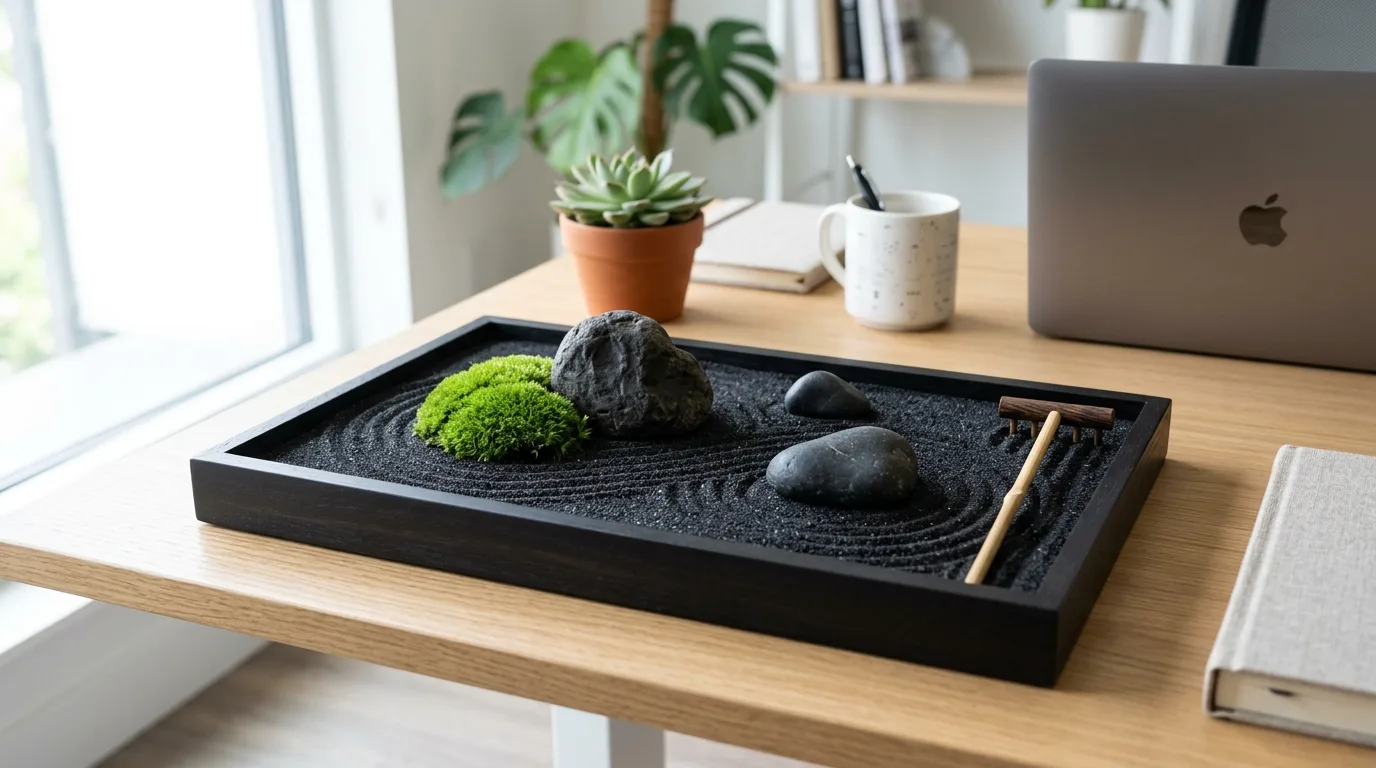
Round ceramic bowl garden for a softer desktop look
Using a round bowl instead of a rectangular tray makes the whole piece feel more sculptural and decorative, especially on a small table or shelf. The curved edges naturally soften the garden and help it look like a finished object rather than a workplace accessory.
Idea 4
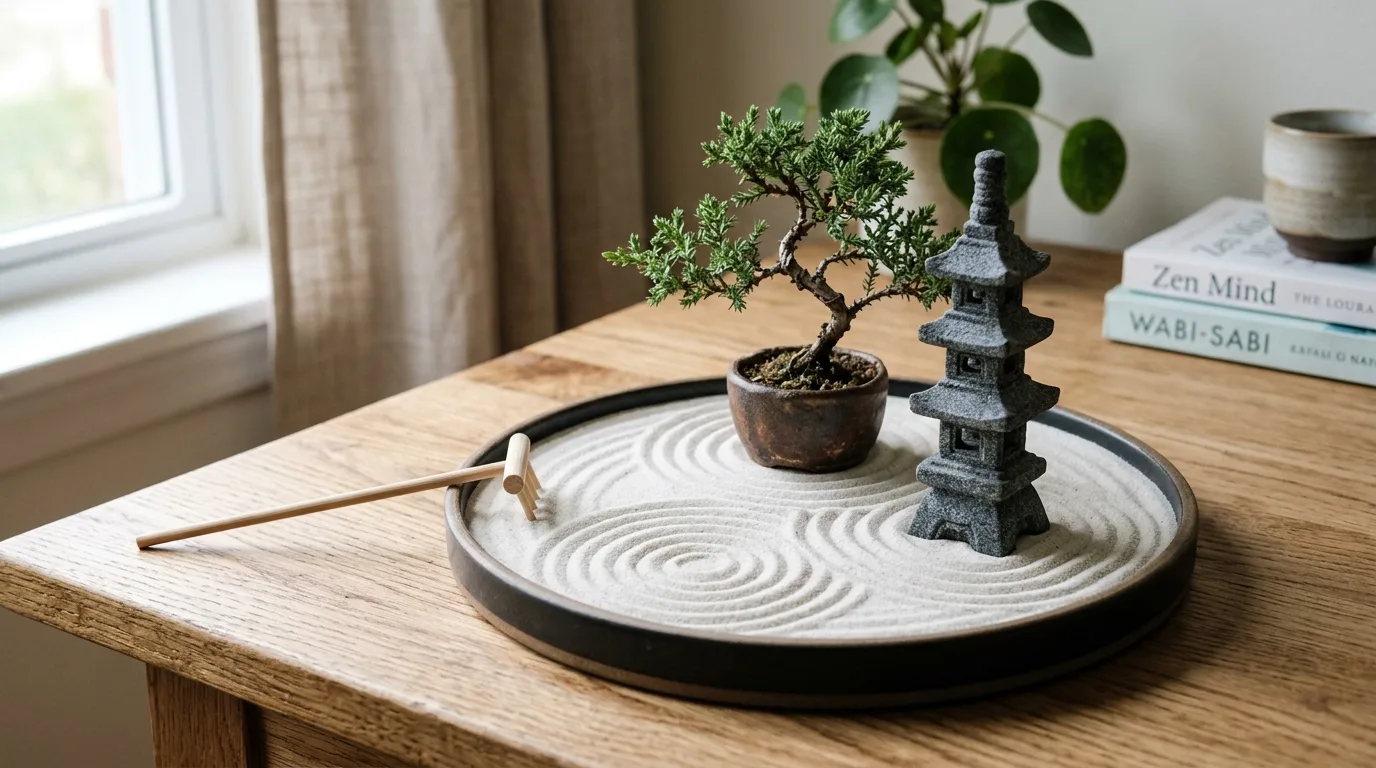
Dark gravel garden with a low stacked pebble tower
Dark gravel changes the mood completely by giving the garden more depth and a quieter, evening-like tone that feels especially good in modern rooms. A low stone tower adds just enough vertical shape to keep the composition interesting without making it feel busy.
Idea 5
Wooden tray garden with a slim rake tucked inside
A wooden tray makes the garden feel more tactile and natural, and keeping the rake inside the tray turns it into something you are more likely to use often. That small detail matters because the ritual of moving the sand is part of what makes the setup feel calming.
Idea 6
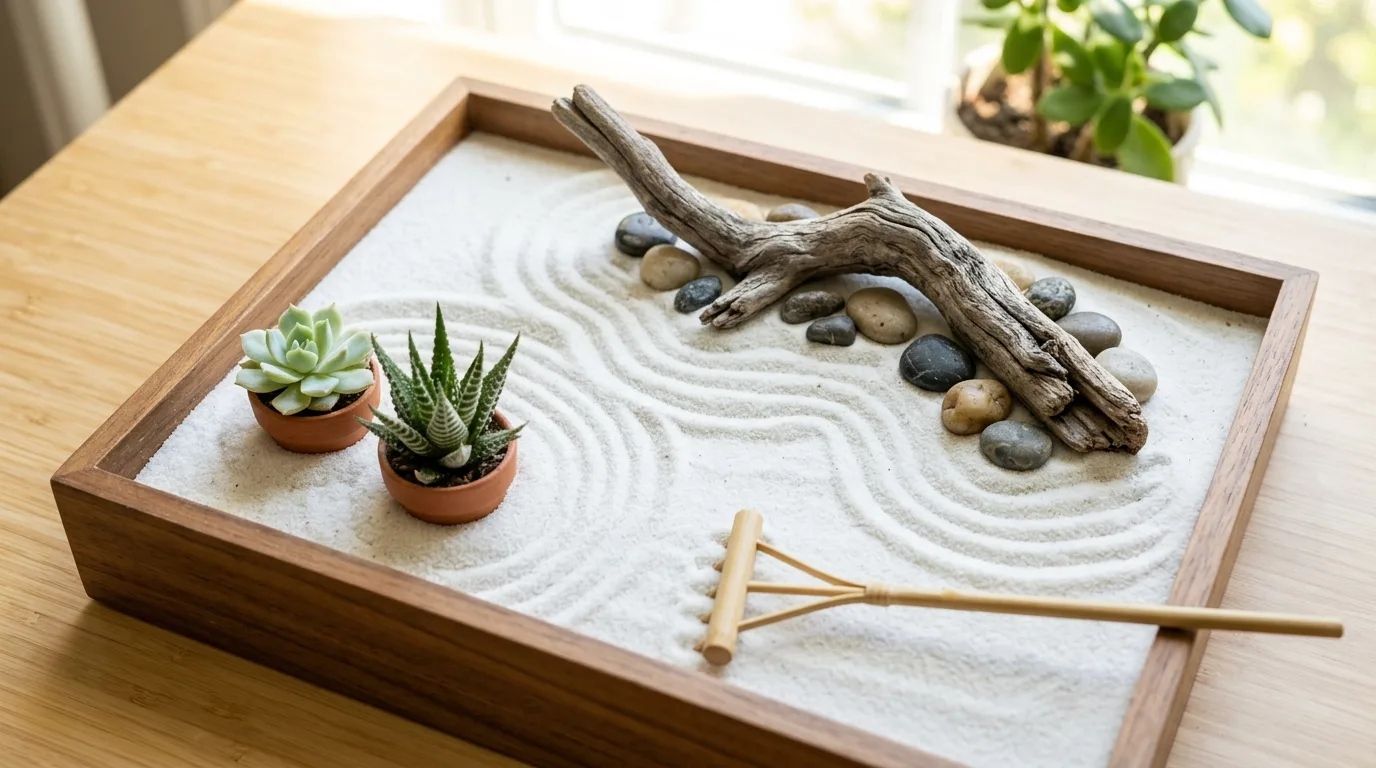
Zen corner with a candle and a tiny succulent
Pairing the tray with one candle and a small succulent turns it into a fuller little retreat rather than a standalone desk ornament. This layout works especially well when you want a focused corner for breathing, journaling, or stepping away from screen noise for a minute.
Idea 7
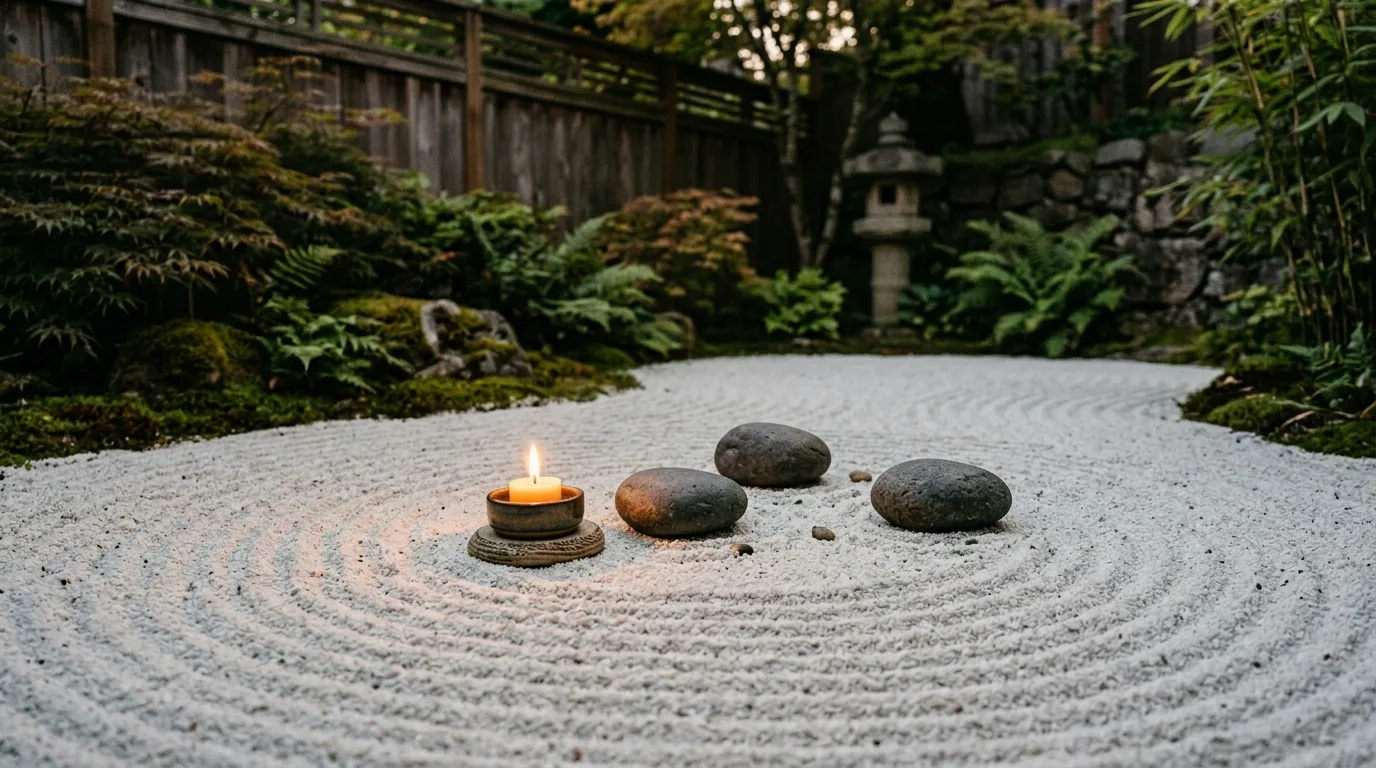
Stone path pattern traced through fine pale sand
A line of small stones laid like a path gives the tray a stronger sense of movement and helps the whole piece feel a little more narrative and meditative. It is a subtle way to make a mini garden look designed rather than simply filled with sand and rocks.
Idea 8
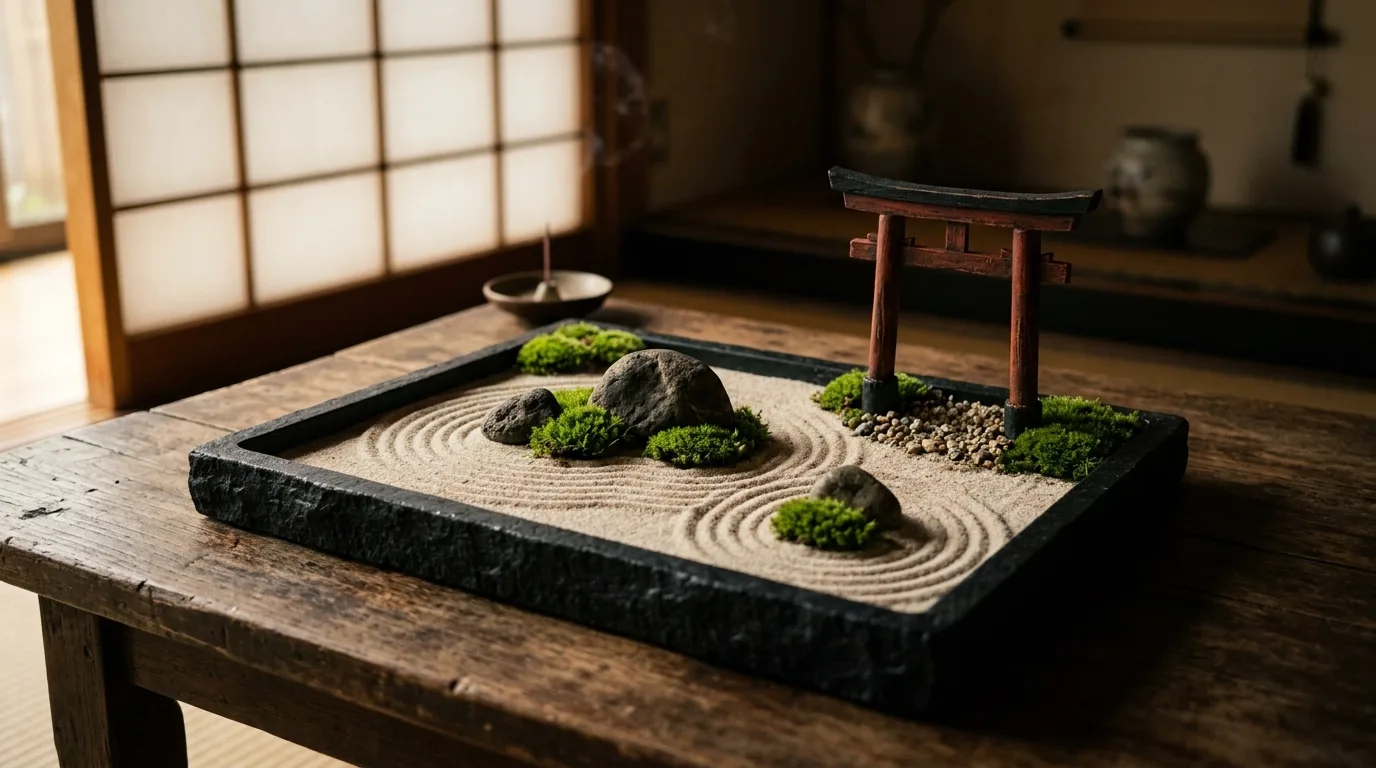
Low concrete dish garden for a modern office shelf
A concrete vessel gives the garden a crisp architectural edge that works beautifully in cleaner offices or more minimal interiors. The rougher texture of the dish also keeps the tiny scene from feeling too polished, which can make it more restful to look at.
Idea 9
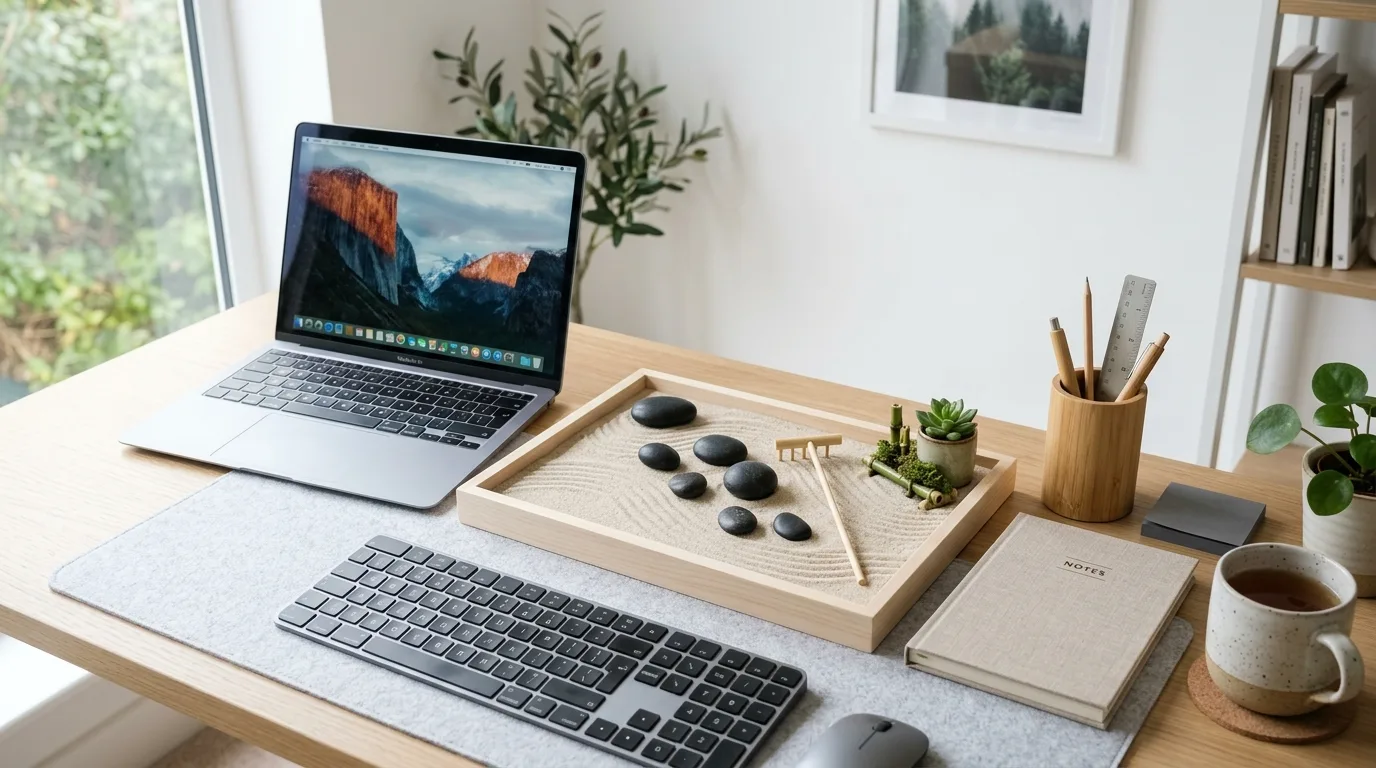
Three-stone composition with long curved rake lines
Three carefully spaced stones create a more balanced arrangement than a scattered handful, especially when the surrounding rake lines are broad and gently curved. The result feels measured and calm, which is often exactly what makes a miniature garden satisfying to revisit.
Idea 10
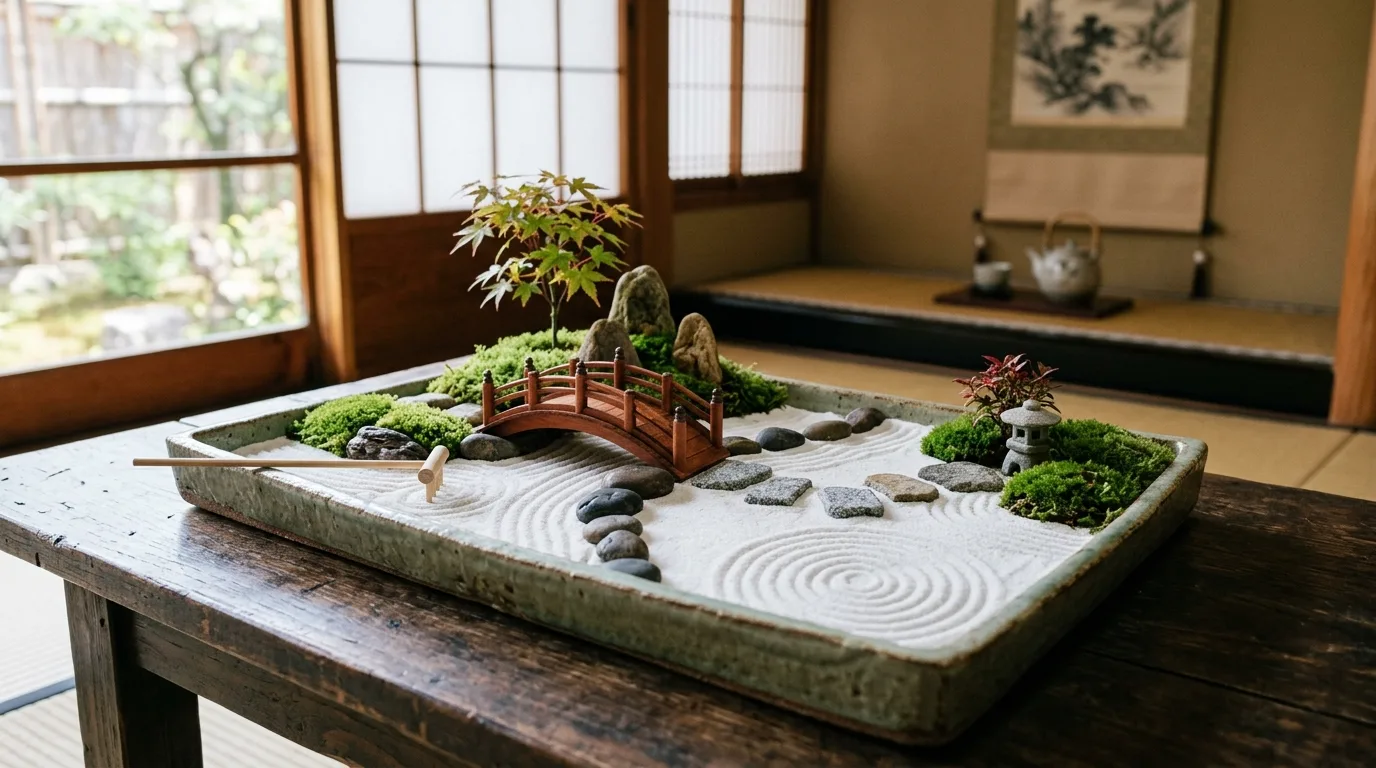
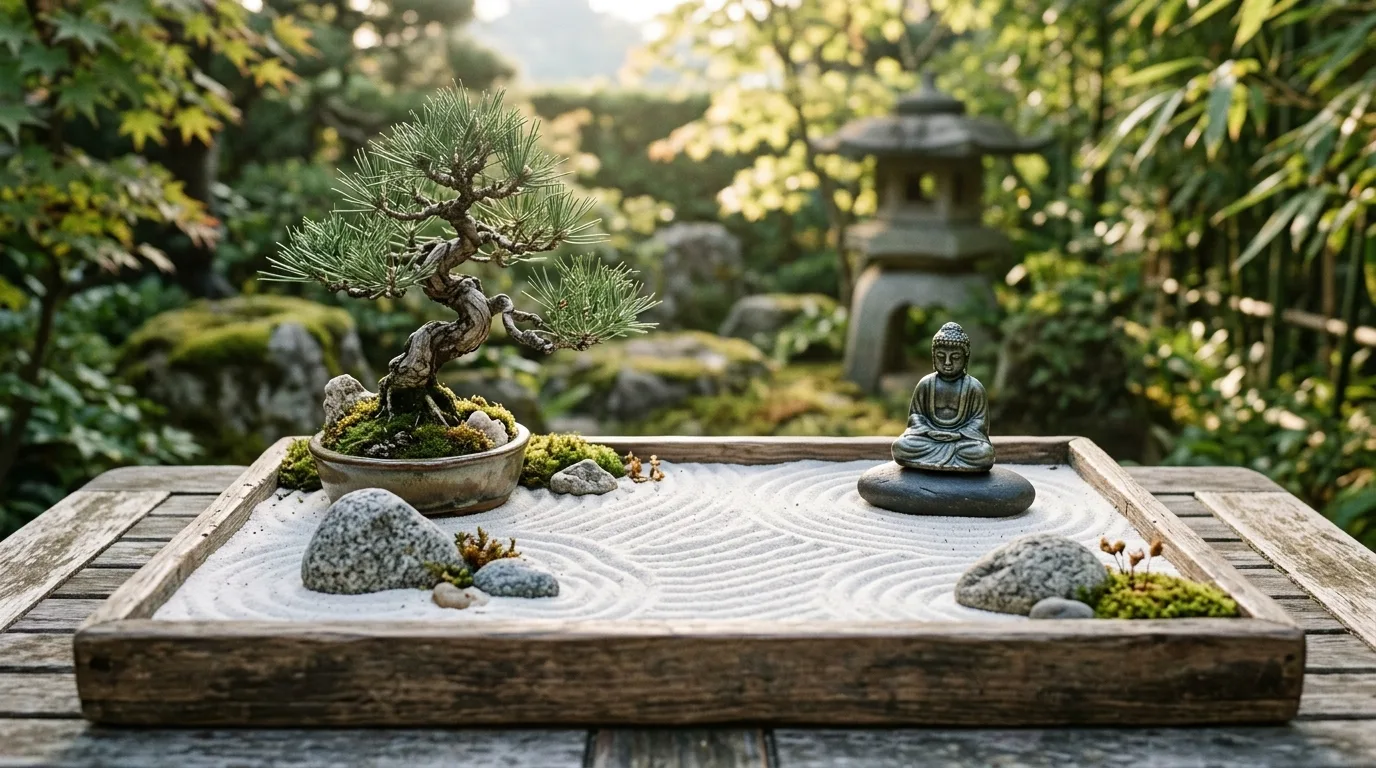
Miniature bridge detail over a small gravel bed
A tiny bridge introduces a playful design element while still fitting the slower mood of a zen garden, and it can make the whole tray feel more like a complete landscape. This is a nice choice when you want the piece to feel decorative as well as meditative.
Idea 11
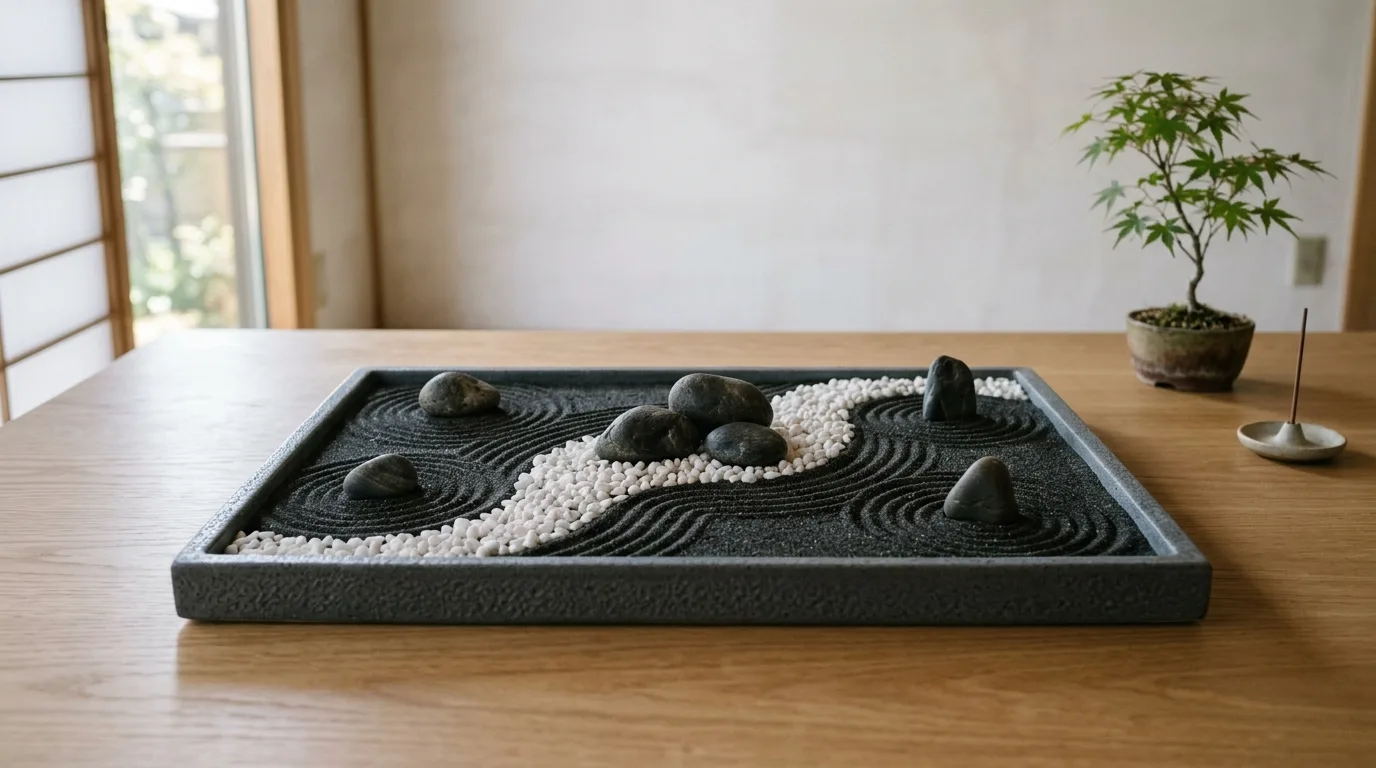
Slate edged tray with moss and driftwood accents
Slate, moss, and driftwood give the little garden a grounded natural palette that feels more earthy than polished, which can be especially good in rooms full of electronics and hard lines. The textures do a lot of the visual work without needing many components.
Idea 12
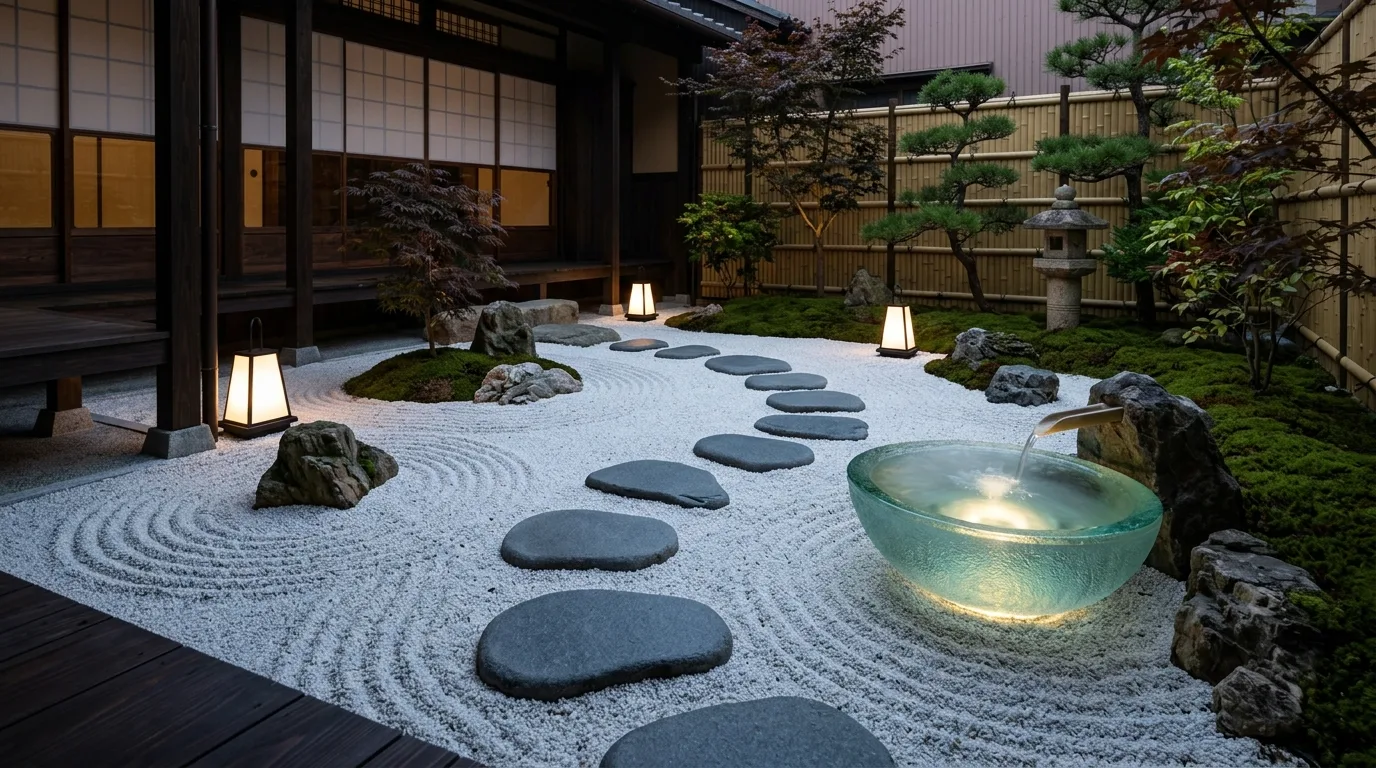
Window side meditation tray with clean morning light
Placing the garden near a window changes the whole experience because the soft movement of daylight makes even the simplest sand patterns feel more alive. It is an easy way to make a tiny tray feel more peaceful and more connected to the rhythm of the day.
Read next on Saw & Sprout
Edible Gardens
13 Clever Tomato Trellis Gardens for a Bountiful Harvest
Small-Space Growing
14 Space-Saving Small Vegetable Gardens for Urban GrowersFrequently asked questions
What should a mini zen garden include?
Most good mini zen gardens use a simple tray, fine sand or gravel, a few carefully placed stones, and sometimes one soft natural detail such as moss or driftwood.
Do desk zen gardens need to be very minimal?
Usually yes. They tend to feel more calming when the composition is restrained and the materials are allowed to breathe instead of being overfilled with accessories.
Where does a mini zen garden look best?
They work especially well on desks, shelves, window ledges, and reading corners where the scale stays intimate and the garden can be seen clearly without competing with too many other objects.