Japanese landscape design creates beauty through balance, restraint, and careful attention to how stone, water, planting, and empty space relate to one another.
What makes these gardens so compelling is that they do not need visual excess to feel complete. A few thoughtful materials arranged with discipline can create extraordinary calm and depth.
These Japanese landscape ideas explore gravel gardens, pond settings, bamboo screens, tea-garden entries, moon-viewing terraces, and intimate urban retreats shaped around zen garden beauty.
Quick planning notes
Keep the composition edited so each stone, plant, and open area has enough meaning and room to breathe.
Use natural materials that age gracefully and support a quieter mood.
Think about the garden as an experience of movement, light, and reflection rather than only a static picture.
Let seasonality matter in subtle ways through one tree, one path, or one changing focal moment.
Idea 1
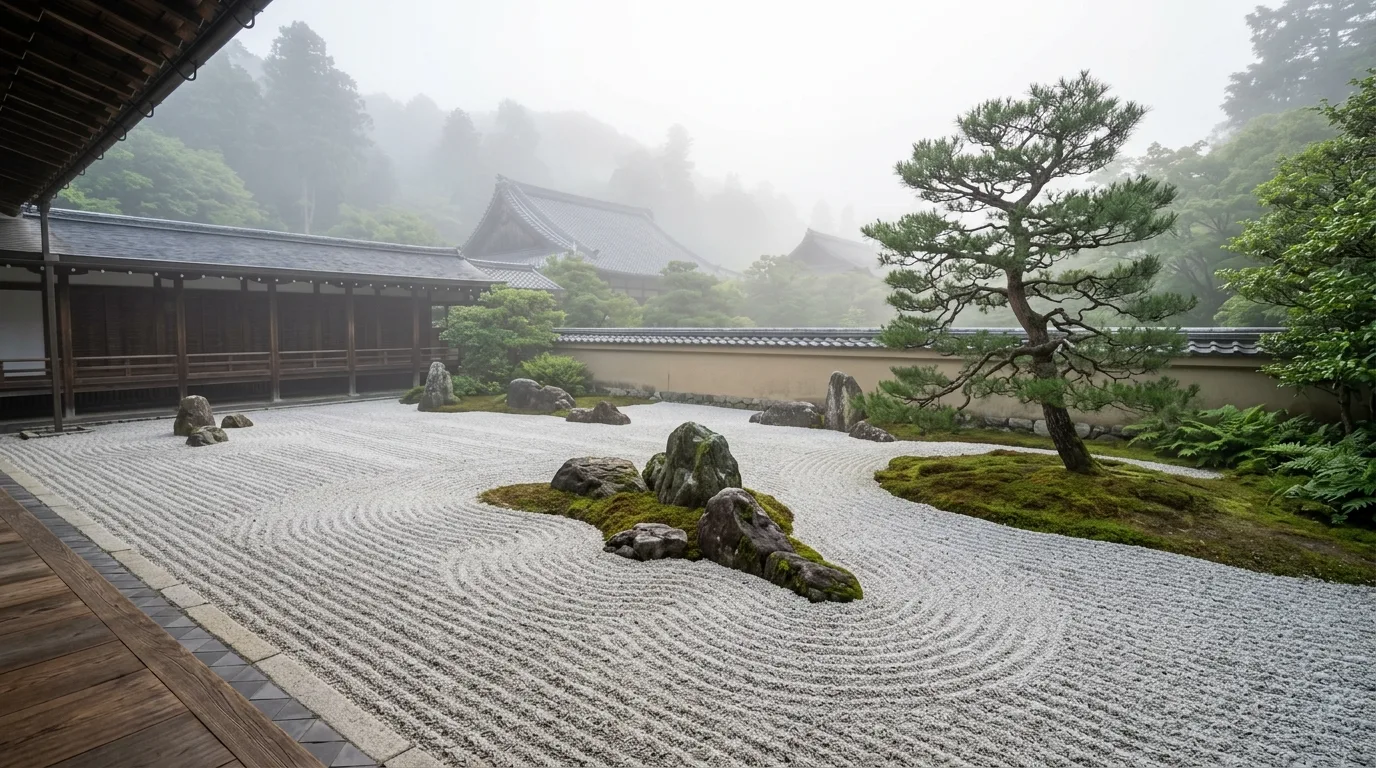
A gravel court with stone lantern and cloud-pruned pine
Japanese-inspired landscapes often feel so tranquil because they rely on fewer, more meaningful elements whose placement and proportion carry enormous emotional weight. Gravel, stone, and one beautifully shaped pine can create a complete sense of calm all on their own.
Idea 2
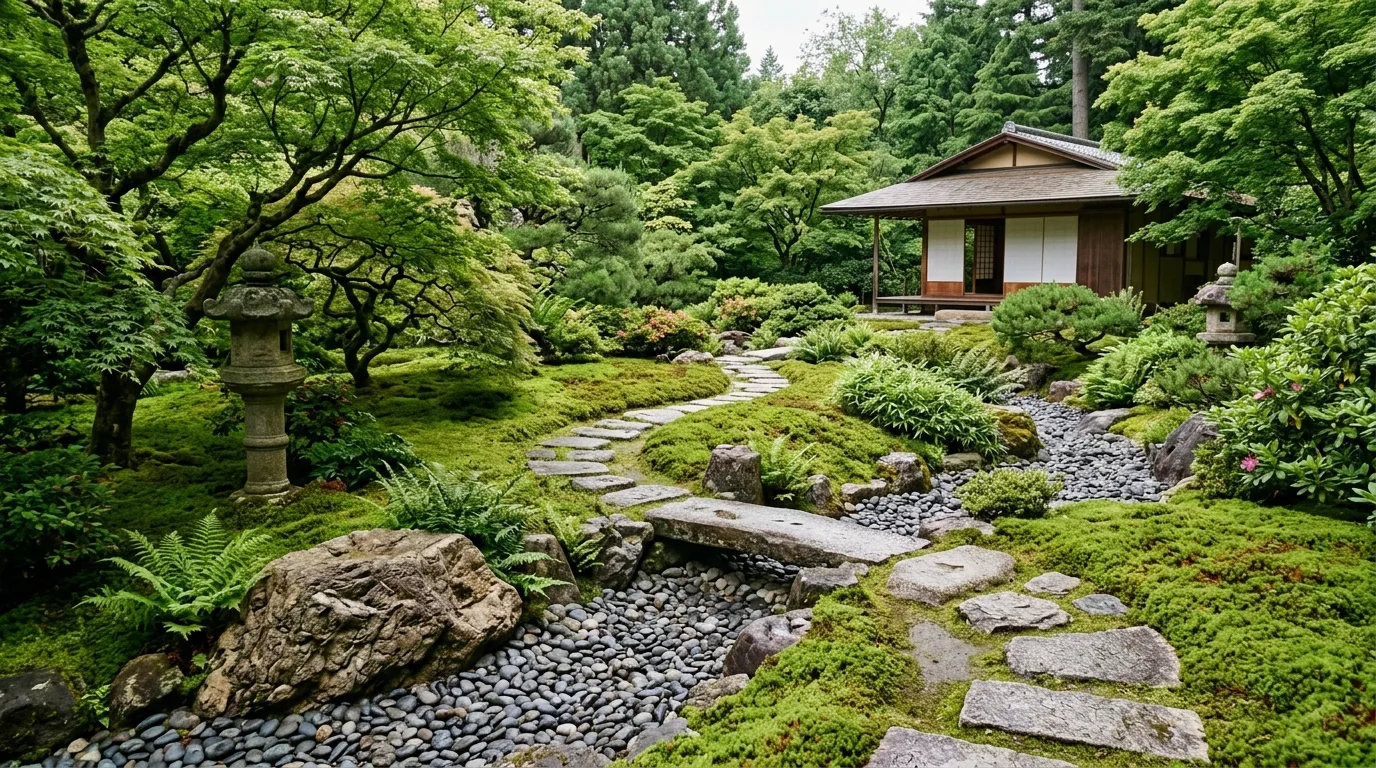
A stepping-stone path crossing moss and filtered shade
Pathways in Japanese gardens are rarely only functional, because the rhythm of stepping stones can slow movement and deepen attention to texture, shadow, and changing perspective. Moss and filtered light make the experience even more meditative.
Idea 3
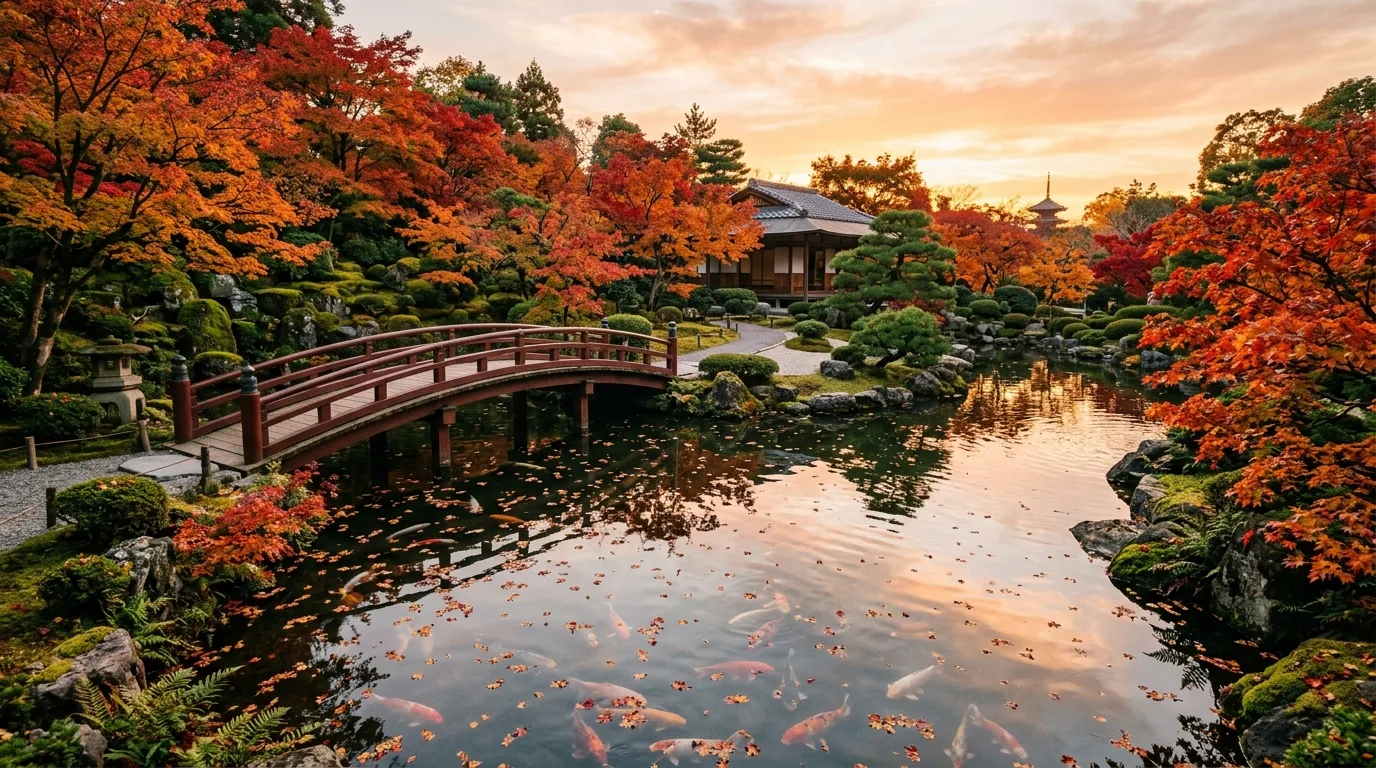
A pond garden with bridge reflection and soft iris edges
Water adds stillness and depth to Japanese landscapes, especially when the planting and structures around it remain quiet enough for reflection to become part of the design. The whole scene feels peaceful, balanced, and deeply composed.
Idea 4
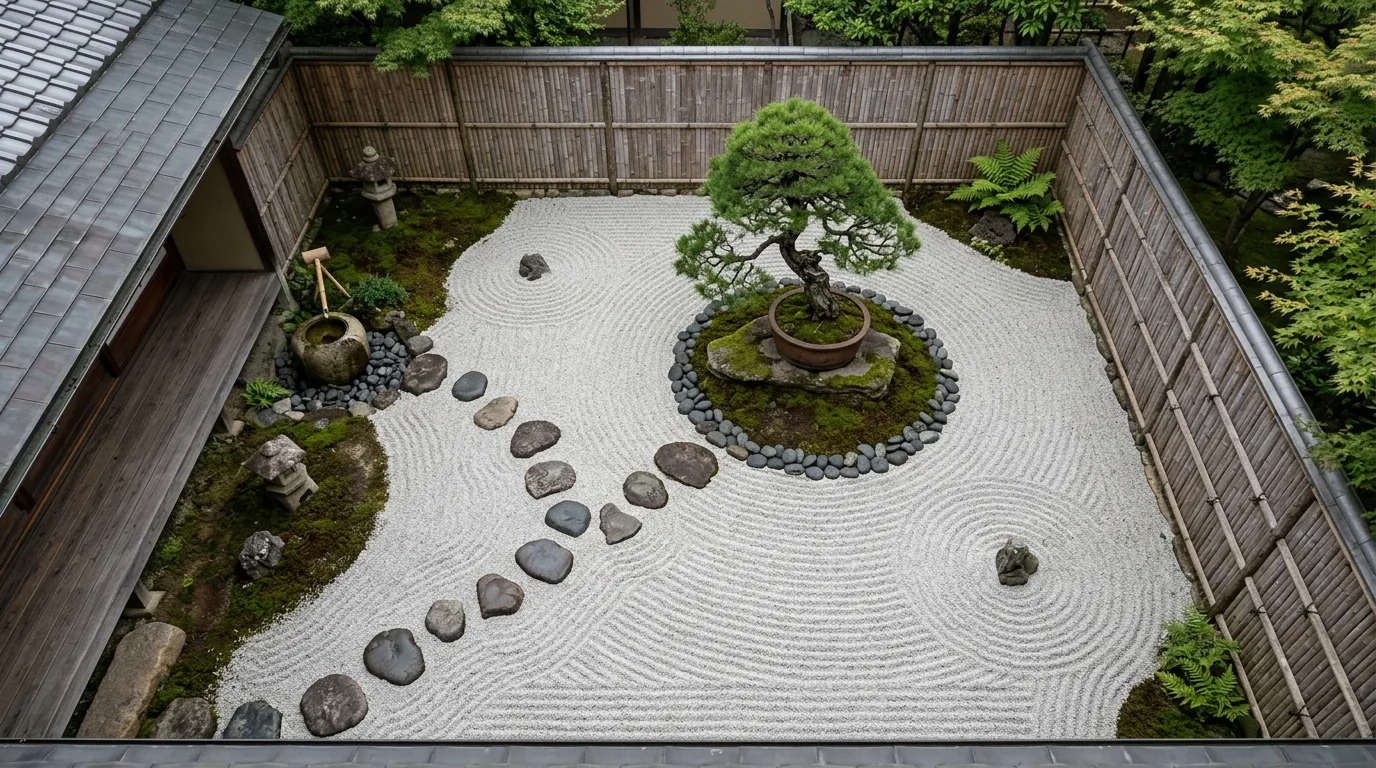
A courtyard tsubo-niwa with bamboo and one stone basin
Small Japanese courtyard gardens are powerful because they show how little space is needed to create atmosphere when every material is selected with care and every element serves the whole. The basin, bamboo, and stone feel intimate and complete together.
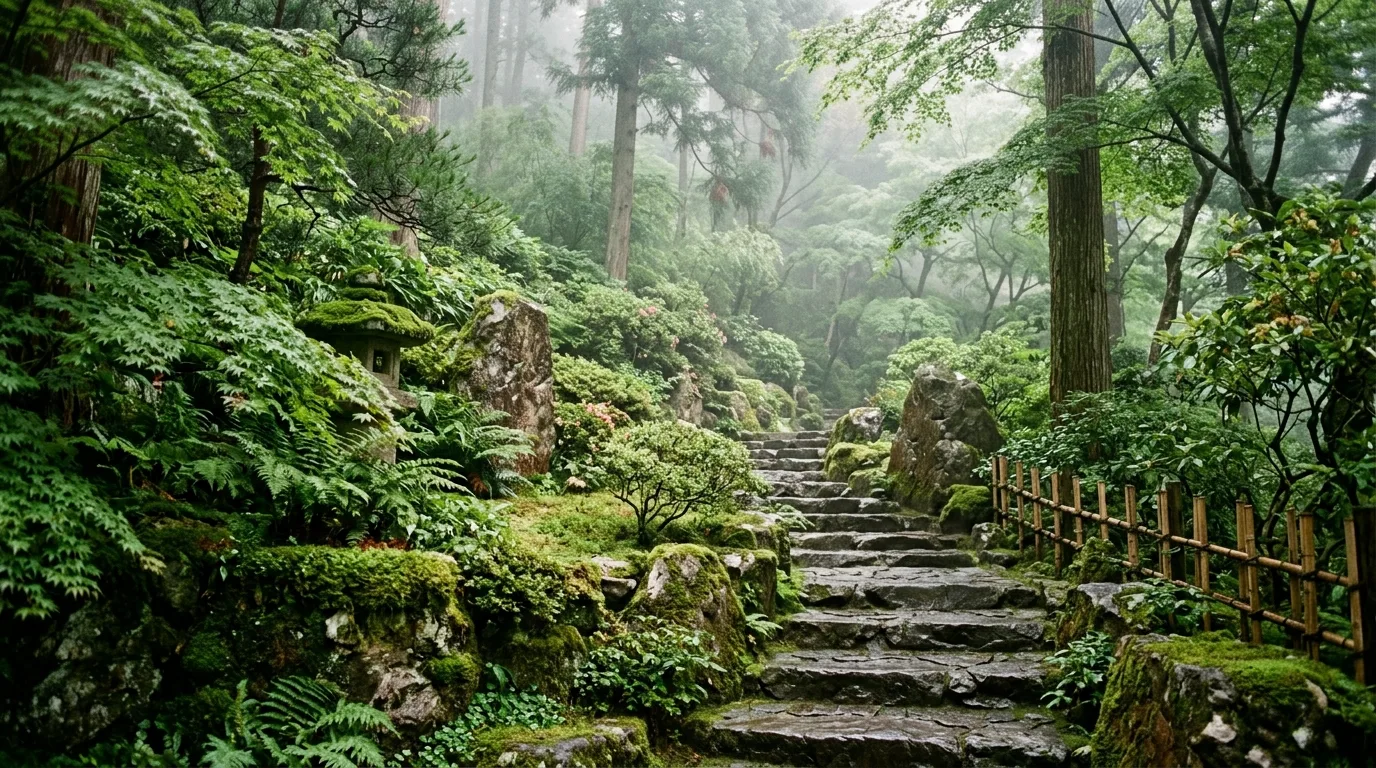
Idea 5
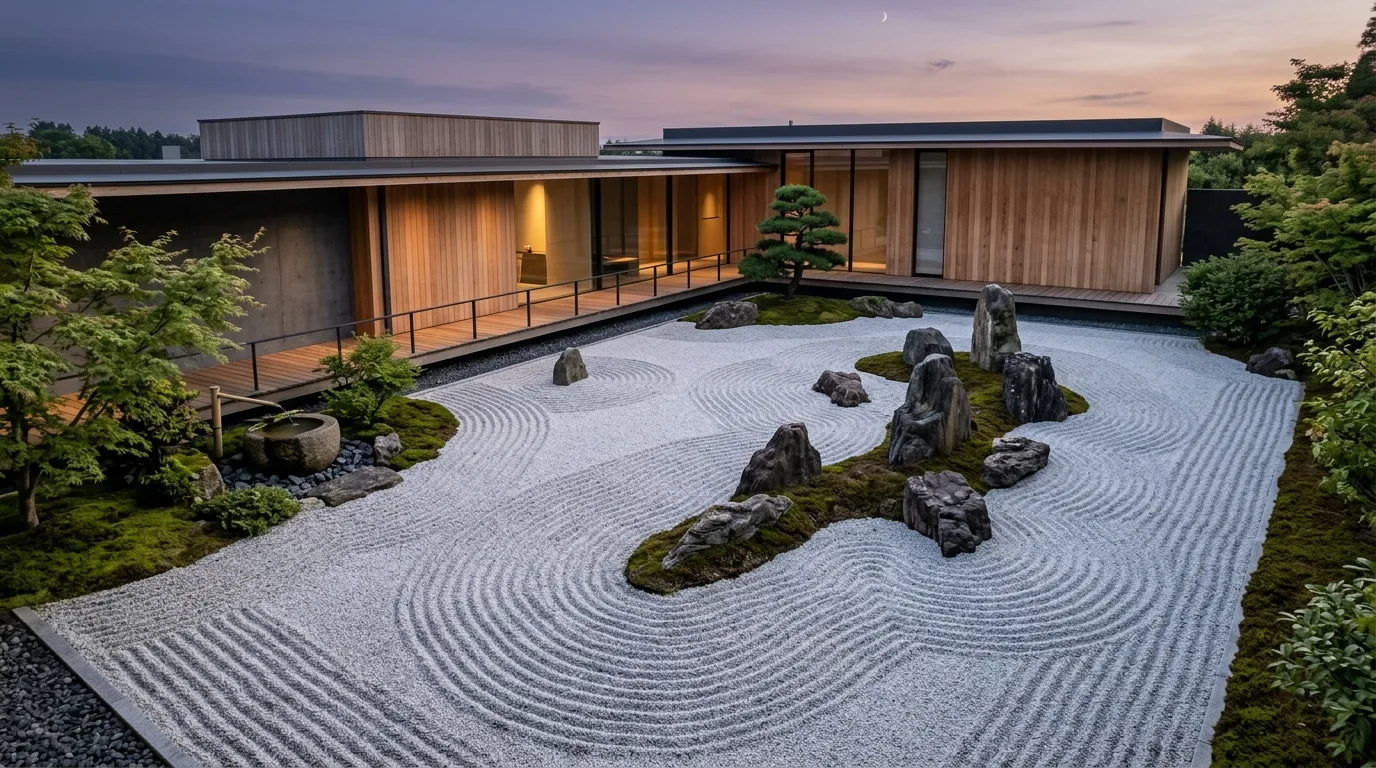
A raked dry garden using shadow and rock for quiet drama
Dry gardens can feel more moving than lush ones when the composition of rock, gravel, and empty space is handled well, because the viewer’s attention is drawn to shape, balance, and silence. The restraint becomes the beauty.
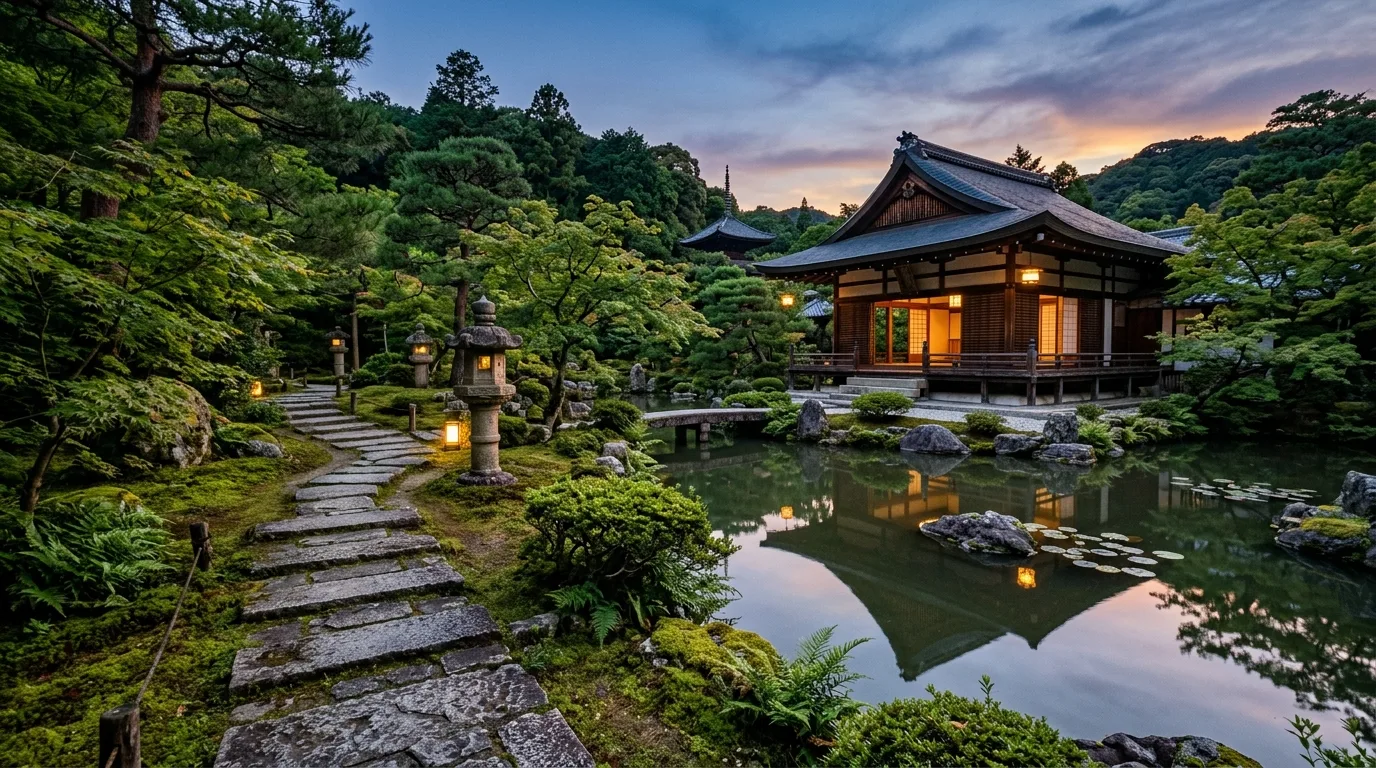
Idea 6
A tea-garden entry with weathered stone and clipped evergreen calm
Thresholds are especially meaningful in Japanese design, and a carefully weathered approach can make entering the garden feel like a transition into a quieter state of mind. Evergreen structure keeps the scene simple and grounded throughout the year.
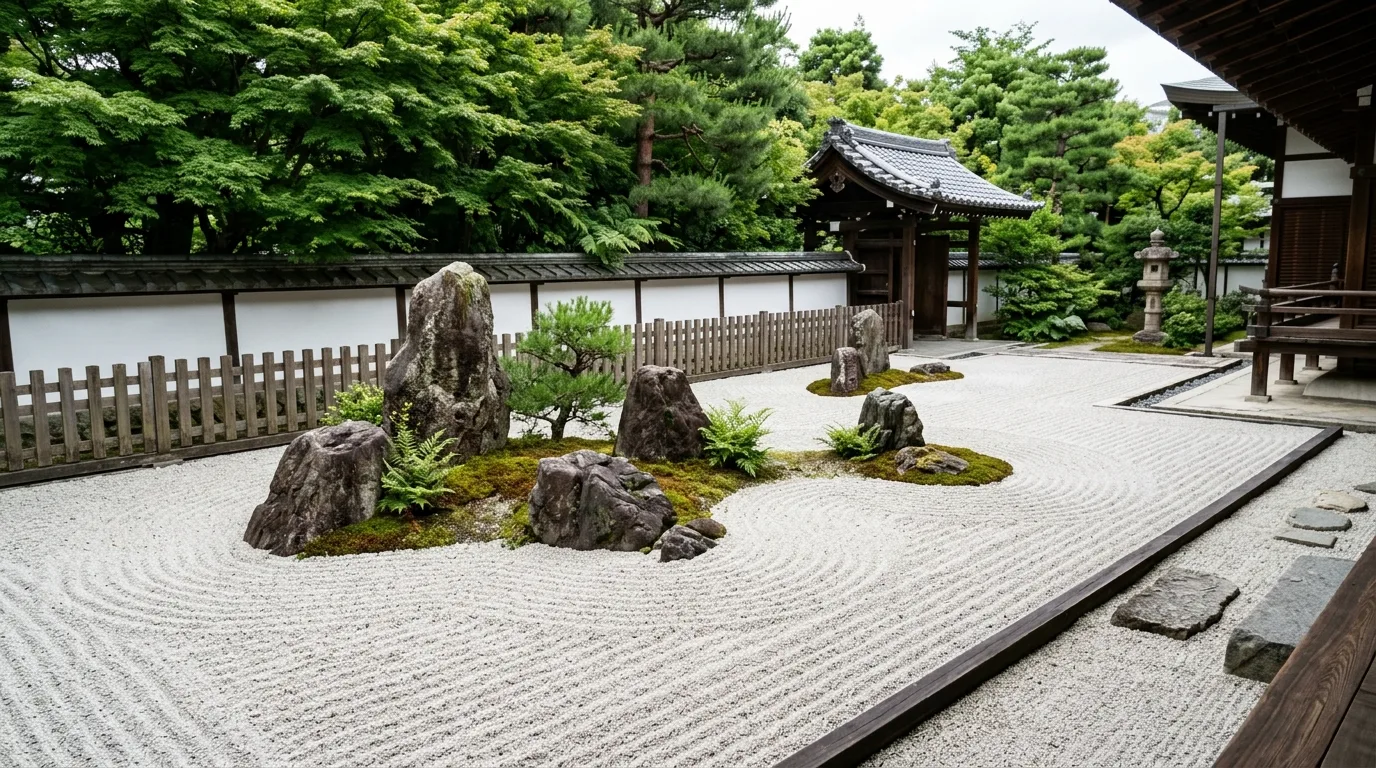
Idea 7
A maple-led corner garden glowing softly in autumn
Seasonal change has a special role in Japanese landscapes because one tree in bloom or color can shape the entire emotional tone of the garden when everything else remains composed and understated. The maple becomes poetry rather than decoration.
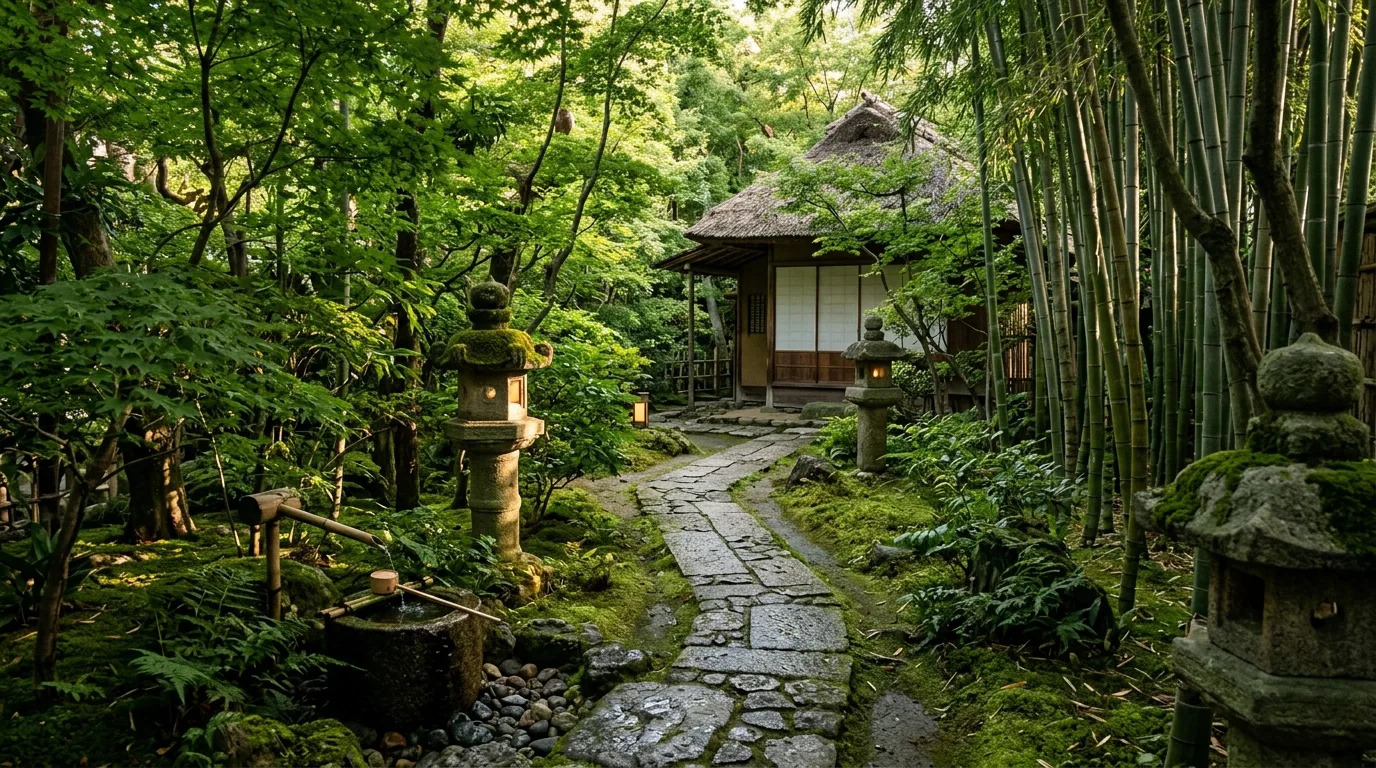
Idea 8
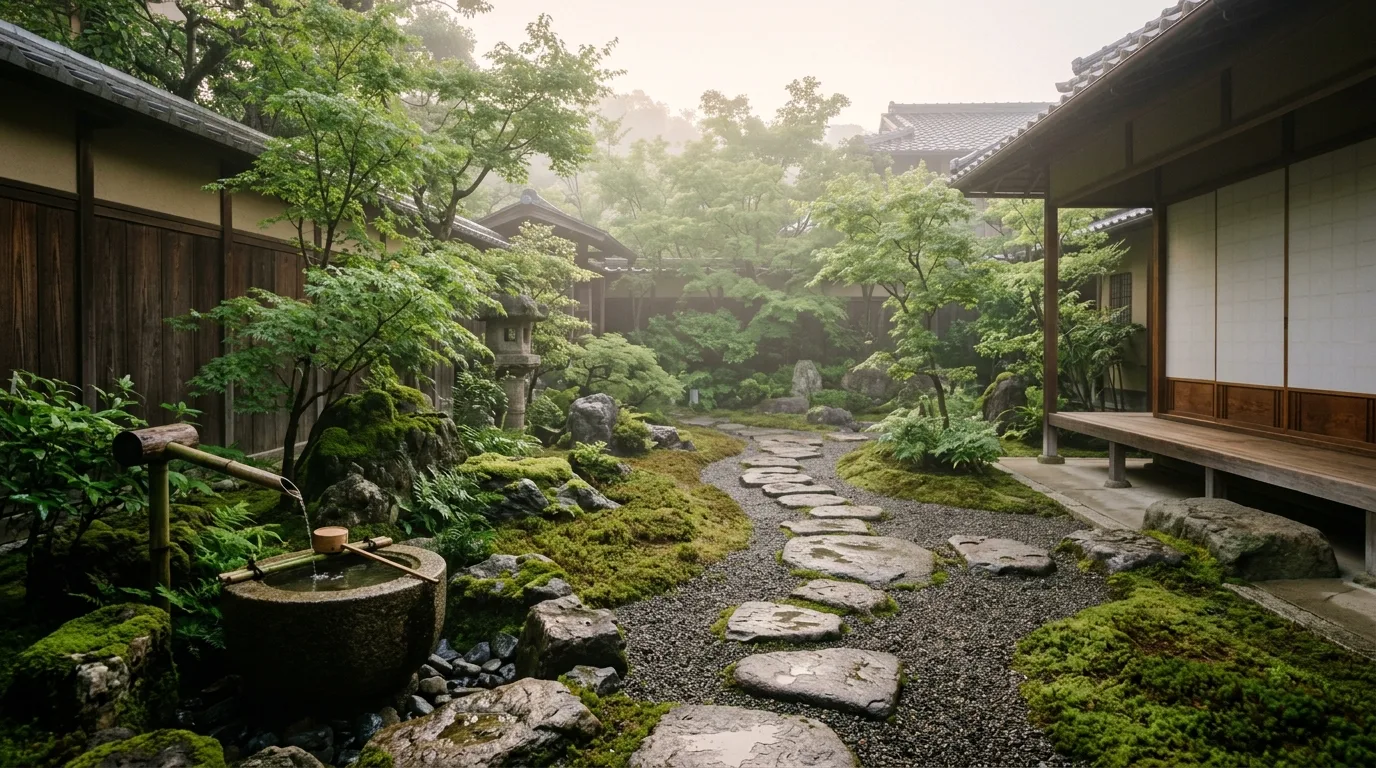
A bamboo fence backdrop with layered stone and soft groundcover
Screening in Japanese gardens often contributes real beauty instead of simply blocking views, and bamboo fencing paired with stone and low planting creates an enclosure that feels light, natural, and deeply supportive of the whole composition.
Idea 9
A moon-viewing terrace with plain paving and restrained planting
Some of the calmest landscapes are designed around observation rather than activity, and a simple terrace that leaves room for sky and seasonal light can feel remarkably complete with only minimal planting around it. The openness becomes contemplative.
Idea 10
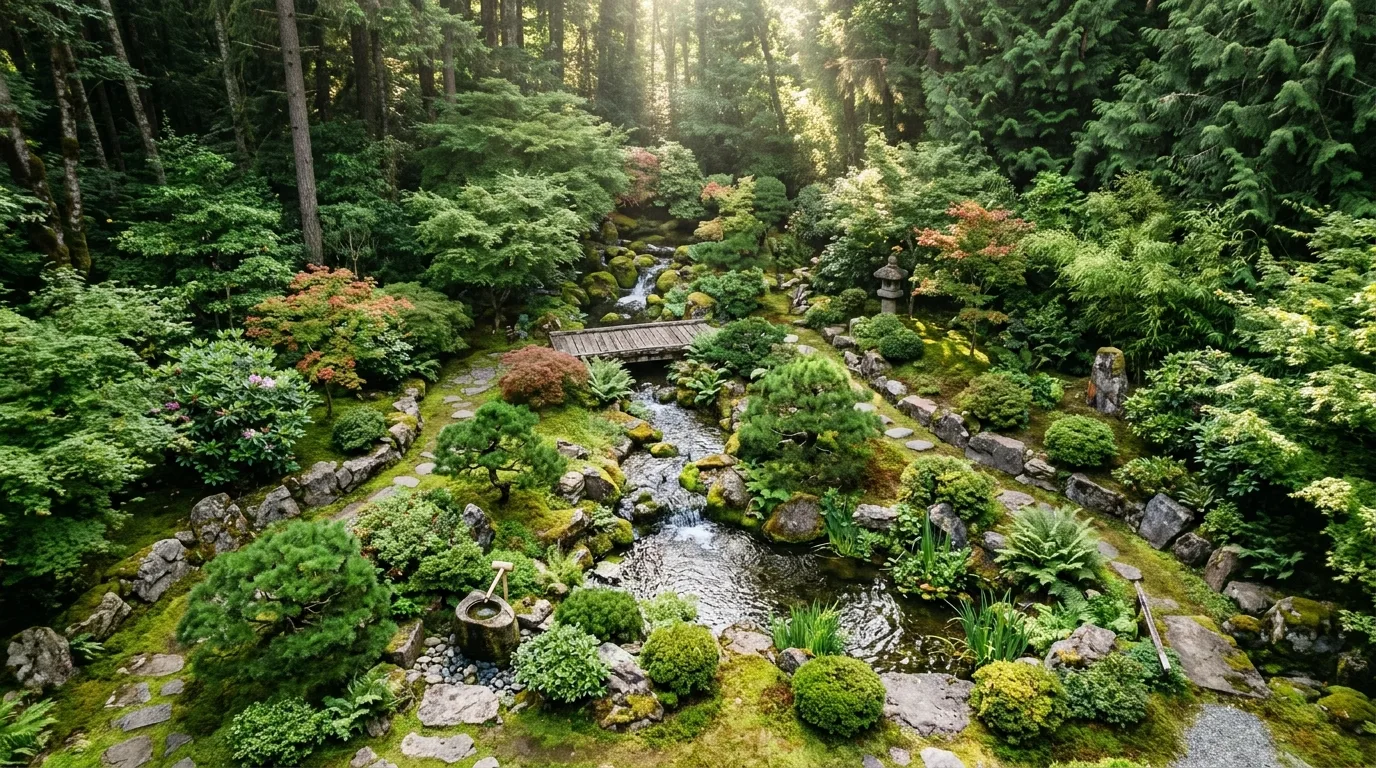
A bridge-over-stream scene with fern texture and cool shade
Moving water through a shaded Japanese-style garden can create a deeply restorative feeling because the sound, crossing, and filtered greenery all reinforce the slow rhythm of the place. The bridge becomes a gentle focal pause.
Idea 11
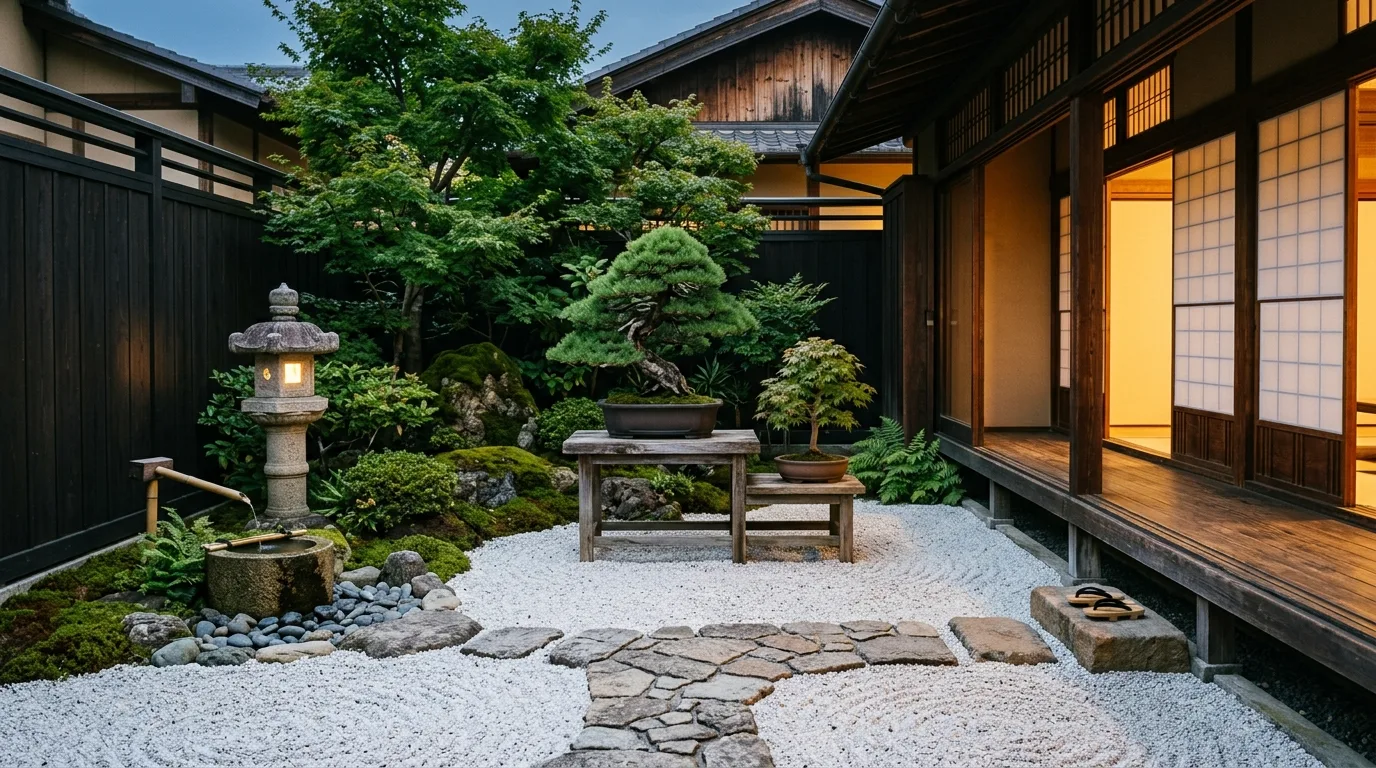
A courtyard wall softened by trained branches and precise gravel
Japanese landscapes often make excellent use of walls because they treat them as quiet backdrops for branch structure, shadow, and carefully edited materials rather than as blank boundaries to ignore. The garden gains depth without needing more objects.
Idea 12
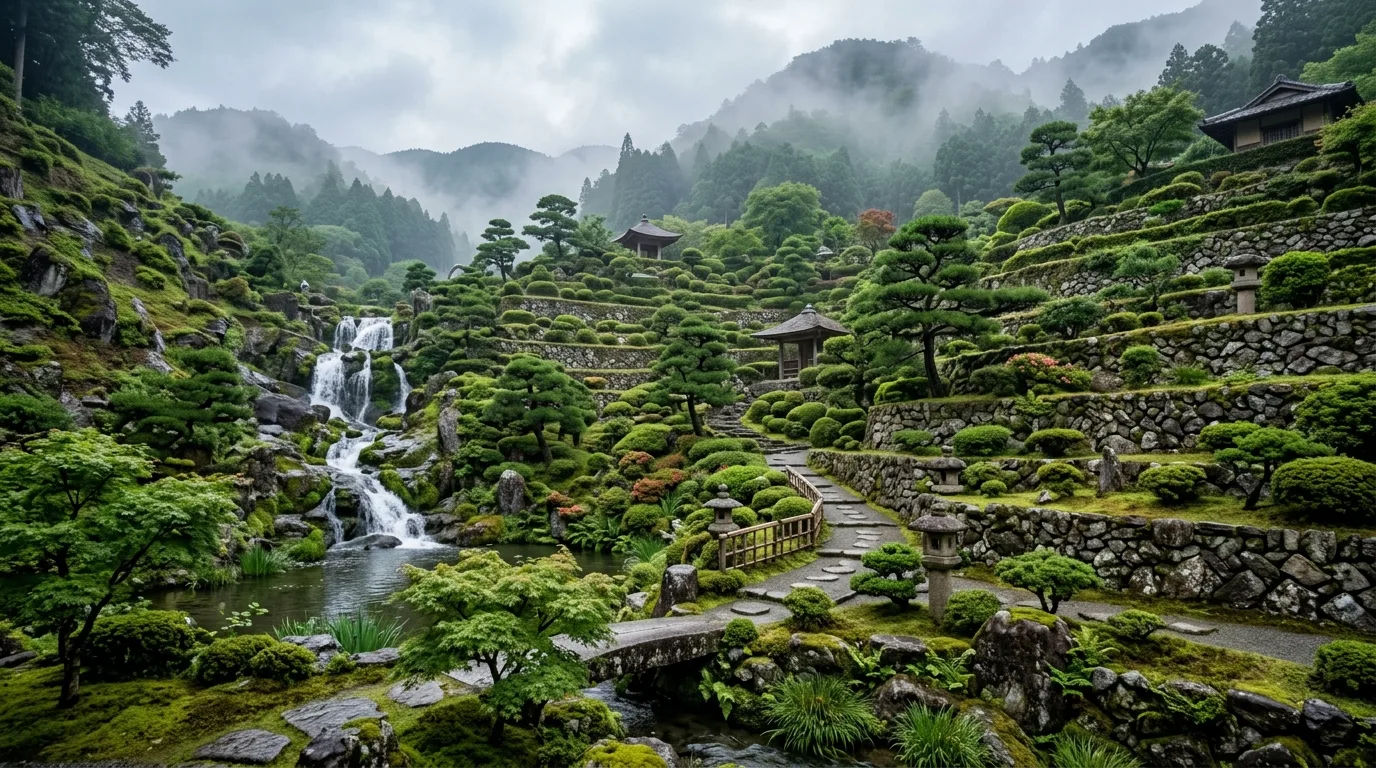
A compact urban retreat where every stone feels intentionally placed
Japanese design is especially powerful in smaller spaces because precision and restraint can make even a narrow city yard feel calm, spacious, and emotionally rich when each element has enough room and purpose. The result is quiet but never empty.
Idea 13
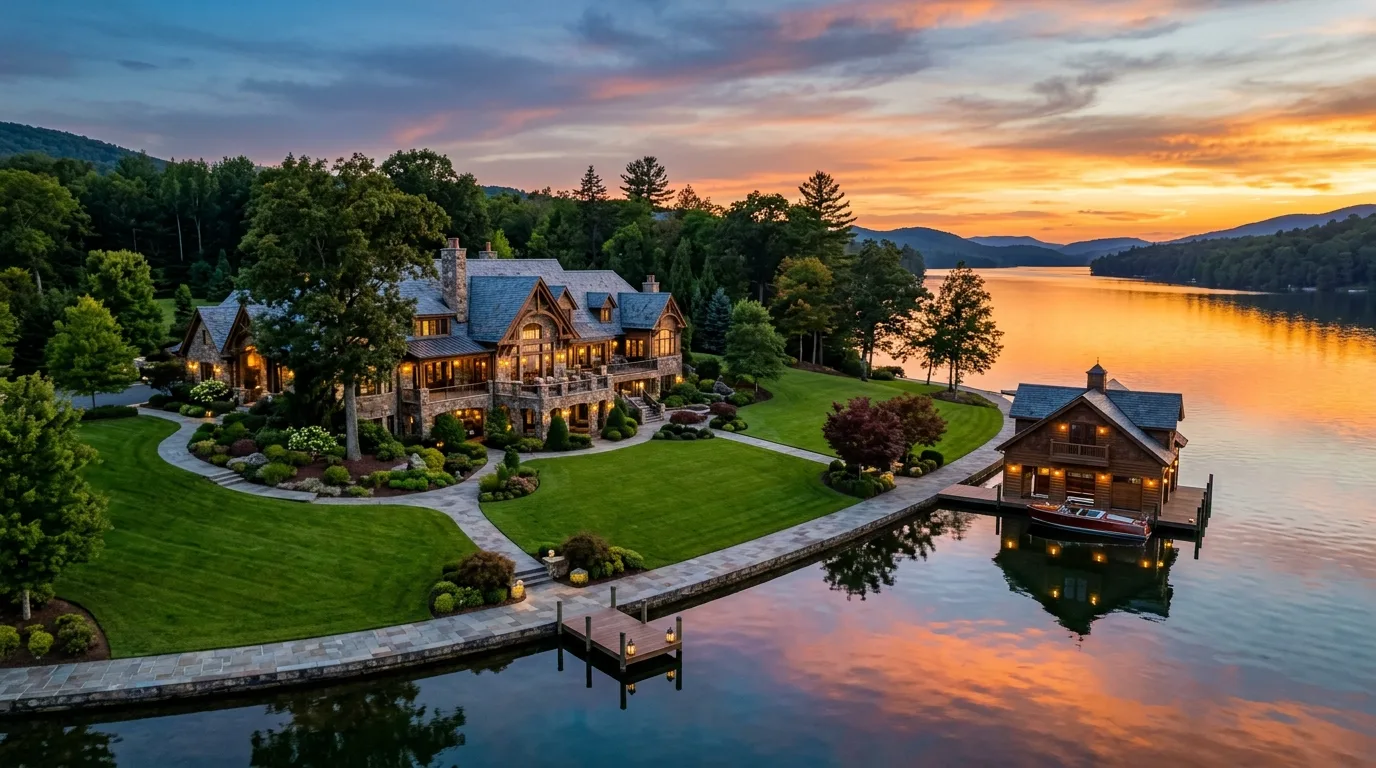
A lantern-lit evening garden where shadows become part of the design
At dusk, Japanese gardens often become even more atmospheric because light reveals only certain forms and lets shadow do much of the visual work, deepening the sense of stillness. The mood becomes hushed, elegant, and highly memorable.
Idea 14
A serene garden where stone, water, planting, and emptiness stay in balance
The best Japanese landscapes succeed because every material and every open space contributes to a balanced composition that feels both natural and deeply intentional. That harmony is what gives zen-garden beauty its enduring power.
Read next on Saw & Sprout
Edible Gardens
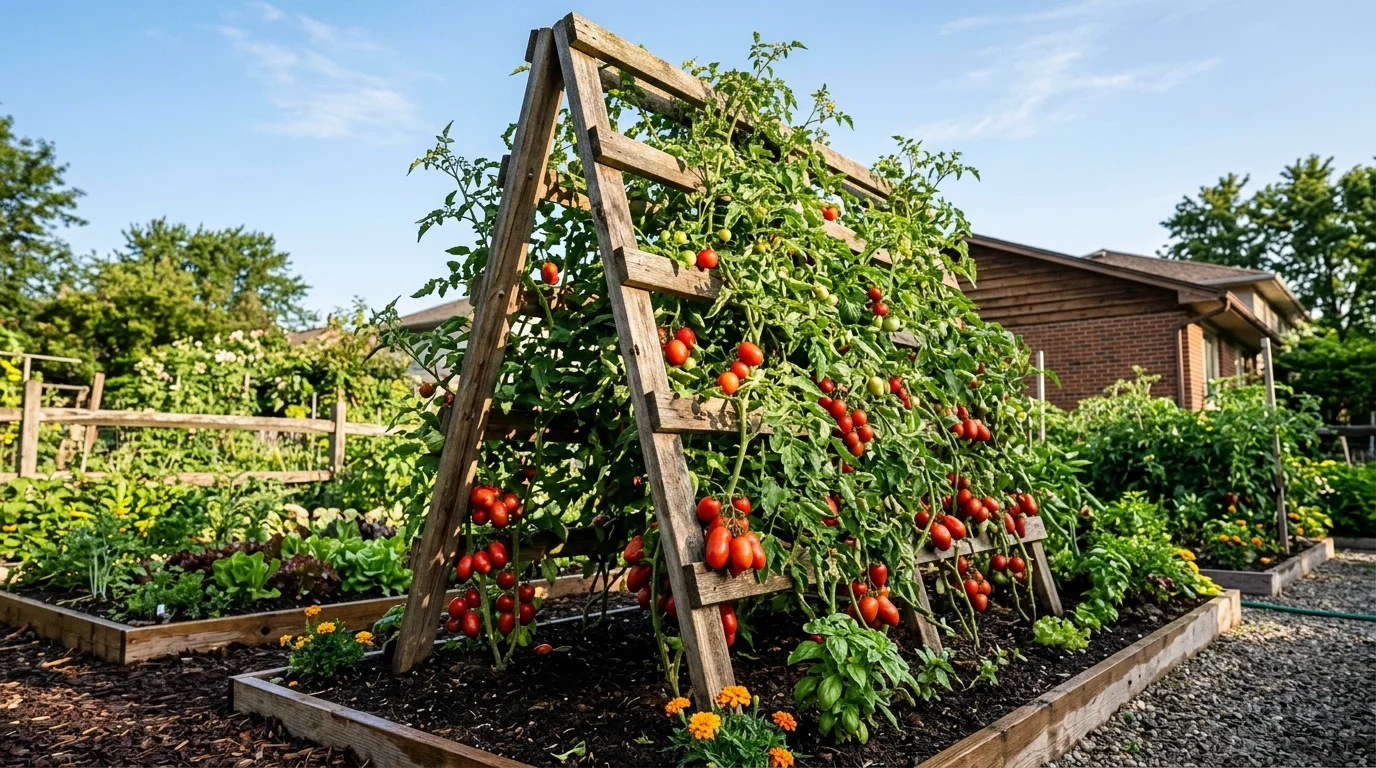
13 Clever Tomato Trellis Gardens for a Bountiful Harvest
Small-Space Growing
14 Space-Saving Small Vegetable Gardens for Urban GrowersFrequently asked questions
What defines a Japanese-inspired landscape?
Careful balance, restrained planting, natural materials, stone, water, and meaningful empty space usually define the style most clearly.
Can a Japanese garden work in a small yard?
Yes. These principles often work beautifully in compact spaces because precision and restraint can make even small gardens feel deep and calm.
Do Japanese landscapes always need a pond?
No. Gravel courts, moss, stone, paths, lanterns, and carefully shaped planting can create the same spirit without a large water feature.