Standing desks appeal to so many home workers because they can make long hours at a screen feel less static and a little easier to reset throughout the day. A good one is not just taller than a normal desk though. It still has to support posture, equipment, and the rhythms of actual work.
The best DIY standing desks usually solve a particular problem, whether that is fitting into a tiny corner, sharing a wall with another user, hiding cords, or giving you the option to shift between sitting and standing more easily. Those practical choices are what make the workspace feel productive instead of experimental.
These ideas focus on standing desk builds that aim for daily usefulness as much as visual neatness. Some are compact and minimal, while others are more substantial, but each one is built around creating a better work from home experience.
Quick planning notes
Set the working height around your own posture and equipment, because a standing desk only feels healthy when your shoulders, elbows, and screen height are properly supported.
Decide whether the desk should be fixed, convertible, wall mounted, or shared before choosing the structure, since each format solves a different kind of workspace need.
Use shelves, rails, or cable planning to keep the surface from becoming crowded, because standing desks feel better when the working zone stays visually calm and easy to maintain.
Place the desk where light and circulation support longer use, since comfort comes from the whole environment and not only from the height of the work surface.
Idea 1
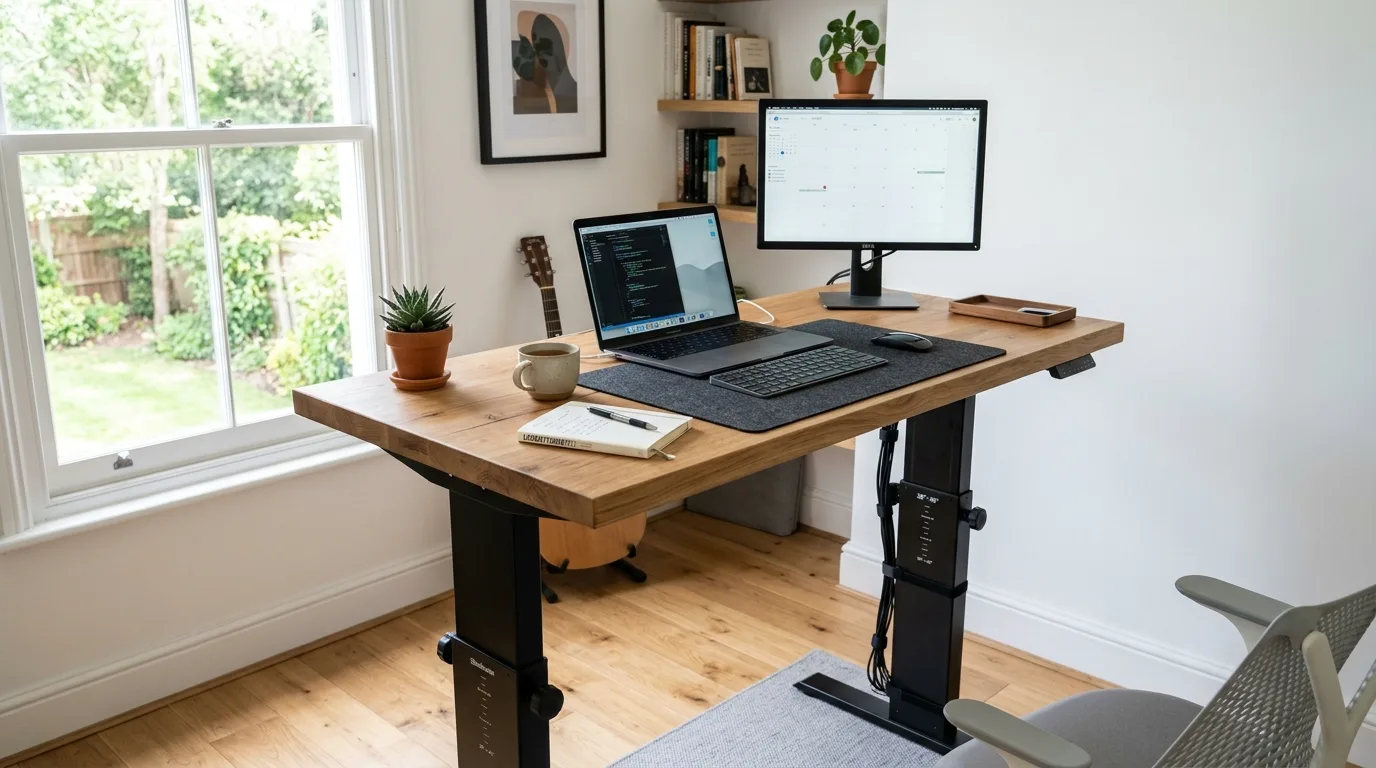
Simple standing desk on wooden legs with a broad work top
A straightforward standing desk with a generous top gives you room for a laptop, monitor, notebook, and the small extras that make daily work easier. The simplicity is part of the appeal because it keeps the workspace calm and easy to use.
Idea 2
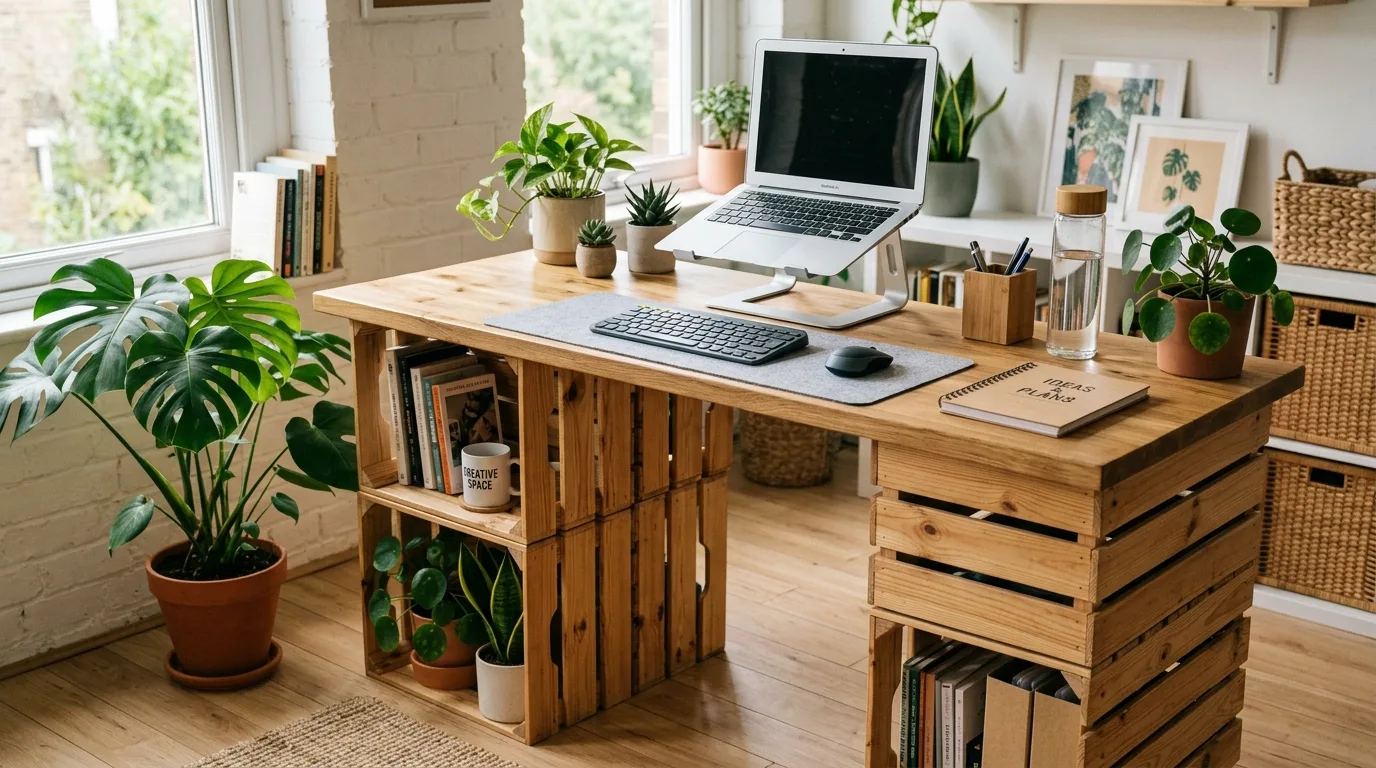
Wall mounted standing shelf desk for a tiny office nook
A wall mounted design keeps the footprint incredibly small while still creating a dedicated place to work, which is valuable in apartments and multipurpose rooms. It feels light visually and can make a cramped corner far more useful.
Idea 3
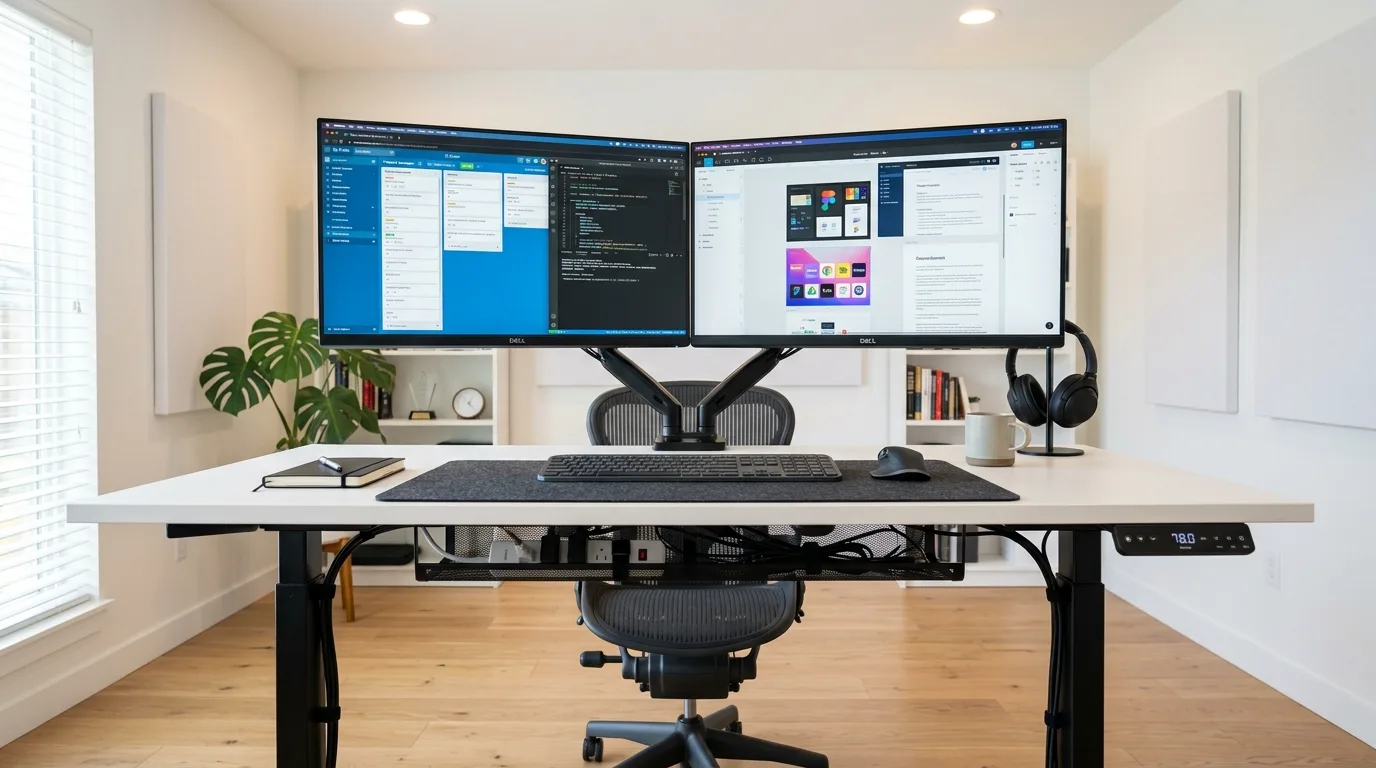
Adjustable desk riser built from stacked wood panels
A desktop riser is one of the easiest ways to try standing work without rebuilding your whole office, and stacked wood panels keep the look warmer than plastic store bought versions. It is a good first step if you want flexibility more than permanence.
Idea 4
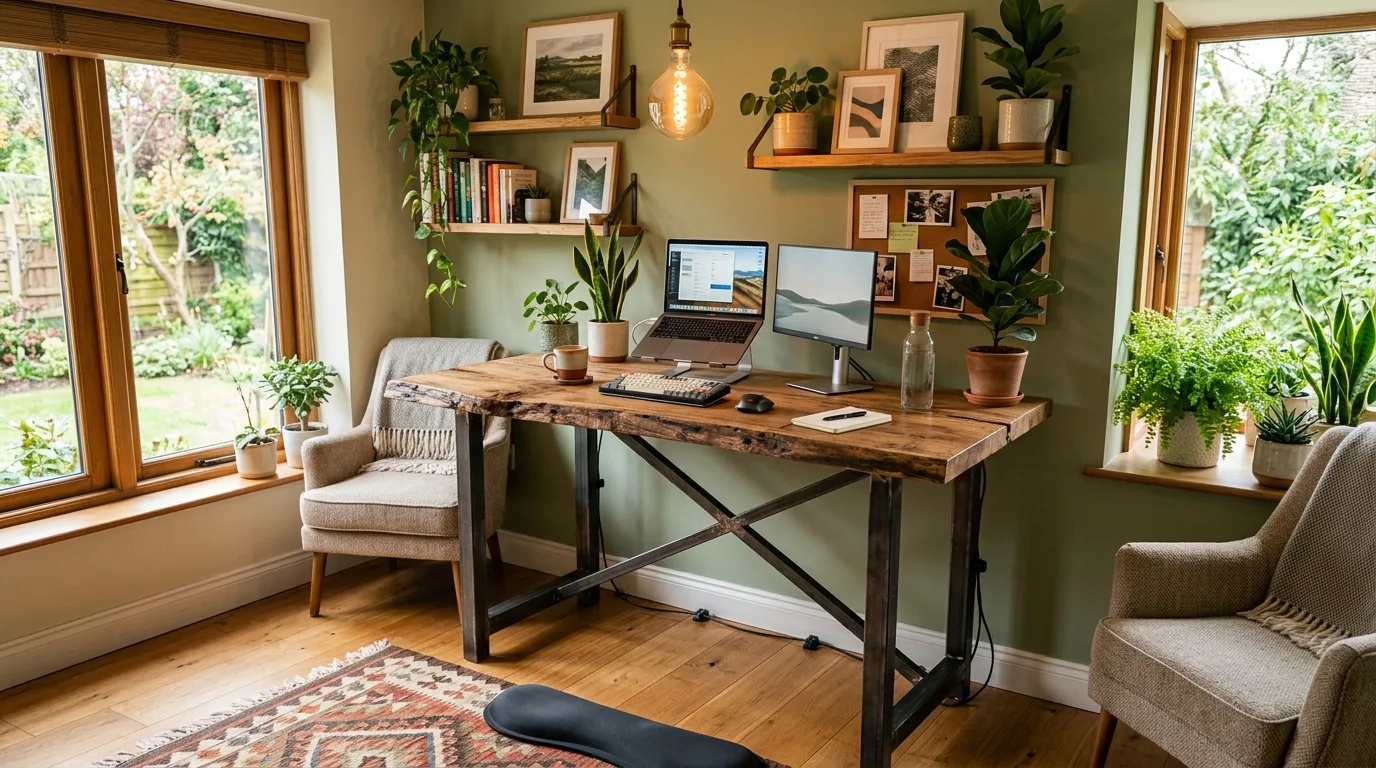
Corner standing desk with room for dual monitors
A corner format helps the desk feel anchored and gives you enough depth for larger screens, which can matter a lot in work from home setups that rely on two monitors. The added wraparound surface also makes tools and papers easier to organize.
Idea 5
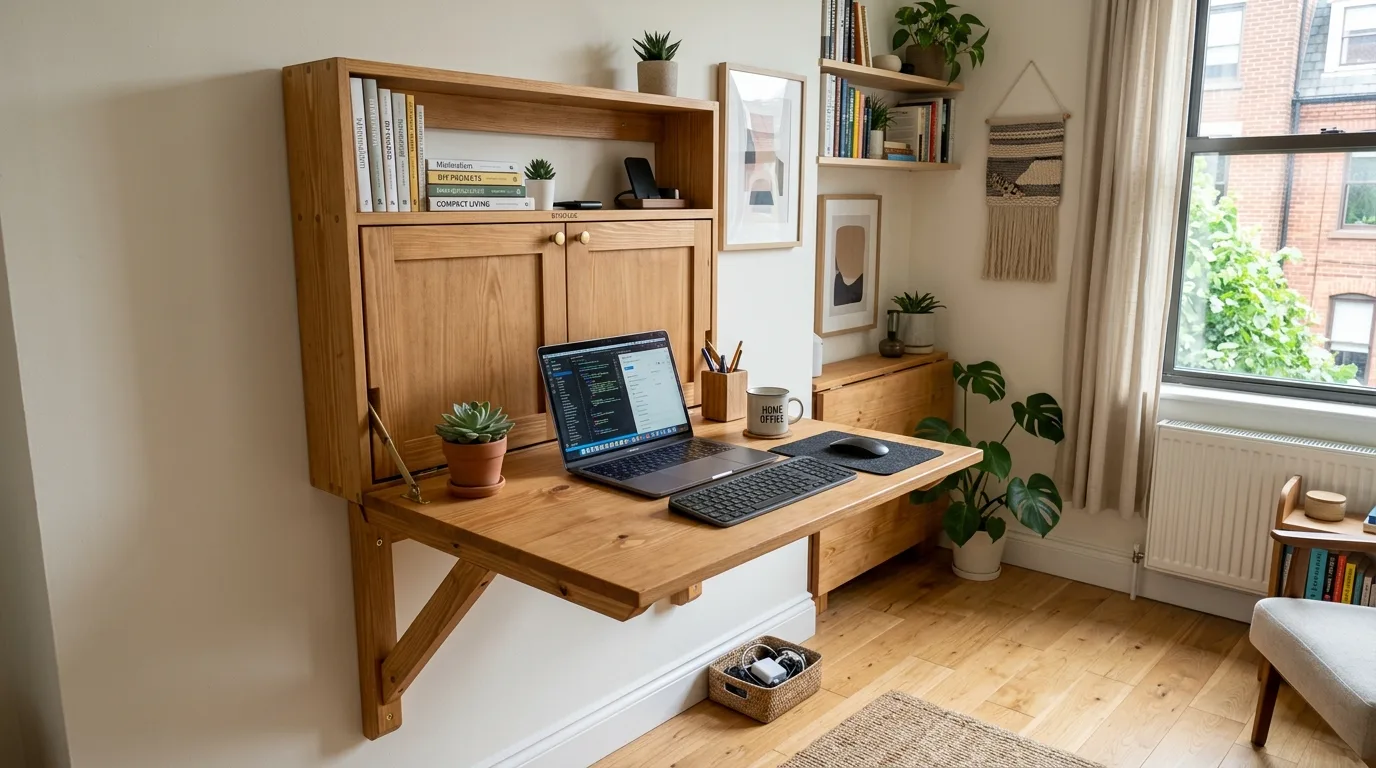
Standing desk with a lower keyboard shelf and open base
A lower shelf for the keyboard can make longer standing sessions feel more natural because your shoulders and wrists are not forced too high. It is a practical detail that helps the desk feel more ergonomic rather than just taller.
Idea 6
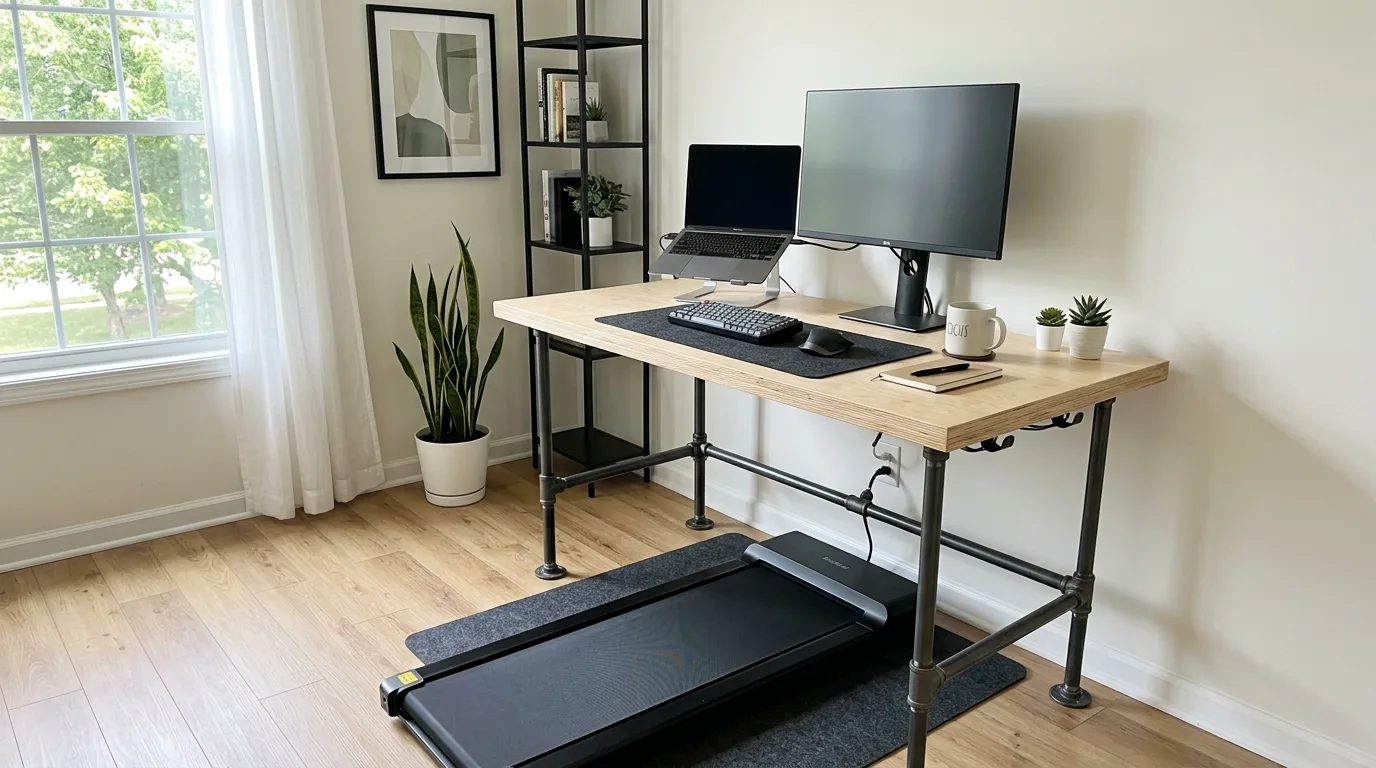
Minimal pipe frame desk for an industrial work zone
A pipe base gives the desk strong visual structure and suits loftier or more industrial spaces where slimmer metal lines already make sense. The build feels sturdy and direct, which is often exactly what a daily work desk should be.
Idea 7
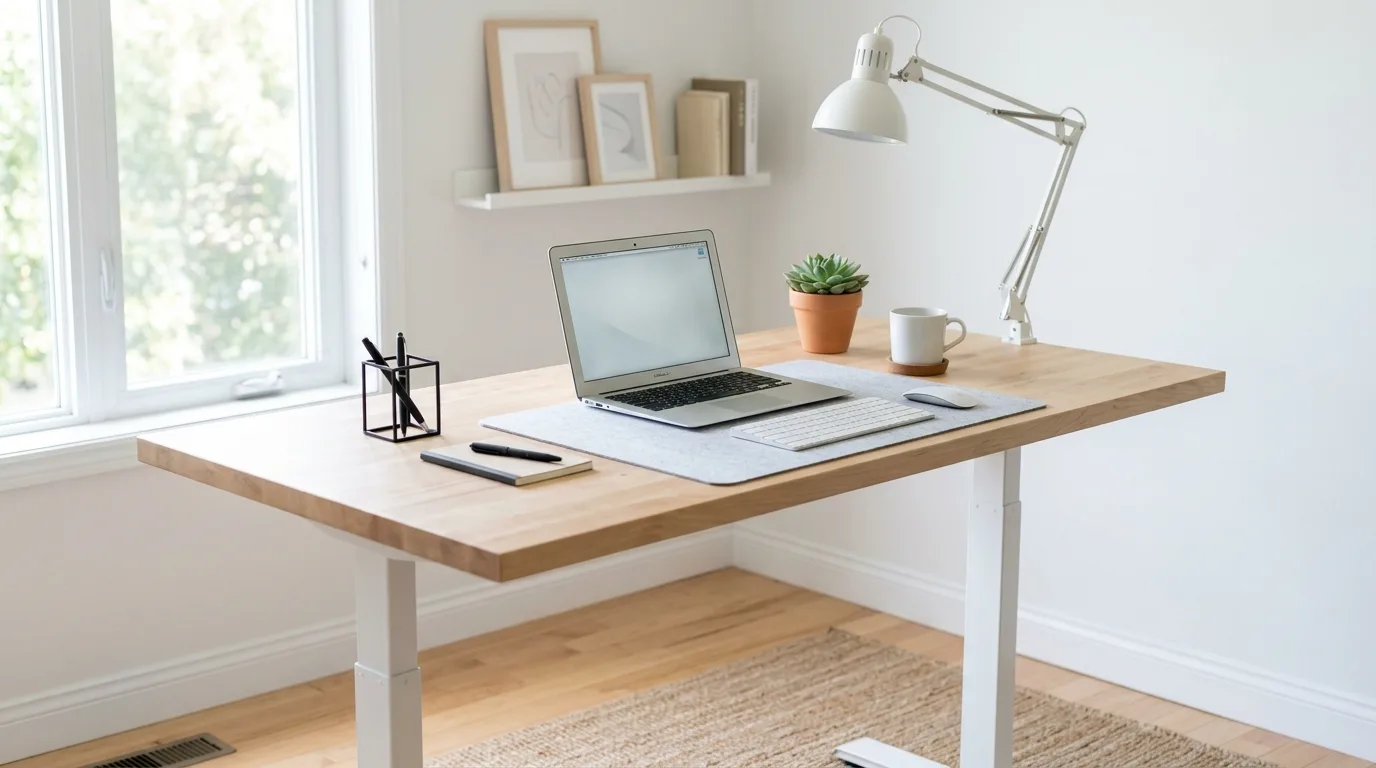
Plywood standing desk with shelf storage below the top
Built in shelf space beneath the work surface helps keep notebooks, devices, and cords off the main desk without losing easy access to them. That small layer of storage can make the whole setup feel far more composed day to day.
Idea 8
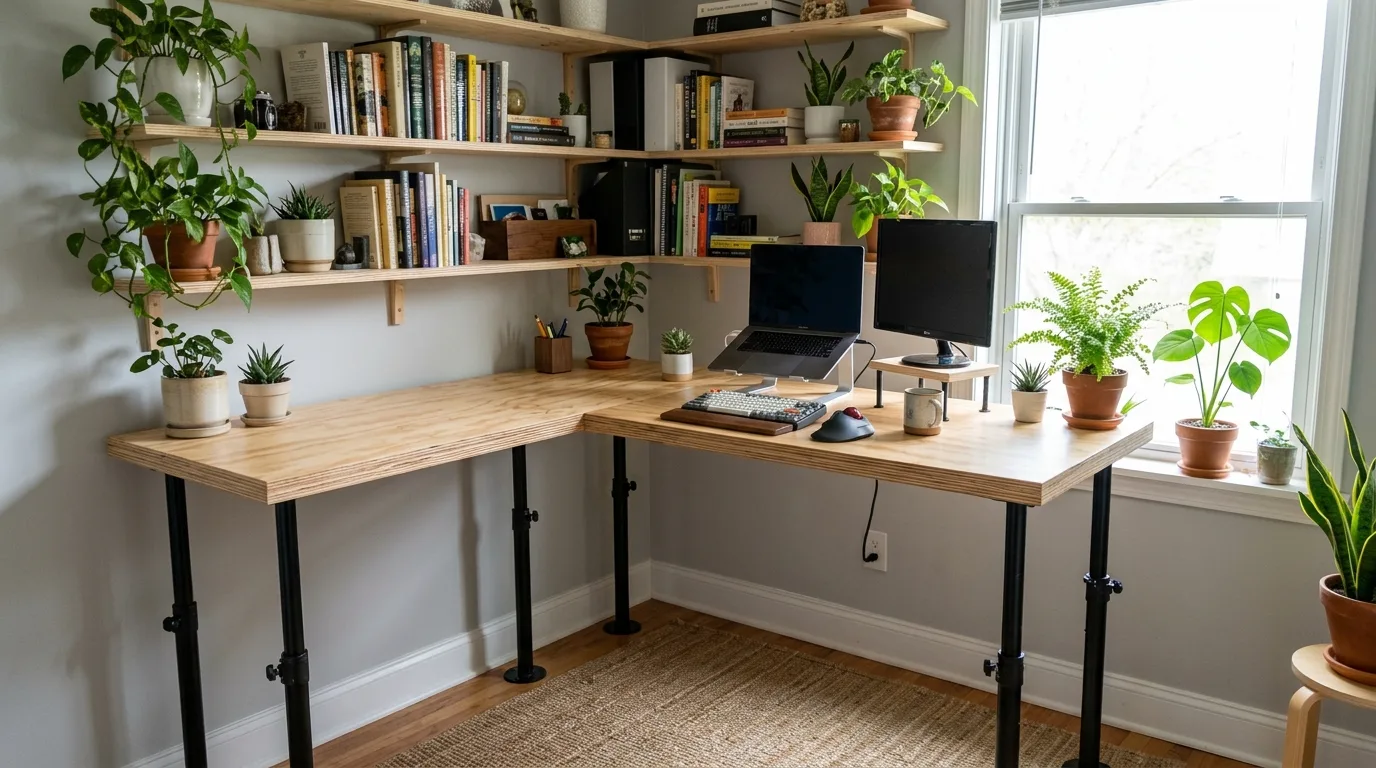
Convertible sit stand desk made with removable risers
A convertible build gives you more freedom because you can shift between sitting and standing without committing to one fixed height all day. It is especially helpful if several people use the same workspace or your needs change through the week.
Idea 9
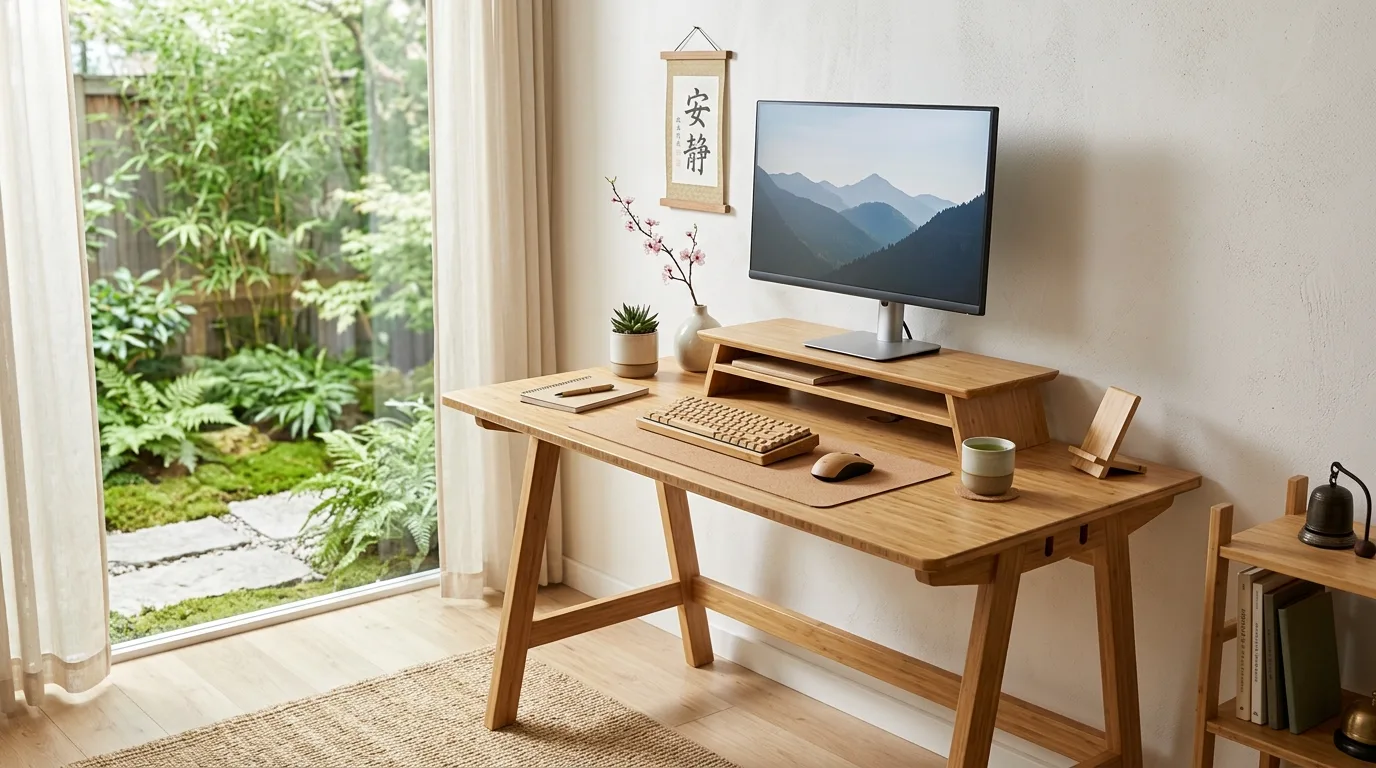
Compact standing desk for a bedroom office wall
A compact standing desk can make a bedroom office feel more intentional without taking over the room the way a larger workstation would. The smaller scale helps maintain calm while still giving you a dedicated place to focus.
Idea 10
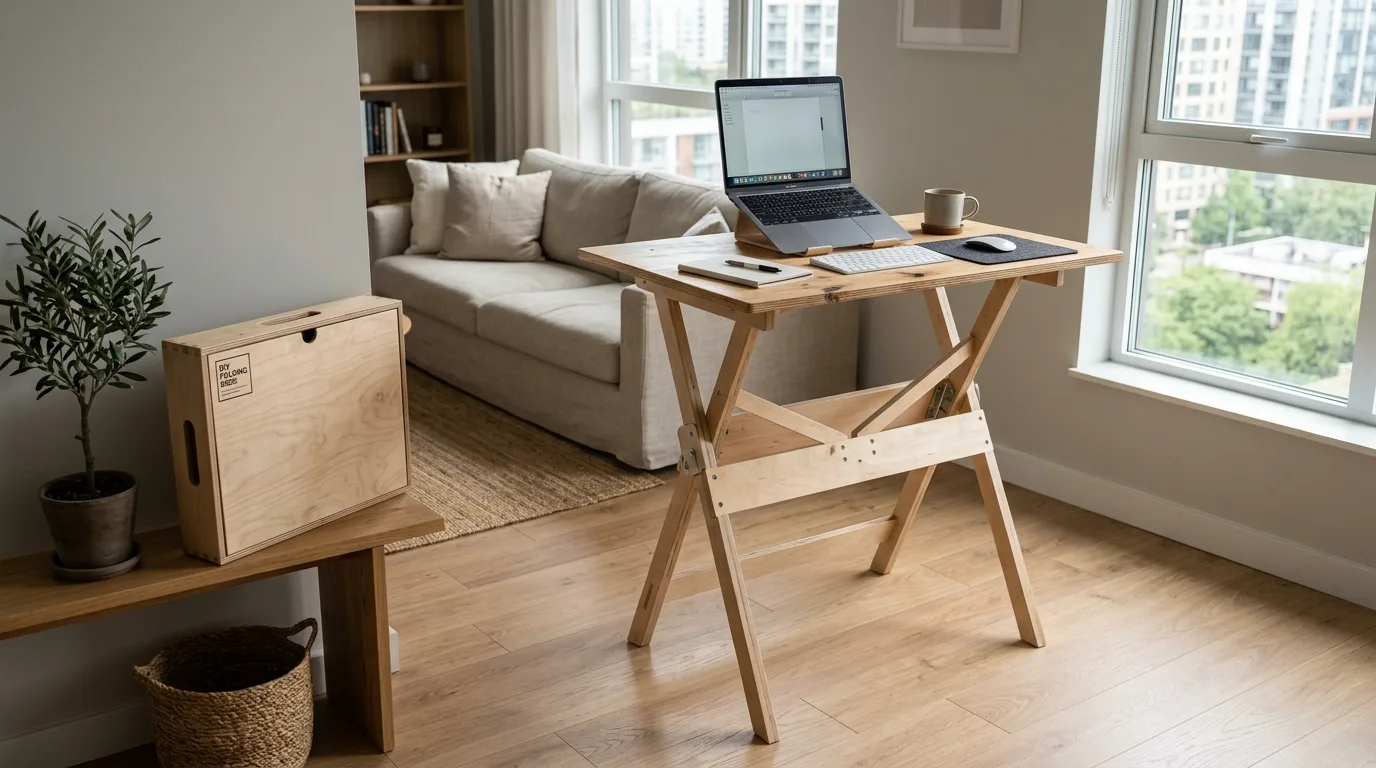
Standing desk with peg rail and shelf for daily tools
Adding a peg rail and top shelf turns the wall into part of the system, which is useful when surface space is limited but you still need headphones, notes, and office supplies close by. It makes the desk feel more complete and thoughtfully built.
Idea 11
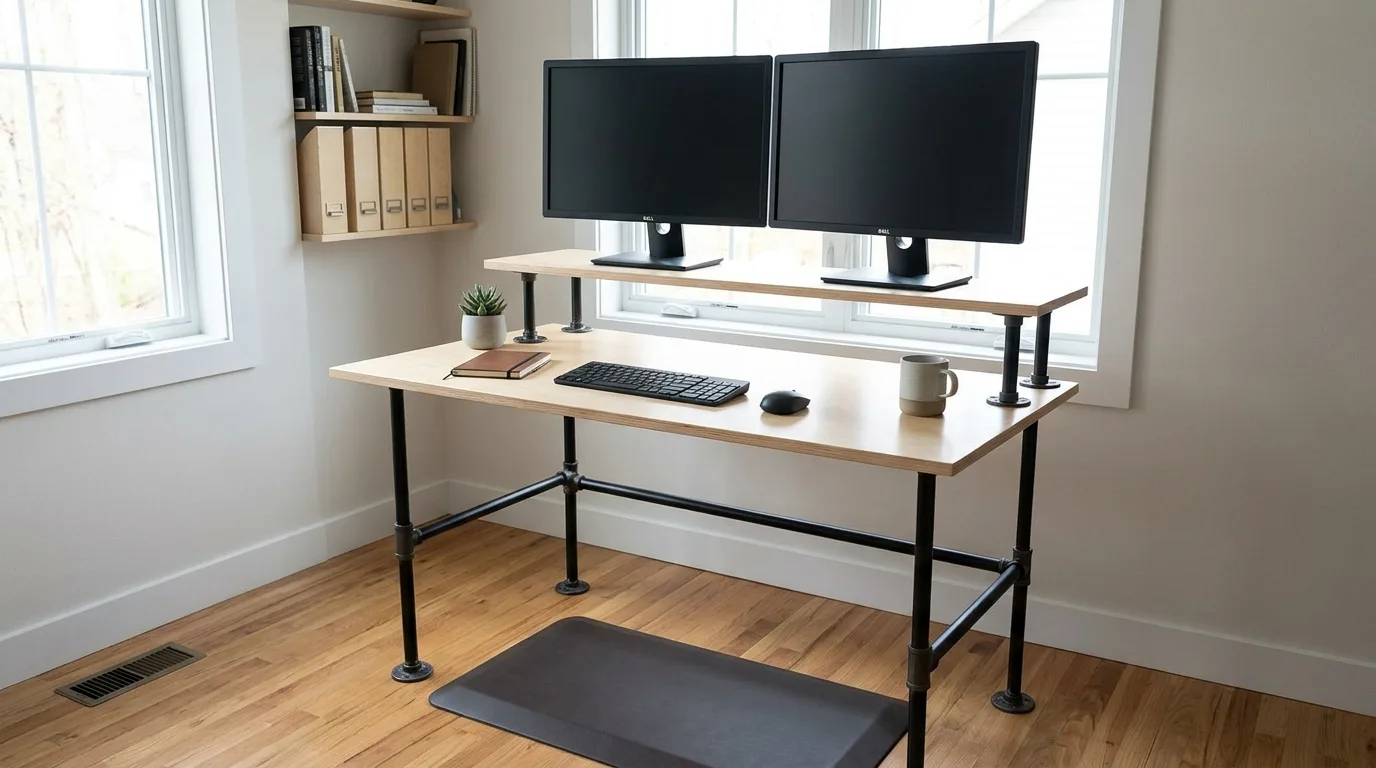
Butcher block standing desk with hidden cable routing
A butcher block top gives the desk warmth and weight, but the hidden cable path is what keeps the whole setup from looking messy once devices are added. That kind of hidden organization helps the workspace feel truly custom.
Idea 12
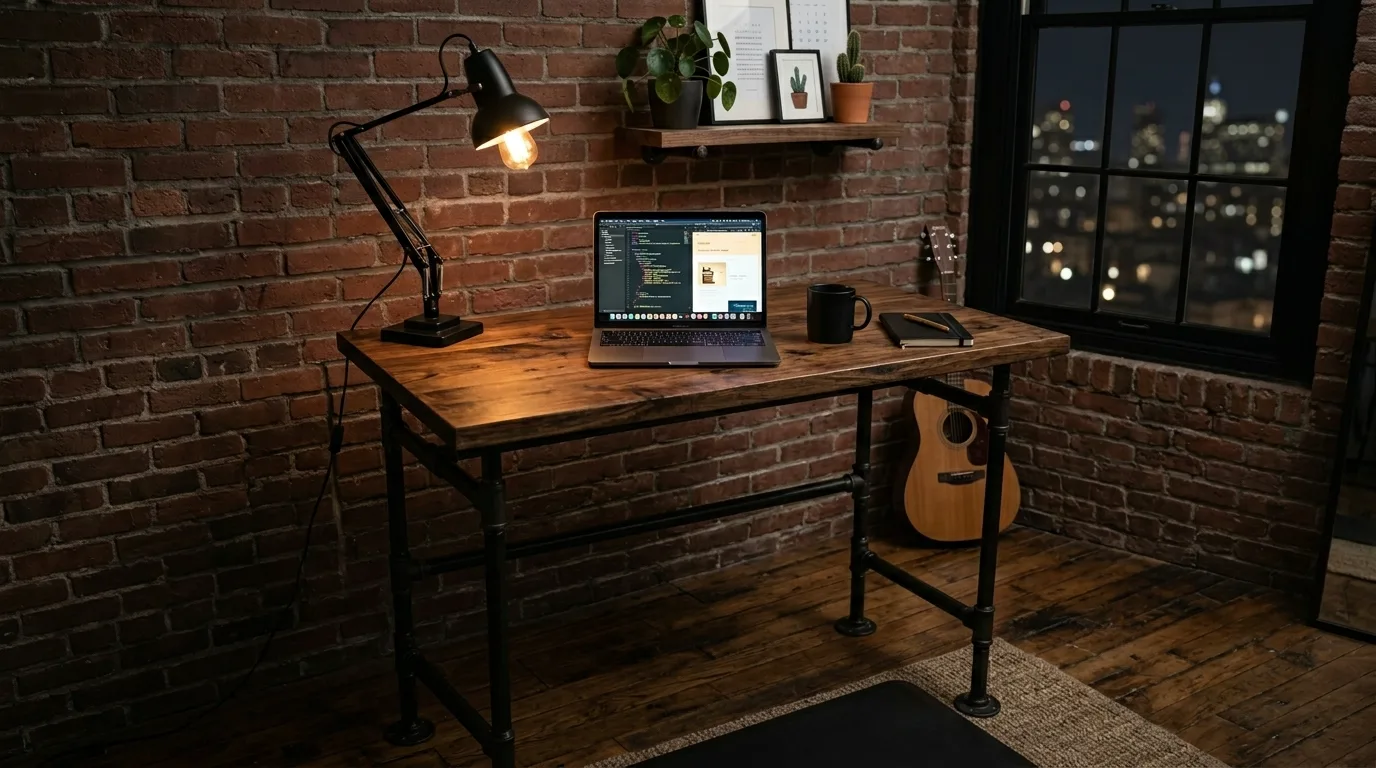
Shared standing desk wall for two side by side users
A double standing desk can make a shared office more efficient because each person has a clear station while the whole wall still feels coordinated. It is especially useful in homes where two people need to work at the same time without crowding each other.
Idea 13
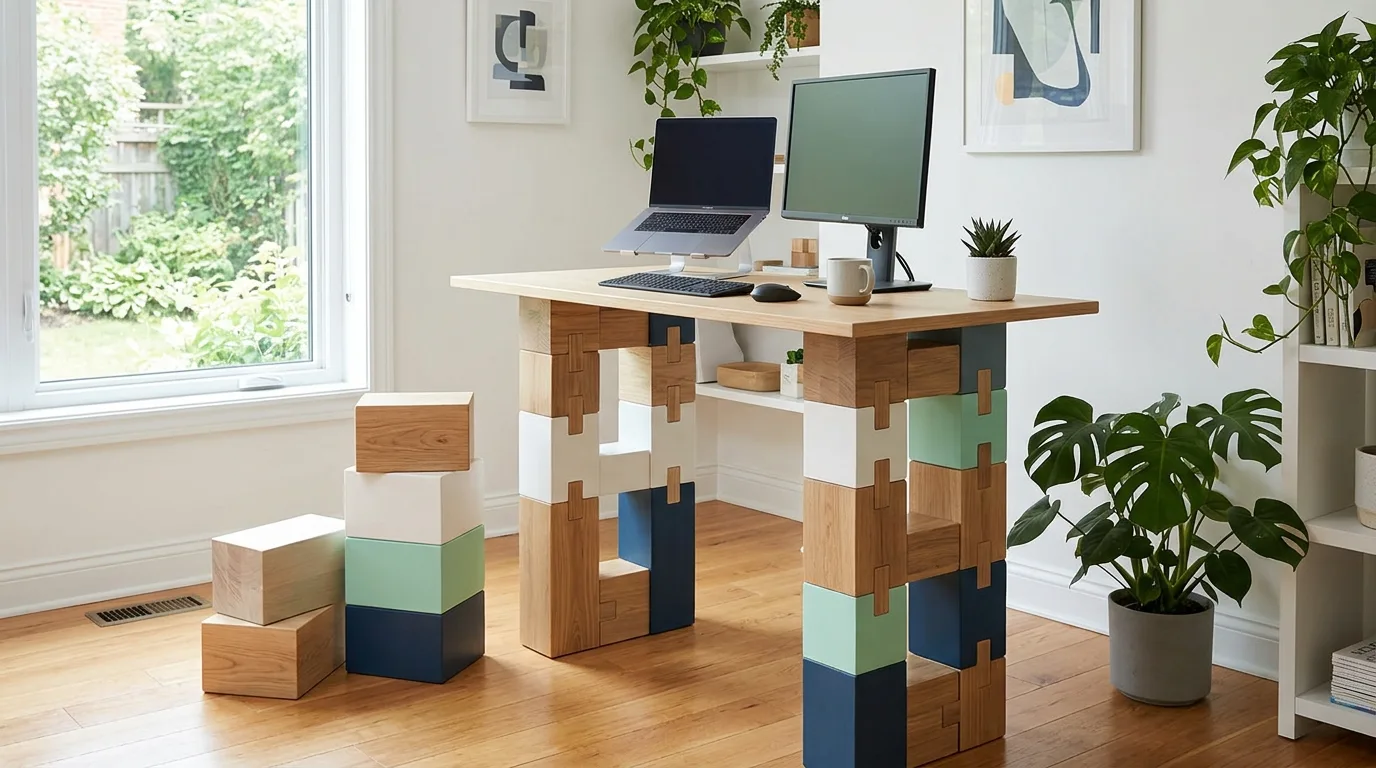
Standing desk beside a window for a brighter workday
Positioning the desk near a window can make standing work feel more natural because the light and view help reduce the closed in feeling that long screen hours often bring. The location matters as much as the desk itself in setups like this.
Read next on Saw & Sprout


Edible Gardens
13 Clever Tomato Trellis Gardens for a Bountiful Harvest
Small-Space Growing
14 Space-Saving Small Vegetable Gardens for Urban GrowersFrequently asked questions
What makes a standing desk feel healthy to use?
Proper height, good monitor placement, space for the wrists and shoulders, and the ability to change posture comfortably through the day are what matter most.
Is a desk riser enough for standing work?
For many people yes, especially as a first step, but the setup still needs good keyboard and screen positioning if it is going to feel comfortable for longer sessions.
Where do standing desks work best at home?
They work well in offices, bedroom corners, alcoves, shared walls, and small nooks as long as the height, light, and monitor layout are all planned carefully.