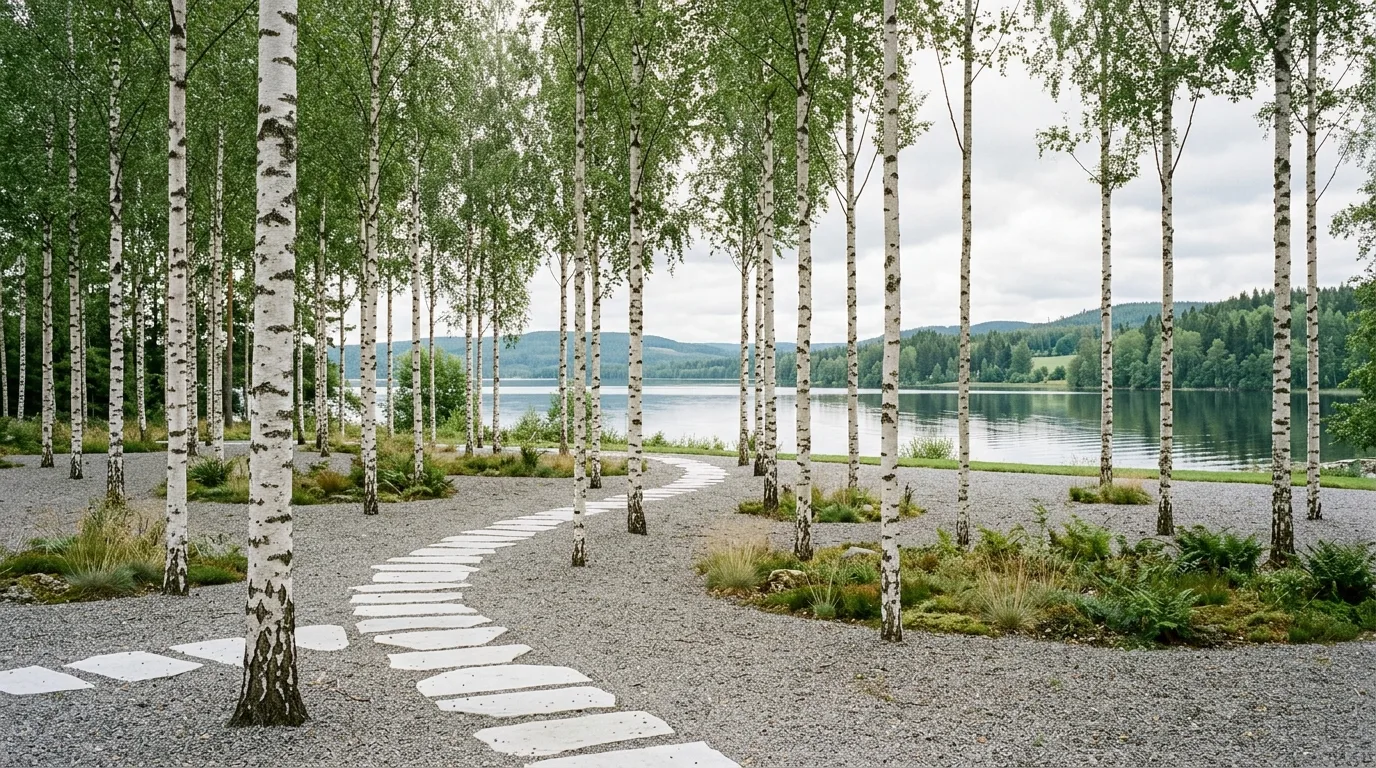
Scandinavian landscape design is appealing because it proves that outdoor spaces can feel warm, natural, and deeply inviting without relying on visual excess. Its elegance comes from editing, texture, and strong relationships between materials.
The style often uses pale gravel, warm wood, restrained evergreens, and a limited plant palette to create calm that still feels alive through changing weather and seasons.
These Scandinavian landscape ideas focus on simple elegance, showing how clean layouts and natural materials can shape yards that feel grounded, useful, and quietly beautiful.
Quick planning notes
Keep the material palette narrow so the landscape feels calm and coherent instead of visually fragmented.
Use plants for texture and structure as much as for color, especially if you want the garden to stay strong in cooler seasons.
Let negative space do some of the work because open gravel, lawn, or decking is part of the style's beauty.
Balance the cooler restraint with enough timber or soft planting so the yard still feels welcoming.
Idea 1
A pale gravel court with clipped pines and quiet symmetry
Scandinavian landscapes feel strongest when the palette stays light and restrained, allowing simple evergreen forms and open gravel surfaces to create calm instead of visual pressure. The symmetry adds order while still preserving the softness that makes the style livable.
Idea 2
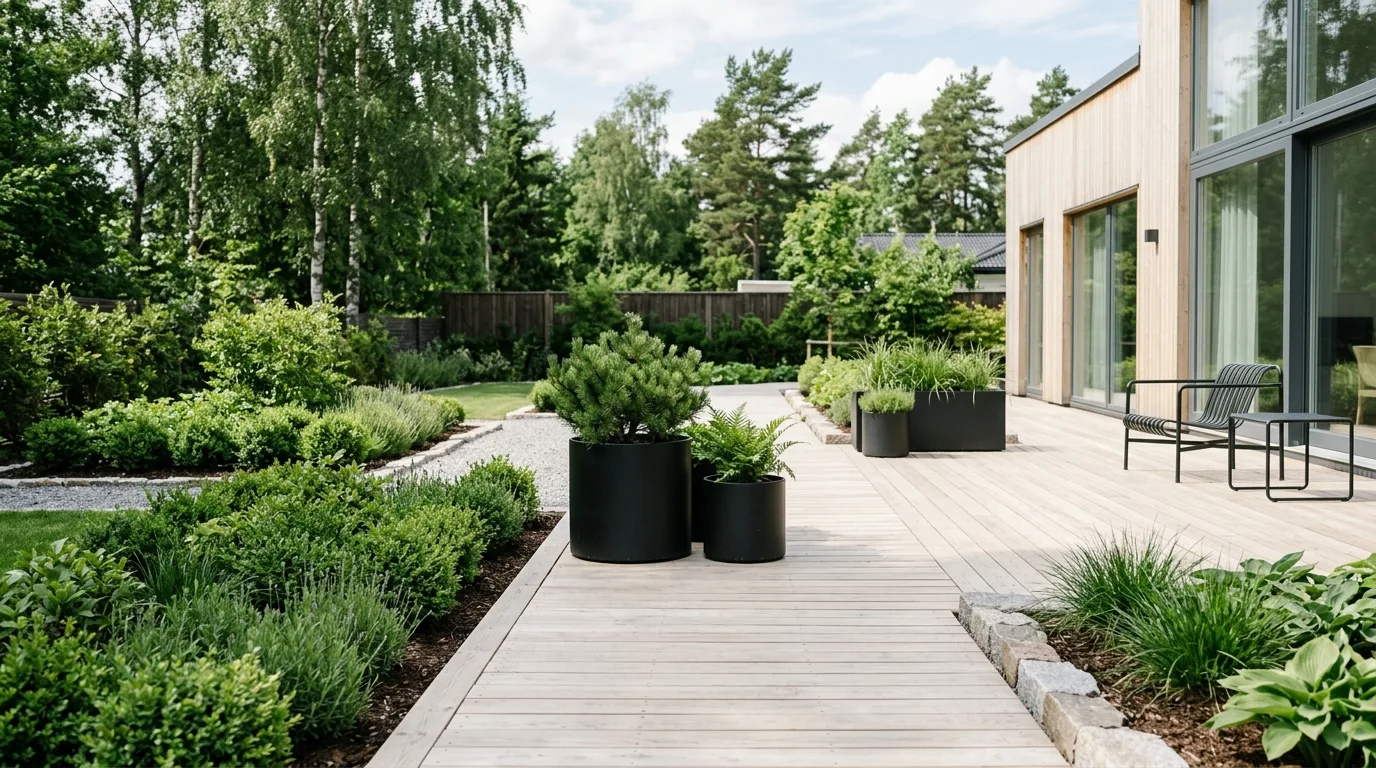
A timber deck softened by birch trunks and grasses
Warm wood and cool planting are a natural partnership in Scandinavian design because they balance one another without needing much ornament to feel complete. Birch trunks and airy grasses keep the setting light, clean, and quietly rooted in nature.
Idea 3
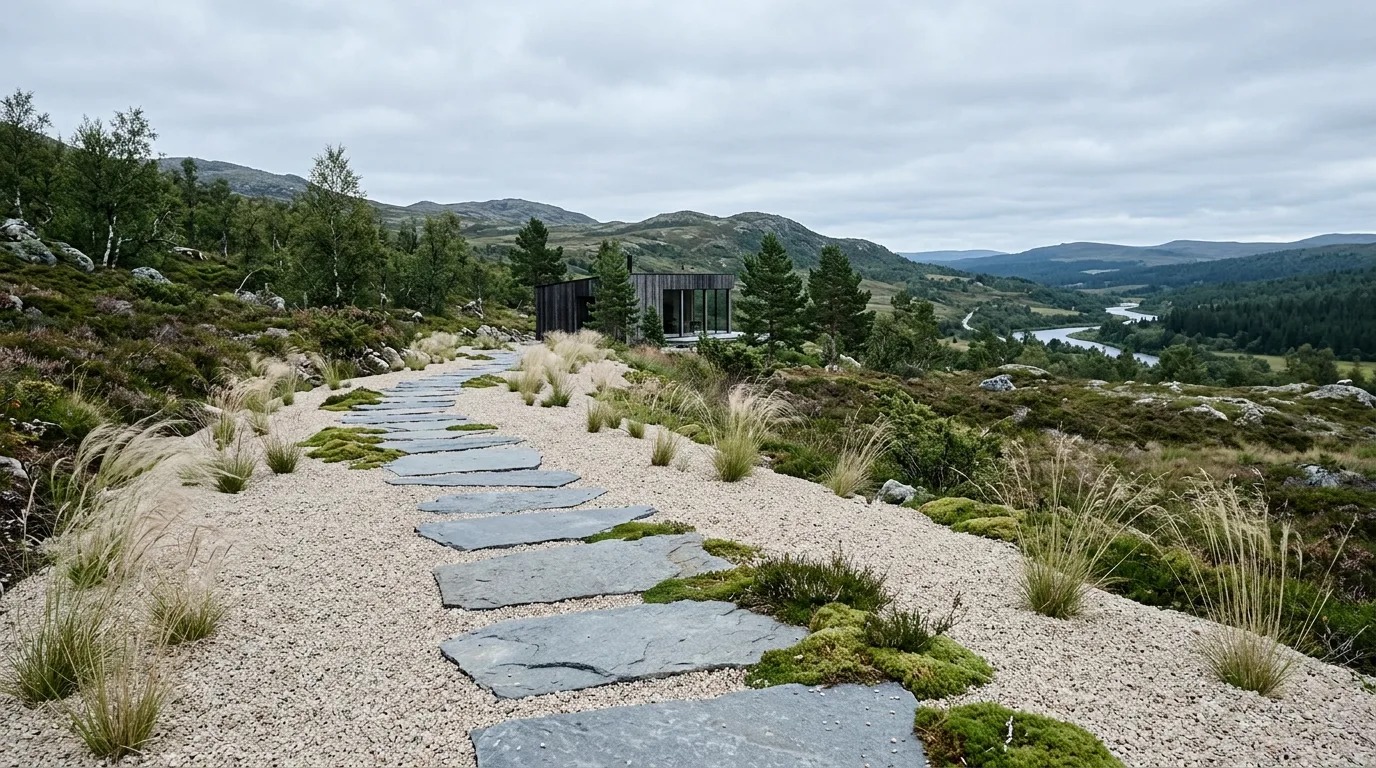
A front walk lined with repeated black planters and low greens
Repetition is especially effective in minimalist gardens because it gives the landscape rhythm and confidence without introducing clutter, and a simple entry sequence can feel very elegant through that discipline alone. The dark containers sharpen the pale surroundings beautifully.
Idea 4
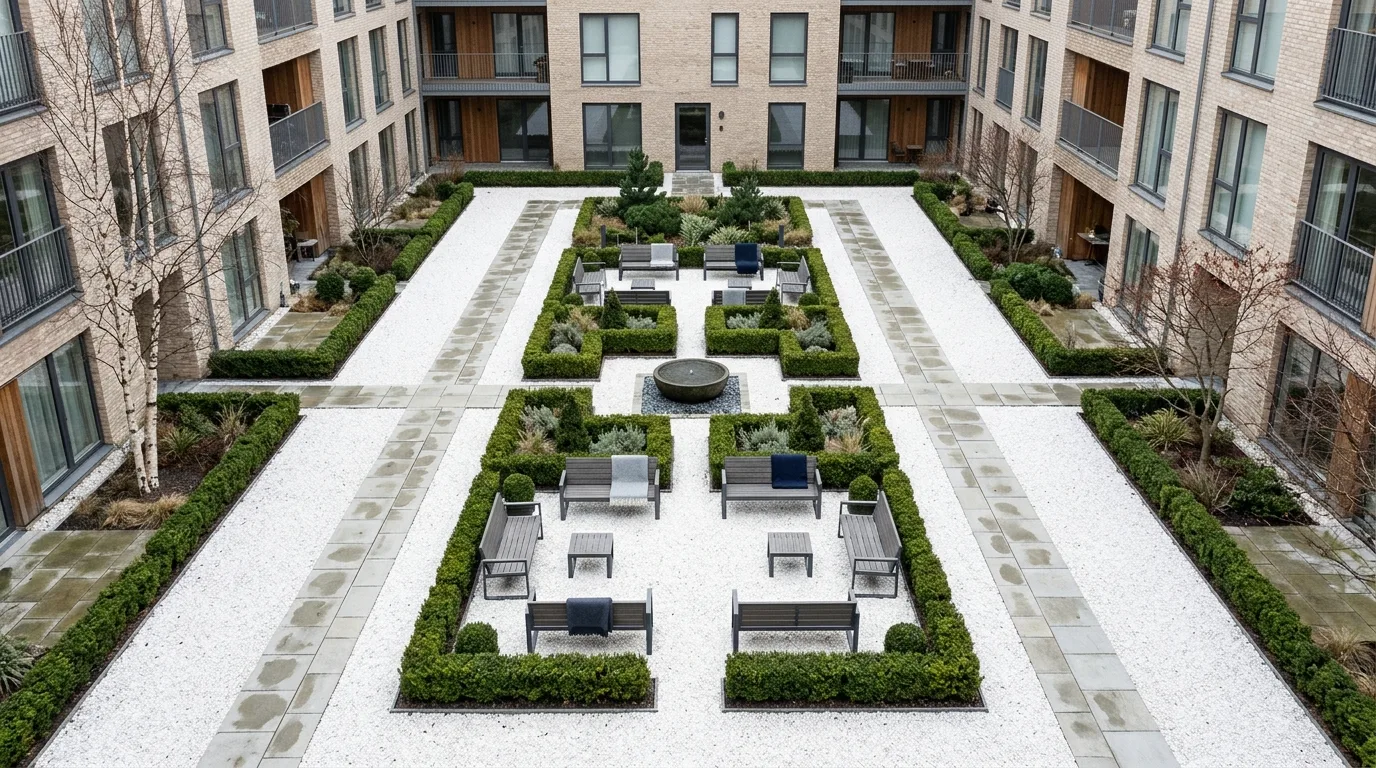
A rain-soaked courtyard where stone and wood do the visual work
Scandinavian landscapes often become more beautiful in gray weather because their materials and proportions are designed to hold mood rather than depend on constant bright color. Wet stone and timber gain depth, making the courtyard feel atmospheric and deeply composed.
Idea 5
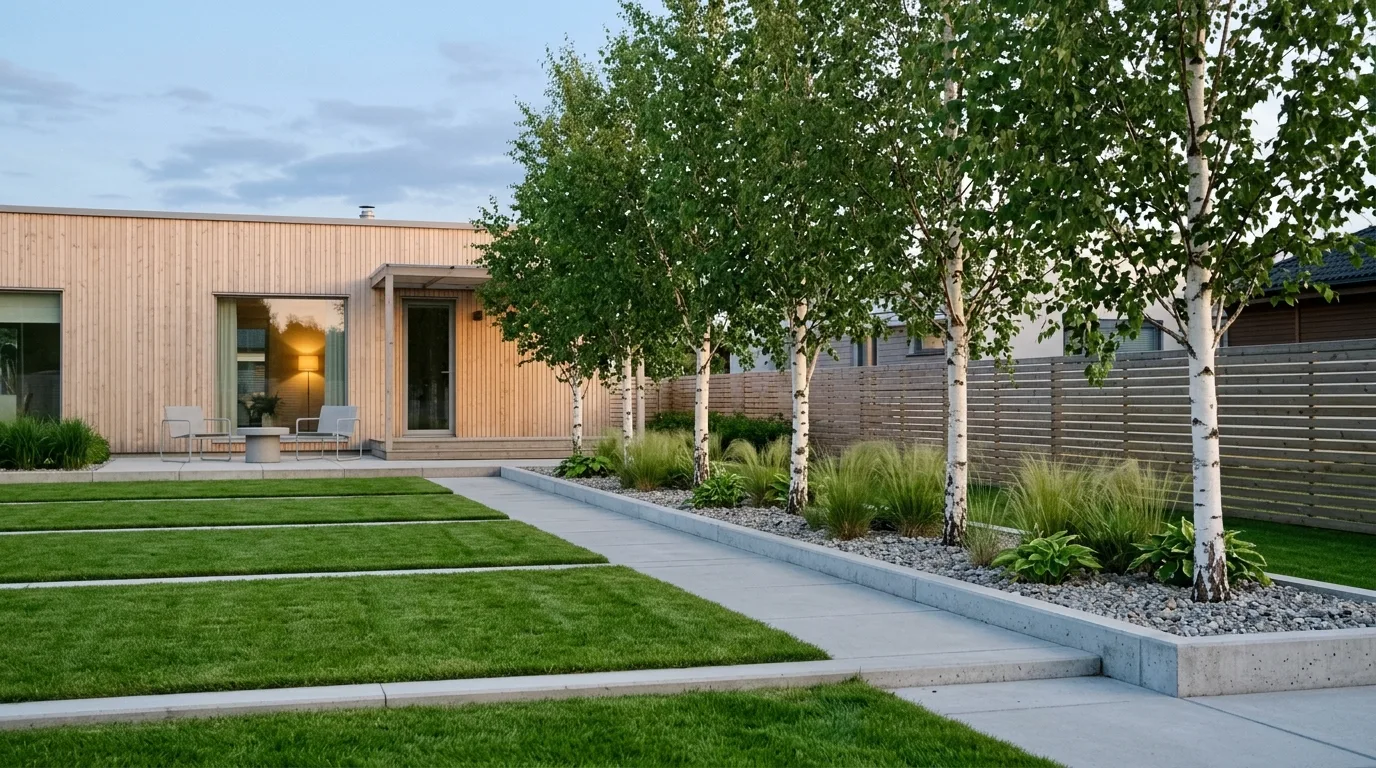
A lawn panel framed by clean edging and soft meadow planting
Minimal does not have to mean empty, and a neat lawn surrounded by looser grasses or flowers can create the kind of contrast that keeps Scandinavian yards feeling both relaxed and orderly. The clear edge is what allows the softer planting to stay believable.
Idea 6
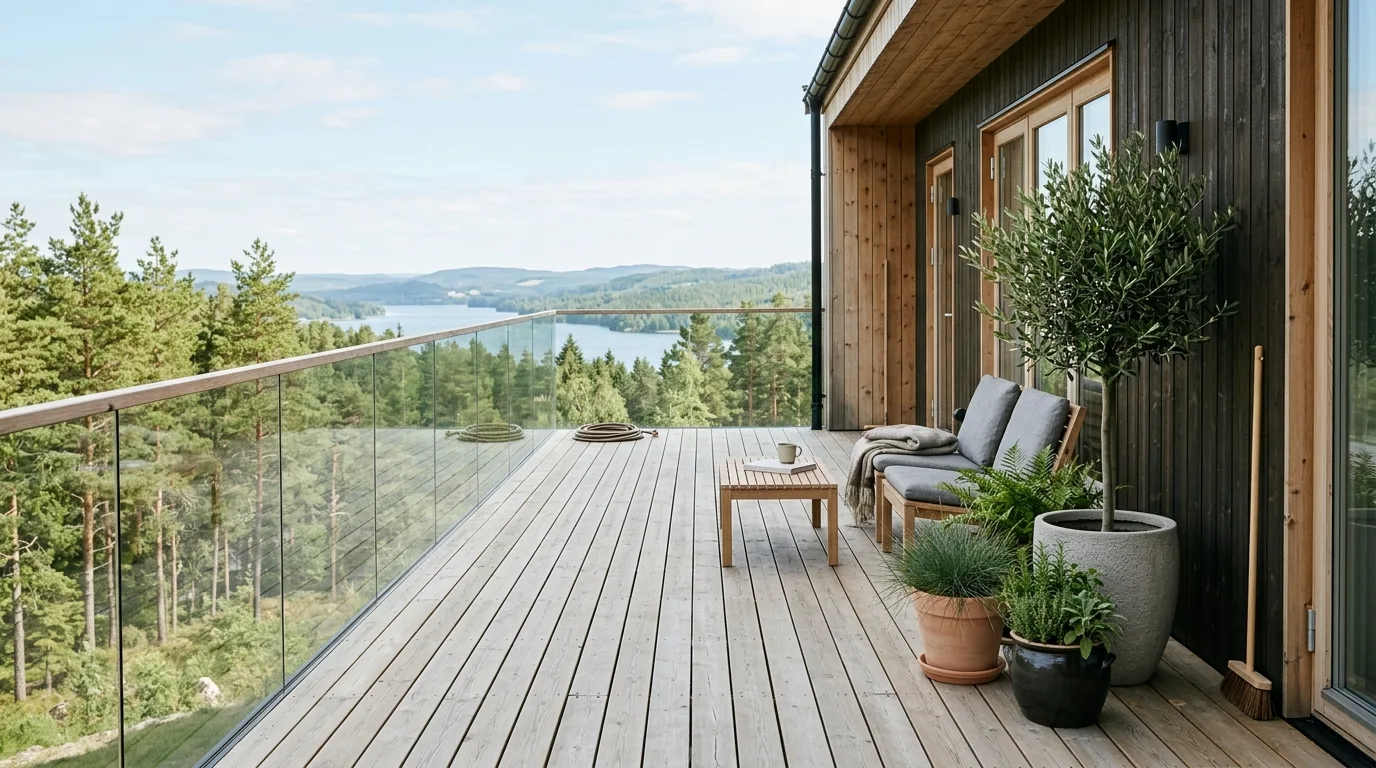
A narrow side yard treated as a calm passage garden
Even utilitarian spaces can feel special when they are reduced to a few strong materials and one or two reliable plants that suit the light well. The side yard becomes serene because nothing is shouting for attention and every element feels quietly resolved.
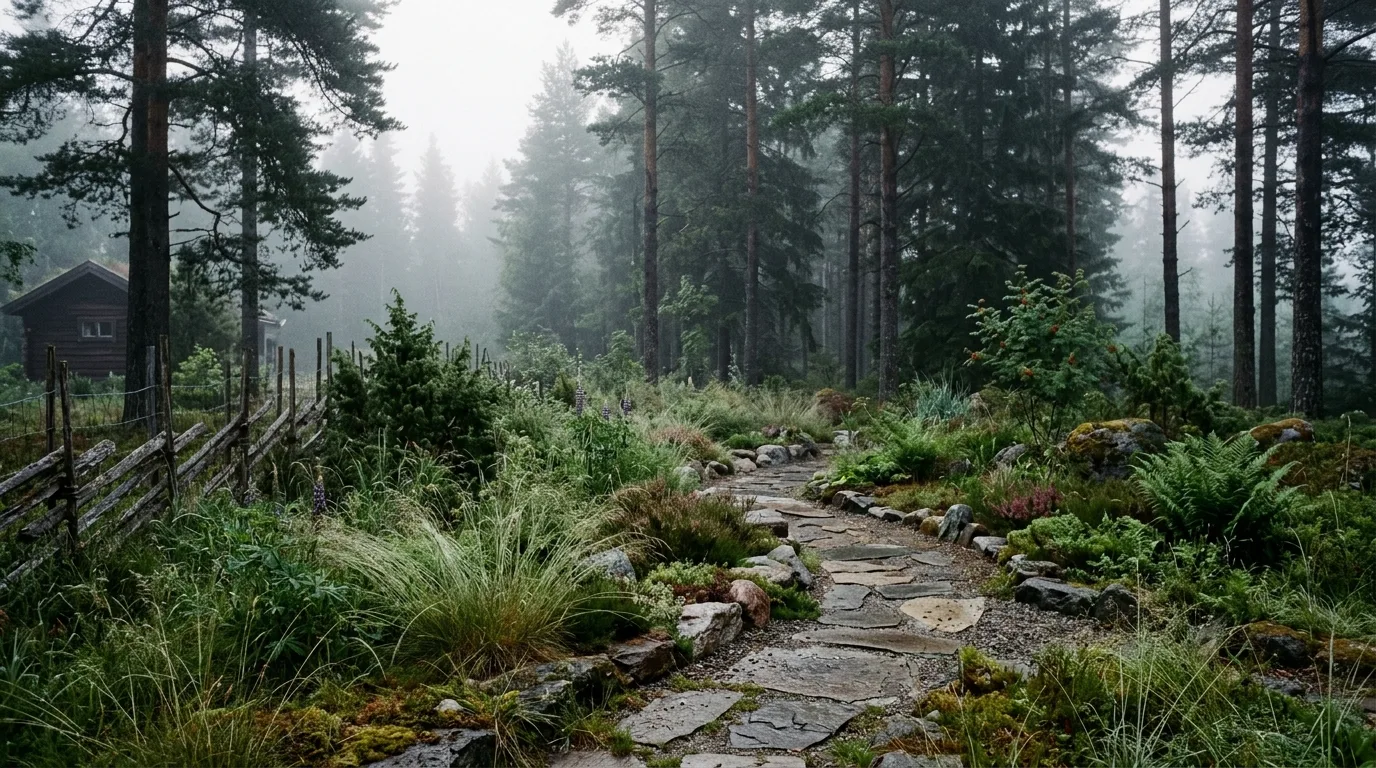
Idea 7
A fire bowl terrace with simple seating and open sky
Outdoor comfort matters in Scandinavian design, but it is usually expressed through elemental pleasures like warmth, timber, and clean views rather than through excess furnishing or decoration. A fire bowl terrace captures that balance beautifully and feels inviting year-round.

Idea 8
A kitchen-garden edge mixing utility with restrained beauty
Scandinavian landscapes often blur the line between practical and decorative because edible beds, herbs, and simple fences can all be arranged with the same calm clarity as ornamental spaces. The result feels honest, useful, and still highly considered.
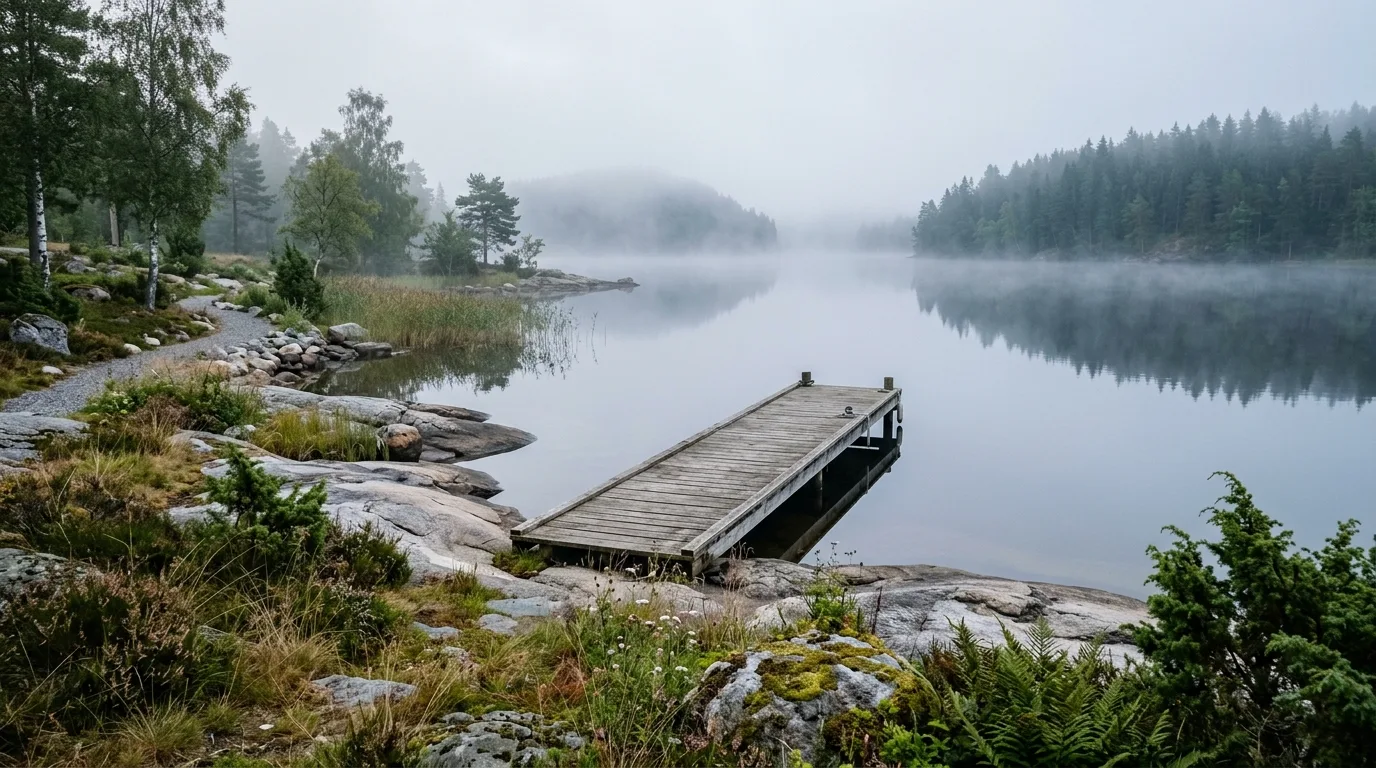
Idea 9
A rock-and-moss planting area for cool natural texture
One of the quiet strengths of this style is its respect for subtle texture, and a modest composition of stone, moss, and low groundcover can feel every bit as finished as a more colorful border. The beauty comes from closeness, material honesty, and restraint.
Idea 10
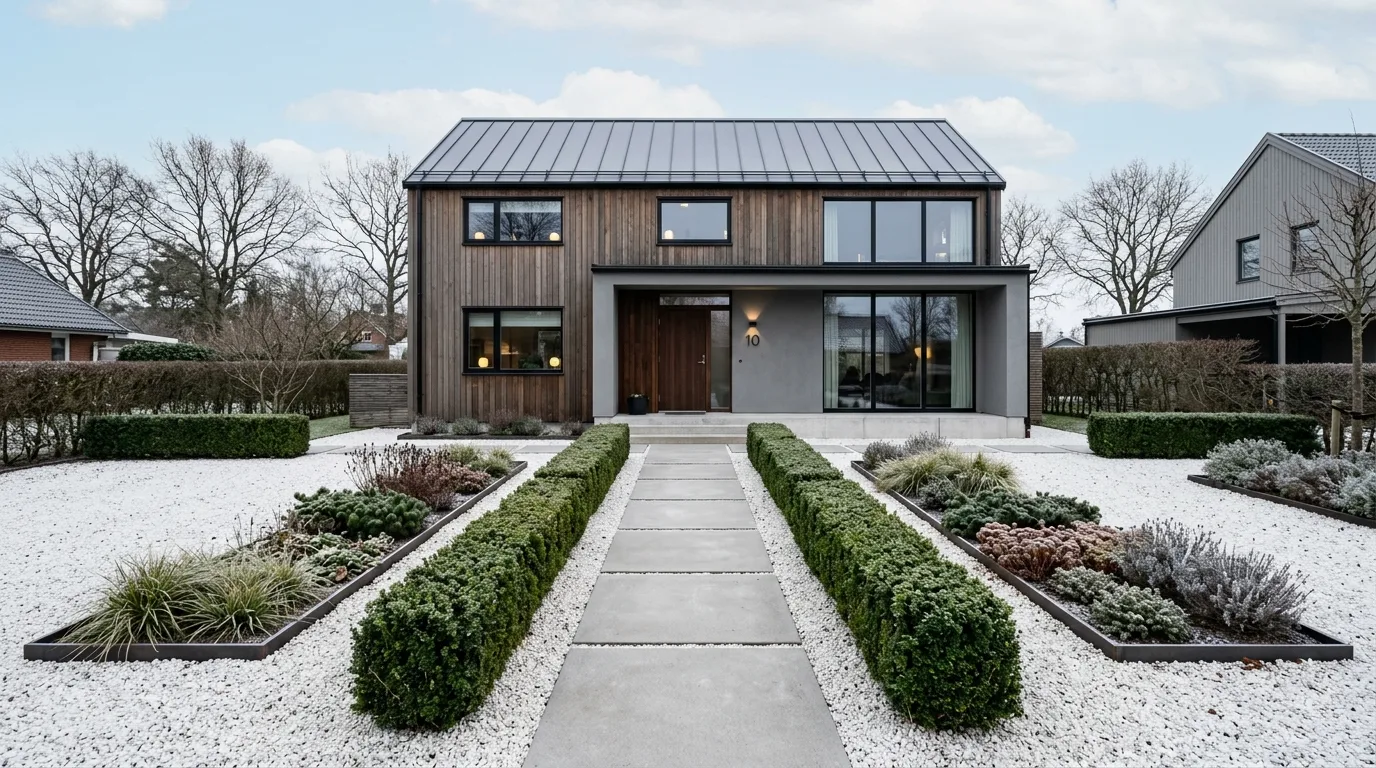
A winter-ready entry using evergreens and pale paving
Scandinavian gardens need to hold up beautifully in long cold seasons, which is why evergreen anchors and simple light-colored surfaces are such reliable tools in the palette. They keep the landscape readable and welcoming even when flowers are absent.
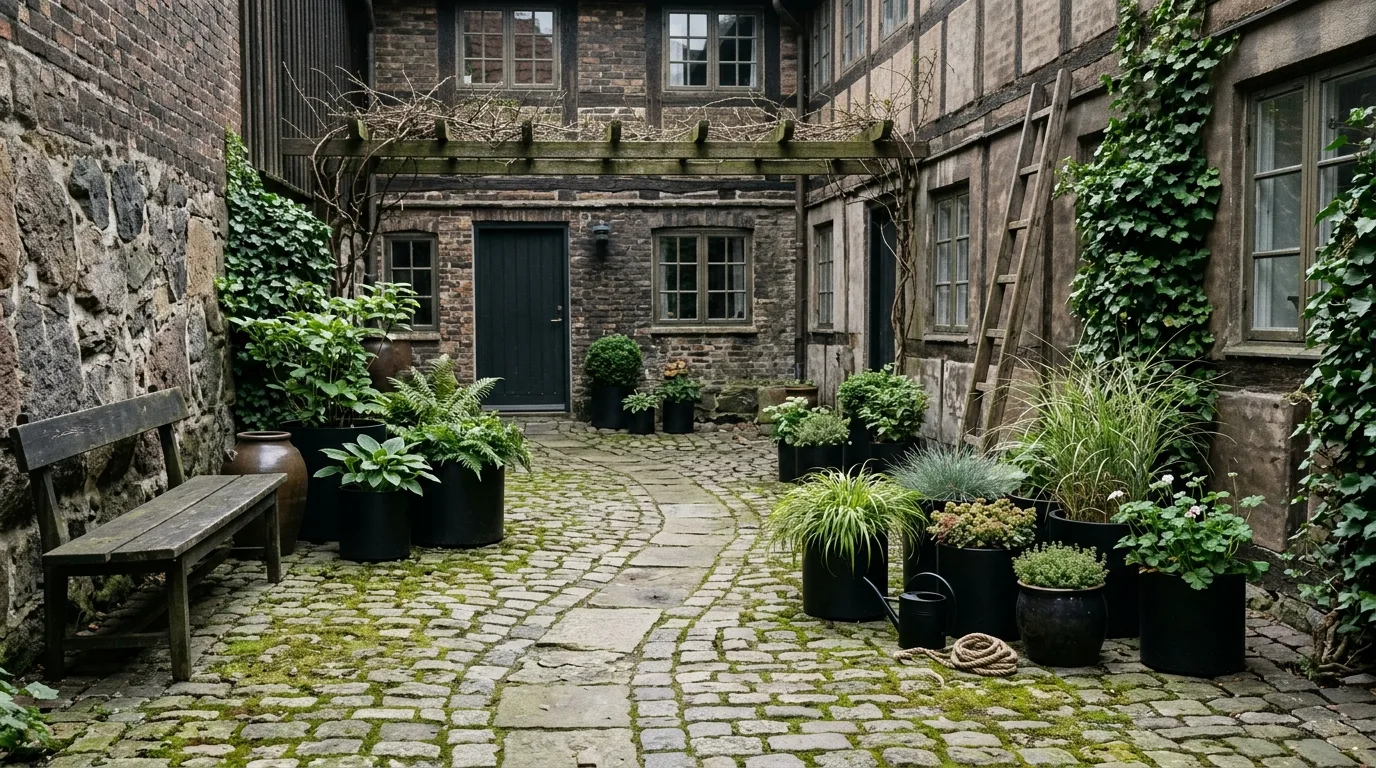
Idea 11
A waterside deck that lets the view remain the main event
The strongest minimalist landscapes know when to step back, and near water or open scenery the design often works best when materials are refined enough to support the setting without competing with it. The deck feels generous precisely because it remains so simple.
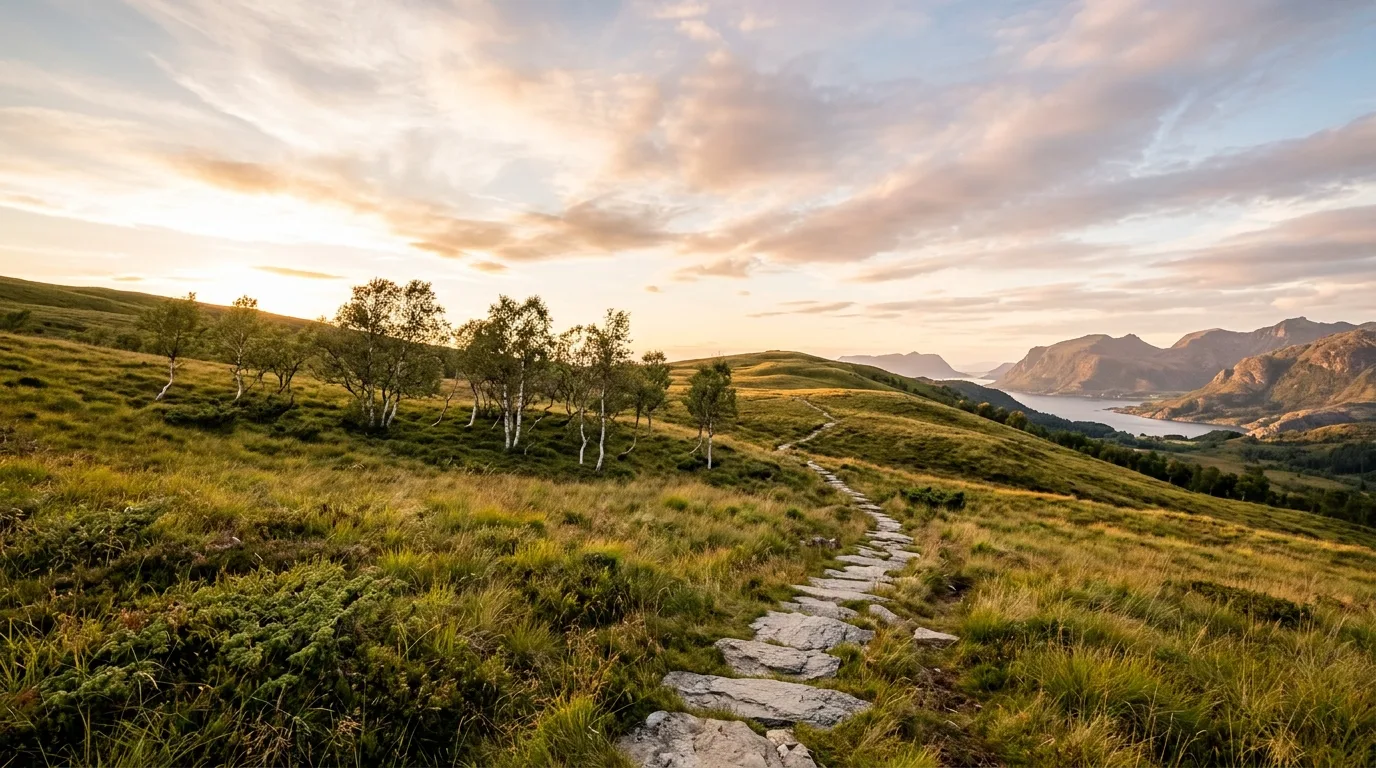
Idea 12
A sheltered patio framed by slatted wood and soft green texture
Privacy can be handled very gently in this style through slatted screens, limited planting, and warm materials that create enclosure without heaviness. The patio feels protected and intimate while still staying visually open and clean.
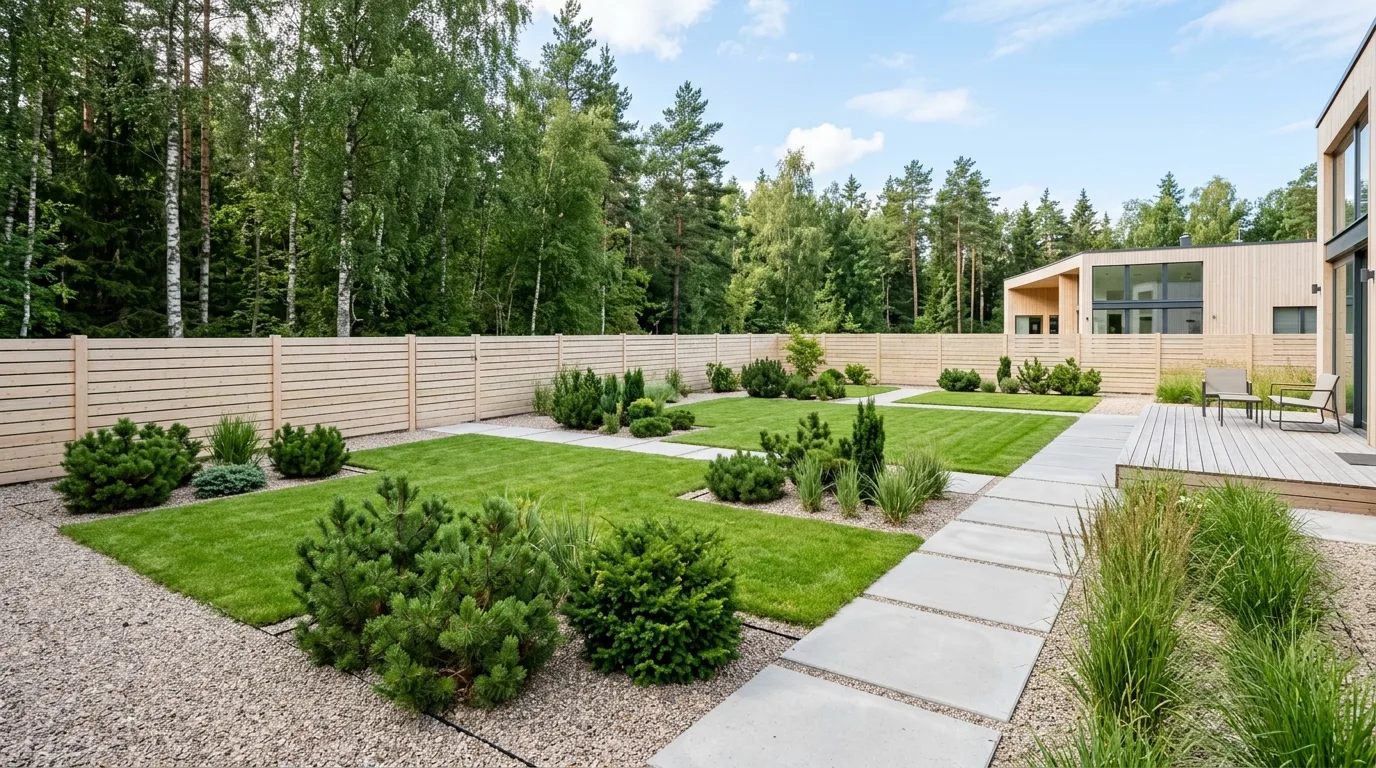
Idea 13
A birch-led front yard with understated seasonal change
Birches are especially fitting in Scandinavian landscapes because their light bark and airy canopies bring movement and seasonality without disrupting the simplicity of the whole scheme. They make the yard feel alive while preserving its clear, uncluttered identity.
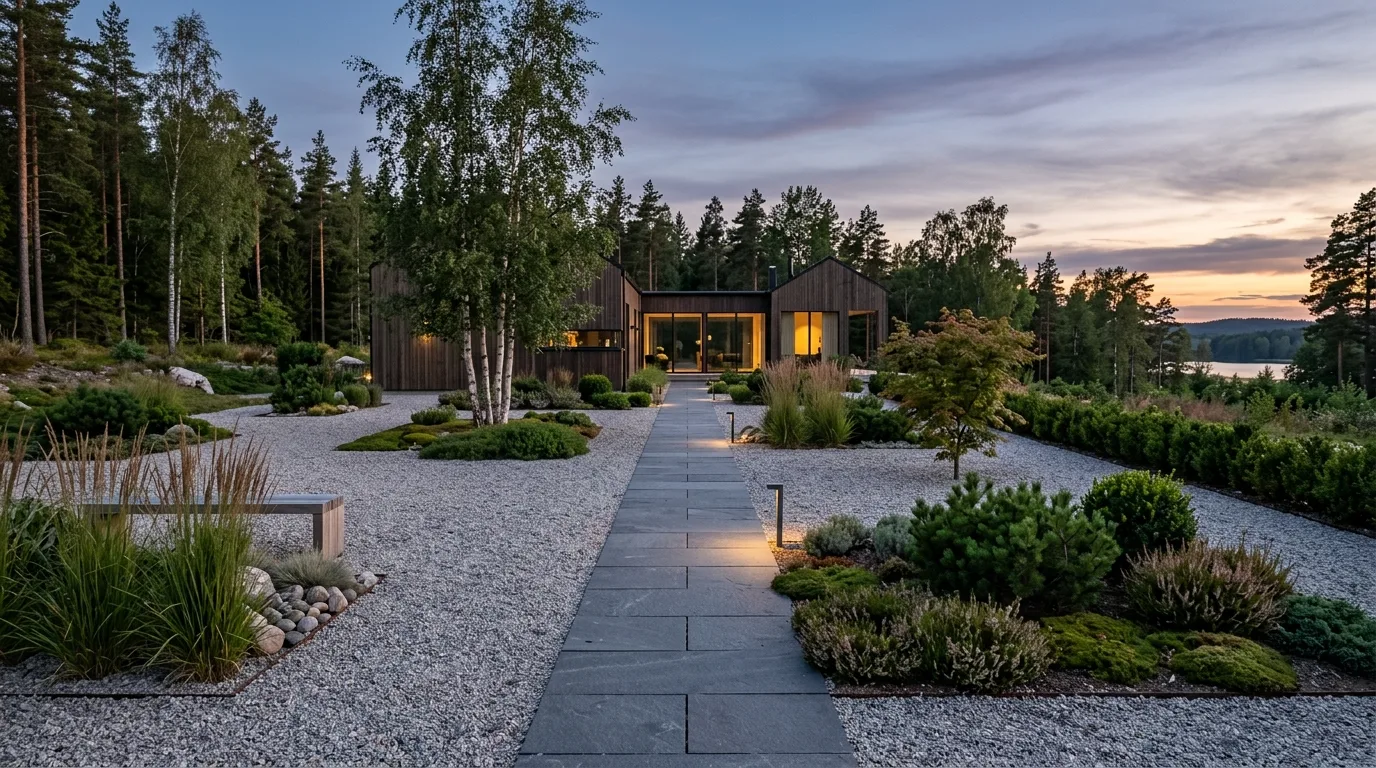
Idea 14
A simple landscape where every surface feels edited and calm
The most convincing Scandinavian gardens are not memorable because they contain a lot, but because nothing feels accidental and each material supports a coherent quiet mood. That careful editing is what turns simplicity into real elegance instead of absence.
Read next on Saw & Sprout

Edible Gardens
13 Clever Tomato Trellis Gardens for a Bountiful Harvest
Small-Space Growing
14 Space-Saving Small Vegetable Gardens for Urban GrowersFrequently asked questions
What defines a Scandinavian landscape style?
Simple forms, natural materials, restrained planting, and a strong sense of calm usually define the look more than decorative detail.
Can Scandinavian gardens still feel warm?
Yes. Wood, soft grasses, birch, and thoughtful lighting often give the style its inviting warmth without breaking its minimal character.
Do Scandinavian landscapes need a large yard?
No. The principles often work very well in compact spaces because clean lines and edited materials make small areas feel more spacious.