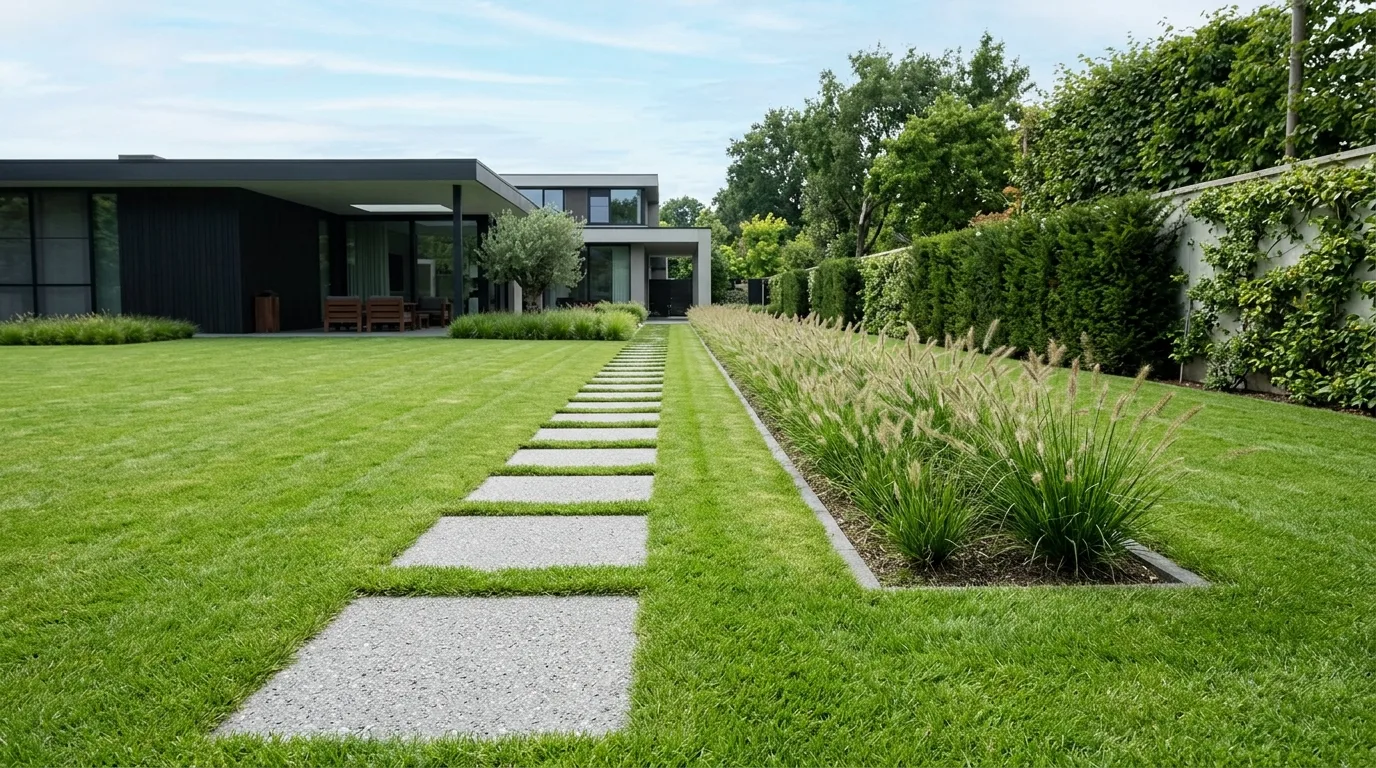
Minimal landscape design feels powerful because it depends on space, proportion, and disciplined materials rather than trying to impress through abundance.
The best modern yards in this style use a small number of strong elements, giving paving, planting, and architecture enough breathing room that the whole property feels calmer and more intentional.
These minimal landscape ideas explore front yards, courtyards, patios, side passages, and roof terraces that show how clean design can still feel warm, livable, and distinctive.
Quick planning notes
Limit both materials and plant types so the yard stays calm and visually coherent.
Use negative space confidently because open room is part of what gives minimal design its strength.
Choose plants for shape and texture rather than relying on many blooms or colors.
Make every edge and alignment matter because small mistakes show more clearly in restrained landscapes.
Idea 1
A front yard of pale gravel, clipped shrubs, and one precise path
Minimal landscapes feel strongest when every line is clear and every surface has enough room to matter, allowing the house and garden to work together without visual clutter. The restraint creates a calm, contemporary yard that feels more intentional than sparse.
Idea 2
A black-and-green entry composition with broad pavers
A limited palette can make a modern yard look especially polished because repeated dark accents and disciplined greenery create rhythm without depending on many decorative details. The broad pavers then reinforce that crisp architectural mood underfoot.
Idea 3
A courtyard with one specimen tree and open negative space
Negative space is one of the most powerful tools in minimal design, and when a single tree is given enough breathing room it can shape the entire emotional tone of the courtyard. The result feels serene, sculptural, and far more expansive than the footprint suggests.
Idea 4
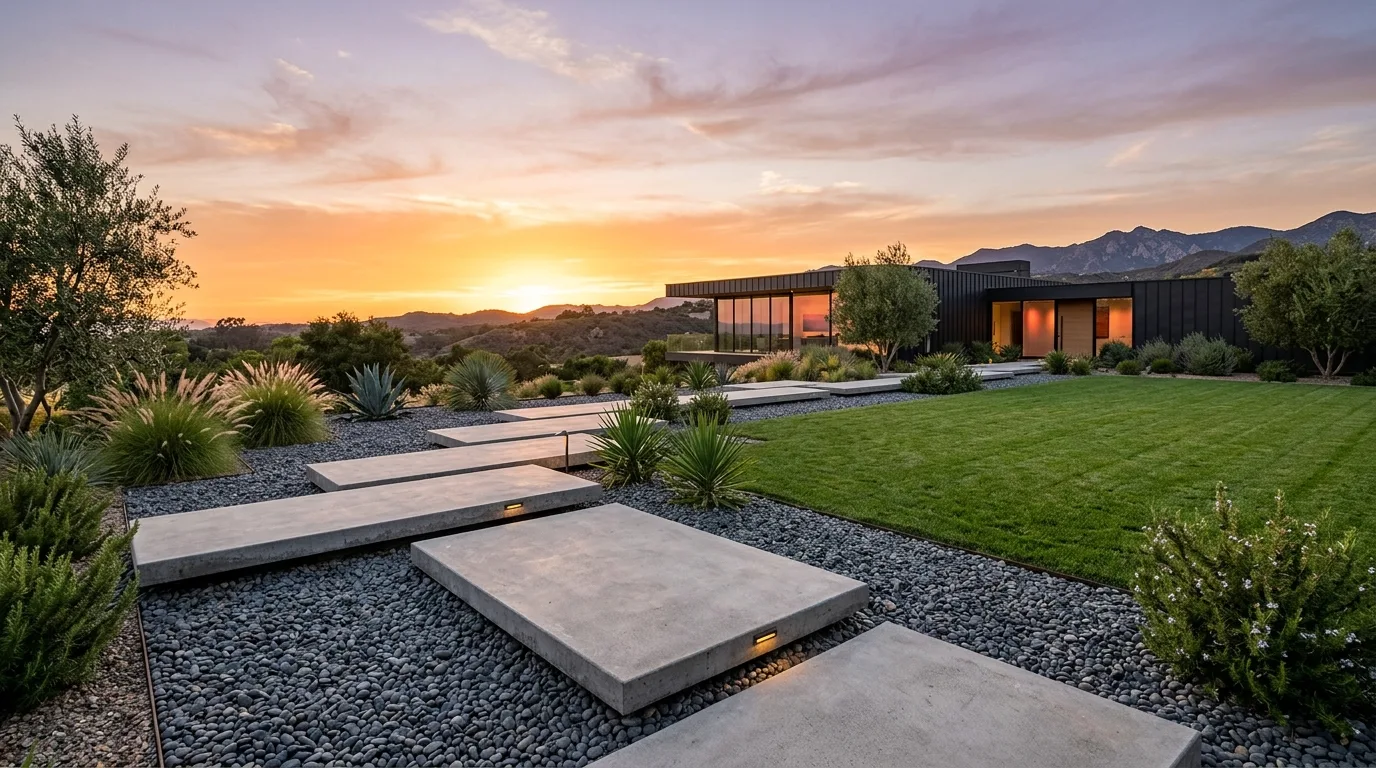
A side yard simplified by concrete, gravel, and upright grass
Minimal side yards work well because they strip the space back to its essential movement and structure, letting one or two plant forms provide softness without complicating upkeep. The passage starts to feel elegant rather than merely functional.
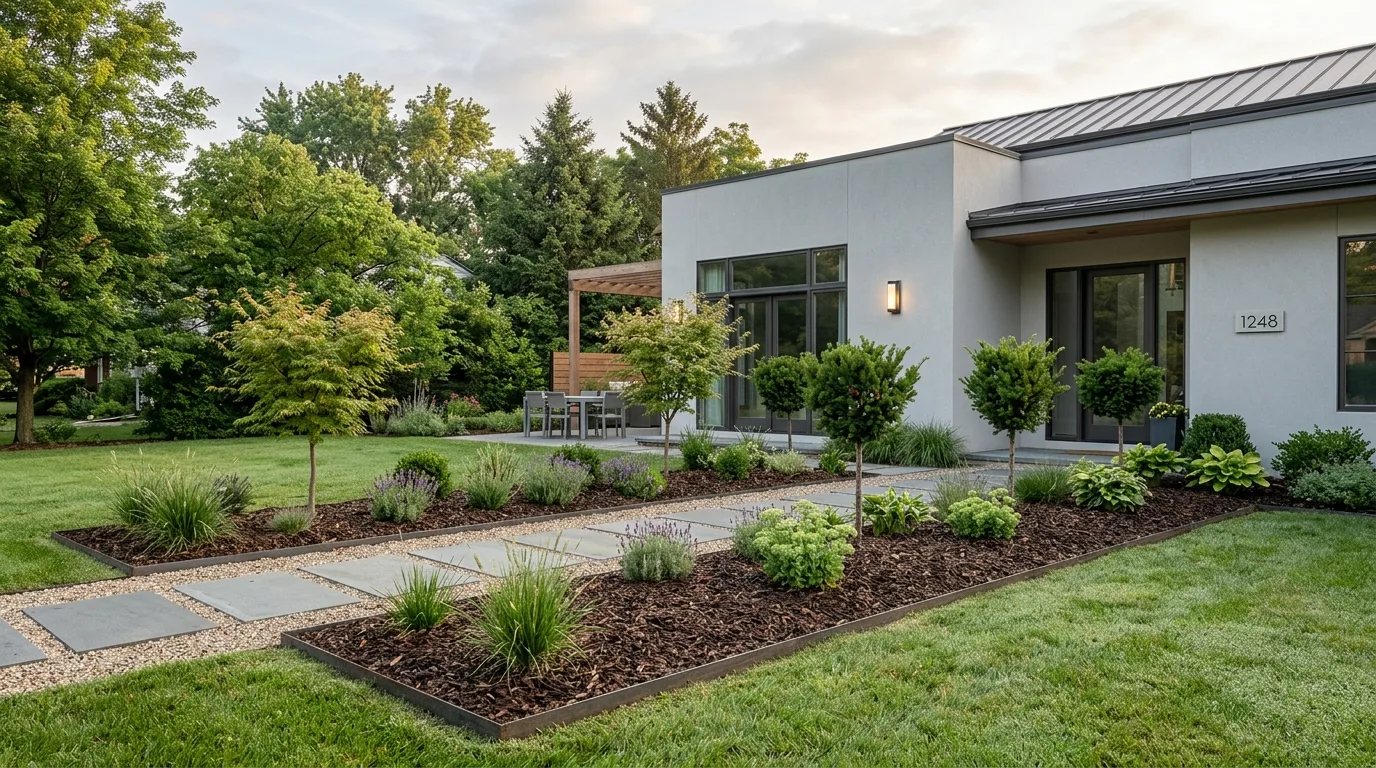
Idea 5
A rectangular lawn panel framed by sharp planting lines
Minimal design does not have to exclude grass, and a cleanly defined lawn can become a powerful visual pause when its boundaries are crisp and the surrounding planting remains controlled. The green reads like an intentional plane instead of leftover space.
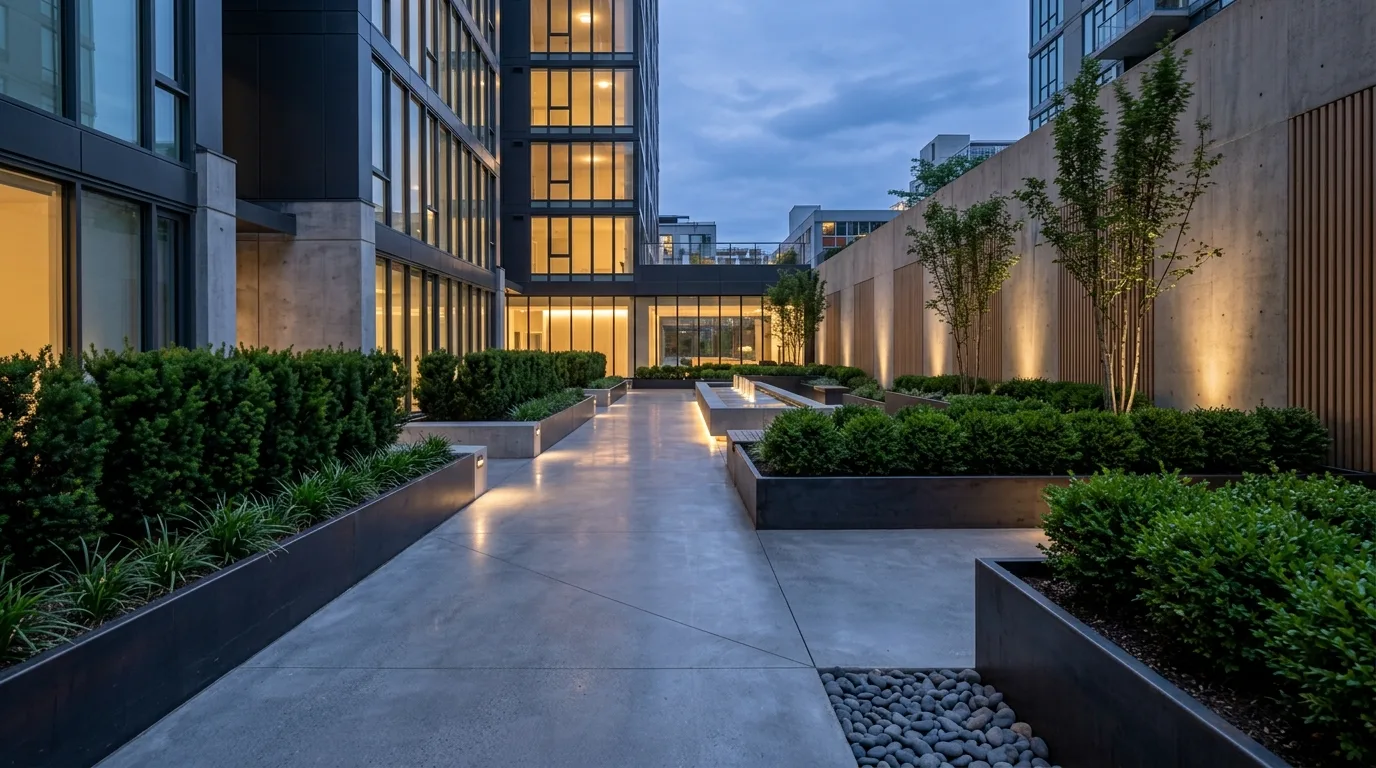
Idea 6
A patio edge with repeated pots and no visual excess
Repetition allows minimal patios to feel finished without becoming crowded, because a small number of matching containers can provide all the greenery the space needs while supporting the geometry of the hardscape. The mood stays orderly and calm.
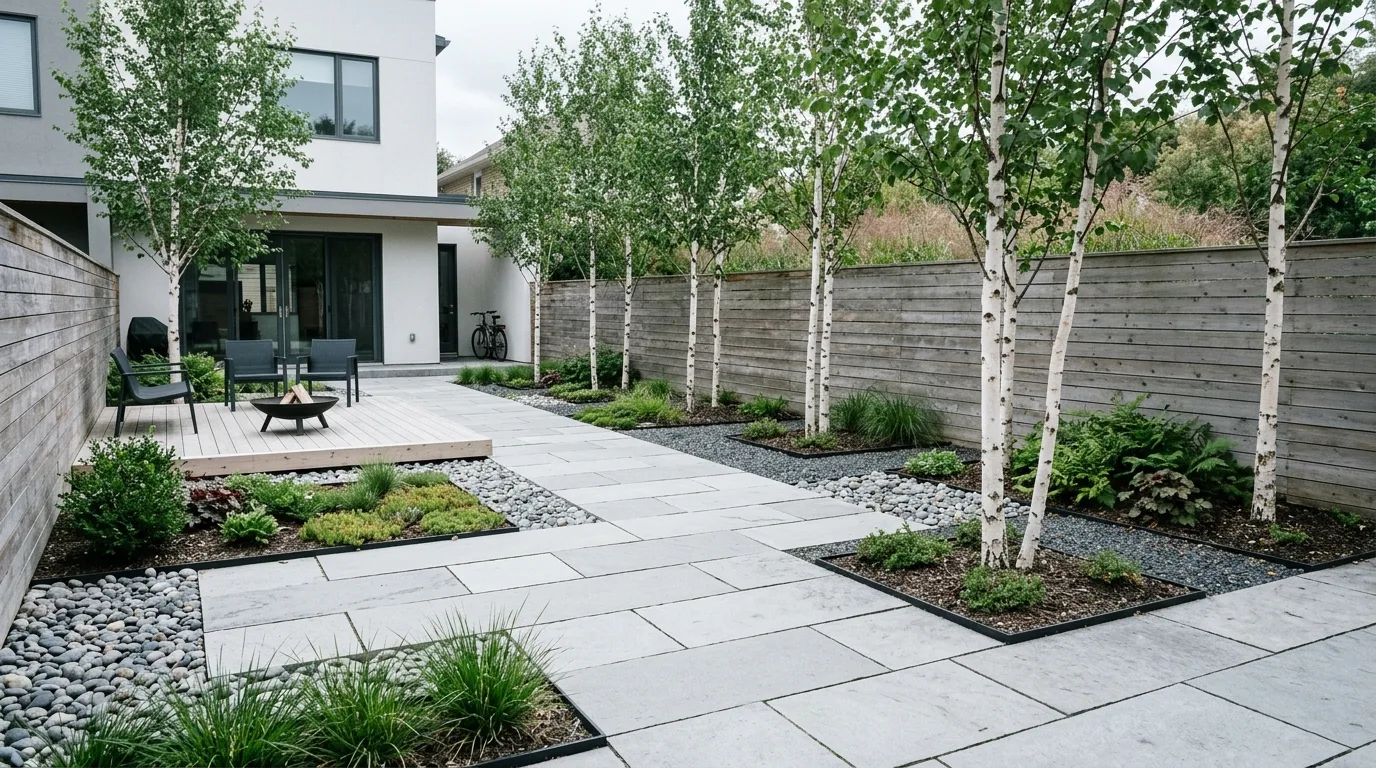
Idea 7
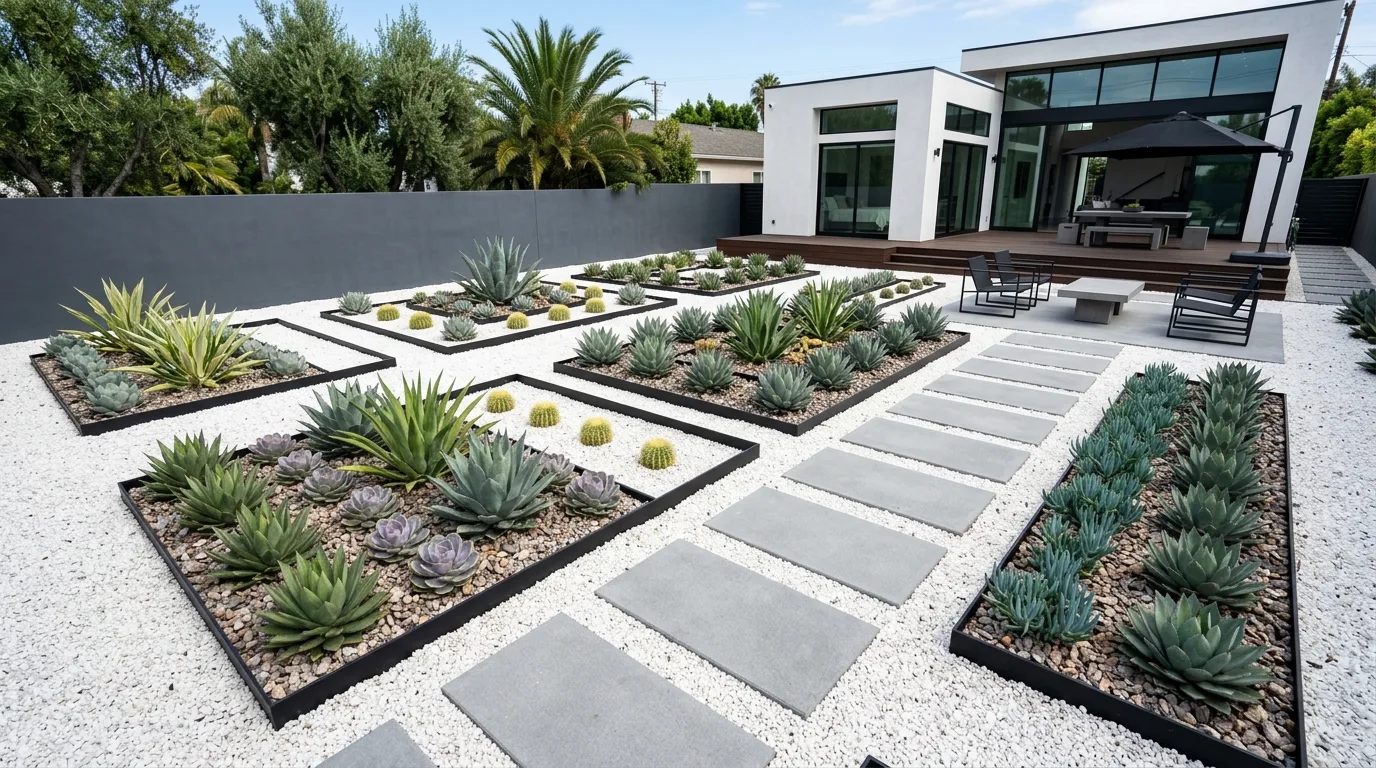
A dry-climate front yard using stone and sculptural agave forms
Minimalism often works especially well in low-water landscapes because gravel, stone, and sculptural plants already carry strong shapes that do not need much accompaniment. The yard feels modern, disciplined, and completely suited to the climate.
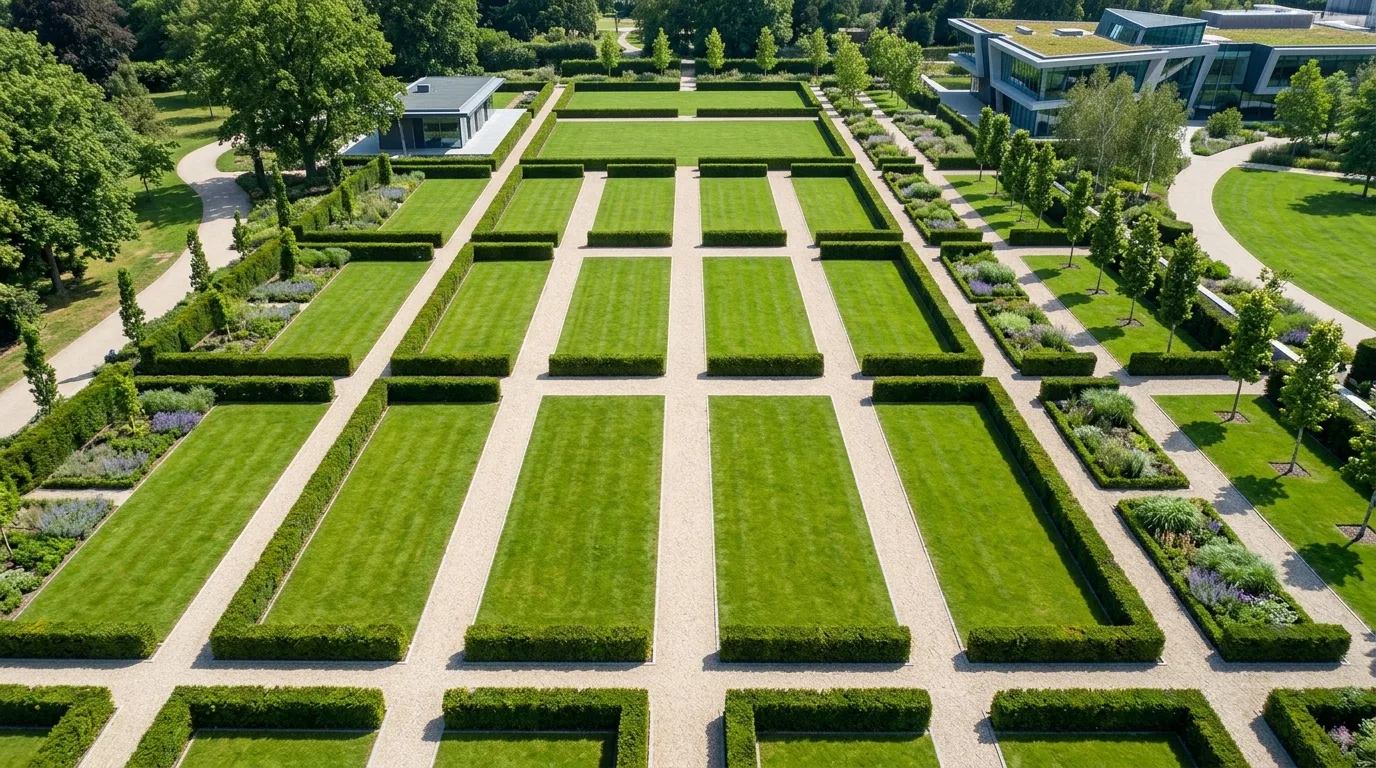
Idea 8
A monochrome planting plan built from layered green texture
Even a very limited color story can feel rich when the plant forms vary just enough in scale and texture to create depth without breaking the simplicity of the composition. The whole landscape stays quiet, but never flat or lifeless.
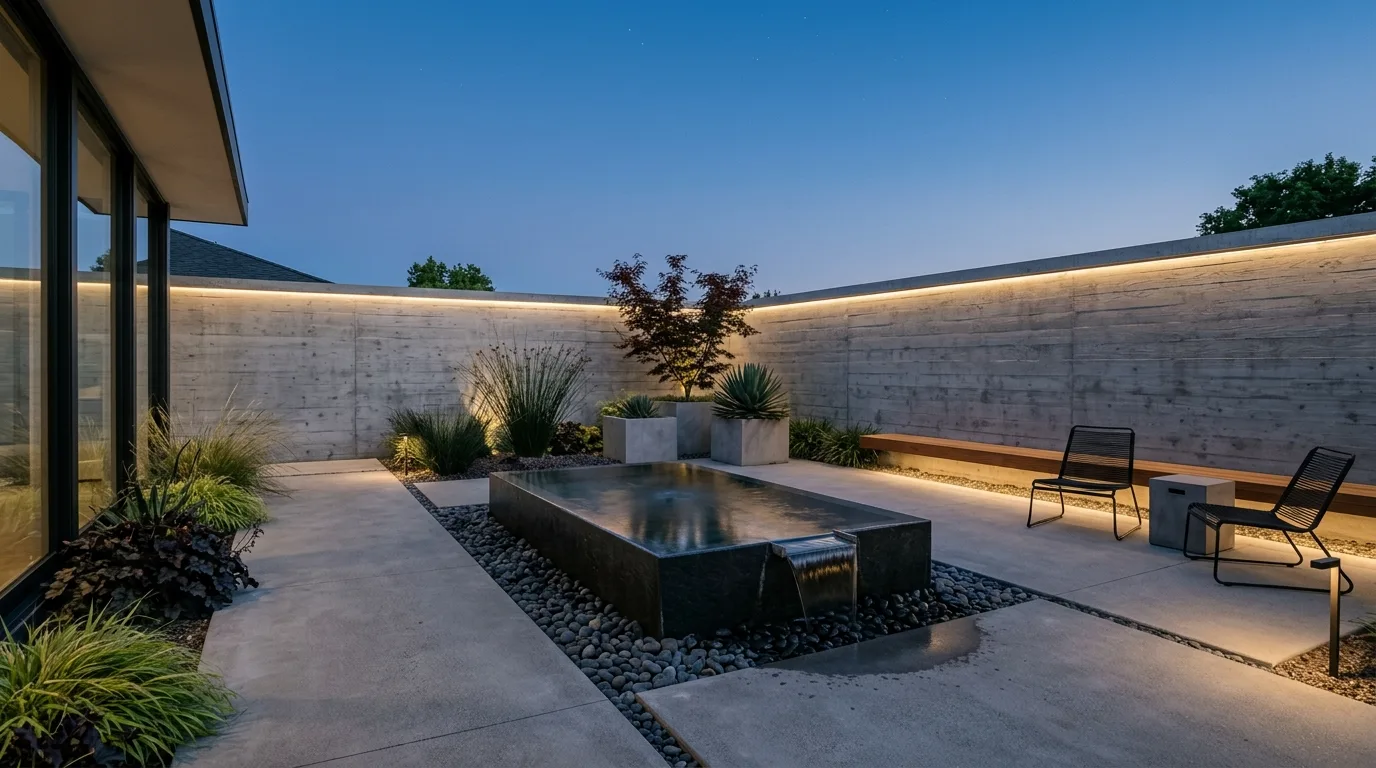
Idea 9
A pool surround where open paving keeps the view uncluttered
Minimal pool landscapes feel luxurious because the hardscape gives water and sky more visual importance, while a few carefully placed plants stop the scene from becoming sterile. The openness itself becomes part of the beauty.
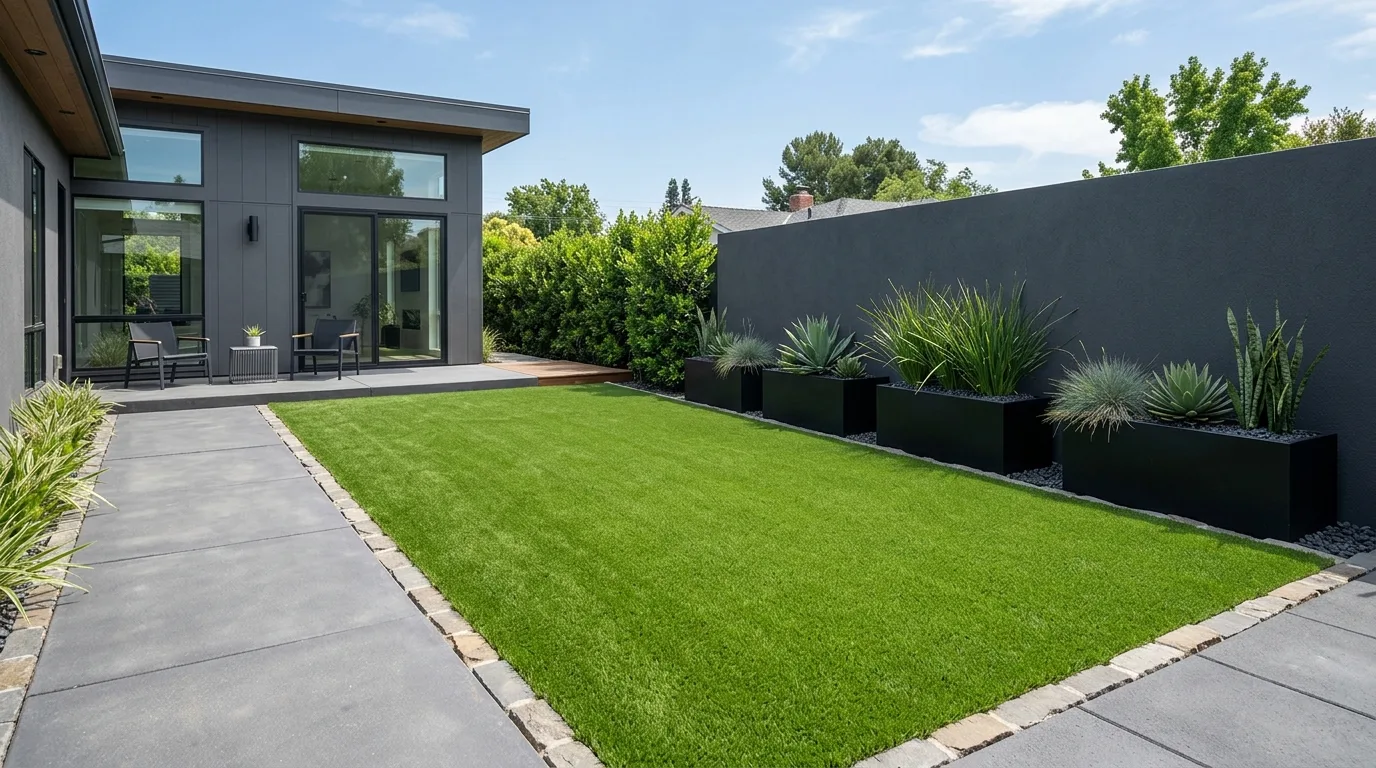
Idea 10
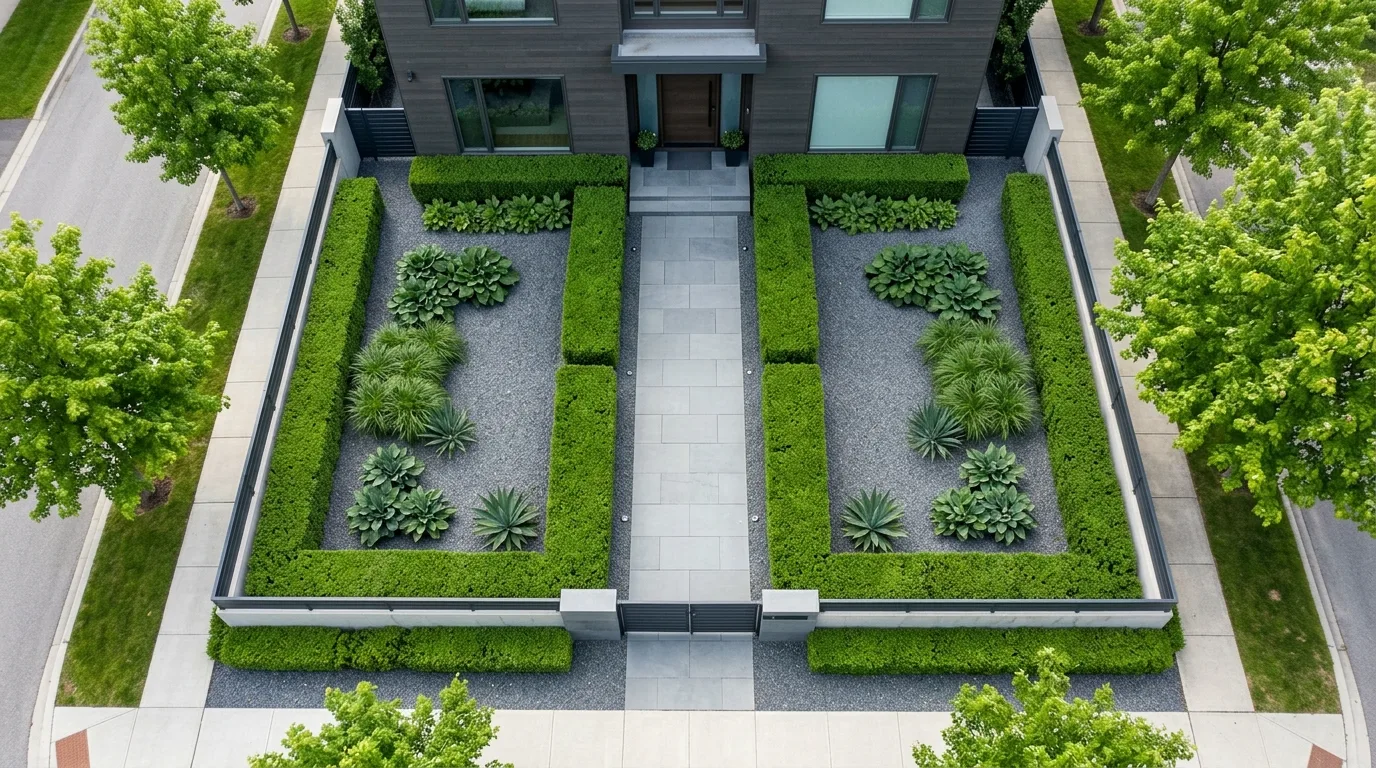
A narrow urban front yard with strong symmetry and calm surfaces
Compact modern homes often benefit from minimal landscaping because the simpler layout makes the frontage look sharper and more expensive without demanding much space. Symmetry and surface discipline do most of the visual work.
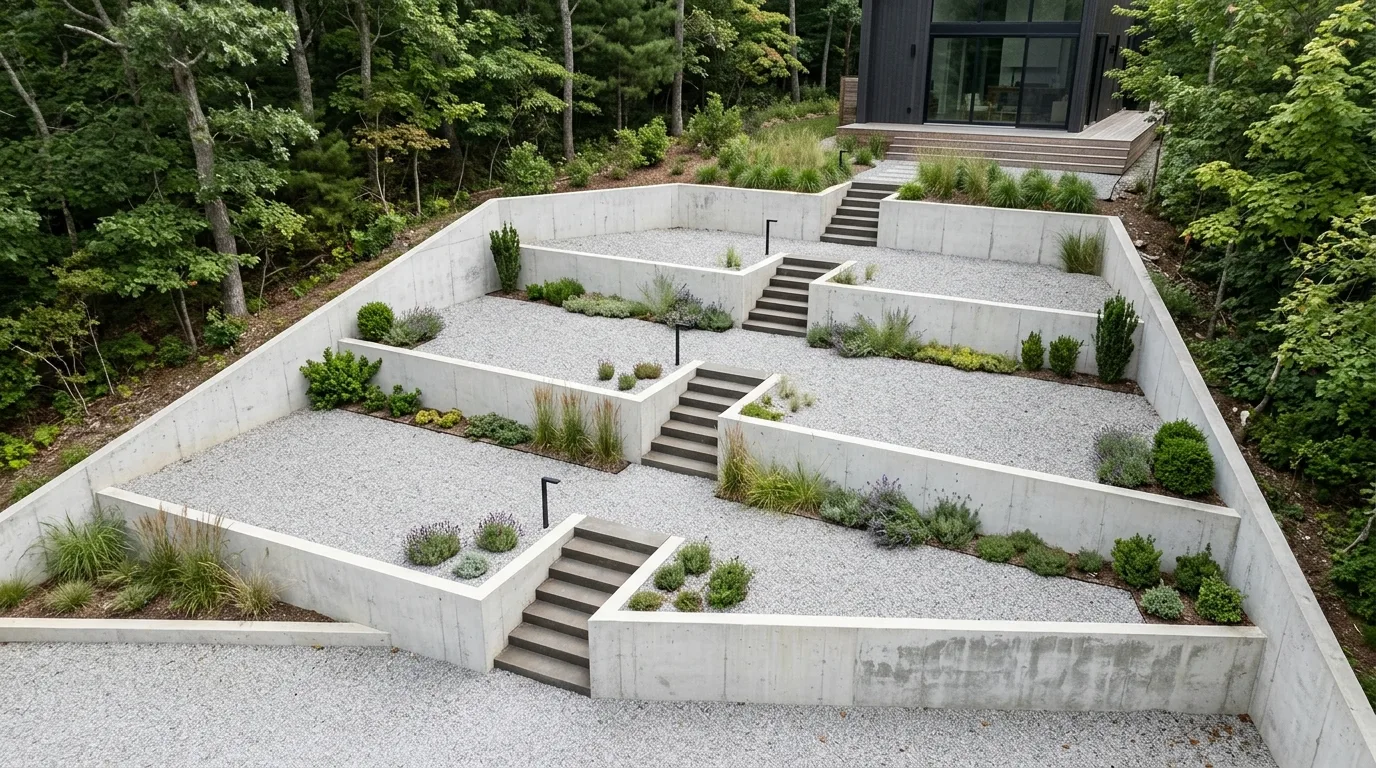
Idea 11
A black fence backdrop making the entire garden feel sharper
Dark boundaries are a useful minimal device because they absorb distraction and let the forms of paving and planting read more clearly against them. Even modest greenery gains a stronger, more graphic presence in the composition.
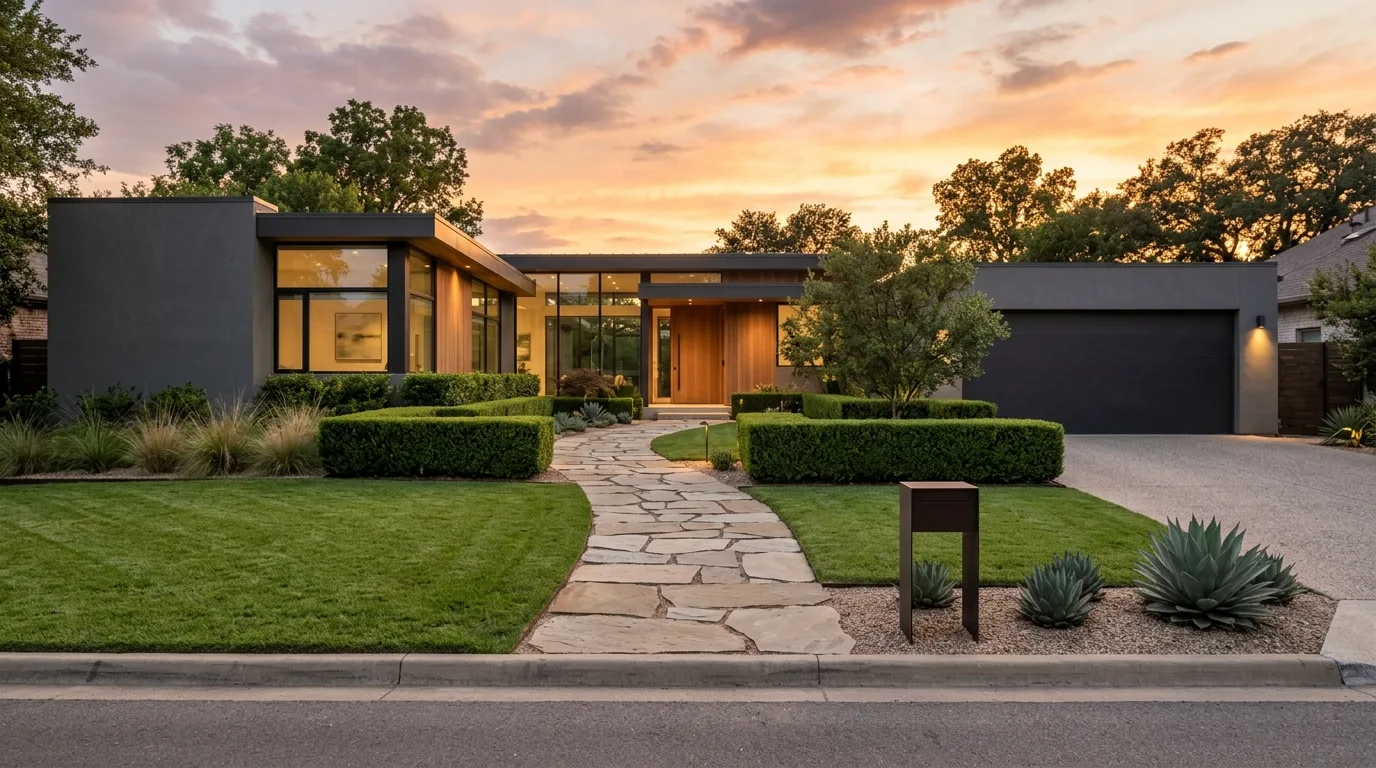
Idea 12
A roof terrace using low furniture and disciplined planting blocks
Minimal roof terraces succeed when the furniture stays low and the planting remains organized enough to support the skyline view rather than compete with it. The garden feels airy, urban, and carefully edited from every angle.
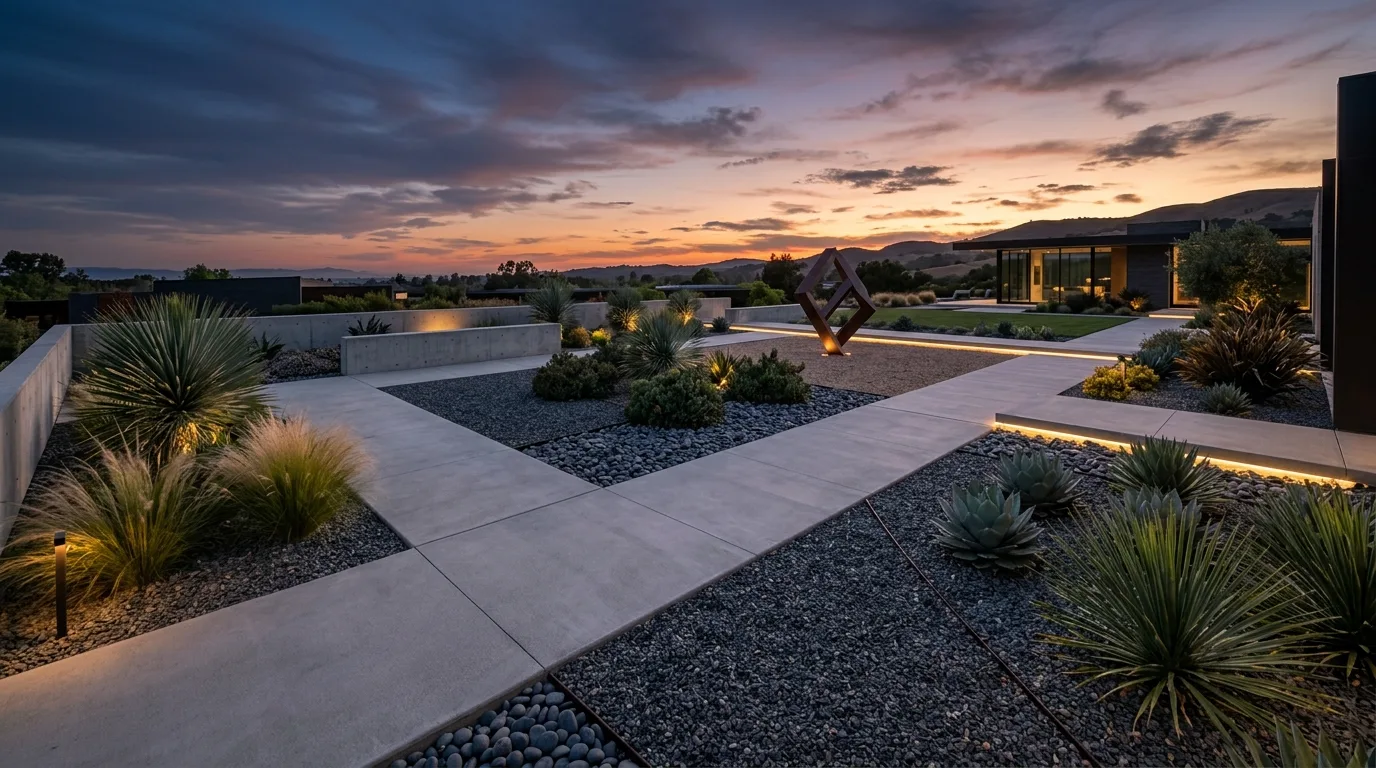
Idea 13
A modern yard where simplicity, spacing, and proportion create the beauty
The best minimal landscapes prove that beauty can come from fewer things handled more thoughtfully, with every material and plant placed carefully enough to feel deliberate. That clarity is what gives modern yards their clean, lasting appeal.
Read next on Saw & Sprout
Edible Gardens
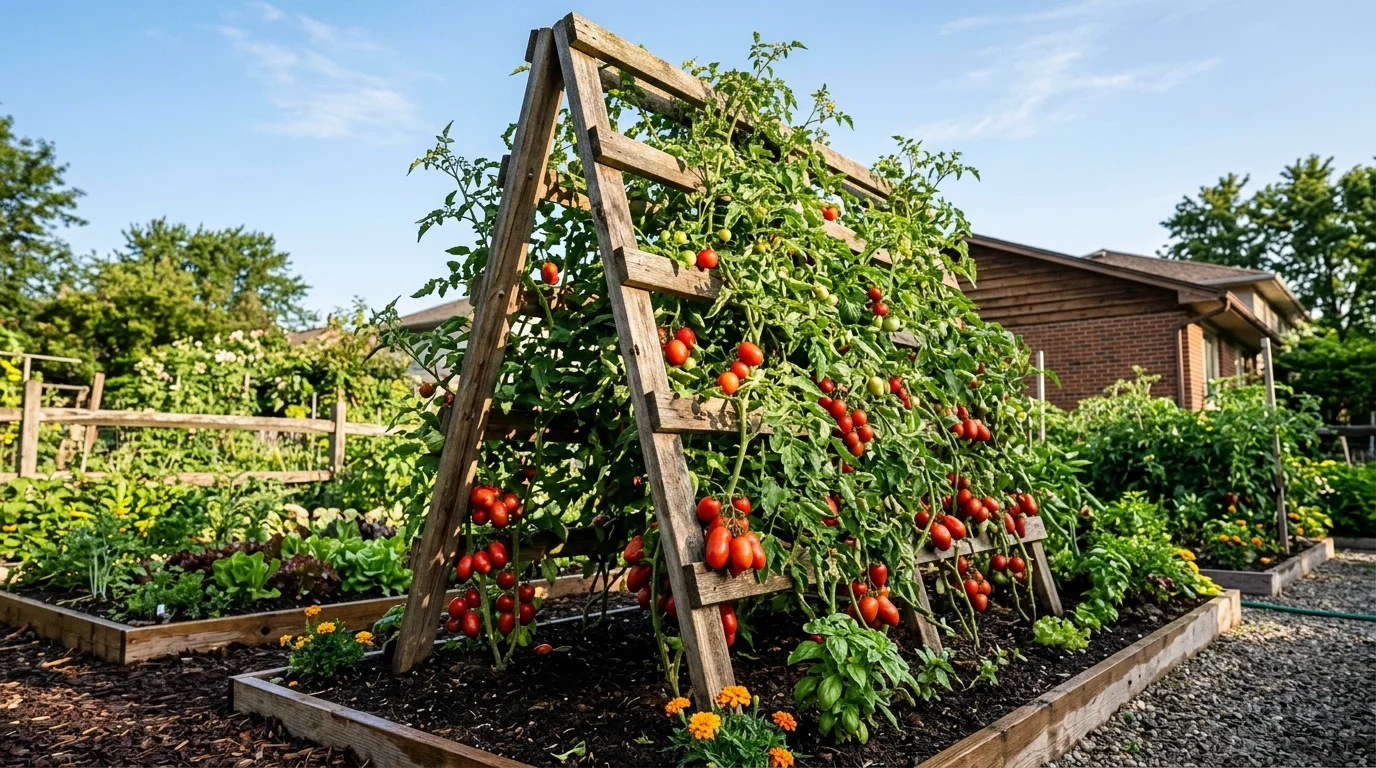
13 Clever Tomato Trellis Gardens for a Bountiful Harvest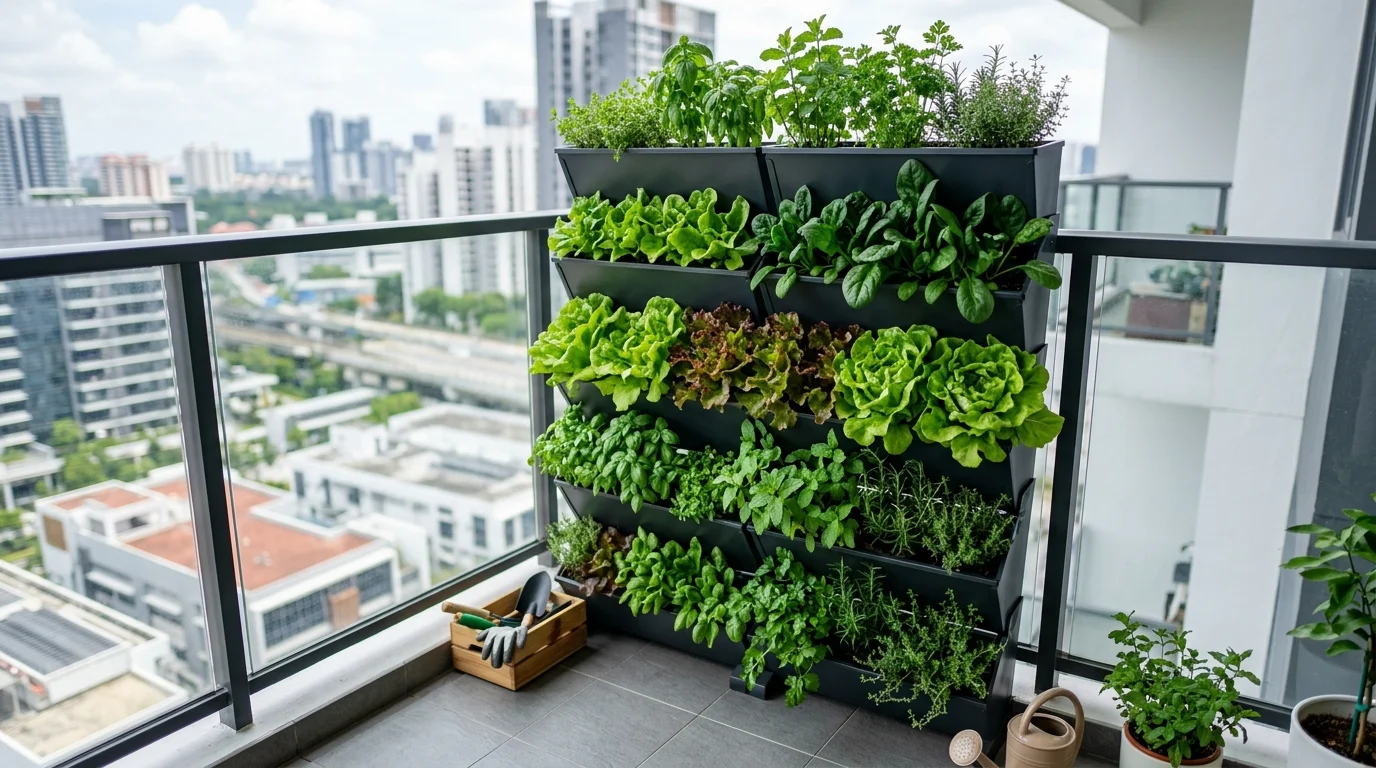
Small-Space Growing
14 Space-Saving Small Vegetable Gardens for Urban GrowersFrequently asked questions
What makes a landscape feel minimal instead of unfinished?
Strong proportions, careful spacing, repeated materials, and purposeful planting usually make the difference between clean restraint and emptiness.
Can minimal landscapes still feel warm?
Yes. Timber, softer greens, warm stone, and good lighting can make restrained modern yards feel welcoming without losing their clarity.
Are minimal landscapes easier to maintain?
Often yes, especially when the plant palette is limited and the layout avoids too many intricate beds or decorative details.