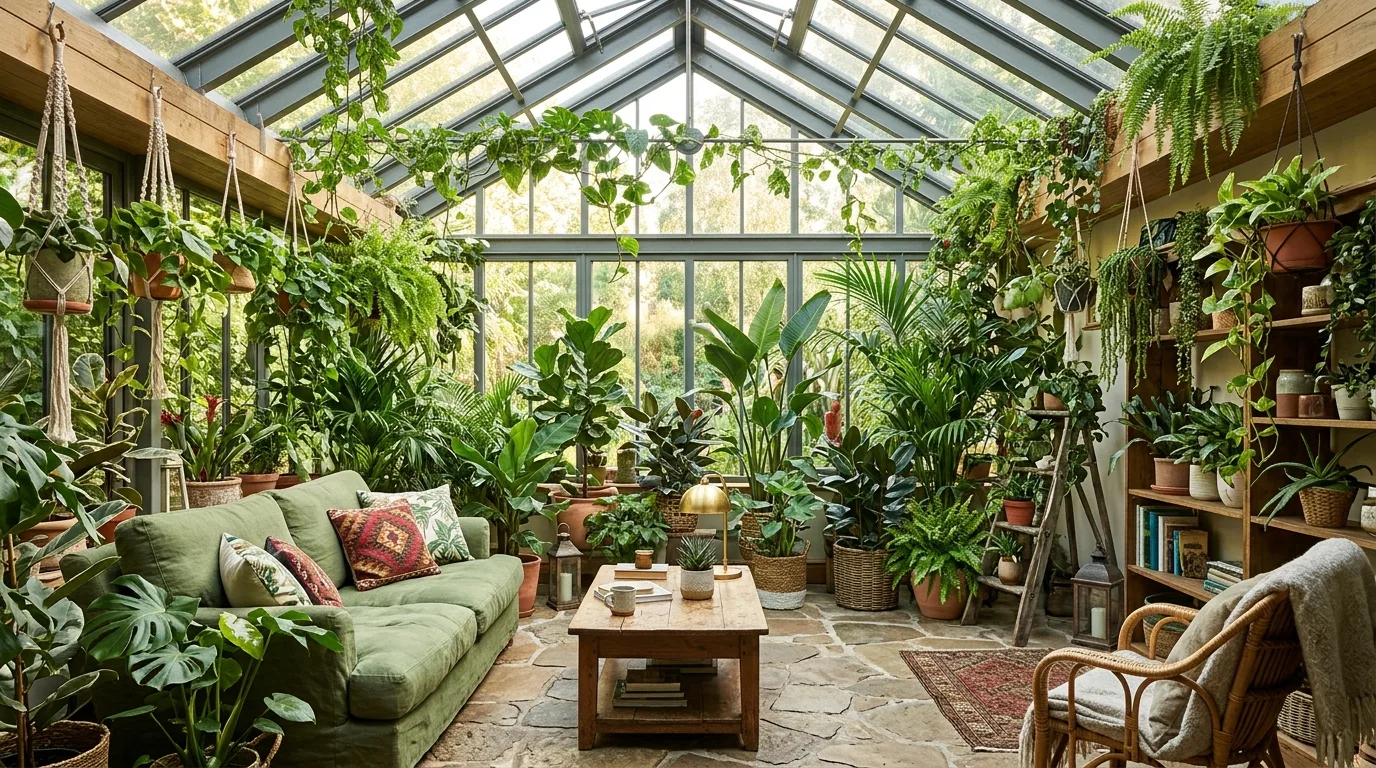
An interior garden does more than add a few plants to a room because it changes the atmosphere through softness, movement, and a stronger connection to light and season. When greenery is treated as part of the design, the home starts to feel more alive and much more immersive.
The best indoor garden ideas are not always the biggest ones. Sometimes a thoughtful kitchen herb shelf or a calm bathroom plant nook creates more impact than a larger collection that has not been composed carefully within the room.
These ideas focus on interior gardens that feel creative, livable, and genuinely integrated with the home. Some use one corner or shelf, some build a fuller indoor retreat, but all of them show how nature can become a stronger part of everyday interiors.
Quick planning notes
Match the plants to real light conditions first, because an interior garden only feels beautiful long term when the greenery can actually thrive where it is placed.
Use different heights and leaf shapes so the arrangement feels layered and garden-like rather than like a row of similar pots.
Treat containers as part of the room's style language, since terracotta, baskets, ceramics, and sleek planters all change the mood differently.
Build around one meaningful area such as a bench, shelf, niche, or window so the greenery feels anchored within the room instead of loosely scattered.
Idea 1
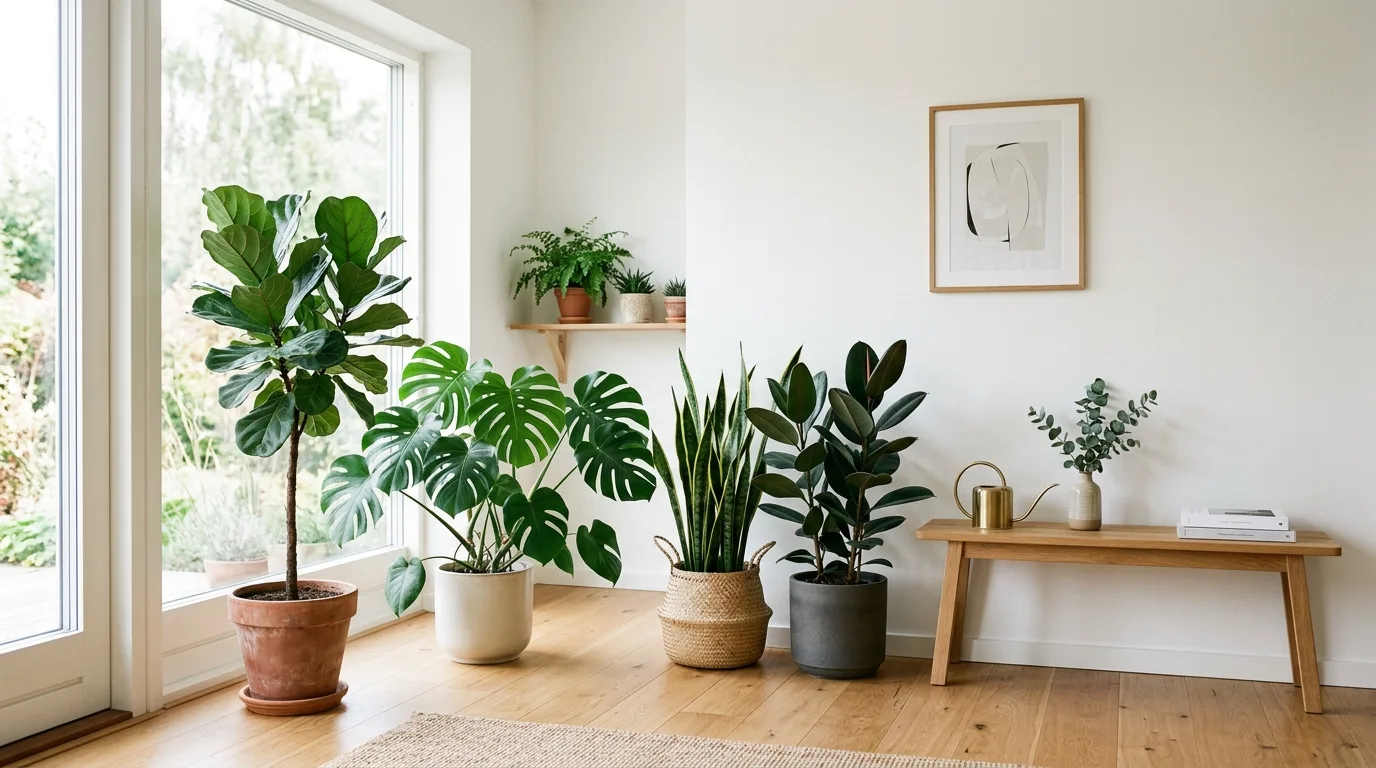
Sunlit corner with layered floor plants and a wooden plant stand
An interior garden starts to feel immersive when one sunlit corner is built up with several plant heights instead of a single pot left alone. A wooden stand adds warmth and variation, helping the greenery feel like part of the room's design and not just an accessory.
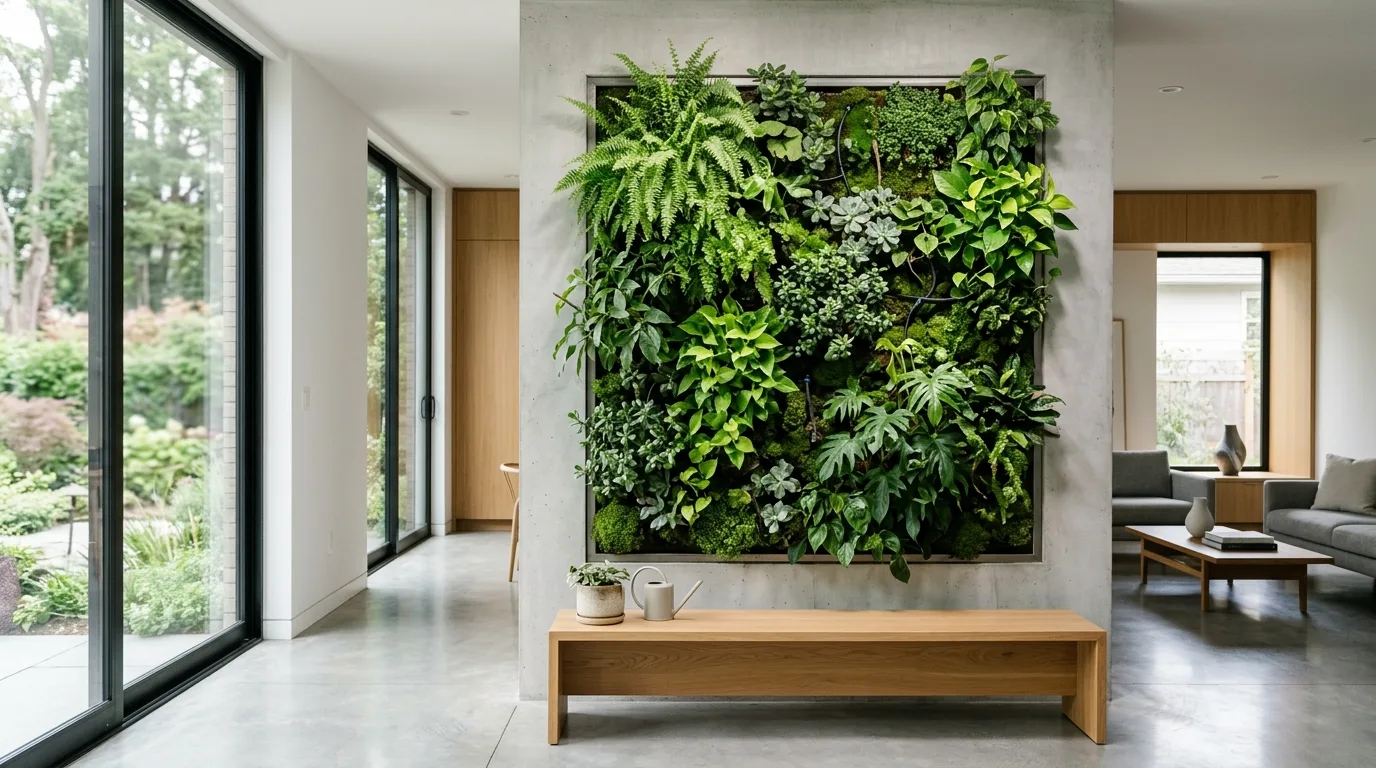
Idea 2
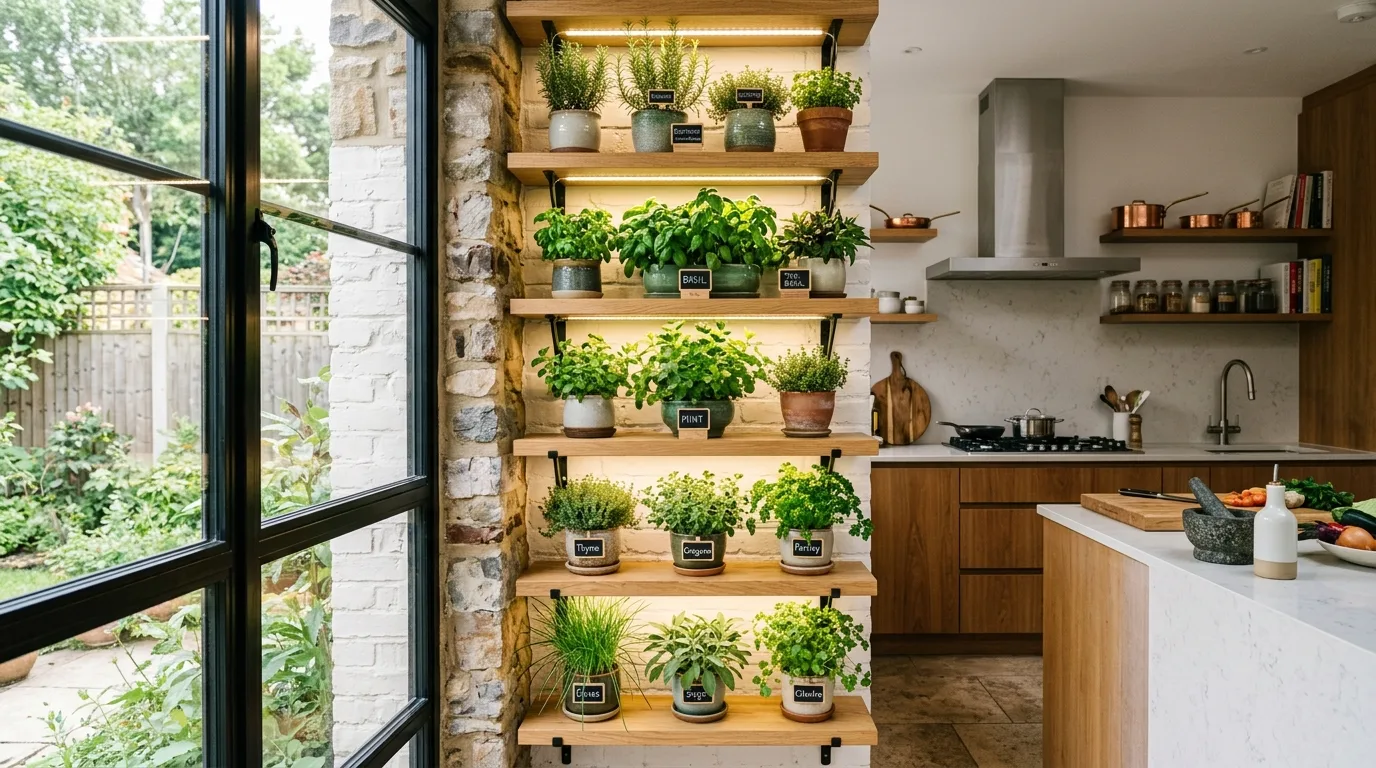
Indoor herb shelf beside a kitchen window with terracotta rhythm
A kitchen interior garden can be both beautiful and useful when herbs line a bright shelf in matching or related terracotta pots. The repetition creates order, while the living greenery makes the whole window zone feel fresher and more welcoming every day.
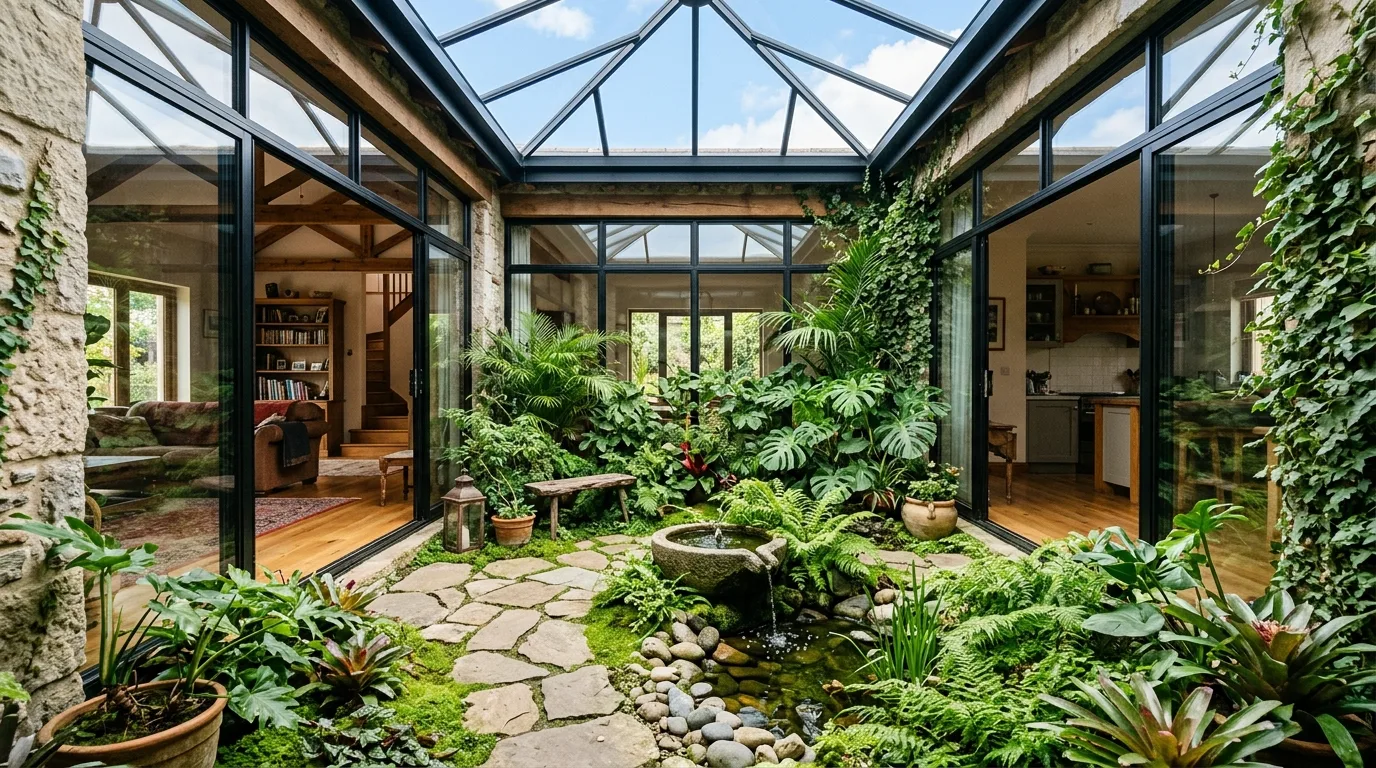
Idea 3
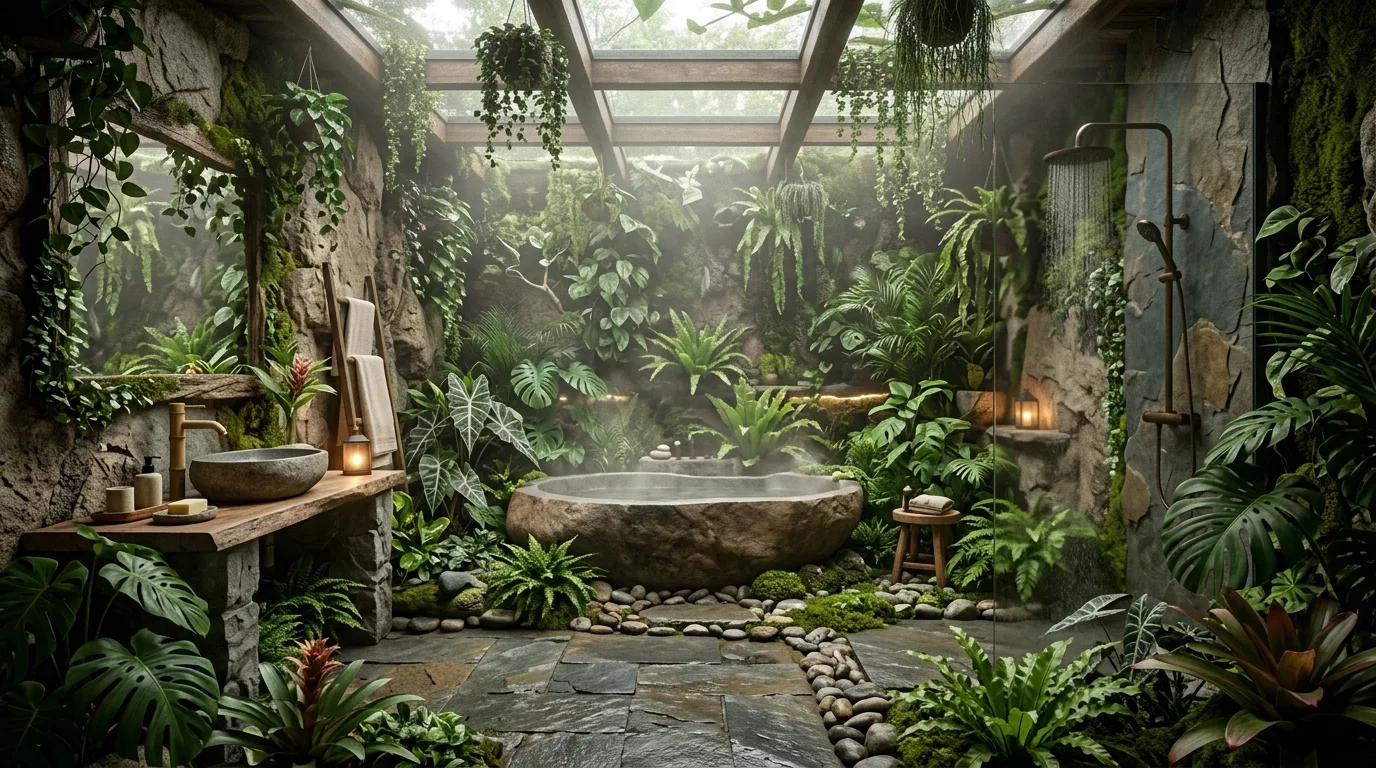
Bathroom garden nook with humidity loving plants and pale stone accents
Bathrooms lend themselves well to interior gardens because the extra humidity supports many leafy plants while also making the room feel softer and more restorative. Pale stone accents keep the space grounded, giving the greenery a spa-like setting that feels intentional.
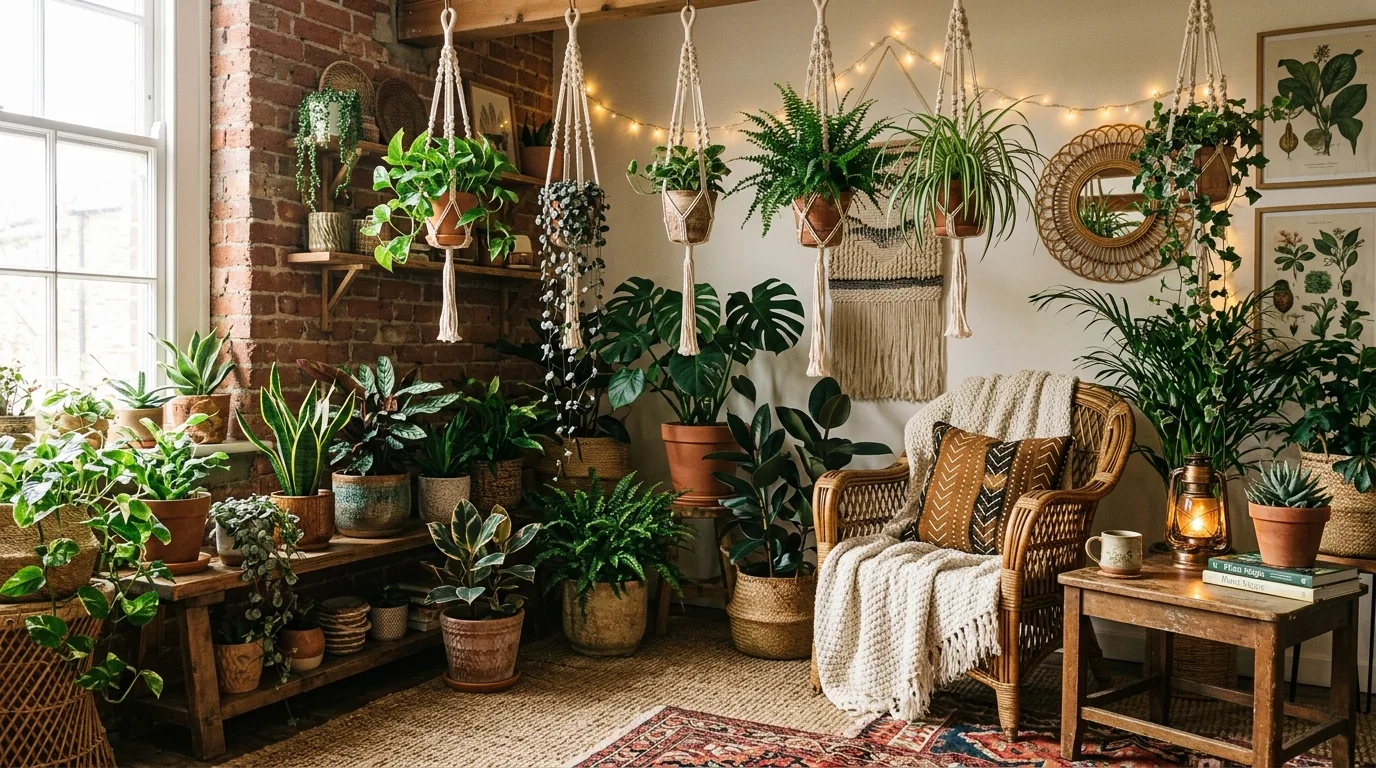
Idea 4
Dining room ledge lined with trailing vines and mixed ceramic pots
Trailing vines give an interior garden more movement because the greenery starts to spill into the room rather than sitting still on a shelf. Mixed ceramics add a collected feel, helping the ledge feel layered, artistic, and very easy to keep evolving over time.
Idea 5
Built in bench framed by tall leafy plants and a hanging planter
A bench wrapped with greenery can turn a simple seating area into a small indoor retreat when taller plants create enclosure around it. One hanging planter above adds another layer, making the whole composition feel more garden-like and much less like standard furniture styling.
Idea 6
Minimal living room with one oversized tree and low companion pots
An interior garden does not need dozens of plants to feel effective when one oversized tree already brings height, shadow, and presence to the room. Lower pots at the base complete the scene, creating a fuller green moment without sacrificing the calm of a minimal space.
Idea 7
Plant filled stair landing with filtered light and varied leaf textures
Stair landings often feel underused, which makes them excellent places to build a small interior garden that can be enjoyed while moving through the home. Filtered light and varied leaf textures make the landing feel softer and more alive, turning a transition zone into something memorable.
Idea 8
Home office softened by a desk side fig and smaller shelf greenery
Plants can make a home office feel much more breathable when one larger fig anchors the corner and smaller greenery breaks up shelving nearby. That balance helps the workspace feel productive but less mechanical, which is often exactly what an interior garden should do indoors.
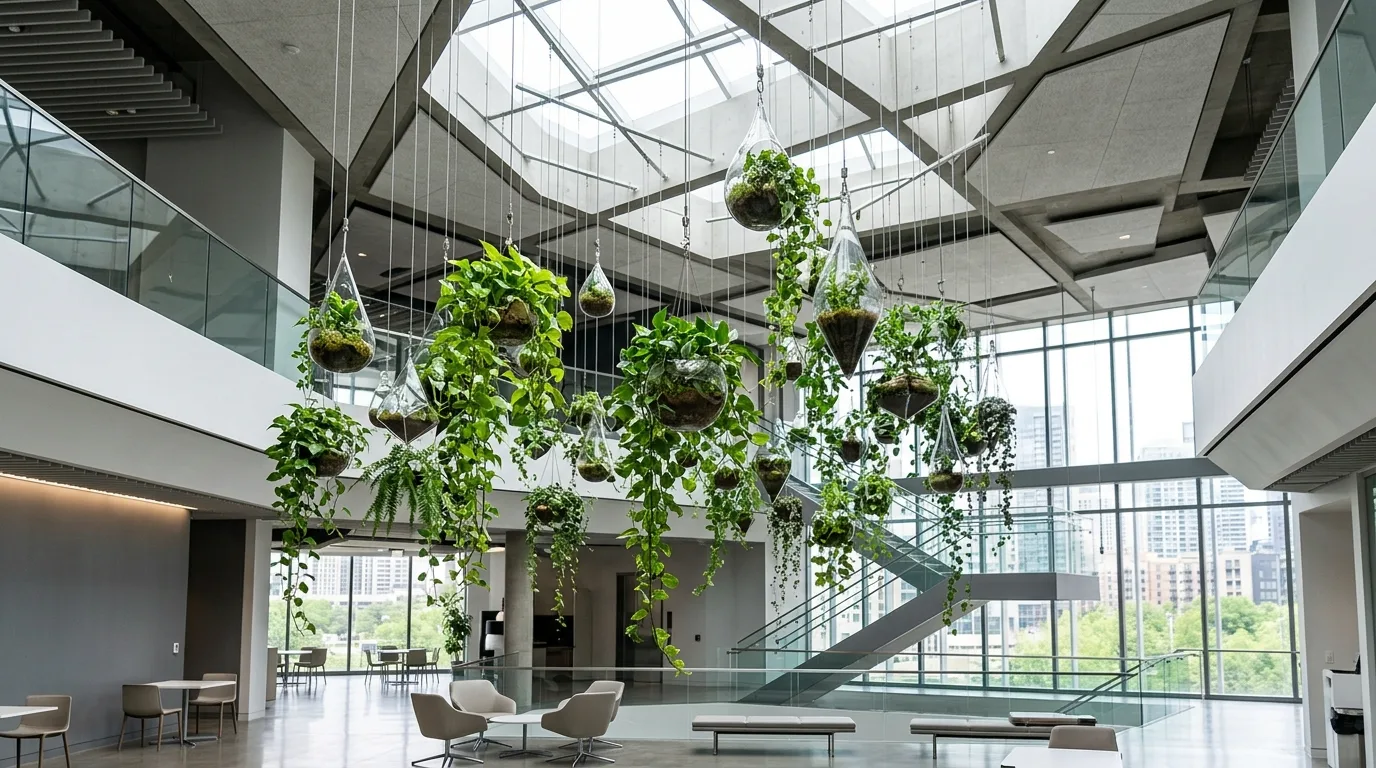
Idea 9
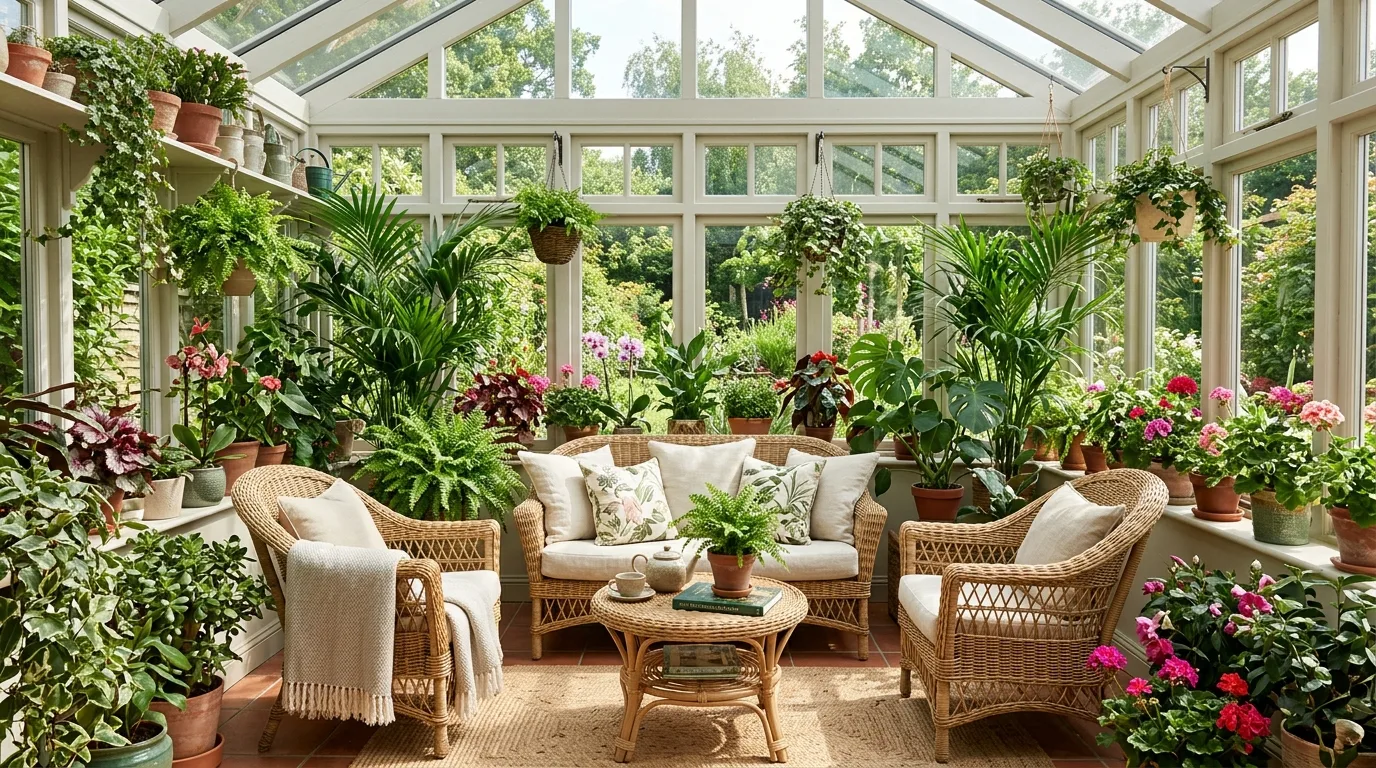
Glass enclosed sunroom garden with rattan seating and layered pots
A sunroom naturally supports an interior garden because the light level allows a fuller range of plants to thrive in one place. Rattan seating and layered pots then make the space feel like a true indoor conservatory, giving the room both softness and destination value.
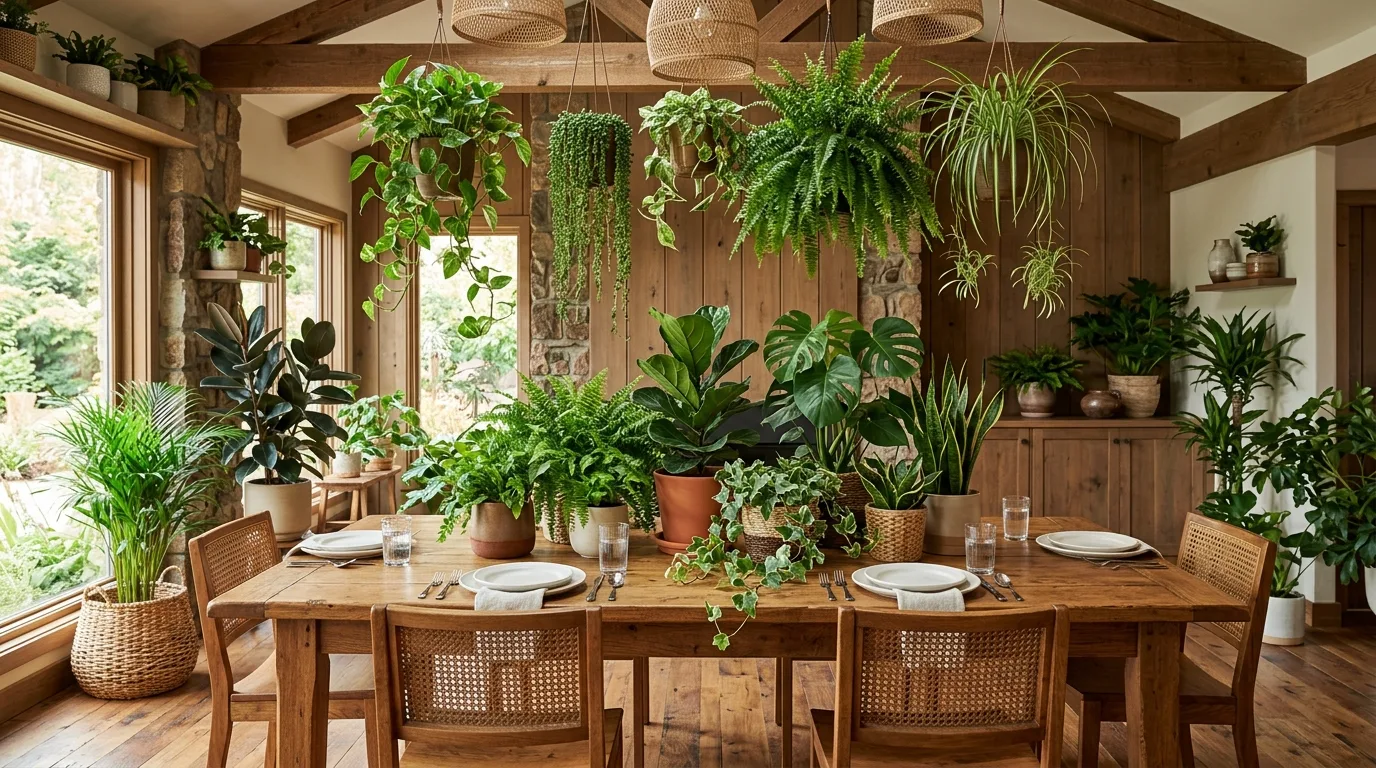
Idea 10
Bookshelf garden woven through stacked books and quiet decor objects
A bookshelf garden works best when the plants are woven through the arrangement instead of separated into one predictable cluster. That integration keeps the greenery feeling natural and gives the shelf a more lived-in, layered quality without making it seem messy.
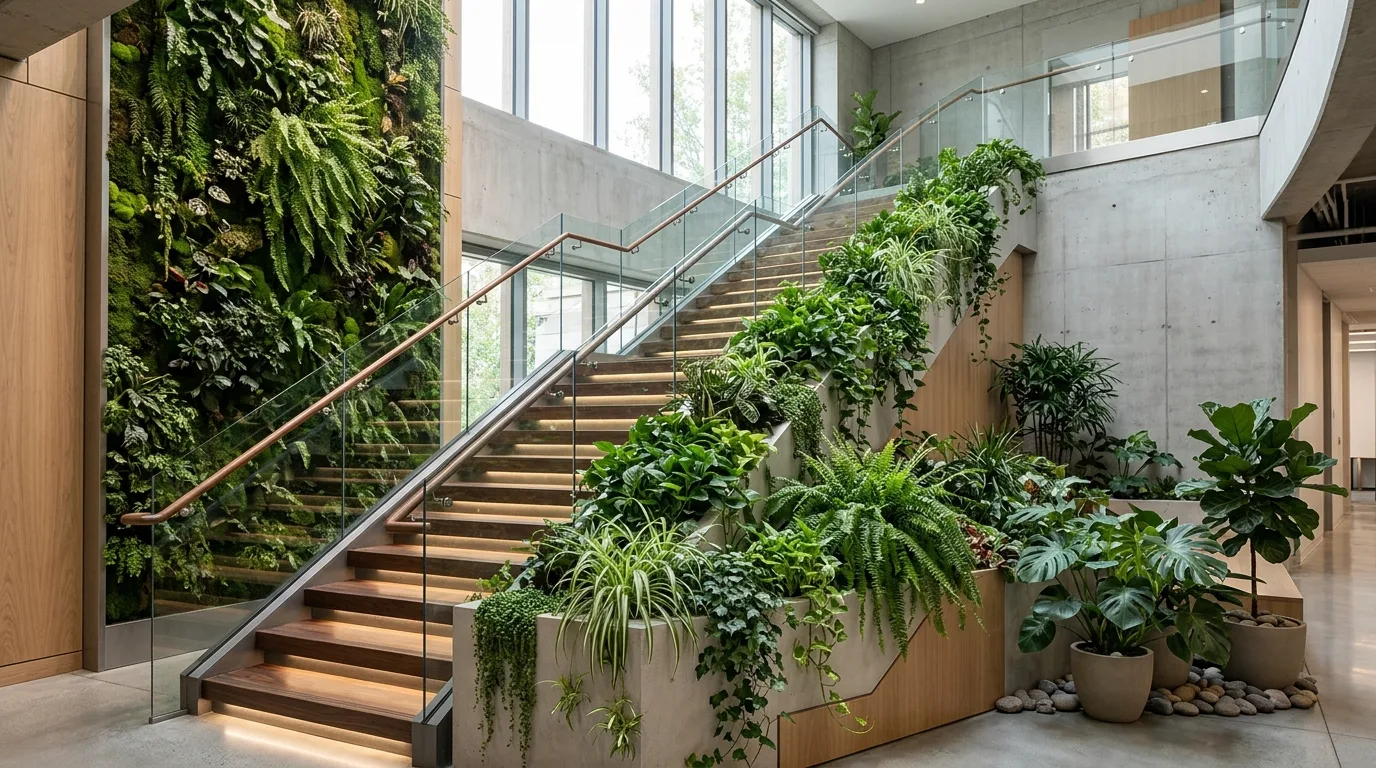
Idea 11
Entryway garden with a slim console and a wall of hanging planters
An entry interior garden can create a striking first impression when one wall of hanging planters brings vertical greenery into a narrow area. A slim console below keeps the space useful, while the plants help the whole arrival moment feel fresher and more distinctive.
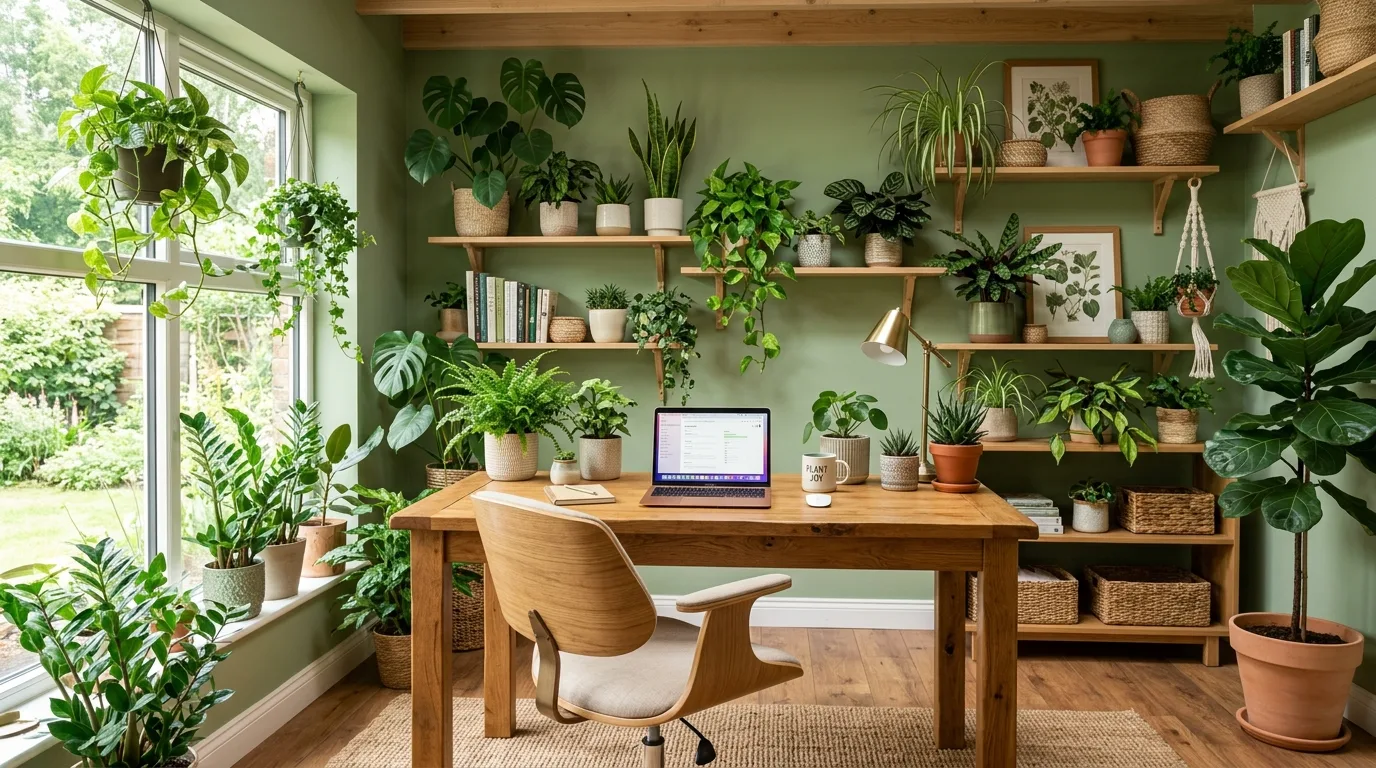
Idea 12
Bedroom corner with a cane chair olive tree and soft basket planters
A bedroom interior garden feels most restful when the plants support calm rather than compete for attention, and an olive tree does that beautifully with its softer silhouette. Basket planters and a cane chair round out the corner, making it feel like a quiet personal retreat.
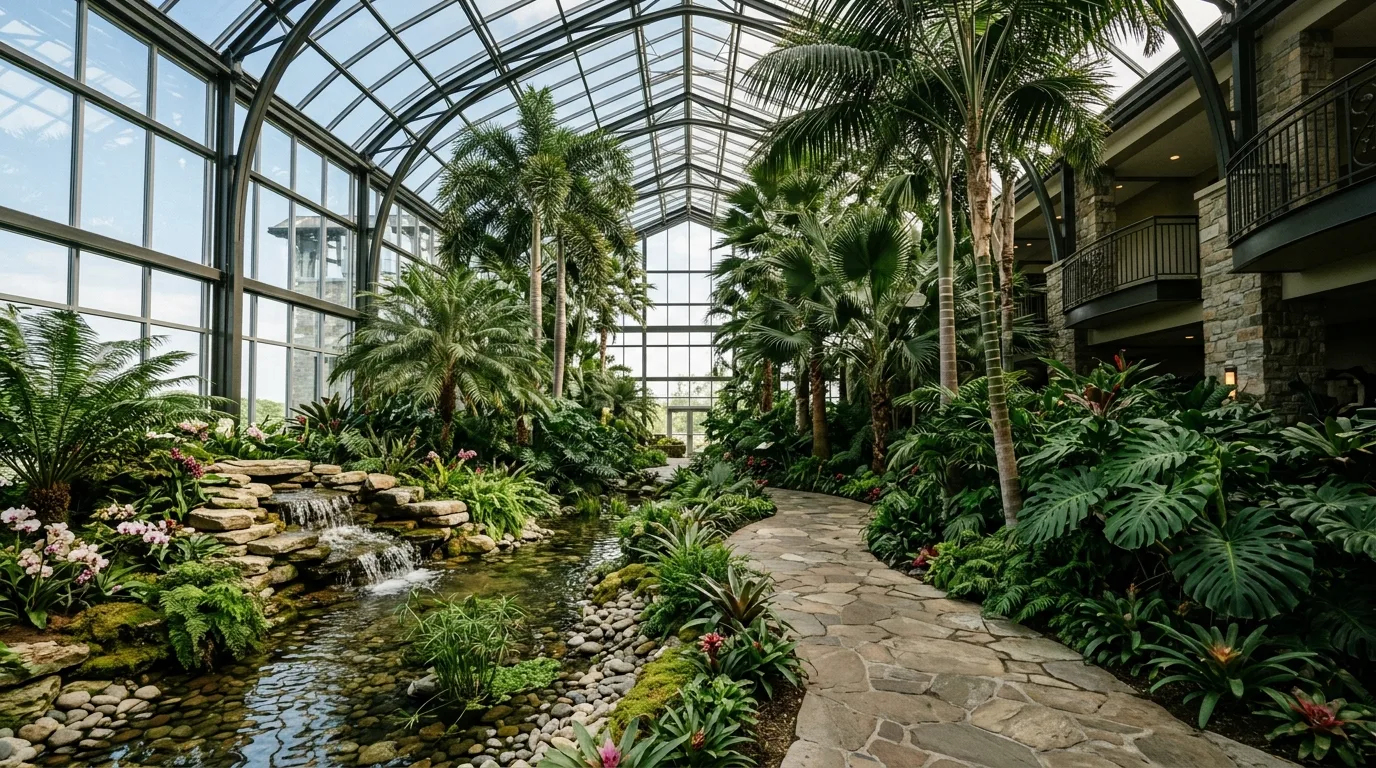
Idea 13
Kitchen island end styled with herbs trailing ivy and one sculptural pot
The end of a kitchen island is often enough space for an interior garden moment when herbs and ivy bring freshness to a room full of harder surfaces. One sculptural pot gives the grouping a focal point, helping the setup feel styled and not merely scattered.
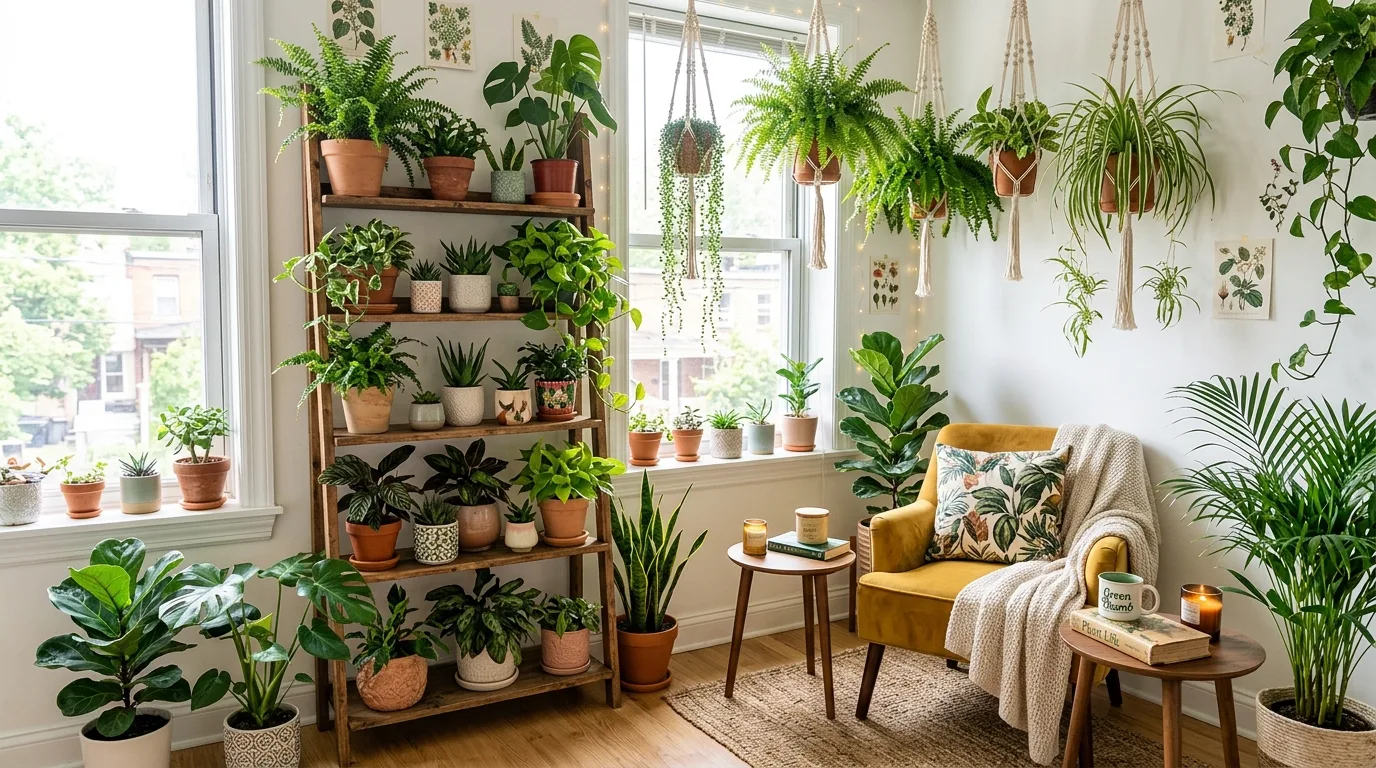
Idea 14
Hallway niche turned into a mini indoor jungle with repeated pots
A hallway niche can become surprisingly powerful as an interior garden when repeated pots and layered plants give the recess its own identity. The repetition keeps the look organized, while the fullness of the greenery turns an awkward architectural leftover into a feature.
Read next on Saw & Sprout
Edible Gardens
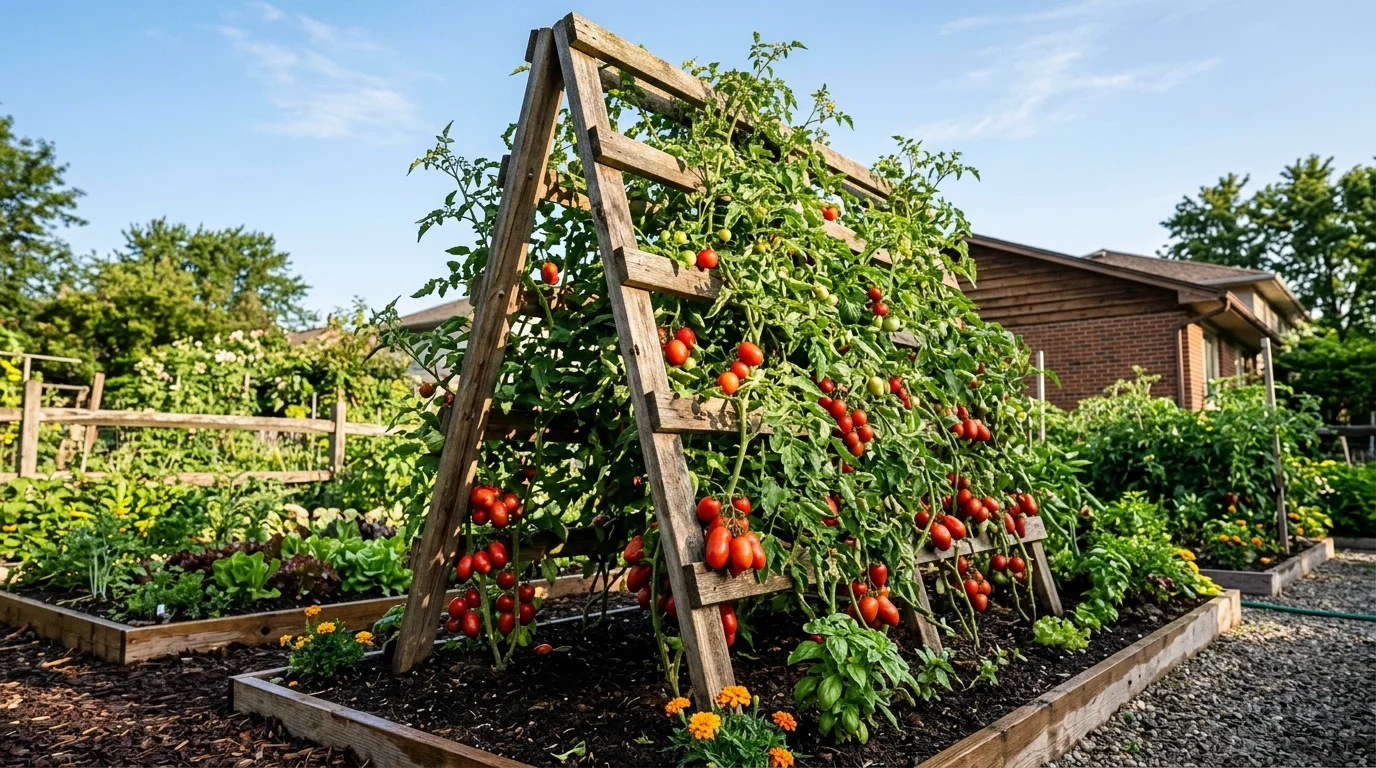
13 Clever Tomato Trellis Gardens for a Bountiful Harvest
Small-Space Growing
14 Space-Saving Small Vegetable Gardens for Urban GrowersFrequently asked questions
What makes an interior garden feel intentional?
Thoughtful placement, varied plant forms, coordinated containers, and a clear relationship to the room's light and layout usually make the biggest difference.
Where do interior gardens work best?
Sunny corners, kitchen windows, bathrooms, shelves, stair landings, sunrooms, entries, and offices often make especially strong locations.
How do you keep indoor plant styling from looking messy?
Repeating materials, grouping plants in purposeful zones, and leaving some open space usually keeps the greenery lush but still composed.