A desk in the living room can either feel like an intrusion or a smart integration, and the difference usually comes down to how thoughtfully the workspace is blended into the room's existing rhythm. When the desk supports focus during the day and recedes gracefully after hours, the room can hold both work and rest without losing its sense of home.
The best living room desks respect balance. They understand scale, visual calm, storage, cable control, and the emotional importance of not letting work sprawl across the very room meant for gathering and unwinding.
These ideas focus on desk setups that feel functional, attractive, and genuinely realistic for shared homes. Some hide away fully, some blend in more openly, but all of them aim to help the living room support productivity without sacrificing comfort.
Quick planning notes
Decide how visible the work zone should be after hours because that answer often shapes the best desk type more than anything else.
Use furniture and finishes that belong to the living room so the desk feels integrated instead of imported from a separate office.
Plan for storage and cable control early, since visual clutter is usually what makes a living room workspace feel stressful over time.
Define the work area just enough for focus while still protecting the room's relaxing identity when the laptop closes.
Idea 1
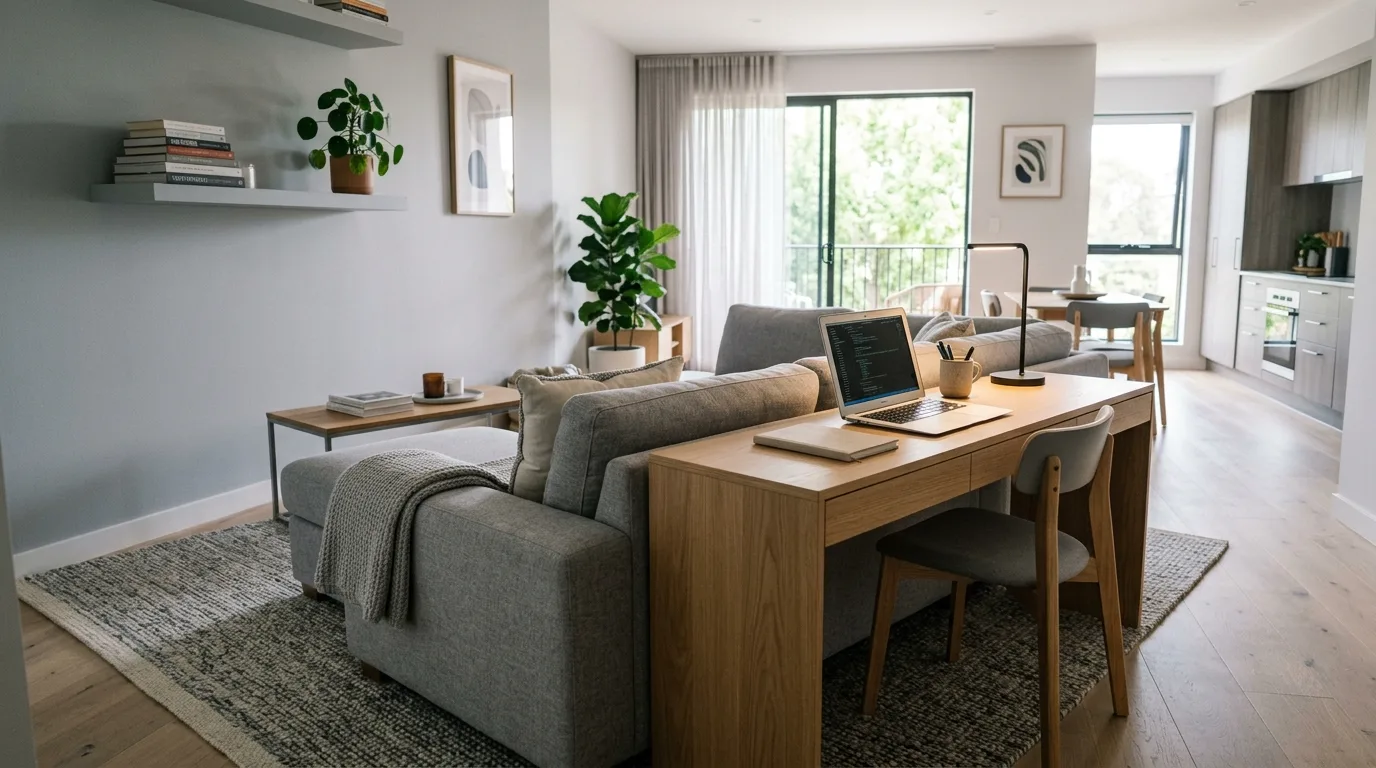
Slim writing desk behind the sofa acting as a subtle work zone
A desk behind a sofa can make working in the living room feel less intrusive because the furniture line already exists and the workspace slips into it naturally. The room keeps its lounge identity, but the desk still gains a real and usable place.
Idea 2
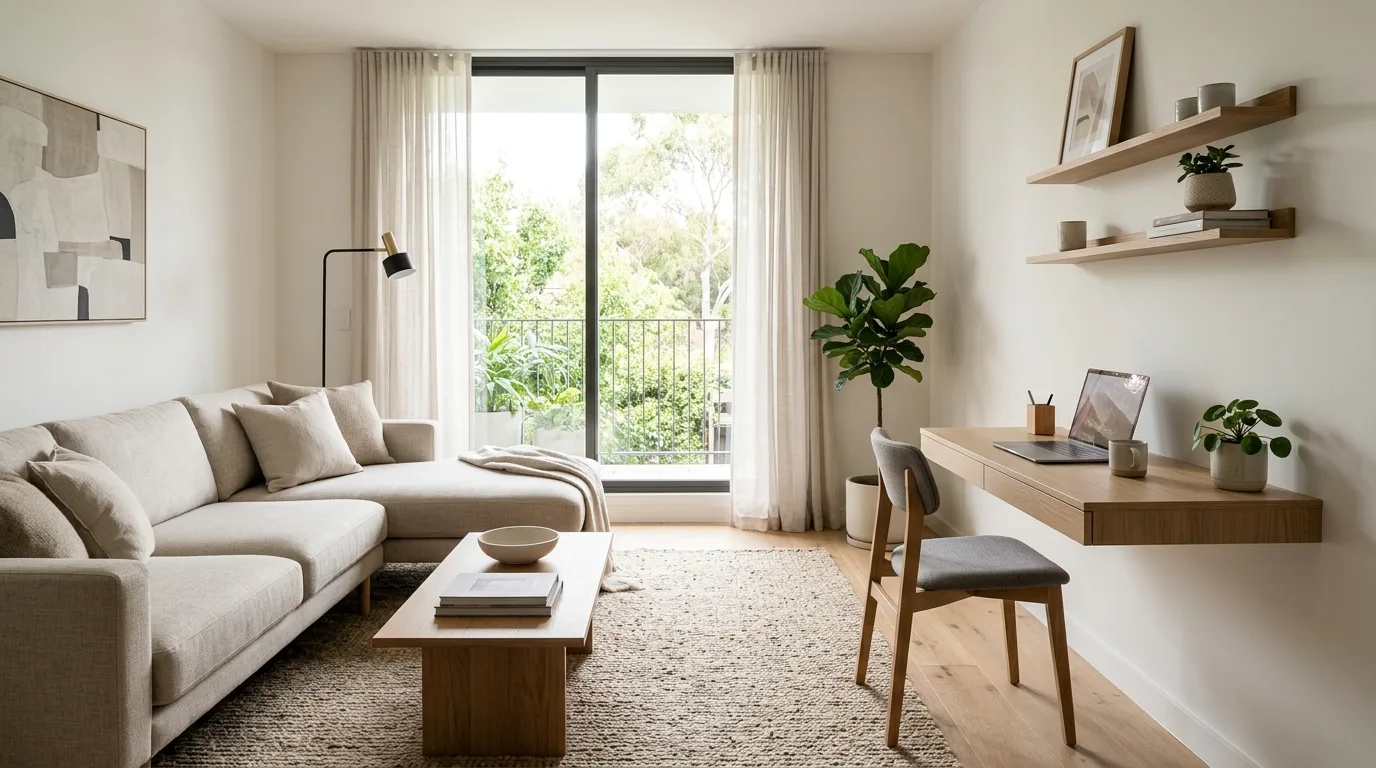
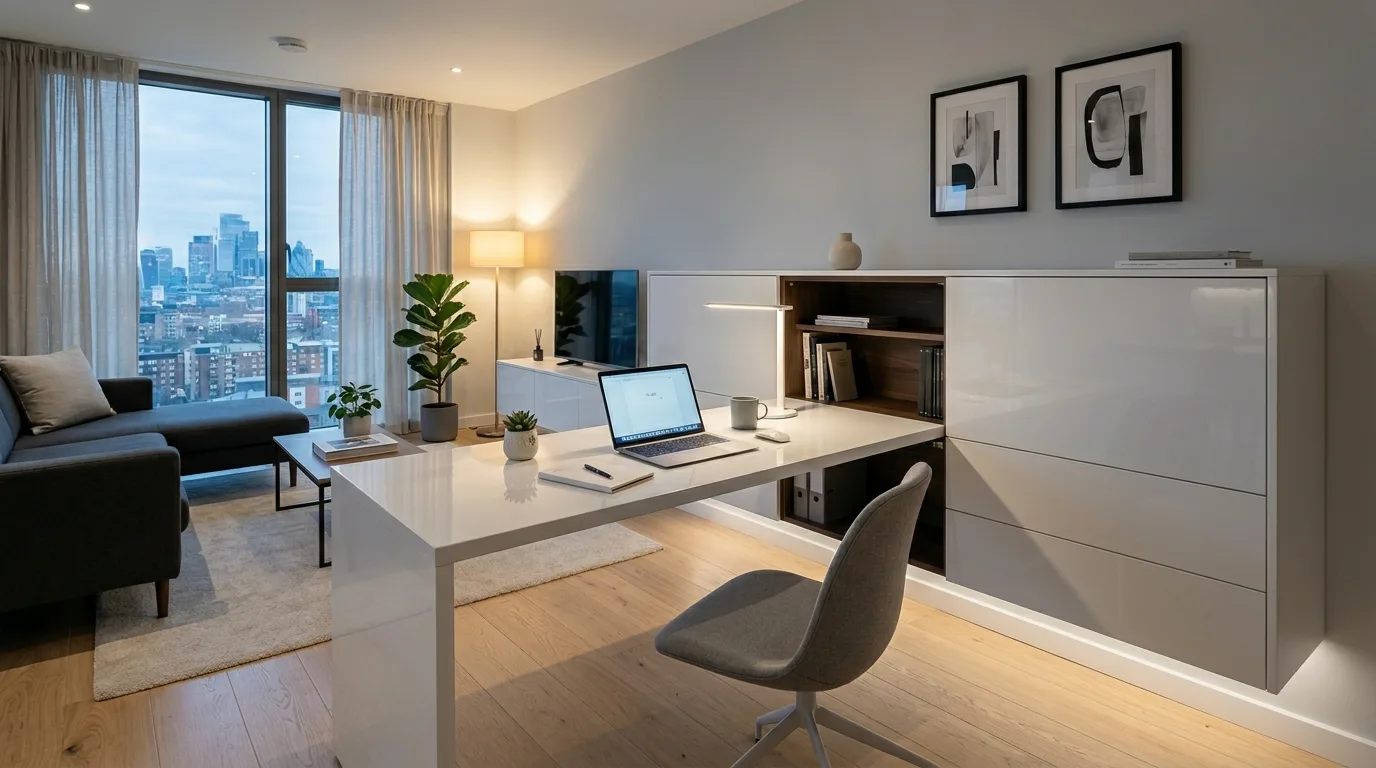
Wall mounted desk tucked beside shelving and balanced by decor
A wall-mounted desk helps work-life balance because it occupies less visual and physical space than a full office setup would in the living room. When shelving and decor share the wall, the station feels integrated instead of interruptive.
Idea 3
Secretary desk that closes up when the workday ends
A secretary desk is useful in a living room because it allows work to disappear physically once the task is done, which can make the room feel more restful again. That closure matters emotionally as much as it does visually when home and work overlap.
Idea 4
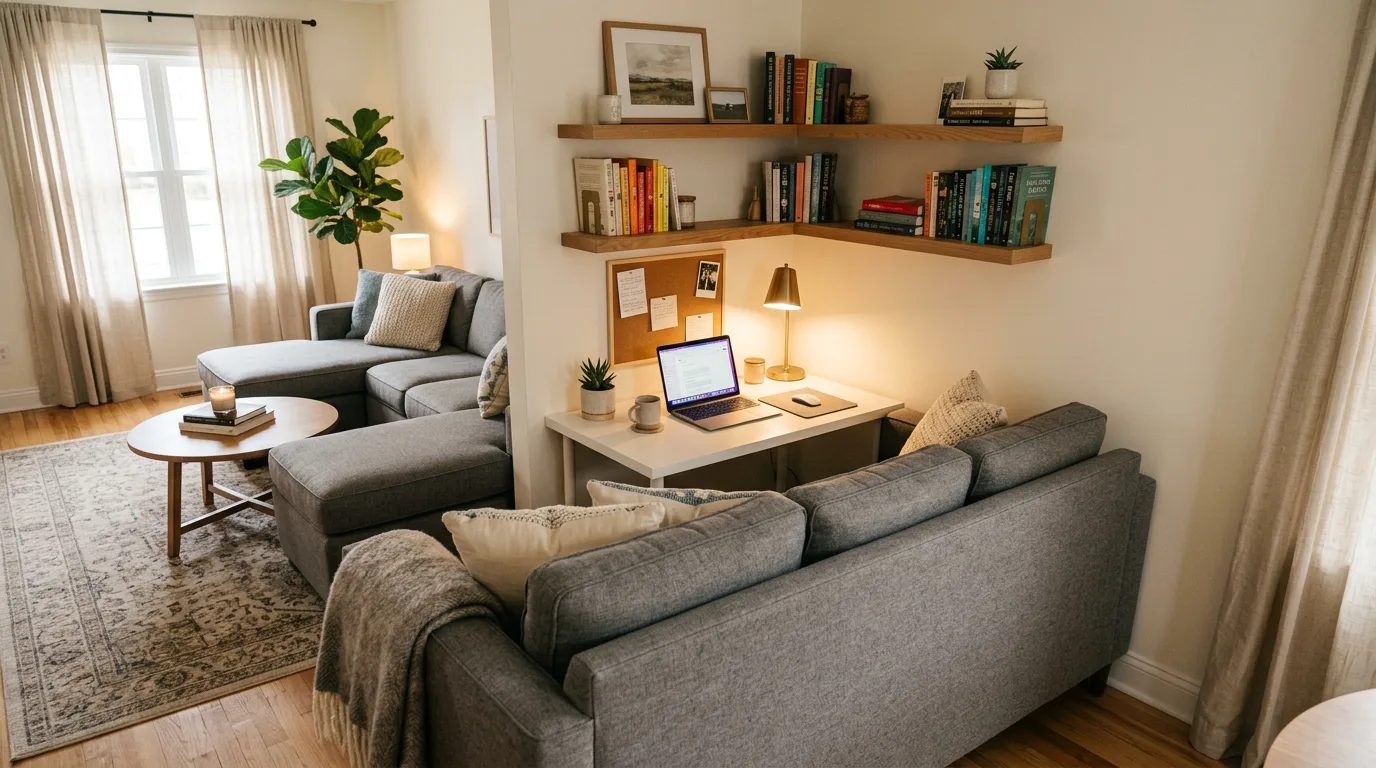
Compact desk in a corner styled with art lamp and one soft chair
A small corner desk works best in a living room when it feels like part of the room's design language rather than a separate office dropped into the corner. Art, light, and one soft chair help that happen, making the workspace gentler and easier to live with.
Idea 5
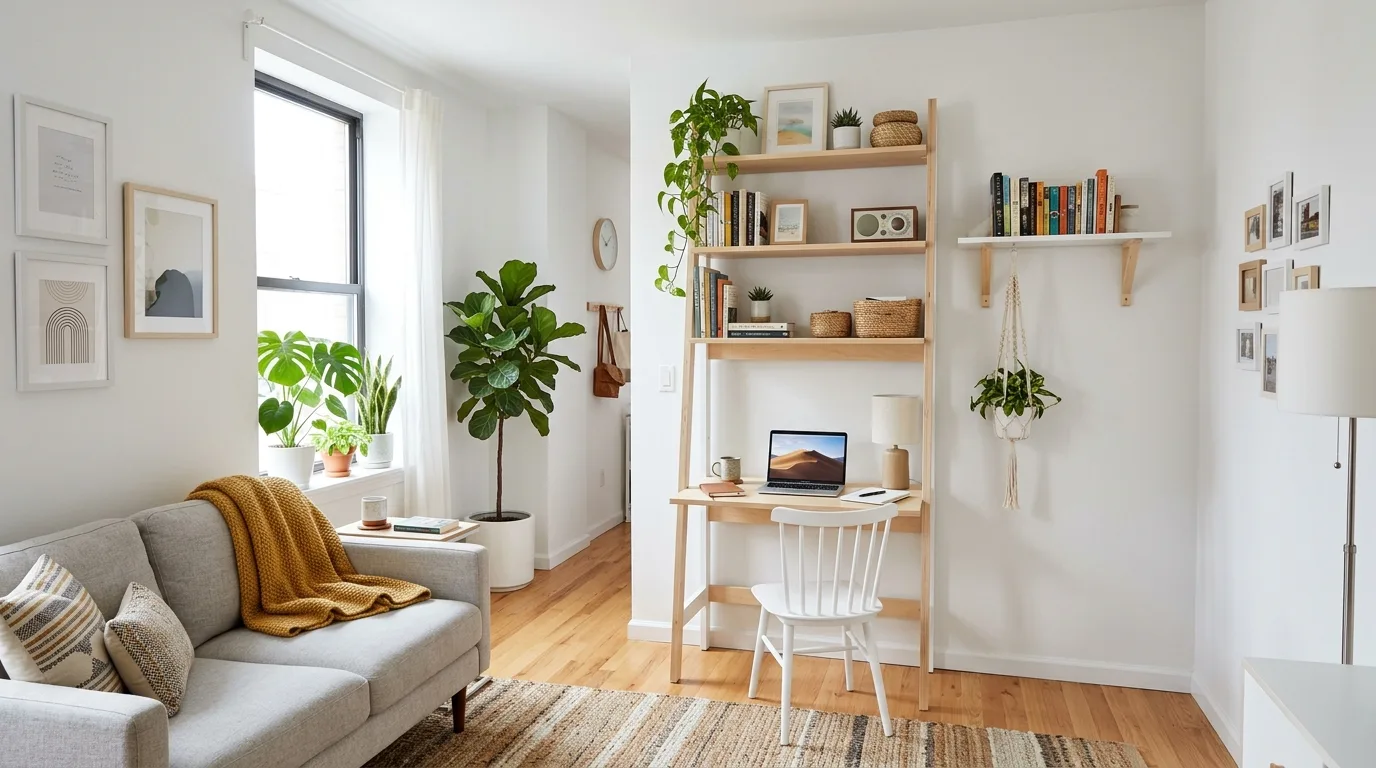
Console desk under a window giving daylight without taking over the room
A window-facing console can be a smart compromise because it offers light and focus during work hours without visually dominating the living room all day. The slim shape keeps the space calm, making the work zone feel more temporary and flexible.
Idea 6
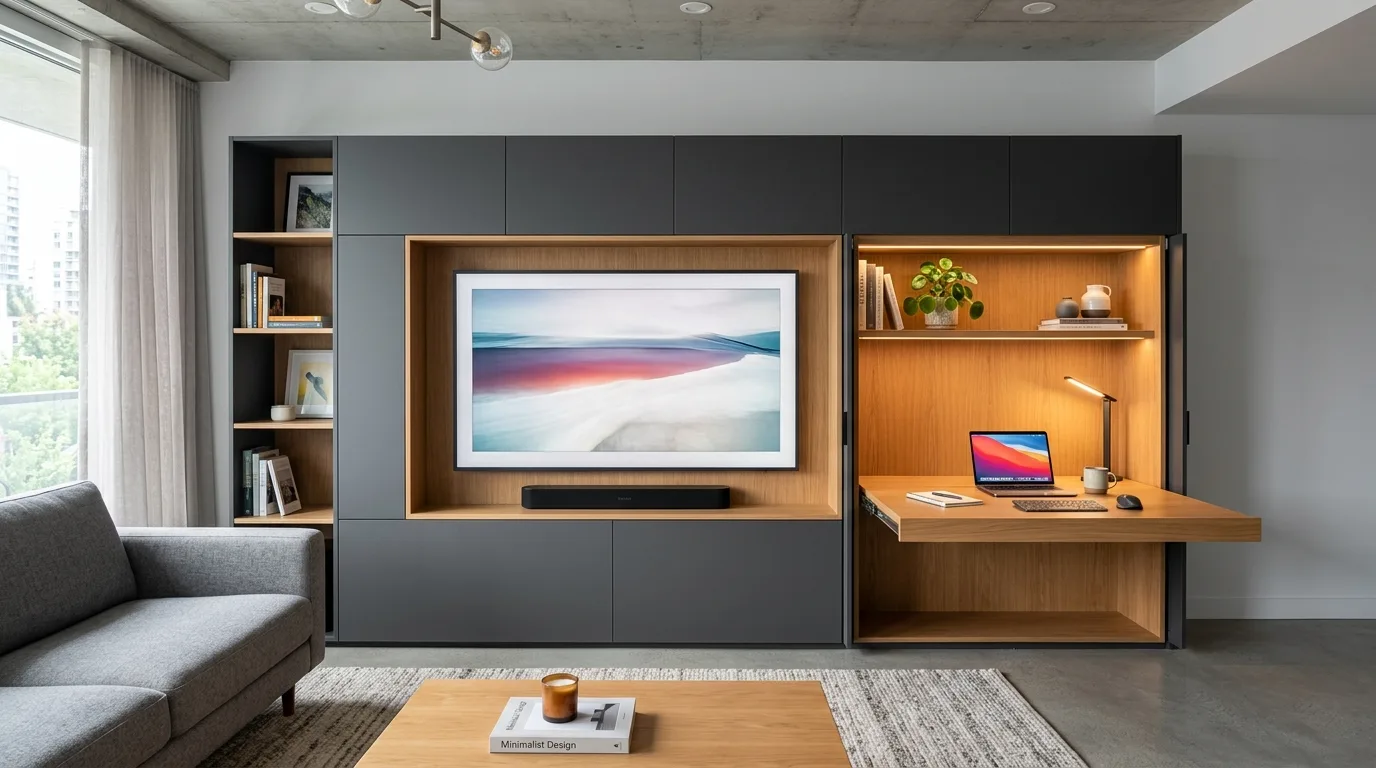
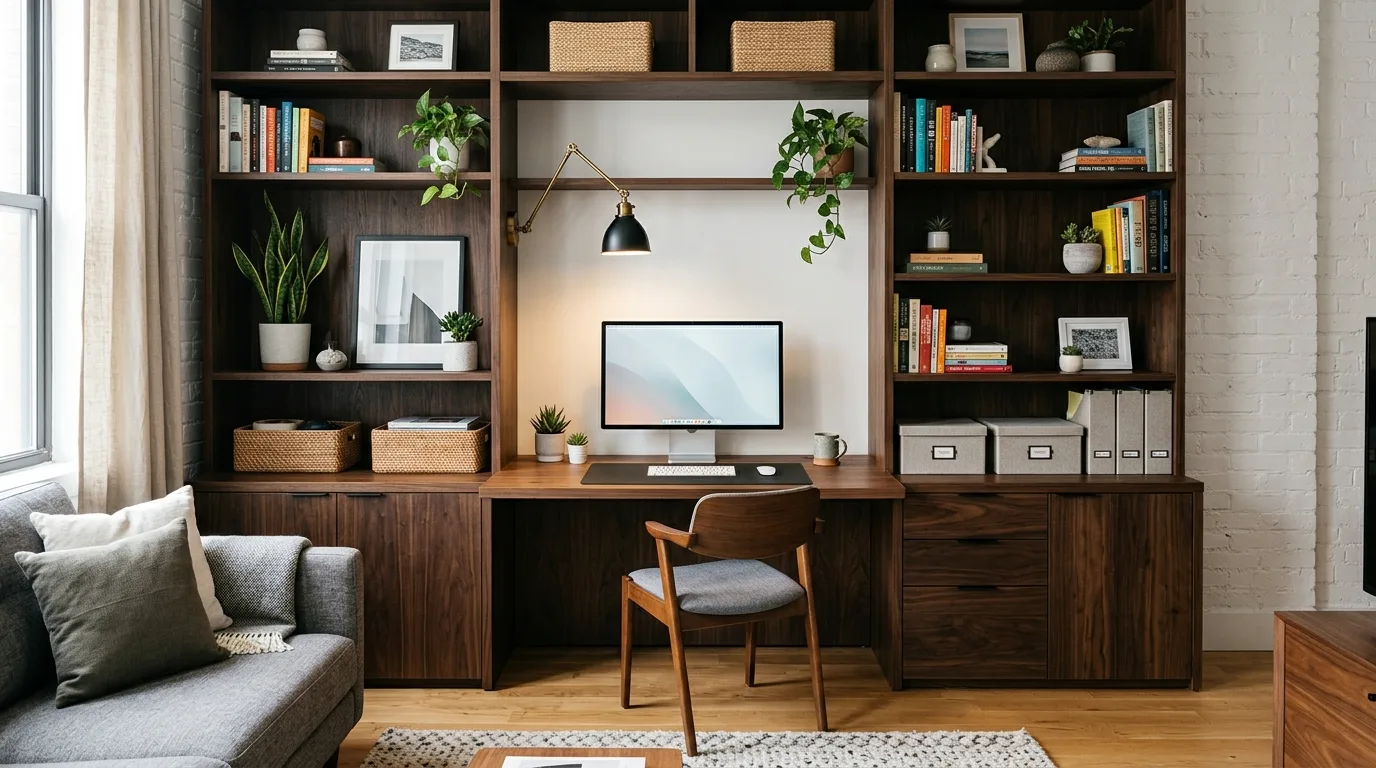
Built in desk niche hidden within a media wall or bookcase system
A desk tucked into a larger built-in arrangement often works beautifully because the workspace becomes one component of a broader living room composition. When the niche is not in use, it feels like architecture and storage rather than a full-time office reminder.
Idea 7
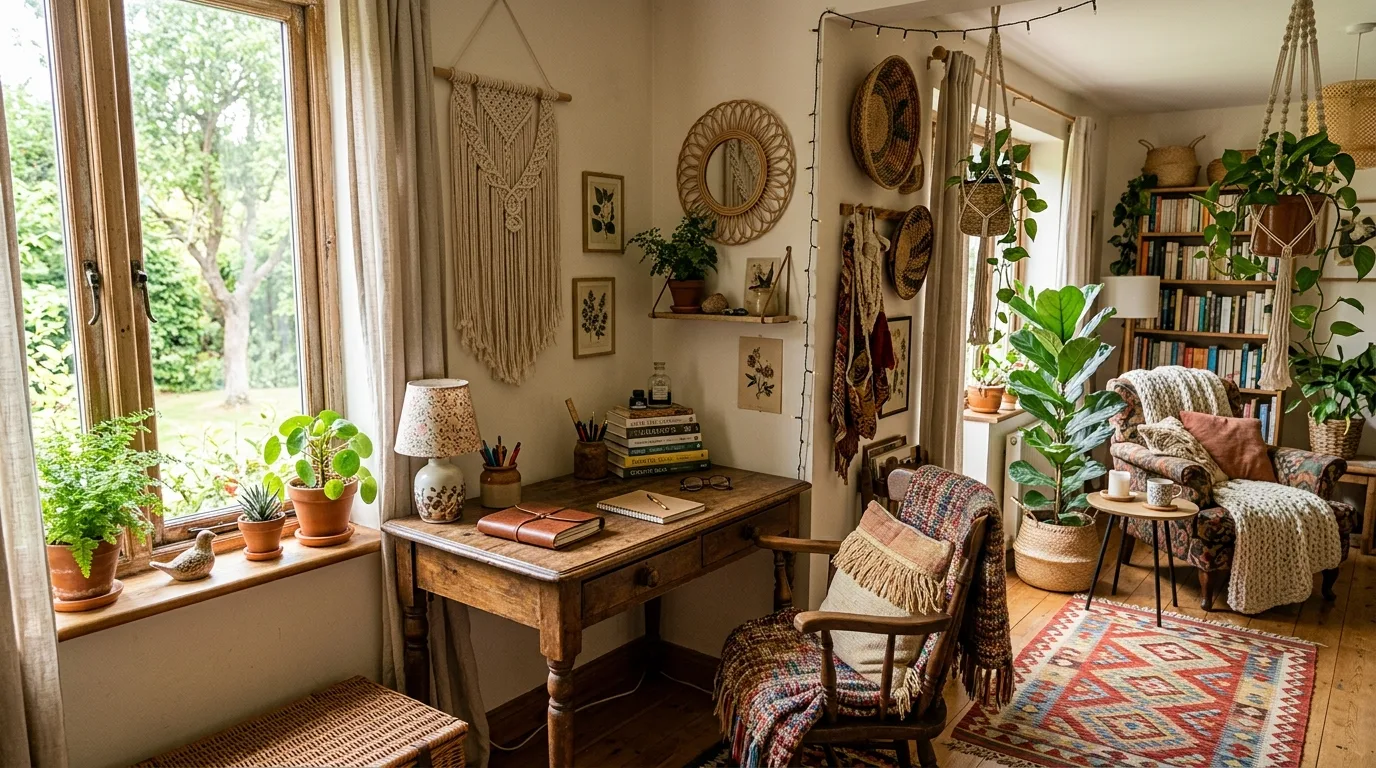
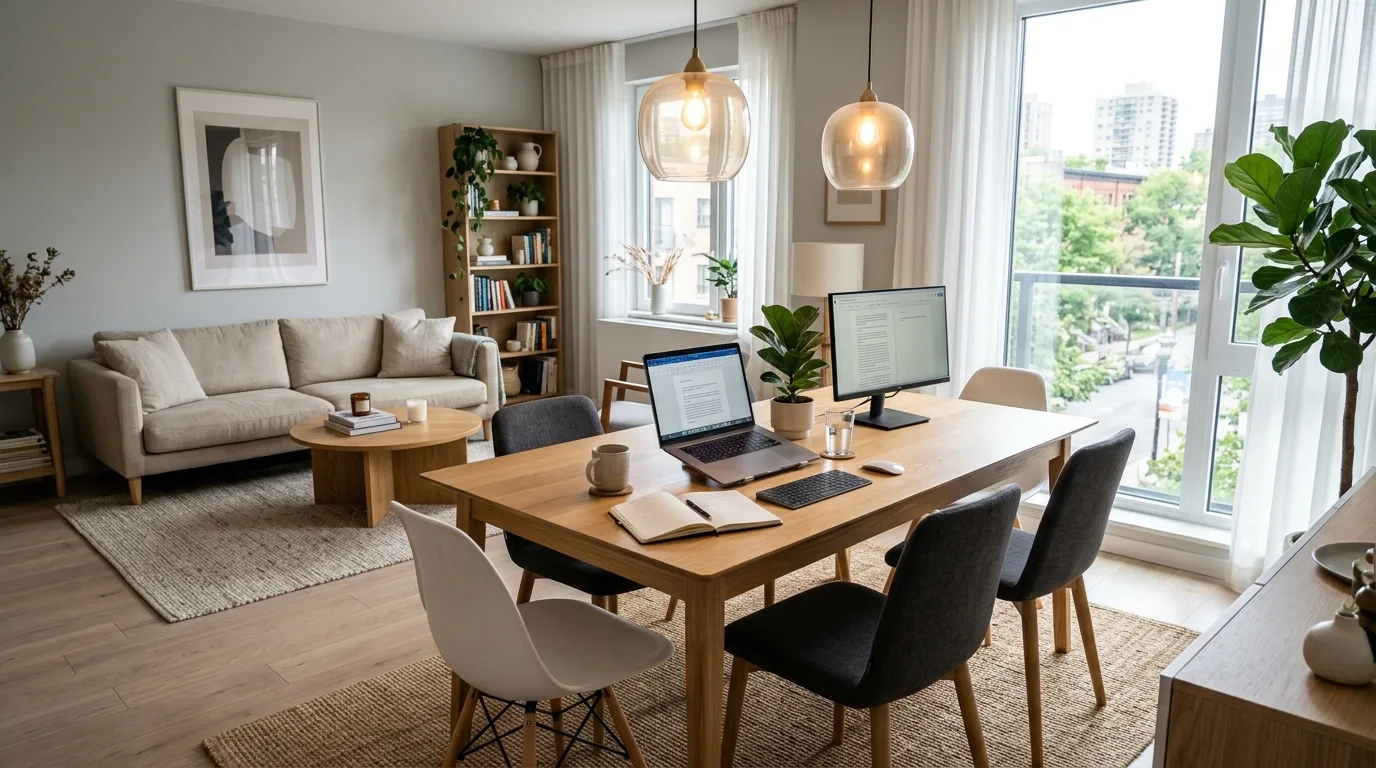
Dining table crossover used as desk by day and gathering surface later
Some living rooms need one surface to support many different roles, and a shared table can do that well when the styling remains light enough to shift easily. The room stays social, but the table still creates a viable work zone during the day.
Idea 8
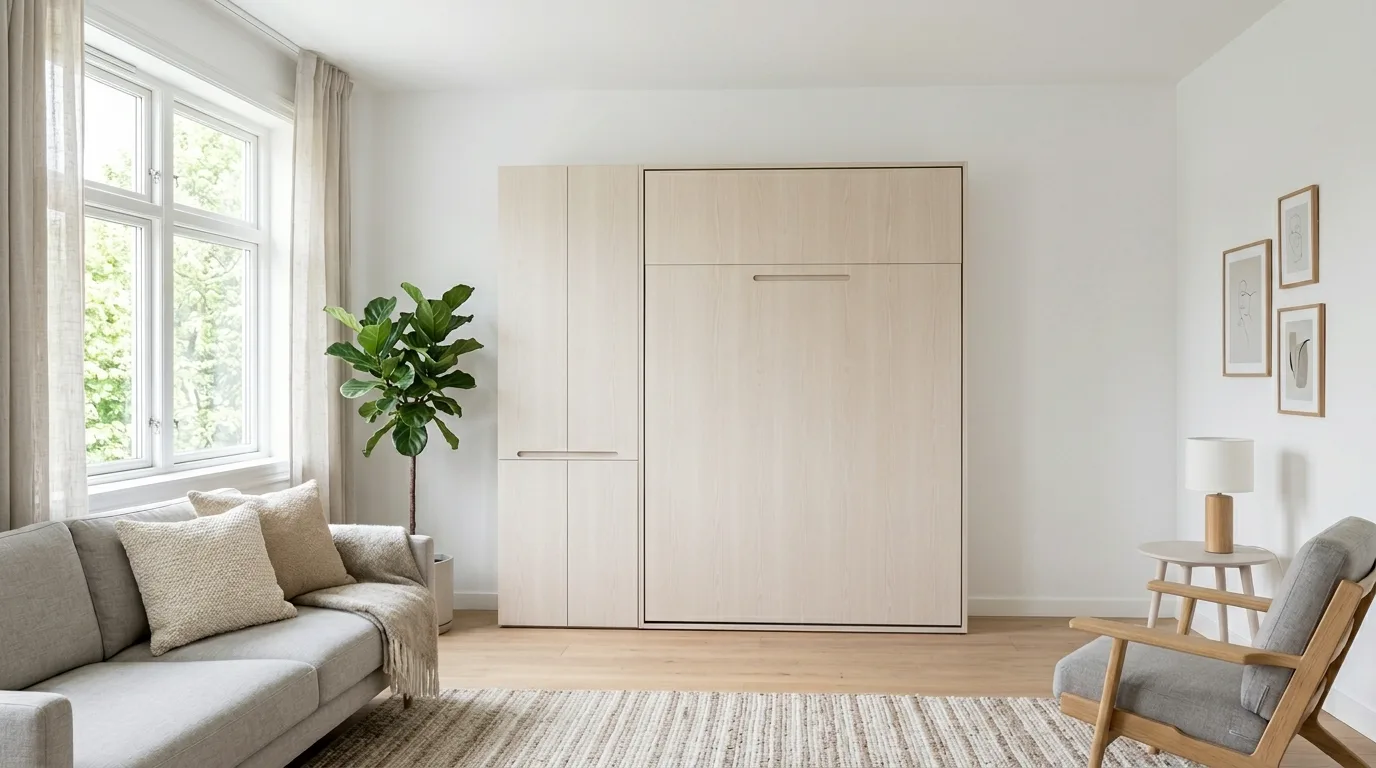
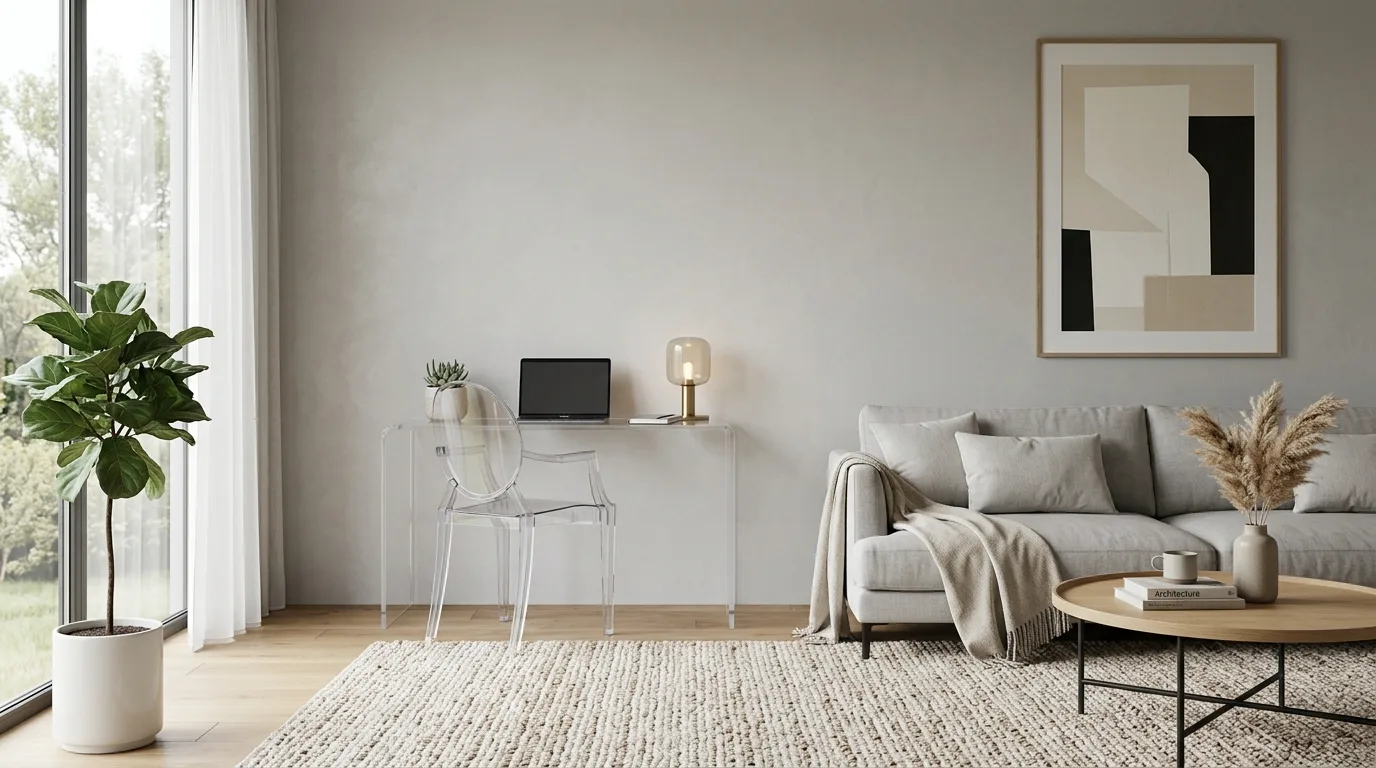
Murphy style fold down desk disappearing into a paneled wall
A fold-down desk is especially strong for work-life balance because it lets the room visibly reset when the workday ends. Once closed, the wall regains its calmer decorative identity, which helps the living room feel like home again.
Idea 9
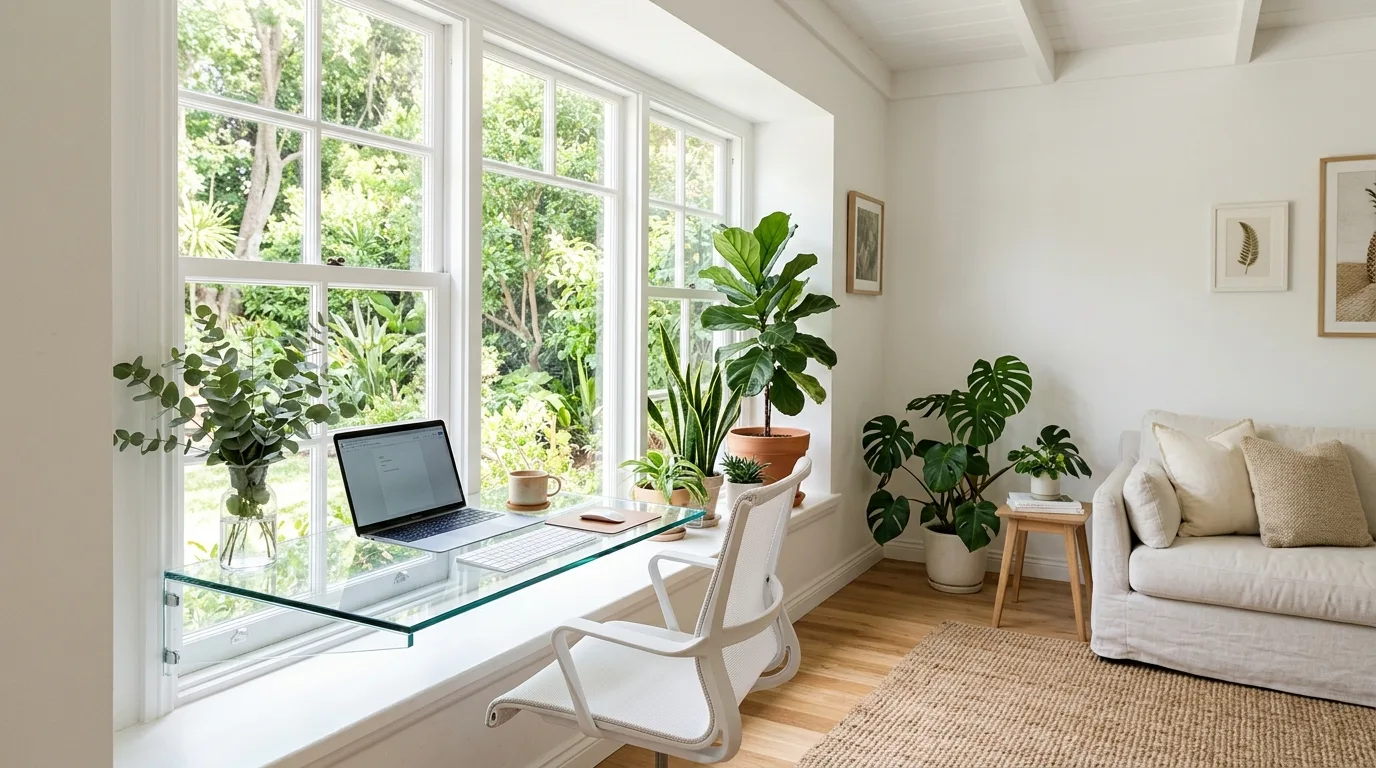
Desk styled within a bay window nook using natural light and soft textiles
A bay window nook can become a better workspace than many spare rooms because the natural light and enclosure support focus without isolating the person completely. Soft textiles make it feel continuous with the living room, which keeps the setup welcoming.
Idea 10
Modern oak desk paired with a lounge worthy chair and hidden cable management
A living room desk feels more balanced when the chair and materials belong to the room's aesthetic instead of looking purely task-driven. Hidden cables complete that effect, making the station feel polished enough to coexist with relaxation.
Idea 11
Double duty sideboard desk that stores papers and office tools inside drawers
Storage inside the desk matters in a shared room because leaving work supplies visible makes it harder for the room to relax after hours. A sideboard-style desk hides those tools well, allowing the living room to recover its calmer identity.
Idea 12
Desk zone defined by an area rug and lamp inside an open living room
A rug and lamp can help a desk feel like its own zone even when there are no walls dividing it from the seating area. That small amount of definition improves focus during work while also helping the room look intentional rather than improvised.
Idea 13
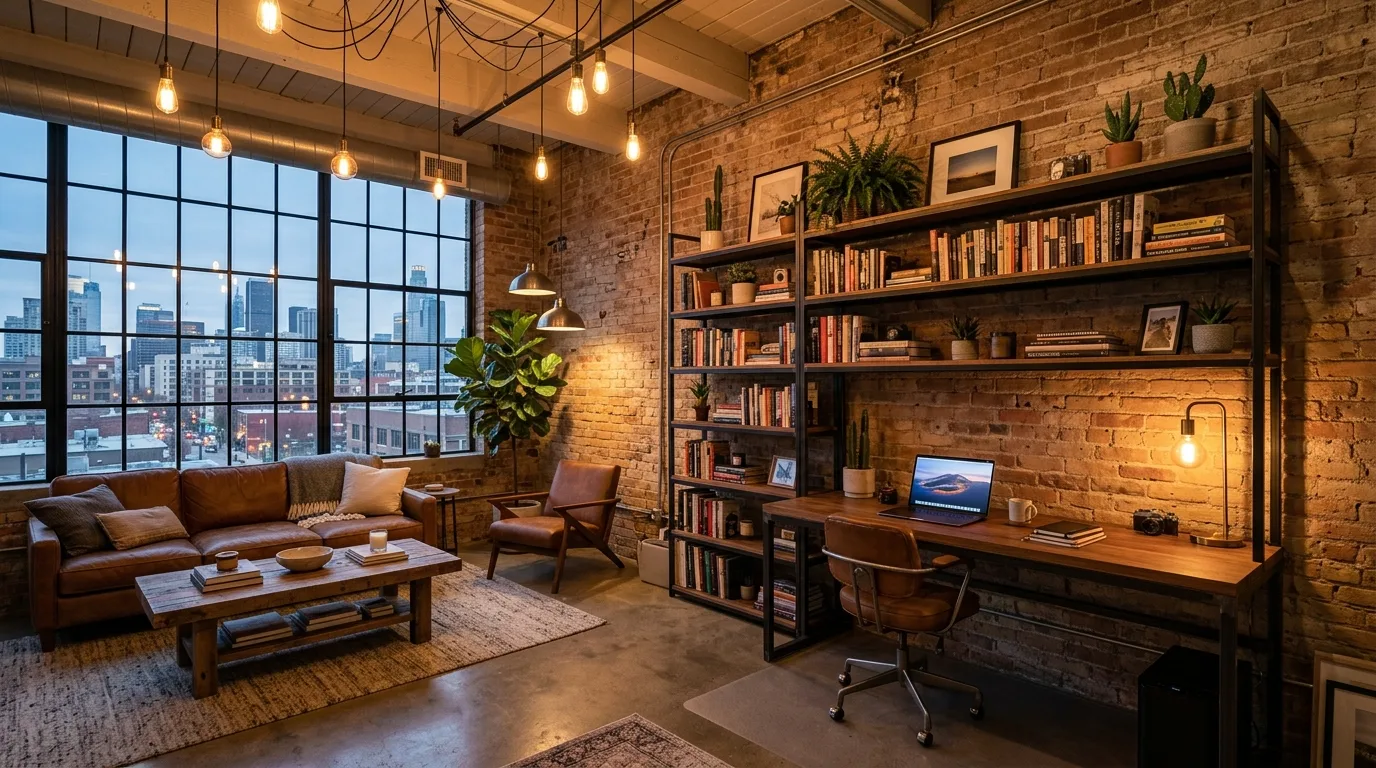
Apartment setup with ladder desk and bookshelf blended into one vertical unit
Ladder desks work well in living rooms because they use height instead of depth, which keeps the footprint lighter in apartments or shared spaces. The blended shelves soften the office function and make the piece feel more like furniture.
Idea 14
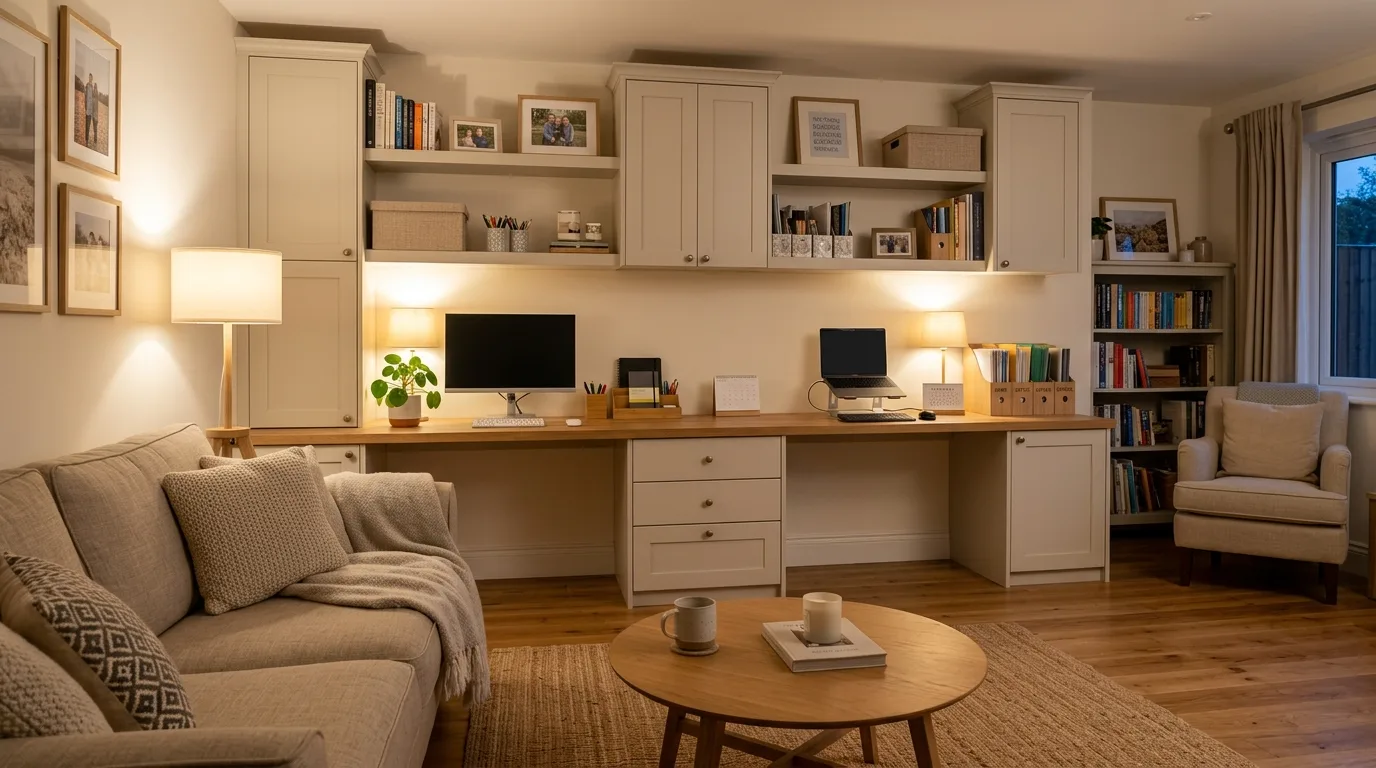
Soft neutral workspace beside fireplace using only one narrow desk surface
A narrow desk can be enough in a living room when the task needs are modest and the goal is to preserve calm around the fireplace or main seating area. The soft neutral styling helps the work zone feel compatible with rest instead of visually fighting it.
Idea 15
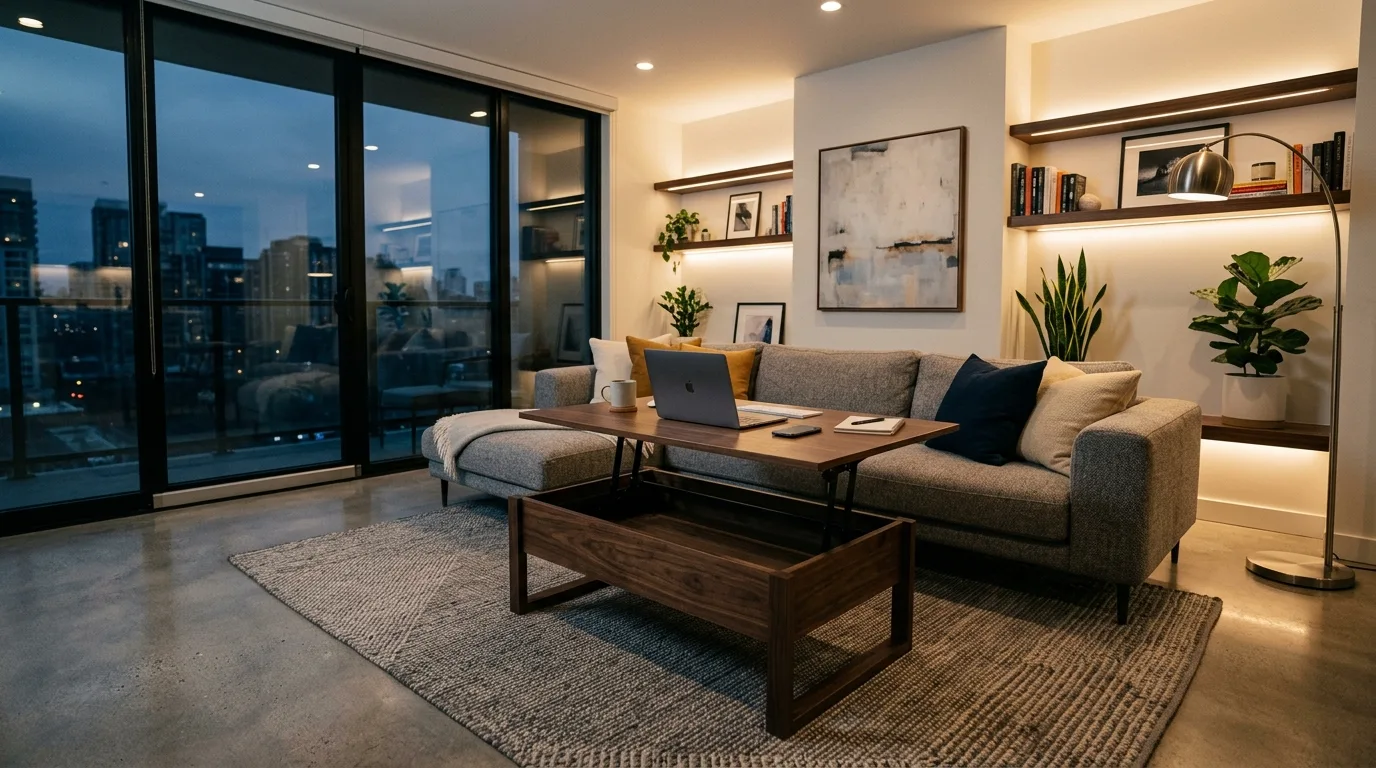
Desk hidden in plain sight as a console beneath artwork and layered accessories
When a desk looks like a console first, it blends into the living room much more gracefully and makes work feel less invasive after hours. Artwork and accessories above it reinforce that disguise, helping the room hold onto its decorative identity.
Read next on Saw & Sprout


Edible Gardens
13 Clever Tomato Trellis Gardens for a Bountiful Harvest
Small-Space Growing
14 Space-Saving Small Vegetable Gardens for Urban GrowersFrequently asked questions
How do you keep a living room desk from taking over the room?
Choose a smaller or closable desk, keep cables and papers contained, and let the materials match the living room's existing style.
What type of desk works best in a living room?
Consoles, secretary desks, wall-mounted options, built-in niches, and fold-down desks often work especially well because they stay lighter visually.
Can a living room desk still feel comfortable for real work?
Yes. Good chair choice, enough light, smart storage, and a well-sized surface can make it genuinely productive while still blending into the room.