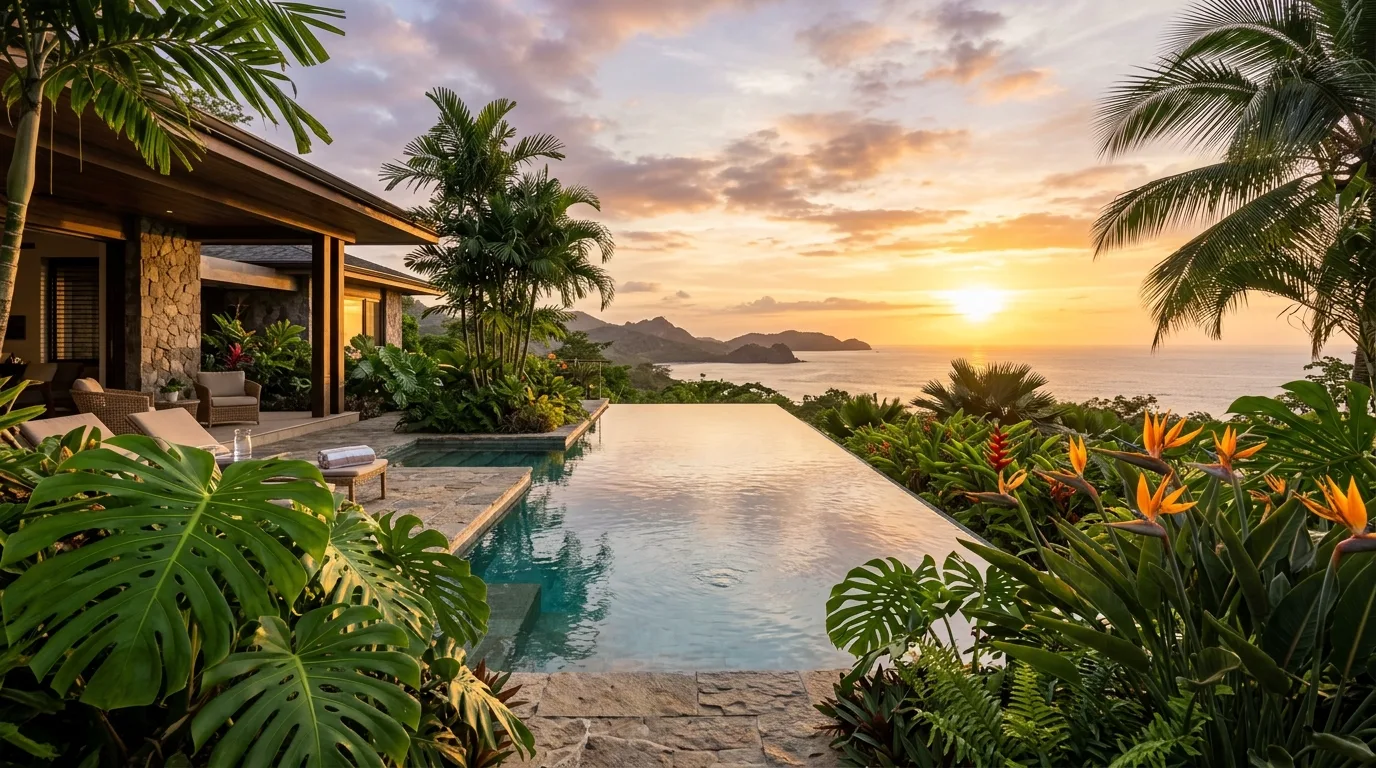
Modern tropical landscapes are so appealing because they combine lush immersion with a cleaner design discipline that keeps the planting feeling luxurious instead of chaotic.
Large leaves, filtered light, warm decking, and carefully chosen hardscape can create an outdoor space that feels like a private escape while still remaining easy to read and enjoyable to use every day.
These tropical landscape ideas explore pool terraces, courtyards, pergolas, night lighting, and foliage-led layouts that turn a yard into an exotic paradise without losing structure.
Quick planning notes
Let foliage lead the design because tropical gardens usually feel richest through leaf texture and mass rather than through many flower colors.
Balance the abundance with calm hardscape so the planting has something clean to play against.
Think about shade, water, and evening lighting early because atmosphere matters as much as daytime appearance in this style.
Repeat plant forms enough to keep the layout feeling intentional and not randomly dense.
Idea 1
A poolside garden layered with palms and glossy broad leaves
Modern tropical landscapes feel immersive when the foliage creates generous volume without losing clarity, and a poolside setting gives those strong leaf shapes even more drama. The space reads like a private resort while still feeling carefully designed.
Idea 2
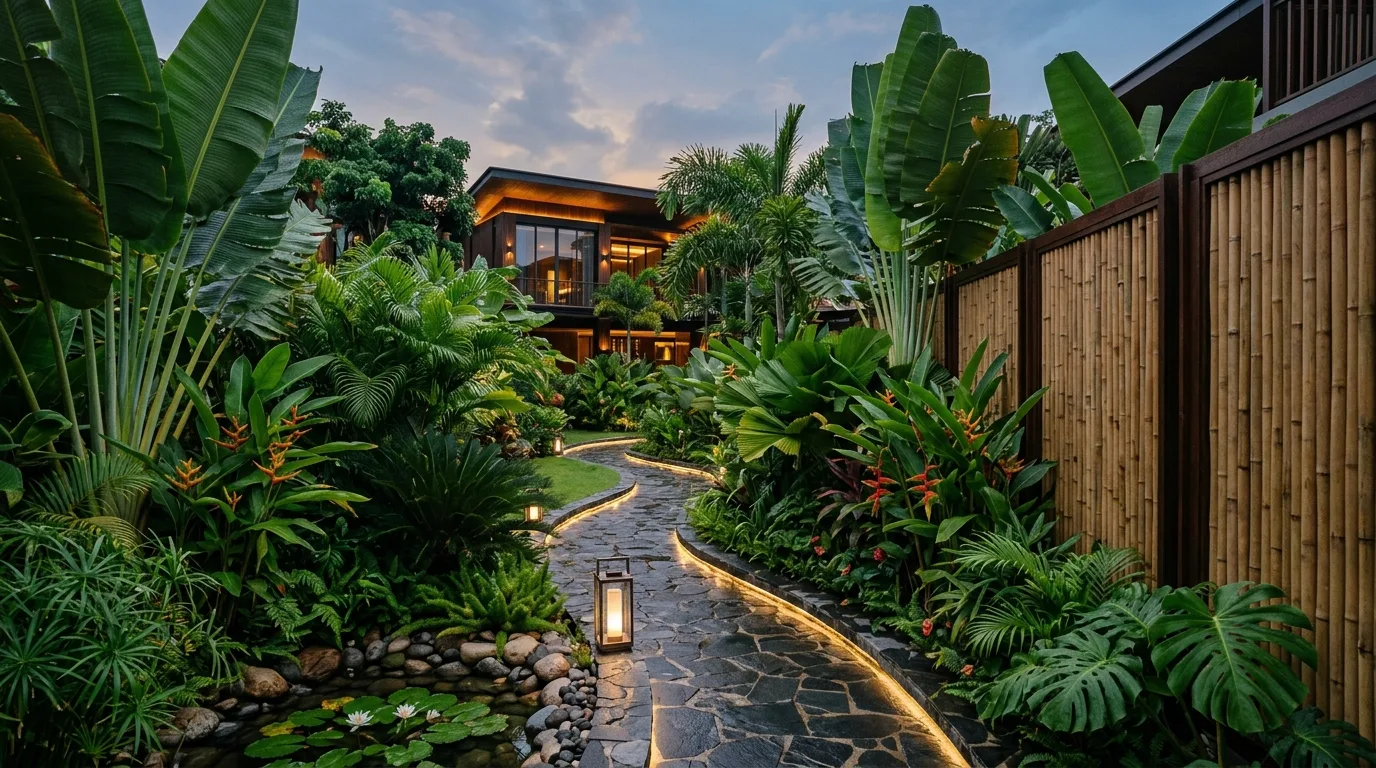
A courtyard with black planters and rich green jungle texture
Tropical planting becomes more contemporary when it is paired with restrained containers and cleaner architectural lines that let the foliage do the expressive work. The contrast between dark planters and bright leaves feels bold, polished, and current.
Idea 3
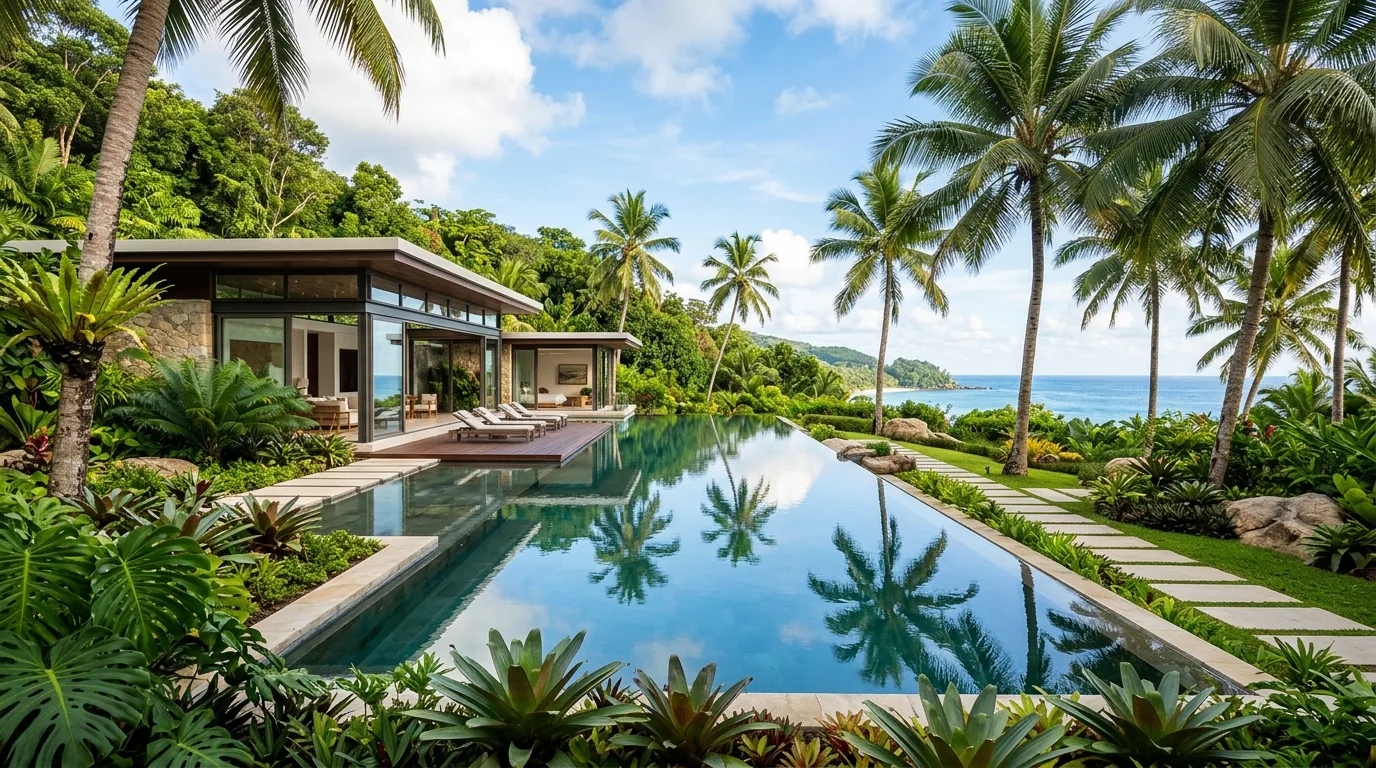
A timber deck framed by banana leaves and filtered shade
Large leaves can make an outdoor deck feel softer and more enclosed without needing walls, especially when the planting rises close enough to catch light and shadow through the day. The whole retreat becomes warmer, more layered, and more transportive.
Idea 4
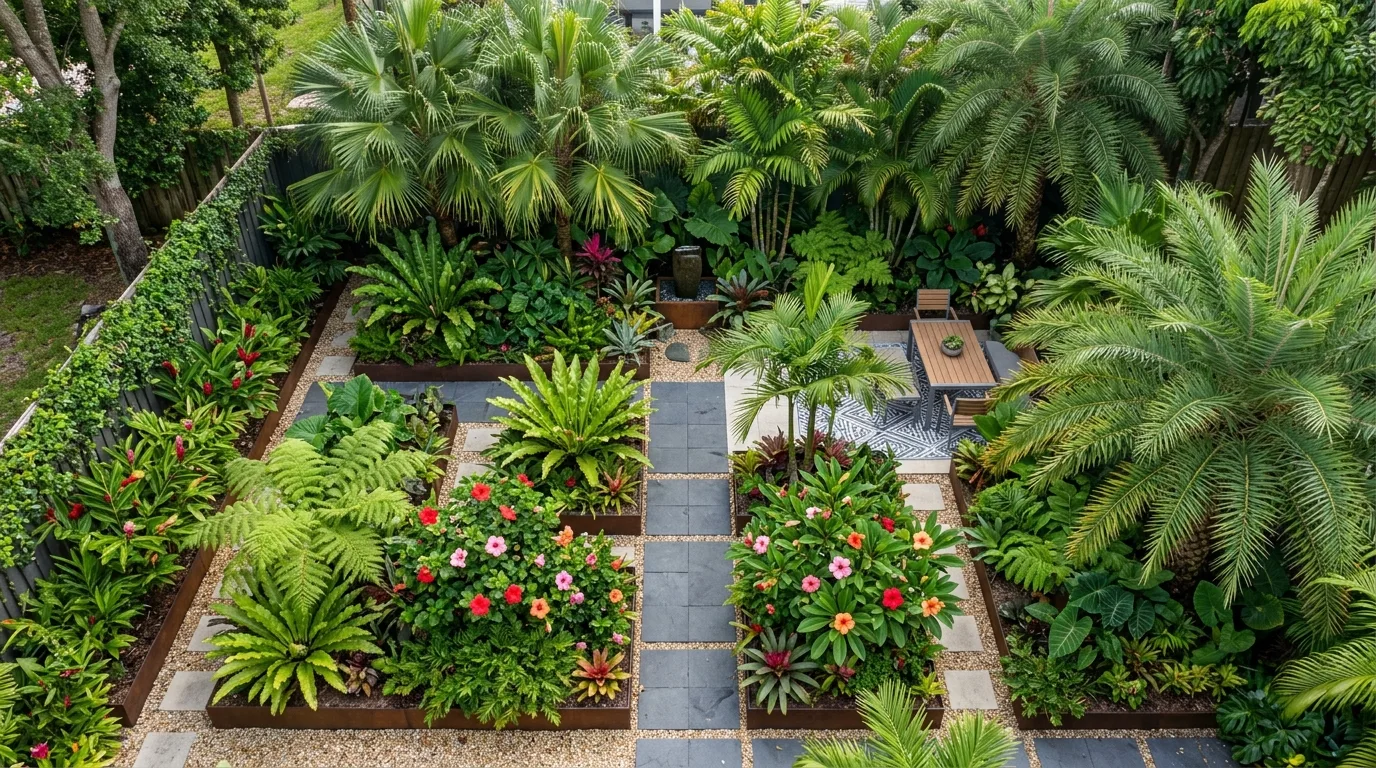
A front yard entry softened by upright palms and clipped edges
Tropical style can still feel organized at the front of a house when the stronger foliage is balanced with cleaner borders and repeated lines that keep the composition from getting loose. The entrance feels fresh and exotic without losing curb-appeal discipline.
Idea 5
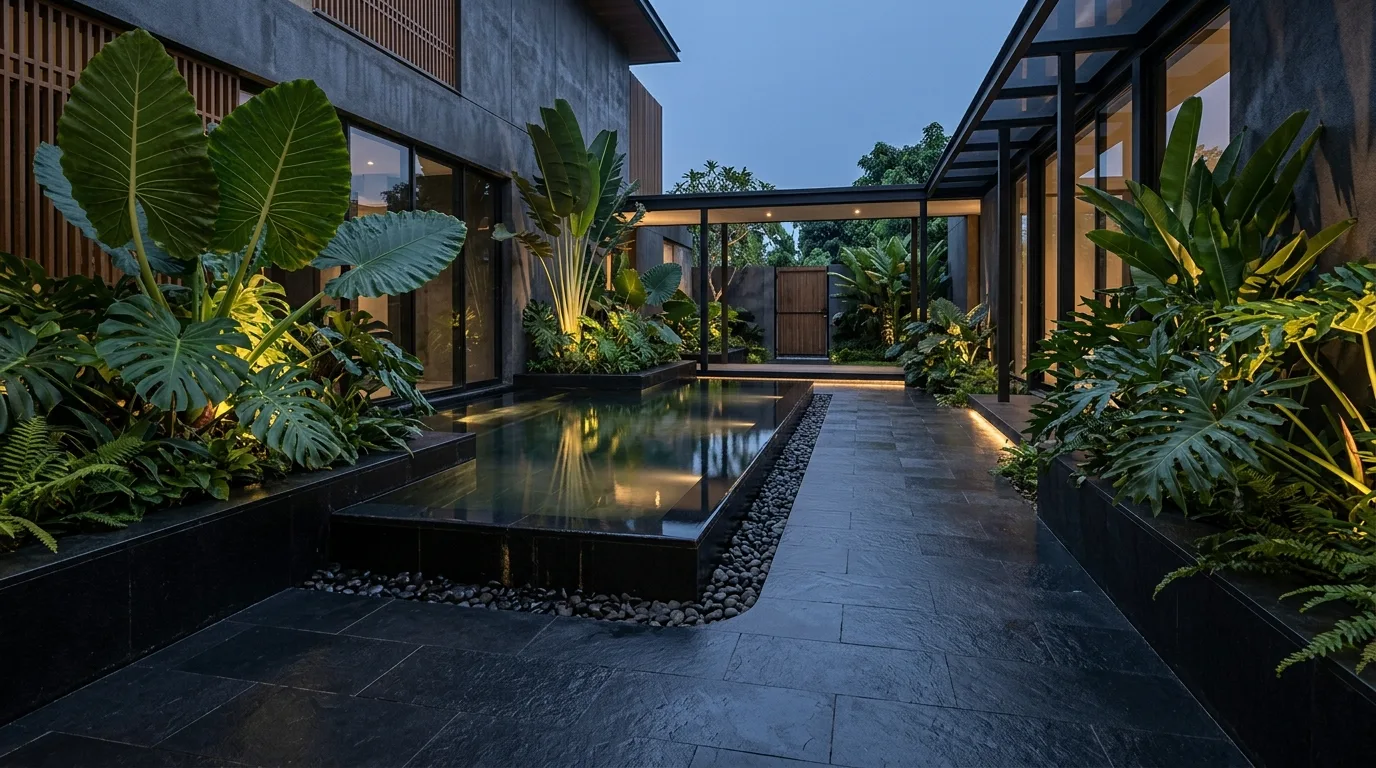
A rain-friendly tropical path with stone and dense understory
Stone paths through rich planting are especially effective in tropical gardens because the foliage creates a feeling of discovery while the hardscape keeps movement clear and grounded. The result feels lush, moody, and highly usable after wet weather too.

Idea 6
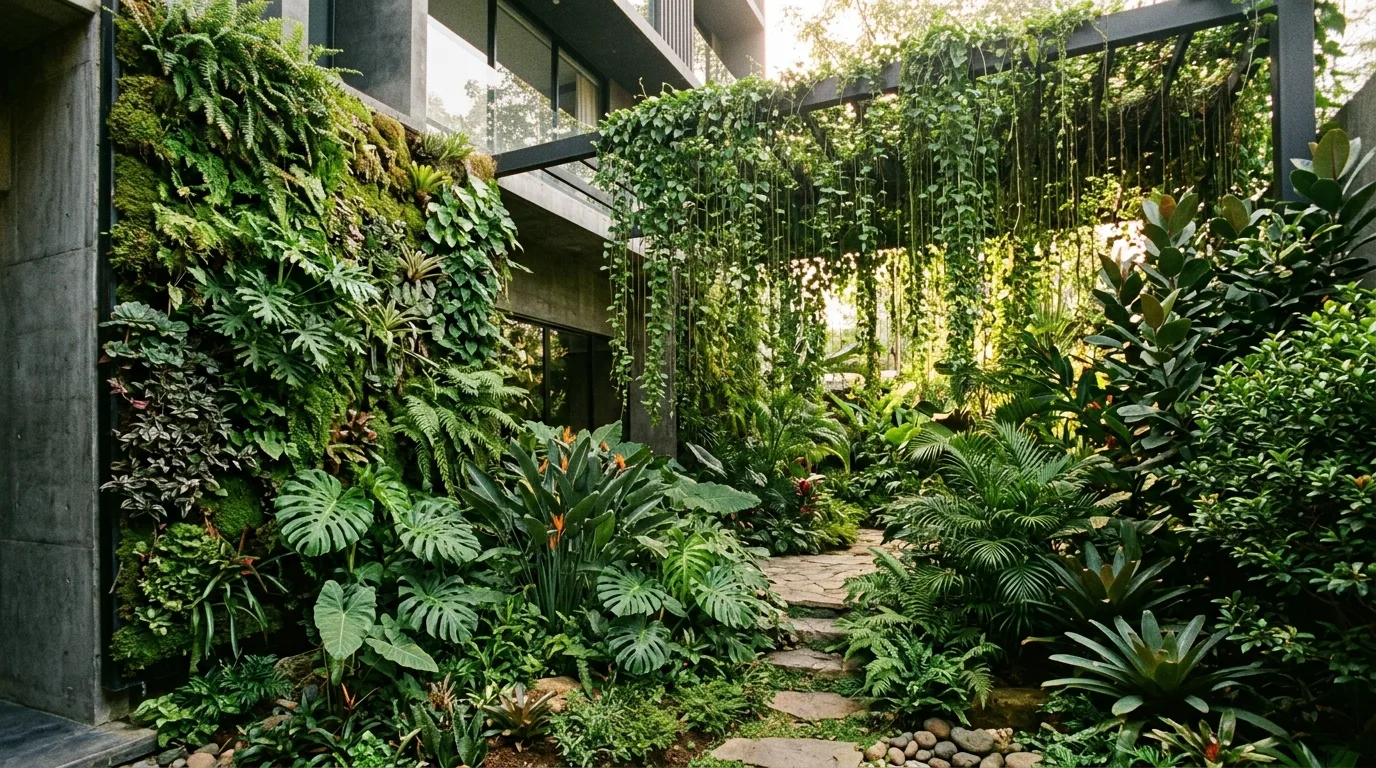
A compact urban yard turned into a vertical tropical escape
Even small spaces can feel surprisingly lush when the planting rises upward with layered foliage, wall-mounted greens, and a tight palette that keeps the scene from becoming visually messy. The space feels bigger because the eye keeps traveling through leaves and height.
Idea 7
A tropical lounge corner with rattan texture and oversized leaves
The strongest resort-like corners rely on more than plants alone, and when woven seating joins large-leaf greenery the whole zone starts to feel relaxed, tactile, and deeply inviting. It becomes an outdoor room with a much softer emotional tone.
Idea 8
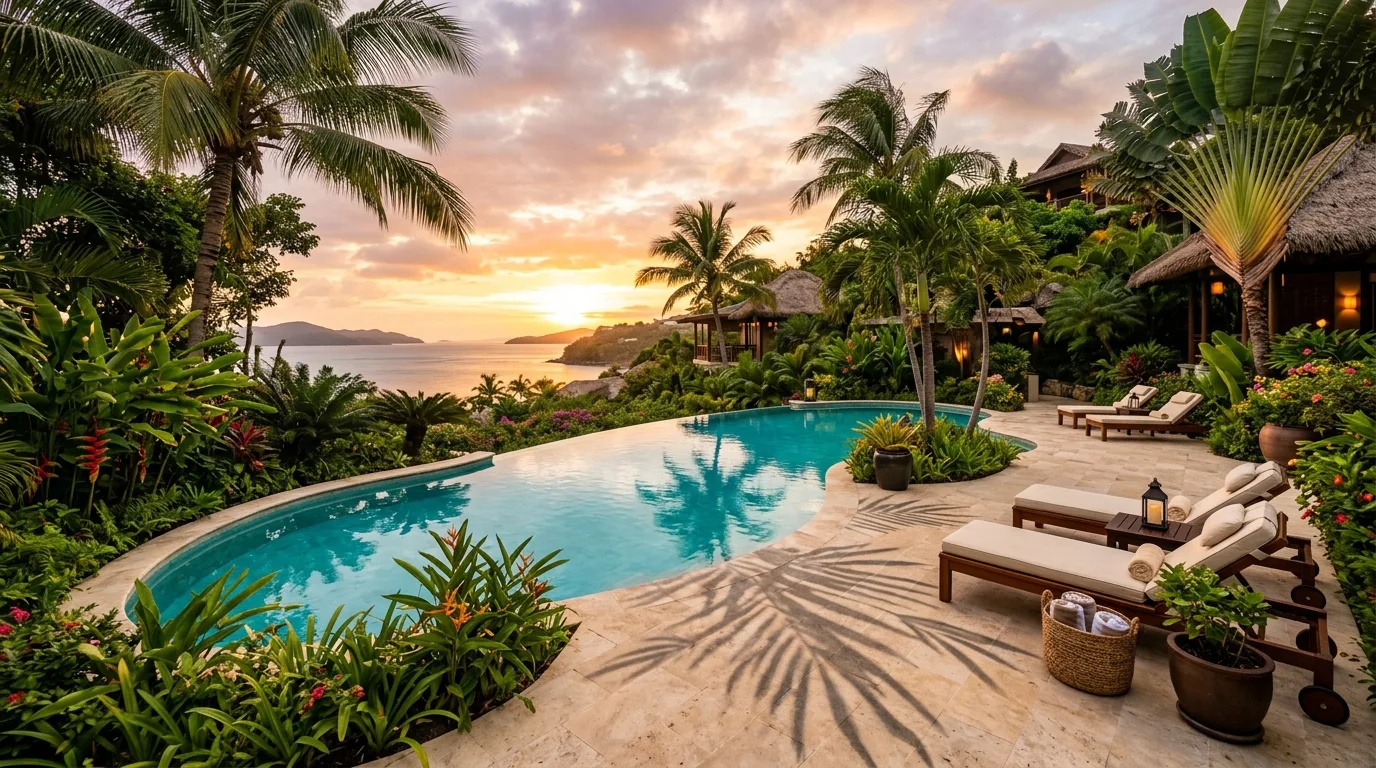
A monochrome tropical palette built from repeating green tones
Some of the most sophisticated tropical landscapes avoid bright flower clutter and instead lean into the extraordinary range of greens found in palms, gingers, philodendrons, and grasses. That restraint makes the exotic planting feel even richer and more design-led.
Idea 9
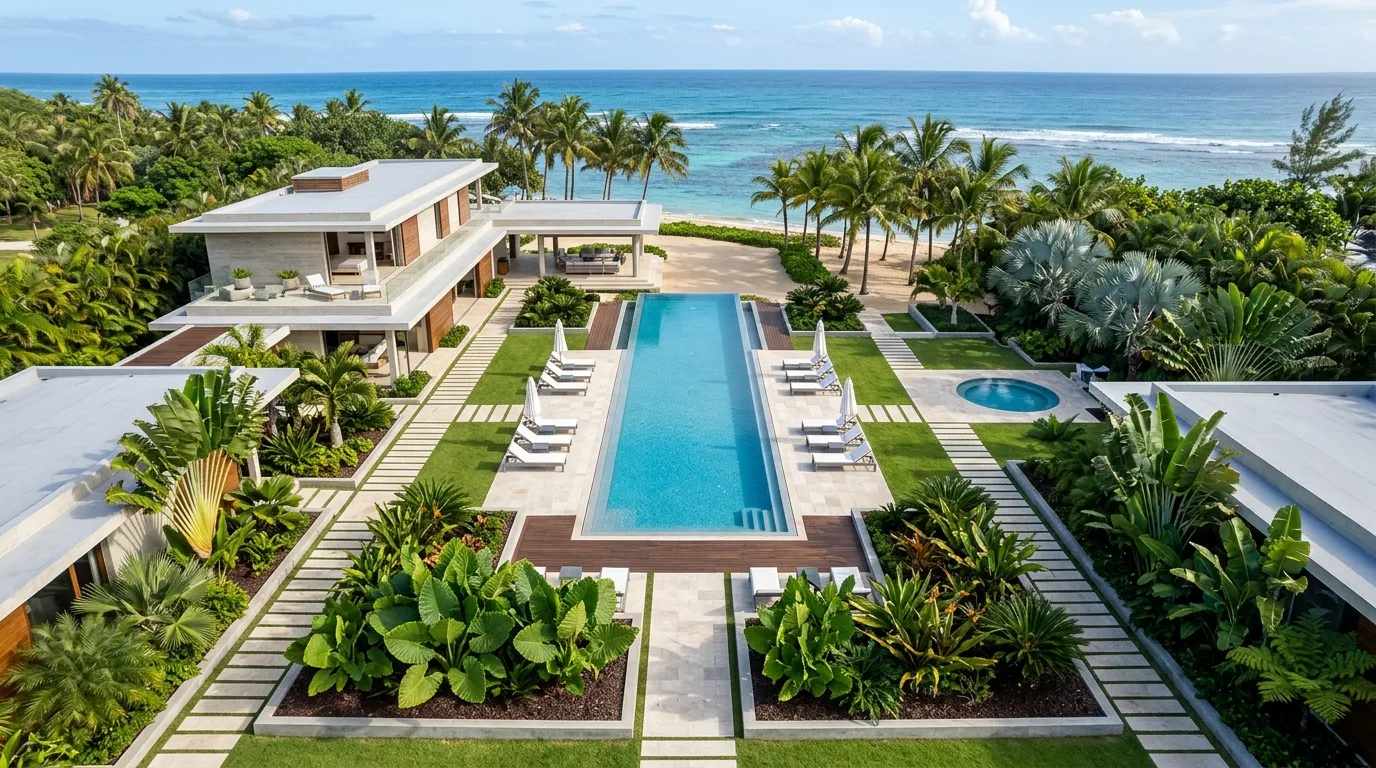
A water-feature wall making the garden feel cooler and calmer
Tropical landscapes often benefit from sound and reflected light, and a water wall adds both while giving the planting a stronger sense of atmosphere and enclosure. The garden feels more complete because the foliage is paired with a clear sensory focal point.
Idea 10
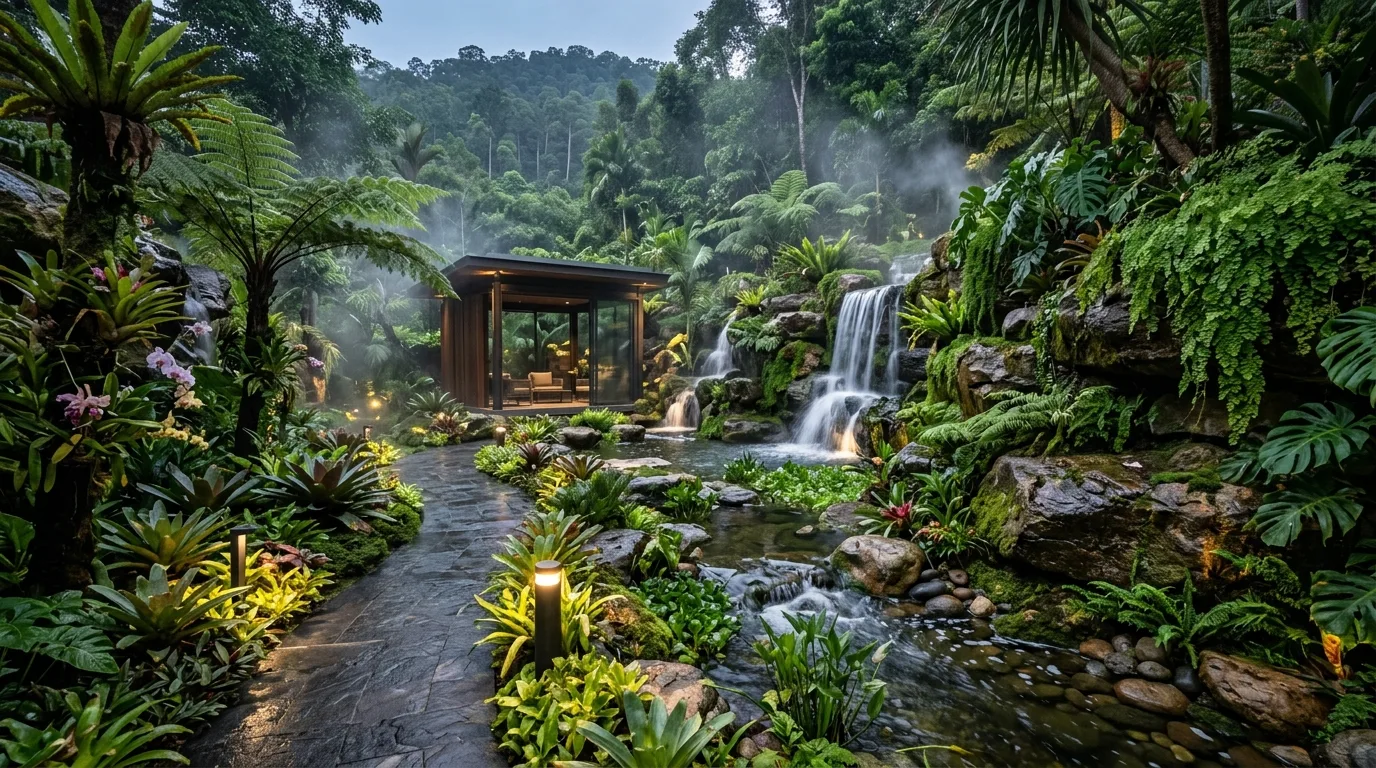
A night-lit tropical garden with dramatic leaf shadows
After dark, uplighting can turn tropical foliage into one of the most theatrical materials in the landscape because every large leaf throws shape and shadow with very little effort. The mood becomes luxurious and cinematic without adding more objects.
Idea 11
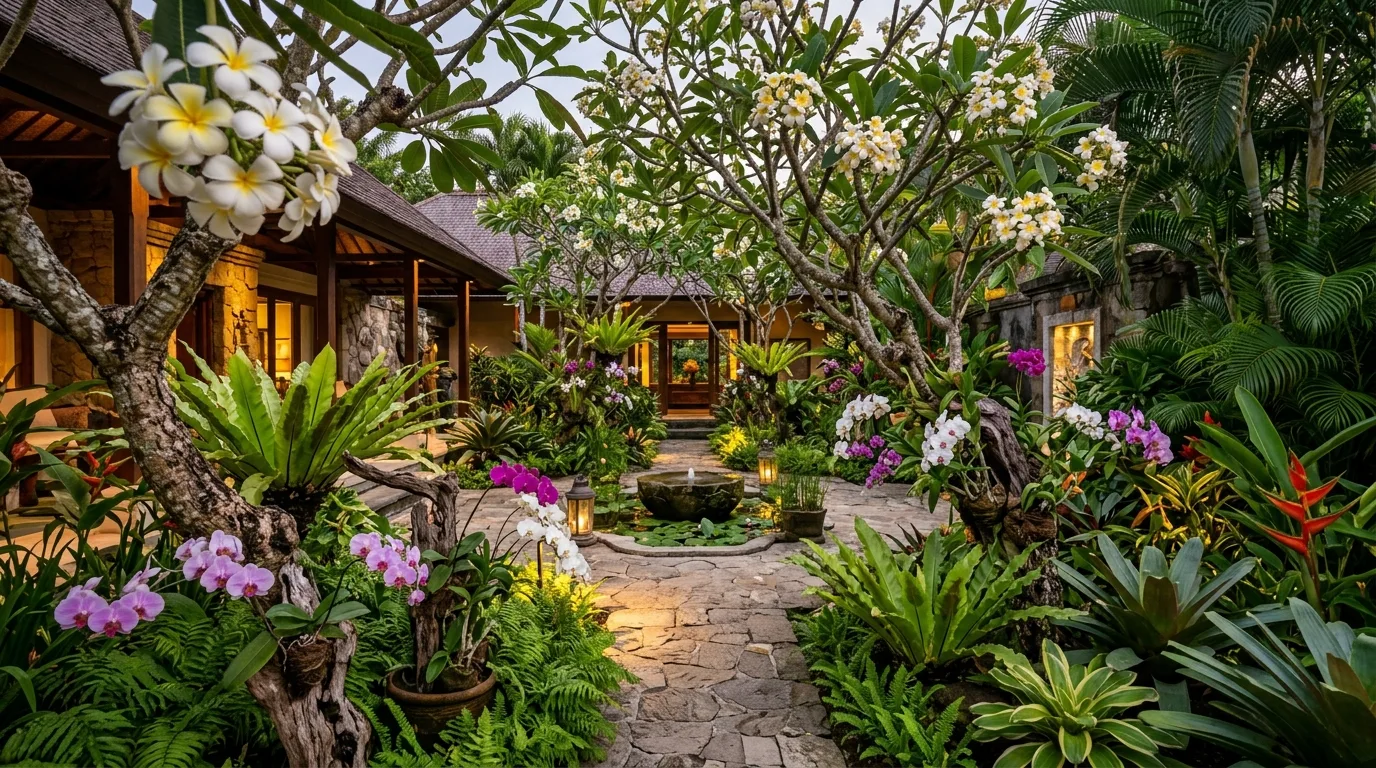
A gravel and foliage mix that keeps tropical style low fuss
Tropical gardens do not always need lawns or elaborate flower beds, and gravel can be a smart way to simplify the floor plane while letting the planting feel fuller and easier to maintain. The contrast keeps the whole design crisp instead of overgrown.
Idea 12
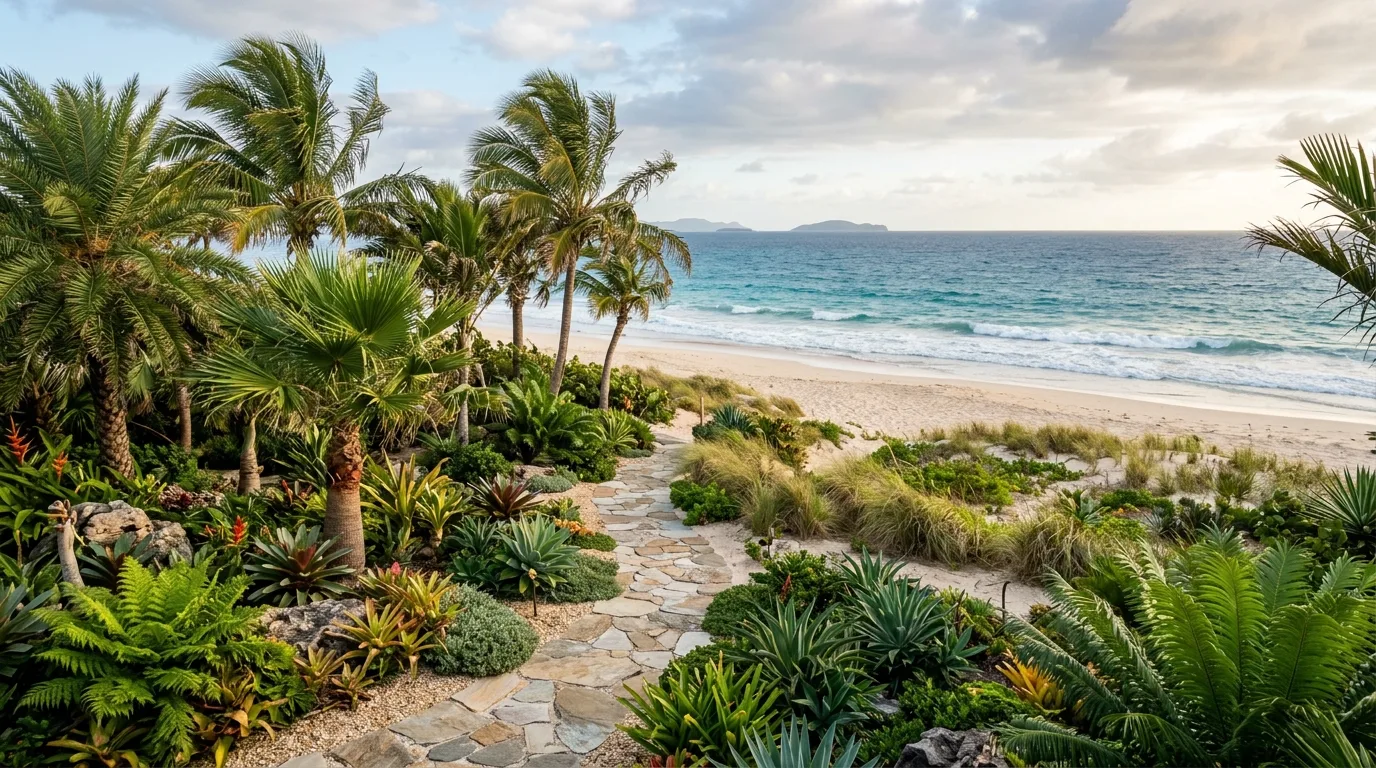
A pergola court wrapped in vines and humid green texture
Pergolas pair beautifully with tropical planting because the overhead structure gives vines somewhere to soften the light while the foliage below creates layered enclosure from the sides. The whole scene feels shaded, private, and almost hotel-like in the best way.
Idea 13
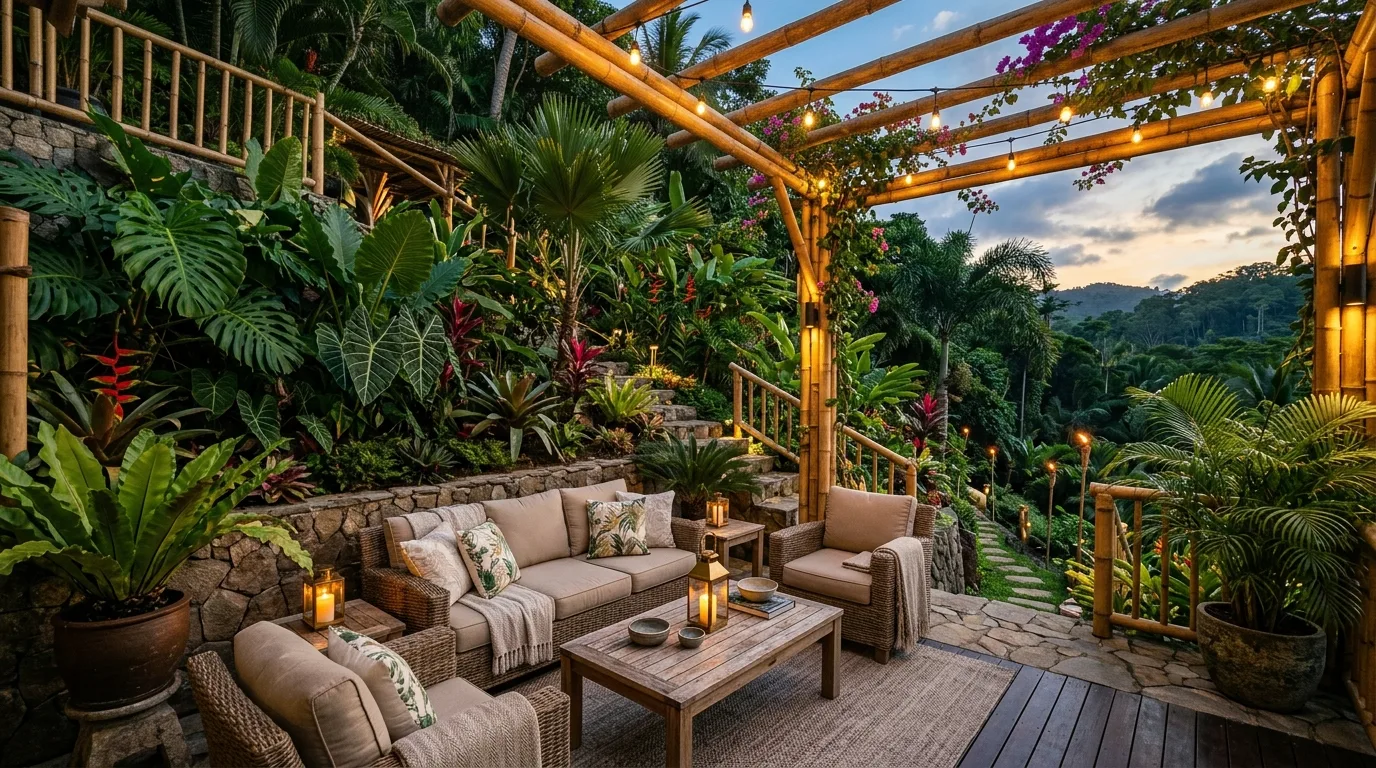
A front-to-back tropical layout with repeating foliage rhythm
Repetition is especially useful in rich tropical gardens because it prevents the planting from feeling random and instead gives the eye clear patterns to follow across the yard. That rhythm makes the landscape feel professionally composed and deeply immersive.
Idea 14
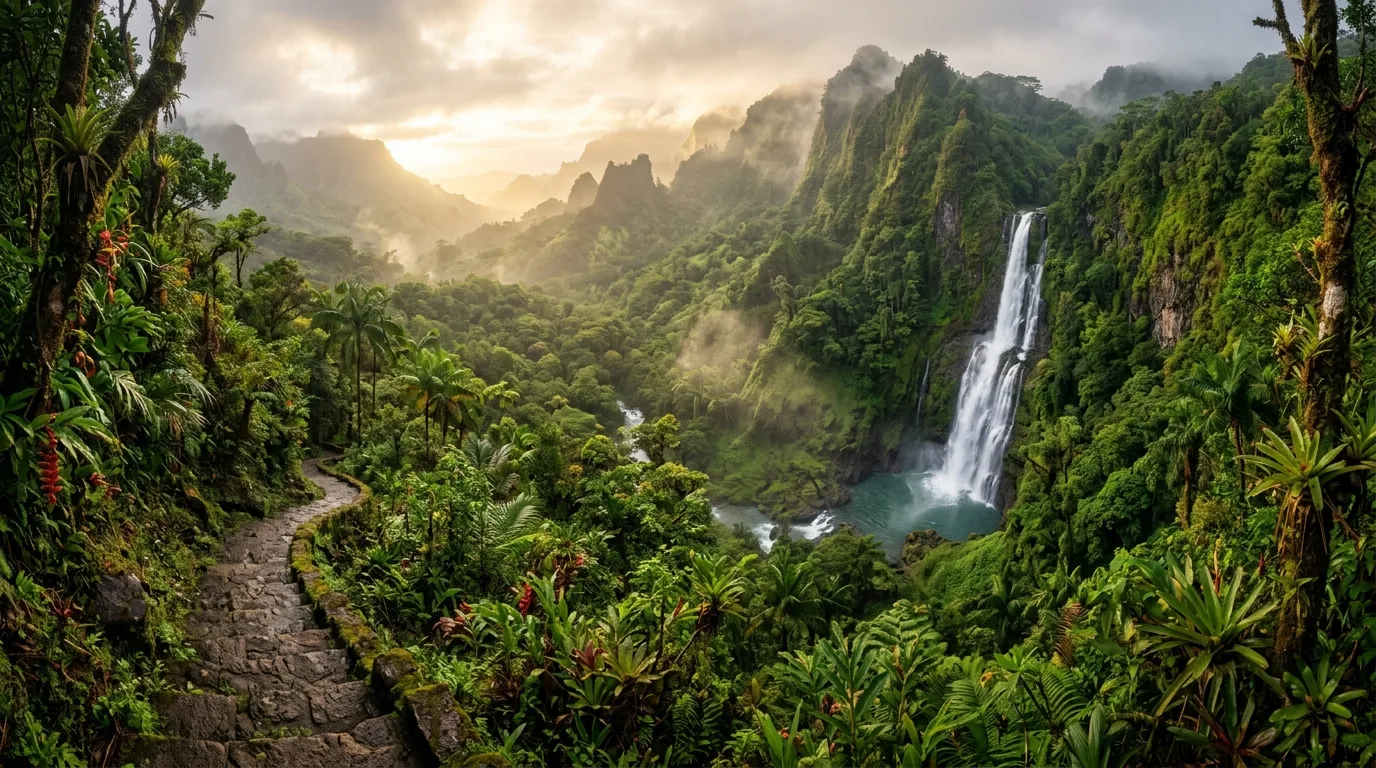
A modern paradise where exotic planting and clean structure stay balanced
The best tropical landscapes succeed because the planting feels abundant while the underlying hardscape remains calm enough to hold it all together with confidence. That balance is what turns a lush garden into a true outdoor paradise rather than uncontrolled density.
Read next on Saw & Sprout
Edible Gardens
13 Clever Tomato Trellis Gardens for a Bountiful Harvest
Small-Space Growing
14 Space-Saving Small Vegetable Gardens for Urban GrowersFrequently asked questions
What makes a tropical landscape feel modern?
Clean hardscape, restrained materials, repeated foliage forms, and a disciplined layout usually make tropical planting feel more modern and elevated.
Do tropical landscapes need a large yard?
No. Even compact spaces can feel immersive when vertical foliage, layered shade, and a clear palette are used carefully.
How do you keep a tropical garden from looking messy?
Use repetition, simplify the ground plane, and let a few dominant plant types lead instead of mixing too many unrelated textures.