Small vegetable gardens work best when every surface earns its place. That might mean using height, stacking containers, growing along railings, or turning one slim strip of sunlight into a focused edible zone.
These ideas are built for urban conditions where square footage is tight but the urge to grow food is strong. Each example shows a different way to organize vegetables so the setup stays both productive and visually clean.
Quick planning notes
Choose crops with different growth habits so one container can hold vertical, mounding, and quick-harvest plants together.
Use shelves, walls, or railings first before expanding the footprint outward.
Keep the most frequently harvested crops closest to your door so they are easy to maintain every day.
Idea 1
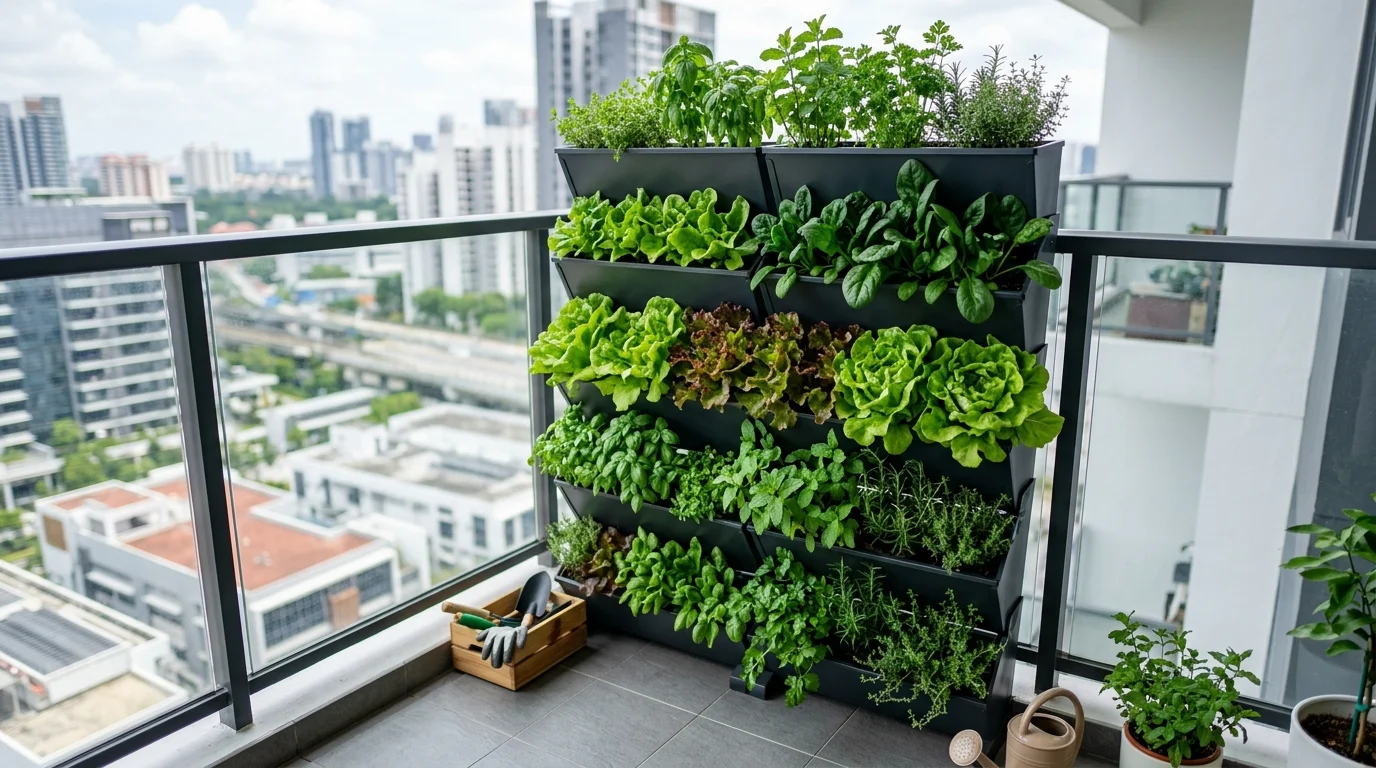
Stacked balcony planters for layered greens
Vertical stacks let lettuce, spinach, and herbs share one narrow balcony edge without crowding the floor. It is a crisp and modern way to turn a railing zone into a productive salad station.
Idea 2
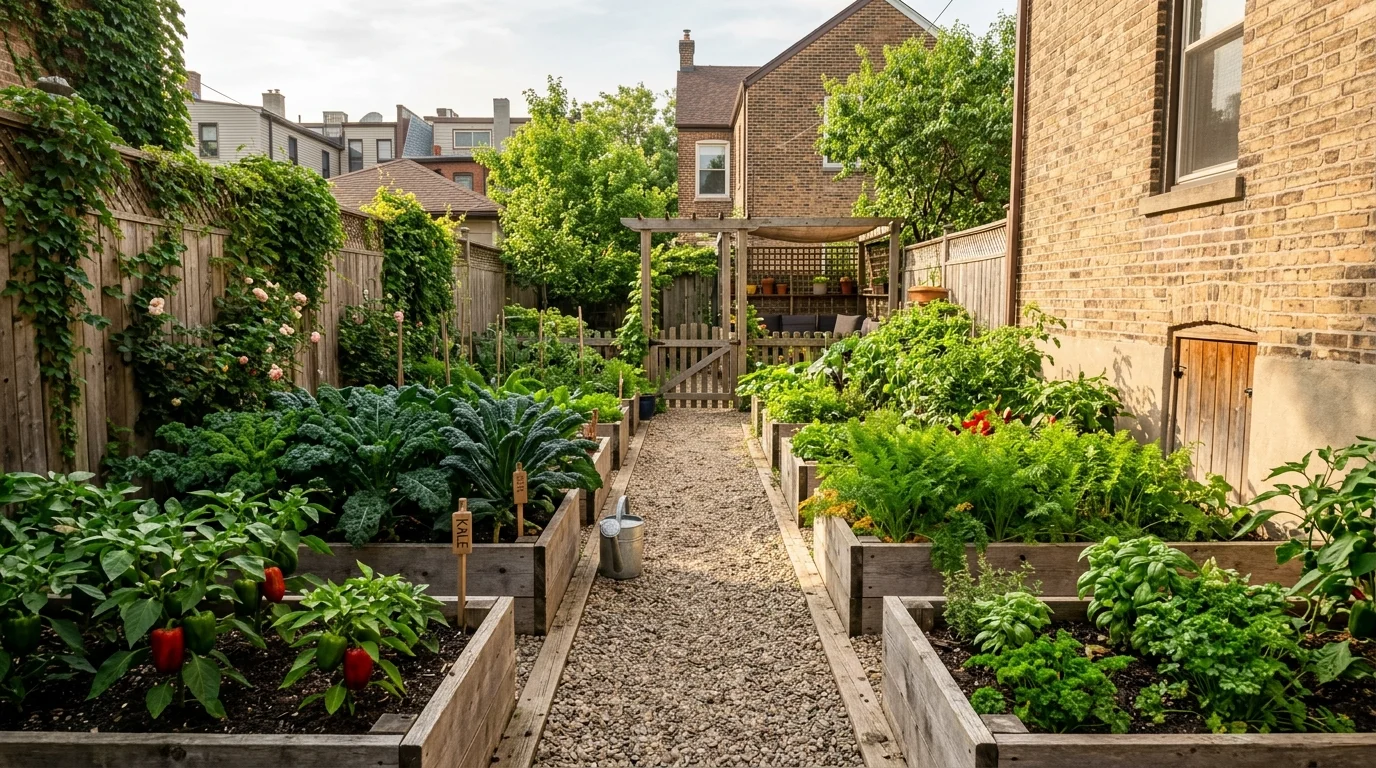
Parallel raised beds in a narrow yard
Slim beds arranged in rows create strong circulation while still leaving enough space for a useful crop mix. This layout works especially well when your yard is longer than it is wide.
Idea 3
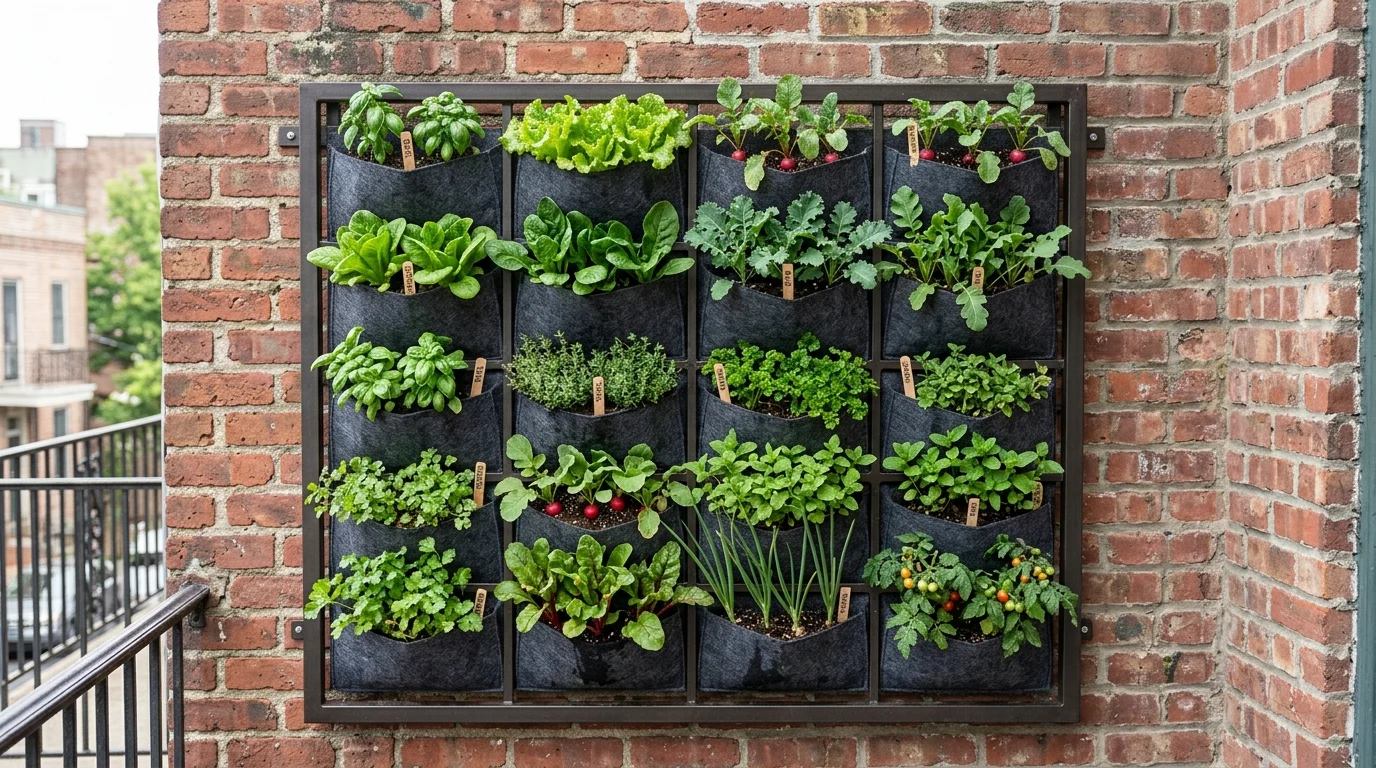
Wall pockets for herbs and leafy vegetables
A pocket system mounted on a wall makes use of vertical real estate that would otherwise go unused. The straight-on organization keeps a small setup from feeling busy even when it is packed with greens.
Idea 4
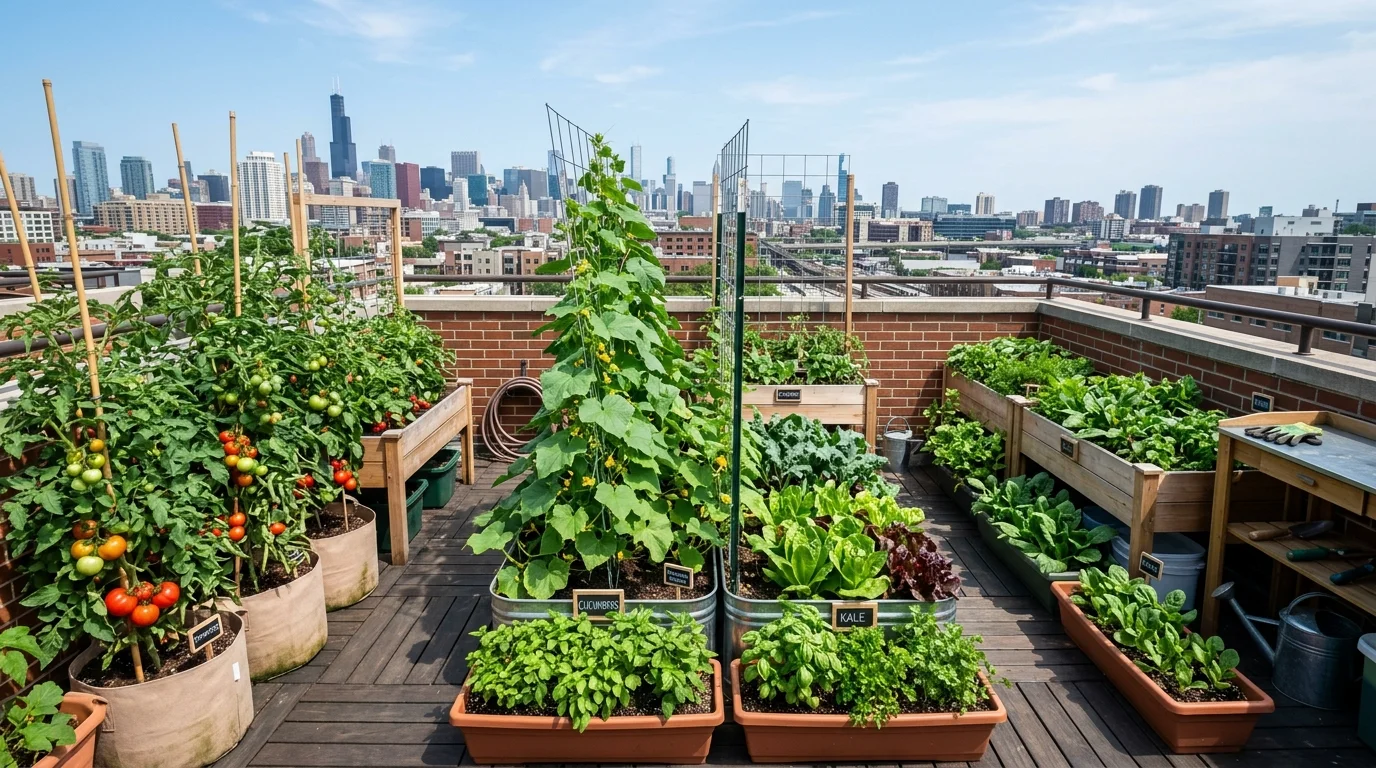
Rooftop containers with a full crop mix
Compact planters on a rooftop can still support tomatoes, cucumbers, and greens when the layout is efficient. Keeping planters grouped by height helps the space read as intentional instead of improvised.
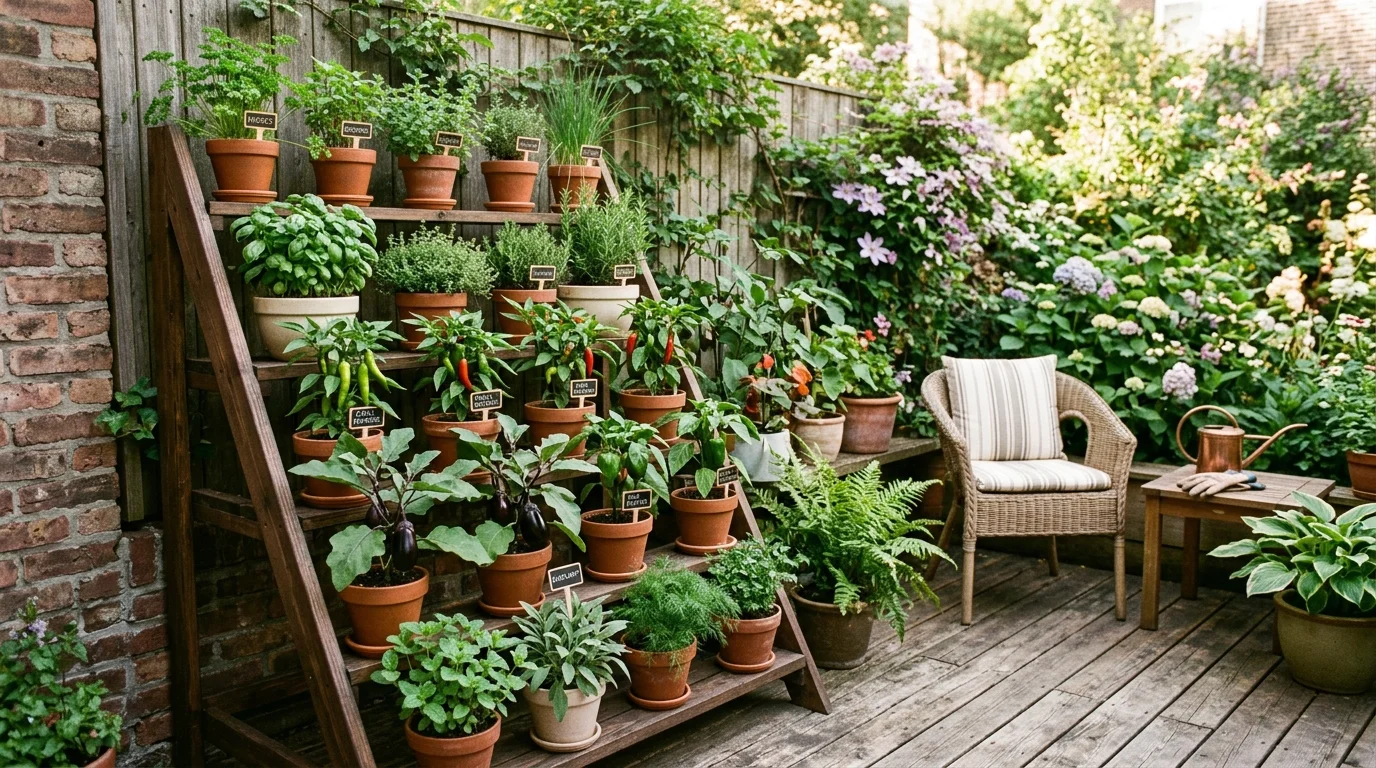
Idea 5
Tiered shelf garden for patios
Shelving instantly multiplies planting capacity on a small patio and keeps crops at easy reach. Peppers, eggplants, and herbs are especially effective in this setup because they tolerate containers well.
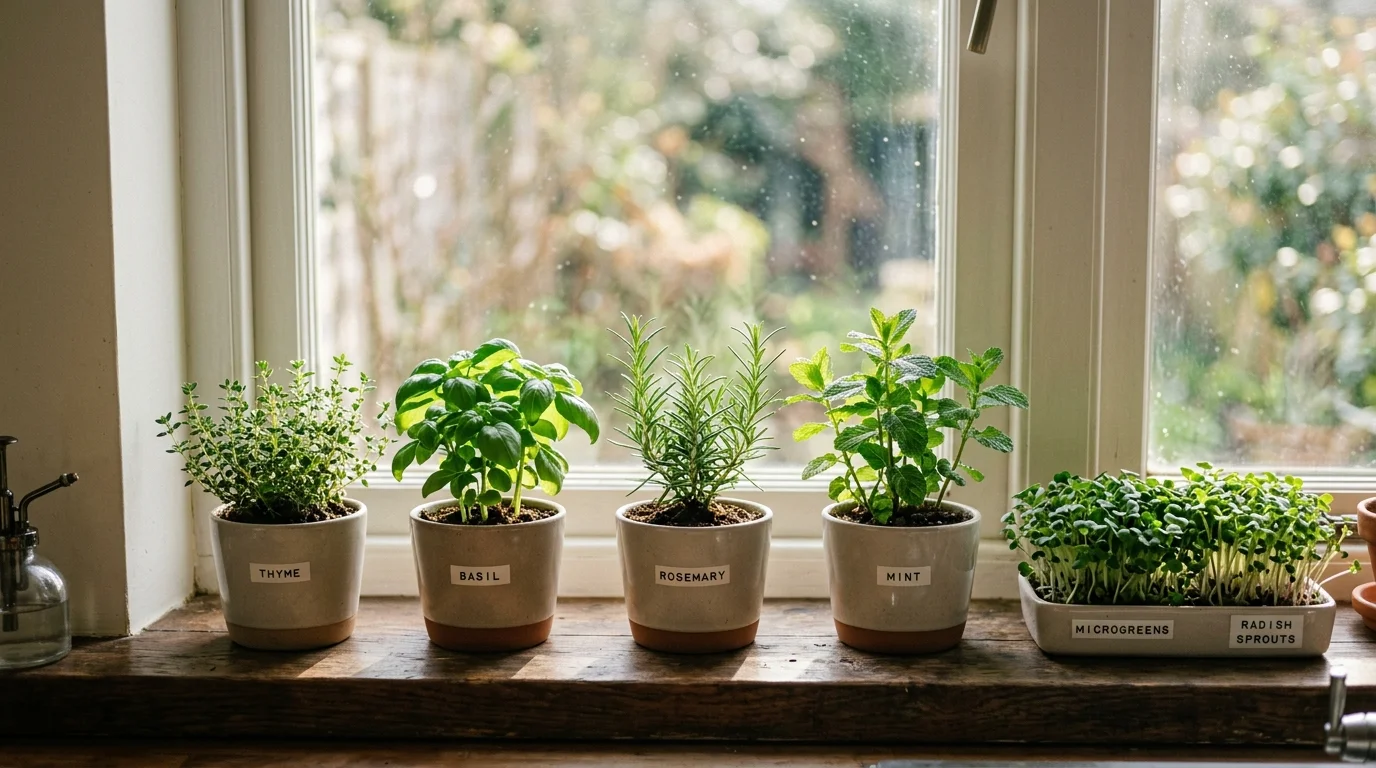
Idea 6
Kitchen windowsill for herbs and microgreens
A narrow indoor sill can still become a productive growing zone when you focus on quick-turn crops. This type of setup is ideal for cooks who want freshness close at hand every day.
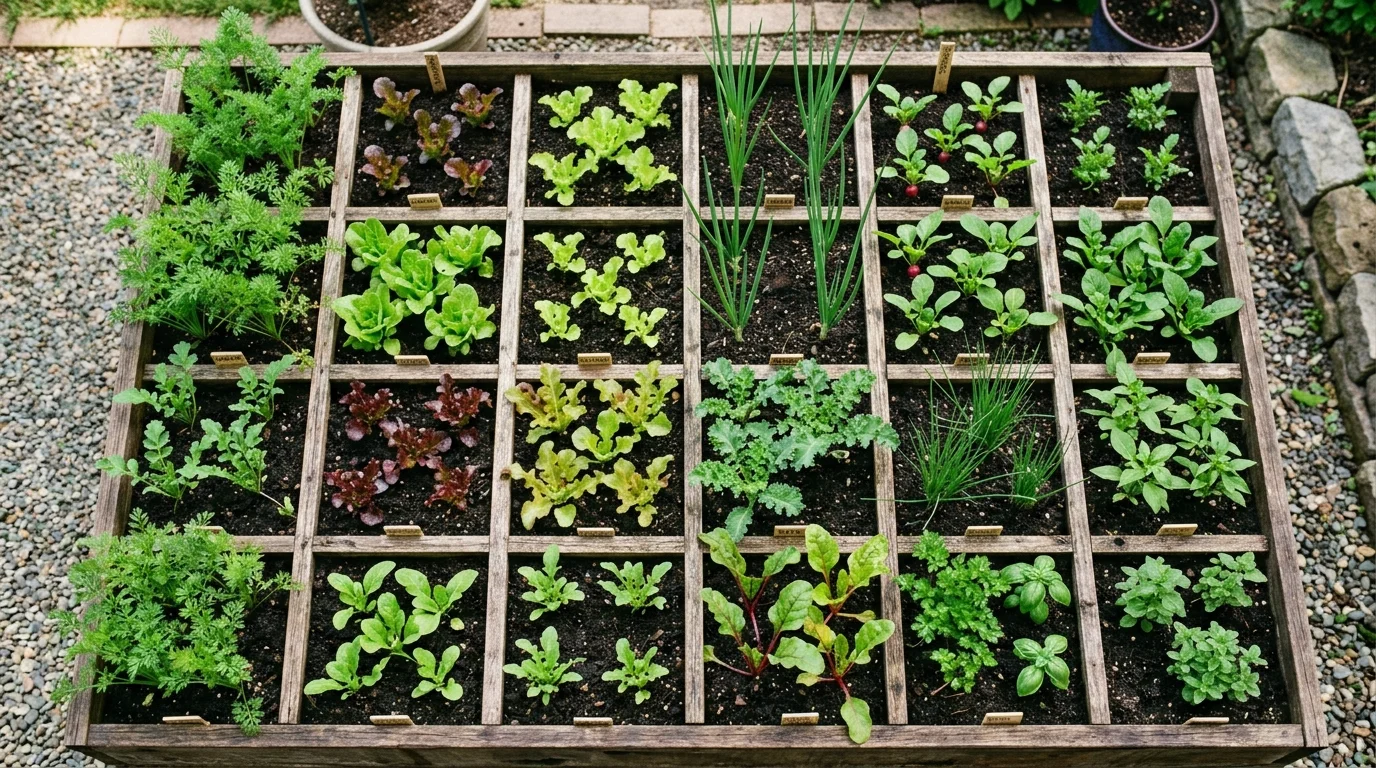
Idea 7
Square-foot bed for easy planning
Dividing one compact bed into clear sections makes spacing decisions simple and helps maximize yield. It is one of the easiest ways for beginners to prevent overplanting in small spaces.
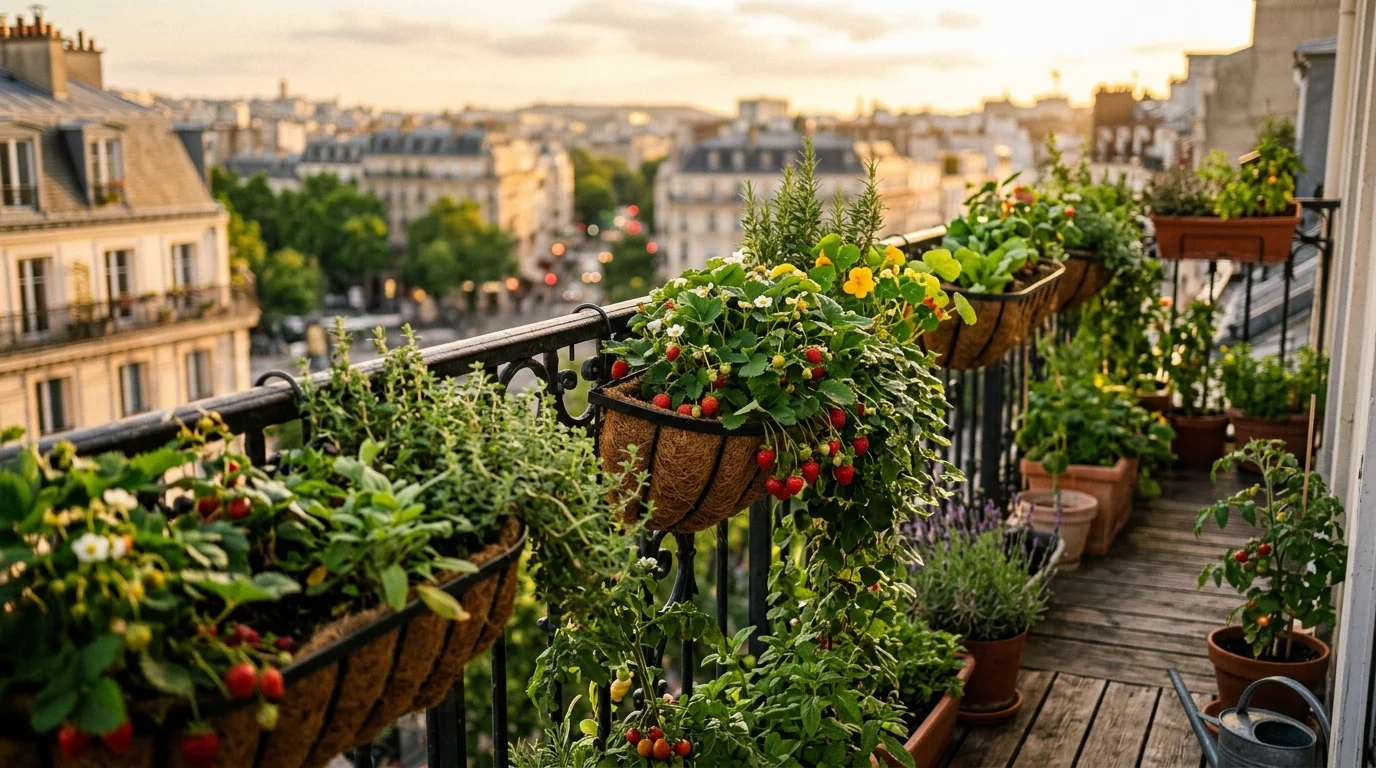
Idea 8
Hanging railing planters for trailing crops
Strawberries, herbs, and small vegetables can spill over the balcony edge without taking up ground space. The result feels lush while still preserving room for seating or circulation.
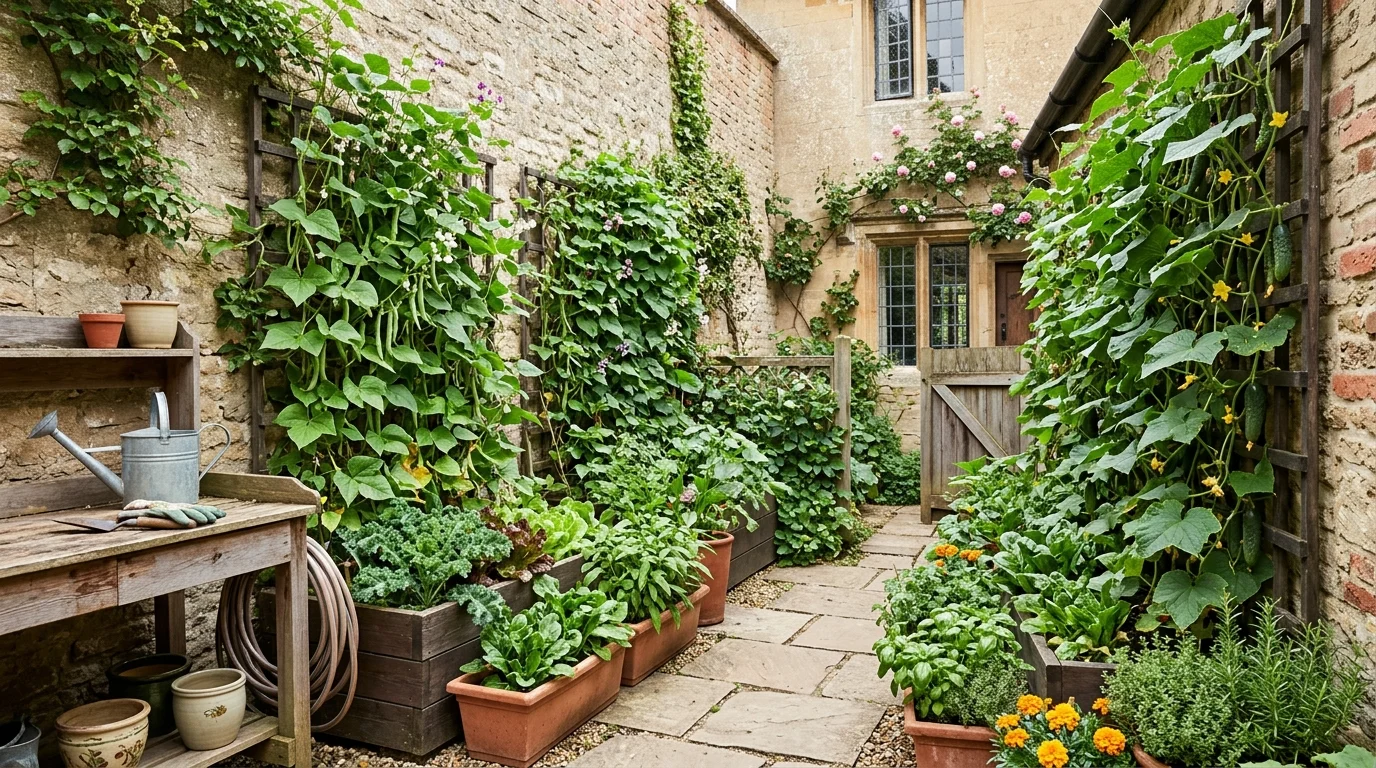
Idea 9
Courtyard trellis wall with ground planters
Climbing vegetables let you harvest vertically while smaller containers below fill in the base. It is a strong strategy for enclosed courtyards where sunlight comes from one main direction.
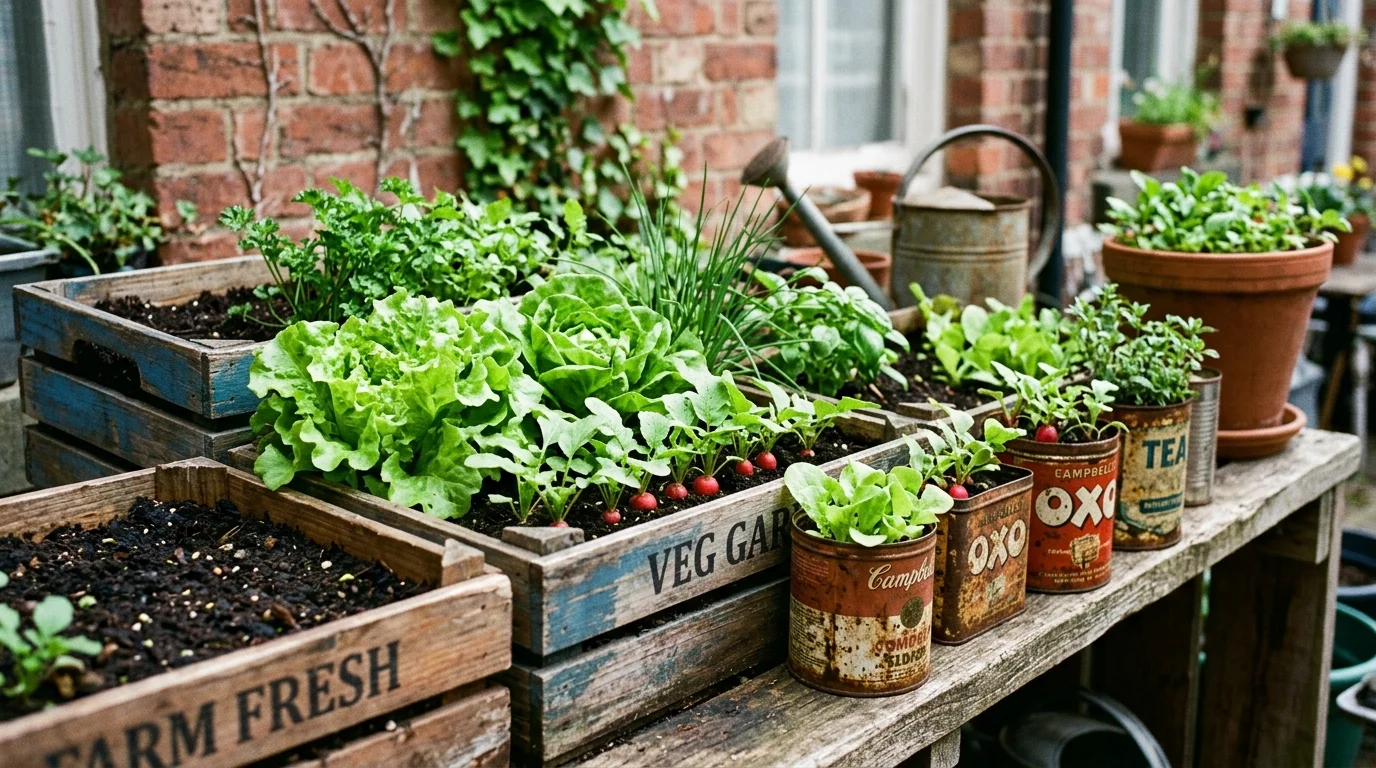
Idea 10
Recycled crate garden with rustic character
Wooden crates and tins create a flexible patchwork that is easy to move and refresh. This is a practical option when you want a low-cost starter garden that still looks charming.
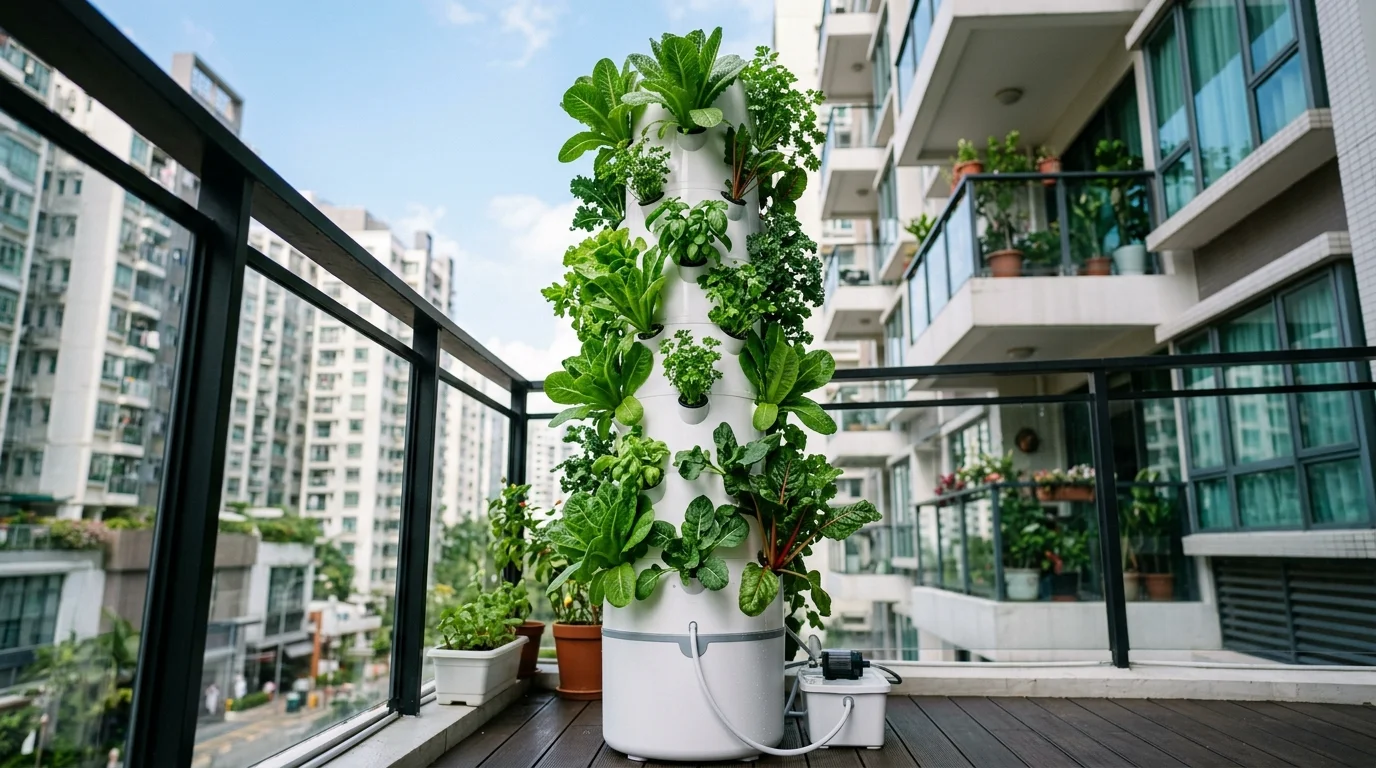
Idea 11
Hydroponic tower for maximum yield per square foot
A tower system compresses a surprising amount of leafy production into a very small footprint. Its clean vertical profile also suits modern balconies where clutter needs to stay low.
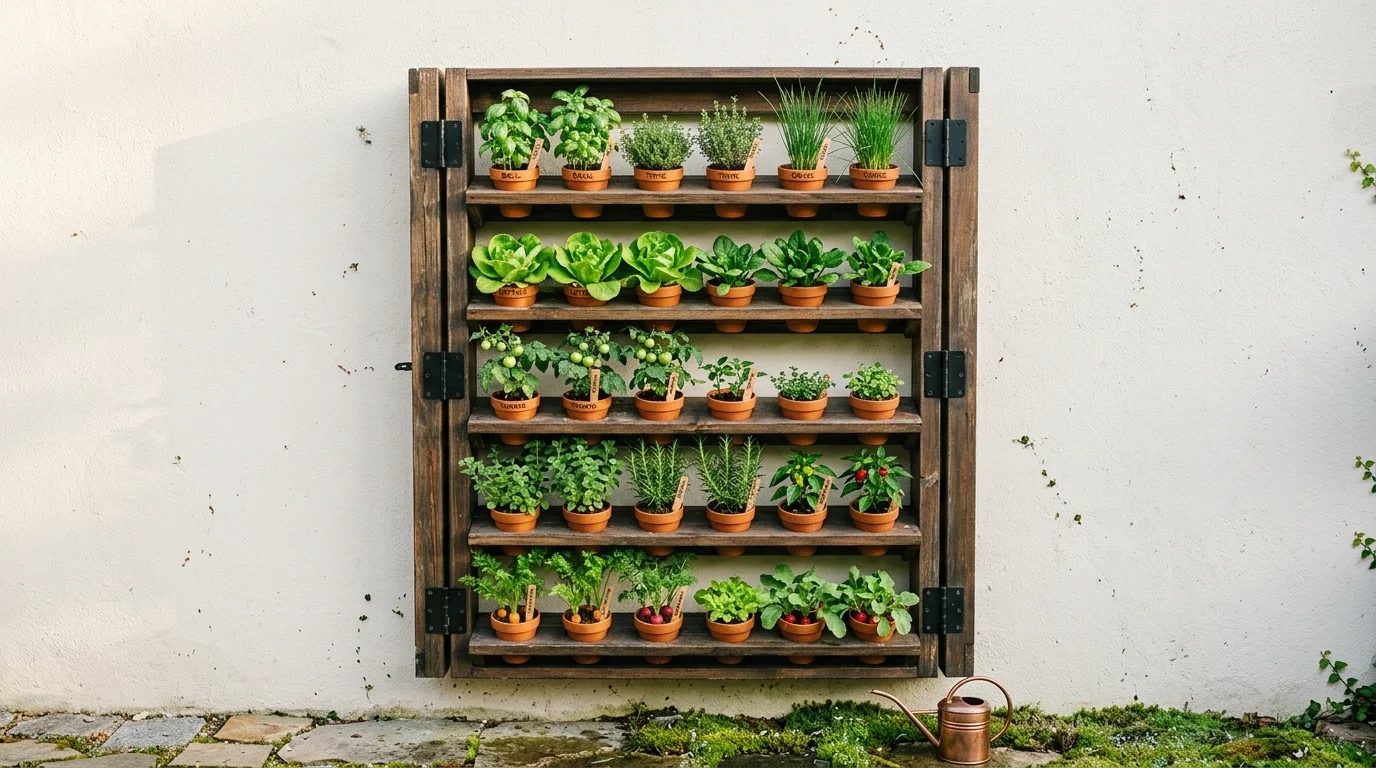
Idea 12
Fold-down wall garden for flexible use
Hinged shelves offer planting space when you need it and can stay compact when you do not. That makes them especially useful for patios or utility zones that need to stay multifunctional.
Idea 13
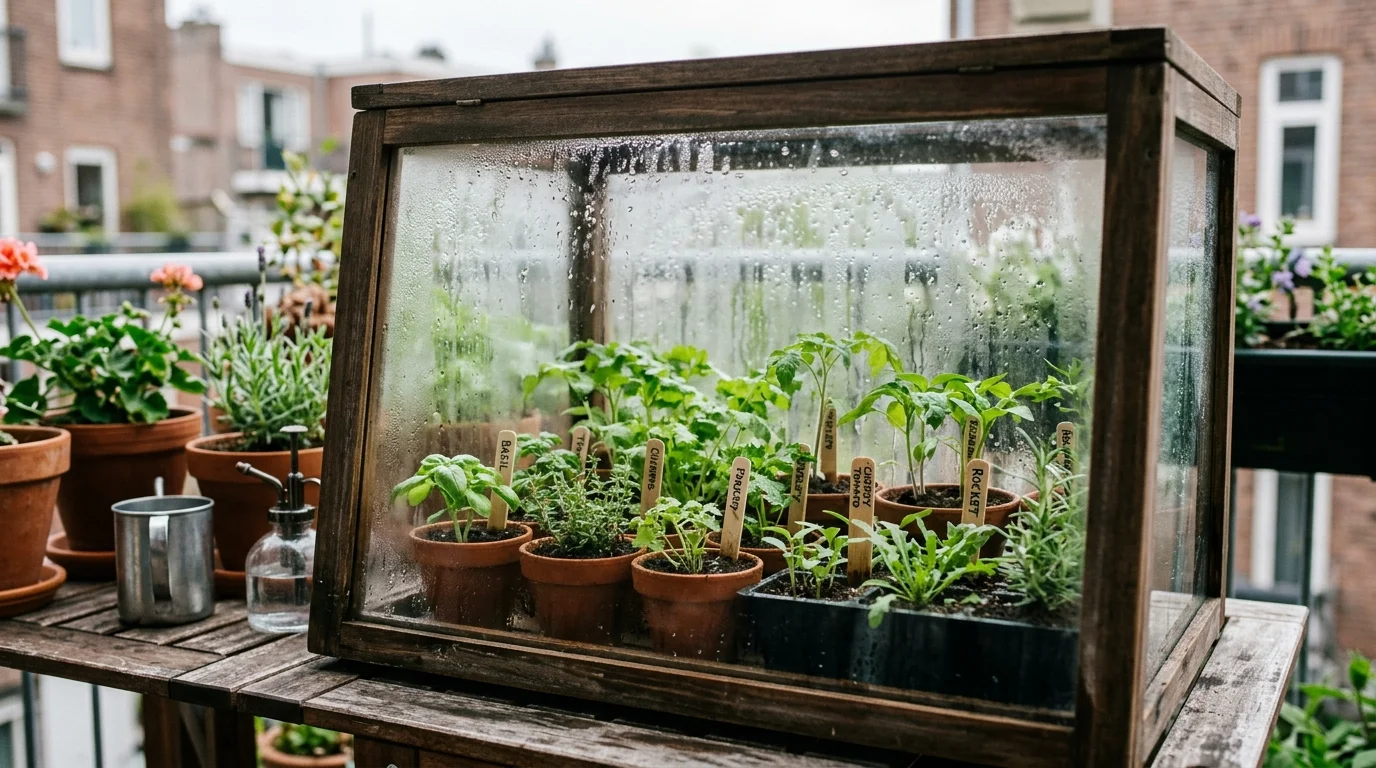
Mini greenhouse cabinet for seedlings and herbs
A balcony cabinet extends the season for tender plants and keeps propagation organized. It is ideal if you like growing starts early without committing to a full greenhouse footprint.
Idea 14
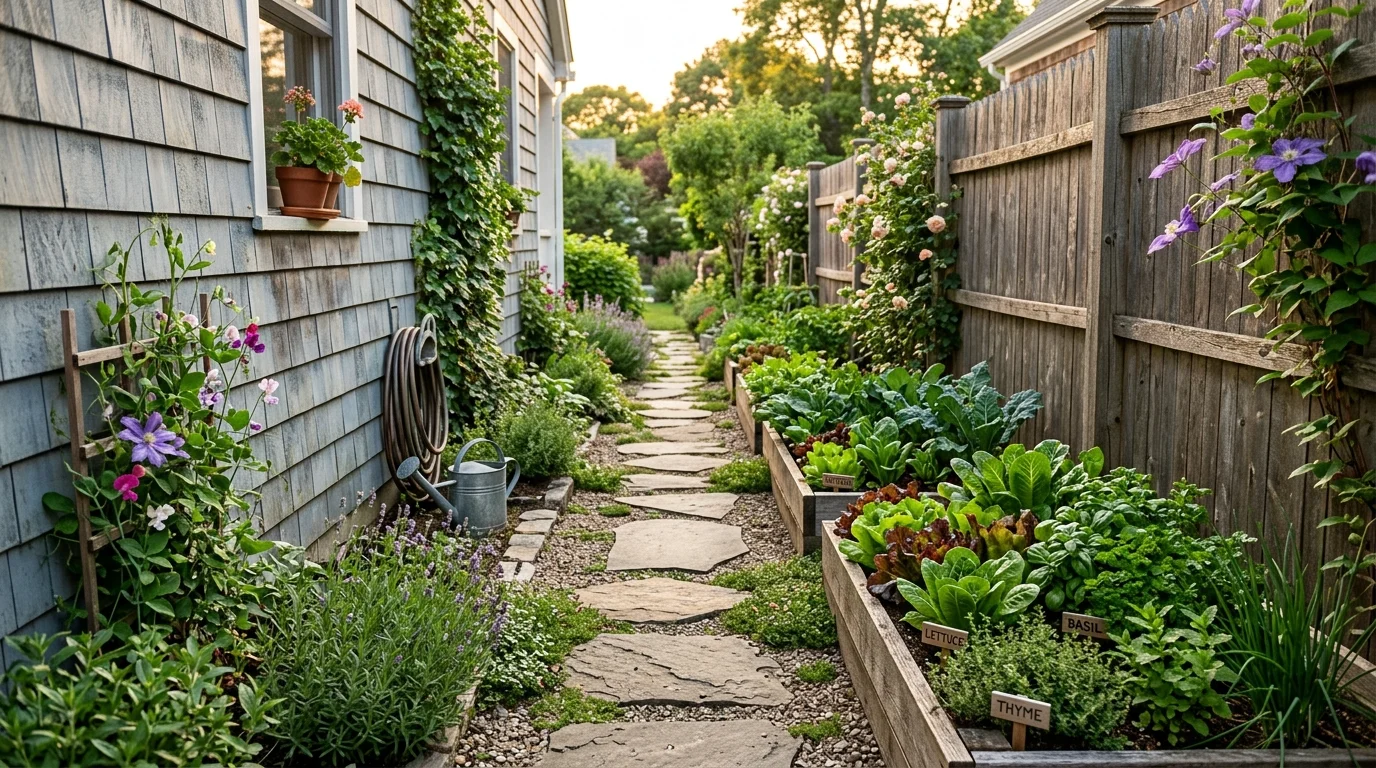
Side-yard strip turned into a harvest lane
A fence-hugging raised bed can make a forgotten side yard productive and attractive at the same time. Compact greens and herbs are especially good here because access is linear and easy.
Read next on Saw & Sprout
Frequently asked questions
What vegetables are best for a very small urban garden?
Leafy greens, herbs, radishes, compact peppers, strawberries, and trellised tomatoes or cucumbers are all strong small-space choices because they produce well in containers or vertical systems.
How do I make a small vegetable garden look tidy?
Use repeated container styles, keep a limited color palette for hard materials, and group plants by height. Clear edges and vertical organization make a big difference in small spaces.