Flower bed walls can quietly transform a backyard because they add definition before a single bloom opens. They create level changes, sharpen edges, frame patios, support slopes, and give planting a stronger sense of intention.
What makes them especially valuable is that they solve both visual and practical problems at once. A wall can retain soil, direct circulation, and raise flowers into better view while also making the whole garden feel more deliberate and composed.
These 14 ideas explore that spectrum, from rustic sleeper walls and natural rock forms to cleaner modern edges and more formal symmetrical layouts.
If your planting feels beautiful but a little shapeless, a better flower bed wall strategy can often be the missing piece.
Quick planning notes
Choose the wall material based on the garden style you want, because stone, brick, timber, and rendered finishes all set different tones immediately.
Use planting to soften the wall edges so the structure feels integrated rather than too severe.
Consider the wall from multiple vantage points, especially if it borders a patio, path, or major view from inside the house.
If the site has slope or awkward corners, treat the wall as both a functional solution and a design opportunity.
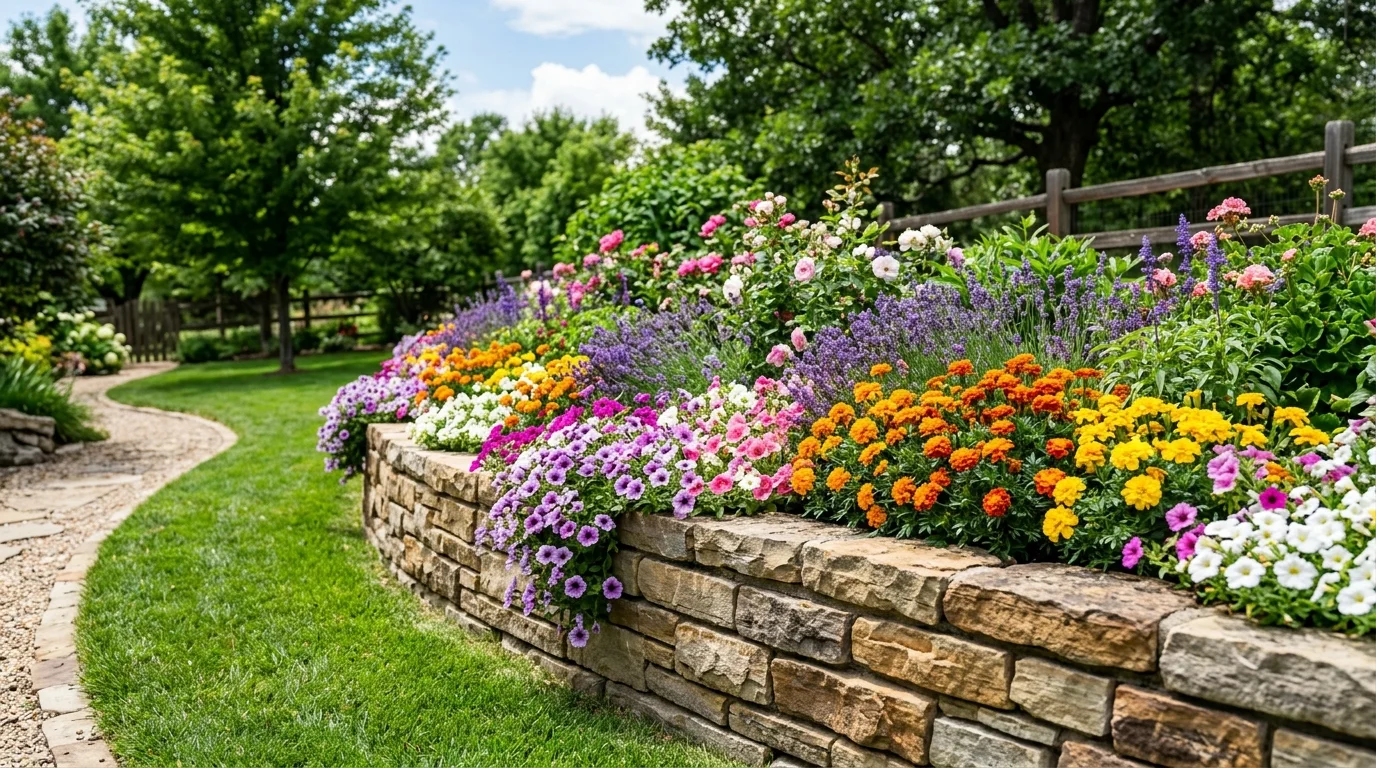
Idea 1
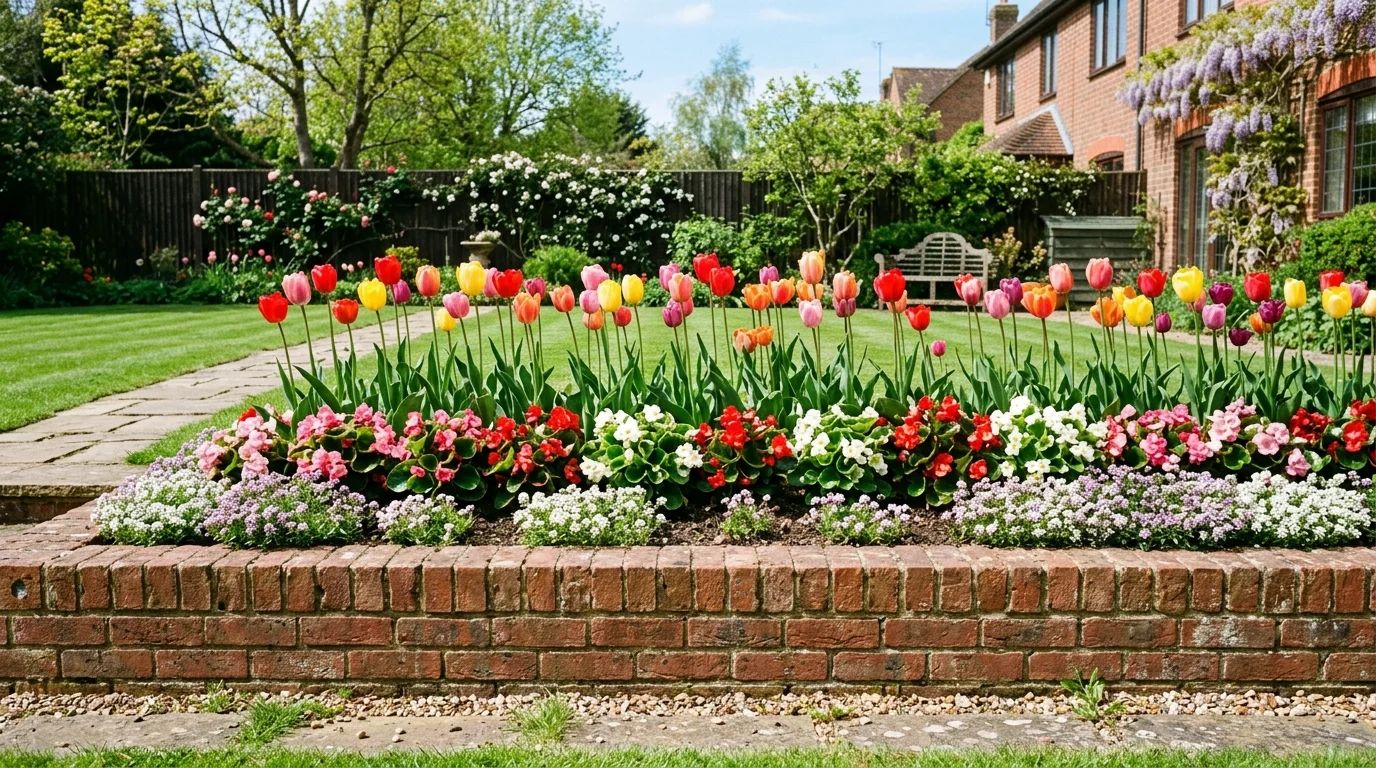
Low stone wall bed with classic layered flowers
A flower bed wall can do much more than retain soil. When it is proportioned well and paired with layered planting, it creates structure, height, and a much clearer garden edge for the entire yard.
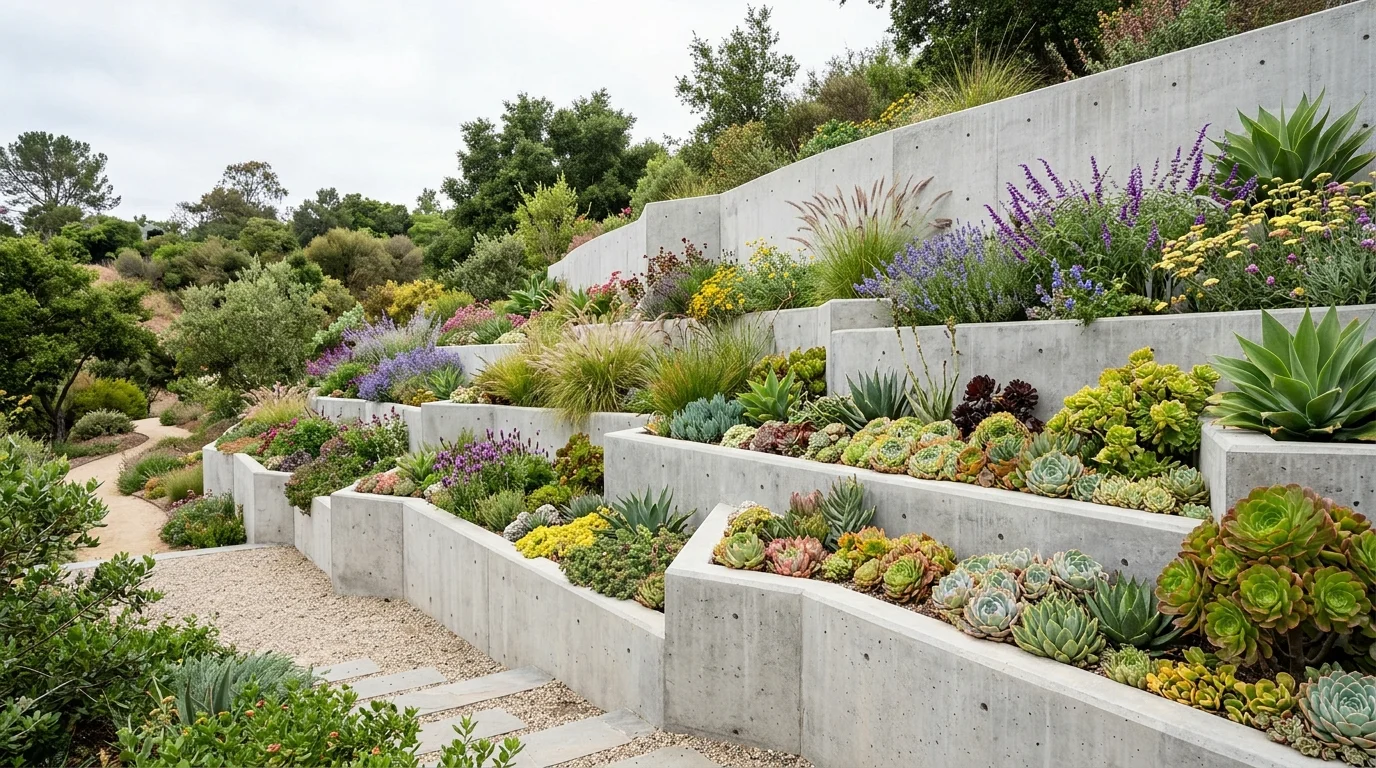
Idea 2
Brick-edged wall bed with warm cottage structure
Brick brings instant warmth and pairs naturally with fuller flower planting. This is a strong choice for backyards that want better organization without losing softness and personality.
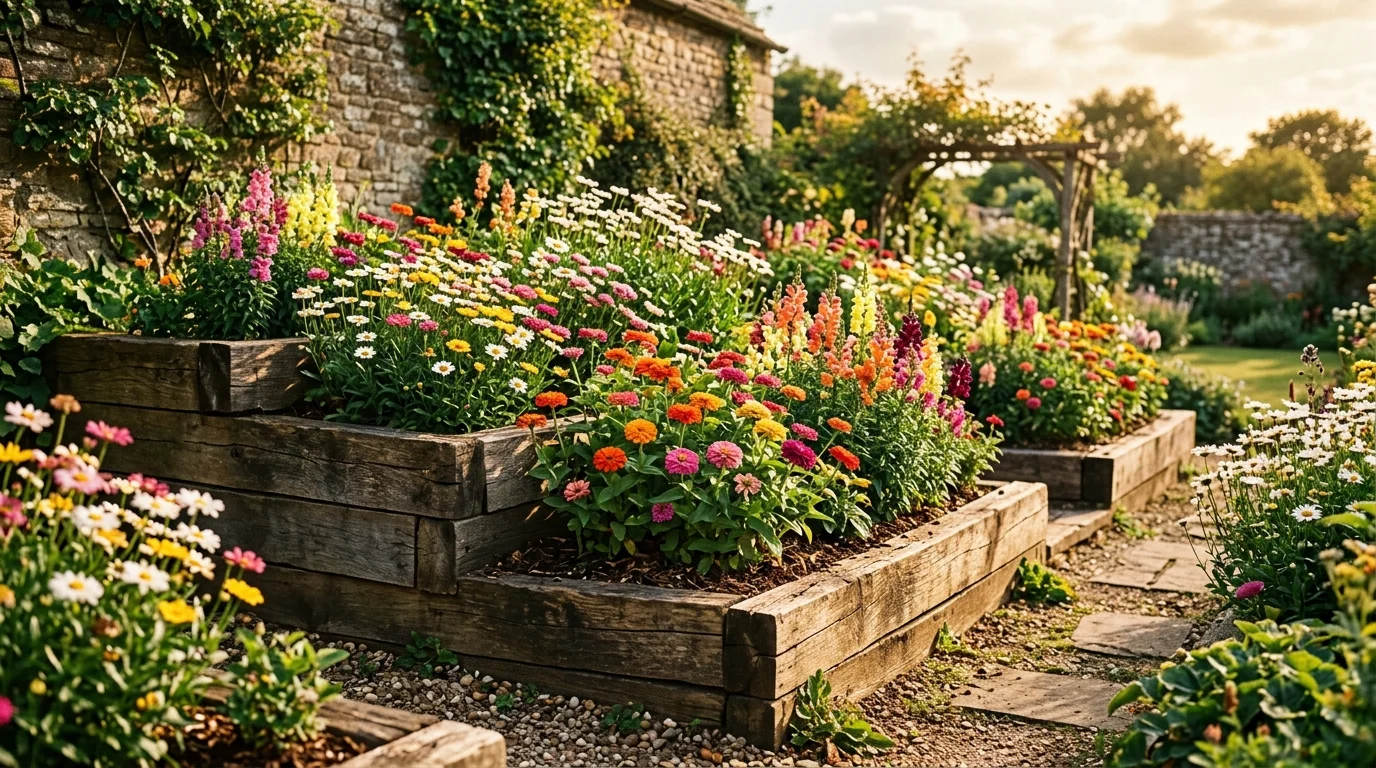
Idea 3
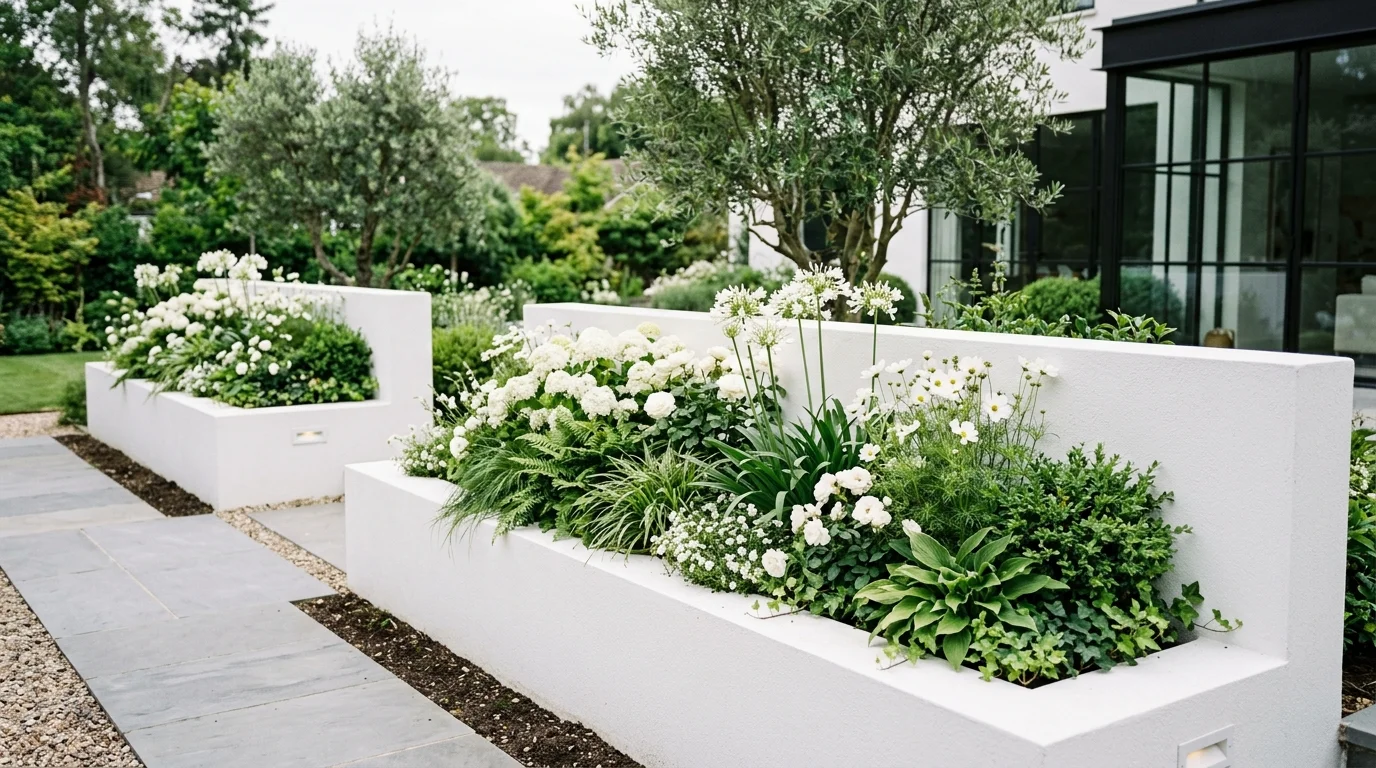
Modern rendered wall with clean planting rhythm
A simpler wall finish can make flowers look even more intentional by giving them a quiet backdrop. This style works especially well in contemporary yards where restraint is part of the visual language.
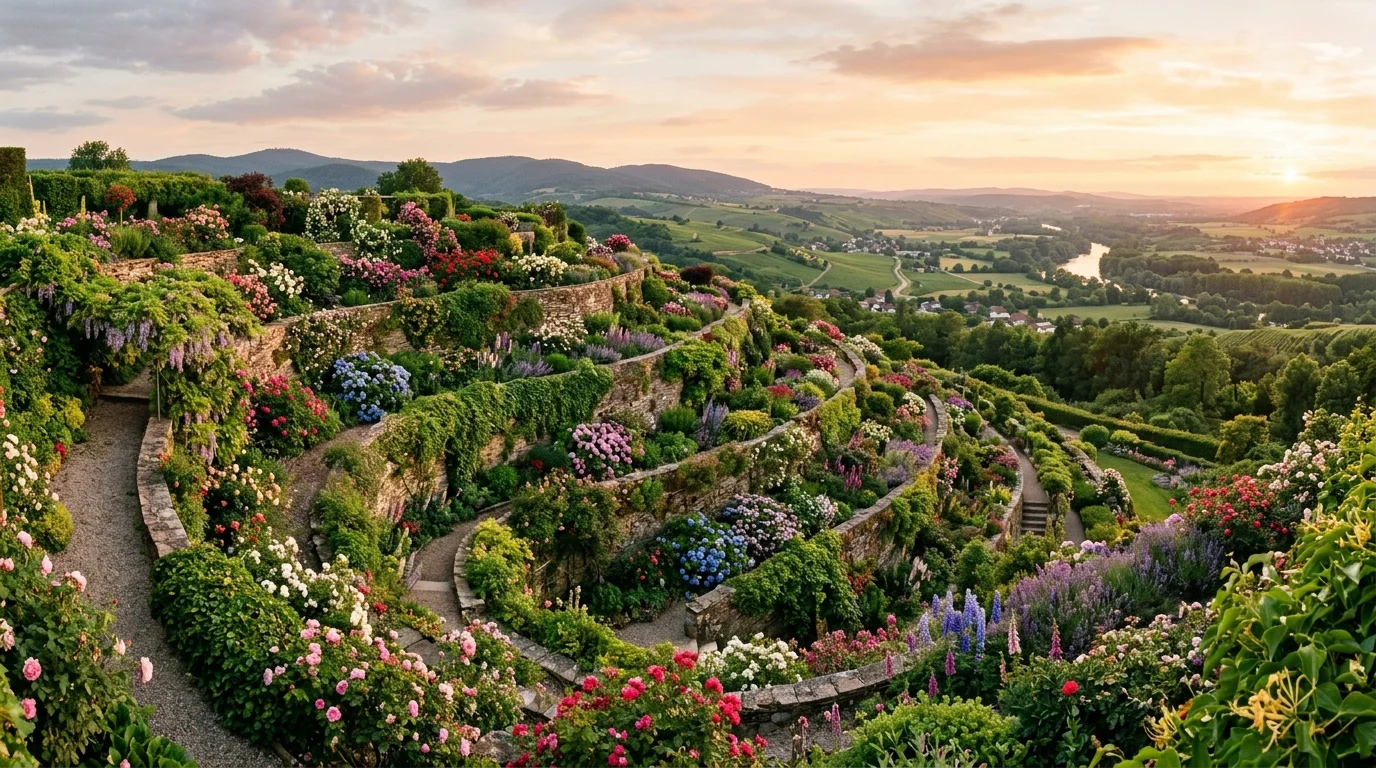
Idea 4
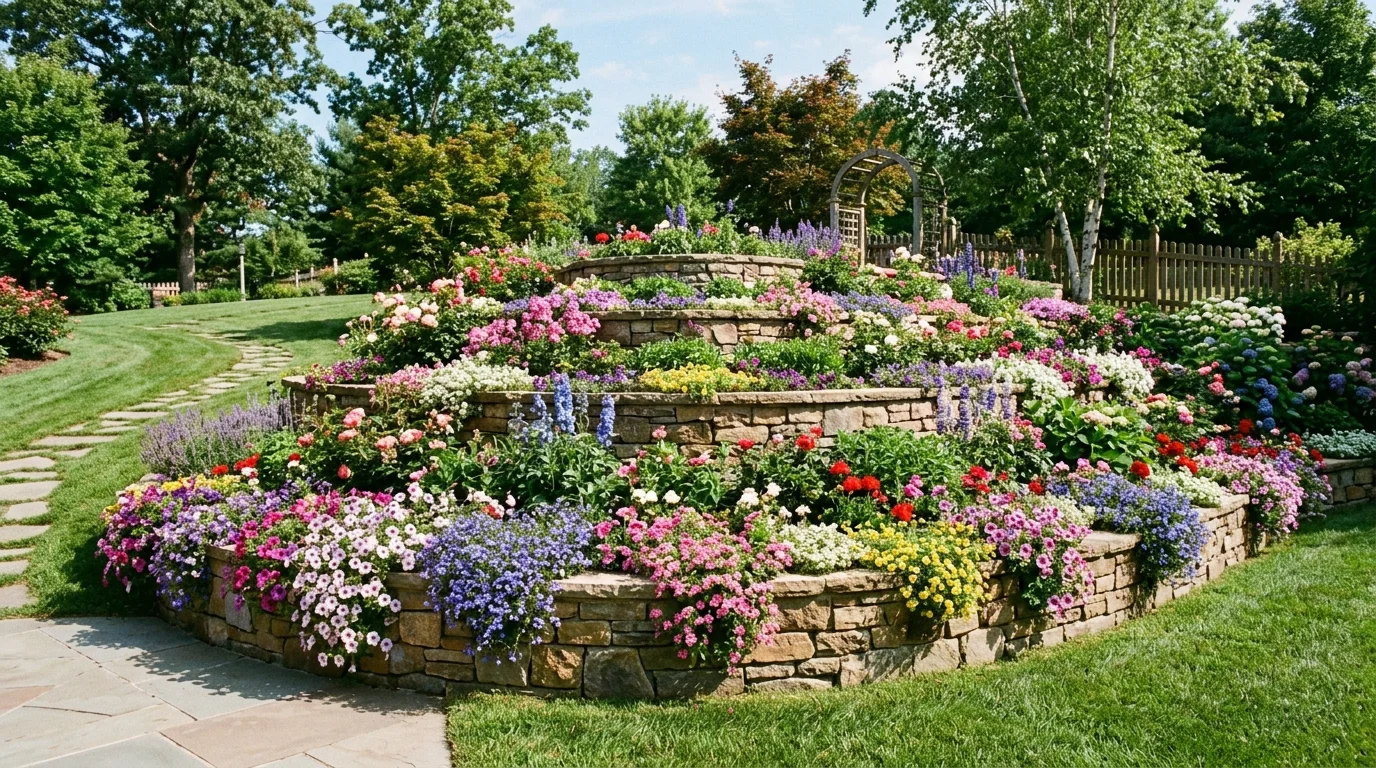
Tiered retaining wall with richer vertical planting
When the yard slopes or changes level, tiered walls can turn a challenge into a feature. They allow planting to stack beautifully and give the garden more presence from multiple viewpoints.
Idea 5
Wood sleeper wall with relaxed floral abundance
Timber sleepers create a softer, more informal structure than masonry while still defining the planting clearly. This style works well in rustic, farmhouse, or more natural-feeling backyards.
Idea 6
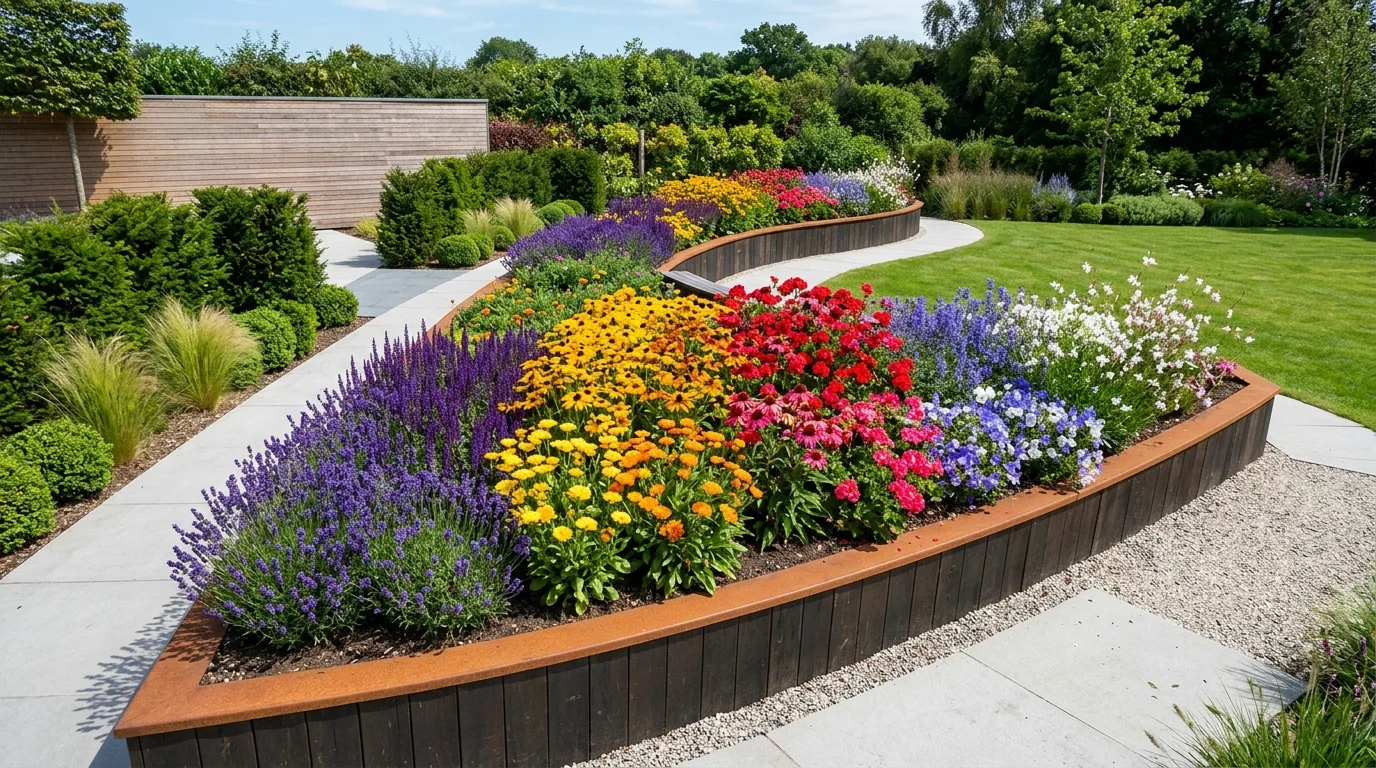
Curved bed wall that softens the whole landscape
A curved wall can make the garden feel more organic and guide the eye much more gently than a straight run. It is especially effective when paired with drifts of flowers that echo the same flowing movement.
Idea 7
Raised patio-edge wall with bright seasonal color
A wall along a patio edge helps define the outdoor room while giving flowers a stronger platform. It is a particularly useful move when you want seating areas to feel wrapped in planting rather than simply bordered by it.
Idea 8
Gabion-style wall with a more textural modern edge
Stone-filled cages bring a more contemporary, architectural texture to a flower bed wall. They work best when the planting is allowed to soften the hardness so the final effect feels balanced rather than severe.
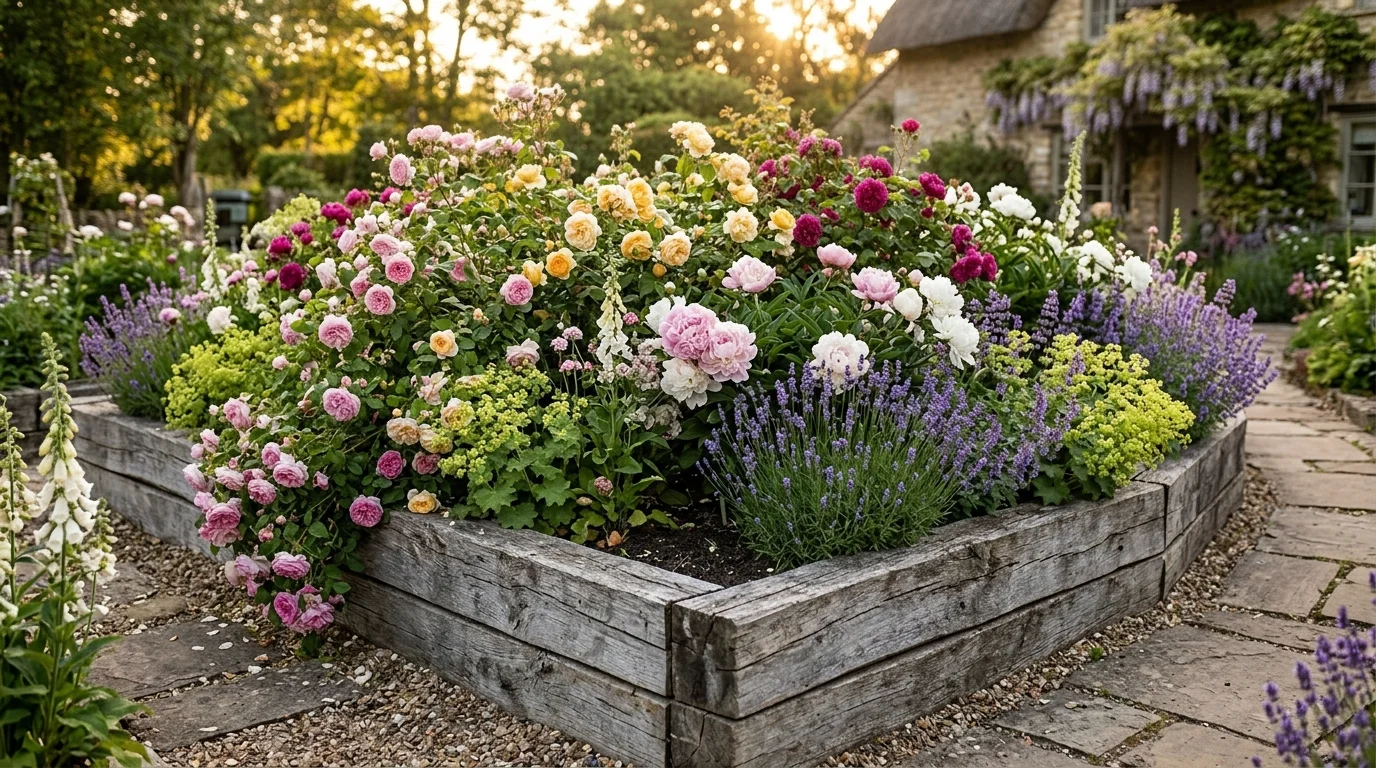
Idea 9
White wall planter bed with high flower contrast
A bright wall surface can make foliage and bloom color stand out dramatically in the best way. This is ideal for gardens that want a fresher, more graphic look while still keeping floral abundance.
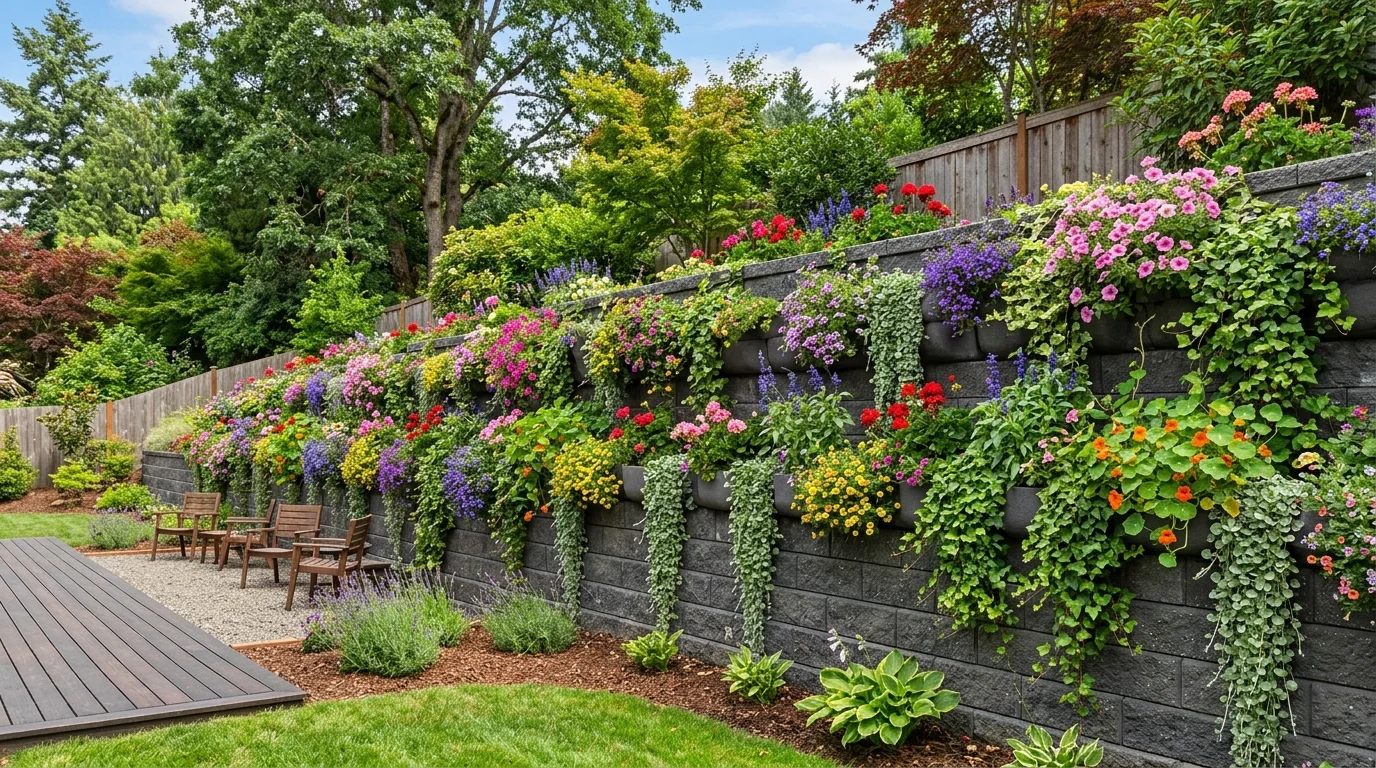
Idea 10
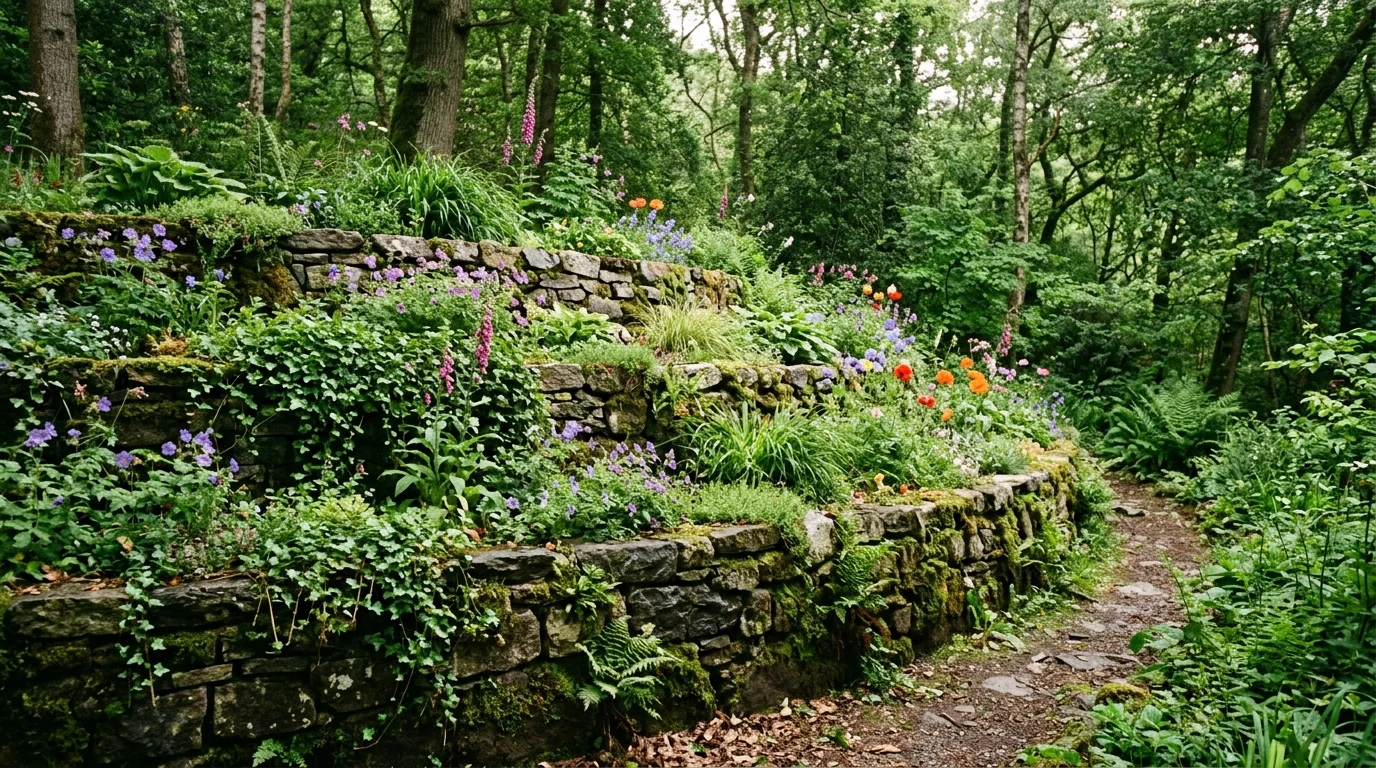
Natural rock wall with a softer hillside feeling
Irregular stone can make a structured bed feel more grounded in the landscape rather than imposed onto it. It is a beautiful option for yards that already lean rustic, natural, or gently sloped.
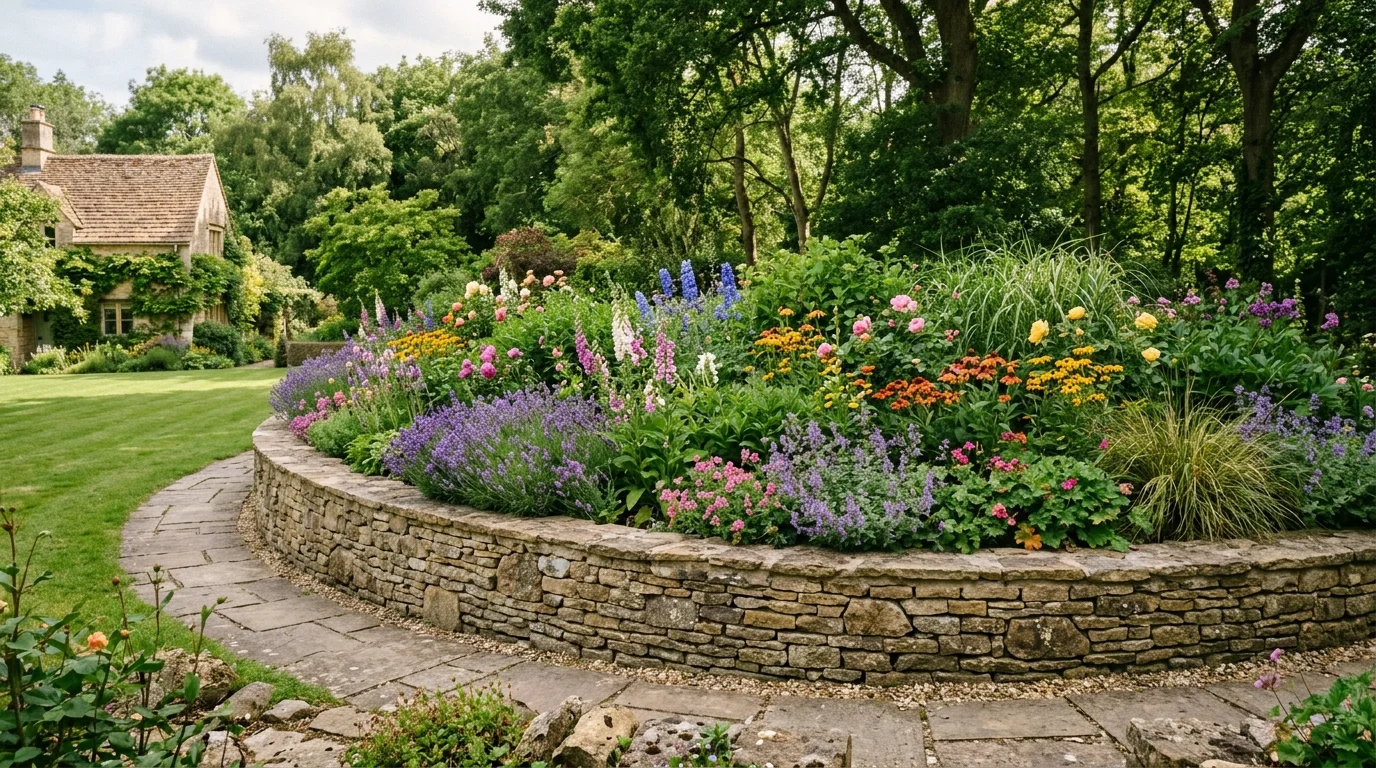
Idea 11
Short retaining wall with overflowing border planting
Letting flowers spill slightly over the edge softens the formality of the wall and makes the structure feel integrated. This is one of the easiest ways to keep a necessary retaining element feeling romantic.
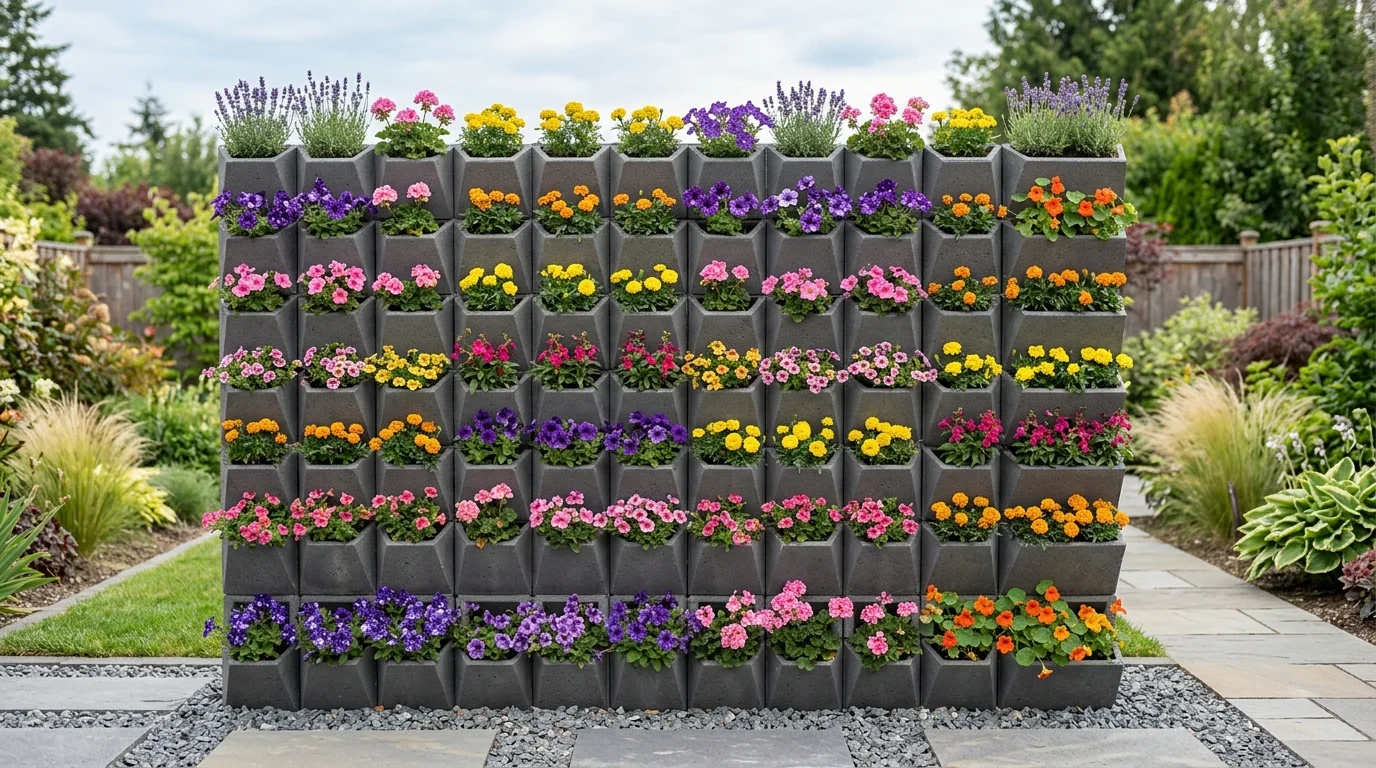
Idea 12
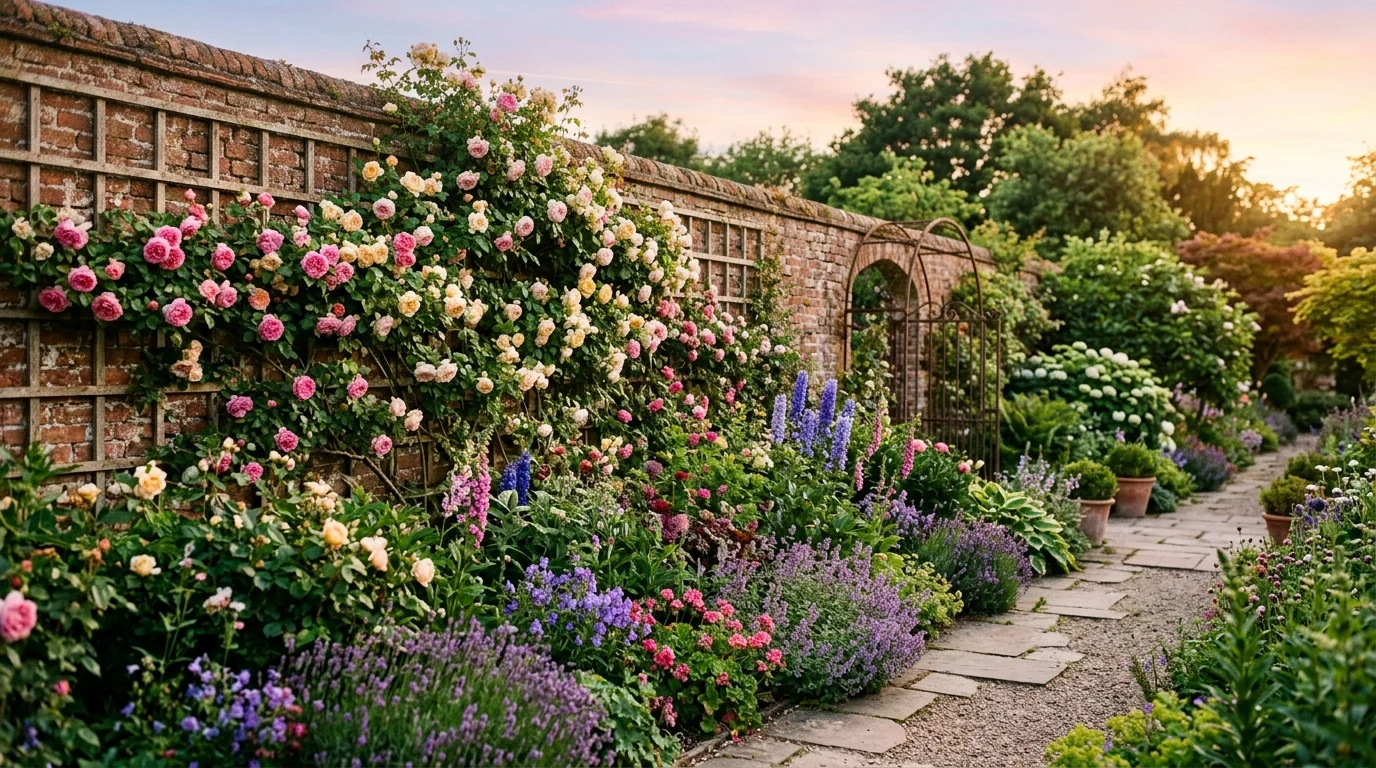
Formal garden wall with symmetrical flower placement
Symmetry and repetition can make a flower bed wall feel almost architectural in its precision. This approach suits homes and yards that already lean formal or classically ordered.
Idea 13
Corner wall bed that turns an awkward spot into a feature
Corners often become more useful once a wall gives them definition and planting height. It is a smart way to transform a forgotten part of the yard into something that feels purposeful and attractive.
Idea 14
Long boundary wall bed with layered visual rhythm
A long wall needs repetition, rhythm, and planting depth to avoid becoming monotonous. This kind of layout is excellent for creating a strong garden backbone along fences or property edges.
Read next on Saw & Sprout
Frequently asked questions
What material works best for a flower bed wall?
That depends on the overall garden style. Stone feels timeless, brick feels warm, timber feels softer and more rustic, and cleaner rendered finishes suit more modern spaces.
How do I keep a wall-supported flower bed from feeling too formal?
Let some planting soften the top edge, use varied flower forms, and avoid making every line perfectly rigid if the rest of the garden is more relaxed.
Are flower bed walls only useful in sloped yards?
Not at all. Even in flatter yards they can help define outdoor rooms, frame planting, create better viewing height, and make the overall design feel more structured.