Wagon wheels work in gardens because they already carry texture, age, and shape before you style a single plant around them. Their circular form stands out easily in beds filled with softer natural lines.
The trick is using them with purpose. A wheel can anchor an entry, support a fountain idea, divide a herb bed, or simply add height and history to a quiet corner that needs a focal point.
These 12 ideas lean into that versatility so the decor feels integrated into the landscape, not dropped in as a theme piece.
Quick planning notes
Use wagon wheels where they can either frame a path or contrast against softer planting for the strongest visual effect.
Repeat nearby materials like aged wood, gravel, terracotta, or galvanized metal so the wheel feels native to the space.
If the wheel is purely decorative, support it with surrounding plants or a built vignette so it does not feel isolated.
For reused wheels in furniture or fountains, make sure the styling around them stays simple enough to let the form read clearly.
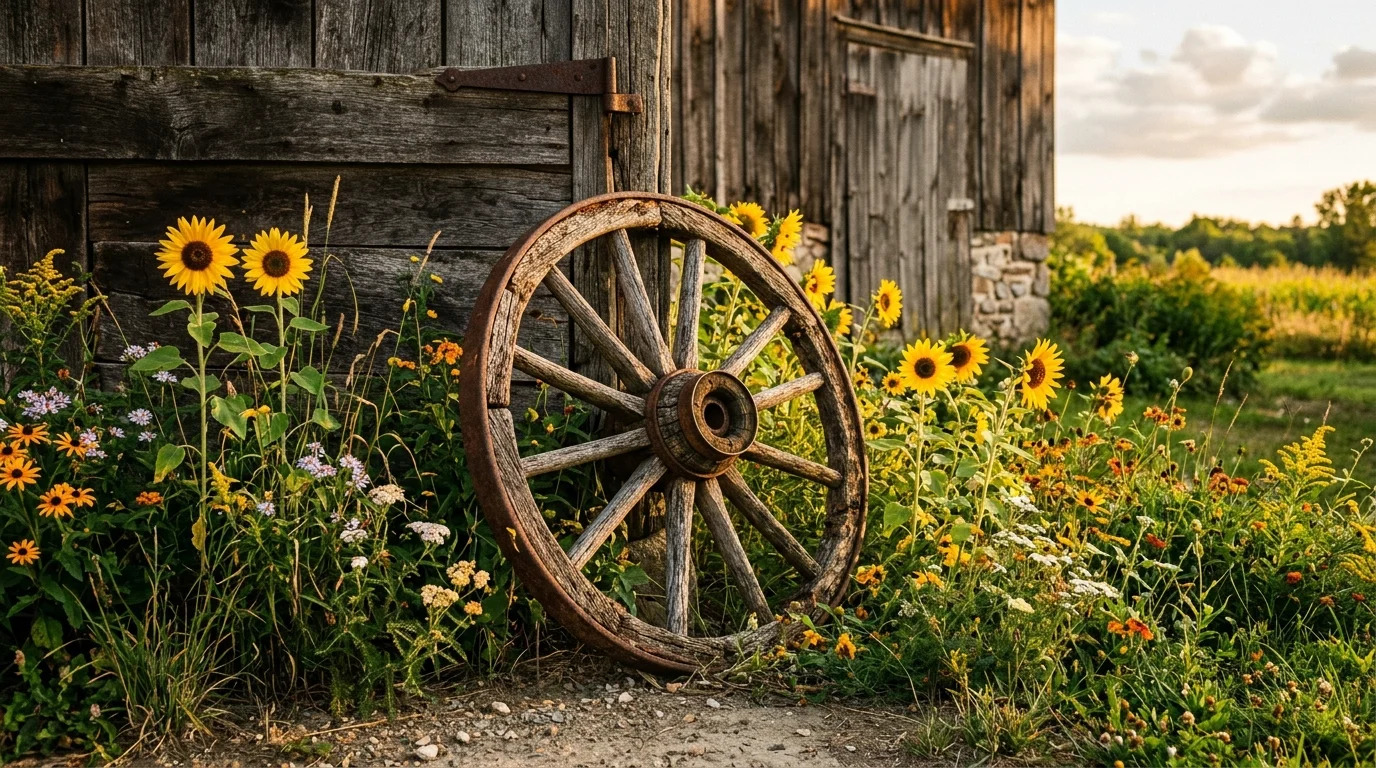
Idea 1
Barn-wall wheel with sunflower framing
Leaning a weathered wheel against a barn or shed wall gives it instant presence while surrounding blooms keep the display from feeling too heavy. It is a simple way to introduce farmhouse character without building a full vignette.
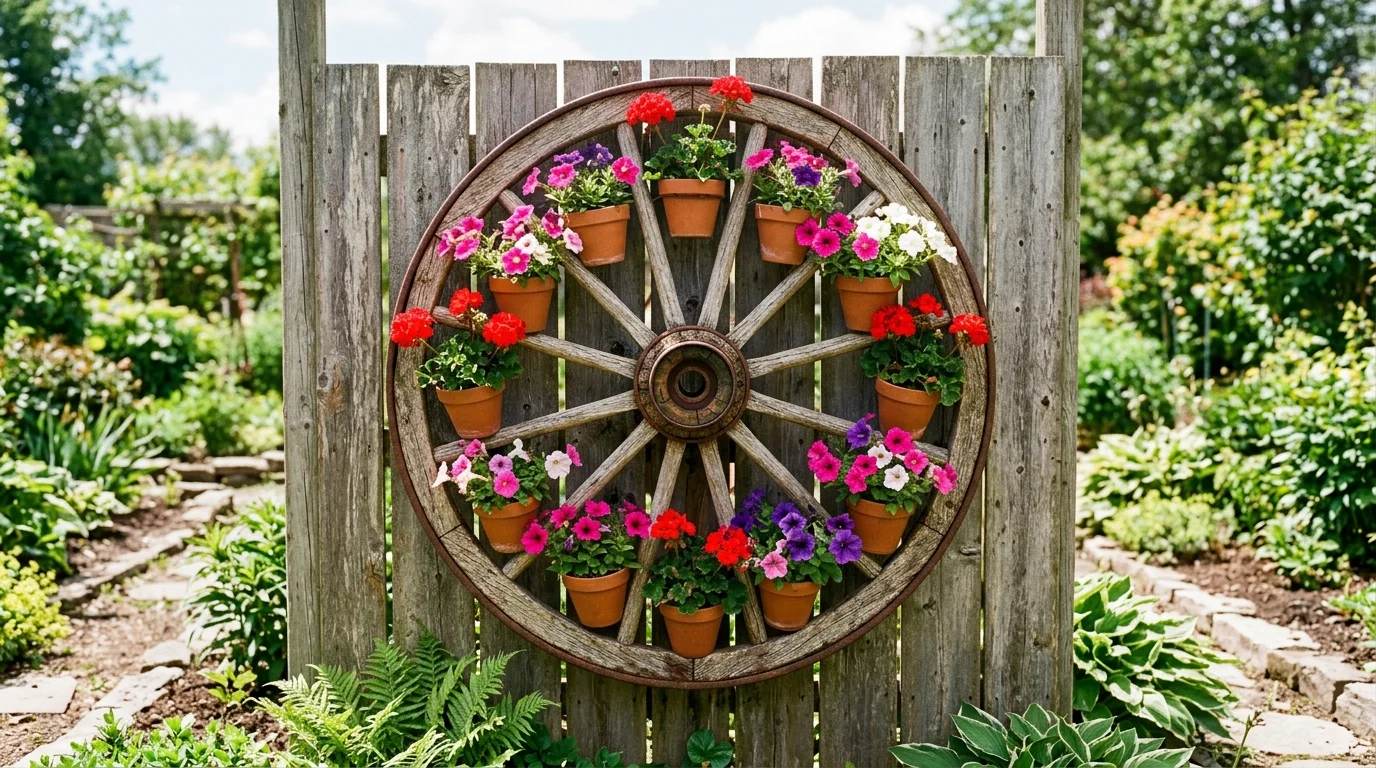
Idea 2
Wheel turned into a vertical flower planter
Using the spokes as a framework for small pots creates height and color in one move. This approach works especially well along fences where a standard planter would get visually lost.
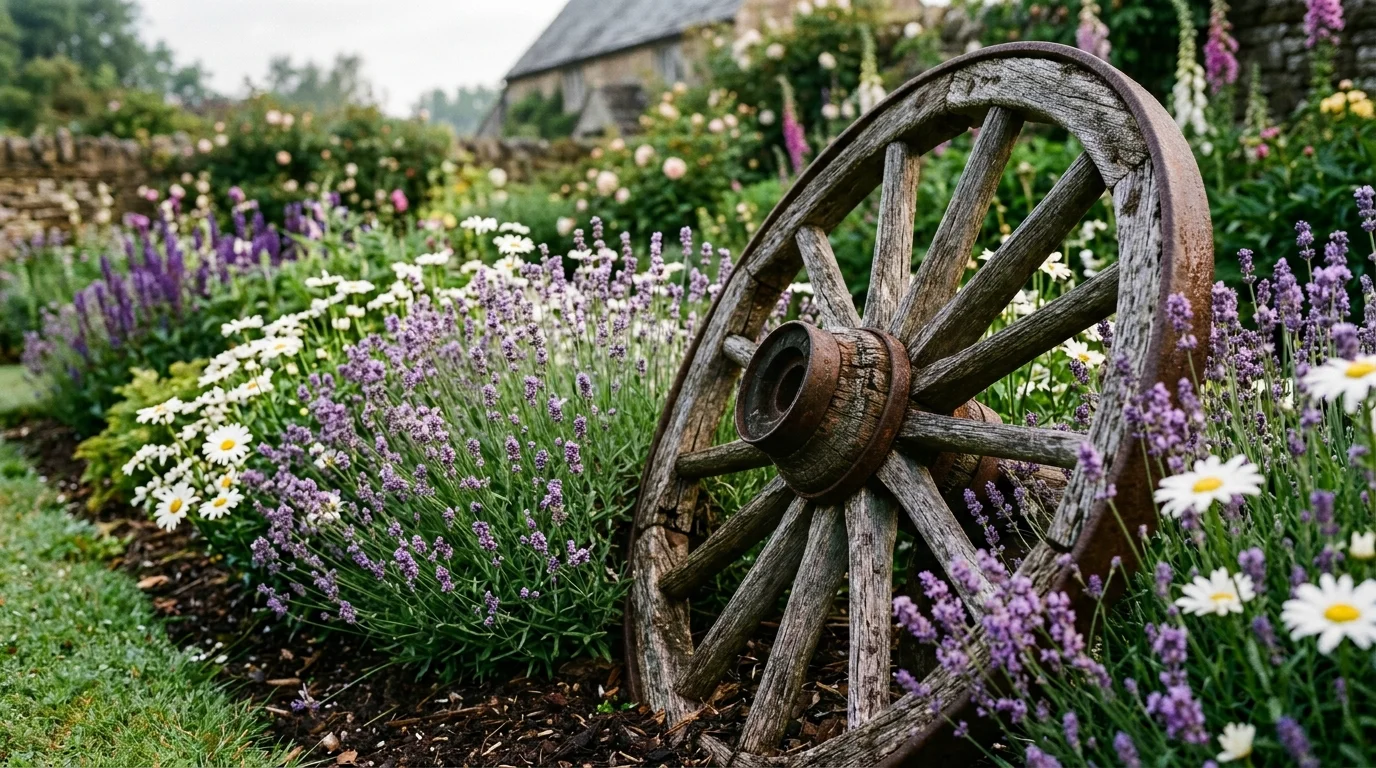
Idea 3
Partially buried wheel as a planted accent
A half-sunken wheel feels more integrated into the bed than a fully upright decorative piece. It is useful when you want the decor to read as aged and storied rather than freshly staged.
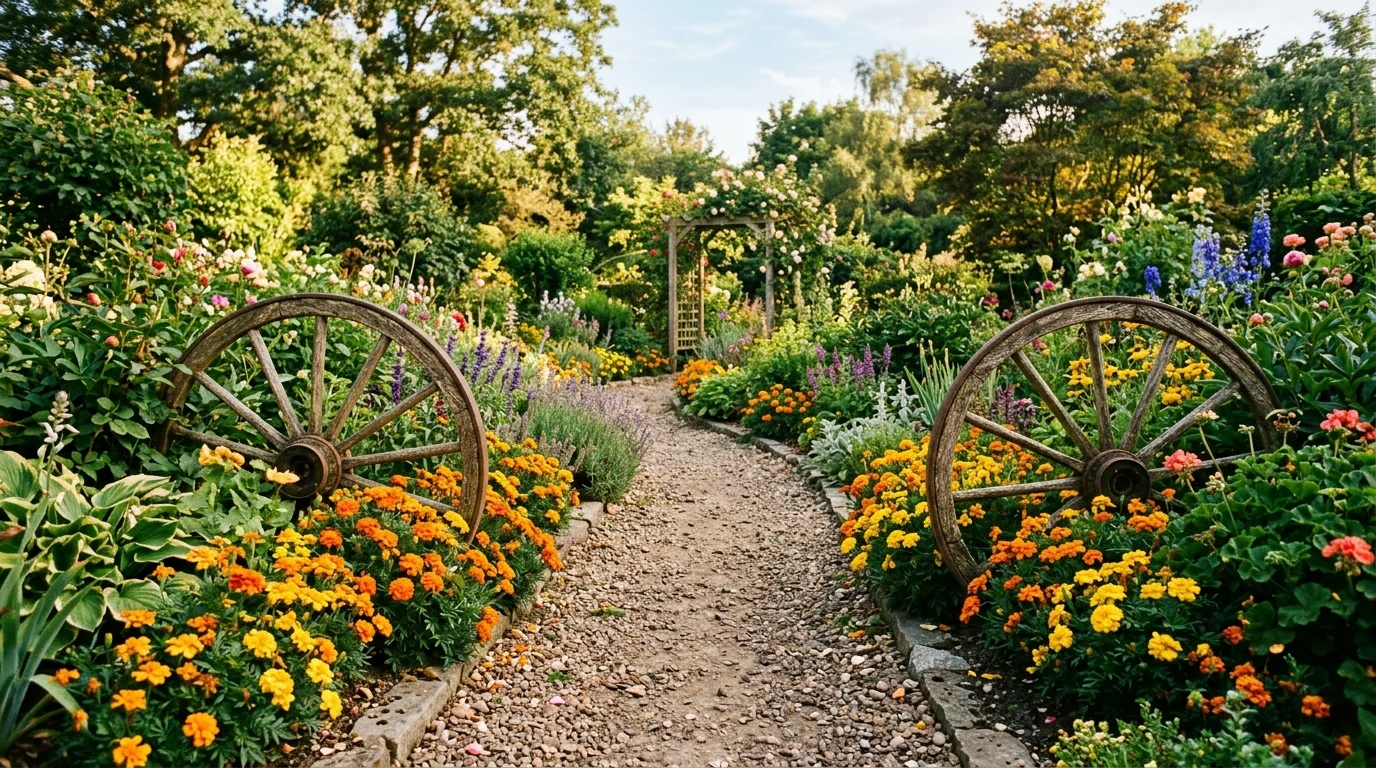
Idea 4
Path entry marked by paired wagon wheels
Matching wheels at the start of a path create a clear threshold and a lot of rustic personality. The effect is strongest when planting and gravel textures continue the same farmhouse mood around them.
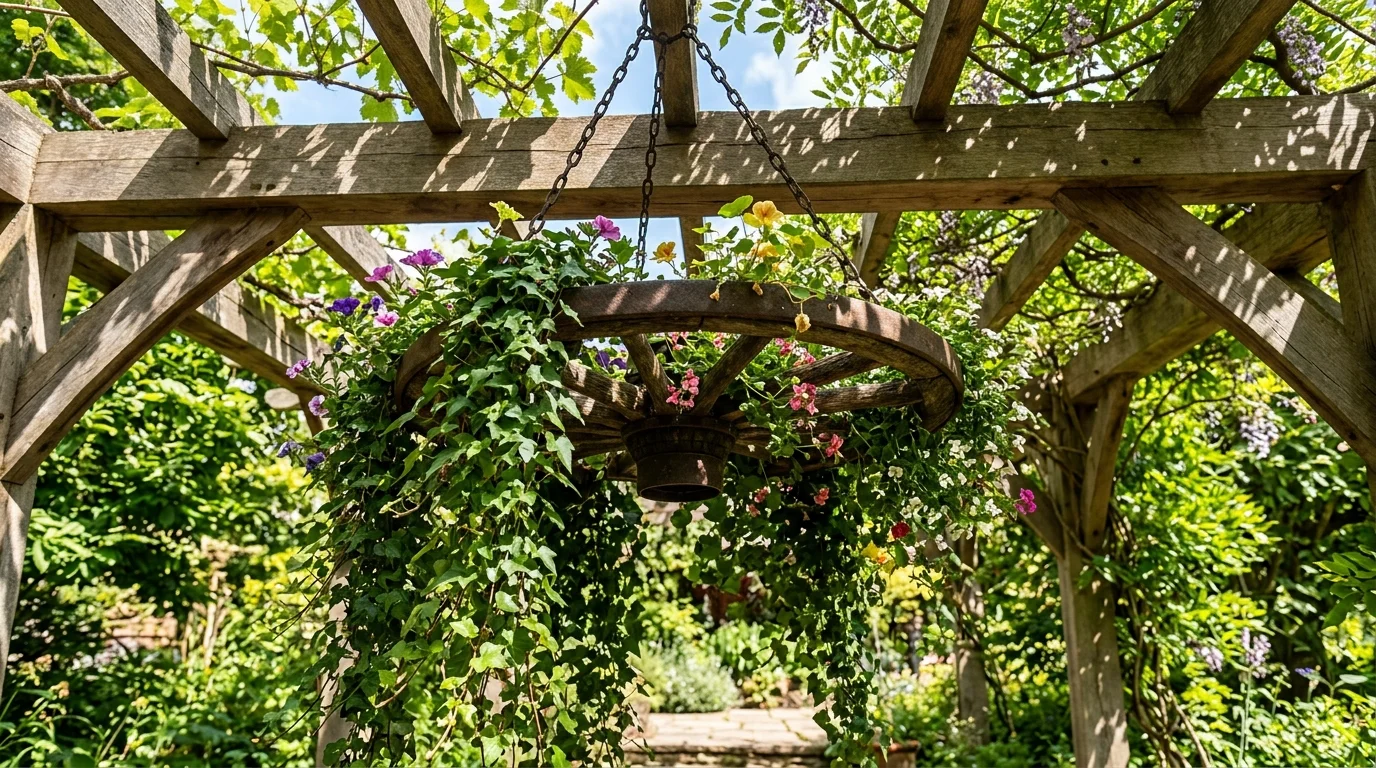
Idea 5
Pergola-hung wheel with trailing greenery
Suspending a wheel overhead turns a familiar object into a sculptural feature instead of a ground-level accessory. This is a great move for patios or pergolas that need a stronger center point.
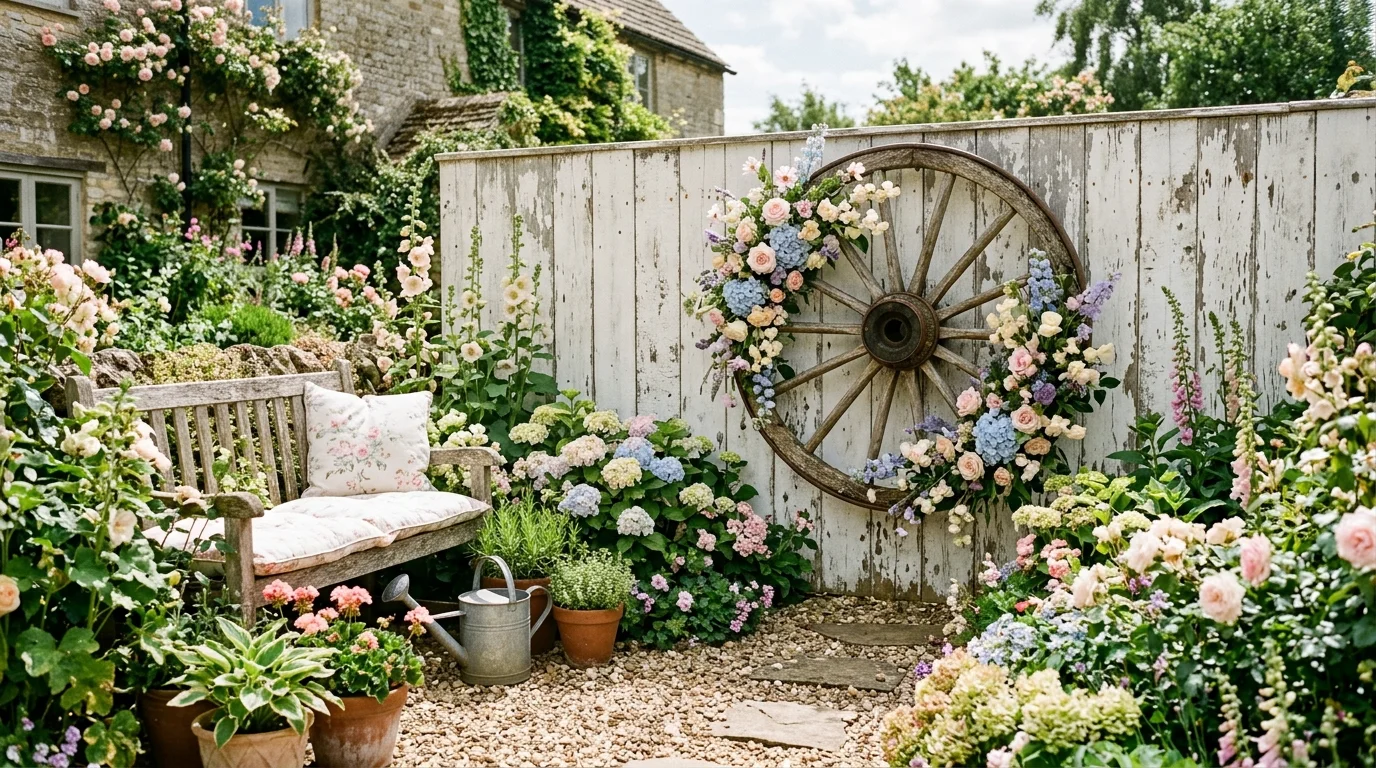
Idea 6
Fence-mounted wheel for a soft farmhouse corner
Mounted decor helps a quiet corner feel finished without taking up planting space at the ground level. Soft florals and whitewashed wood keep the look light instead of overly rugged.
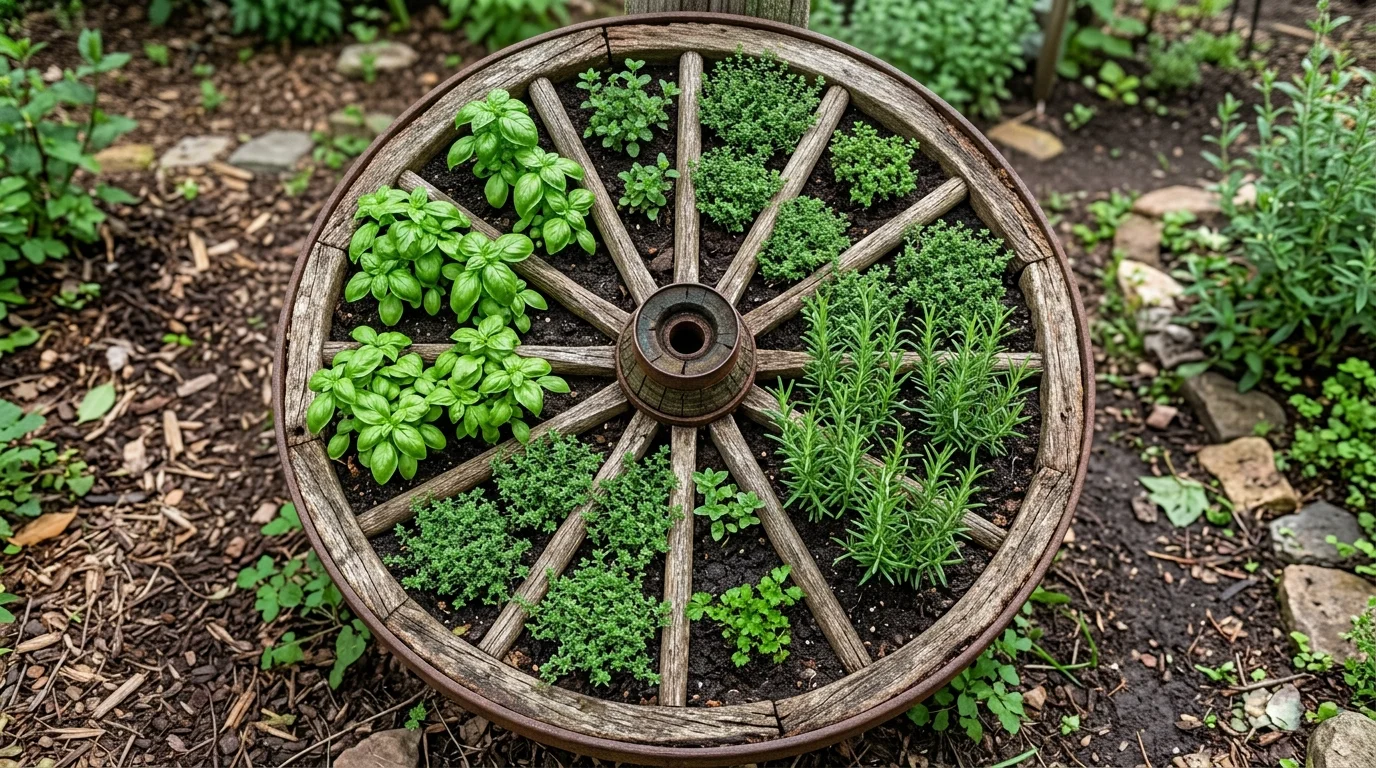
Idea 7
Wheel spokes used to divide a herb circle
A laid-flat wheel can create natural wedges for basil, thyme, rosemary, and other herbs. It is practical, decorative, and especially appealing in edible gardens that still want vintage texture.
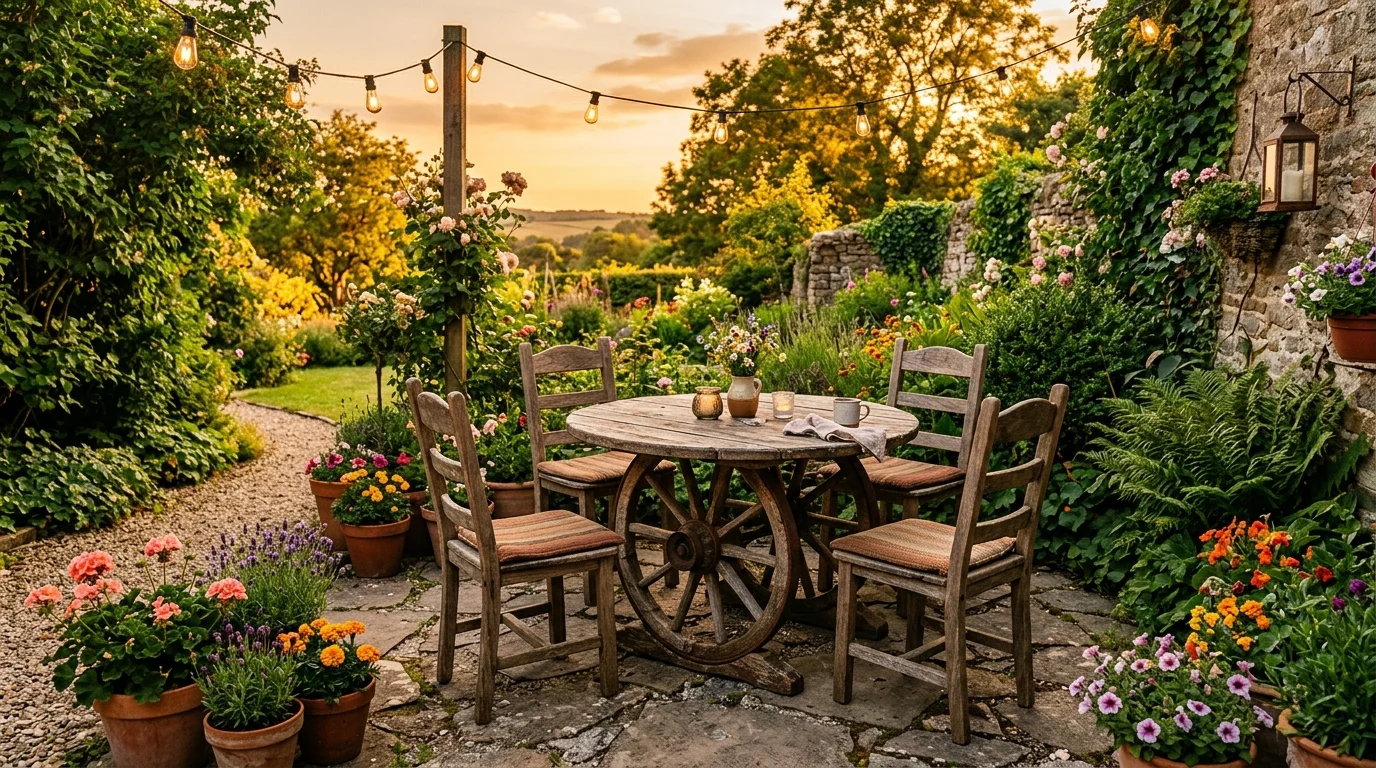
Idea 8
Table base built around a salvaged wheel
Working an old wheel into outdoor furniture gives the decor a purpose beyond display. This kind of reuse feels especially strong in backyard entertaining areas with other rustic wood elements nearby.
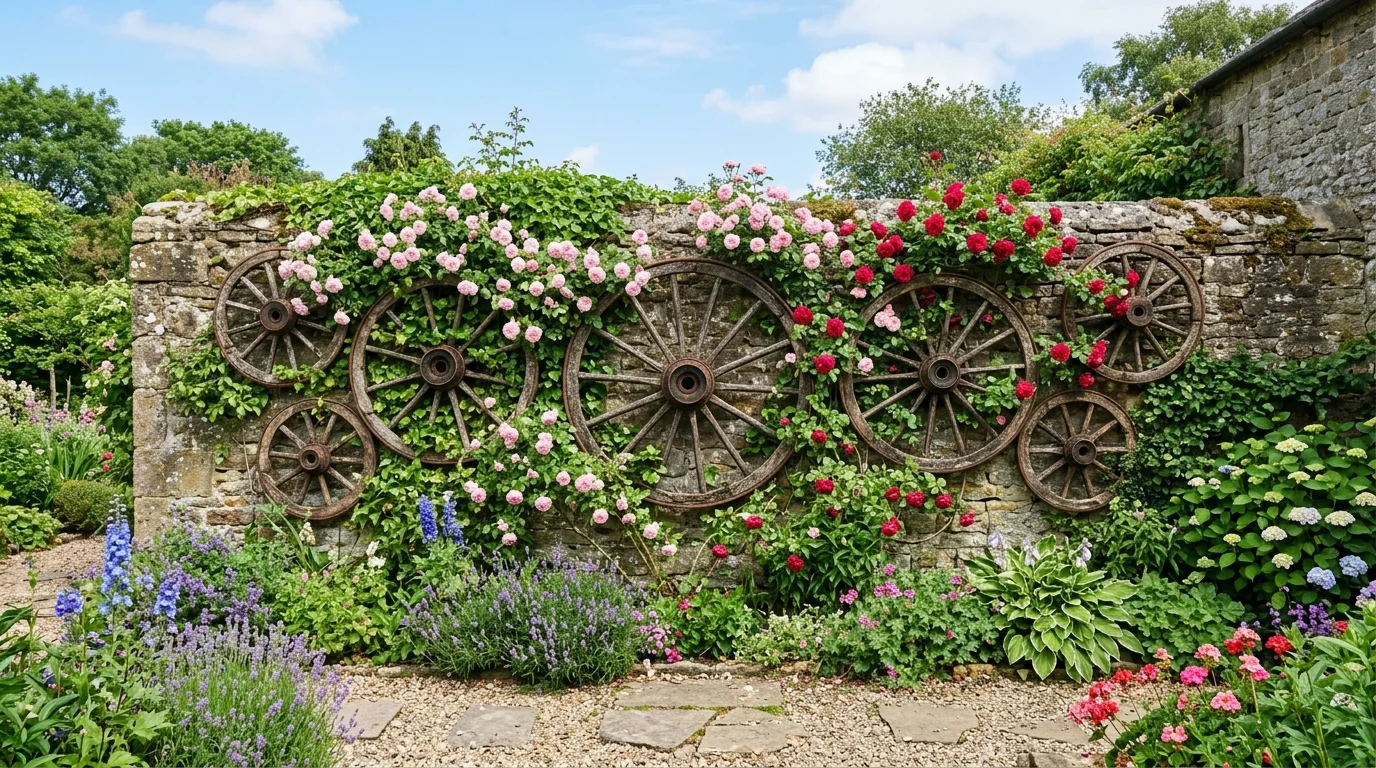
Idea 9
Garden wall gallery with layered wheels and vines
Several wheels grouped together can create a full backdrop rather than a single decorative note. Climbing roses make the collection feel lush and integrated instead of staged like a prop display.
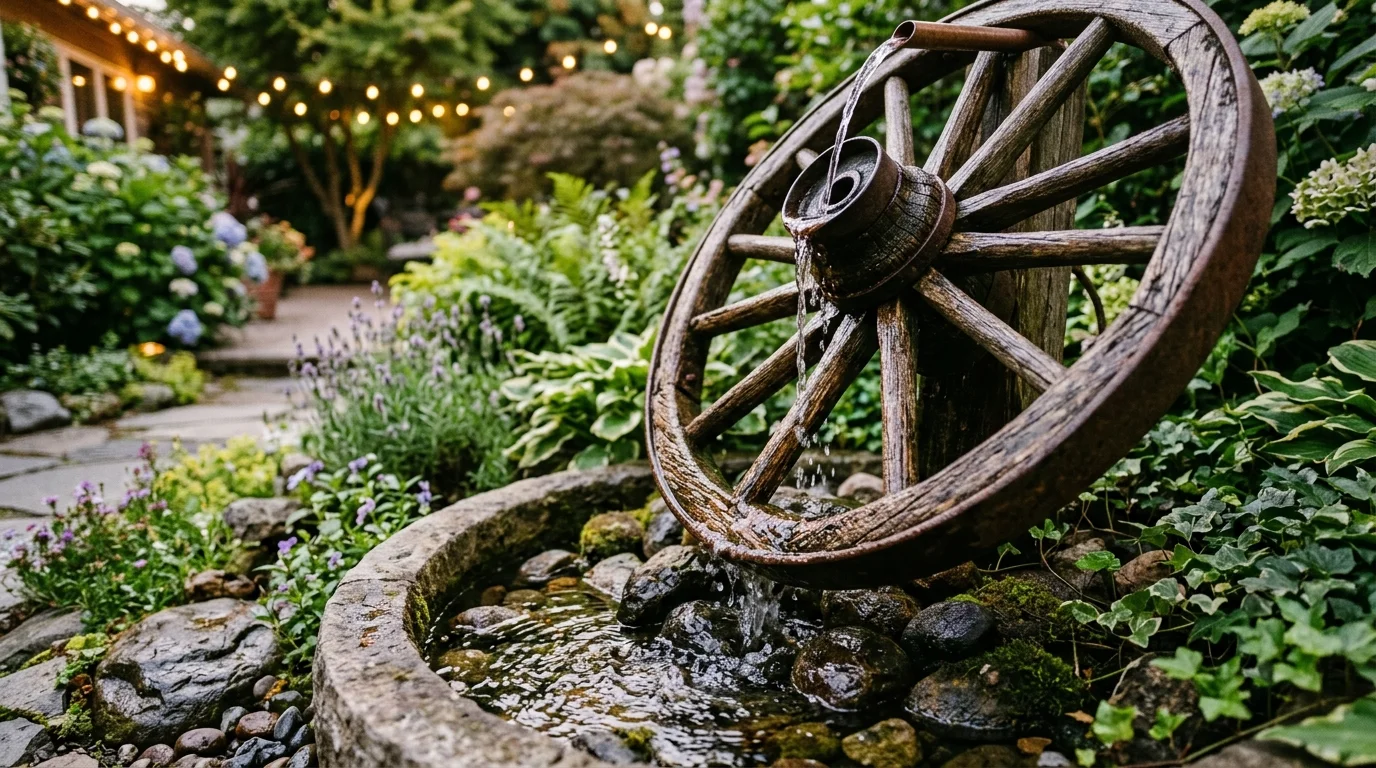
Idea 10
Wheel fountain with a handcrafted focal point
Turning the wheel into a water feature adds movement and sound while keeping the farmhouse theme intact. It is a memorable centerpiece for cottage gardens, entry courts, or patio edges.
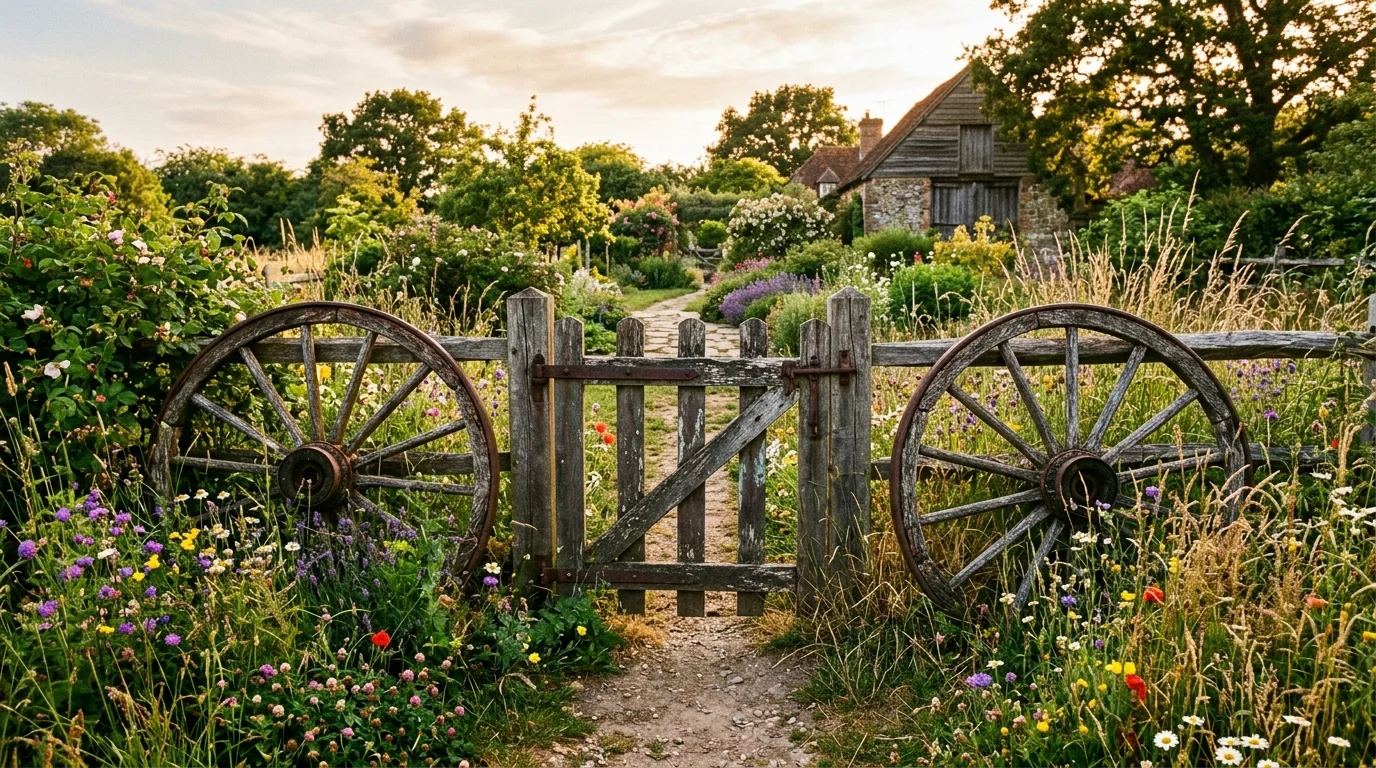
Idea 11
Gate flanked with wheels and tall meadow planting
Placing wheels on both sides of a garden gate gives the entrance more identity and balance. Loose grasses and flowers keep the whole scene from feeling too rigid or decorative for decoration’s sake.
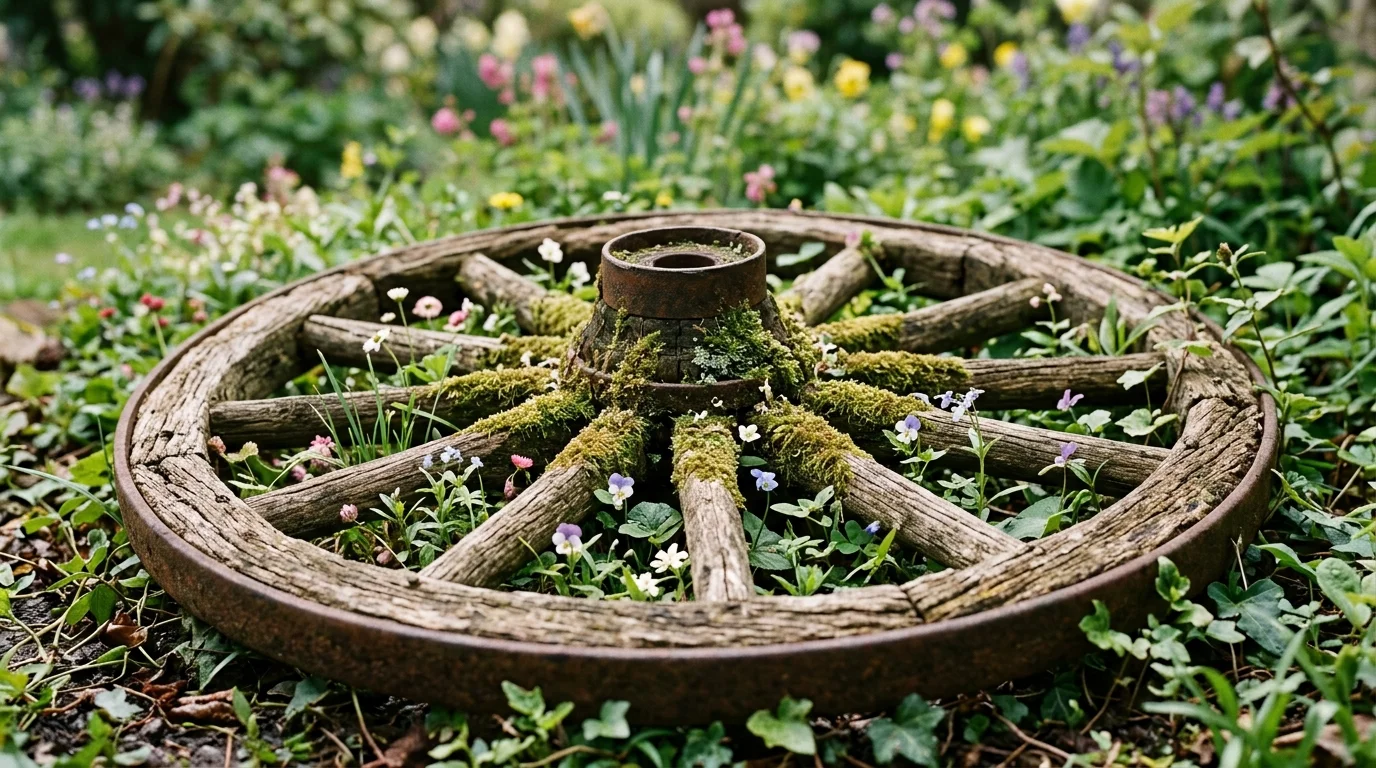
Idea 12
Close-up wheel detail with moss and low blossoms
A horizontal wheel can create a beautiful micro-landscape when moss and small flowers settle around the spokes. This idea is quieter than a full statement display and works well in intimate beds.
Read next on Saw & Sprout
Frequently asked questions
Where do wagon wheels look best in a garden?
They are strongest at transitions like paths, gates, pergolas, or seating areas, where their shape can act as a deliberate focal point rather than getting lost in open lawn.
How do I keep rustic decor from looking overly themed?
Balance it with real planting, weathered but simple materials, and enough negative space. The goal is texture and warmth, not a prop-heavy scene.
Can wagon wheels work in edible gardens too?
Yes. They are especially useful in herb circles, fence displays, and mixed cottage-style edible beds where decorative structure helps the garden feel designed.