A pond landscape succeeds when the water and the garden feel inseparable. The best versions do not stop at building a basin or adding a fountain; they shape planting, paths, seating, and views so the pond becomes part of a larger atmosphere.
That atmosphere can take many forms. Some pond gardens feel formal and reflective, some feel deeply natural, and others become tropical, woodland-like, or softly romantic depending on how the edges and surroundings are handled.
These 15 ideas explore different ways to turn a water feature into a fuller landscape experience, with designs that support calm, beauty, movement, and stronger everyday enjoyment of the yard.
If you want the garden to feel more immersive and restorative, a well-designed pond setting can make an enormous difference.
Quick planning notes
Decide whether the pond should feel formal, natural, tropical, or meditative before choosing edge materials and surrounding planting.
Create at least one clear primary viewpoint so the water feature has a memorable visual role from a path, patio, or window.
Use planting to support the pond mood, because clipped hedges, meadow grasses, tropical leaves, and woodland ferns all tell different stories.
Think about sound as well as appearance, since still reflection and moving water create very different outdoor experiences.
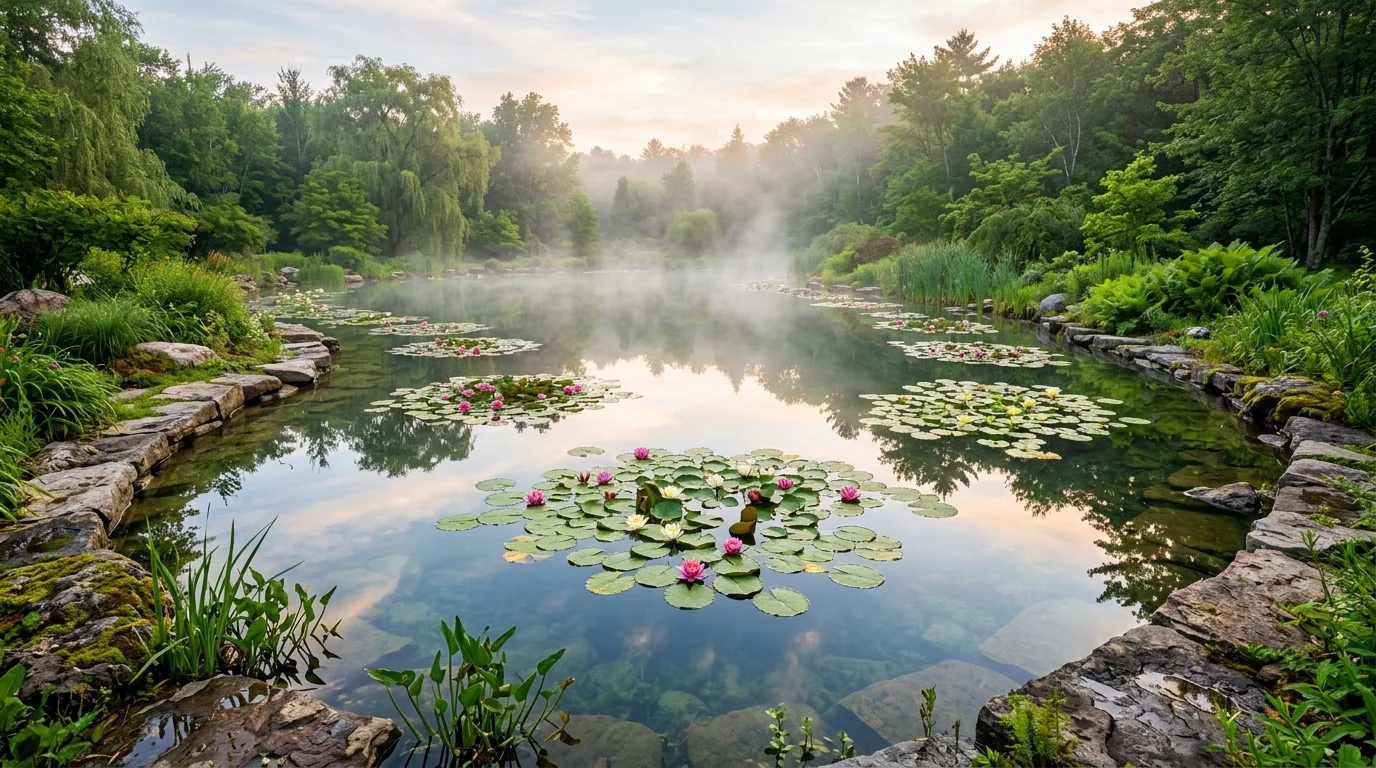
Idea 1
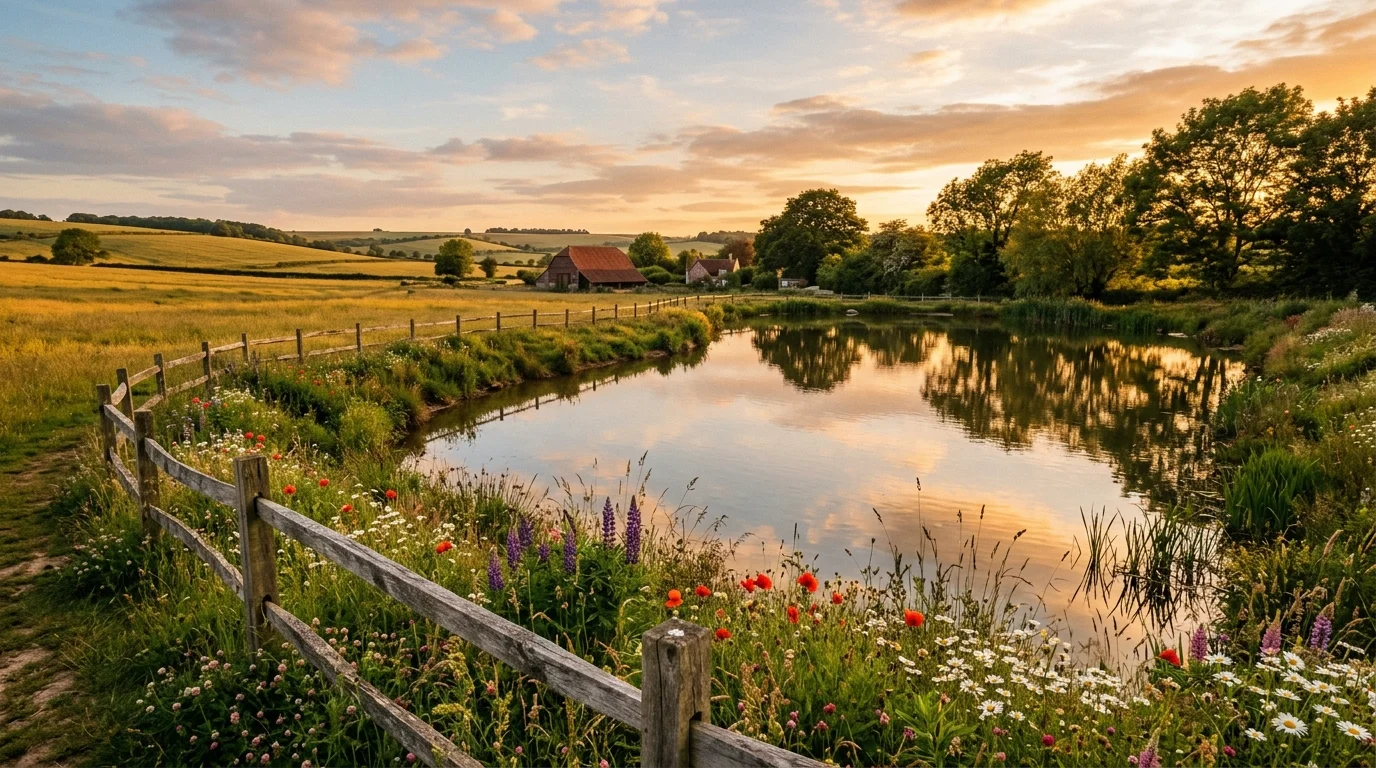
Natural pond framed by meadow planting and weathered stone
A pond feels most restorative when the surrounding landscape lets it blend into the garden rather than isolating it as a feature piece. Meadow planting and weathered stone create that easy, established mood while still giving the water a strong presence.
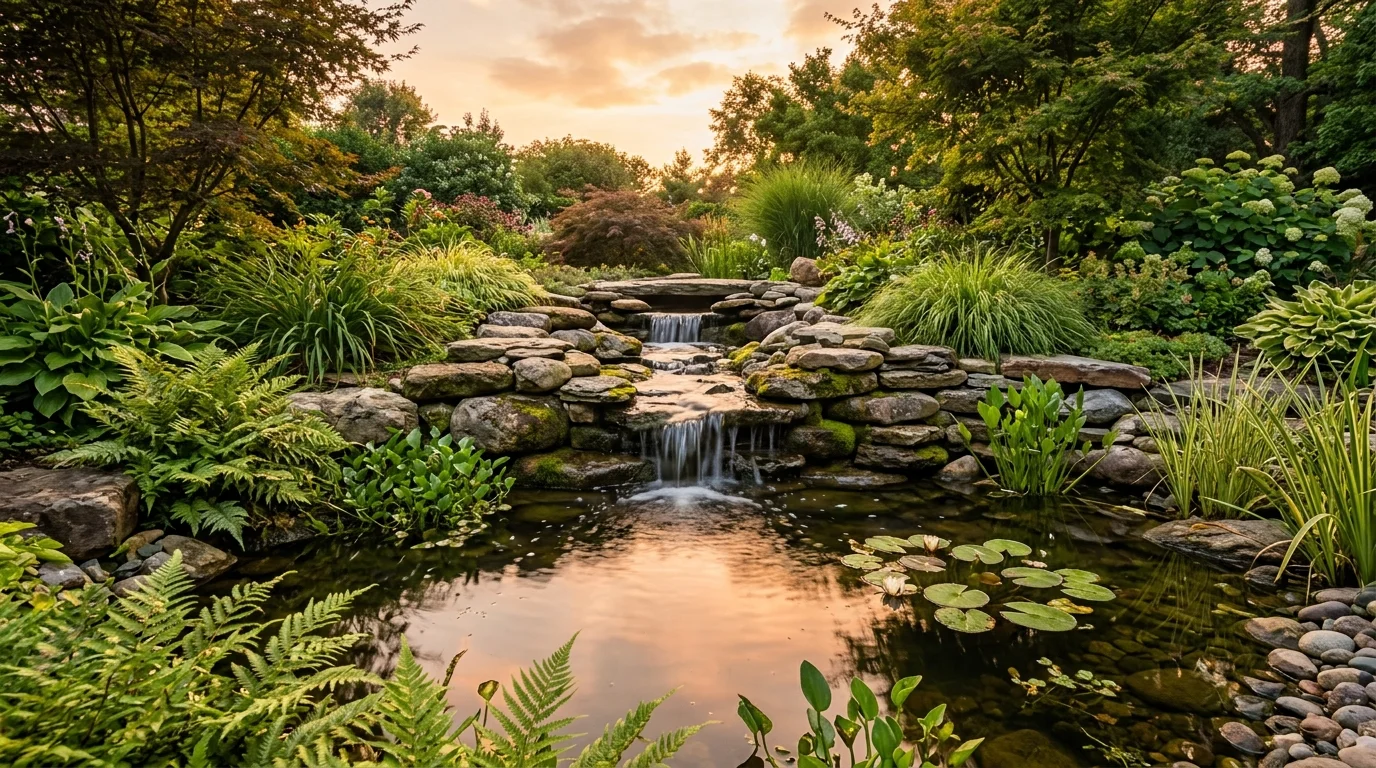
Idea 2
Formal reflective pond with clipped hedges and still symmetry
Still water becomes especially striking when it mirrors clean geometry and disciplined greenery around it. This layout suits gardens that want serenity through order, with the pond acting as a calm architectural centerpiece instead of a wild edge.
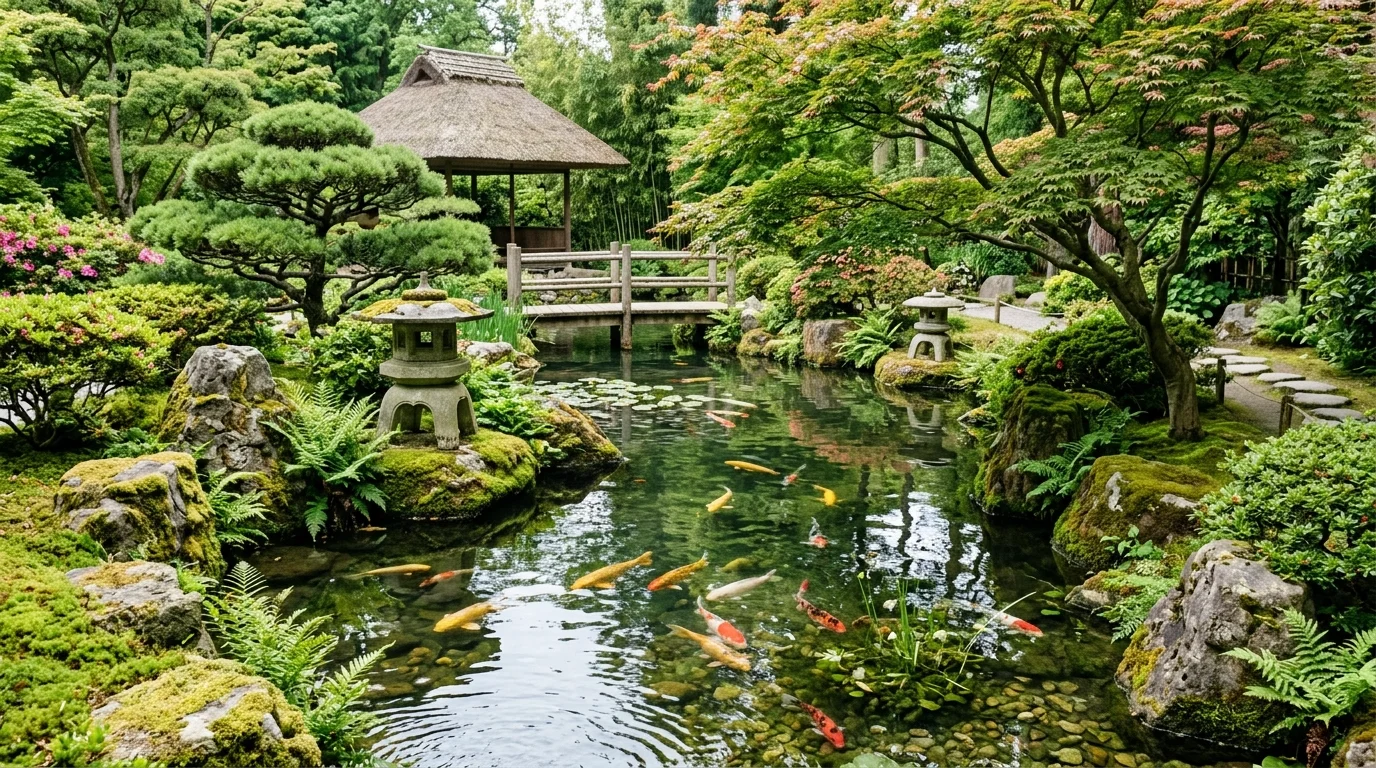
Idea 3
Koi landscape with broad stone coping and layered shade plants
Broad stone edges make the pond feel intentional and accessible, while layered shade planting softens the structure beautifully. It is a strong choice when you want the water feature to feel like a destination that rewards close viewing.
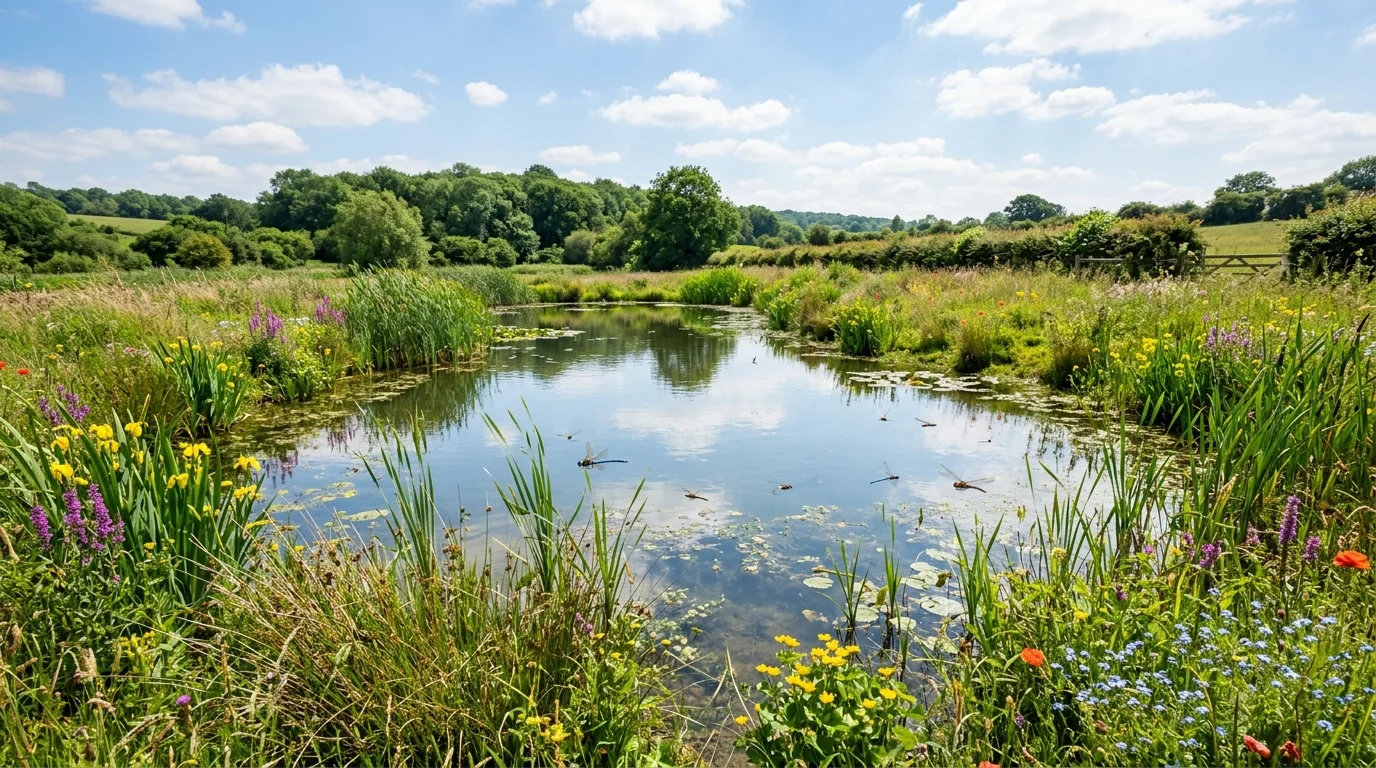
Idea 4
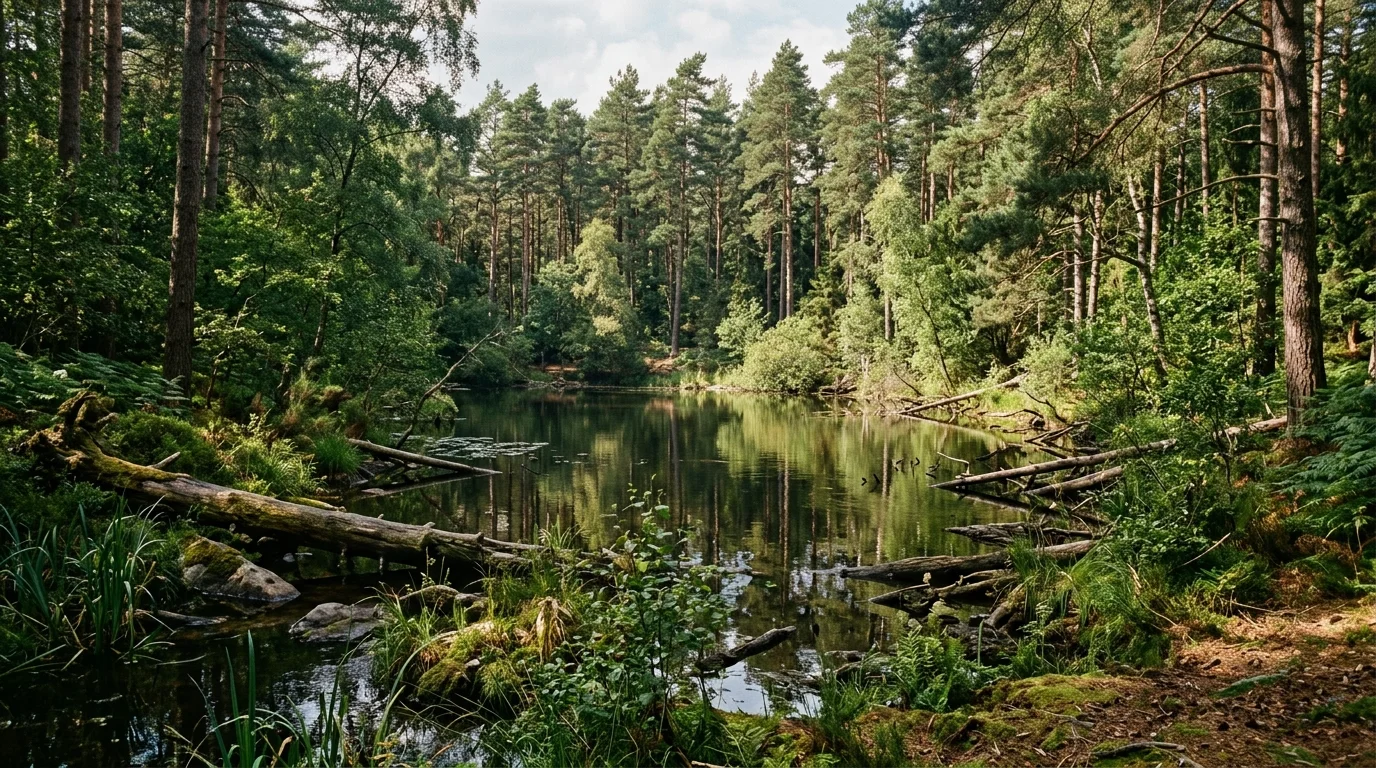
Woodland pond path with ferns, moss, and quiet enclosure
A pond tucked into woodland-style planting often feels more immersive because the approach itself becomes part of the experience. Ferns, moss, and filtered light help the landscape feel cooler, softer, and deeply secluded.
Idea 5
Terraced pond garden with low walls and layered viewpoints
Terracing lets the pond participate in the whole landscape rather than sitting awkwardly at one grade. It also creates better viewing opportunities, which makes the water feature feel more integrated with paths, patios, and planting around it.
Idea 6
Bridge crossing over water with lilies and soft edge planting
A bridge gives the pond an immediate sense of story and movement, even when the water itself stays calm. It is especially effective for turning a medium-size pond into a memorable focal point that guests naturally gravitate toward.
Idea 7
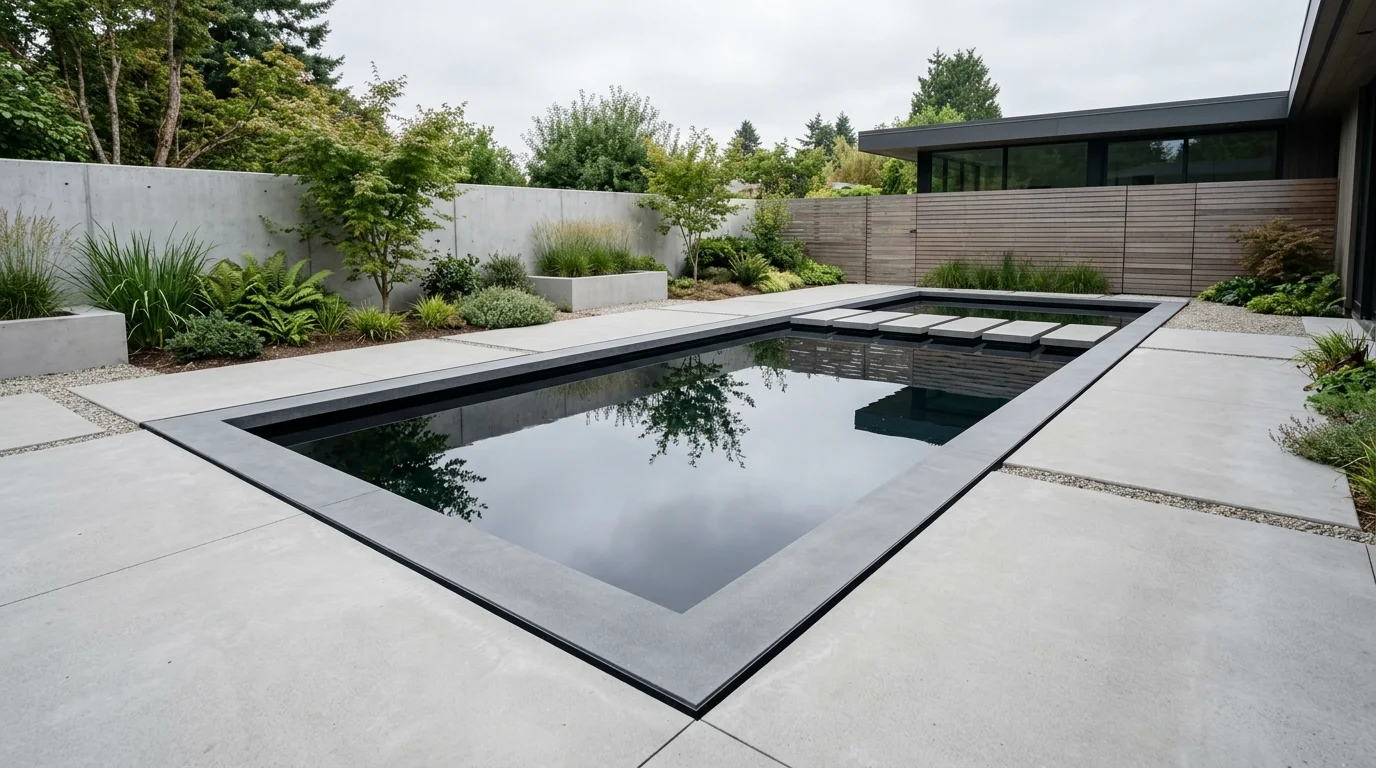
Modern dark-water pond with crisp paving and minimal planting
Dark reflective water paired with crisp paving creates a quieter and more architectural kind of beauty than a naturalistic pond. This approach works best when the surrounding landscape already values restraint, contrast, and clean material lines.
Idea 8
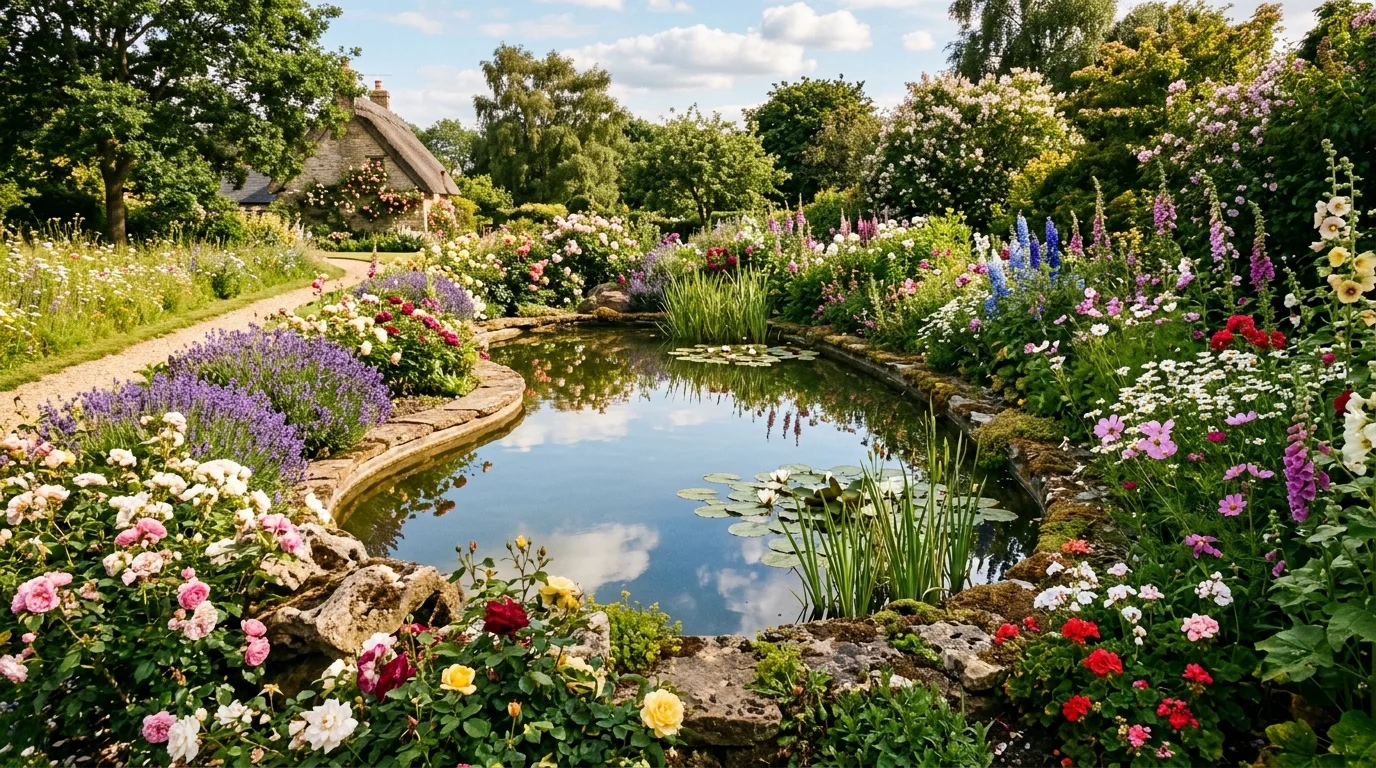
Cottage pond wrapped in flowers and relaxed stepping stones
Flowers around a pond can make the water feel even more luminous because the reflections double the color without adding extra clutter. A few stepping stones keep the space approachable and help the feature feel woven into everyday garden movement.
Idea 9
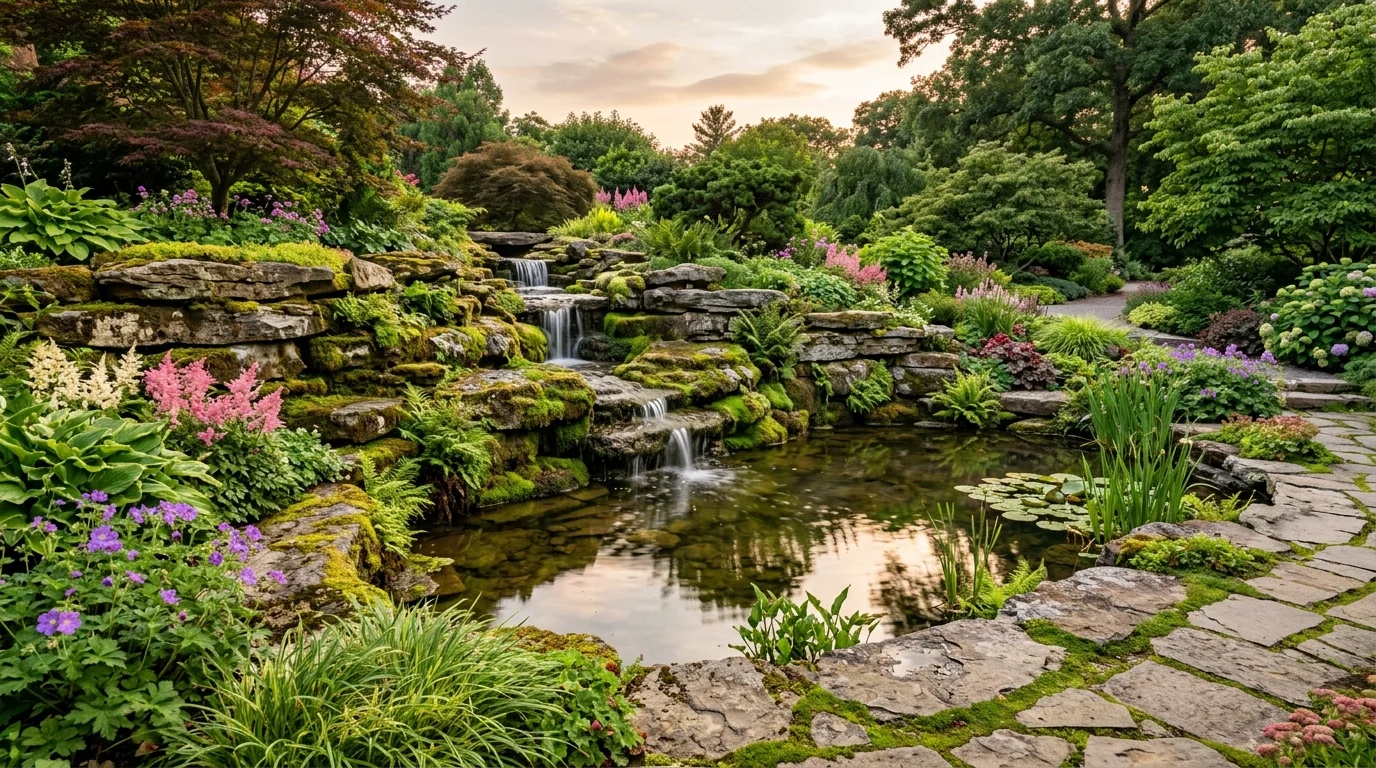
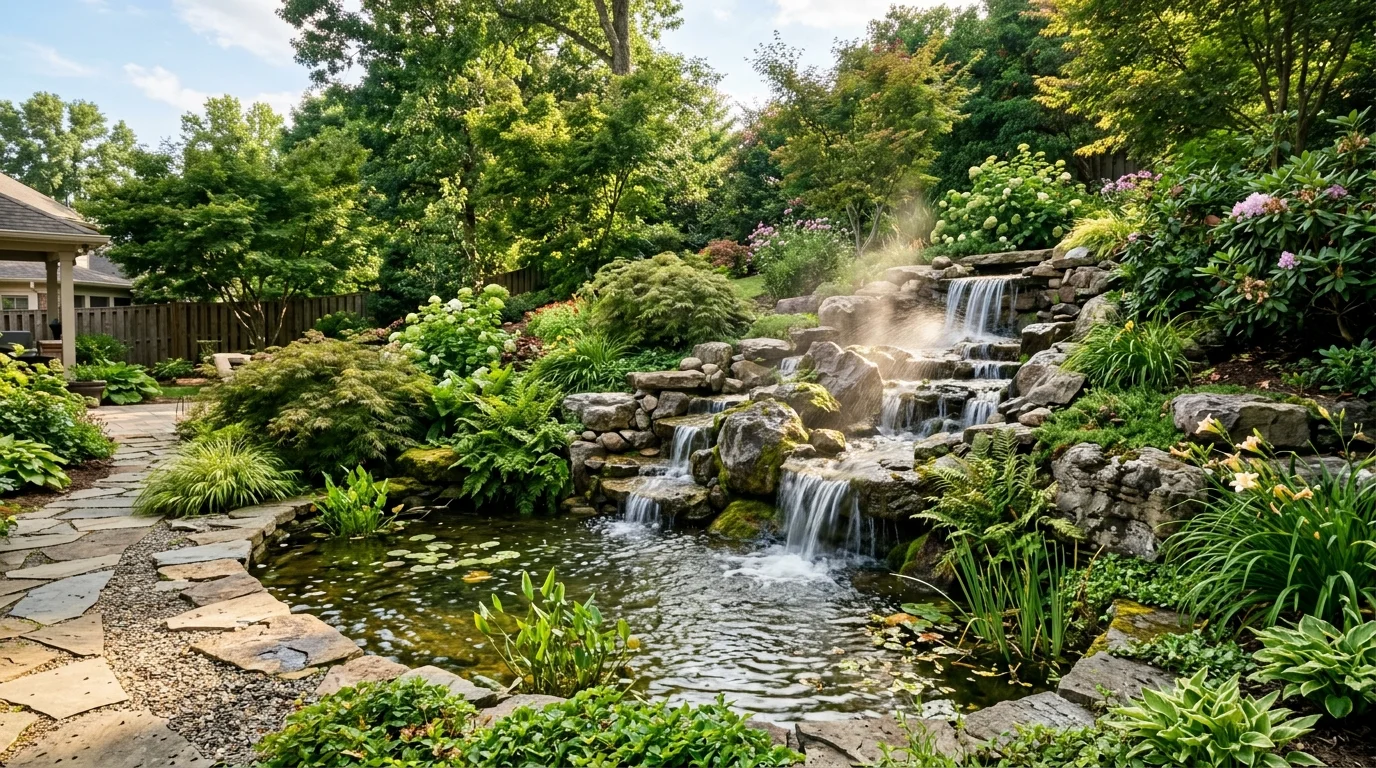
Waterfall pond built into a rocky slope with rich planting
A slope is often an advantage rather than a problem when the pond design includes cascading water and layered rocks. The added sound and movement make the whole landscape feel more dynamic while still preserving a sense of calm.
Idea 10
Patio-adjacent pond designed for dining and evening views
When a pond is visible from a patio, it becomes part of daily outdoor life instead of a feature you only walk to occasionally. This kind of placement works best when the edges are polished and the water reads clearly from seated eye level.
Idea 11
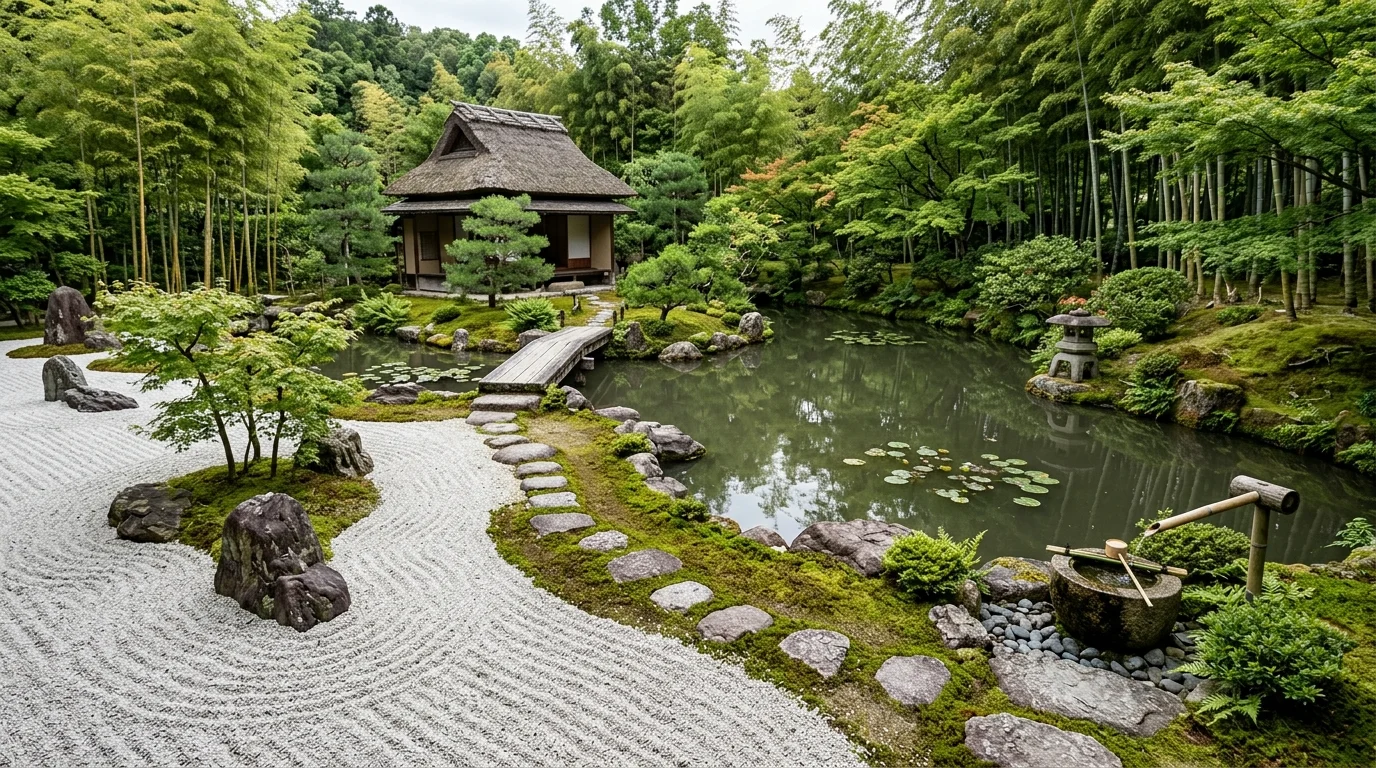
Japanese-inspired pond with lantern accents and raked calm
Stone lanterns, controlled planting, and quiet water give the landscape a contemplative mood without needing excessive ornament. It is an especially good direction when you want the pond area to feel balanced, meditative, and visually disciplined.
Idea 12
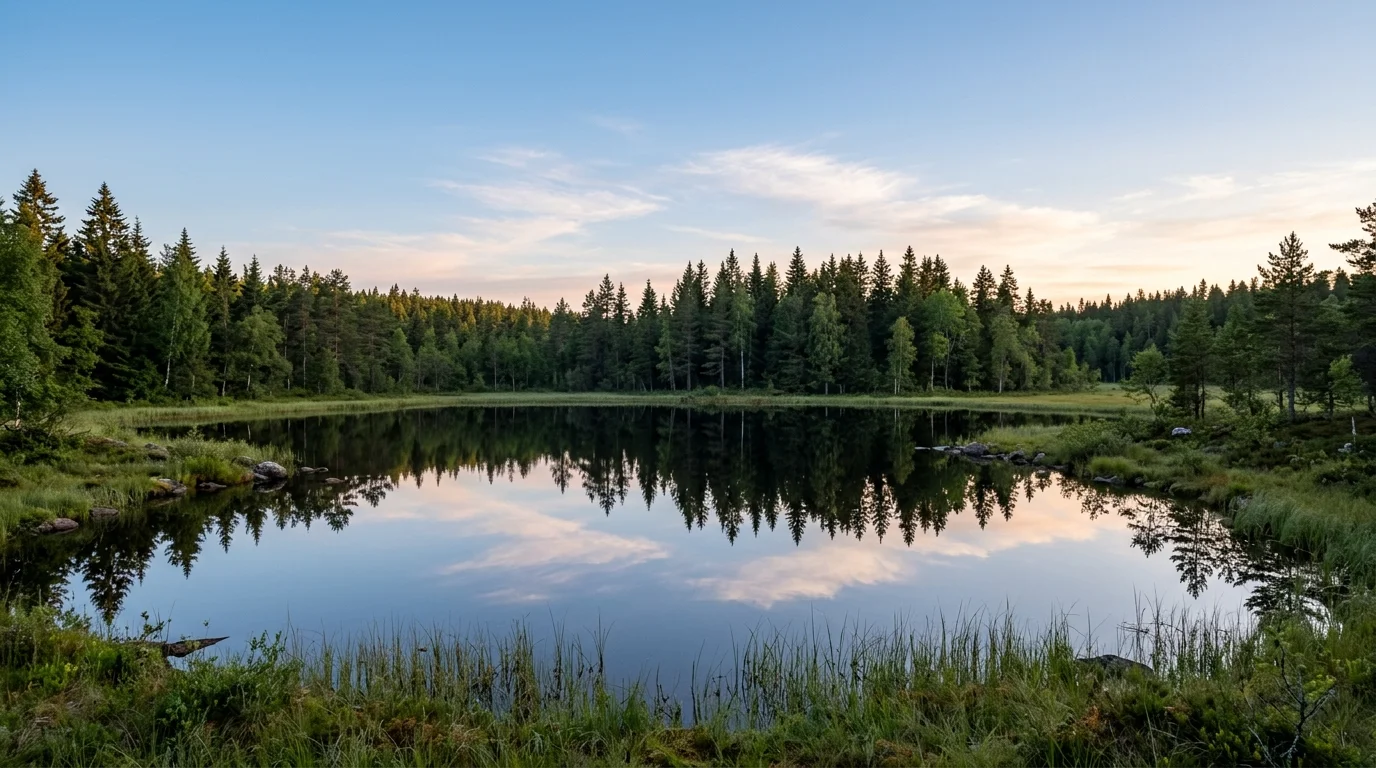
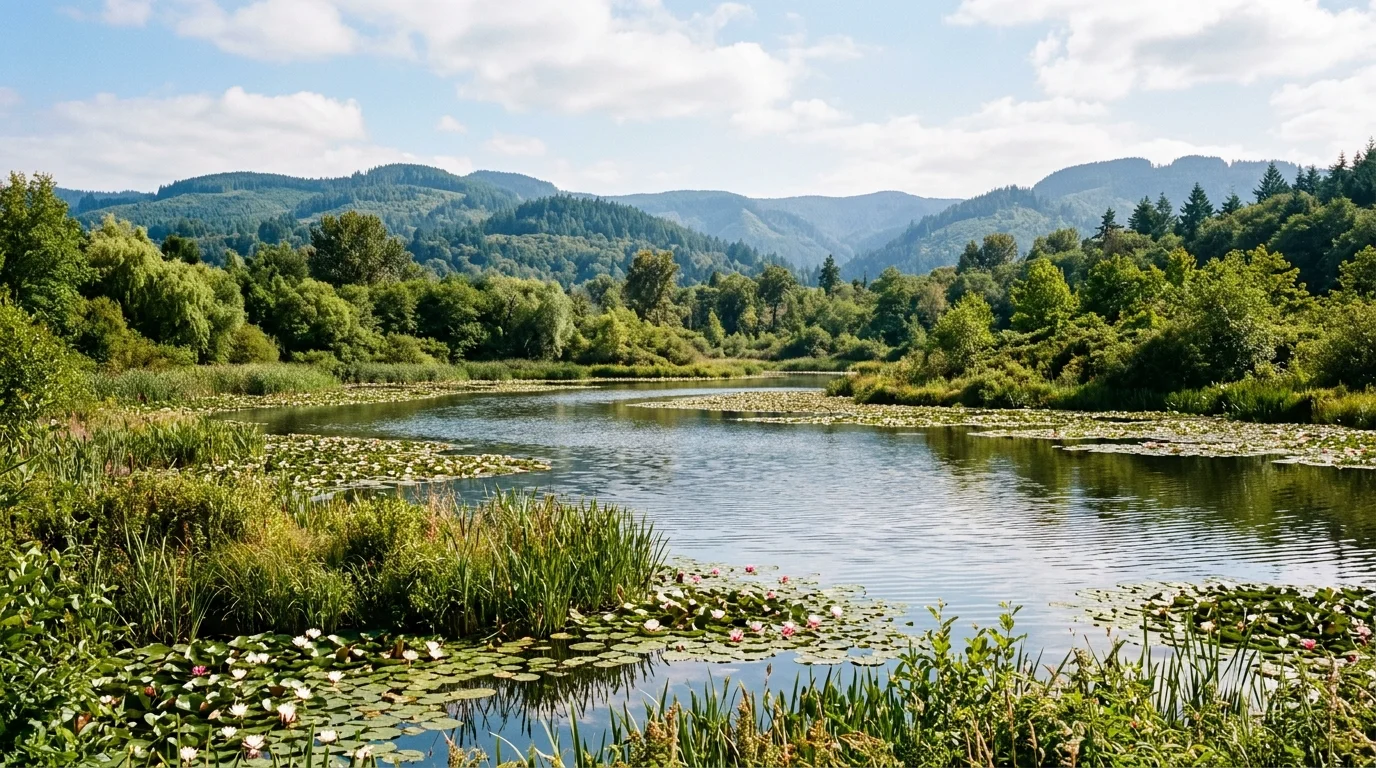
Wildlife pond with native planting and a softer natural edge
A wildlife pond succeeds when it feels hospitable rather than overfinished, with enough native planting to support movement and seasonal change. The atmosphere is more ecological and relaxed, but it can still feel beautifully considered in the larger landscape.
Idea 13
Oval lawn pond anchored by clipped borders and gravel walk
A simple oval shape can make the water feature feel formal enough to anchor a broad lawn without becoming rigid or cold. Gravel and clipped borders keep the composition legible while letting the pond remain the visual centerpiece.
Idea 14
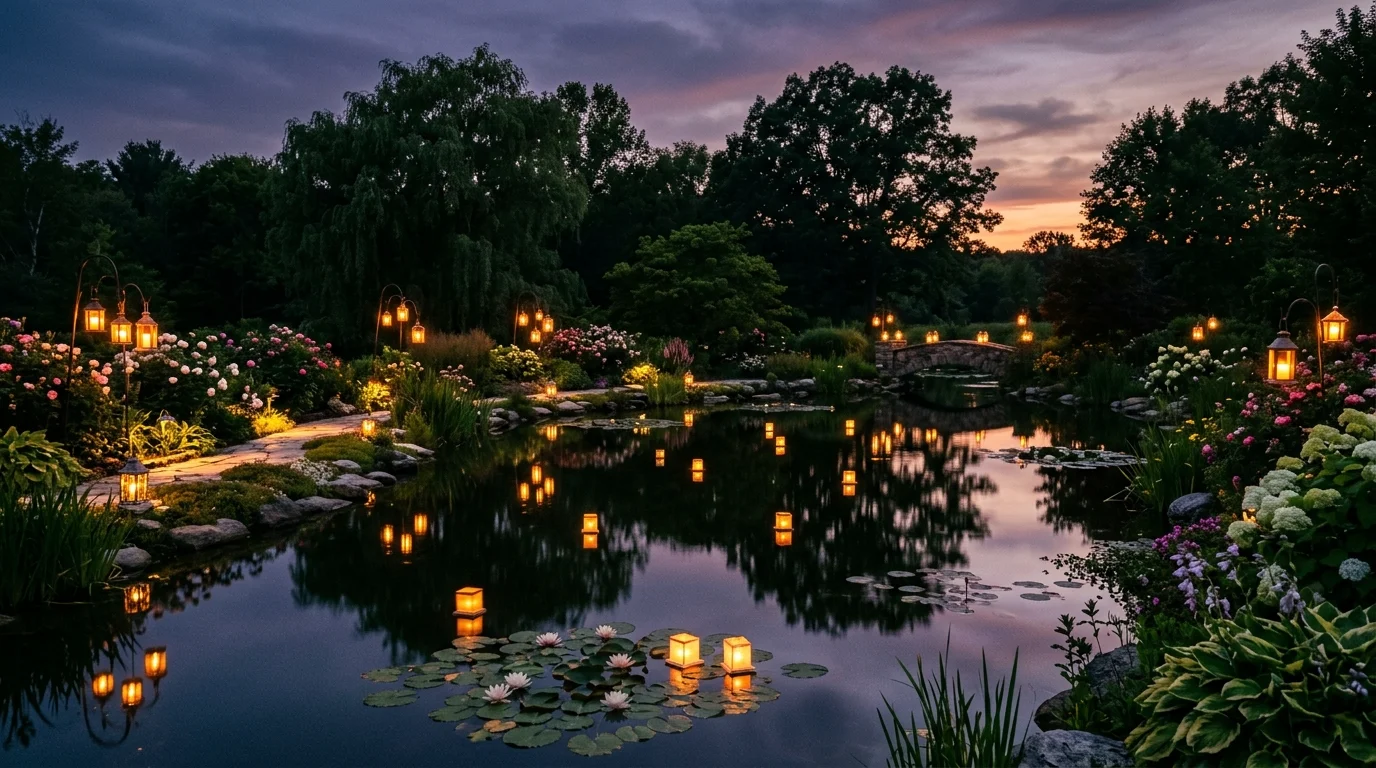
Moon garden pond with pale blooms and gentle nighttime glow
Pale flowers and reflected light can make the pond area feel especially atmospheric once the sun goes down. This is a strong choice for gardeners who want evening beauty as much as daytime planting interest around the water.
Idea 15
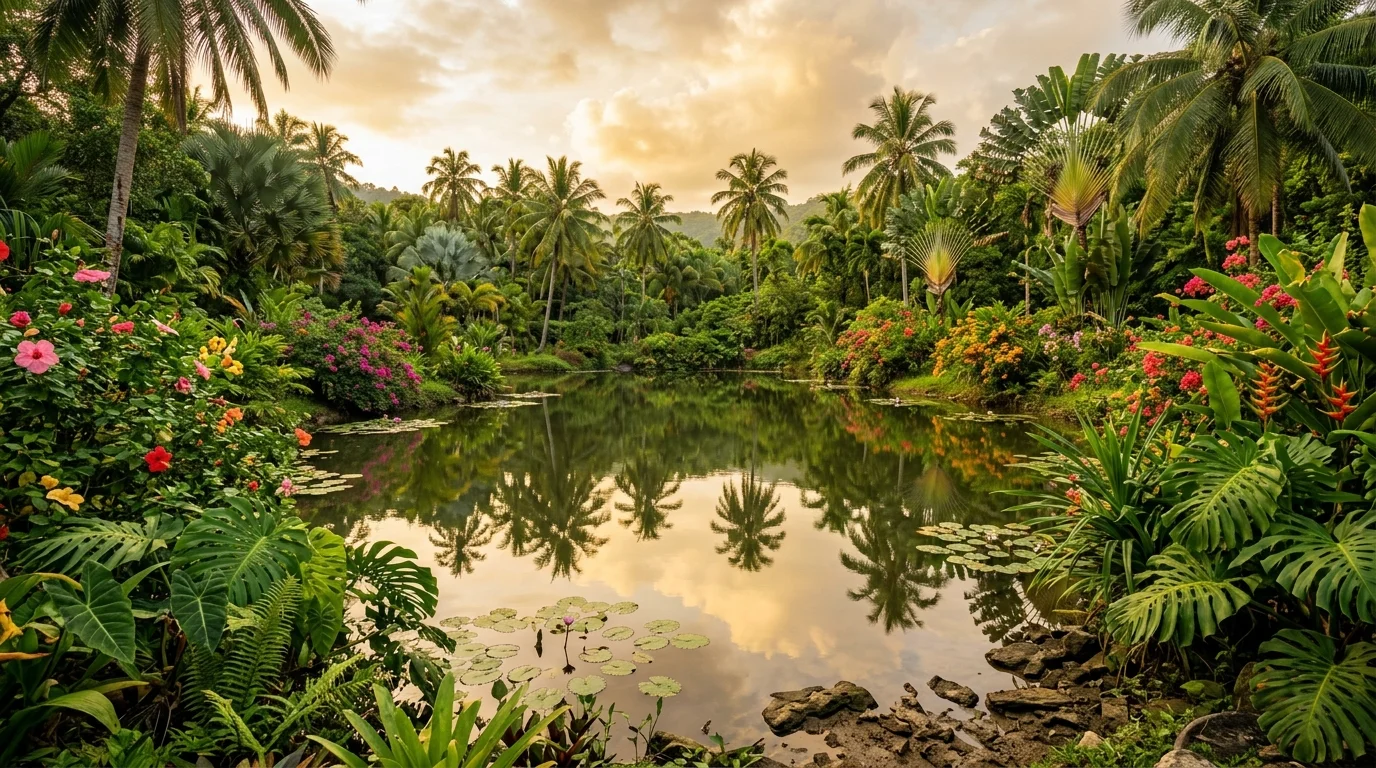
Tropical pond border with oversized leaves and lush immersion
Large-leafed planting gives the pond a resort-like richness and makes the water feel hidden inside a deeper green world. It is ideal when the goal is a backyard feature that feels transportive, humid, and generously layered.
Read next on Saw & Sprout
Frequently asked questions
What makes a pond landscape feel serene instead of busy?
A focused planting palette, clear edge treatment, and one dominant mood usually help the space feel calmer. Too many unrelated accents can dilute the effect quickly.
Can a pond still feel natural if it is close to a patio?
Yes. The key is blending the transition with thoughtful planting and materials so the water feature feels integrated instead of abruptly attached.
Do pond landscapes need lots of flowers?
Not necessarily. Texture, reflection, grasses, shrubs, and foliage can create just as much beauty as flowering borders when the composition is handled well.